Terracotta Army
Qínshǐhuángdì Líng Bówùyuàn (Bīngmǎyǒng)
8,000 life-sized soldiers buried for China's First Emperor — and still on guard 2,200 years later.
Entry
From ¥120
Hours
Mar 16 – Nov 15 · 8:30
Time needed
2½–4 hours
Booking
Required · 7 days ahead
Metro
Line 9 · Huaqing Pool (华清池) · C
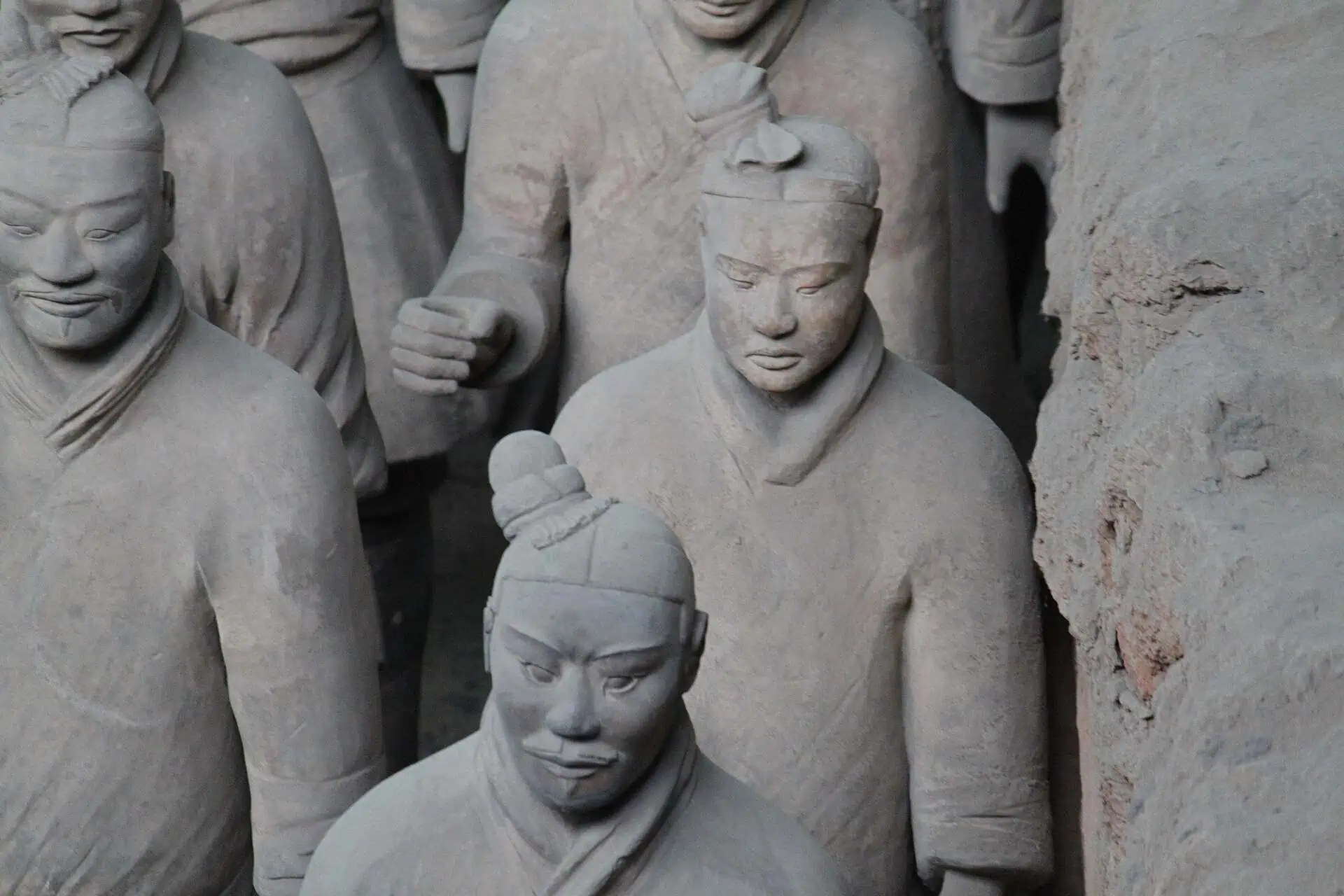
For 2,200 years, an army has been standing at attention in the Lintong clay — and Pit 1 still knocks the wind out of everyone who sees it. Pit 1 alone — a battle formation of thousands of unique, life-sized soldiers — is worth the trip to China. Go early, bring your passport, and don't skip the mausoleum park included in your ticket.
What you're looking at
In 246 BC, a 13-year-old king became ruler of the Qin state and immediately ordered work to begin on his tomb. By the time Ying Zheng had conquered every rival state and crowned himself Qin Shi Huang — First Emperor of a unified China — an estimated 700,000 laborers had spent decades building him an underground empire. The terracotta army was its garrison: a full military formation of infantry, cavalry, chariots and generals, built to protect him in the afterlife.
Every figure is an individual. Faces, topknots, armor plates and even shoelaces differ — soldiers were assembled from standard body parts, then finished by hand so no two are alike. They were originally painted in vivid mineral colors (traces survive on a handful of figures) and carried real bronze weapons, many still sharp when excavated thanks to a chrome-salt coating that prevented rust for two millennia.
The army was forgotten for over 2,000 years until March 1974, when farmers digging a well during a drought hit a terracotta head. What archaeologists eventually mapped:
- Pit 1 — the one from the photographs. A 230-meter hangar holding a battle formation of some 6,000 infantry and horses, still emerging from the earth in the rows where they were found. This is the emotional knockout.
- Pit 2 — the tactically interesting one: cavalry, archers, chariots and mixed units. Several of the finest individual figures (including the famous kneeling archer) are displayed here in glass cases at eye level.
- Pit 3 — small but significant: the command post, with senior officers and a war chariot.
- Lishan Garden — the mausoleum park around the emperor's tomb mound, 1.5 km west and included in your ticket, with a free shuttle bus. The tomb itself remains unexcavated (Sima Qian's account of rivers of mercury inside has kept archaeologists cautious — soil tests confirm abnormally high mercury levels). The two half-scale bronze chariots, the finest bronzes ever found in China, are displayed in the park's museum.
One honest note: you view the pits from elevated galleries, not from among the warriors. The scale still overwhelms — but anyone promising you a walk between the ranks is selling something.
Visiting strategy
Timing beats everything here. Tour buses arrive in waves between about 10:00 and 14:30. Come at opening (8:30) and you'll photograph Pit 1 with a railing to yourself; come after 15:00 and the day-trippers are already back on the highway. Weekdays beat weekends; Chinese public holidays are a different sport entirely.
A route that works: Pit 1 first, while it's quiet — nothing else on site competes with it, so take the impact early. Then Pit 3 (small, five minutes) and Pit 2, where the glass-case figures let you study faces and armor up close. Finish at the exhibition hall, then, if you have the legs, take the free shuttle to Lishan Garden for the bronze chariots and the tomb mound.
Budget your time: the main museum deserves 2–3 hours; add 60–90 minutes for Lishan Garden. Combined with transport, this is a half-day trip minimum — don't schedule anything before lunch.
Common mistakes to avoid:
- Forgetting your passport. Real-name ticketing means the passport you booked with is your ticket. No passport, no entry.
- Buying at the gate. There is effectively no walk-up ticket window for foreign visitors — book online before you go (see fact box).
- Falling for the "fake pits." Touts — and some private tour buses — divert first-timers to side "exhibition pits" of modern reproductions near the approach road, often luring them with "here you can touch the warriors" (you cannot, anywhere — the real pits are behind glass). The genuine museum is signed 秦始皇帝陵博物院 (Emperor Qinshihuang's Mausoleum Site Museum) and Pit 1 holds the actual excavated army. Don't let a "guide" talk you into a sideshow first.
- The "farmer who discovered the warriors" book signing. For years a man has sat in a gift shop signing books as one of the 1974 well-diggers. It's a canned photo-op — the discovery was a team of villagers digging a well, not a lone hero, and the signing exists to move overpriced books. Politely skip it.
- Bus 306 (游5) no longer leaves from Xi'an Station. Since October 2019 the municipal tourist bus 306 (游5) — grey-green, ¥5 fare — departs from Fangzhicheng Transit Hub (纺织城枢纽站) at Metro Line 1/9 Fangzhicheng Station, NOT the station's east square. Many older guides still say "east square" — that's years out of date and you'll waste a trip. Fake "游5" private minibuses still lurk near the station: they charge more and detour to commission shops; the real 306 boards only at Fangzhicheng.
- Following the "terracotta factory" detours. The road from the parking lot to the entrance is lined with souvenir shops and unofficial "guides." Official licensed guides wait inside, near the entrance hall.
- Skipping Lishan Garden. Many visitors don't realize it's included. The bronze chariots alone justify the shuttle ride.
Getting there
The museum sits in Lintong District, about 35 km east of downtown Xi'an. Three realistic options:
- Tourist bus 306 (游5) departs from Fangzhicheng Transit Hub (纺织城枢纽站) at Metro Line 1/9 Fangzhicheng Station — NOT Xi'an Railway Station's east square, where it stopped leaving from in October 2019 (many older guides still say east square; that's years out of date). Fare is about ¥5 and the ride takes roughly an hour. Fake "游5" private minibuses still lurk near the railway station — charge more, detour to commission shops. The real 306 boards only at Fangzhicheng.
- Metro Line 9 to Huaqing Pool station (华清池, exit C), then a 15-minute taxi or local bus (602 or 613) to the museum. The metro leg avoids road traffic and works well if you're starting near a Line 9 connection.
- DiDi or taxi from downtown costs ¥120–150 and takes 40–60 minutes. Worth it at 7:30 in the morning when it buys you a near-empty Pit 1.
Many visitors combine the army with Huaqing Palace, two metro stops away — see our 3-day itinerary for how the day fits together.
Practical notes
- Food: on-site options are overpriced and forgettable. Eat a big breakfast, bring snacks, or eat back in Lintong town. The Muslim Quarter is a fine reward for your return.
- Payments: ticket booking is online-only, so have Alipay or WeChat Pay set up before you visit. The row of souvenir shops outside is cashless almost everywhere too.
- Toilets: available near each pit hall and at the visitor center; carry tissues as a habit anywhere in China.
- Luggage: storage at the visitor center — workable if you're coming straight from the airport or station, but a hotel drop-off is more comfortable.
- Kids: Pit 1's scale lands with children too; the galleries are stroller-friendly. Bring snacks and make Lishan Garden optional.
- Accessibility: ramps and elevators throughout the main halls; wheelchairs can be borrowed at the visitor center.
Questions, answered
Is the Terracotta Army worth visiting?
Yes — it's one of the few globally famous sights that exceeds expectations in person. Pit 1's scale doesn't translate to photographs. It's the single most-visited sight in Xi'an for a reason.
How long do you need at the Terracotta Army?
Allow 2–3 hours for the three pits and exhibition hall, plus 60–90 minutes if you add Lishan Garden (the mausoleum park, included in the ticket). With transport from Xi'an, it's a half-day trip minimum.
Can I buy Terracotta Army tickets at the gate?
Effectively no. The museum uses real-name timed-entry booking — reserve online via the official site or WeChat mini program up to 7 days ahead, and bring the passport you booked with. Third-party platforms (e.g. Trip.com) also sell tickets and are foreigner-friendly.
How far is the Terracotta Army from Xi'an?
About 35 km east of the city center — roughly an hour by tourist bus 306 (from Fangzhicheng Transit Hub, not the railway station), 40–60 minutes by taxi (¥120–150), or metro Line 9 plus a short local bus or taxi hop.
What is the best time of day to visit?
Opening time (8:30) or after 15:00. Tour groups flood the site between roughly 10:00 and 14:30. Avoid Chinese public holidays entirely if you can.
Can you go inside Qin Shi Huang's tomb?
No — the tomb mound itself is unexcavated. Ancient accounts describe rivers of mercury inside, and soil tests confirm high mercury levels, so archaeologists are waiting for technology that can preserve whatever is in there. You can visit the surrounding mausoleum park (Lishan Garden), which is included in your ticket.
Keep exploring
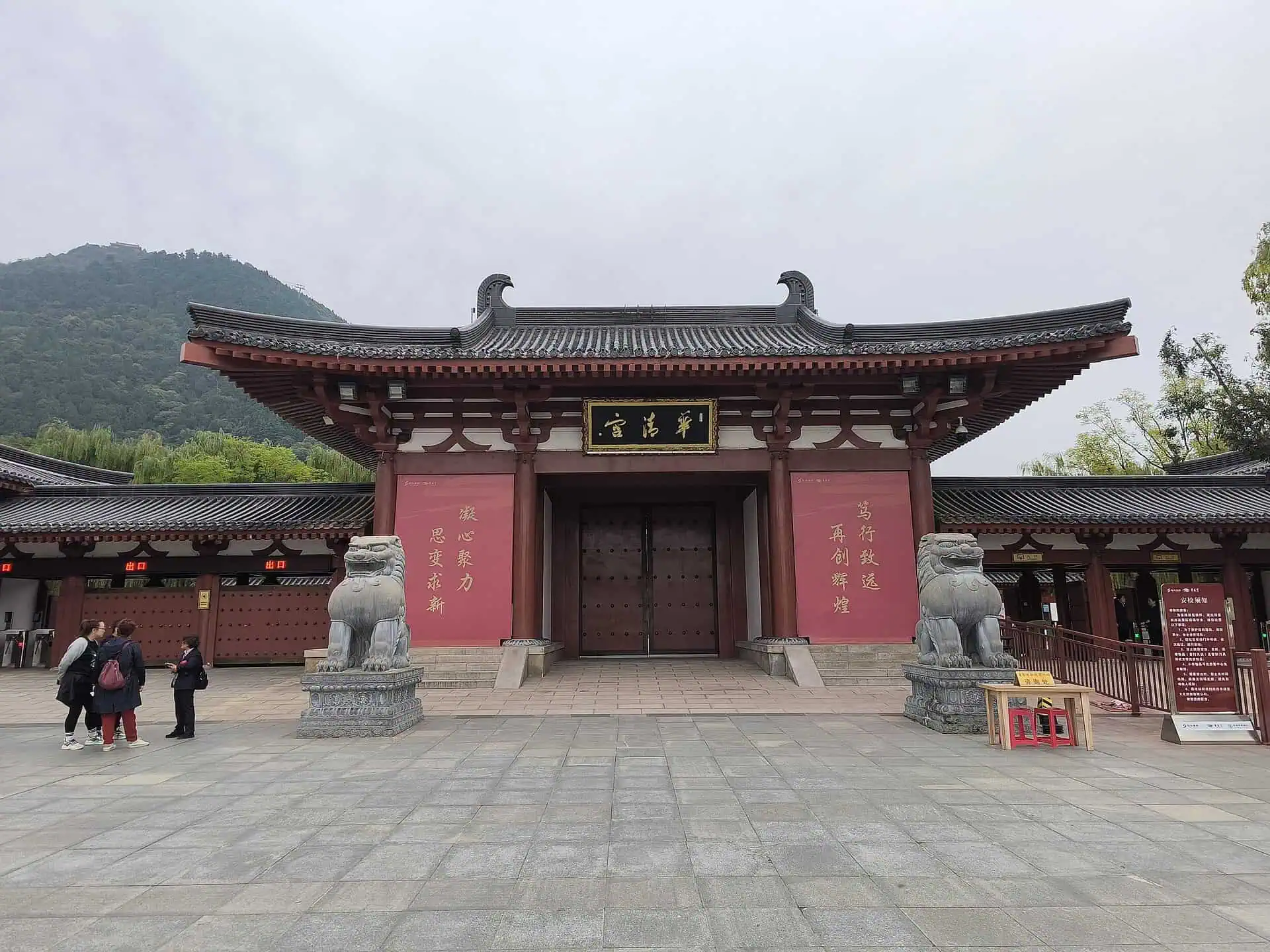
Huaqing Palace & Hot Springs
Tang emperors soaked here in the 700s — China's most famous love story, and the site of a 1936 kidnapping that changed the country.
Learn more →
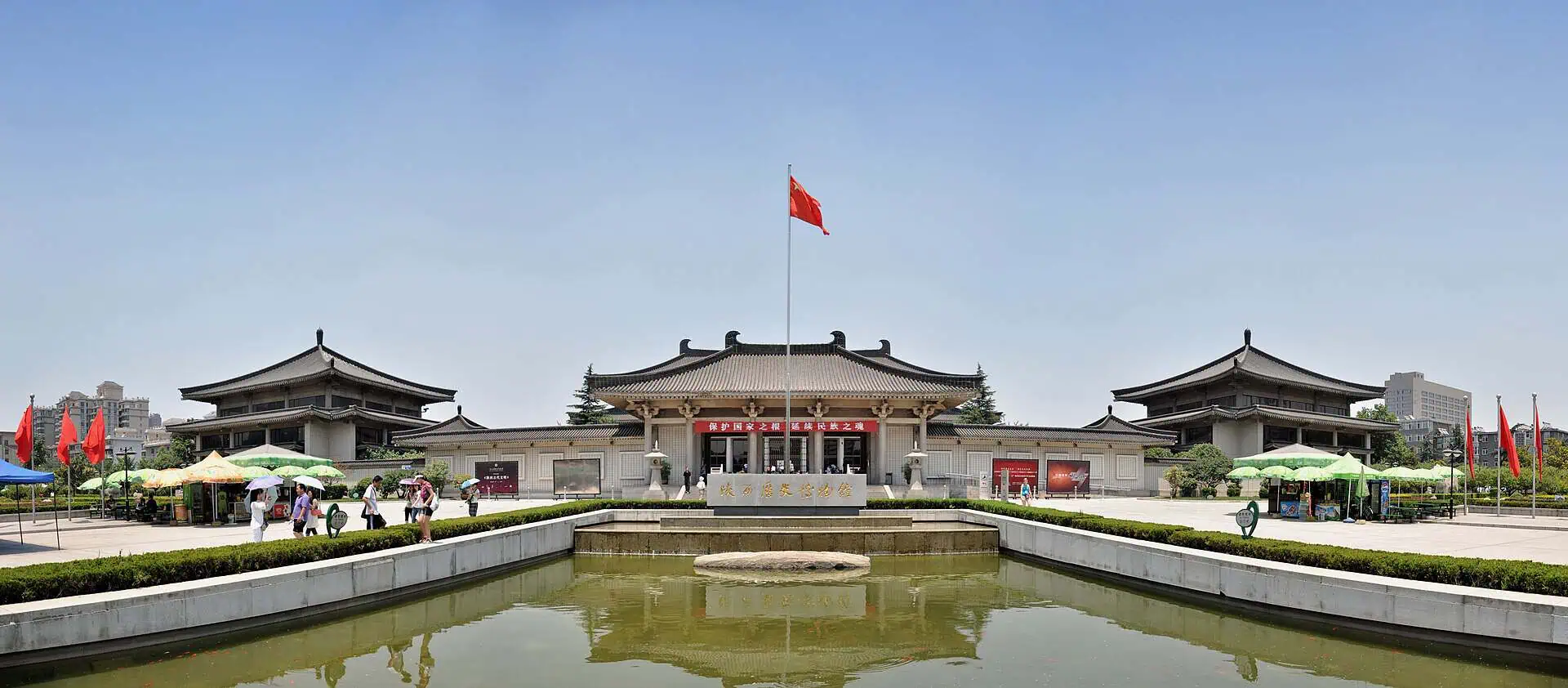
Shaanxi History Museum
Every layer of Xi'an's time stack under one roof — Zhou bronzes, Han gold and Tang treasure.
Learn more →
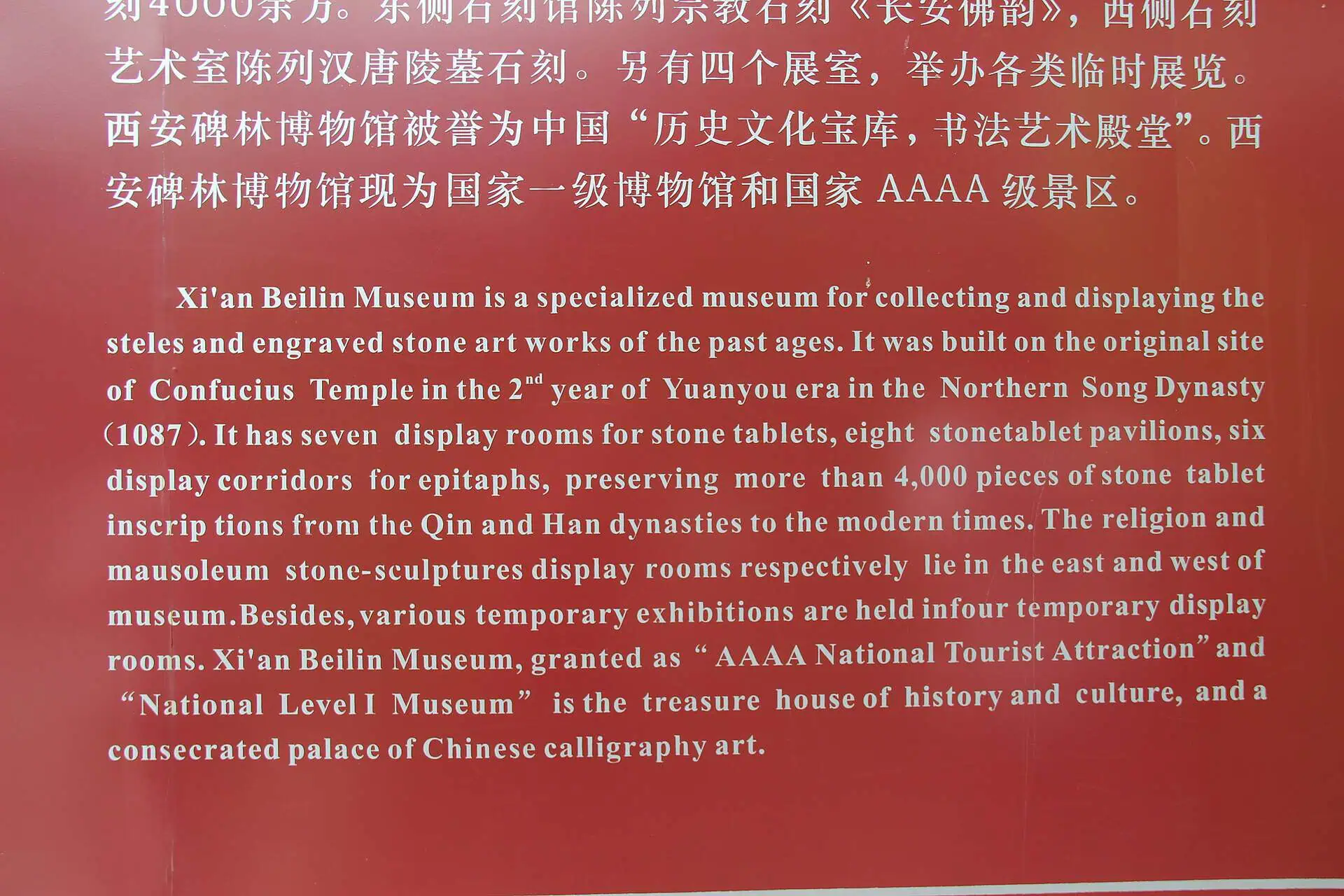
Forest of Steles (Beilin Museum)
Stone books since 1087 — nearly 3,000 steles, and the home of Chinese calligraphy itself.
Learn more →
Related stories
Visas & entry: do you need one?
Probably less paperwork than you fear — and two of the doors now have their own deep-dive packages: the 30-day visa-free entry (~50 countries) and the 240-hour transit (55 countries, including the US). This page is the router: work out which door is yours, then read its package.
The 240-hour visa-free transit, explained
Ten days in China without a visa, if you're just passing through — including Americans. The rules, the traps, and how to run it through Xi'an.
Money & payments: Alipay/WeChat Pay for foreigners
China runs on QR codes, and since 2023 foreigners can join in: link your Visa or Mastercard to Alipay and WeChat Pay, verify with your passport, and pay like a local. Set both apps up before you fly, carry a little cash as backup, and forget about tipping.
Getting around: metro, buses, DiDi & taxis
Xi'an's metro covers everything a tourist needs for ¥2–8 a ride, with English signage throughout. For anywhere off the rails, DiDi (China's Uber, in English) is cheap and easy — and the walled center is compact enough to walk.
Internet, eSIM & VPNs: staying connected
Google, WhatsApp, Instagram and much of the Western internet are blocked on mainland Chinese networks. The clean fix is a travel eSIM, which routes your data outside the mainland so everything just works — no VPN required. Buy and install it before you leave home.
Booking attractions in Xi'an: the real-name reservation system explained
China's big sights run on real-name, timed-entry reservations tied to your passport — and Xi'an has the two hardest tickets in the country outside Beijing: the Terracotta Army and the Shaanxi History Museum. The good news: only those two genuinely require planning. Here's exactly what to book, when tickets release, and how to do it as a foreigner without a Chinese phone number.
Where to stay in Xi'an: the honest area-by-area guide
Xi'an is a compact city with a decisive metro, so the choice of base matters more for mood than logistics. For most first-timers the answer is inside the City Wall near the Bell Tower; below is every realistic alternative, with the character, the crowd it suits and what a room actually costs in each.
Best time to visit Xi'an: an honest month-by-month guide
Xi'an has two golden windows — late March to May, and September to early November — and two seasons that demand a reason: a furnace-hot summer and a cold, dry, wonderfully empty winter. Weather is only half the story, though; the Chinese holiday calendar can matter more than the temperature. Here's every month, with the traps marked.
The essential apps for Xi'an (and how to set them up)
China runs on its own app ecosystem, and Xi'an is no exception — but the setup is far easier than it used to be. Five apps cover payments, trains, taxis and maps, all work with a foreign phone number and bank card, and the whole job takes an evening at home before you fly.
Public holidays & crowds: when not to come
Chinese public holidays concentrate 1.4 billion people's travel into the same few weeks, and Xi'an is one of the country's most popular destinations. Two periods are genuinely best avoided — the October Golden Week and the Spring Festival season — while the smaller three-to-five-day holidays just demand earlier bookings and earlier mornings.
Health & safety in Xi'an: a calm, practical guide
Xi'an is one of the safest big cities you'll ever visit — violent crime against tourists is rare, and solo travelers, including women walking at night, report few problems. The genuine risks are mundane: traffic, trip hazards, tap water you shouldn't drink, winter air and summer heat. Here's how to handle each.
Etiquette in Xi'an: what actually matters
Most China etiquette advice is written for business dinners, not tourists. The real list is short: one chopstick taboo, a young-and-imperfect queue culture, some camera manners, and a simple money rule — bargain at stalls, tip nowhere. Here's how to move through Xi'an without stepping on anyone.
Xi'an with kids: the family playbook
Xi'an is one of China's easiest cities to do with children: a compact center, sights with genuine visual scale, and food kids actually eat. The trick is choosing the four or five things that land with young travelers — and skipping the ones that are homework.
Accessibility in Xi'an: an honest audit
Xi'an is a 3,000-year-old city running on modern infrastructure, and accessibility splits exactly along that line: the metro and the big modern museums are genuinely step-free, while anything involving a 600-year-old gate, tower or pagoda usually means stairs. Here's what works, what doesn't, and what to confirm before you fly.
What a trip to Xi'an actually costs: budget vs comfort
Xi'an is one of China's cheapest big tourist cities — street dinners for ¥20, hostel beds under ¥150, a metro that reaches every headline sight. But the Terracotta Army, a night show and a decent hotel add up fast. Here are two honest daily budgets, the real price of every big-ticket item, and the savings that actually work.
Xi'an vs Beijing: how to split your China trip
The classic first-timer's dilemma, settled honestly: Beijing has the Forbidden City and the Great Wall, Xi'an has the Terracotta Army and a wall you can cycle — and they're different enough that most trips should include both. Here's what each city actually gives you, what it costs, and how to divide a week between them.
Xi'an vs Luoyang: the two ancient capitals, compared honestly
Both cities claim thirteen dynasties, both are 1.5 hours apart by high-speed train, and they complement each other better than they compete: Xi'an has the Terracotta Army and Tang cosmopolitanism at full volume, Luoyang has the Longmen Grottoes and a slower, quieter, cheaper rhythm. Here's the category-by-category comparison, and how to fit both into one trip.
Shopping in Xi'an: what's actually worth buying
Most of what's sold to tourists in Xi'an is factory stock you could buy anywhere in China — but a few things are genuinely local and worth suitcase space: a seal carved with your name on Shuyuanmen, a proper museum-shop terracotta figure, fu brick tea, and Shaanxi's dried persimmons. Here's what to buy, what to skip, and how the haggling works.
Halal eating in Xi'an
In most Chinese cities, halal travelers hunt restaurant by restaurant. In Xi'an you pick a neighborhood instead: the Hui Muslim community has been cooking here since the Tang dynasty, an entire district behind the Drum Tower sells no pork at all, and several of the city's signature dishes are halal by birth. Here's how to read the signs, what to eat, and what to watch for outside the quarter.
Xi'an at night: lights, shows & evening walks
Xi'an is a different city after dark — Tang-style streetscapes floodlit gold, a pagoda floating over fountain shows, gate towers glowing above the moat. The best of it is free: the Grand Tang Ever-Bright City pedestrian street alone is worth an evening, and the pagoda fountain show costs nothing. Add a late dinner in the Muslim Quarter and, in season, the open-air Song of Everlasting Sorrow, and your nights may outshine your days.
Nightlife & craft beer in Xi'an
Xi'an is not Shanghai — nobody flies here for the clubs. But the city has bar streets with real history clustered around the South Gate, a small but genuine craft beer scene, a working livehouse circuit, and KTV as a full-contact local pastime. Here's what's actually worth your evening, what it costs, and what to skip.
The photographer's Xi'an: best spots & times
Xi'an rewards photographers who plan around light, not locations. The city's great subjects — walls, towers, pagodas, night markets — are all floodlit after dark, which means the magic window is the same almost everywhere: the hour around sunset. Here's where to stand, when to be there, and the rules that can cost you your drone.
Cherry blossoms in Xi'an: Qinglong Temple & beyond (March–April)
Xi'an's cherry blossom season runs roughly mid-March to mid-April, and the classic place to see it is Qinglong Temple — a Tang dynasty temple with a 1,200-year-old connection to Japan, where hundreds of Japanese-donated cherry trees bloom against old temple walls. Entry is free but you'll need a reservation, weekends are a contact sport, and if you miss the petals, April's peonies are the consolation prize. Here's how to time it.
Autumn in Xi'an: ginkgo gold (November)
Every November, a single 1,400-year-old ginkgo tree in the Zhongnan Mountain foothills turns Xi'an's social feeds gold — tradition says Emperor Taizong planted it himself. Seeing it takes a free-but-competitive reservation and an hour's drive south; if you'd rather stay in the city, there are honest ginkgo spots inside the wall and a 10,000-tree forest at Hanyangling. Here's the timing, the booking drill, and what November in Xi'an is actually like.
Xi'an in winter: lantern festivals & lights (December–February)
Xi'an in winter is cold, dry and mostly crowd-free — and for about ten weeks around Chinese New Year it's also lit up like nowhere else in China. The City Wall Lantern Festival drapes giant illuminated sets across a 600-year-old rampart, the Tang quarter glows every night, and temple fairs fill the old town. Here's what the lights cost, when they run, and an honest take on the cold.
A short history of Xi'an (Chang'an)
Qin Shi Huang and the story of the Terracotta Army
Thirteen dynasties: Xi'an as capital, a visual timeline
Maps in China: why Google Maps fails, and what to use instead
Google Maps in China fails twice — it's blocked on mainland networks, and its pins sit 100–600 meters off reality thanks to China's scrambled map coordinates. The fix is easy: Apple Maps on iPhone, Amap on Android, and a few screenshots before you fly.
DiDi in English: ride-hailing in Xi'an without a Chinese number
DiDi is China's ride-hailing giant, and in 2026 it works end-to-end for foreigners: English interface, signup on your home phone number, payment by foreign card or through Alipay/WeChat. Set it up before you fly and every ride in Xi'an becomes a non-event.
Shared bikes in Xi'an: the last-kilometer answer
Xi'an's yellow and blue shared bikes turn the flat, spread-out city center into a 10-minute ride — unlocked with the Alipay or WeChat scan you already have, deposit-free, for about ¥1.5 per half hour. The one skill you need is parking inside the GPS zones.
What to pack for Xi'an: a consolidated, season-by-season checklist
Xi'an punishes over-packers and rewards layers. The city runs from furnace-hot summers (35°C+) to cold, dry winters (lows around −5°C), with spring and autumn as the mild sweet spot — so the clothing list changes entirely with the month. The non-negotiables barely change at all: pocket tissues for paperless toilets, a mask for winter air, a refillable bottle, and your passport, which doubles as your ticket at the big sights. Here's the whole list in one place.
Is Xi'an safe for solo and women travelers? An honest answer
By the consensus of Western travel writing, Xi'an is one of the safer major Chinese cities for people traveling alone — violent crime against tourists is rare, and women walking at night inside the city wall report few problems. The risks worth planning for are mundane ones: pickpockets in the Muslim Quarter and Terracotta Army queues, scam touts, and the logistics of getting around without fluent Mandarin. Here is an honest, specific assessment — the reassurance and the caveats.
Riding the Xi'an metro: lines, fares and the airport line
Xi'an's metro is the spine of any visit — clean, bilingual, and within reach of nearly every sight, the airport and the Terracotta Army direction. Twelve lines are running as of 2026; in practice you'll lean on Line 2 through the centre, Line 14 to the airport and Line 9 out toward Lintong. Pay with the transit QR code in Alipay or WeChat and most rides cost ¥3–7.
Studying in Xi'an: a practical guide for international students
Xi'an is one of China's classic student cities — over 50 universities, tuition that starts around ¥20,000 a year, and dorms cheap enough that living costs can stay under ¥2,500 a month. This guide covers the visas (X1 vs X2), the universities that host international students, what it really costs, and how to actually enjoy the city on a student budget.
Business travel in Xi'an: conventions, meetings and the rules of the room
Xi'an is a serious meetings city — a UFI-member convention center in the Chanba district, a 21,000 m² conference hotel, and a high-speed rail link that puts Beijing 4.5 hours away. This guide covers where the venues are, how to get to a meeting without being late, and the business-culture basics that actually matter: WeChat as your business card, hierarchy at the table, and the gift rules that quietly make a difference.
Xi'an: group tour or DIY? Honest advice for first-timers
Xi'an is one of China's easiest cities to do yourself: a clean English-signed metro, tickets bookable on official apps, and every headline sight reachable without a guide. A group tour buys you transport, tickets and context — but the cheap ones add shopping stops and the Terracotta Army needs no explanation to move you. Here's when each makes sense, what a fair tour costs, and the pitfalls either way.
9 mistakes first-timers make in Xi'an — and how to avoid them
Almost every Xi'an regret is avoidable: arriving without mobile payments, missing the booking window for the Terracotta Army, wandering into the Muslim Quarter's tourist-priced core, or showing up to the museum on a Monday. These are the nine mistakes we see travelers make most — each one fixable before it costs you a day.
Student, senior & child discounts at Xi'an sights — the full table
Xi'an's big sights offer real discounts: students roughly half price at most attractions, seniors 65+ free at the Terracotta Army and most museums, children under 16 free at the flagship sights. The catch: it's physical ID at the gate, photos don't count, and some policies apply only to Chinese nationals. Here's the complete table.
On video
Xi'an on video
What this place looks like on video.