Xi'an vs Luoyang: the two ancient capitals, compared honestly
Both cities claim thirteen dynasties, both are 1.5 hours apart by high-speed train, and they complement each other better than they compete: Xi'an has the Terracotta Army and Tang cosmopolitanism at full volume, Luoyang has the Longmen Grottoes and a slower, quieter, cheaper rhythm. Here's the category-by-category comparison, and how to fit both into one trip.
8 min read · 7 sections
The short version
- They're neighbors: 50+ high-speed trains a day link Xi'an North and Luoyang Longmen in about 1.5 hours (fastest ~1h15), second class roughly ¥160–200.
- Xi'an holds the headliners — the Terracotta Army, a complete walkable city wall, the Muslim Quarter; Luoyang's peak is the Longmen Grottoes (¥90), one of China's finest sights.
- Luoyang is cheaper and calmer: quieter sights, cheaper hotels, fewer international tourists — mostly domestic visitors and fewer English menus.
- The practical answer for most trips: base in Xi'an 3–4 days, then borrow Luoyang as an overnight (or a long day trip) before moving on.
- April is the exception: Luoyang's peony festival (1–30 April) makes the city worth two days in its own right — book early.
The short version
This is not a rivalry — it's a division of labor between two cities that both served as the capital of imperial China, 380 kilometers apart. Xi'an (西安, Xī'ān) is where the empire was made: the Qin buried their army here, the Han opened the Silk Road from here, and Tang Chang'an was likely the largest city on Earth. Luoyang (洛阳, Luòyáng) is the other ancient capital — the secondary seat that hosted Eastern Zhou kings, Eastern Han emperors, the Northern Wei court that began carving the Longmen Grottoes, and Empress Wu's Zhou dynasty.
Because the high-speed train stitches them together in about ninety minutes, the honest advice is almost never "choose" — it's "base and borrow." Give Xi'an the majority of your days; it has the depth and the food scene to reward them. Then take one or two of those days to Luoyang for the Longmen Grottoes alone — they are worth the trip in themselves — and add White Horse Temple and a walk along the Luo river if you stay overnight.
History: thirteen dynasties, twice over
Both cities market themselves as 十三朝古都 — the capital of thirteen dynasties — and both claims are technically defensible, which is exactly why the comparison confuses first-time visitors.
The difference is weight class. Xi'an (as Chang'an, 长安) was the seat of the dynasties that defined China: the Qin unified the country from here, the Han gave the majority ethnic group its name, and the Tang set the cultural high-water mark — the era when Japanese and Korean envoys, Persian merchants and Central Asian musicians all lived in the same city. That arc is what our short history of Xi'an walks through.
Luoyang's thirteen are real but mostly secondary or shorter: the Eastern Zhou kings, the Eastern Han, Cao Wei, Northern Wei (whose move south in 494 CE began the Longmen Grottoes), and the Sui–Tang era when it served as the eastern second capital — briefly the main one under Empress Wu. What Luoyang has instead of headliners is continuity: a lower, calmer stack of history, with Buddhism woven through it deeper than in Xi'an — China's first Buddhist temple stands here, and its greatest sculpture gallery is carved into the river cliff.
What you actually see and do
Xi'an delivers spectacle at volume. The Terracotta Army is an in-situ army of thousands, still being excavated in front of visitors; the Ming city wall is complete and cyclable end to end; the Bell Tower and Muslim Quarter anchor a walkable core that fills three to four days easily — our 3-day itinerary is the template. Add the museums, the Tang-dynasty night shows, and a Mount Huashan day trip, and the city swallows a week without strain.
Luoyang delivers concentration. The Longmen Grottoes are the reason you come: more than 2,300 niches and tens of thousands of Buddhist figures carved into both banks of the Yi river across four centuries, anchored by the colossal Fengxian Temple Vairocana Buddha. You can see the best of it in a half-day of slow walking. Around it: White Horse Temple (白马寺, Báimǎ Sì, ¥35) — traditionally the first Buddhist temple in China, founded 68 CE, with an unusual international quarter of foreign-built Buddhist chapels; the free Luoyang Museum (closed Mondays); and the reconstructed Sui-Tang axis around Yingtianmen, whose evening 3D light show is free to watch. If brick-and-stone authenticity matters more to you than army-scale spectacle, Luoyang punches far above its ticket price.
The train that links them
Xi'an North (西安北) to Luoyang Longmen (洛阳龙门) is a workhorse high-speed corridor: 50+ direct G and D trains daily, the fastest covering the ~380 km in about 1 hour 15 minutes and most landing between 1.5 and 2 hours. Second class floats roughly ¥160–200 depending on train and demand — book through Trip.com or the official 12306 system with your passport, exactly as on any other Chinese line.
Note the station name: Luoyang Longmen, named for the grottoes and on the south side of the city — from there it's a short taxi or bus ride to the site itself, so the standard arrival move is grottoes first, hotel second. First and last trains bracket a long day trip comfortably, though an overnight is the better shape: Longmen at dusk or early morning, when the tour groups thin out, is the experience you came for.
Costs and crowds
Luoyang is the cheaper stop, clearly. The headline tickets: Longmen Grottoes ¥90 (passport real-name; buy via the official WeChat account or on site — far less brutal than Xi'an's free-museum reservation wars) against the Terracotta Army's ¥120; White Horse Temple ¥35 against the City Wall's ¥54. Hotels run a visible tier below Xi'an's for the same quality, and Luoyang's signature meal — the water banquet (水席), a long sequence of broth-based dishes — runs roughly ¥35–100 a head in the old-brand restaurants, cheaper still in the local ones.
Crowds tilt the same way. Xi'an gets the full international-and-domestic double flow, which means booked-out headliners and a thick Muslim Quarter at dinner time; Luoyang is overwhelmingly a domestic-tourist city — you'll share Longmen with plenty of people (it is famous, after all), but the queues, the scramble and the after-work crowds are all a notch lower, and English coverage thinner to match. One timing exception on each side: avoid Xi'an's golden weeks, and expect Luoyang's hotel prices to spike for the April peonies.
April: the month the answer flips
For one month a year Luoyang stops being the side trip. The Luoyang Peony Culture Festival runs 1–30 April — the 43rd edition filled the whole month in 2026 — with peak bloom usually between about 9 and 25 April. The city's parks and heritage sites fill with domestically famous peony displays, garden tickets run ¥80–120 at peak, and hotel prices climb accordingly. Peony pilgrimages are a Chinese-literature tradition going back to the Tang — Empress Wu's capital loved this flower — and the festival is Luoyang at its most alive.
If your dates are flexible and you enjoy botanic spectacle, plan Xi'an first, then give Luoyang two April days: grottoes plus peonies at Wangcheng or the National Flower Garden. If crowds are what you're escaping, do the opposite and skip April entirely.
The verdict: base in Xi'an, borrow Luoyang
For a first trip that includes either city: 3–4 days in Xi'an, then 1–2 in Luoyang, riding the morning train between them. Luoyang pairs naturally with a wider Henan loop (Zhengzhou, the Shaolin Temple) if your China trip is longer; on a strict Xi'an-only schedule, a long day trip — first train out, evening train back — buys you the Longmen Grottoes and a water-banquet dinner, though it leaves White Horse Temple unhurried travelers' leftover.
Pick only Xi'an if your time is short, your list is the Terracotta Army and the wall, or you want the international-traveler infrastructure (English menus, hotel desks that handle foreign passports) that comes with the bigger tourist economy.
Pick only Luoyang if you've already done Xi'an, if Buddhist art and quiet old streets draw you more than imperial armies, or if you're assembling a Henan-first trip around Zhengzhou. And if you're chasing the deepest single thread of Chinese history in one week — Qin to Tang, first temple to final capital — the pair of them, ninety minutes apart, is the most efficient double act in the country.
Questions, answered
Can you visit Luoyang as a day trip from Xi'an?
Yes, and it's a common one: with 50+ daily trains taking ~1.5 hours (fastest ~1h15), a first-train-out, last-train-back day covers the Longmen Grottoes comfortably and a water-banquet dinner if you push. An overnight is the better shape — Longmen at dusk or early morning without the midday crush is worth the hotel night.
Longmen Grottoes or the Terracotta Army — which is better?
They answer different urges. The Terracotta Army is an in-situ army — scale, proximity and the uncanny row-upon-row effect nothing else matches. Longmen is sculpture and setting — thousands of Buddhist figures carved into a river cliff, at its best in low light. If you love art history, Longmen may win; for most first-time visitors the Terracotta Army is the unmissable one. Ninety minutes apart by train, the real answer is both.
How much are Longmen Grottoes tickets, and do foreigners need to book ahead?
¥90 for the day ticket covering both hills, Xiangshan Temple and the Baiyuan garden, bought with passport real-name verification via the official WeChat account or on site. It sells out nothing like Xi'an's free museums do — same-day entry is usually fine; book ahead only for peak season and the April peony festival weeks.
Is Luoyang cheaper than Xi'an?
Yes, noticeably. Headline tickets are lower (¥90 Longmen vs ¥120 Terracotta Army), hotels run a tier cheaper for equivalent quality, and the water banquet runs ¥35–100 a head. The exception is April, when peony-festival demand lifts Luoyang hotel prices sharply.
How many days does Luoyang need?
One full day covers the Longmen Grottoes and a first-rate evening (Yingtianmen light show, old-town dinner). Two days add White Horse Temple and the Luoyang Museum at a civilized pace — that's the right amount in April with the peony gardens in bloom.
Places in this story
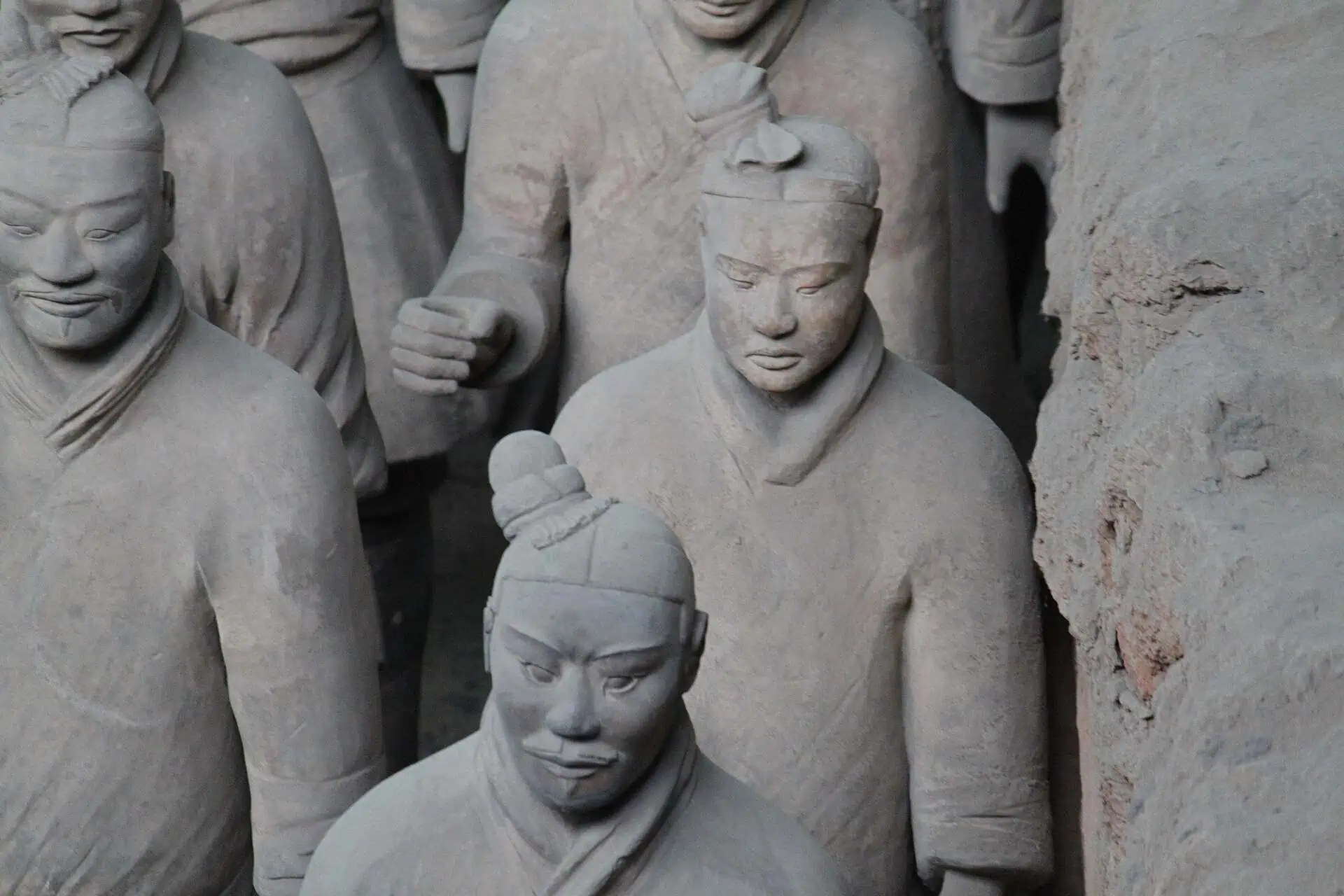
Terracotta Army
8,000 life-sized soldiers buried for China's First Emperor — and still on guard 2,200 years later.
Learn more →
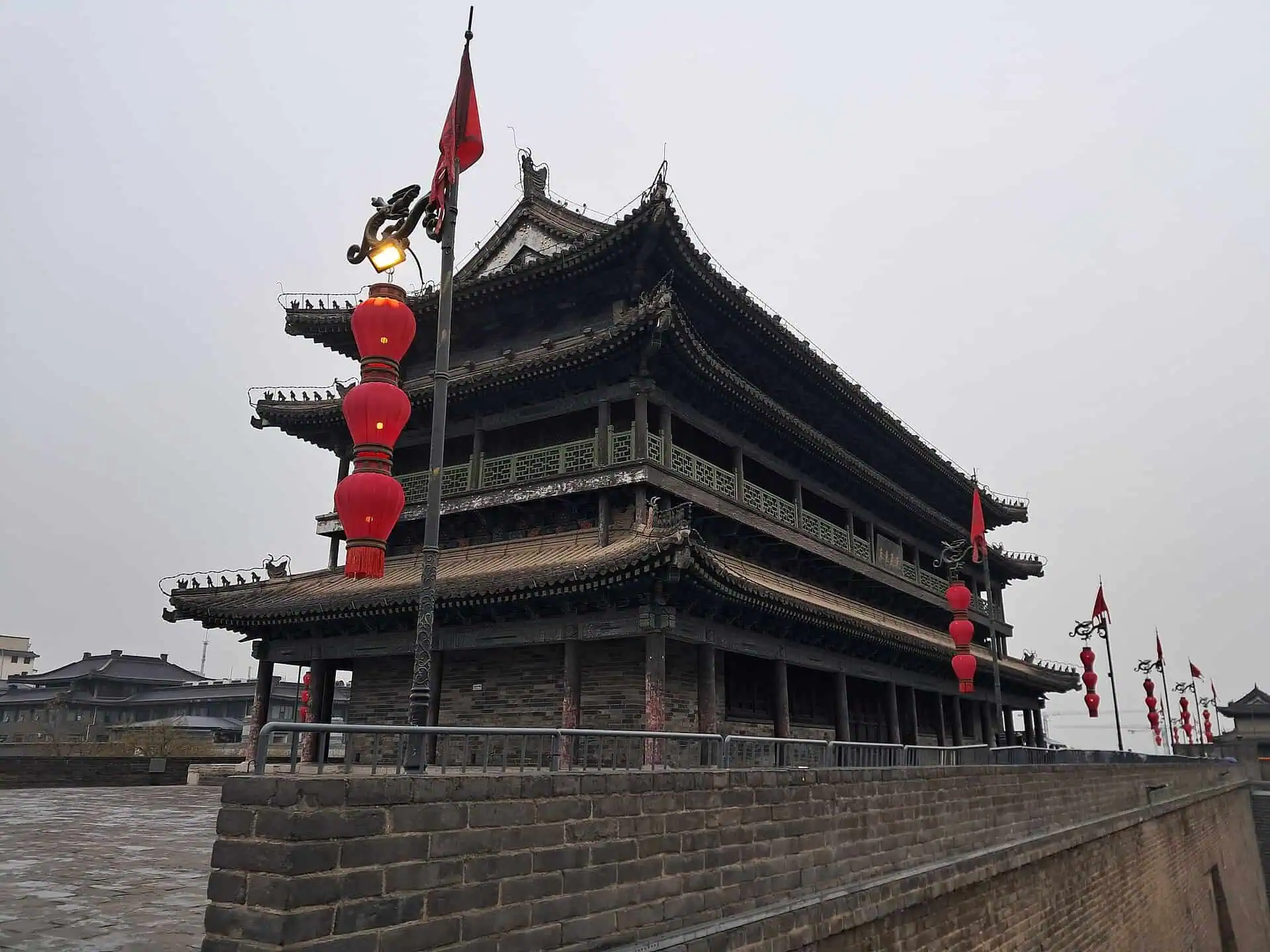
Xi'an City Wall
A 14-kilometer Ming dynasty rectangle you can cycle on top of — 650 years old and still the city's favorite commute.
Learn more →
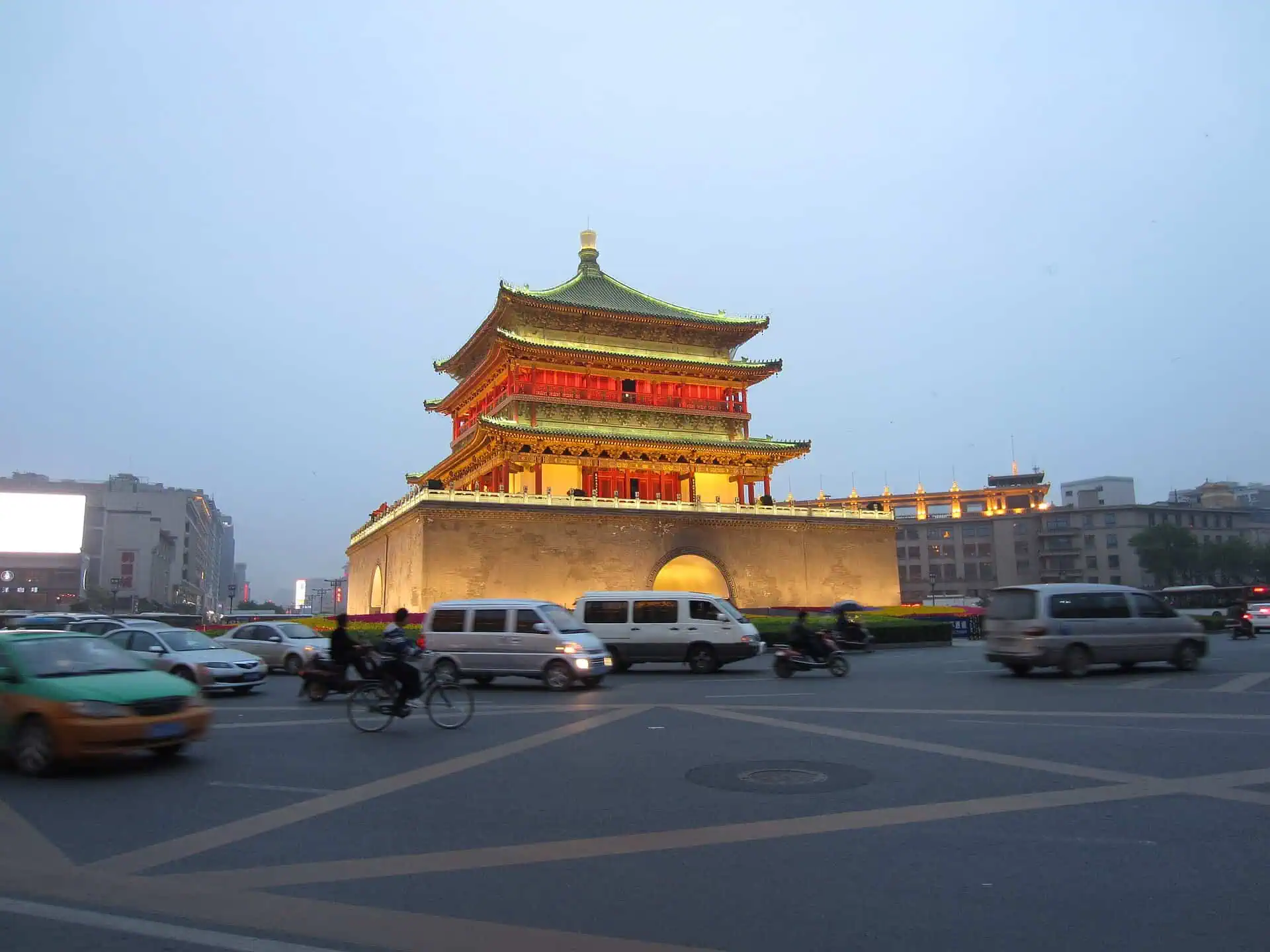
Xi'an Bell Tower
A Ming tower from 1384 at the dead center of the walled city — best admired at dusk, floodlit above the roundabout.
Learn more →
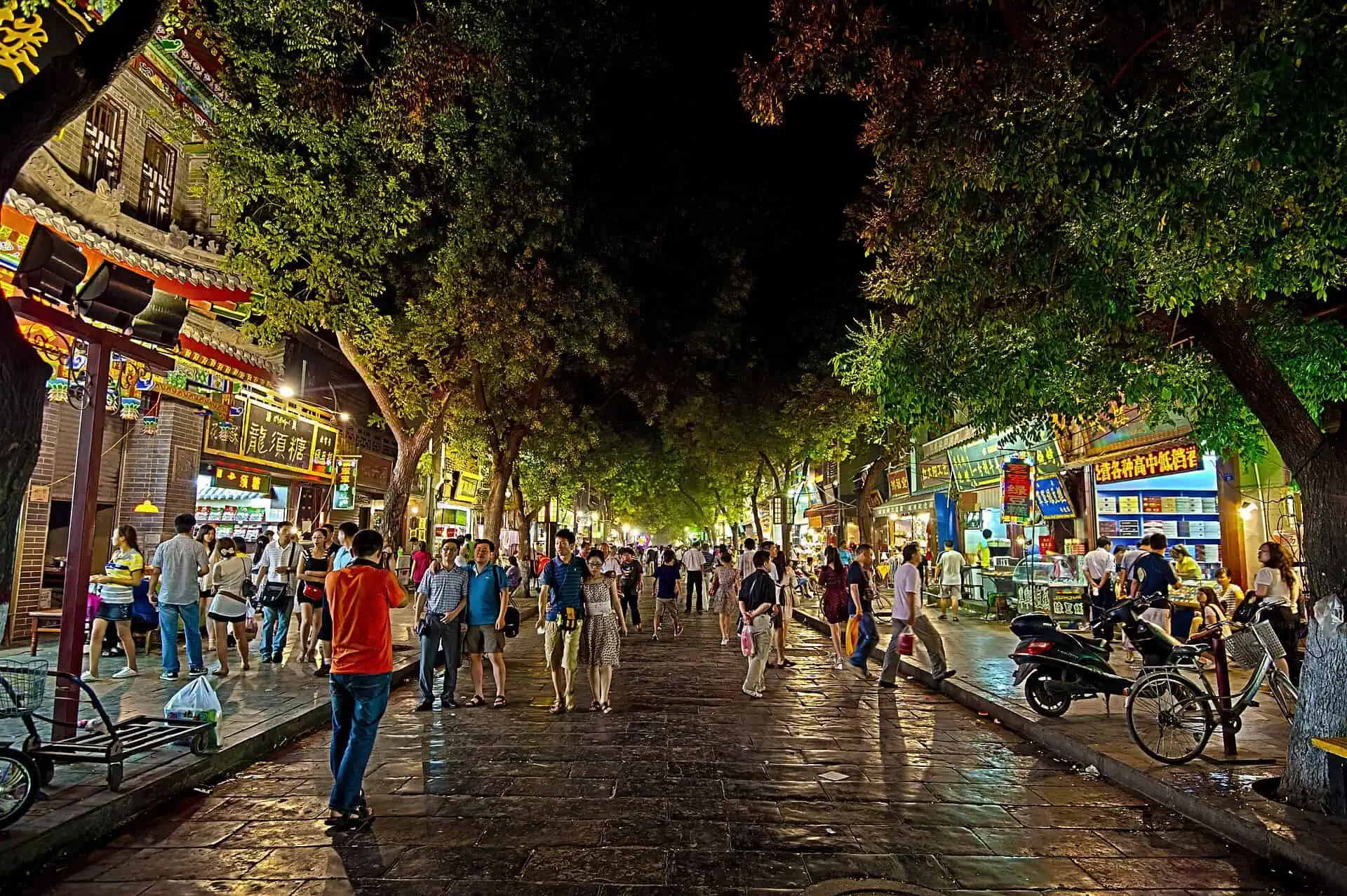
Muslim Quarter
Feeding Xi'an since the 700s — the loudest, smokiest, best-smelling streets of its Hui community.
Learn more →
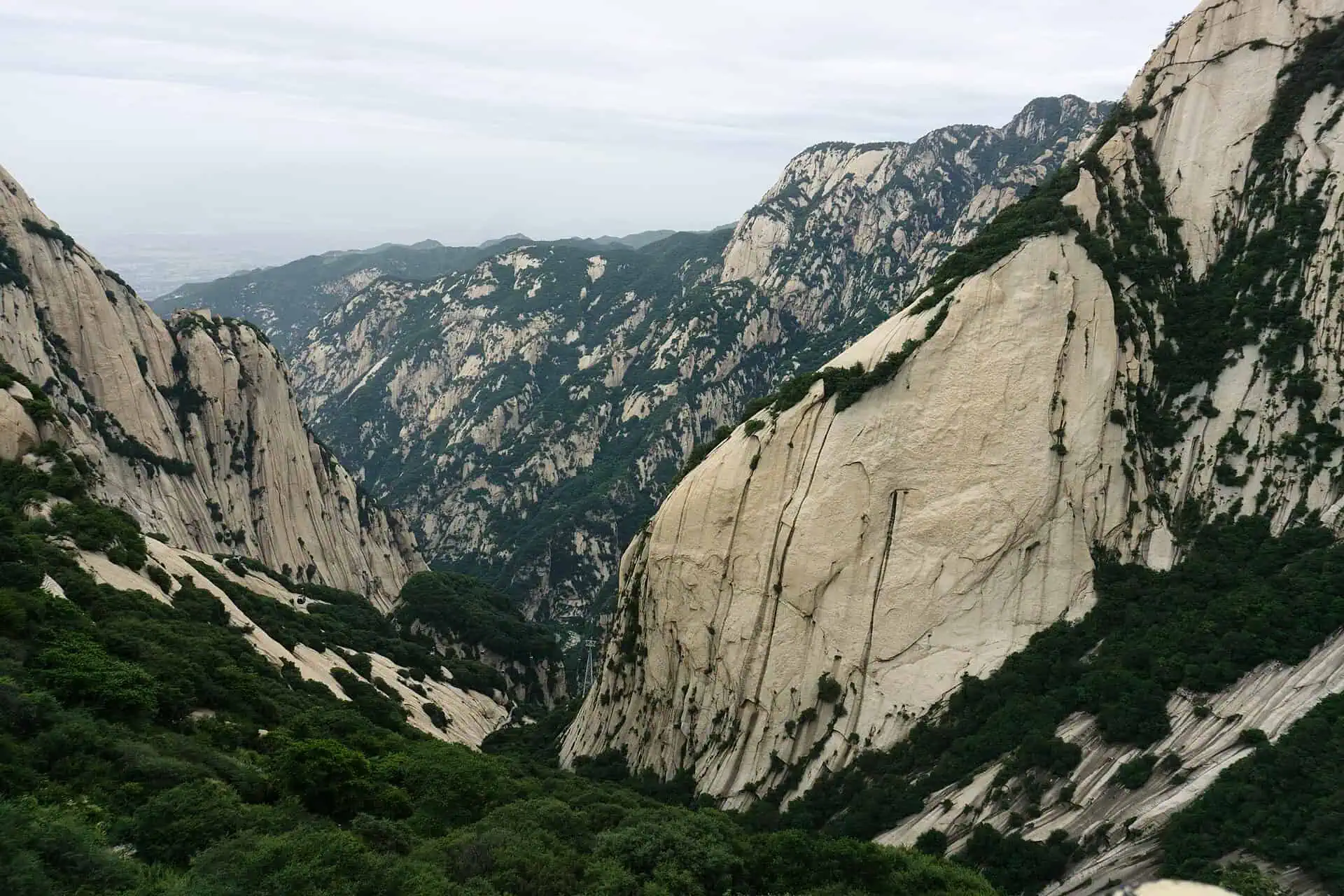
Mount Huashan Day Trip
Sacred for 2,000 years, infamous for one plank path — China's most dramatic granite peaks, an hour from Xi'an by bullet train.
Learn more →
Keep exploring
Visas & entry: do you need one?
Probably less paperwork than you fear — and two of the doors now have their own deep-dive packages: the 30-day visa-free entry (~50 countries) and the 240-hour transit (55 countries, including the US). This page is the router: work out which door is yours, then read its package.
The 240-hour visa-free transit, explained
Ten days in China without a visa, if you're just passing through — including Americans. The rules, the traps, and how to run it through Xi'an.
The 30-day visa-free entry: who gets in free
Around 50 countries can now enter China for up to 30 days with no visa at all — no transit logic, no onward-ticket games. Most of Europe, the UK, Canada, Australia and more. The US is not on the list.