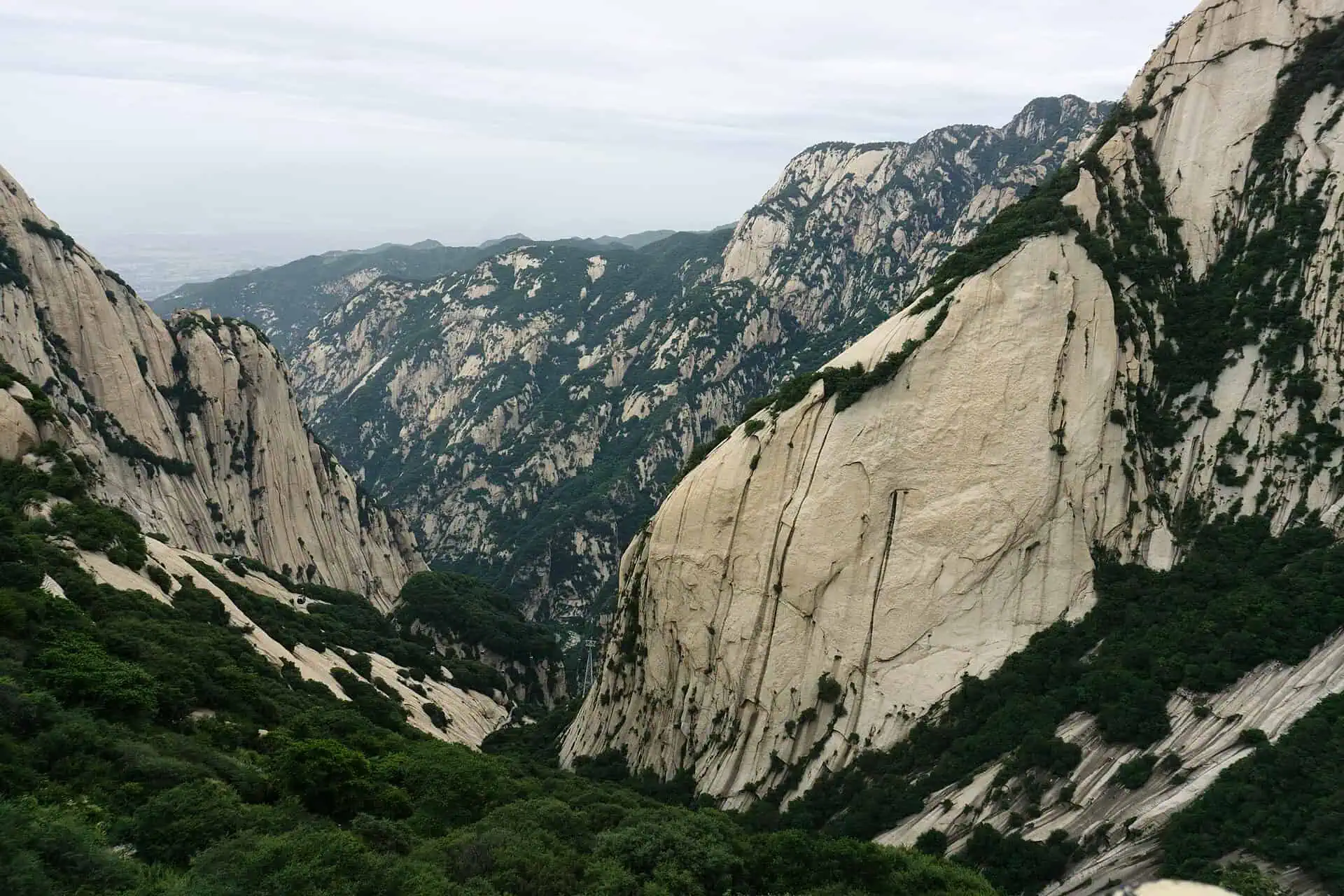
Mount Huashan Day Trip
Huà Shān
Sacred for 2,000 years, infamous for one plank path — China's most dramatic granite peaks, an hour from Xi'an by bullet train.
Entry
From ¥160
Hours
Mountain entry · Open around the clock
Time needed
8–10 hours
Pilgrims have been climbing Huashan's granite ridges for over 2,000 years, and it remains the most dramatic mountain you can reach as a day trip from Xi'an: five peaks, staircases cut into cliffs, and views that justify every step. It's also a logistics exercise — trains, shuttles, two competing cable cars — and it's genuinely not for anyone with vertigo or bad knees. Plan it properly and it's a highlight of the trip; wing it and it's an expensive queue.
What you're looking at
Mount Huashan (华山, Huà Shān) is the westernmost of China's Five Great Mountains (五岳) — five granite peaks arranged like petals (the name puns on "flower") rising straight out of the plain 120 km east of Xi'an. The South Peak tops out at 2,155 m. It has been a Taoist sacred mountain for over two thousand years, and temples cling to its ridges, some reachable only by chain-railed staircases notched into the rock.
The famous bits are the exposure: Canglong Ridge (苍龙岭, Cānglóng Lǐng), a knife-edge walkway with drops on both sides, and above all the plank walk (长空栈道, Chángkōng Zhàndào) — wooden boards bolted to a vertical cliff on the South Peak, which you cross clipped to a safety line. The viral photos are accurate: the ledge is real, the drop is real, and so is the harness. It costs roughly ¥30, queues build by midday, and it closes the moment weather turns. It also runs on a minimum-two rule — staff won't send a lone hiker out on the boards, so solo travelers end up buddying up with strangers at the queue (which is half the "I survived Huashan" stories you'll read online). Honest rule: if you're asking yourself whether you can handle it, skip it — the main ridgeline route already delivers plenty of vertigo.
Choosing your route
Two cable cars serve the mountain, and they are not interchangeable — their base stations are valleys apart, so you commit when you buy your shuttle ticket.
- West Peak cable car (西峰索道, Xīfēng Suǒdào): the longer, steeper, more spectacular ride — about 18 minutes up a cliff face to just below the West Peak. ¥140 one-way. Lands you in the heart of the high peaks.
- North Peak cable car (北峰索道, Běifēng Suǒdào): shorter and cheaper (¥80 one-way), but the North Peak (1,614 m) sits alone — reaching the other peaks means climbing Canglong Ridge, the steepest sustained section on the mountain.
The routes that make sense:
- Classic: West up, North down. Cable car to the West Peak, then walk South Peak (summit and plank walk), East Peak and Middle Peak, and descend to the North cable car — 5–6 hours on the mountain, mostly downhill or along ridges. Total mountain cost runs about ¥460 (¥160 entry + ¥140 + ¥80 + shuttle buses) — check the official 华山景区 WeChat account for current prices.
- Easy: West up, West down. Highest scenery, least climbing, pricier cable cars (¥280 round). The right call for anyone unsure about knees.
- Hardcore: hike up from Yuquan Temple (玉泉院, Yùquán Yuàn) — 4–6 hours of stone stairs. Traditional for sunrise (start around 22:00), brutal on the way down. Take a cable car down; your knees will thank you.
Shuttle buses from the visitor center to each cable car base are mandatory (no walking in) and cost roughly ¥20–40 each way depending on the route.
Getting there
The train makes this day trip easy — everything else is sequencing.
- High-speed train: Xi'an North (西安北站) → Huashan North (华山北站) takes 30–40 minutes, about ¥55 in second class, with frequent departures from early morning. Book a few days ahead for weekends; our high-speed rail guide covers how booking and boarding work.
- Station to mountain: from Huashan North, shuttle buses and taxis run to the visitor center (游客中心) in 10–15 minutes. Use the official queue and ignore anyone offering "direct to the cable car" deals.
- A realistic day: 7:00–7:30 train out → 8:30 at the visitor center → cable car up by 9:30 → five to six hours on the peaks → descend by 15:30–16:30 → 17:00–18:00 train back. Trains run into the evening, so a missed connection is annoying, not fatal — but booking your return in advance is still smart.
- Documents: bring your passport — it's your ID for train tickets, mountain tickets and real-name checks throughout.
If a full mountain day feels like too much, the 3-day itinerary keeps Huashan optional and focuses on Xi'an itself.
Practical notes
- Budget for the day: roughly ¥460 in mountain costs (entry, two cable cars, shuttles) plus ~¥110 in train fares and food on top — call it ¥600 all-in per person. Prices shift; verify on the official 华山景区 WeChat account before booking.
- Wear real shoes. Grippy soles, not fashion sneakers. Cheap work gloves sold at the base are genuinely useful for the chain handrails.
- Carry water and snacks. Everything on the peaks is carried up and priced accordingly; 1.5 liters per person is a sane minimum.
- Weather rules the mountain. Cable cars and the plank walk stop for wind, rain, lightning and ice. Check the forecast the night before and have a backup day in your itinerary if you can — see our planning guides.
- When to skip it: winter (December–February) brings ice on the steps and closed routes — beautiful but genuinely hazardous unless you're experienced. Chinese public holidays mean one- to two-hour cable car queues. And anyone with vertigo, heart or knee problems should pick a gentler day.
- Stay connected: you'll want data for train apps and translation on the mountain — sort your SIM/eSIM and VPN before the day trip, and have mobile payments working for tickets and food.
Questions, answered
Can you visit Mount Huashan as a day trip from Xi'an?
Yes — it's the standard way to do it. The high-speed train from Xi'an North to Huashan North takes 30–40 minutes (~¥55), then a short shuttle to the visitor center. Leave around 7:00–7:30 and you can be back in Xi'an for dinner.
Which Huashan cable car should I take — West Peak or North Peak?
The classic route is West Peak up (¥140, spectacular ride into the high peaks) and North Peak down (¥80), giving 5–6 hours of mostly downhill ridge walking. West up / West down is the easier, pricier option. North up means climbing the steep Canglong Ridge first — only choose it on a budget and good legs.
Is the Mount Huashan plank walk dangerous?
It's a controlled attraction — you cross clipped to a safety line in a harness (about ¥30, paid on the mountain) — but the exposure is completely real and it closes in wind, rain or ice. If you have any doubt about heights, skip it; the main ridge route already has dramatic drops.
How much does a Mount Huashan day trip cost?
About ¥600 per person all-in: roughly ¥460 on the mountain (¥160 entry + West and North cable cars + shuttle buses), ~¥110 in return train fares, plus food. Check the official 华山景区 WeChat account for current ticket and cable car prices.
When should I NOT go to Mount Huashan?
Skip it in winter ice (Dec–Feb) unless experienced, on Chinese public holidays (1–2 hour cable car queues), in forecast storms, and entirely if you have vertigo, heart problems or bad knees — there are thousands of stone steps even with cable cars.
Do I need to book Mount Huashan tickets in advance?
Mountain entry can be bought on the day via the 华山景区 WeChat account or Trip.com, but book your train seats a few days ahead for weekends — Xi'an North to Huashan North sells out. Bring your passport; it functions as your ticket throughout.
Keep exploring
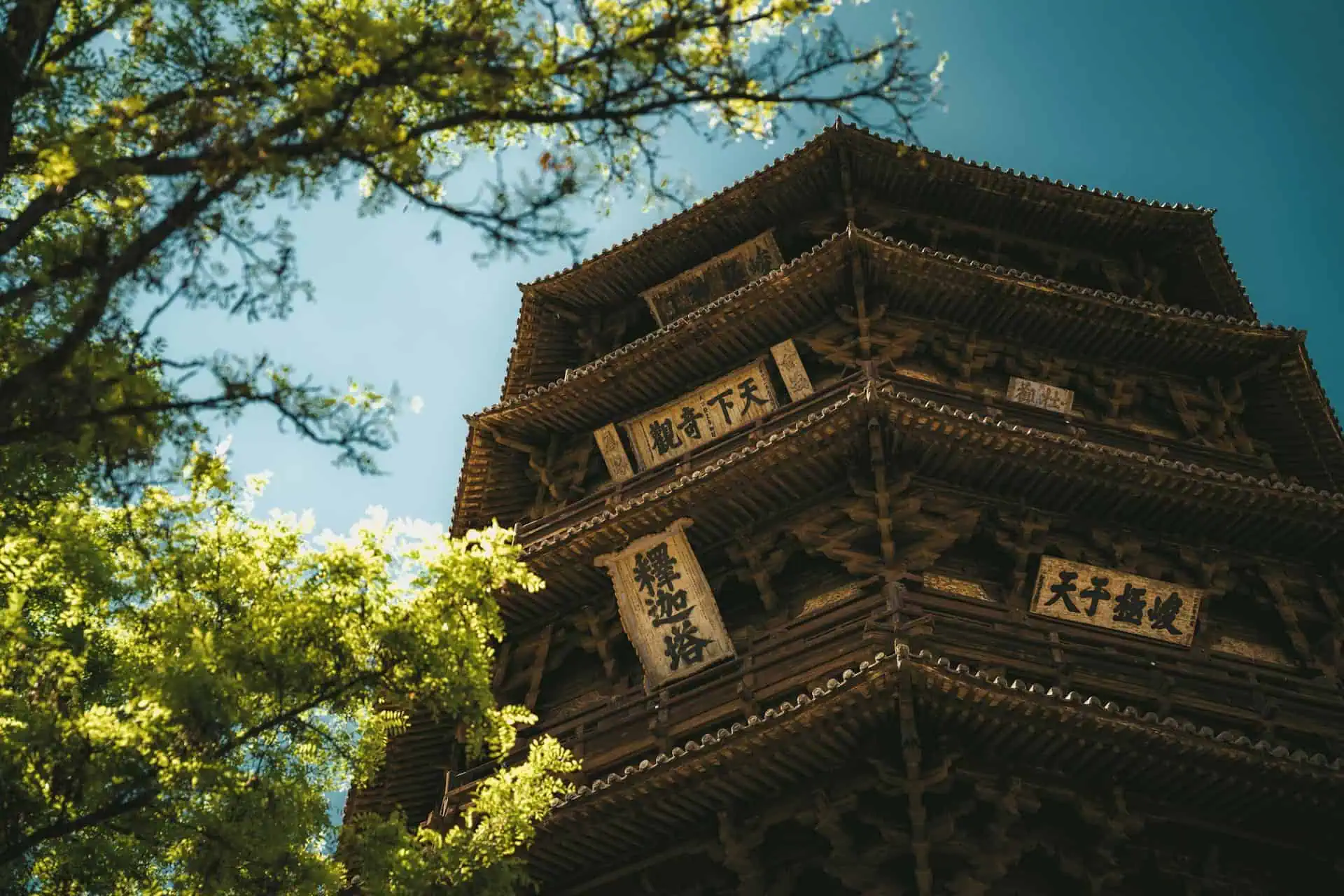
Famen Temple
A Buddha finger bone sealed in a Tang crypt in 874 AD, the treasure vault beside it, and one very large diamond — 120 km west of Xi'an.
Learn more →
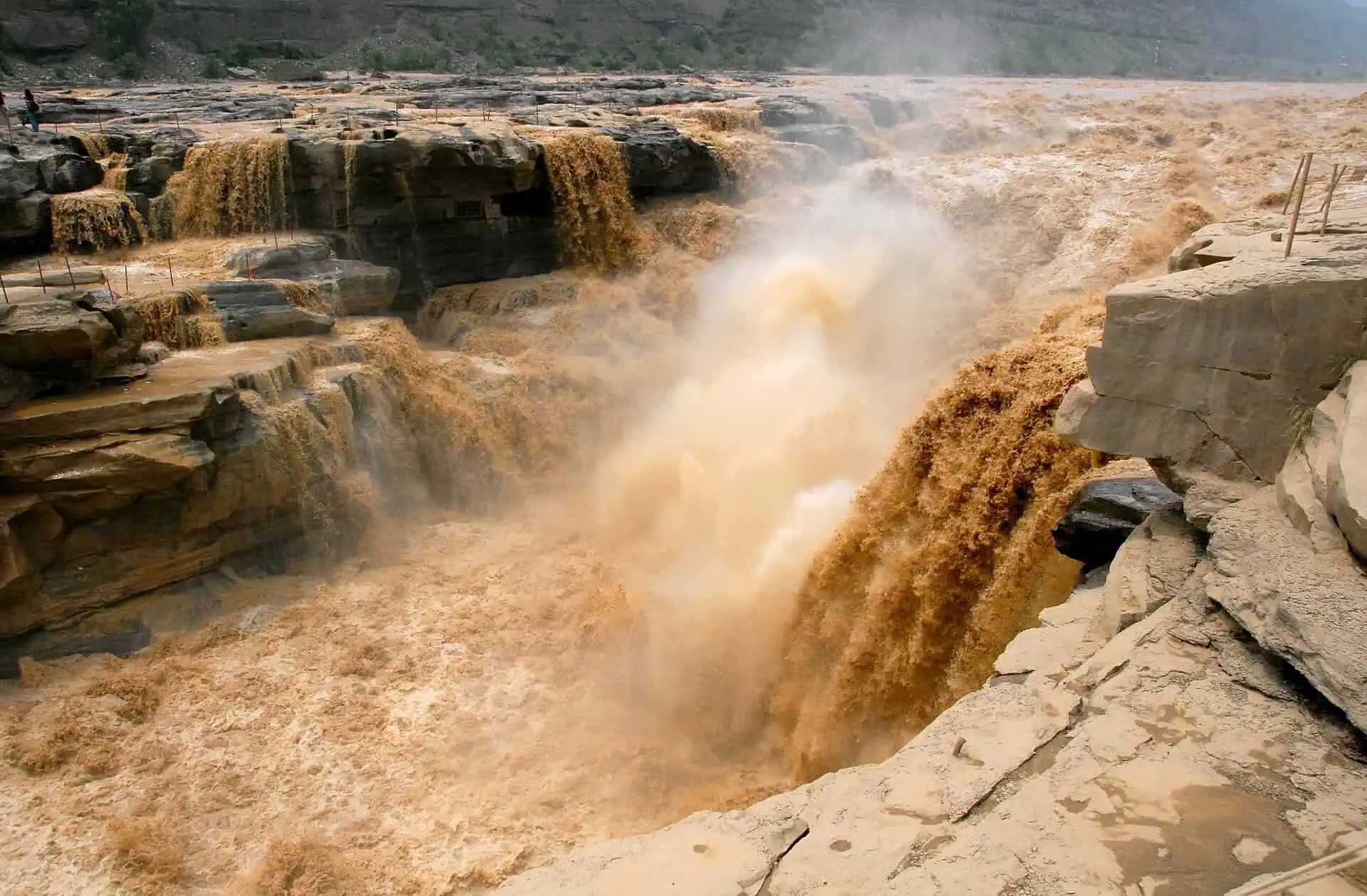
Hukou Waterfall
The Yellow River's temper, carved into rock since before any dynasty — the mightiest amber falls in China, four hours by road from Xi'an.
Learn more →
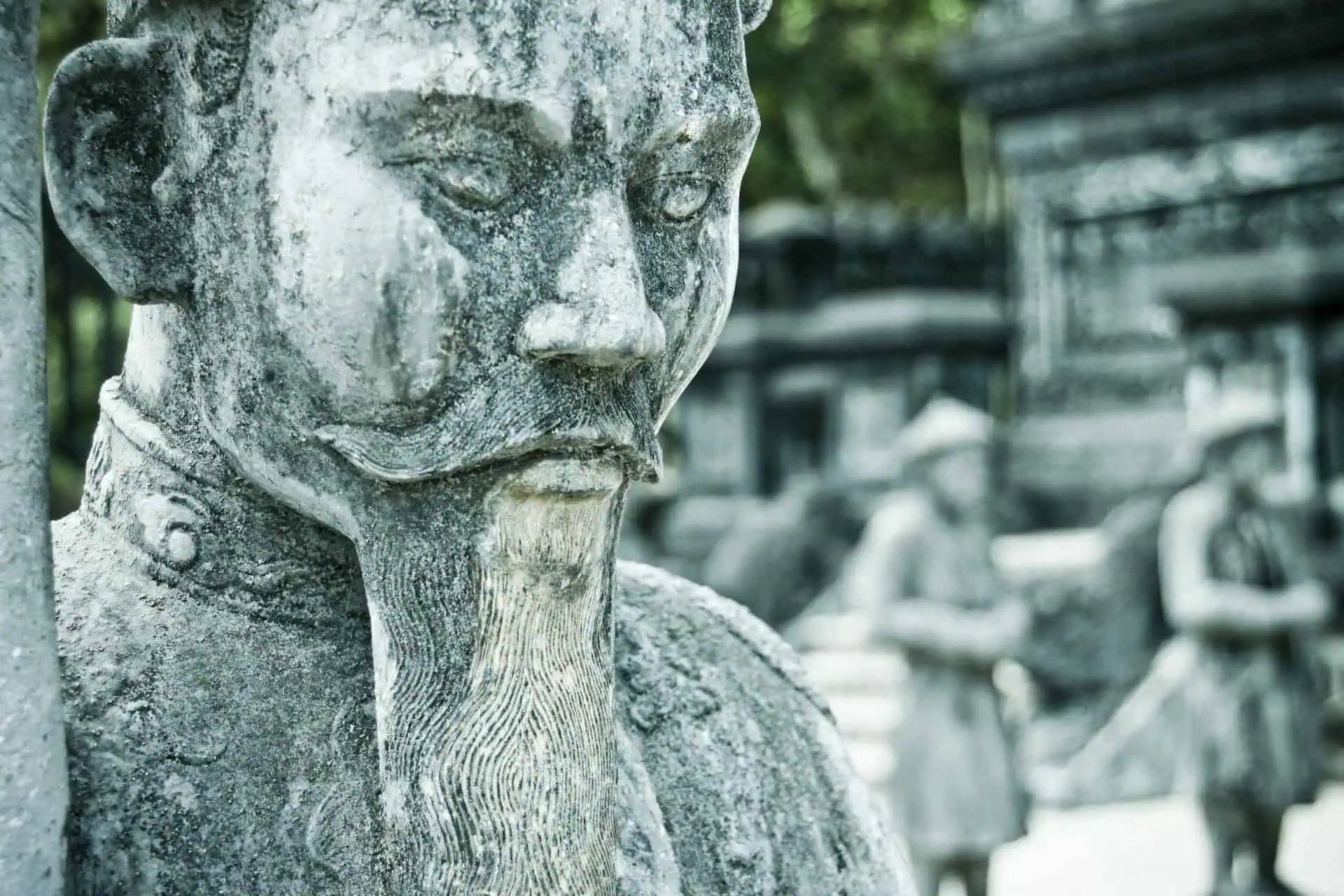
Qianling Mausoleum
Since 705 AD, China's only female emperor has slept beside her husband in a tomb no one has ever opened.
Learn more →
Related stories
The 30-day visa-free entry: who gets in free
Around 50 countries can now enter China for up to 30 days with no visa at all — no transit logic, no onward-ticket games. Most of Europe, the UK, Canada, Australia and more. The US is not on the list.
High-speed rail to Xi'an
China's bullet trains are the best way to reach Xi'an from Beijing, Shanghai or Chengdu — city center to city center at 300 km/h. Book on Trip.com or the official 12306 app with your passport, then scan that same passport at the gates: it is your ticket.
Xi'an vs Beijing: how to split your China trip
The classic first-timer's dilemma, settled honestly: Beijing has the Forbidden City and the Great Wall, Xi'an has the Terracotta Army and a wall you can cycle — and they're different enough that most trips should include both. Here's what each city actually gives you, what it costs, and how to divide a week between them.
Xi'an vs Luoyang: the two ancient capitals, compared honestly
Both cities claim thirteen dynasties, both are 1.5 hours apart by high-speed train, and they complement each other better than they compete: Xi'an has the Terracotta Army and Tang cosmopolitanism at full volume, Luoyang has the Longmen Grottoes and a slower, quieter, cheaper rhythm. Here's the category-by-category comparison, and how to fit both into one trip.
A short history of Xi'an (Chang'an)
Xi'an in Summer: museums, mountains & long evenings
Xi'an is one of China's 'Four Furnaces' — June to August is genuinely hot and humid, with heat waves pushing toward 40°C. The fix is a rhythm, not a destination: museums and malls at midday, sights and street food at dawn or after dark, and a mountain escape if you can. Here's how to plan a summer trip without melting.
Xi'an: group tour or DIY? Honest advice for first-timers
Xi'an is one of China's easiest cities to do yourself: a clean English-signed metro, tickets bookable on official apps, and every headline sight reachable without a guide. A group tour buys you transport, tickets and context — but the cheap ones add shopping stops and the Terracotta Army needs no explanation to move you. Here's when each makes sense, what a fair tour costs, and the pitfalls either way.