Riding the Xi'an metro: lines, fares and the airport line
Xi'an's metro is the spine of any visit — clean, bilingual, and within reach of nearly every sight, the airport and the Terracotta Army direction. Twelve lines are running as of 2026; in practice you'll lean on Line 2 through the centre, Line 14 to the airport and Line 9 out toward Lintong. Pay with the transit QR code in Alipay or WeChat and most rides cost ¥3–7.
8 min read · 6 sections
The short version
- Twelve lines run as of 2026; the ones you'll actually use are Line 2 (Bell Tower, City Wall, Xiaozhai), Lines 3/4 (Big Wild Goose Pagoda), Line 9 (Lintong/Huaqing Pool) and Line 14 (airport).
- Pay with the transit QR in Alipay (Transport/出行) or WeChat (乘车码) — tap in and out with the same app. Fares are distance-based, ¥2 to around ¥9; no day pass is worth buying.
- Hours are roughly 6:00–23:30, but the last train leaves the terminal before then — check your station's last-train time before a late night out.
- Every station entrance runs an X-ray bag scan and a liquids check; build in two extra minutes, especially at interchanges.
- Airport: Line 14 from XIY to Xi'an North in ~35 min (¥7–9). Terracotta Army: Line 9 to Huaqing Pool, then a short bus or DiDi.
The network at a glance
Xi'an's metro is the spine of any visit — clean, air-conditioned, bilingual, and within reach of almost every sight inside the city, plus the airport and the Terracotta Army direction. As of mid-2026, twelve lines are in service: 1, 2, 3, 4, 5, 6, 8, 9, 10, 14, 15 and 16. The network has expanded fast enough that any printed map more than a year old is missing something, so use the live map inside Alipay, WeChat, or one of the maps that actually works in China.
You won't ride all twelve. The lines that matter for sightseeing are:
- Line 2 (red) — the tourist spine, running north–south through Xi'an North railway station, the Bell Tower (Zhonglou), the City Wall's south gate (Yongningmen) and Xiaozhai by the museums.
- Lines 3 and 4 — the east–west cross-town lines; between them they serve the Big Wild Goose Pagoda (Dayanta) and the Qujiang museum quarter.
- Line 9 — runs east out to Lintong and Huaqing Pool, the budget route toward the Terracotta Army.
- Line 14 — the airport line, straight from Xi'an Xianyang Airport to Xi'an North.
For how the metro fits alongside DiDi, scan-to-ride bikes and the high-speed rail, see the getting around overview.
Fares and how to pay
Fares are distance-based: ¥2 for the shortest hops, rising to around ¥9 for cross-town and airport-length rides, with most tourist trips landing at ¥3–7. You tap in at the entry gate and tap out at the destination, and the system charges by the distance travelled — so you must use the same app or token to enter and exit, or the exit gate won't open and staff send you to the help desk.
The way nearly everyone pays is the transit QR code inside Alipay or WeChat:
- In Alipay, open the app → Transport (出行) → select Xi'an, and a QR code appears. In WeChat, search the mini-program 乘车码 („chengche ma”, ride code) and pick Xi'an.
- Hold the QR over the gate scanner at entry and again at exit. The fare debits the card linked to your account automatically.
- Use the same app both ways. Mixing an Alipay tap-in with a WeChat tap-out is the most common way foreigners get stuck at the exit gate.
If you'd rather not use your phone, every station has ticket machines with an English button that sell single-journey tokens — pick your destination station, pay by Alipay/WeChat QR or cash, tap the token to enter and drop it in the slot to exit. There is no day pass worth buying at these prices; ten rides cost less than a single London Underground ticket.
Hours, frequency and when to avoid it
Trains run roughly 6:00 to 23:30, but the exact first and last departure depends on the line and the station. A 23:15 entry at an outlying station can already be too late, because the last train left the terminal earlier. If you're counting on a late train back from dinner or the fountain show at the Big Wild Goose Pagoda, check the last-train time for your specific station on the platform map or in the transit mini-program before you travel.
Headways are tight — typically 2–5 minutes through the day and shorter at peak — so you rarely wait long. Crowding is the real variable. Rush hour runs roughly 07:30–09:00 and 17:30–19:30, and on Lines 2 and 1 through the centre the trains run shoulder-to-shoulder with bags held high. Travel mid-morning or mid-afternoon if you can; if you can't, expect to let one or two full trains pass. Luggage the size of a checked bag is allowed but unpopular at rush hour — for airport runs with big bags, a DiDi is the kinder choice.
Security at every entrance
Every Xi'an metro station runs a bag check at the entrance — all bags go through an X-ray scanner, with a walk-through lane beside it. Build an extra two minutes into tight connections, because queues stack up at the busy interchange stations at peak times.
Two specifics catch tourists off guard:
- Liquids get checked. Staff may ask you to take a sip of any drink you're carrying, or run it through a scanner, to confirm it isn't flammable. It's quick and routine, not a search — a sealed bottle from a convenience store sails through.
- Some items are banned outright — aerosols and some pressurised cans, large lighters, certain chemicals, and very large knives (yes, including that replica sword you bought at the Terracotta Army). If you've been shopping, expect to be flagged.
Security is consistent across all twelve lines; there is no station where you can skip it.
Key stations for tourists
Most of what you came to Xi'an to see sits within a few stops of three corridors:
- Bell Tower / Zhonglou (钟楼) — Line 2. The dead centre of the old city, with the Muslim Quarter a five-minute walk north and the Drum Tower right beside it. The Line 2 station is the one you'll use most.
- Yongningmen (永宁门) — Line 2. The south gate of the City Wall and the easiest access for walking or cycling the ramparts.
- Xiaozhai (小寨) — Lines 2/3. The drop-off for the Shaanxi History Museum a few minutes' walk north, plus good eating streets nearby.
- Dayanta (大雁塔) — Lines 3/4. Serves the Big Wild Goose Pagoda, its fountain square and the Qujiang museum and park district.
- Xi'an North / Xi'an Bei (西安北) — Lines 2/4/14. Where high-speed trains arrive and where Line 14 from the airport terminates.
- Huaqing Pool / Huaqing Chi (华清池) — Line 9. The station for Huaqing Palace and the practical jumping-off point for the Terracotta Army.
Signage throughout is bilingual (Chinese and English), platform screens and in-train announcements give the next stop in both languages, and station names are romanised in pinyin on every map. You won't get lost for lack of English.
Line 14 to the airport, and Line 9 to the warriors
The airport — Line 14. Xi'an Xianyang International Airport (XIY) sits on Line 14, with stations serving T1/T2/T3 (and the newer T5). The train runs east to Xi'an North railway station — about 35 minutes — where you transfer to Line 2 for the Bell Tower and city centre, or Line 4 toward the Big Wild Goose Pagoda. The airport-to-city fare lands around ¥7–9. Trains follow the same ~6:00–23:30 envelope, but verify the last departure against your flight: late landings can fall in the gap after the last train, in which case a DiDi or a licensed airport taxi is the fallback. A DiDi to the centre runs roughly ¥100–150 door-to-door — see the DiDi guide for setup.
The Terracotta Army — Line 9. The warriors sit out in Lintong, roughly 40 km east, and Line 9 is the budget spine out there. Ride to Huaqing Pool (华清池) station, then either hop a local bus (Lintong 602 or 613, a couple of yuan) or a short DiDi for the final stretch to the museum. Line 9 continues one more stop to Qinling West (秦陵西), nearer the Qin Shi Huang Mausoleum site, but Huaqing Pool is the standard transfer point and the one tour groups use. Total transit time from the city centre is about 1–1.5 hours each way — pair it with a morning at Huaqing Palace to make a day of it.
Questions, answered
Does Xi'an have a metro, and which lines are open?
Yes, a large one. As of 2026, twelve lines are running (1, 2, 3, 4, 5, 6, 8, 9, 10, 14, 15 and 16), covering the city center, the airport on Line 14, and the Lintong direction toward the Terracotta Army on Line 9. Signage, platform screens and in-train announcements are bilingual in Mandarin and English.
How do tourists pay for the Xi'an metro?
The transit QR code inside Alipay or WeChat. Open Alipay's Transport (出行) section or search WeChat for 乘车码, select Xi'an, and hold the QR over the gate scanner on entry and exit — the fare debits your linked card automatically. You must tap in and out with the same app. Single-journey tokens from the station machines (English interface, QR or cash) are the backup.
How much does the Xi'an metro cost?
Fares are distance-based: ¥2 for the shortest hops, around ¥9 for cross-town or airport-length rides, and most tourist trips land at ¥3–7. There's no day pass worth buying at these prices — ten metro rides cost less than a single London Underground ticket.
What are the metro's operating hours?
Roughly 6:00 to 23:30, but the last train leaves the terminal before 23:30, so an outlying station can close to entries as early as 23:00. Before a late night out, check the last-train time for your specific station in the Alipay or WeChat transit mini-program rather than trusting the headline closing time.
Can I take the metro to the Terracotta Army?
Not door-to-door. Take Line 9 east to Huaqing Pool (华清池) station, then a short local bus (Lintong 602 or 613, a couple of yuan) or a DiDi for the final stretch to the museum. Line 9 continues one stop to Qinling West nearer the mausoleum, but Huaqing Pool is the standard transfer. The whole run from central Xi'an is about 1–1.5 hours each way.
Does the metro go to Xi'an Xianyang Airport?
Yes. Line 14 runs from the airport terminals (T1/T2/T3 and T5) to Xi'an North railway station in about 35 minutes — fare around ¥7–9 — where you transfer to Line 2 for the Bell Tower and city center. Trains stop after roughly 23:00–23:30; if you land late, fall back to a DiDi or official airport taxi, about ¥100–150 to the center.
Show your phone · tap to play
All emergency cards安检在哪里?
Ānjiǎn zài nǎlǐ?
Where is the security check?
末班车是几点?
Mòbānchē shì jǐ diǎn?
What time is the last train?
请带我去机场。
Qǐng dài wǒ qù jīchǎng.
Take me to the airport, please.
几号检票口?
Jǐ hào jiǎnpiàokǒu?
Which ticket gate?
行李寄存处在哪里?
Xínglǐ jìcúnchù zài nǎlǐ?
Where is the left-luggage counter?
车牌号是多少?
Chēpái hào shì duōshao?
What's the license-plate number?
Places in this story
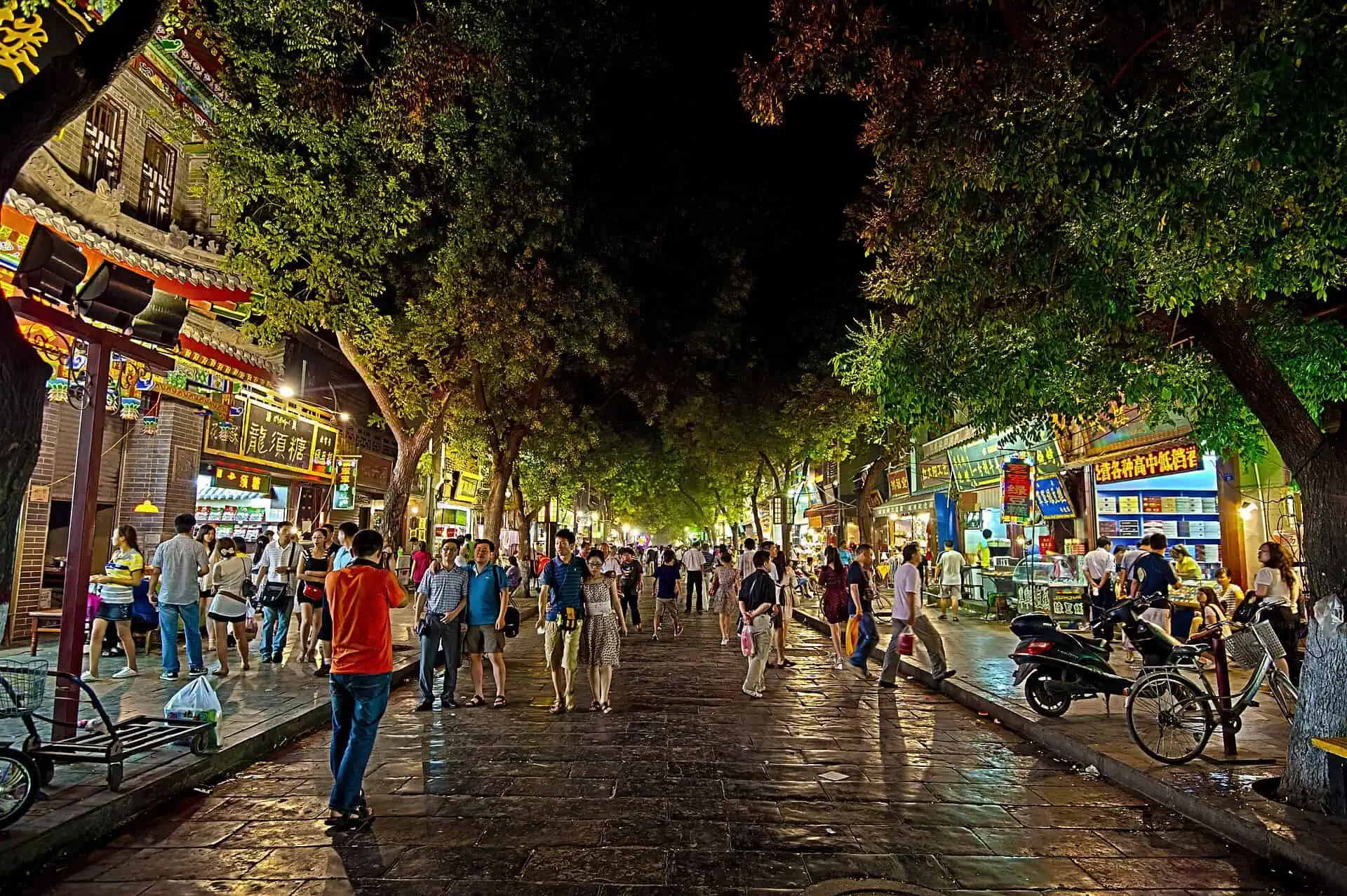
Muslim Quarter
Feeding Xi'an since the 700s — the loudest, smokiest, best-smelling streets of its Hui community.
Learn more →
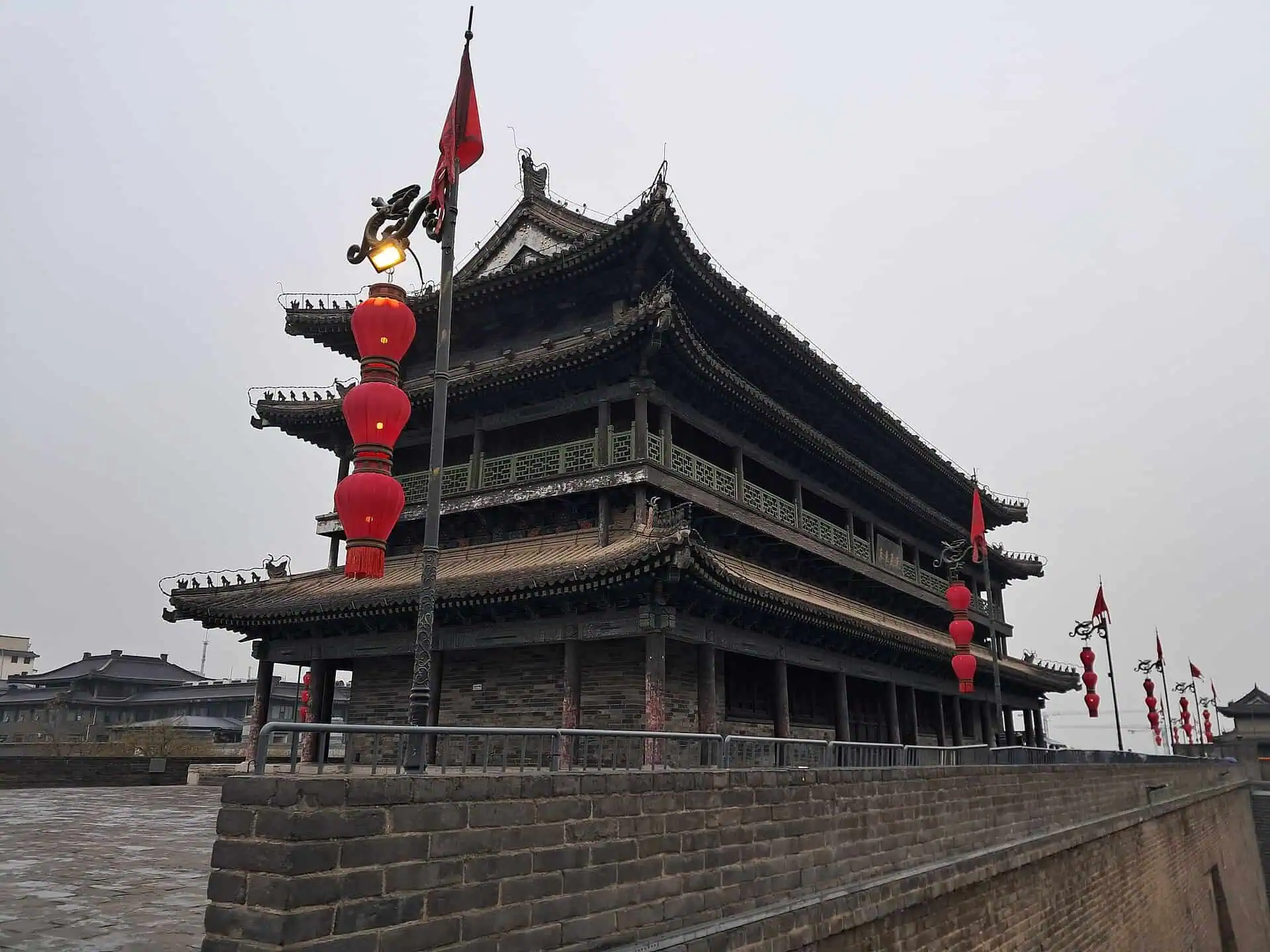
Xi'an City Wall
A 14-kilometer Ming dynasty rectangle you can cycle on top of — 650 years old and still the city's favorite commute.
Learn more →
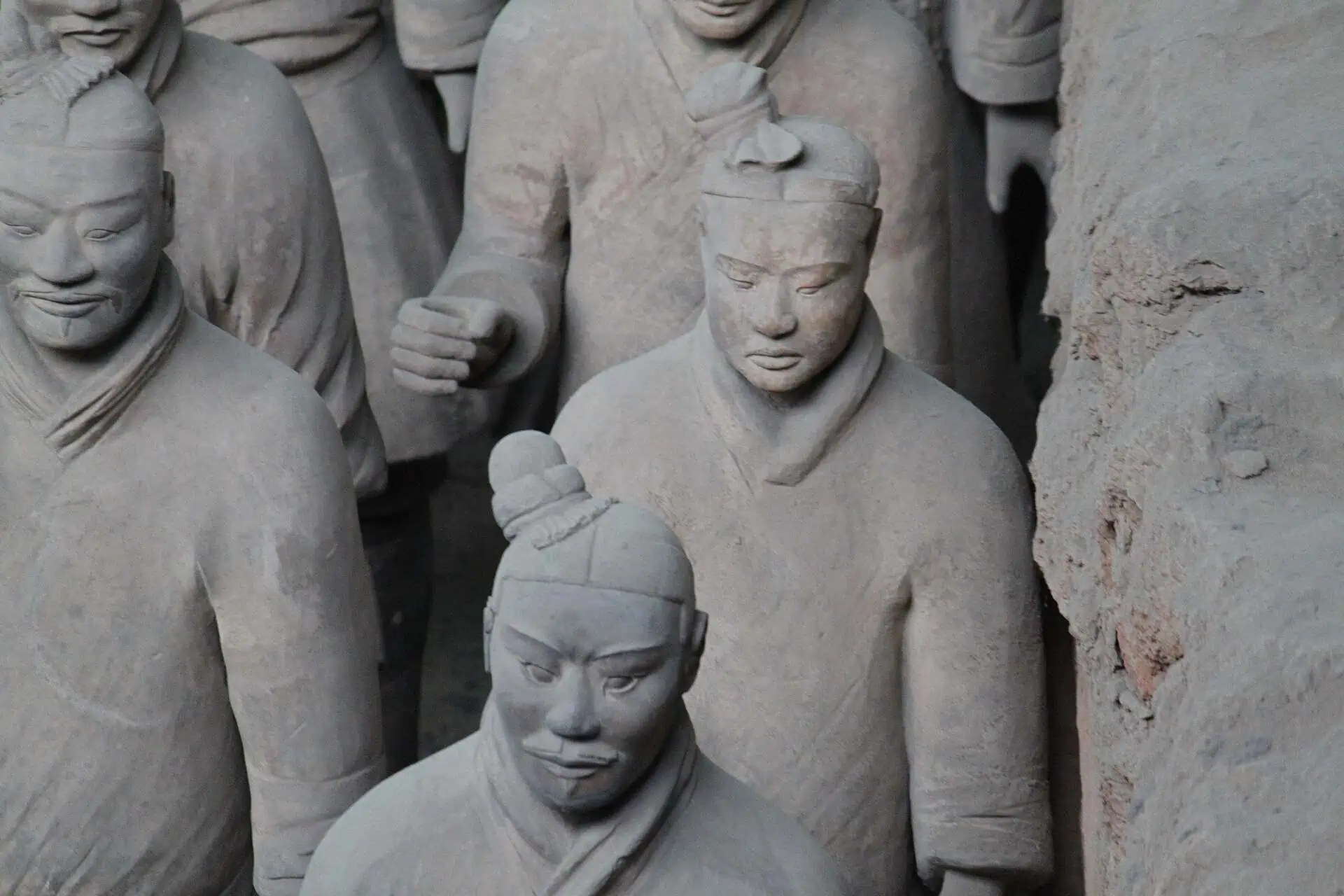
Terracotta Army
8,000 life-sized soldiers buried for China's First Emperor — and still on guard 2,200 years later.
Learn more →
Keep exploring
Visas & entry: do you need one?
Probably less paperwork than you fear — and two of the doors now have their own deep-dive packages: the 30-day visa-free entry (~50 countries) and the 240-hour transit (55 countries, including the US). This page is the router: work out which door is yours, then read its package.
The 240-hour visa-free transit, explained
Ten days in China without a visa, if you're just passing through — including Americans. The rules, the traps, and how to run it through Xi'an.
The 30-day visa-free entry: who gets in free
Around 50 countries can now enter China for up to 30 days with no visa at all — no transit logic, no onward-ticket games. Most of Europe, the UK, Canada, Australia and more. The US is not on the list.