Where to stay in Xi'an: the honest area-by-area guide
Xi'an is a compact city with a decisive metro, so the choice of base matters more for mood than logistics. For most first-timers the answer is inside the City Wall near the Bell Tower; below is every realistic alternative, with the character, the crowd it suits and what a room actually costs in each.
8 min read · 8 sections
The short version
- First visit? Stay inside the City Wall near the Bell Tower — walkable to the wall, the towers and the Muslim Quarter, with metro Line 2 at your feet.
- South Gate (Yongningmen) is the upscale version: wall views, cocktail bars, the city's best hotels.
- Qujiang, by the Big Wild Goose Pagoda, suits families — parks, evening fountain shows, big modern rooms.
- Xiaozhai is the local-buzz budget option on the metro; Xi'an North is for early trains only; Lintong is for hot springs only.
- Typical bands: international five-stars ¥800–1,600; local high-end ¥500–900; mid-range chains ¥300–500; guesthouses ¥100–300.
- Prices spike hard during Golden Week and May Day — book those dates early, with free cancellation.
How to choose
Three questions settle it. Is this your first visit? Stay inside the wall — everything you came for clusters there. Do you care more about evenings or mornings? The pagoda districts to the south own the nights; the wall area owns the wandering. Are you catching a 7:00 train or soaking in a hot spring? Only then do the two outlier districts below make sense.
Whatever you pick, two rules apply city-wide. Every hotel in China registers foreign guests against a passport at check-in — have it ready — and virtually all mid-range-and-up hotels take foreigners without issue, while a minority of small guesthouses still don't, so filter for "accepts foreign guests" on budget bookings. And don't fixate on star ratings: in Xi'an the gap between an international five-star and a good local business hotel is mostly the lobby, not the location.
Inside the City Wall: the Bell Tower area
The default answer, and the right one for most people. The rectangle inside the Ming wall holds the Bell Tower at its crossroads, the Muslim Quarter's food lanes in its northwest corner, and metro Line 2 running straight through it — the same line that goes directly to Xi'an North station for your onward train. On a first visit you'll do the wall, the towers and the Quarter repeatedly; from here, all three are walks, not journeys.
Who it suits: first-timers, short stays, anyone who wants to graze late and wander home. The trade-off: it's the commercial heart of the city, so the main arteries are busy and bright rather than charming — the character hides in the back lanes near Shuyuanmen (书院门, Shūyuànmén).
Hotel tiers and bands: the blocks around the Bell Tower are mid-range territory — reliable Chinese business chains and a few international mid-market brands at roughly ¥300–500. Lanes toward the southwest hide courtyard guesthouses and hostels at ¥100–300. The area's full profile is on our Inside the City Wall area page.
South Gate (Yongningmen): the upscale wall view
The south side of the wall, around Yongningmen (永宁门, Yǒngníngmén), is where Xi'an keeps its polish. The gate itself is the City Wall's grandest entrance and the stage for the nightly light-up, the bar and restaurant strips along the moat stay lively without turning rowdy, and Yongningmen station sits on metro Line 2. You still walk to everything inside the wall — you just come home to somewhere quieter and better-looking.
Who it suits: couples, return visitors, anyone who wants the scenic version of the old city and will pay a moderate premium for it.
Hotel tiers and bands: this is the city's flagship corridor — international five-stars and high-end independents at roughly ¥800–1,600 for a standard room, with wall-view rooms at the top of that band. A rung down, local four-stars and boutique hotels sit around ¥500–900. Book ahead for October; the wall-view rooms go first.
Qujiang and the Big Wild Goose Pagoda: families and night walks
South of the wall, the Qujiang (曲江, Qūjiāng) district around the Big Wild Goose Pagoda (大雁塔, Dàyàntǎ) is Xi'an's modern showcase: wide pavements, parks, the evening fountain show on the pagoda's north square, and the pedestrian spectacle of Grand Tang Ever Bright City a short walk south. It's farther from the wall (metro Line 4 and buses cover it), but everything here was built in the last two decades, so the rooms are bigger and newer than anything inside the old city.
Who it suits: families (space, parks, stroller-friendly evenings), night owls, and anyone pairing the pagoda with the Shaanxi History Museum — it's walkable from here.
Hotel tiers and bands: the district holds several international five-stars at roughly ¥800–1,600, strong local high-end hotels at ¥500–900, and a solid stock of mid-range chains at ¥300–500. More on the area at our Qujiang area page.
Xiaozhai: local commerce on the metro
Xiaozhai (小寨, Xiǎozhài), a couple of stops south of the wall where Lines 2 and 3 cross, is where ordinary Xi'an shops: giant malls, student crowds from the nearby universities, noodle shops that don't see many foreigners. There's no sightseeing in the district itself, but the Shaanxi History Museum sits on its edge, and Line 2 puts the Bell Tower ten minutes away.
Who it suits: budget-conscious travelers who'd rather be in real city life than the postcard version, and anyone prioritizing metro connectivity over atmosphere.
Hotel tiers and bands: mostly local business hotels and mid-range chains at ¥250–450, plus hostels from around ¥100. International five-stars don't bother with this district — which is precisely the point.
Xi'an North station area: early trains only
Be honest with yourself about this one. Xi'an North (西安北站), the high-speed rail terminal, sits about 13 km north of the Bell Tower. The station area is a new-town of wide roads and generic towers with nothing to see, nowhere to stroll, and an evening that ends at your hotel door. Metro Line 2 connects it to the center in about 30 minutes — which means staying here doesn't isolate you, it just adds an hour of commuting to every day of sightseeing.
Who it suits: exactly one person — the traveler with a 7:00 train to Beijing, Chengdu or Pingyao-bound connections, or a midnight arrival who doesn't want a late taxi. Everyone else should sleep in the city.
Hotel tiers and bands: interchangeable business hotels at ¥250–500, all of them used to early check-outs.
Lintong: the hot-spring exception
Lintong (临潼, Líntóng), the district 35 km east around the Terracotta Army and Huaqing Palace, is normally a day trip — but it has one legitimate reason to sleep out here: the hot springs. The same geothermal water that drew Tang emperors to Huaqing feeds a strip of resort hotels along the mountain's foot, and a night here buys you two things the day-trippers can't have: a soak after the crowds leave, and a 15-minute head start on everyone when the Army's gates open at 8:30.
Who it suits: travelers treating the warriors as the trip's centerpiece, couples on a slow itinerary, winter visitors (a hot spring in January is the best version of Lintong). Not for anyone who wants Xi'an's evenings — the city is an hour away.
Hotel tiers and bands: hot-spring resort hotels run roughly ¥600–1,500 depending on how much of the spa is in the room; simpler local hotels near the sights sit at ¥250–450. Details on our Lintong area page.
Booking notes that apply everywhere
- Passport at check-in. Every hotel registers foreign guests with the police against your passport — it's the law, not a policy, and it takes five minutes.
- "Accepts foreign guests" still matters at the budget end. Chains and mid-range hotels are fine by default; a minority of small guesthouses aren't set up for foreign registration. International platforms let you filter for it — do so below the ¥300 mark.
- Holiday pricing is real. Golden Week (October 1–7) and the May Day holiday can double the bands above and empty the mid-range entirely — see public holidays and crowds. Book early with free cancellation and re-check prices a month out.
- Factor the room into your budget honestly. Xi'an is cheap by global city standards; our trip cost guide shows how accommodation fits the daily total, and getting around explains why a metro-adjacent address beats a pretty one.
Questions, answered
What is the best area to stay in Xi'an for first-time visitors?
Inside the City Wall near the Bell Tower. The wall, the Bell and Drum Towers and the Muslim Quarter are all walkable, metro Line 2 runs straight through the district to Xi'an North station, and mid-range rooms run about ¥300–500. The South Gate (Yongningmen) area is the upscale alternative on the same footprint.
How much do hotels cost in Xi'an?
Typical bands: international five-stars ¥800–1,600 per night, local high-end hotels ¥500–900, mid-range chains ¥300–500, guesthouses and hostels ¥100–300. Prices can double during Golden Week (early October) and the May Day holiday, and drop to their lowest in winter.
Should I stay near the Terracotta Army?
Only for one reason: the Lintong hot-spring resorts near Huaqing Palace, roughly ¥600–1,500 a night. A night there gets you into the Terracotta Army at opening time and an evening soak, but it's an hour from everything else in Xi'an — treat it as a one-night splurge, not a base.
Is it better to stay near the Big Wild Goose Pagoda or the Bell Tower?
Bell Tower for a first visit: more of the classic sights are walkable and the metro connection is better. The pagoda area (Qujiang) wins for families and evening people — newer hotels, parks, the fountain show and Grand Tang Ever Bright City — at similar prices.
Do Xi'an hotels accept foreign guests?
All international chains and virtually all mid-range-and-up hotels do, and every hotel registers foreign guests against a passport at check-in. At the budget end, a minority of small guesthouses still aren't set up for foreigners — filter for 'accepts foreign guests' on your booking platform when reserving under about ¥300.
Places in this story
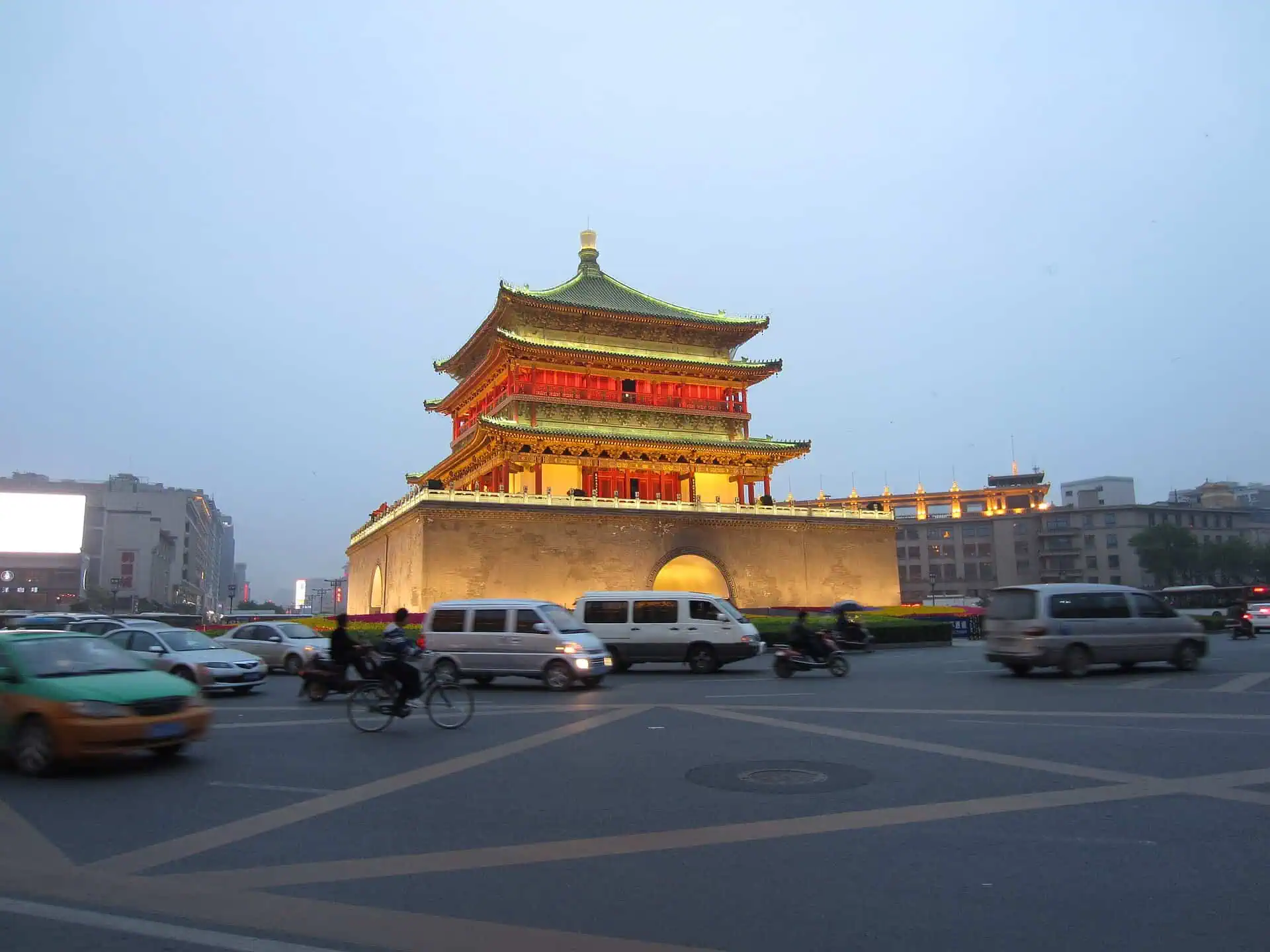
Xi'an Bell Tower
A Ming tower from 1384 at the dead center of the walled city — best admired at dusk, floodlit above the roundabout.
Learn more →
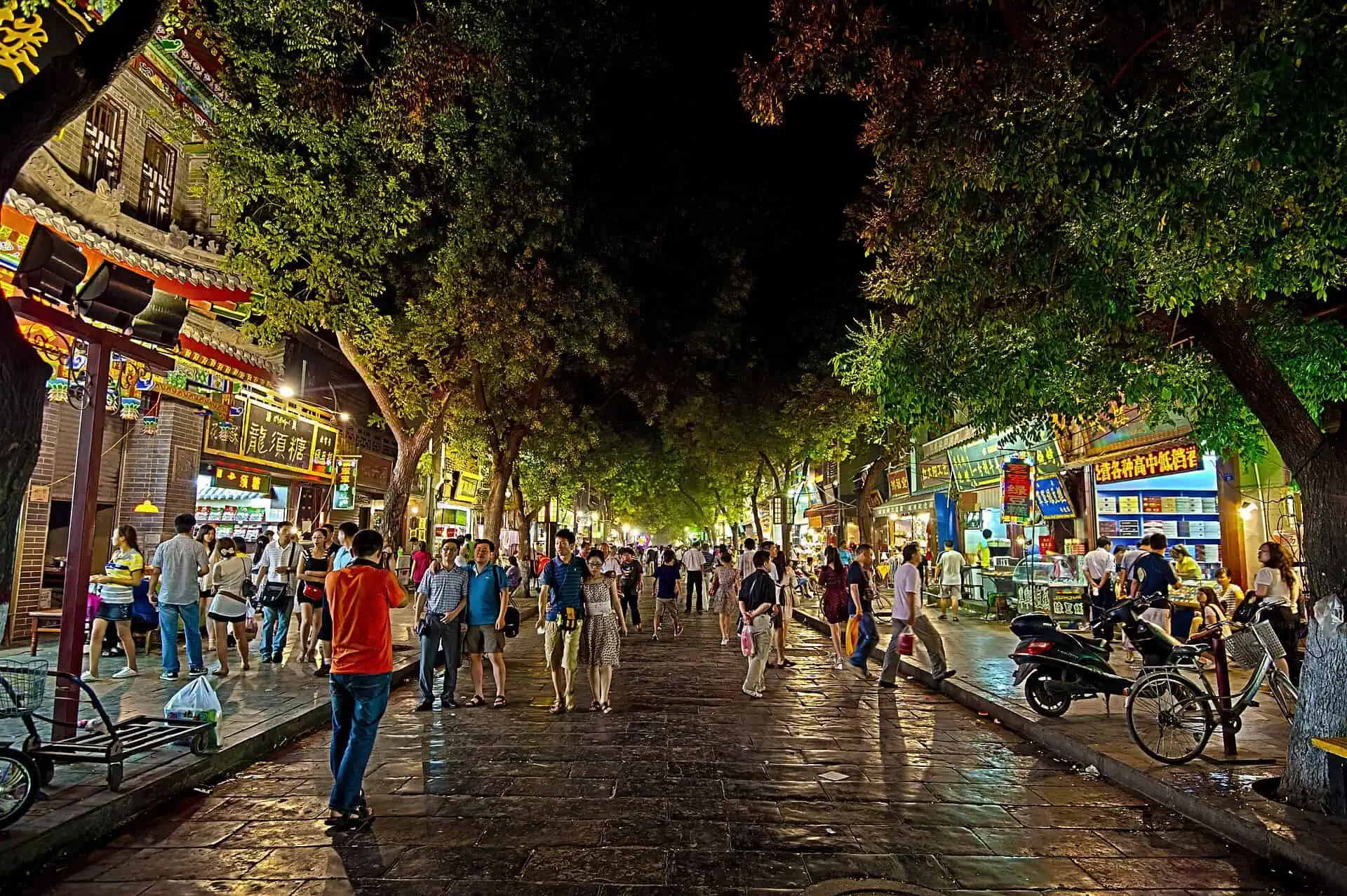
Muslim Quarter
Feeding Xi'an since the 700s — the loudest, smokiest, best-smelling streets of its Hui community.
Learn more →
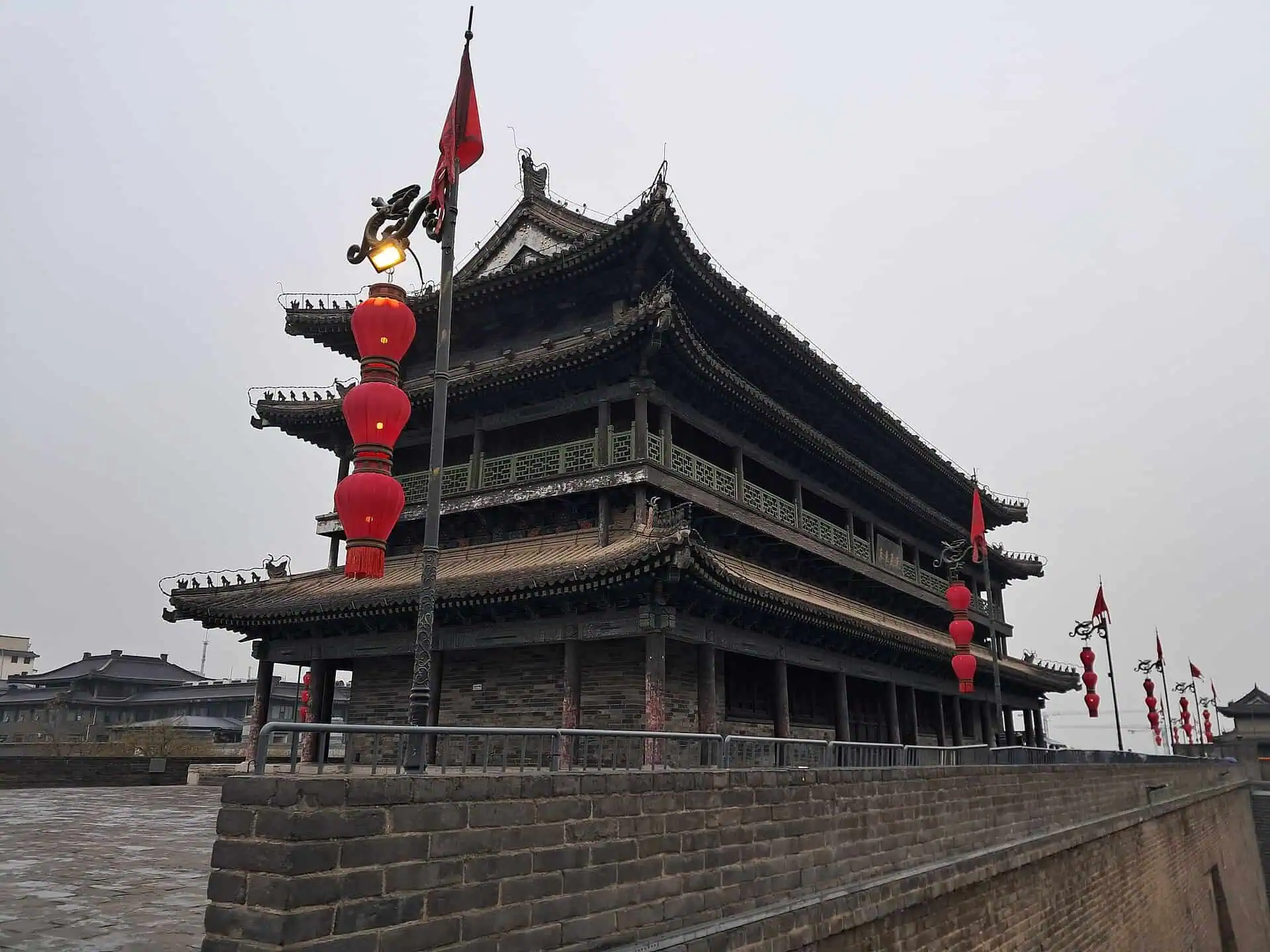
Xi'an City Wall
A 14-kilometer Ming dynasty rectangle you can cycle on top of — 650 years old and still the city's favorite commute.
Learn more →
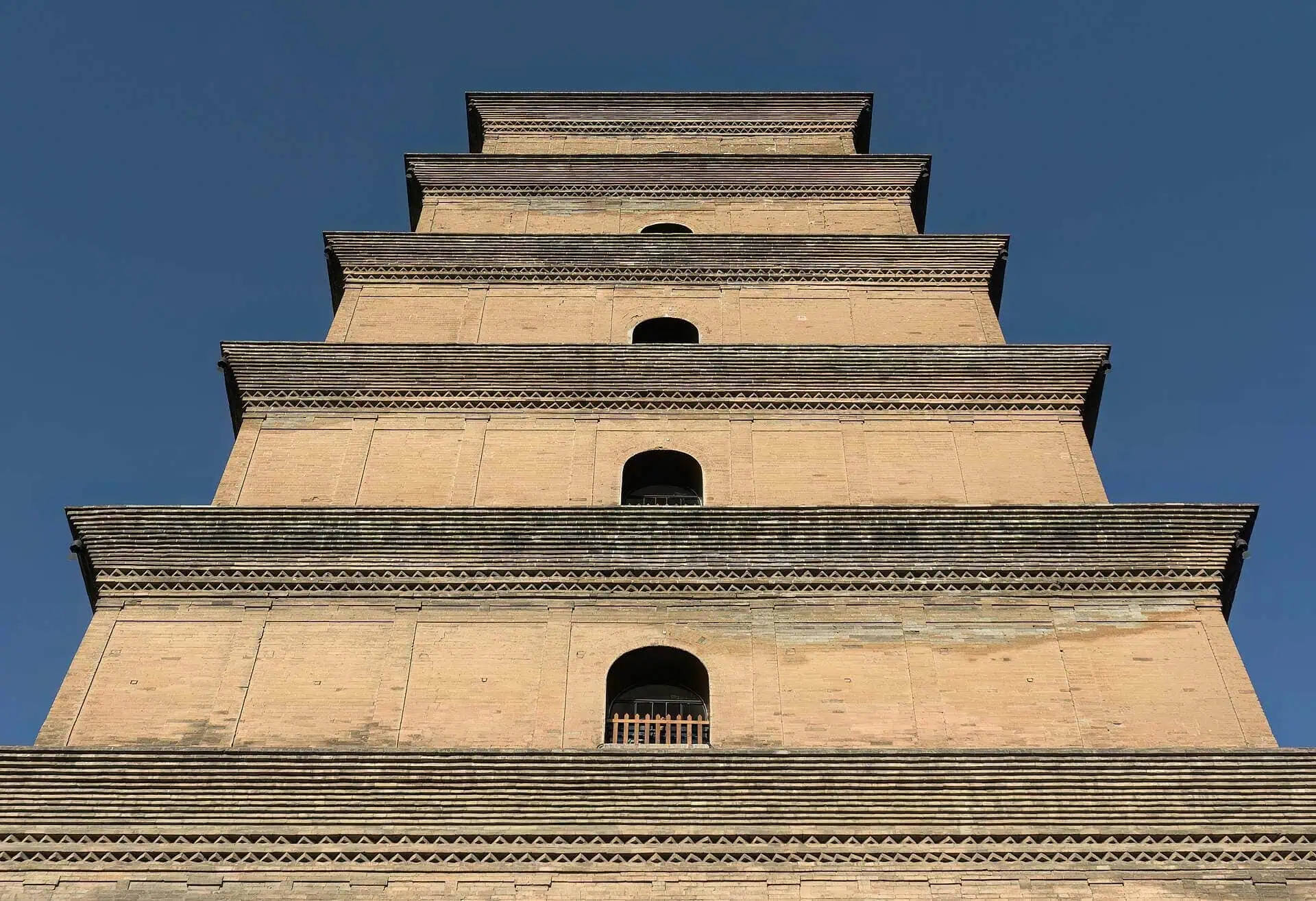
Big Wild Goose Pagoda
A Tang brick pagoda raised in 652 AD for a monk's 17-year journey to India — still Xi'an's defining landmark.
Learn more →
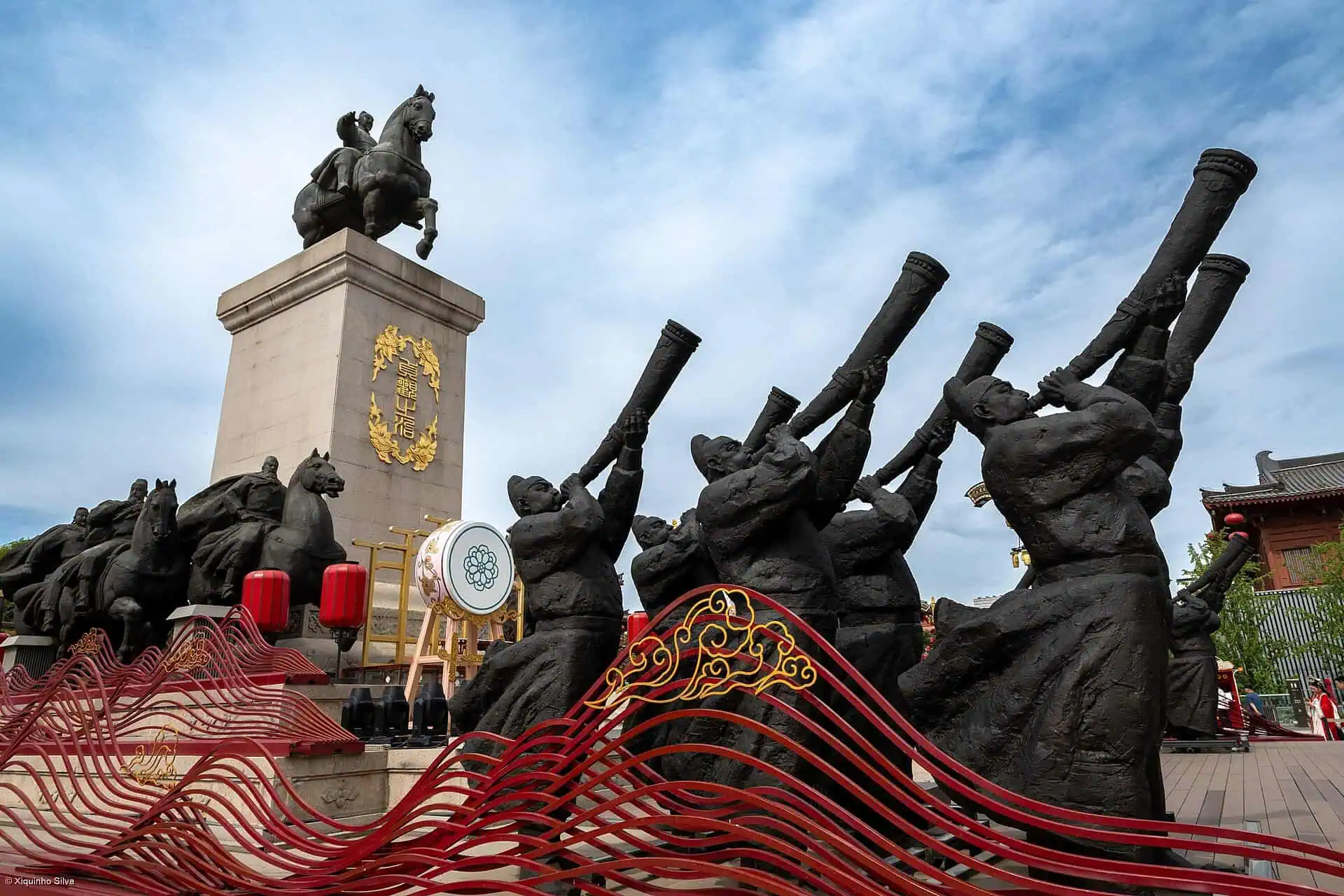
Grand Tang Ever-Bright City
Two kilometers of free, floodlit Tang dynasty spectacle — the golden age, rebooted nightly.
Learn more →
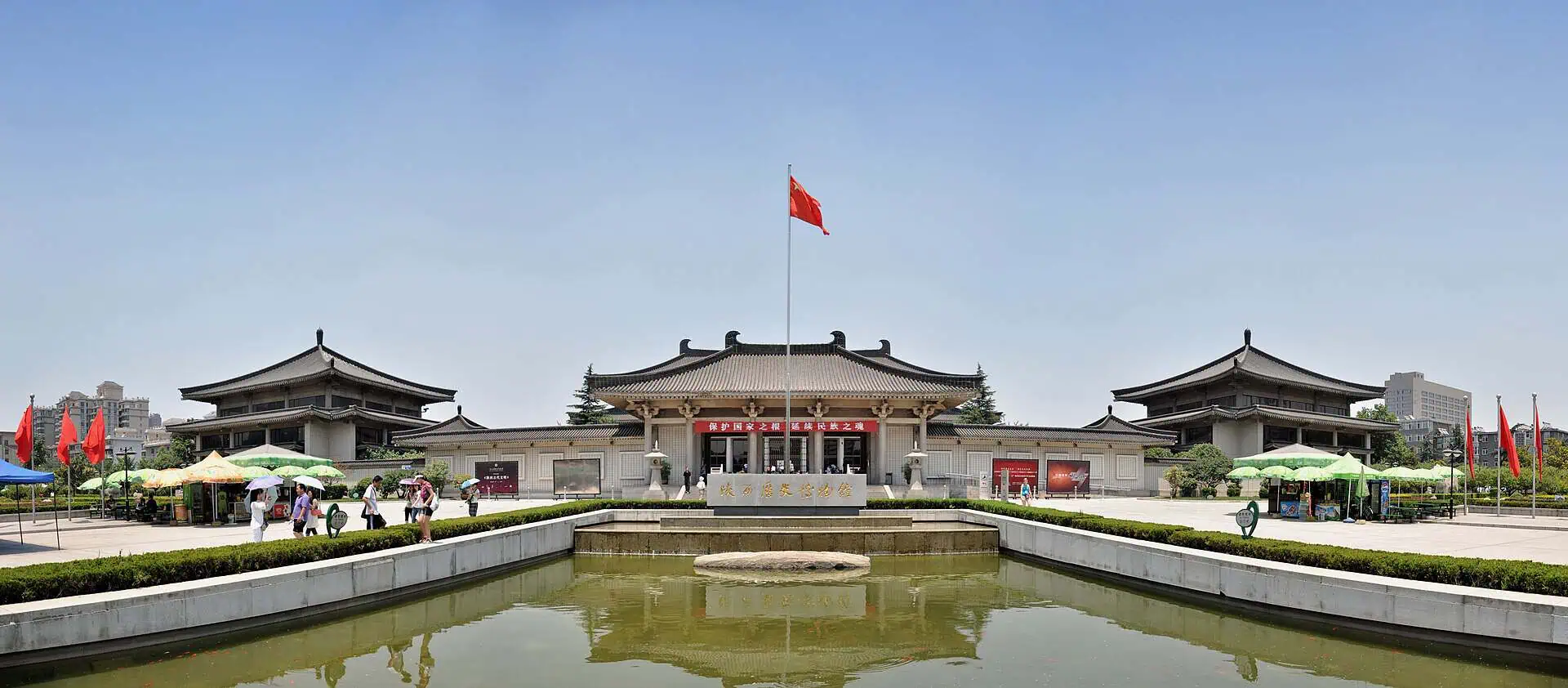
Shaanxi History Museum
Every layer of Xi'an's time stack under one roof — Zhou bronzes, Han gold and Tang treasure.
Learn more →
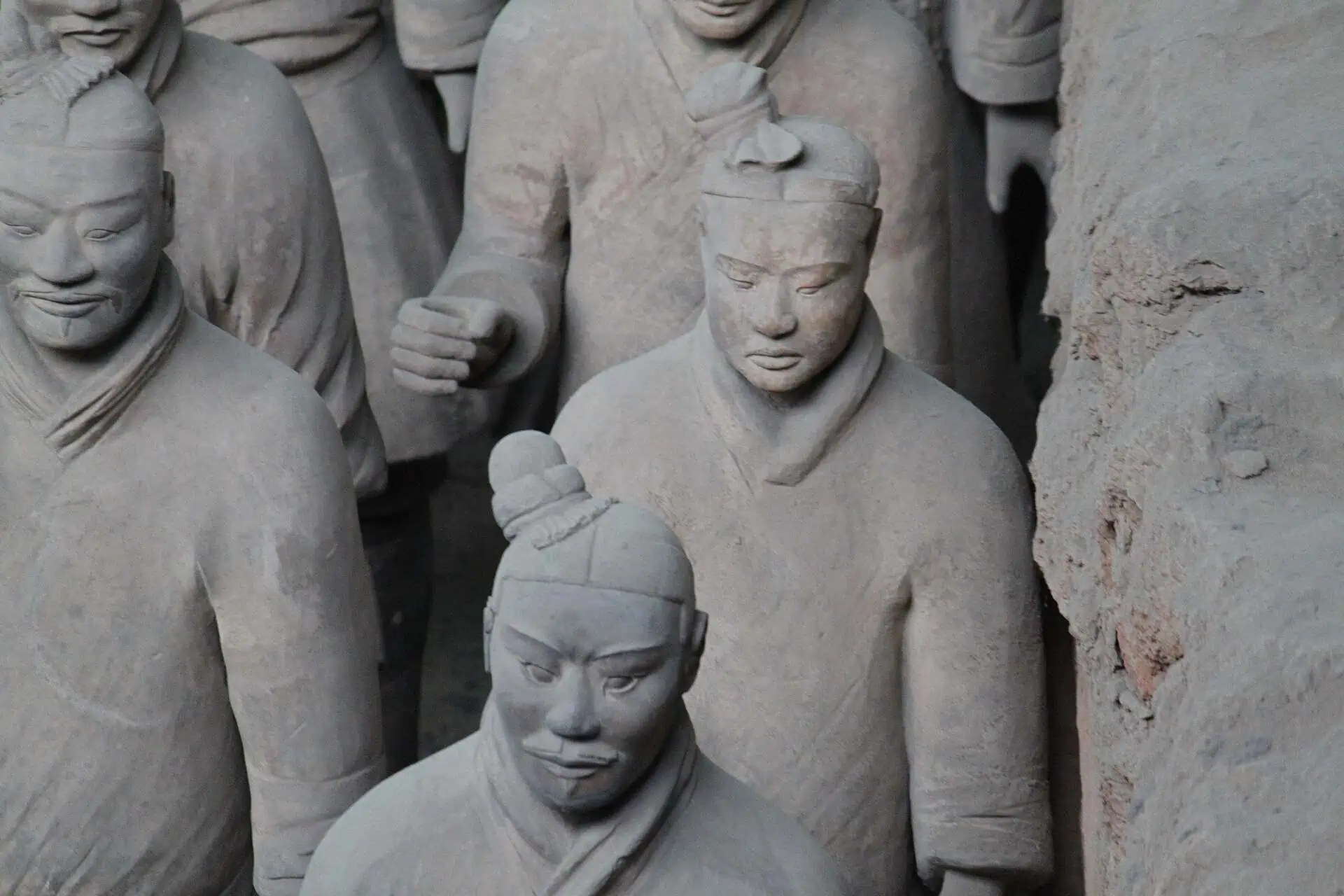
Terracotta Army
8,000 life-sized soldiers buried for China's First Emperor — and still on guard 2,200 years later.
Learn more →
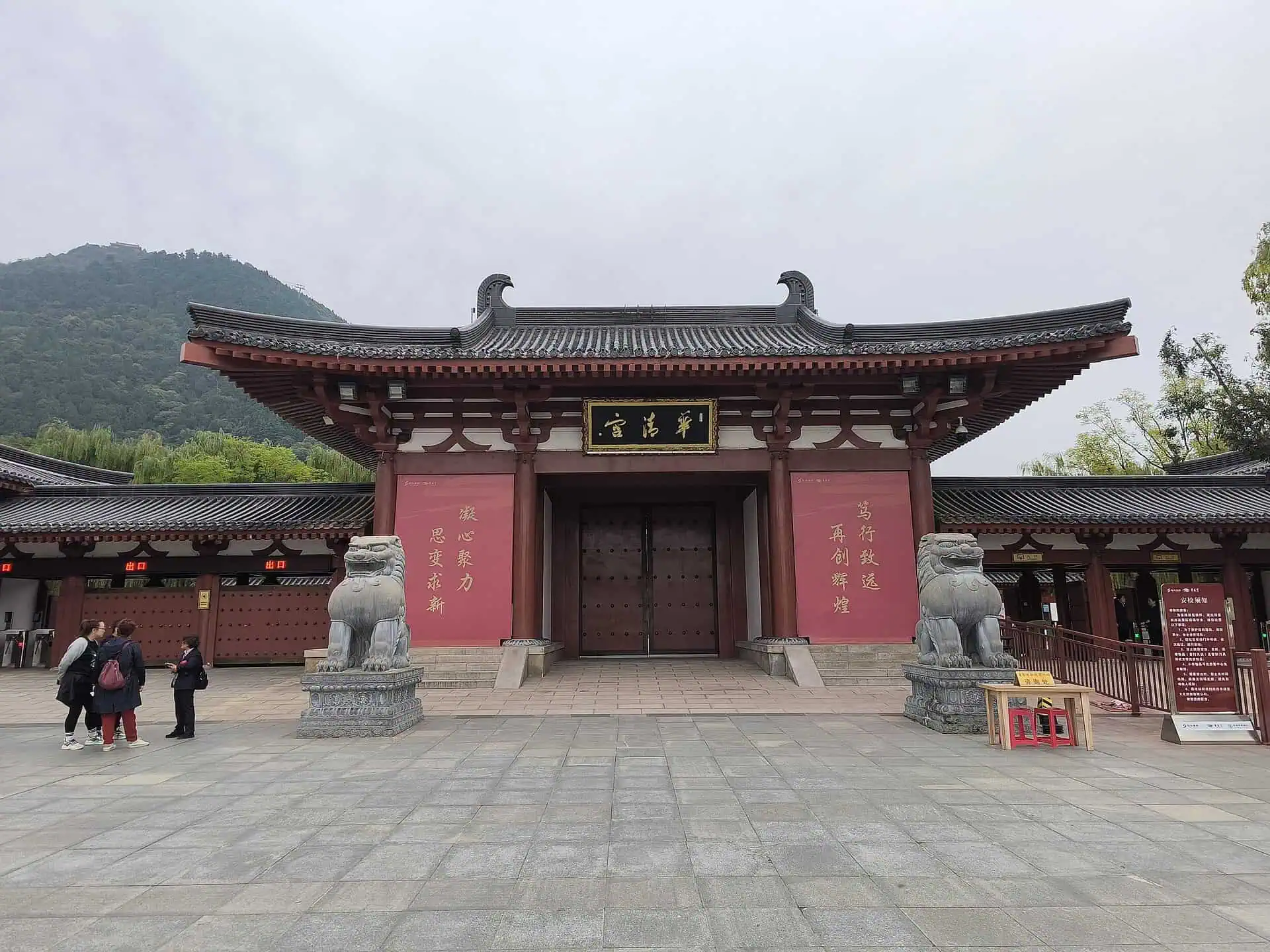
Huaqing Palace & Hot Springs
Tang emperors soaked here in the 700s — China's most famous love story, and the site of a 1936 kidnapping that changed the country.
Learn more →
Keep exploring
Visas & entry: do you need one?
Probably less paperwork than you fear — and two of the doors now have their own deep-dive packages: the 30-day visa-free entry (~50 countries) and the 240-hour transit (55 countries, including the US). This page is the router: work out which door is yours, then read its package.
The 240-hour visa-free transit, explained
Ten days in China without a visa, if you're just passing through — including Americans. The rules, the traps, and how to run it through Xi'an.
The 30-day visa-free entry: who gets in free
Around 50 countries can now enter China for up to 30 days with no visa at all — no transit logic, no onward-ticket games. Most of Europe, the UK, Canada, Australia and more. The US is not on the list.