Thirteen dynasties: Xi'an as capital, a visual timeline
One plain, thirteen regimes, more than a thousand years as the ancient capital of China — the root from which unified China grew. A scannable timeline of every dynasty that made Chang'an or Xi'an its capital.
How the count works
Xi'an's civic slogan is "ancient capital of thirteen dynasties" (十三朝古都, shísān cháo gǔdū), and the list is real — with one honest caveat: the count depends on whether you include two brief, embattled returns (the Eastern Han and Western Jin episodes below, which the standard list does). The usual thirteen, in order: Western Zhou, Qin, Western Han, Xin, Eastern Han, Western Jin, Former Zhao, Former Qin, Later Qin, Western Wei, Northern Zhou, Sui and Tang. Add their reigns together and this plain was China's capital for roughly 1,100 years — longer than anywhere else in the country. It isn't just that many dynasties chose Xi'an — it's that every great unified empire (Qin, Han, Sui, Tang) did. This plain is where the idea of one China kept being reinvented, which is why Chinese historiography calls it the root of the nation. The reason is geography: the Guanzhong plain (关中, Guānzhōng), a fertile Wei River valley walled by mountains and threaded with a handful of defensible passes. Every regime below was buying the same fortress. For the full narrative read a short history of Xi'an; what follows is the quick-reference version.
Western Zhou (c. 1046–771 BC): kings at Fenghao
The Zhou (周, Zhōu) overthrew the Shang around 1046 BC and ruled from twin capitals on the Fen River (沣河, Fēnghé) just west of modern Xi'an — Feng, founded by King Wen (周文王, Zhōu Wénwáng), and Hao, founded by his son King Wu. Together known as Fenghao (丰镐, Fēnghào), they anchored a ritual state whose bronze vessels still anchor museum collections three thousand years later. In 771 BC Quanrong (犬戎, Quǎnróng) raiders sacked Hao and killed the king; the court fled east to Luoyang, and the "Western" Zhou became the "Eastern" one. See it today: no intact site survives, but Zhou bronzes fill the first galleries of the Shaanxi History Museum.
Qin (350–207 BC): Xianyang
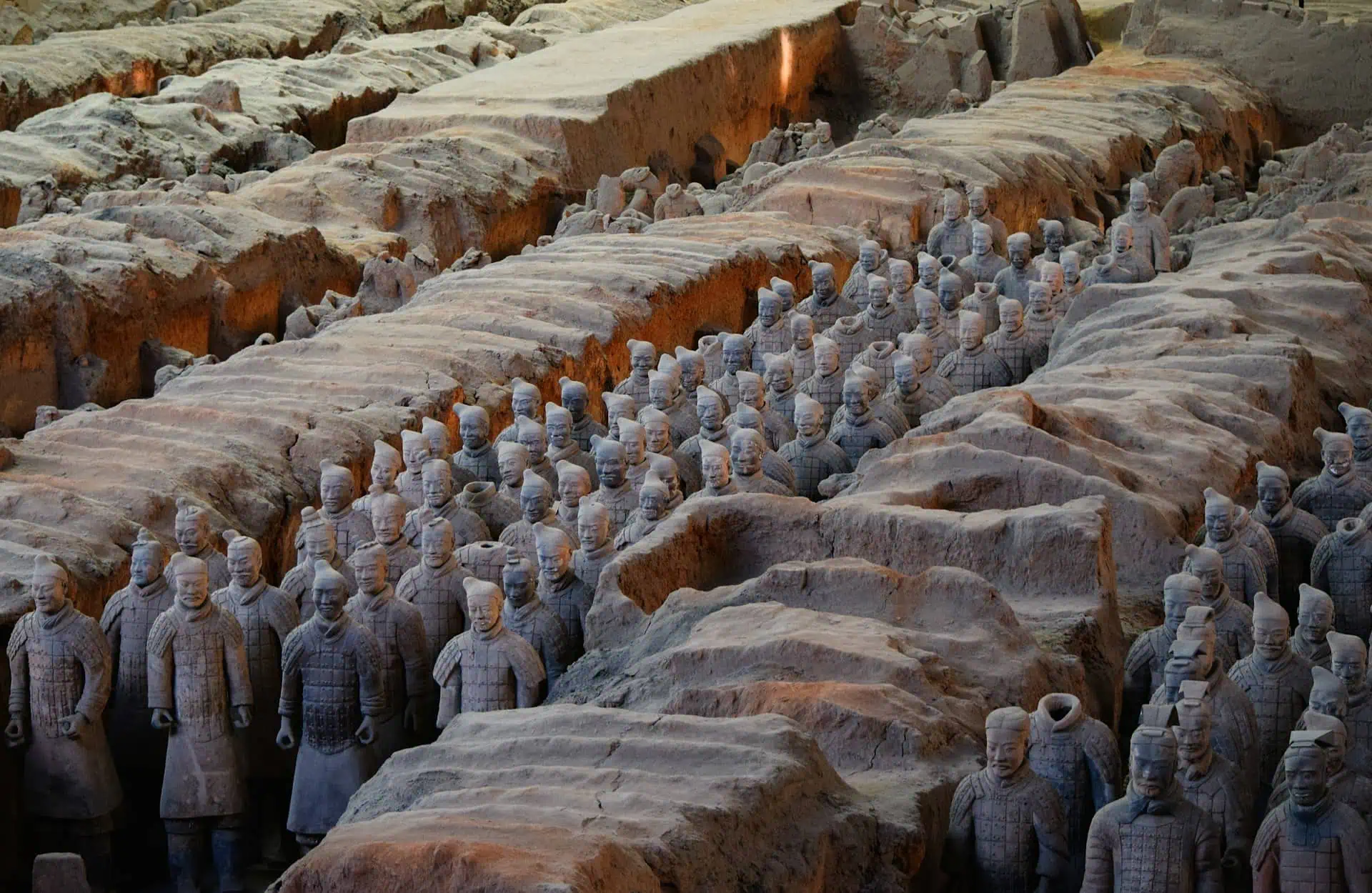
The Qin (秦, Qín) moved their capital to Xianyang (咸阳, Xiányáng), on the north bank of the Wei River (渭河, Wèihé), in 350 BC — and from it ground down six rival states until, in 221 BC, their king became the First Emperor of a unified China. The unified dynasty lasted just fifteen years, but it invented imperial China: one script, one currency, one administration. Its afterlife is Xi'an's most-visited sight. See it today: the Terracotta Army, across the river in Lintong — the full story is in Qin Shi Huang and the Terracotta Army.
Western Han (202 BC–9 AD): Chang'an is born
The Han (汉, Hàn) built a new capital just southeast of Xianyang and named it Chang'an (长安, Cháng'ān) — "Perpetual Peace." Under Emperor Wu (汉武帝, Hàn Wǔdì) it became one of the largest cities on Earth and the launch point of the Silk Road: Zhang Qian's mission west left from here in 138 BC. The Han city stood northwest of today's center, and the rammed-earth ruins of its Weiyang Palace (未央宫, Wèiyánggōng) still rise at the city's edge. See it today: Hanyangling, the joint tomb of Emperor Jing (汉景帝, Hàn Jǐngdì) — Emperor Wu's father — and his empress, half museum, half active dig.
Xin (9–23 AD): Wang Mang's reboot
In 9 AD the regent Wang Mang (王莽, Wáng Mǎng) took the throne himself, declared the Xin (新, Xīn, "New") dynasty and kept Chang'an as his capital — while renaming the currency, the calendar, the ministries and much else besides. His archaizing reforms were radical and unworkable, and floods and famine did the rest. In 23 AD rebels stormed Chang'an, killed Wang Mang and burned the palaces. The restored Han didn't move back — it rebuilt in Luoyang and became the "Eastern" Han.
Eastern Han (190–195): the court dragged back
The Eastern Han (东汉, Dōnghàn) ruled from Luoyang — until 190, when the warlord Dong Zhuo (董卓, Dǒng Zhuó) burned Luoyang and dragged the boy Emperor Xian (汉献帝, Hàn Xiàndì) back west to Chang'an, closer to his own power base. Dong Zhuo was assassinated in 192, and his lieutenants then fought over the emperor in a wrecked, starving city. The court escaped east in 195, and the Han limped on as a warlord puppet show. It counts in the thirteen — barely.
Western Jin (313–316): a teenager's last stand
When Luoyang fell to revolt in 311, the Western Jin (西晋, Xījìn) was finished in the north — but in 313 a teenage prince was proclaimed emperor in the ruins of Chang'an. Emperor Min (晋愍帝, Jìn Mǐndì) held the broken city for three years before surrendering to the Xiongnu-led Han-Zhao state in 316. The dynasty refounded itself in the south, at what is now Nanjing. Chang'an's second brief comeback was over.
Former Zhao (319–329)
The Han-Zhao ruler Liu Yao (刘曜, Liú Yào) moved his capital to Chang'an in 319 and renamed his state (Former) Zhao (前赵, Qiánzhào) — a Xiongnu-descended regime of the chaotic Sixteen Kingdoms period. It lasted a decade before the rival Later Zhao took the city in 329. Little of it is visible today, but it set a pattern: for the next two and a half centuries, every strong north-China state chose this plain.
Former Qin (351–385): the unifiers who fell at one river
The Former Qin (前秦, Qiánqín), led by the Di (氐, Dī) people, took Chang'an in 351. Under the ruler Fu Jian (苻坚, Fú Jiān) and his Chinese chancellor Wang Meng (王猛, Wáng Měng) it unified all of north China by 376 — then came the overreach: in 383 Fu Jian marched a colossal army south to finish reunification and was catastrophically defeated at the Fei River (淝水, Féishuǐ). His empire shattered overnight, Chang'an was lost in 385 and Fu Jian was killed the same year. Chinese still quotes his boast that his army's whips could dam a river — as a warning about hubris.
Later Qin (384–417): Buddhism's great translation project
The Later Qin (后秦, Hòuqín), founded by the Qiang (羌, Qiāng) leader Yao Chang (姚苌, Yáo Cháng) in 384, took Chang'an the next year and ruled from it for three decades. Its second ruler, Yao Xing (姚兴, Yáo Xīng), was a devout Buddhist who brought the Kuchean monk Kumarajiva (鸠摩罗什, Jiūmóluóshí) to Chang'an in 401 and funded his translation bureau — Kumarajiva's renderings are still the versions Chinese Buddhists chant. In 417 an Eastern Jin army took the city, and the Later Qin ended.
Western Wei (535–557): the general behind the throne
When the Northern Wei split in two, the warlord Yuwen Tai (宇文泰, Yǔwén Tài) installed a puppet emperor in Chang'an and ran the Western Wei (西魏, Xīwèi) himself. Outnumbered by the richer east, he built a new kind of army — the fubing (府兵, fǔbīng) militia system — and a fused Xianbei-Chinese officer class known as the Guanlong aristocracy. It worked: that military elite produced the founding families of both the Sui and the Tang. The next three centuries of Chinese history are, in a sense, Yuwen Tai's succession plan.
Northern Zhou (557–581): the north reunified
Yuwen Tai's heirs took the throne openly as the Northern Zhou (北周, Běizhōu) in 557, still ruling from Chang'an. Emperor Wu of Northern Zhou crushed the rival Northern Qi in 577 and reunified the north — and, in the dynasty's most infamous episode, suppressed Buddhism across its territory in 574–577, melting statues and laicizing monks. When he died young, his general Yang Jian (杨坚, Yáng Jiān) eased the child emperor aside in 581 and founded the Sui. The capital stayed where it was — for two more years.
Sui (581–618): Daxing, a brand-new grid
Yang Jian — Emperor Wen of Sui (隋文帝, Suí Wéndì) — reunified all of China by 589 and decided the old Han city was worn out. In 582 his engineer Yuwen Kai (宇文恺, Yǔwén Kǎi) began a colossal planned capital on fresh ground to the southeast: Daxing (大兴, Dàxīng), a perfect walled grid of 108 wards laid out in under two years. The Sui (隋, Suí) then built the Grand Canal and overreached into Korea until the empire snapped — the dynasty lasted just 37 years. But its city plan is still under your feet: modern Xi'an grew up on the Sui-Tang footprint, southeast of the Han site.
Tang (618–907): the golden age
The Tang (唐, Táng) took Daxing, restored the name Chang'an, and presided over the city's — and arguably China's — golden age: a million people inside the walls, Sogdian silver in the West Market, Li Bai and Du Fu in the wine houses, Xuanzang's sutras in the Big Wild Goose Pagoda. The An Lushan rebellion (755) broke the dynasty's back, Huang Chao's rebels sacked the city in 881, and in 904 the warlord Zhu Wen forced the court to Luoyang and demolished the palaces for timber. Chang'an never hosted an emperor again. The era earns its own article: Chang'an in the Tang dynasty. See it today: the Big and Small Wild Goose Pagodas, the Daming Palace park, and the Forest of Steles.
After 907: a western capital in name only
The Five Dynasties regimes that followed — starting with Zhu Wen's own Later Liang (后梁, Hòuliáng, 907–923) — ruled from Kaifeng and Luoyang. The shrunken Chang'an, variously renamed, kept a governor and at times an honorary "western capital" title, but no court ever returned. The city's second act came with the Ming (明, Míng), who renamed it Xi'an — "Western Peace" — in 1369 and raised the city wall and Bell Tower you see today in the 1370s–80s. In December 1936 the city made world headlines with the Xi'an Incident (西安事变, Xī'ān Shìbiàn), when General Zhang Xueliang (张学良, Zhāng Xuěliáng) detained Chiang Kai-shek (蒋介石, Jiǎng Jièshí) at Huaqing Palace to force a united front against Japan. And in 1974, well-diggers in Lintong hit the Terracotta Army — after which the ancient capital became a modern destination.
Where to see this today
- Bronze-age Zhou: the Shaanxi History Museum — the ritual bronzes of Fenghao's world (free; book a timed slot).
- Qin: the Terracotta Army — the First Emperor's underground garrison.
- Han: Hanyangling — Emperor Jing's tomb, the Han answer to Qin excess.
- Sui-Tang grid: the Big Wild Goose Pagoda, Small Wild Goose Pagoda, Daming Palace park and Forest of Steles.
- The Ming city: the city wall, Bell Tower and Drum Tower.
- 1936: Huaqing Palace, where the Xi'an Incident unfolded.
Questions, answered
Which 13 dynasties made Xi'an their capital?
The standard list: Western Zhou, Qin, Western Han, Xin, Eastern Han (briefly, 190–195), Western Jin (briefly, 313–316), Former Zhao, Former Qin, Later Qin, Western Wei, Northern Zhou, Sui and Tang. Some counts vary depending on how you treat the two short interregnum returns, but thirteen is the canonical number.
How long was Xi'an the capital of China?
Roughly 1,100 years in total, spread across three millennia — from the Western Zhou founding of Fenghao around 1046 BC to the Tang court's forced departure in 904 AD. That's longer than any other Chinese city has served as capital.
Why did so many dynasties choose Xi'an?
Geography. The Guanzhong plain is a fertile Wei River valley ringed by mountains and guarded by a few narrow passes — easy to defend, hard to starve, and close to the western frontier dynasties needed to watch. Regimes kept buying the same fortress for over a thousand years.
When did Xi'an stop being the capital of China?
In 904 the warlord Zhu Wen forced the Tang court to Luoyang and demolished Chang'an's palaces; the dynasty itself fell in 907. No later dynasty moved back — China's economic center had shifted southeast, and later capitals clustered in the east: Kaifeng, Nanjing, Beijing.
What was the first capital city at Xi'an?
Fenghao — the twin Western Zhou towns of Feng and Hao on the Fen River, founded around 1046 BC. Next came Qin Xianyang (350 BC) on the north bank of the Wei, then Han Chang'an (202 BC), and finally the Sui-Tang city (582 AD) whose footprint modern Xi'an still occupies.
Places in this story
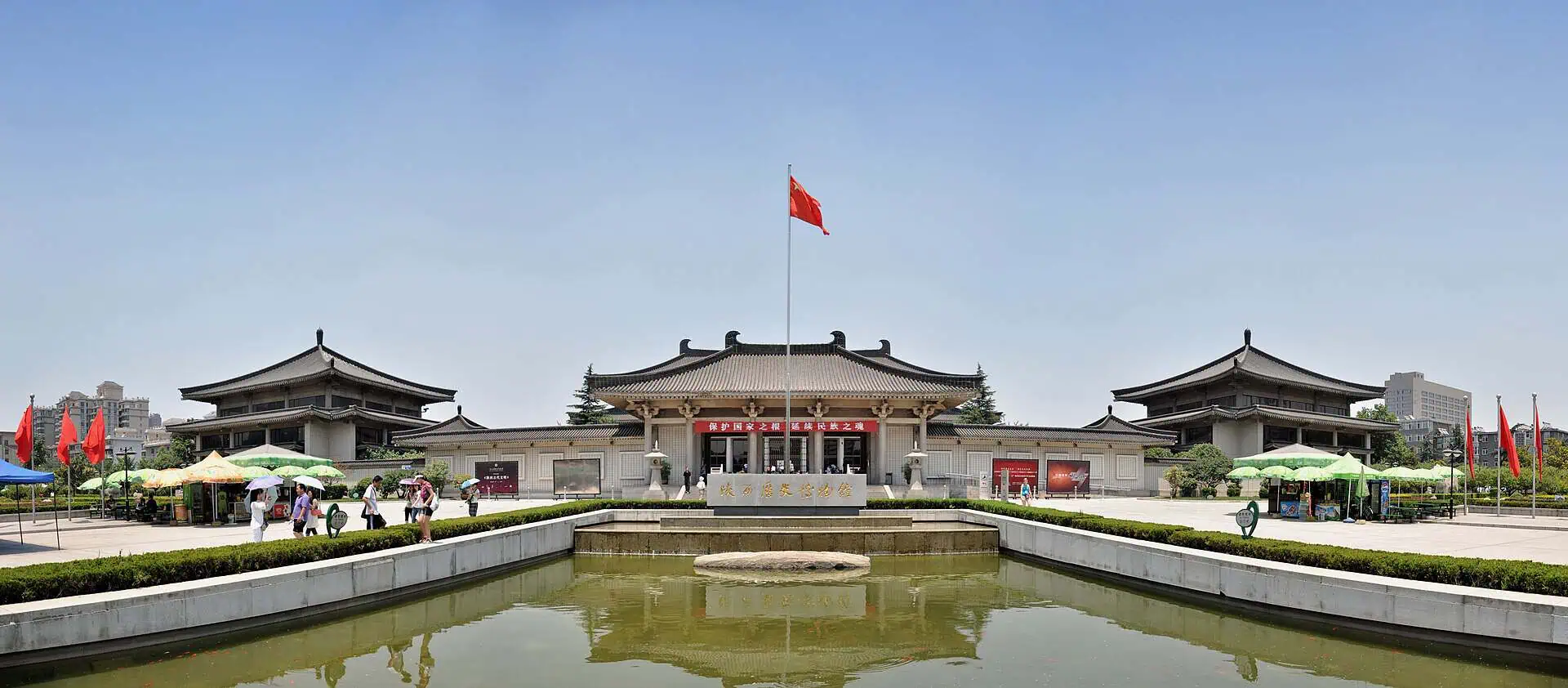
Shaanxi History Museum
Every layer of Xi'an's time stack under one roof — Zhou bronzes, Han gold and Tang treasure.
Learn more →
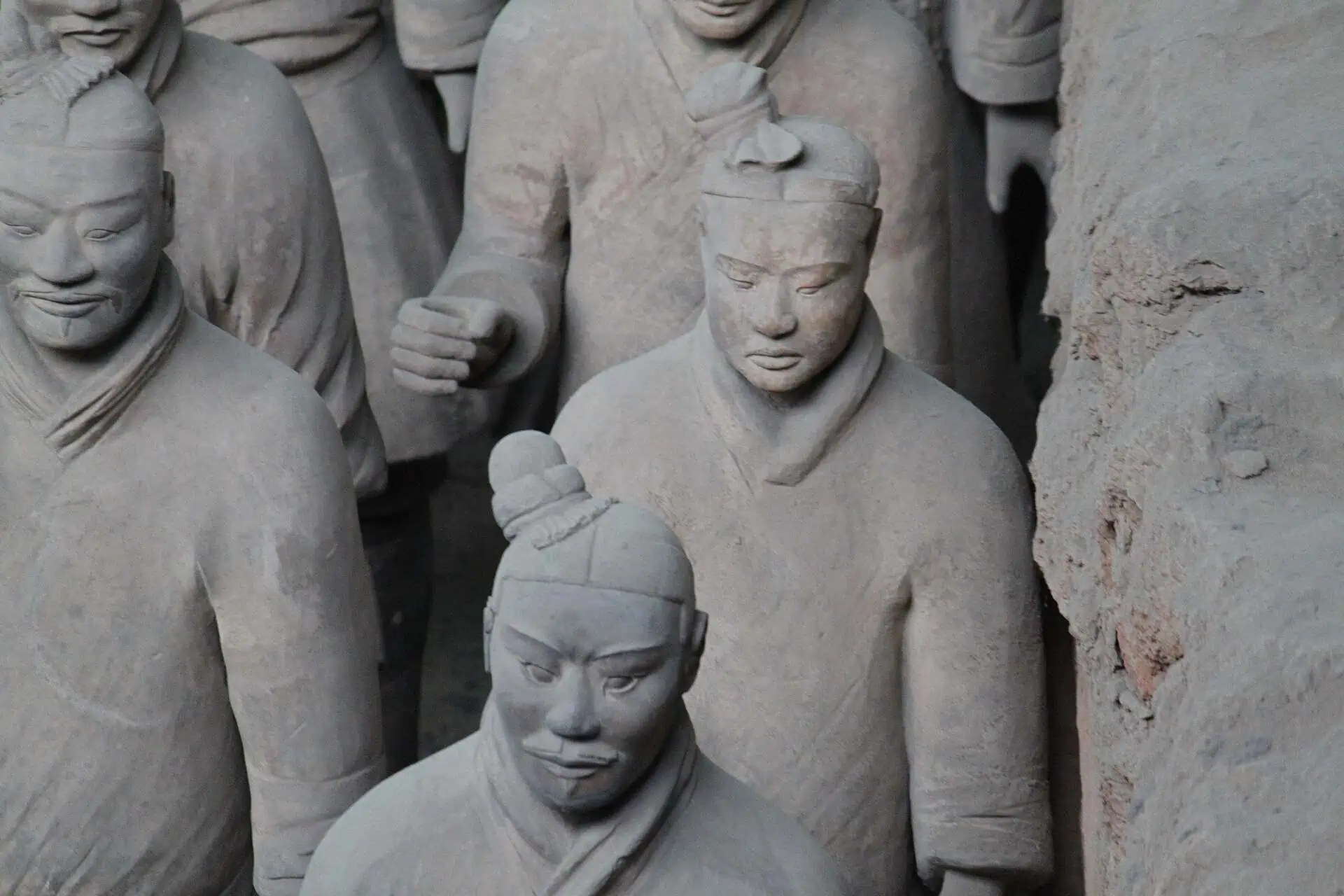
Terracotta Army
8,000 life-sized soldiers buried for China's First Emperor — and still on guard 2,200 years later.
Learn more →
Hanyangling Mausoleum
A Han emperor's underground court, begun in 153 BC — half-sized figures under a glass floor, without the crowds.
Learn more →
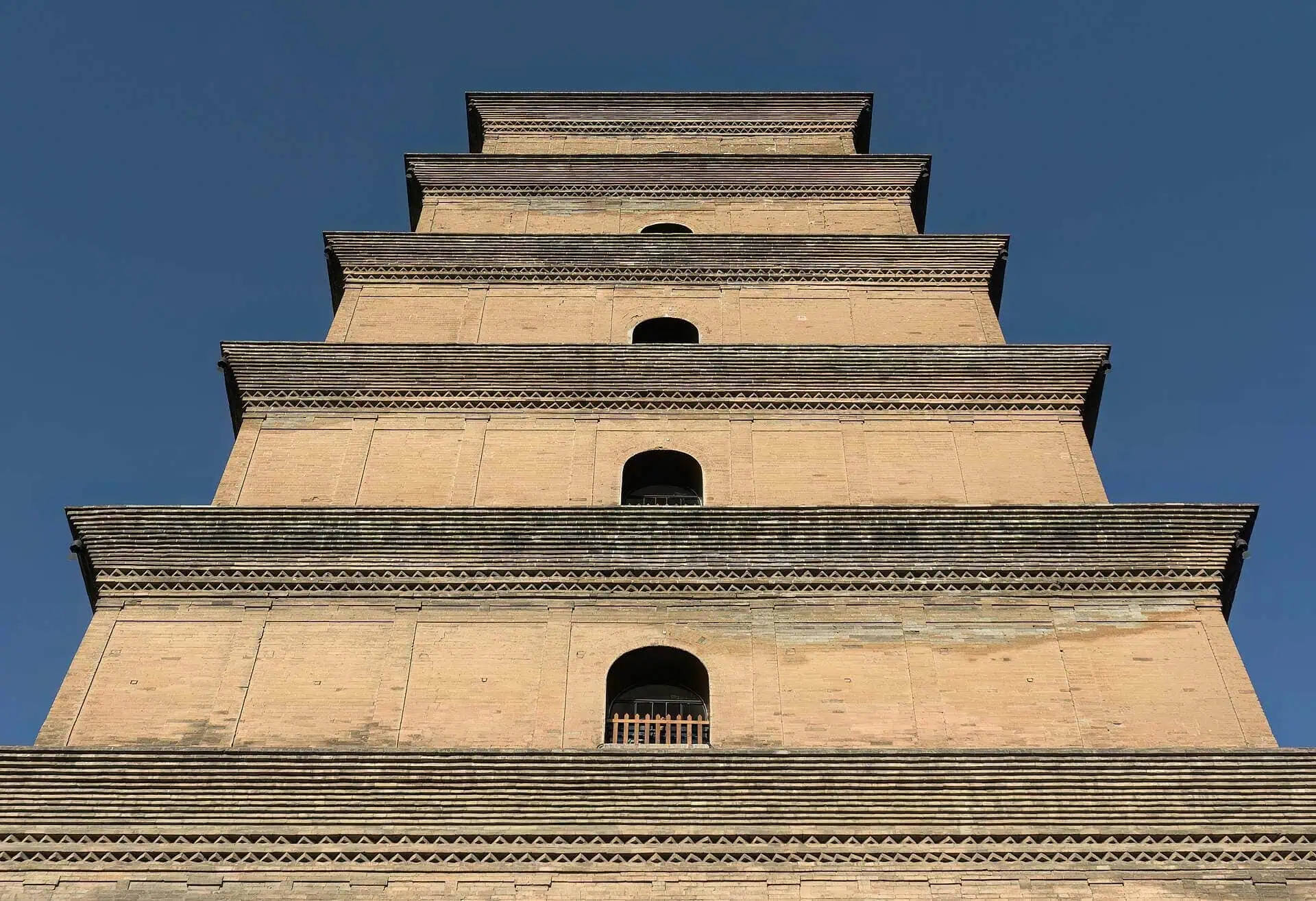
Big Wild Goose Pagoda
A Tang brick pagoda raised in 652 AD for a monk's 17-year journey to India — still Xi'an's defining landmark.
Learn more →
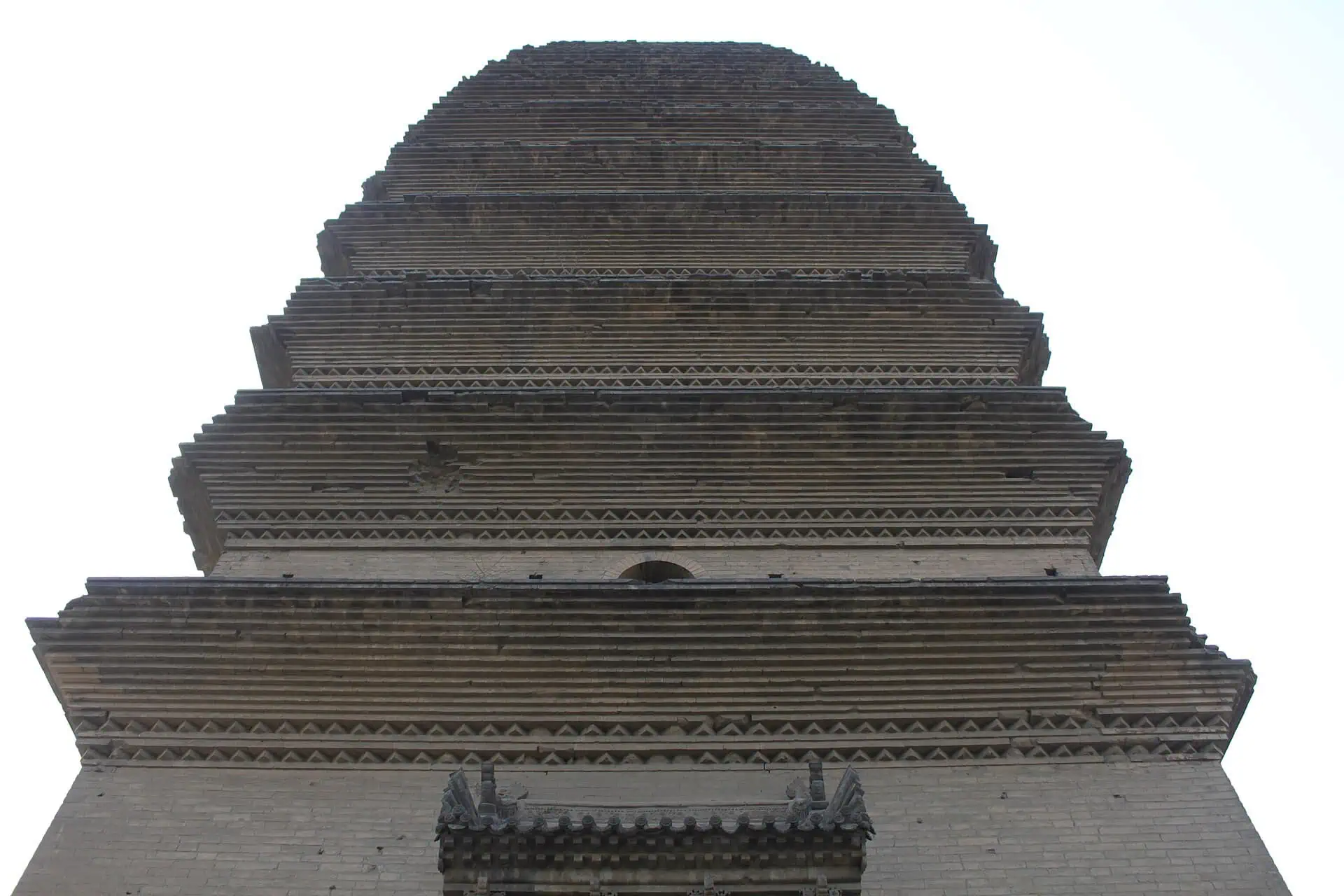
Small Wild Goose Pagoda & Xi'an Museum
A Tang pagoda from 707 AD that outlasted China's deadliest earthquake — free, calm, and half the crowds.
Learn more →
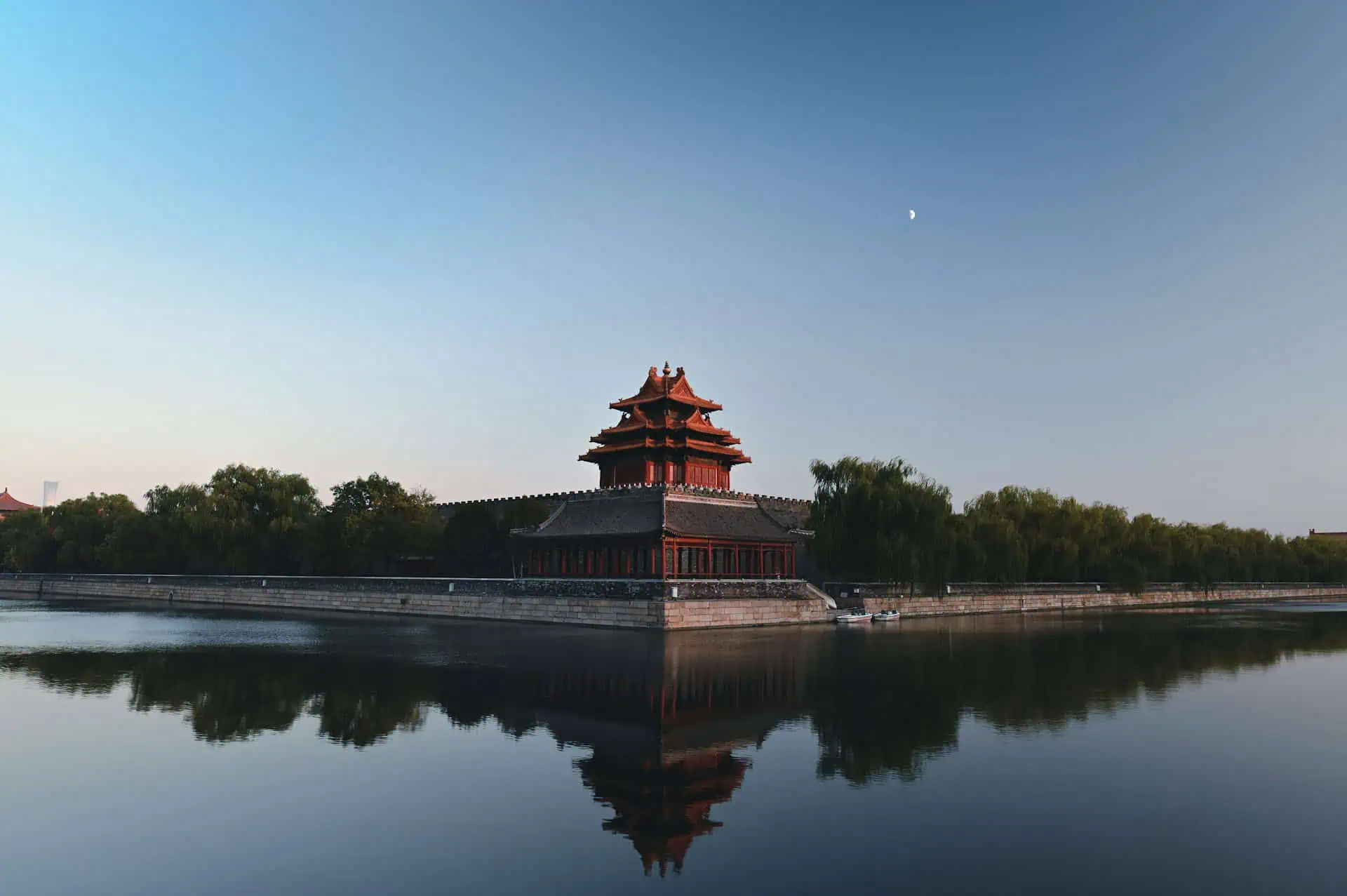
Daming Palace National Heritage Park
The Tang ruled an empire from here starting in 634 AD — a palace 4.5 times the Forbidden City, now foundations in a very large park.
Learn more →
Forest of Steles (Beilin Museum)
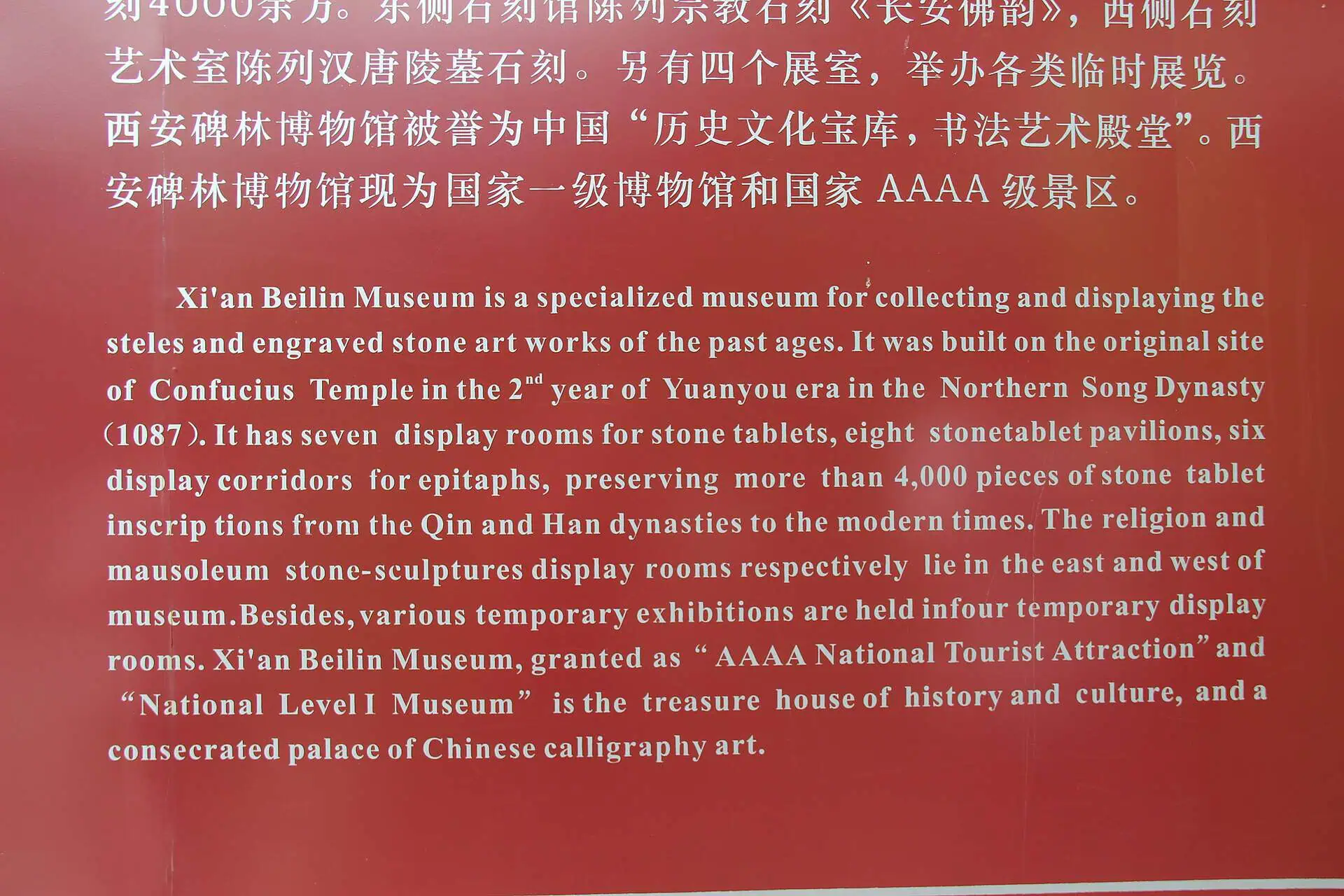
Stone books since 1087 — nearly 3,000 steles, and the home of Chinese calligraphy itself.
Learn more →
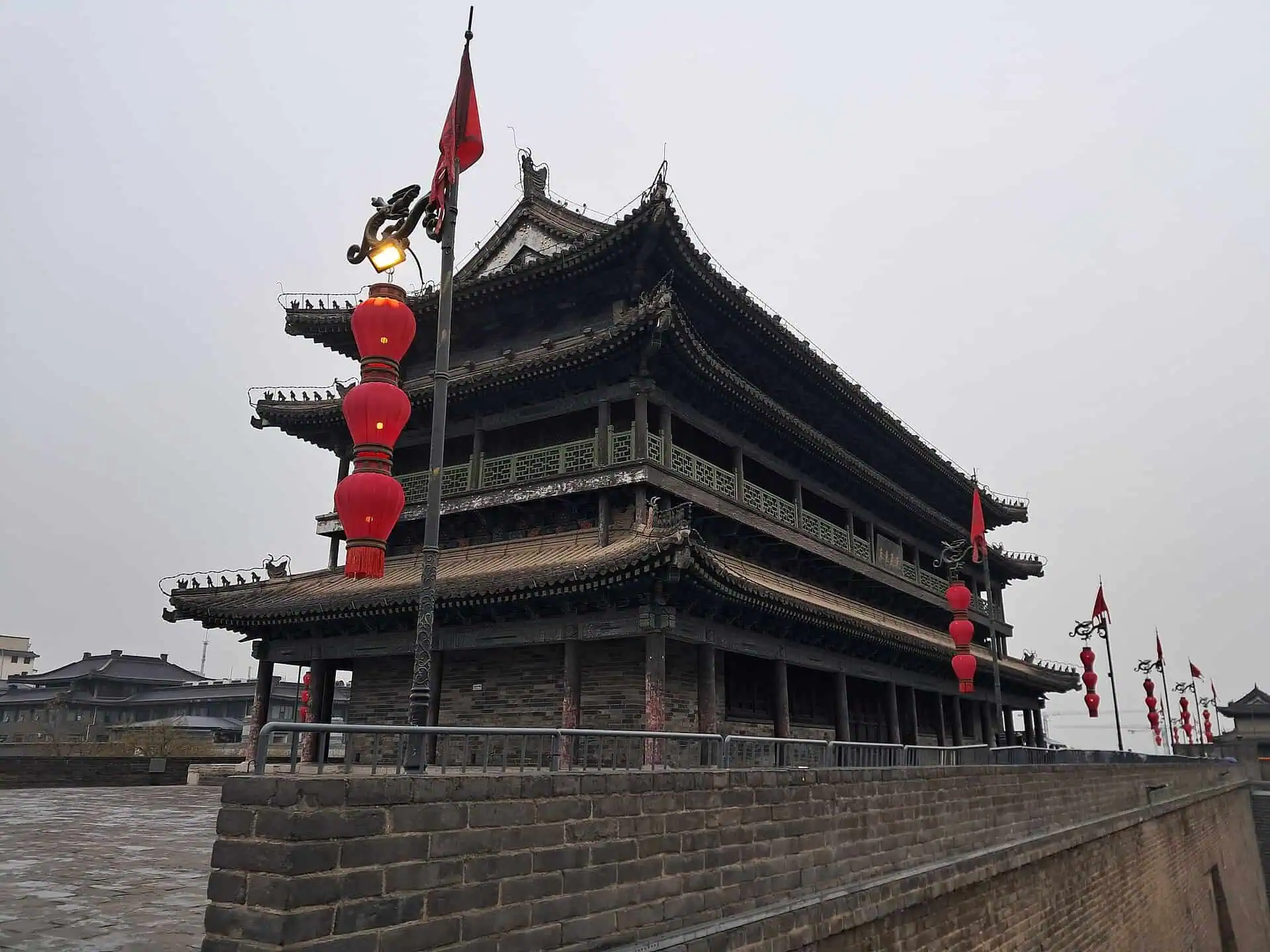
Xi'an City Wall
A 14-kilometer Ming dynasty rectangle you can cycle on top of — 650 years old and still the city's favorite commute.
Learn more →
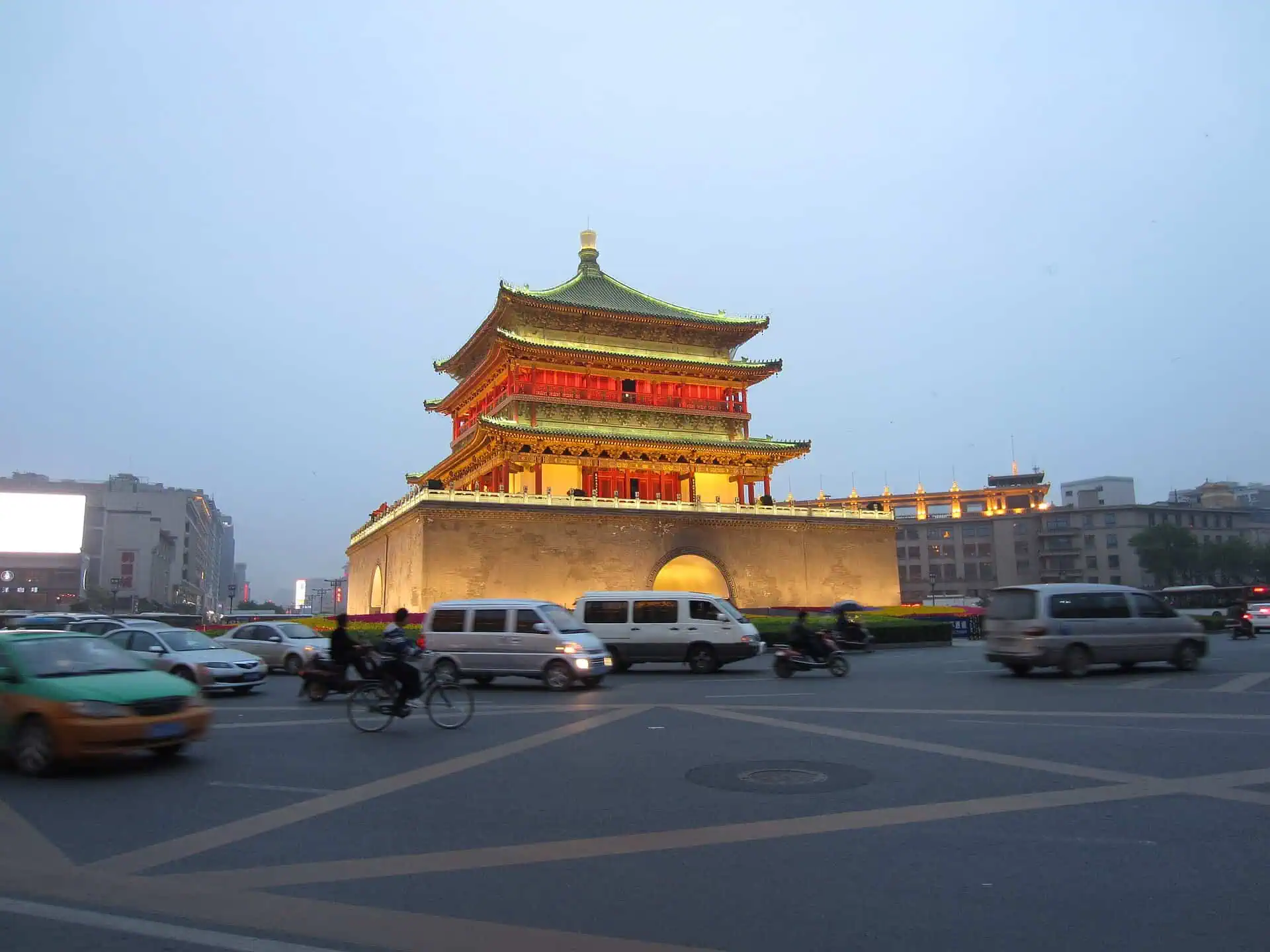
Xi'an Bell Tower
A Ming tower from 1384 at the dead center of the walled city — best admired at dusk, floodlit above the roundabout.
Learn more →
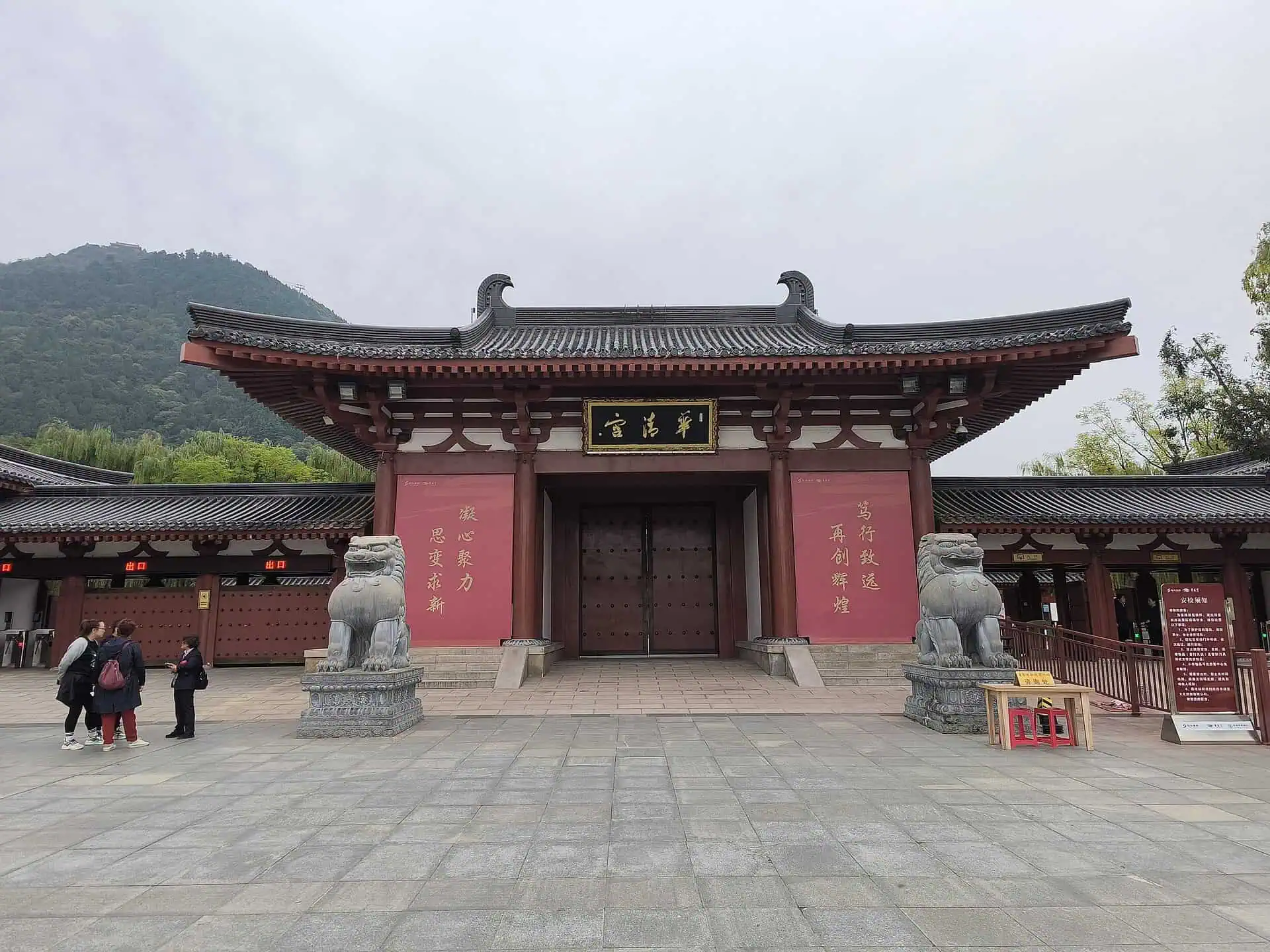
Huaqing Palace & Hot Springs
Tang emperors soaked here in the 700s — China's most famous love story, and the site of a 1936 kidnapping that changed the country.
Learn more →
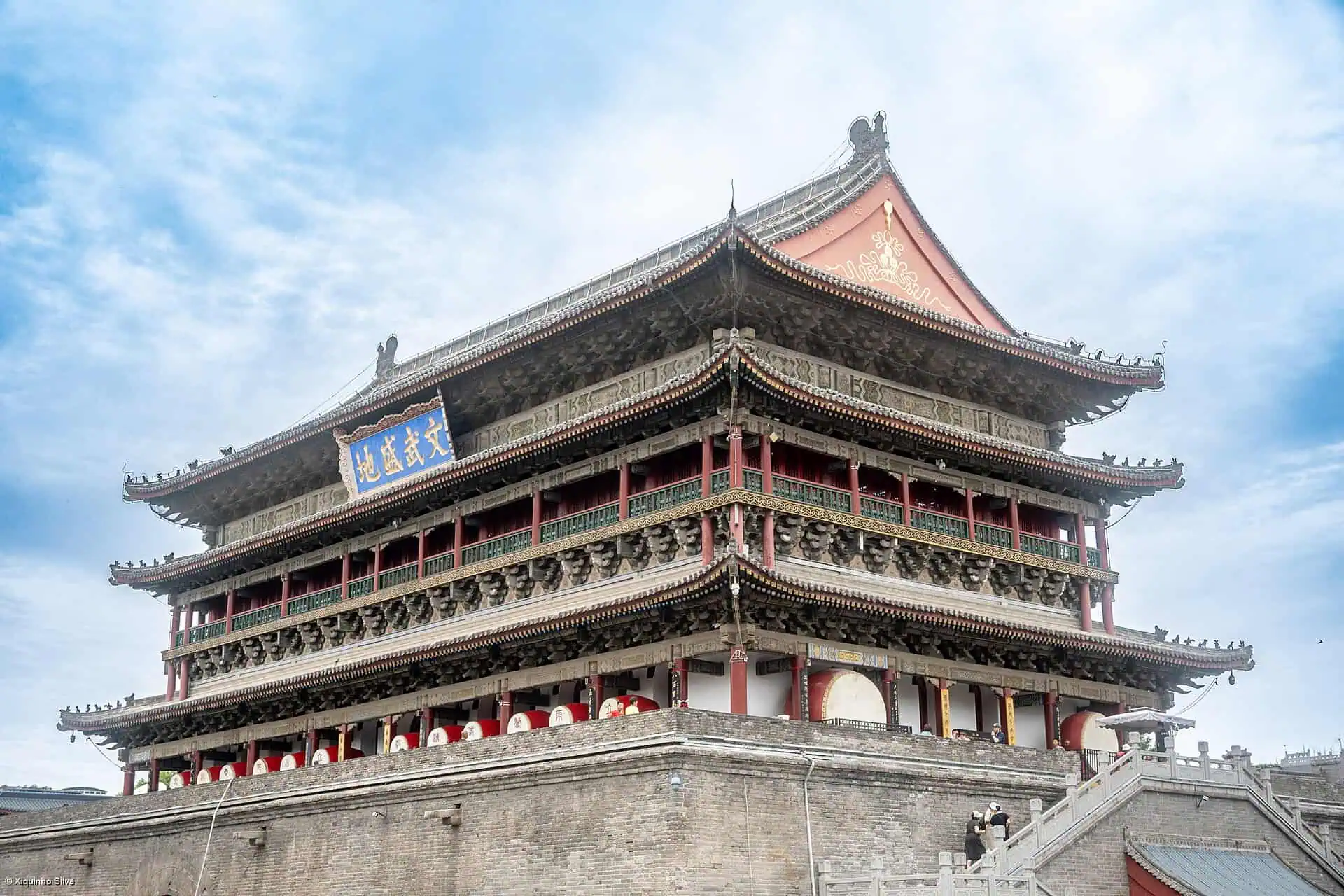
Xi'an Drum Tower
Built in 1380, four years before its famous sister — the tower whose drums closed every Xi'an day, and the gateway to the Muslim Quarter.
Learn more →