Hotels in Xi'an: what to actually book
Xi'an's hotel scene splits cleanly into three workable tiers: international five-stars that cost less than you'd pay at home, Chinese mid-range chains that are the best value in the city, and courtyard guesthouses for character. The two things that actually trip foreigners up — which area to pick and whether the hotel can register you at all — are both solvable in about ten minutes of reading. Start here.
10 min read · 8 sections
The short version
- Pick the area first, the hotel second — the inside-the-wall vs. Qujiang logic is in the where-to-stay guide. Then book the biggest name your budget allows in that area.
- The reliable international names, as of mid-2026: Sofitel Legend (索菲特传奇) on Renmin Square inside the wall; The Westin (威斯汀) and W Xi'an (W酒店) in Qujiang by the Big Wild Goose Pagoda; JW Marriott (JW万豪) and The Ritz-Carlton (丽思卡尔顿) in the business districts.
- Best value in the city: the Chinese mid-range chains Ji Hotel (全季) and Atour (亚朵) — clean, modern, everywhere, and roughly half the price of the internationals.
- Budget Chinese hotels historically couldn't register foreign guests (the 涉外 rule). It's mostly solved at chains, but filter for hotels that accept foreigners on Trip.com to be safe.
- Book on Trip.com for the best inventory and English support; Booking.com and Agoda cover the big names fine. Rough bands: budget ¥200–400, mid-range ¥400–800, international 5★ ¥700–1,500 — check your actual dates.
- During Chinese public-holiday weeks, prices jump and the good rooms sell out — book early or shift your dates.
The short answer
Area before hotel. Xi'an's sights cluster in two zones — the walled center around the Bell Tower, and Qujiang around the Big Wild Goose Pagoda — and picking between them changes your daily logistics more than any hotel brand does. That decision, neighborhood by neighborhood, is what the where to stay guide is for. This page is the next step: given an area, which actual hotels to book, what the tiers cost, and the two Xi'an-specific traps — foreigner registration and holiday price surges — that catch visitors who book on autopilot.
The encouraging headline: Xi'an is cheap for its quality. A genuine international five-star here often costs what a mid-range chain costs in a Western city, and the Chinese mid-range chains are better than their price suggests.
The international names that earn their rates
These are the hotels with a long track record of hosting foreign guests, English at the front desk, and zero registration drama. All of the following were operating as of mid-2026 — brands do occasionally reflag, so treat the roster as current but reconfirm when you book:
- Sofitel Legend People's Grand Hotel (索菲特传奇) — the pick inside the city wall. It occupies a 1950s landmark on Renmin Square, an easy walk to the Bell Tower and the Muslim Quarter, and the Legend badge is Accor's top tier: heritage building, butler service, small by five-star standards. Book it if location and character both matter.
- The Westin Xi'an (威斯汀) — the anchor of Qujiang, directly opposite the Big Wild Goose Pagoda, with the Tang Everbright City pedestrian strip at its doorstep. The evening walk-out-the-door factor is the best in the city. It even houses a small private art museum in the basement.
- W Xi'an (W酒店) — also Qujiang, on the shore of Qujiang Pool: louder, younger, design-forward, with the brand's usual bar scene. Better for couples and night-owl trips than for early-night families.
- JW Marriott (JW万豪) — Marriott's quieter luxury tier has newer properties in Xi'an's business districts; comfortable and polished, but you trade the walkable sightseeing locations of the two above.
- The Ritz-Carlton Xi'an (丽思卡尔顿) — out in the Gaoxin tech district southwest of the center. The hardware and service are the city's most polished; the location suits business travelers and points-collectors more than first-time sightseers, who will spend real time in taxis or on the metro.
Our verdict for a first visit: Sofitel Legend if you want the walled city, the Westin if you want evenings at the pagoda. The others are excellent hotels in slightly less useful places.
The mid-range sweet spot: Ji Hotel and Atour
The best value in Xi'an accommodation is not a bargain international brand — it's the Chinese mid-range chains. Two names are the reliable ones, each with branches all over the city, including multiple locations inside the wall and around the Big Wild Goose Pagoda:
- Ji Hotel (全季酒店, Quánjì) — the workhorse: clean, compact, modern rooms in a muted tea-house aesthetic, decent showers, self-serve laundries in most branches, and consistent quality across the city. Think of it as the Chinese answer to a good Japanese business hotel.
- Atour (亚朵酒店, Yàduǒ) — a half-step upmarket: better mattresses (the brand famously sells its bedding), good lighting for reading, 24-hour book-lending corners, and a slightly warmer design. If Ji is sold out or the price gap is small, take the Atour.
Both chains handle foreign passports routinely — registration is solved at this tier — and both are bookable in English on Trip.com. What you give up versus the five-stars: no pool, a modest breakfast (Chinese-leaning, decent coffee is hit-and-miss), and smaller rooms. What you keep: about half the nightly rate, locations the luxury brands can't match, and a lobby laundry room that resets your packing mid-trip. For most travelers on a one- or two-week China itinerary, this tier is the rational default.
Hostels: the backpacker tier
Xi'an is one of China's great hostel cities, and the dorm bed — ¥60–150 a night — is the cheapest good sleep inside the wall. The classics cluster around the Bell Tower and South Gate: Hantang House (汉唐驿), a long-running favorite steps from the Bell Tower with Tang-dynasty styling and a social courtyard; Xiangzimen International Youth Hostel (湘子门国际青年旅舍), inside the moat's loop by the South Gate, built around quiet courtyards with wall views from its rooftop; and the small hostels tucked into the Shuyuanmen lane itself. Book on Hostelworld, Booking.com or Agoda — all list Xi'an hostels with English reviews — and expect shared baths, bunk curtains, a tours desk, and a common room that solves the meeting-people problem by itself (see our meeting people guide). Dorms book out around holidays; private double rooms in hostels (¥200–300) split the difference when they do.
Courtyard guesthouses: character with caveats
The third option is the siheyuan-style stay: small guesthouses in converted courtyard houses, clustered in the lanes near the South Gate (永宁门, Yǒngníngmén) and the Shuyuanmen area inside the wall. The good ones are the most memorable beds in the city — grey-brick courtyards, rooftop terraces facing the City Wall, owners who actually talk to you — and several market themselves specifically to foreign travelers.
The caveats are real, though. Quality varies wildly between properties that photograph identically; sound insulation in a converted courtyard is what it is; and the small ones are exactly the tier where the foreigner-registration problem (next section) still occasionally bites. Book through Trip.com so you can see the accepts-foreigners policy in writing, specifically read the reviews from foreign guests, and treat this tier as atmosphere-first: you're trading the chain's predictability for a courtyard morning. On a short first trip, one or two nights here plus a chain for the rest is a good split.
The foreigner-registration quirk (涉外)
Every hotel guest in China gets registered with the police — for foreigners, the hotel must scan your passport and file it through a system that, historically, many budget properties simply didn't have. That's the origin of the 涉外 (shèwài, "foreign-related") label: for years, whole tiers of cheap Chinese hotels legally could not check in a foreign passport, and travelers learned the hard way at 11 pm front desks.
In 2026 the problem is mostly solved at chain hotels — everything named on this page registers foreigners routinely — but it has not vanished at the bottom of the market. Individual budget listings still carry policies reading "Mainland Chinese citizens only," and a prepaid booking at one of those is a bad evening. The defense is one filter: on Trip.com, every listing states its guest policy — look for confirmation the property accepts foreigners, and filter or message the hotel when in doubt. Booking.com and Agoda listings are thinner on this detail, which is one more reason Trip.com is the default below. At check-in itself the process is a non-event: hand over passports, wait two minutes while they're scanned, done.
Where to book: Trip.com vs the rest
- Trip.com (携程) — the default. The deepest China inventory by a wide margin, a full English interface, foreign-card payment, English-speaking customer service that can actually call the hotel for you, and the guest-policy labels described above. For Chinese mid-range chains and guesthouses it often has rooms that don't exist on Western platforms at all.
- Booking.com and Agoda — perfectly fine for the international five-stars and the bigger chains, and worth a price check if you hold loyalty status or app coupons. Their Xi'an budget inventory is patchy, and foreigner-policy information is less reliable.
- Direct booking — worth it mainly for the internationals if you collect Marriott or Accor points and status benefits; the brands' apps match prices and add perks. For Chinese chains, direct means a Chinese-language app and a +86 number — not worth the friction for one stay.
Practical routine: shortlist on Trip.com, cross-check the one or two finalists on Booking/Agoda and the brand site, book whoever is cheapest with free cancellation. Prices move, and the free-cancellation rebooking trick a few weeks out genuinely saves money here.
What it costs, and when prices explode
Ranges, not quotes — check your actual dates, because Xi'an swings harder than most cities:
- Budget (local chains, simple guesthouses): roughly ¥200–400 a night.
- Mid-range (Ji Hotel, Atour and peers): roughly ¥400–800.
- International five-star: roughly ¥700–1,500, with the Ritz-Carlton and Sofitel Legend at the top of the band and genuine bargains at the bottom of it in quiet weeks.
The surge warning is the important part: during Chinese public-holiday peaks — Golden Week in early October, May Day, Spring Festival, and the summer school-holiday crush — the same rooms can double or worse, and the well-located mid-range branches sell out entirely weeks ahead. If your dates touch a holiday, book early and with cancellation cover, or shift the trip a week and pocket the difference. The dates to avoid, year by year, are in the public holidays and crowds guide — read it before locking flights.
One last comfort note: whichever tier you book, the practical logistics — paying the deposit by QR, the passport scan at check-in, storing bags before the 14:00 check-in — are all routine at every level of the Xi'an market. The payments guide covers the money side; the hotel side, once you've used the filters above, takes care of itself.
Questions, answered
Can foreigners stay in any hotel in China?
No — that's the 涉外 (foreign-related) registration quirk. Every guest is registered with the police, and some budget properties historically lacked the system to process foreign passports, so they legally couldn't host you. In 2026 it's solved at chains and everything on this page, but some budget listings still say Mainland Chinese citizens only. Book on Trip.com, where each listing states whether it accepts foreigners, and you'll never hit the problem.
What is the best area to stay in Xi'an?
For a first visit it's a two-horse race: inside the city wall near the Bell Tower puts the Muslim Quarter and the wall's South Gate on foot; Qujiang near the Big Wild Goose Pagoda has the best evening atmosphere and the top hotel cluster. The full neighborhood-by-neighborhood breakdown is in our where-to-stay guide — pick the area first, then the hotel.
How much do hotels cost in Xi'an?
As rough 2026 bands: local budget chains ¥200–400 a night, the trustworthy Chinese mid-range (Ji Hotel, Atour) ¥400–800, and international five-stars ¥700–1,500. Xi'an is good value for its quality — but during public-holiday weeks like Golden Week, expect prices to roughly double and the best-located rooms to sell out. Check your specific dates.
Should I book Xi'an hotels on Trip.com or Booking.com?
Trip.com for most of the market: it has the deepest China inventory, full English support, foreign-card payment, and — critically — clear labels on whether a property accepts foreign guests. Booking.com and Agoda are fine for the international five-stars and worth a cross-check on price. Booking direct only really makes sense for the international brands if you're collecting loyalty points and status.
Are Chinese hotel chains like Ji Hotel and Atour good?
Yes — they're the best-value beds in Xi'an. Both are modern, clean, consistent mid-range chains with branches inside the wall and around the Big Wild Goose Pagoda, and both handle foreign passports routinely. You give up pools and Western breakfasts; you keep about half the nightly rate of an international five-star, plus useful touches like lobby laundry rooms.
Show your phone · tap to play
All emergency cards我有预订。
Wǒ yǒu yùdìng.
I have a reservation.
这是我的护照。
Zhè shì wǒ de hùzhào.
Here is my passport.
几点退房?
Jǐ diǎn tuìfáng?
What time is checkout?
我会很晚到,请保留房间。
Wǒ huì hěn wǎn dào, qǐng bǎoliú fángjiān.
I'll arrive very late; please keep the room.
可以寄存行李吗?
Kěyǐ jìcún xínglǐ ma?
Can I store my luggage?
你们接待外宾吗?
Nǐmen jiēdài wàibīn ma?
Do you accept foreign guests?
Places in this story

Big Wild Goose Pagoda
A Tang brick pagoda raised in 652 AD for a monk's 17-year journey to India — still Xi'an's defining landmark.
Learn more →
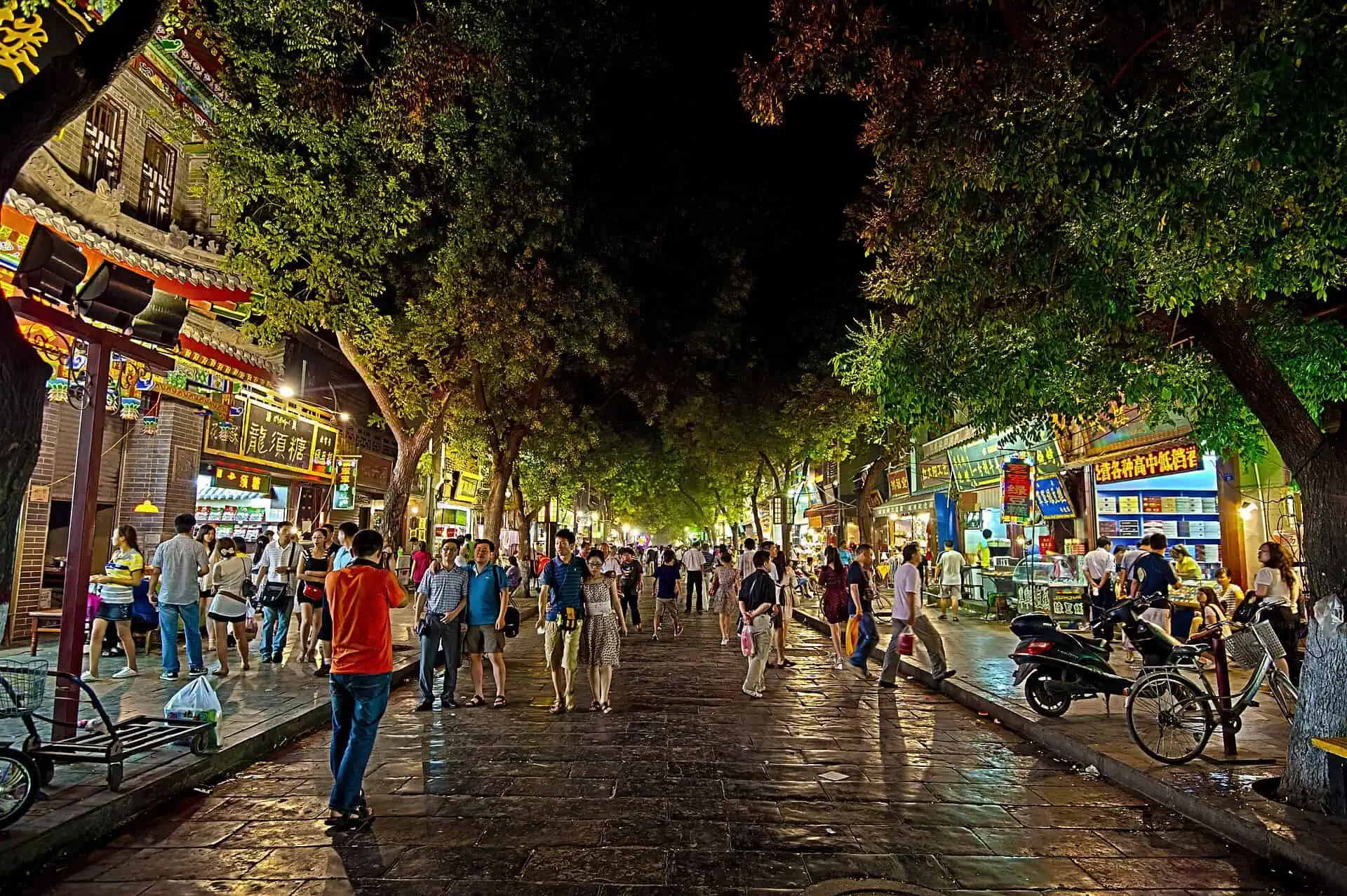
Muslim Quarter
Feeding Xi'an since the 700s — the loudest, smokiest, best-smelling streets of its Hui community.
Learn more →
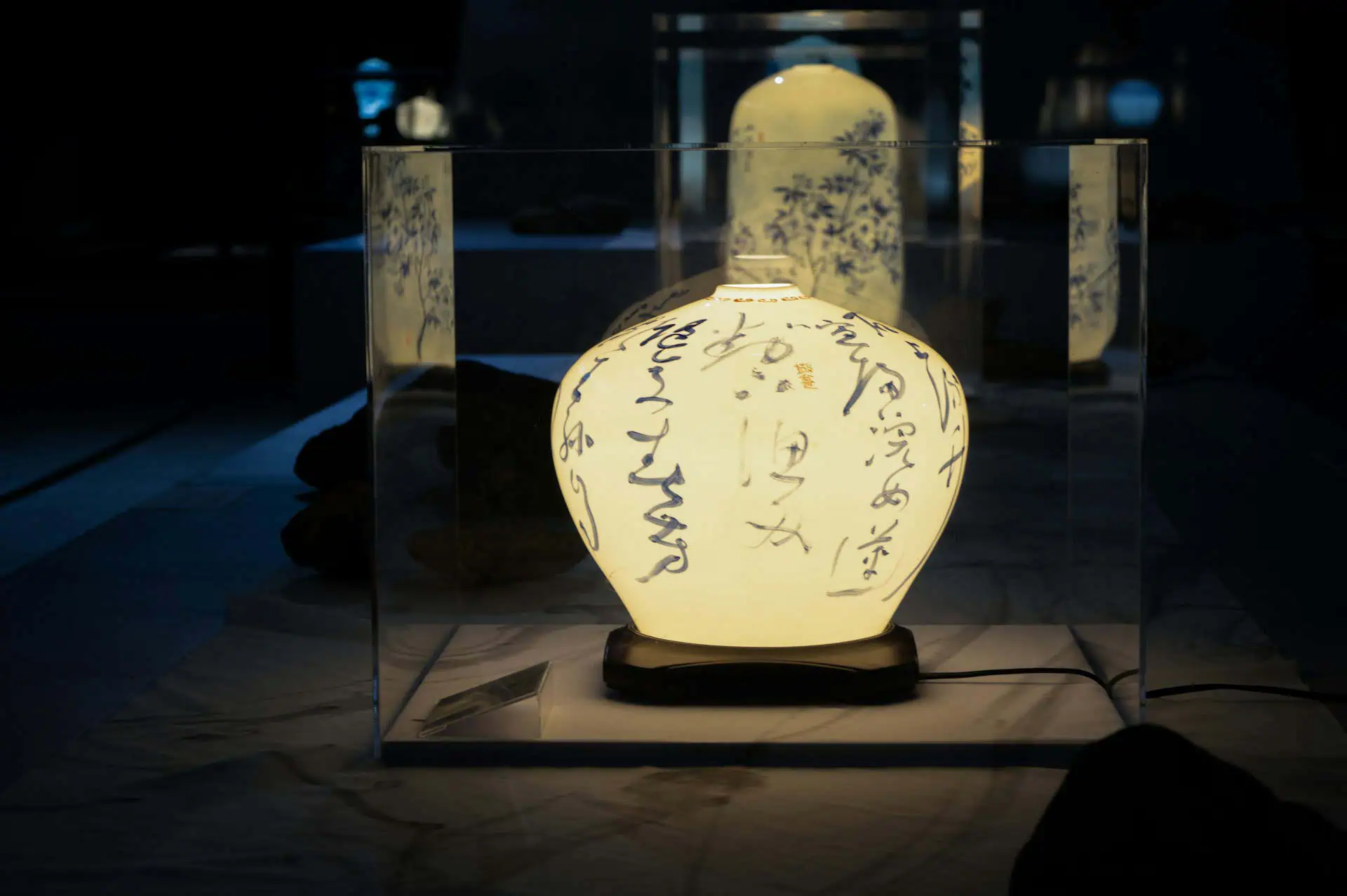
Shuyuanmen Ancient Culture Street
The scholars' lane behind the South Gate — four centuries of brushes, inkstones and seal carvers at work.
Learn more →
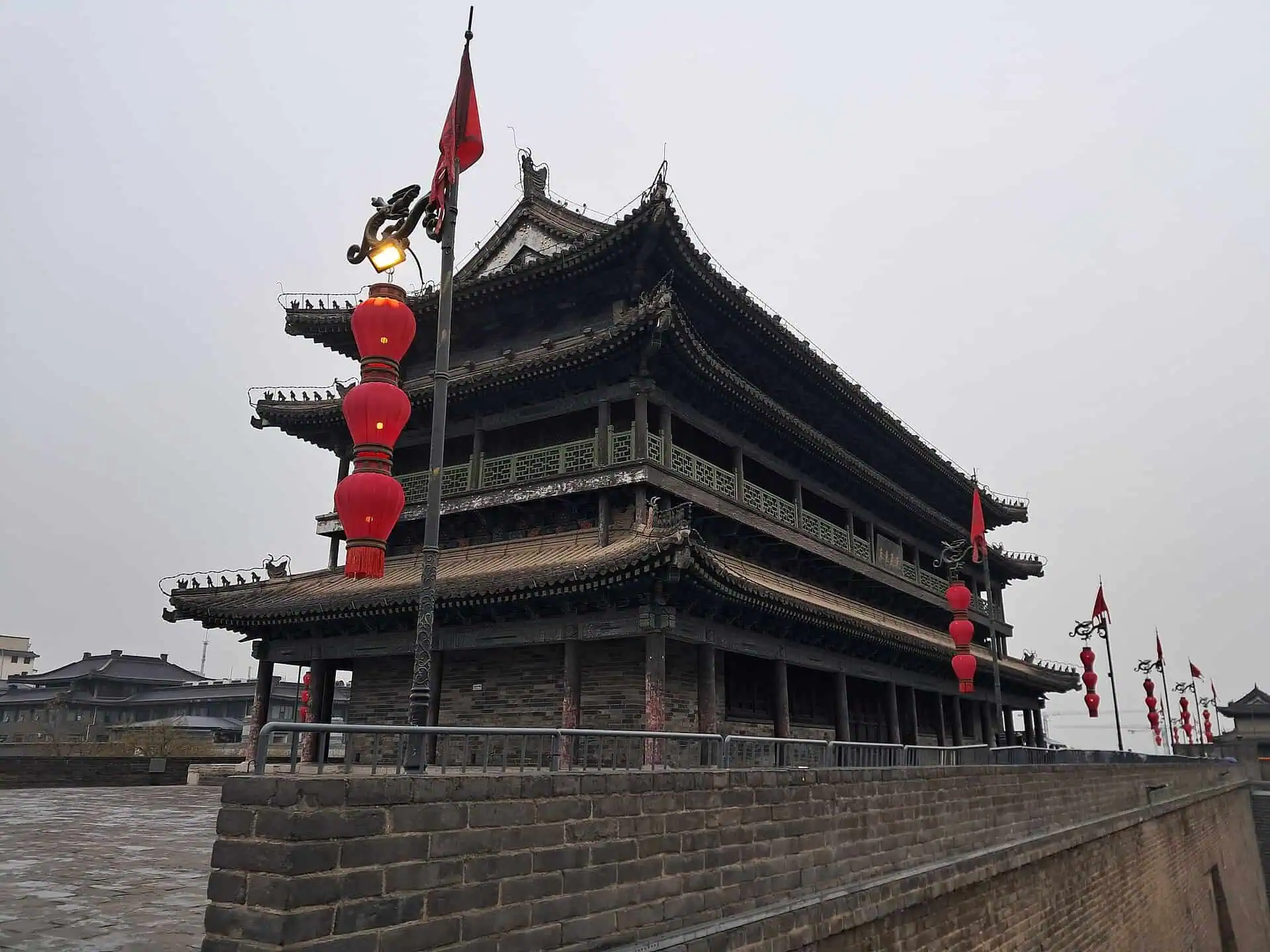
Xi'an City Wall
A 14-kilometer Ming dynasty rectangle you can cycle on top of — 650 years old and still the city's favorite commute.
Learn more →
Keep exploring
Visas & entry: do you need one?
Probably less paperwork than you fear — and two of the doors now have their own deep-dive packages: the 30-day visa-free entry (~50 countries) and the 240-hour transit (55 countries, including the US). This page is the router: work out which door is yours, then read its package.
The 240-hour visa-free transit, explained
Ten days in China without a visa, if you're just passing through — including Americans. The rules, the traps, and how to run it through Xi'an.
The 30-day visa-free entry: who gets in free
Around 50 countries can now enter China for up to 30 days with no visa at all — no transit logic, no onward-ticket games. Most of Europe, the UK, Canada, Australia and more. The US is not on the list.