Muslim Quarter
Huímín Jiē
Feeding Xi'an since the 700s — the loudest, smokiest, best-smelling streets of its Hui community.
Entry
Free
Hours
Mon–Sun · Open street; stalls roughly 10:00
Time needed
1½–3 hours
Metro
Line 2 · Bell Tower (钟楼)
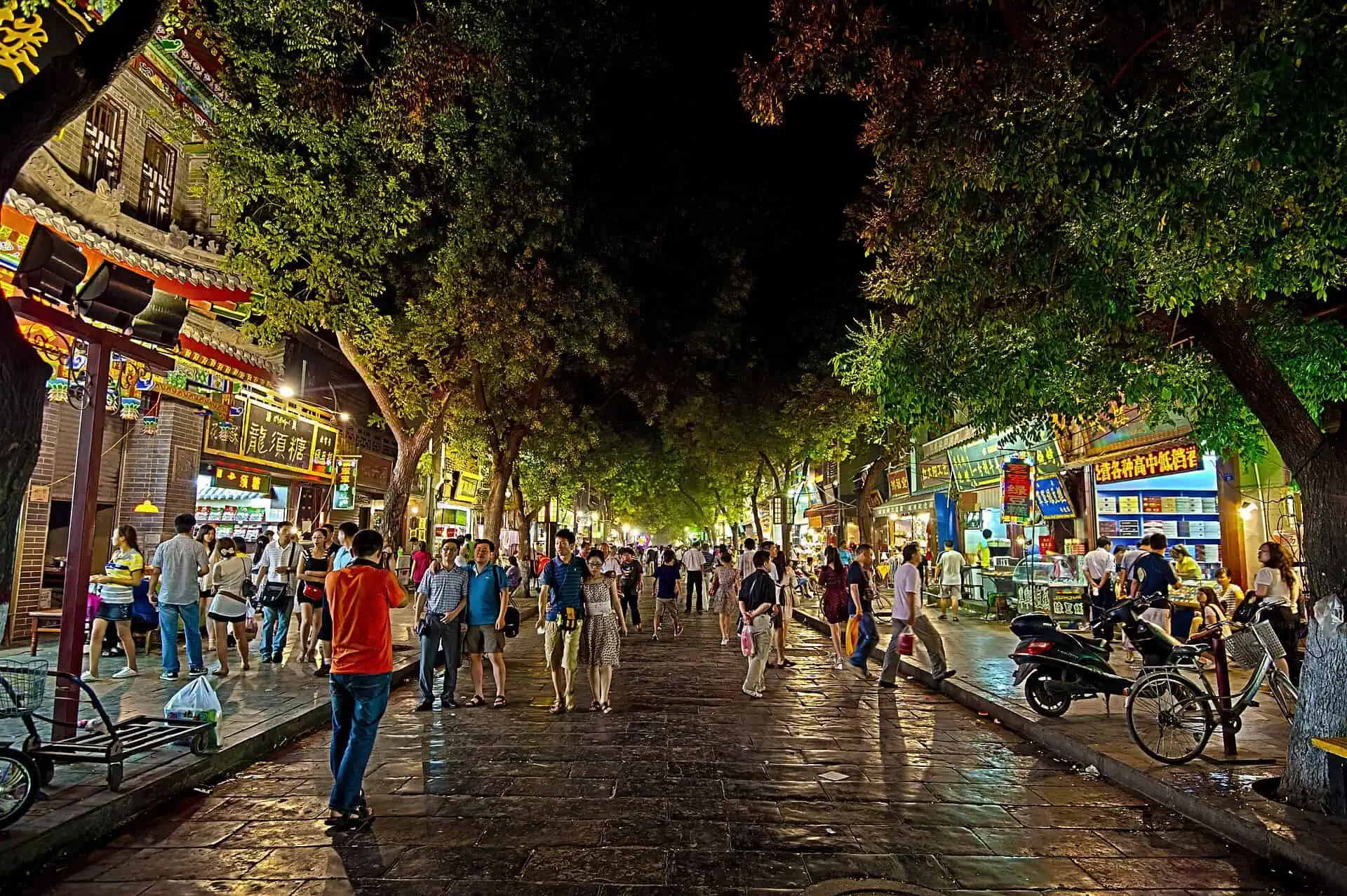
The Hui community has been cooking in these lanes since the 700s — so yes, the main strip is touristy, and yes, you should still go. Behind the neon and the souvenir stalls is a real neighborhood that has fed this city for centuries, cooking some of the best food in Xi'an. Come at dusk, graze rather than commit to one restaurant, and slip into the side lanes when the main drag gets silly.
What you're looking at
The Muslim Quarter (回民街, Huímín Jiē) is the warren of lanes northwest of the Drum Tower (鼓楼, Gǔlóu), anchored by the pedestrian food street Beiyuanmen (北院门, Běiyuànmén). This is the home of Xi'an's Hui (回族, Huízú) community — Chinese Muslims whose roots here go back to Silk Road merchants and later migrations. Tucked into the lanes is the Great Mosque (清真大寺, Qīngzhēn Dàsì), one of the oldest mosques in China, its courtyards built like a Chinese temple rather than anything with domes and minarets — a reminder that this community isn't a theme park but a piece of the city's Silk Road past that never left.
The main strip is a full sensory assault: lamb skewers smoking over coals, mallets pounding sesame candy, pomegranate-juice presses, vendors calling out over loudspeakers. It's unashamedly commercial, packed most evenings, and still worth your time — because the food is genuinely good and the community behind the stalls is genuine too. The trick is knowing where to look.
Eating strategy
Graze, don't dine. The quarter rewards five small stops over one big sit-down meal. Most snacks run ¥5–20 apiece, so mistakes are cheap.
What to hunt down:
- Roujiamo (肉夹馍, ròujiāmò) — the Xi'an burger. Here it's beef or lamb, not the pork version you get elsewhere. Our roujiamo guide explains what to look for.
- Yangrou paomo (羊肉泡馍, yángròu pàomò) — lamb soup with hand-torn flatbread. Tear your own bread into pea-sized pieces; the smaller you tear, the more the kitchen respects you.
- Biangbiang noodles (𰻞𰻞面, biángbiáng miàn) — belt-wide hand-pulled noodles. See the full dish guide.
- Lamb skewers (羊肉串, yángròu chuàn) — grilled over coals, dusted with cumin and chili. The quarter's soundtrack and perfume.
- Persimmon cakes (柿子饼, shìzibǐng) and pomegranate juice (石榴汁, shíliu zhī) — the local fruit, pressed in front of you in autumn.
Escape the main drag. When Beiyuanmen turns into a human traffic jam, walk west: Dapiyuan (大皮院, Dàpíyuàn) lane has the sit-down classics locals actually return to, and the Sajinqiao (洒金桥, Sǎjīnqiáo) area further west is a neighborhood canteen strip — a morning market before 10:00, cheap noodles and paomo all day, a fraction of the tour groups. We've mapped the worthwhile stalls in our Muslim Quarter eats guide.
Getting there
The quarter sits dead center in the old town, immediately behind the Drum Tower.
- Metro: Line 2 to Bell Tower (钟楼) station, then a 10-minute walk — cross to the Bell Tower, walk west to the Drum Tower, and the quarter's entrance arch is right behind it. Our getting around guide covers metro basics.
- From the City Wall: after a late-afternoon ride on the wall, it's a 20-minute walk north from the South Gate, or one metro stop from Yongningmen to Bell Tower. This is the natural evening pairing.
- Taxi/DiDi: ask for 回民街 or 鼓楼. Note that drop-off is at the pedestrian zone edge — no cars go into the lanes.
Practical notes
- Crowds: 18:00–21:00 on weekends and holidays the main strip is shoulder-to-shoulder. Go at 11:00 for a calmer first pass, or after 21:30 when the crush thins. Keep phones and wallets in front pockets.
- This is halal territory: no pork anywhere, and the food is halal by tradition. Alcohol is served in some restaurants but don't bring your own into the lanes; the mosques in the side streets are active places of worship.
- Gluten warning: paomo, biangbiang noodles and most baked snacks are wheat — celiacs should graze carefully (skewers, fruit, rice cakes).
- Toilets: scarce in the lanes. Use the malls around the Bell Tower before you dive in.
- Payments: every stall takes WeChat Pay or Alipay; set it up before you come.
- Timing the visit: 1.5–3 hours covers a thorough graze. It pairs perfectly with the Drum Tower at dusk and the Bell Tower lit up on your way out.
Questions, answered
Is the Muslim Quarter worth visiting or is it a tourist trap?
Both, honestly. The Beiyuanmen main strip is fully commercialized — but the food is genuinely good, the Hui community is real, and the side lanes (Dapiyuan, Sajinqiao) are where locals still eat. Go for dinner, not for souvenirs.
What should I eat in the Muslim Quarter?
The essentials: lamb or beef roujiamo, yangrou paomo (tear your own bread), cumin-dusted lamb skewers, biangbiang noodles, persimmon cakes and fresh pomegranate juice. Graze across several stalls rather than committing to one restaurant.
What is the best time to visit the Muslim Quarter?
Dusk — the grills fire up, the lights come on and the atmosphere peaks around 18:00–22:00. For fewer crowds, come at 11:00 or after 21:30. The Sajinqiao area works best as a morning market, before 10:00.
Is the food in the Muslim Quarter halal?
Yes — this is the home of Xi'an's Hui (Chinese Muslim) community, and the food is halal by tradition. You'll find no pork on the strip; the signature meats are lamb and beef.
How long do you need in the Muslim Quarter?
1.5–3 hours: an hour to walk the main strip, plus time to eat your way through the side lanes. Combine it with the Drum Tower, the Bell Tower at night, or an evening after cycling the City Wall.
How do I get to the Muslim Quarter?
Metro Line 2 to Bell Tower station, then a 10-minute walk past the Drum Tower — the quarter's entrance arch is directly behind it. Taxis drop at the pedestrian zone edge; ask for 回民街 or 鼓楼.
Keep exploring
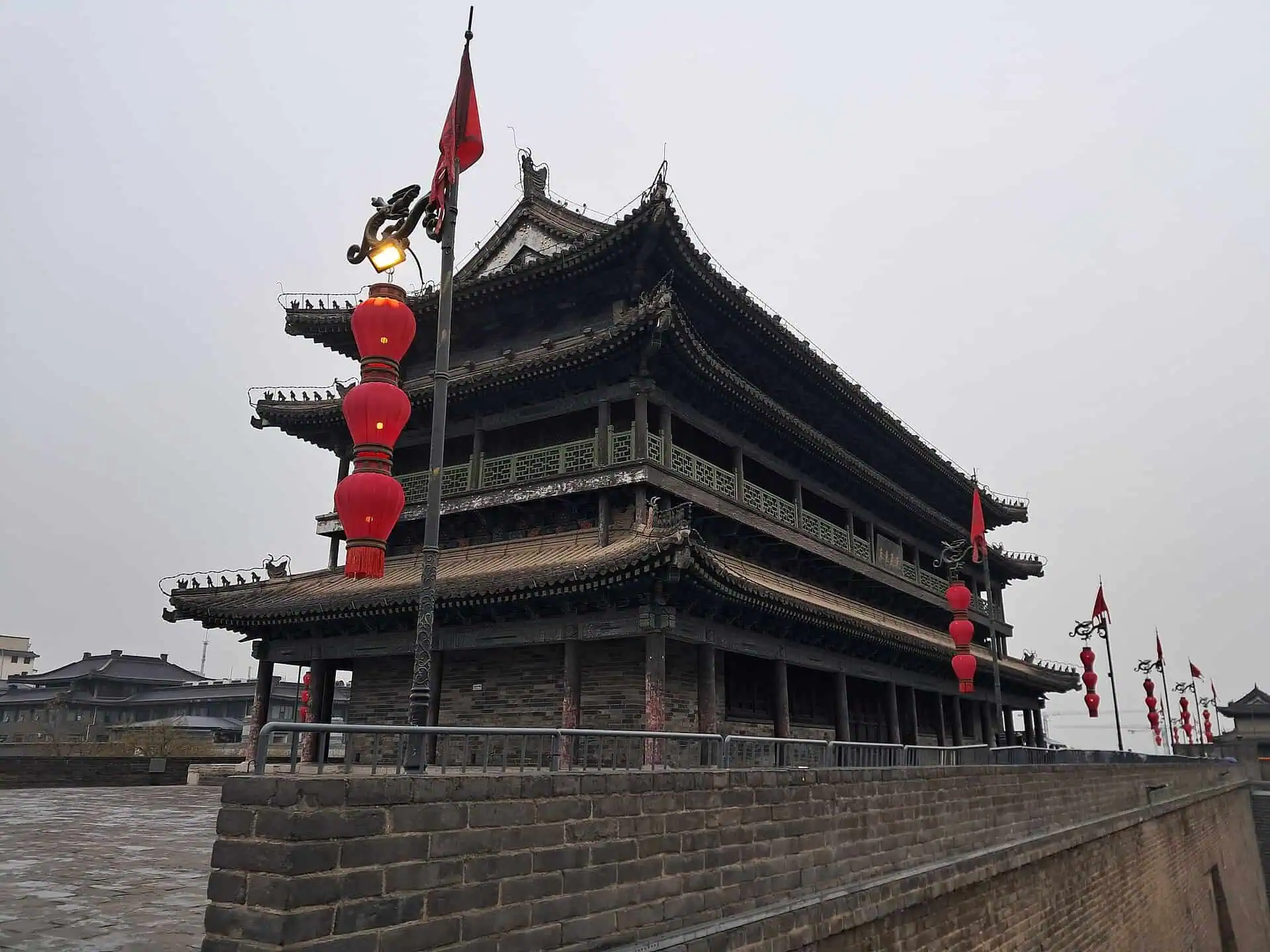
Xi'an City Wall
A 14-kilometer Ming dynasty rectangle you can cycle on top of — 650 years old and still the city's favorite commute.
Learn more →
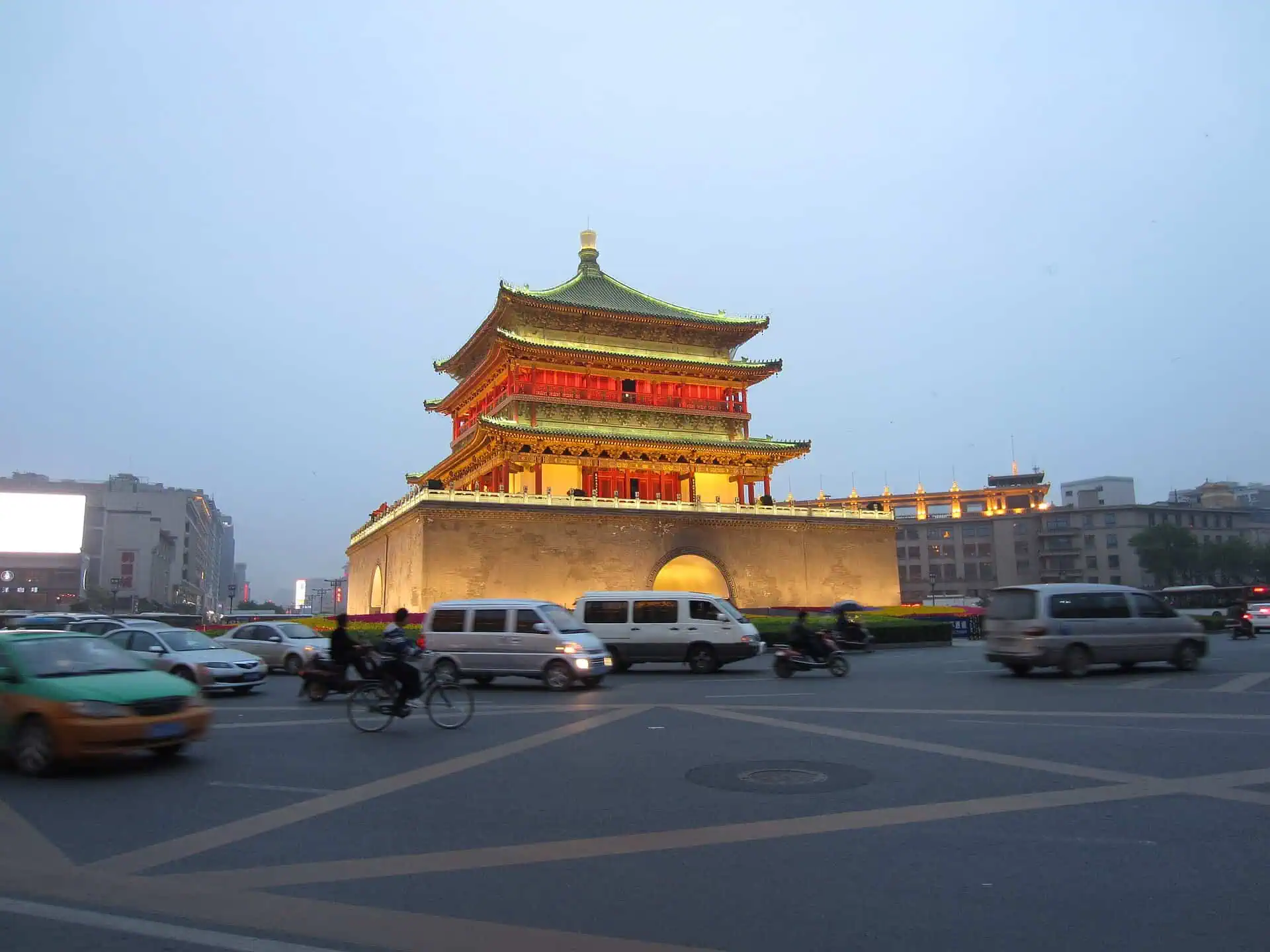
Xi'an Bell Tower
A Ming tower from 1384 at the dead center of the walled city — best admired at dusk, floodlit above the roundabout.
Learn more →
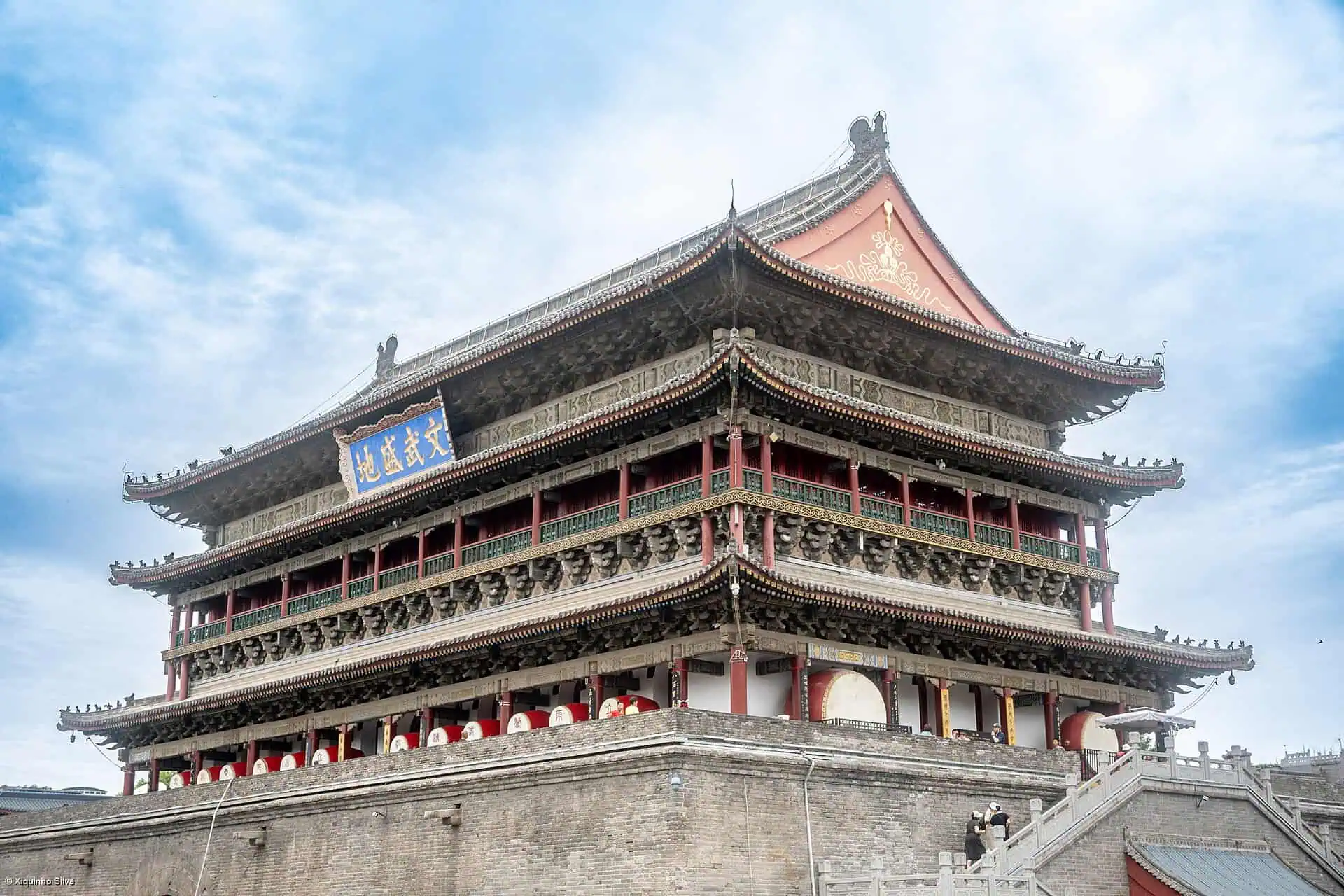
Xi'an Drum Tower
Built in 1380, four years before its famous sister — the tower whose drums closed every Xi'an day, and the gateway to the Muslim Quarter.
Learn more →
Related stories
The 240-hour visa-free transit, explained
Ten days in China without a visa, if you're just passing through — including Americans. The rules, the traps, and how to run it through Xi'an.
Xi'an's railway stations explained
Xi'an has three main passenger stations and they are nowhere near each other. Xi'an North handles almost all high-speed rail; Xi'an (the old central station) handles conventional trains and sits next to the wall; and Xi'an East — which only opened on June 30, 2026 — is the brand-new hub for Wuhan, Yan'an and Ankang. Get the station name right when you book, or you will miss your train.
Getting around: metro, buses, DiDi & taxis
Xi'an's metro covers everything a tourist needs for ¥2–8 a ride, with English signage throughout. For anywhere off the rails, DiDi (China's Uber, in English) is cheap and easy — and the walled center is compact enough to walk.
Where to stay in Xi'an: the honest area-by-area guide
Xi'an is a compact city with a decisive metro, so the choice of base matters more for mood than logistics. For most first-timers the answer is inside the City Wall near the Bell Tower; below is every realistic alternative, with the character, the crowd it suits and what a room actually costs in each.
Best time to visit Xi'an: an honest month-by-month guide
Xi'an has two golden windows — late March to May, and September to early November — and two seasons that demand a reason: a furnace-hot summer and a cold, dry, wonderfully empty winter. Weather is only half the story, though; the Chinese holiday calendar can matter more than the temperature. Here's every month, with the traps marked.
The essential apps for Xi'an (and how to set them up)
China runs on its own app ecosystem, and Xi'an is no exception — but the setup is far easier than it used to be. Five apps cover payments, trains, taxis and maps, all work with a foreign phone number and bank card, and the whole job takes an evening at home before you fly.
Health & safety in Xi'an: a calm, practical guide
Xi'an is one of the safest big cities you'll ever visit — violent crime against tourists is rare, and solo travelers, including women walking at night, report few problems. The genuine risks are mundane: traffic, trip hazards, tap water you shouldn't drink, winter air and summer heat. Here's how to handle each.
Mandarin for Xi'an: the survival kit
You can run an entire Xi'an trip on twenty phrases, a pointed finger and a phone calculator. These are the twenty — with characters to show, pinyin to attempt, and honest notes on which pronunciation traps actually matter and which you can ignore.
Etiquette in Xi'an: what actually matters
Most China etiquette advice is written for business dinners, not tourists. The real list is short: one chopstick taboo, a young-and-imperfect queue culture, some camera manners, and a simple money rule — bargain at stalls, tip nowhere. Here's how to move through Xi'an without stepping on anyone.
Xi'an with kids: the family playbook
Xi'an is one of China's easiest cities to do with children: a compact center, sights with genuine visual scale, and food kids actually eat. The trick is choosing the four or five things that land with young travelers — and skipping the ones that are homework.
Accessibility in Xi'an: an honest audit
Xi'an is a 3,000-year-old city running on modern infrastructure, and accessibility splits exactly along that line: the metro and the big modern museums are genuinely step-free, while anything involving a 600-year-old gate, tower or pagoda usually means stairs. Here's what works, what doesn't, and what to confirm before you fly.
What a trip to Xi'an actually costs: budget vs comfort
Xi'an is one of China's cheapest big tourist cities — street dinners for ¥20, hostel beds under ¥150, a metro that reaches every headline sight. But the Terracotta Army, a night show and a decent hotel add up fast. Here are two honest daily budgets, the real price of every big-ticket item, and the savings that actually work.
Xi'an vs Beijing: how to split your China trip
The classic first-timer's dilemma, settled honestly: Beijing has the Forbidden City and the Great Wall, Xi'an has the Terracotta Army and a wall you can cycle — and they're different enough that most trips should include both. Here's what each city actually gives you, what it costs, and how to divide a week between them.
Xi'an vs Luoyang: the two ancient capitals, compared honestly
Both cities claim thirteen dynasties, both are 1.5 hours apart by high-speed train, and they complement each other better than they compete: Xi'an has the Terracotta Army and Tang cosmopolitanism at full volume, Luoyang has the Longmen Grottoes and a slower, quieter, cheaper rhythm. Here's the category-by-category comparison, and how to fit both into one trip.
Shopping in Xi'an: what's actually worth buying
Most of what's sold to tourists in Xi'an is factory stock you could buy anywhere in China — but a few things are genuinely local and worth suitcase space: a seal carved with your name on Shuyuanmen, a proper museum-shop terracotta figure, fu brick tea, and Shaanxi's dried persimmons. Here's what to buy, what to skip, and how the haggling works.
Where to Eat in the Muslim Quarter: A Street-by-Street Guide
The Muslim Quarter (回民街, Huímín Jiē) is Xi'an's loudest, smokiest, most delicious neighborhood — and its most touristed. The open secret is that almost nobody eating on the main strip is a local: the best food is one or two turns off it, at two-thirds of the price. Here's how the quarter is laid out, what to eat where, and how to dodge the traps.
Eating where locals eat: Yongxingfang, Sajinqiao & beyond
Every visitor finds the Muslim Quarter's main strip; almost none find where Xi'an actually eats. The local circuit splits in two directions: Yongxingfang (永兴坊), a curated one-stop sampler of food from across Shaanxi province by the East Gate, and Sajinqiao (洒金桥), an uncurated working Hui street where breakfast queues form before 8:00. Add the Dongxin Street night market and a couple of side lanes, and you can eat like a local for your entire trip.
Vegetarian & dietary needs in Xi'an
The honest version first: Xi'an's signature dishes are built on meat broth, and no menu in town marks vegetarian options. But the city also has a centuries-old Buddhist vegetarian tradition, a whole halal district where pork and lard can't follow you, and a street-food canon in which several of the best things contain no meat at all. Vegetarians who learn a dozen dishes and three phrases eat well here; strict celiacs should treat Xi'an as hard mode.
Halal eating in Xi'an
In most Chinese cities, halal travelers hunt restaurant by restaurant. In Xi'an you pick a neighborhood instead: the Hui Muslim community has been cooking here since the Tang dynasty, an entire district behind the Drum Tower sells no pork at all, and several of the city's signature dishes are halal by birth. Here's how to read the signs, what to eat, and what to watch for outside the quarter.
Tang Dynasty show & dumpling banquet — worth it?
The Tang Dynasty Palace dinner show is Xi'an's longest-running tourist evening: a dumpling banquet followed by an hour of Tang court music and dance in a plush theater. It's polished, comfortable and unashamedly aimed at visitors — and whether it's ¥400 well spent depends entirely on who you are. Families and first-time visitors to China tend to love it; travelers chasing the raw and local should spend the evening at Ever-Bright City for free instead.
Xi'an at night: lights, shows & evening walks
Xi'an is a different city after dark — Tang-style streetscapes floodlit gold, a pagoda floating over fountain shows, gate towers glowing above the moat. The best of it is free: the Grand Tang Ever-Bright City pedestrian street alone is worth an evening, and the pagoda fountain show costs nothing. Add a late dinner in the Muslim Quarter and, in season, the open-air Song of Everlasting Sorrow, and your nights may outshine your days.
Nightlife & craft beer in Xi'an
Xi'an is not Shanghai — nobody flies here for the clubs. But the city has bar streets with real history clustered around the South Gate, a small but genuine craft beer scene, a working livehouse circuit, and KTV as a full-contact local pastime. Here's what's actually worth your evening, what it costs, and what to skip.
The photographer's Xi'an: best spots & times
Xi'an rewards photographers who plan around light, not locations. The city's great subjects — walls, towers, pagodas, night markets — are all floodlit after dark, which means the magic window is the same almost everywhere: the hour around sunset. Here's where to stand, when to be there, and the rules that can cost you your drone.
Xi'an in winter: lantern festivals & lights (December–February)
Xi'an in winter is cold, dry and mostly crowd-free — and for about ten weeks around Chinese New Year it's also lit up like nowhere else in China. The City Wall Lantern Festival drapes giant illuminated sets across a 600-year-old rampart, the Tang quarter glows every night, and temple fairs fill the old town. Here's what the lights cost, when they run, and an honest take on the cold.
A short history of Xi'an (Chang'an)
Xi'an and the Silk Road: where it all began
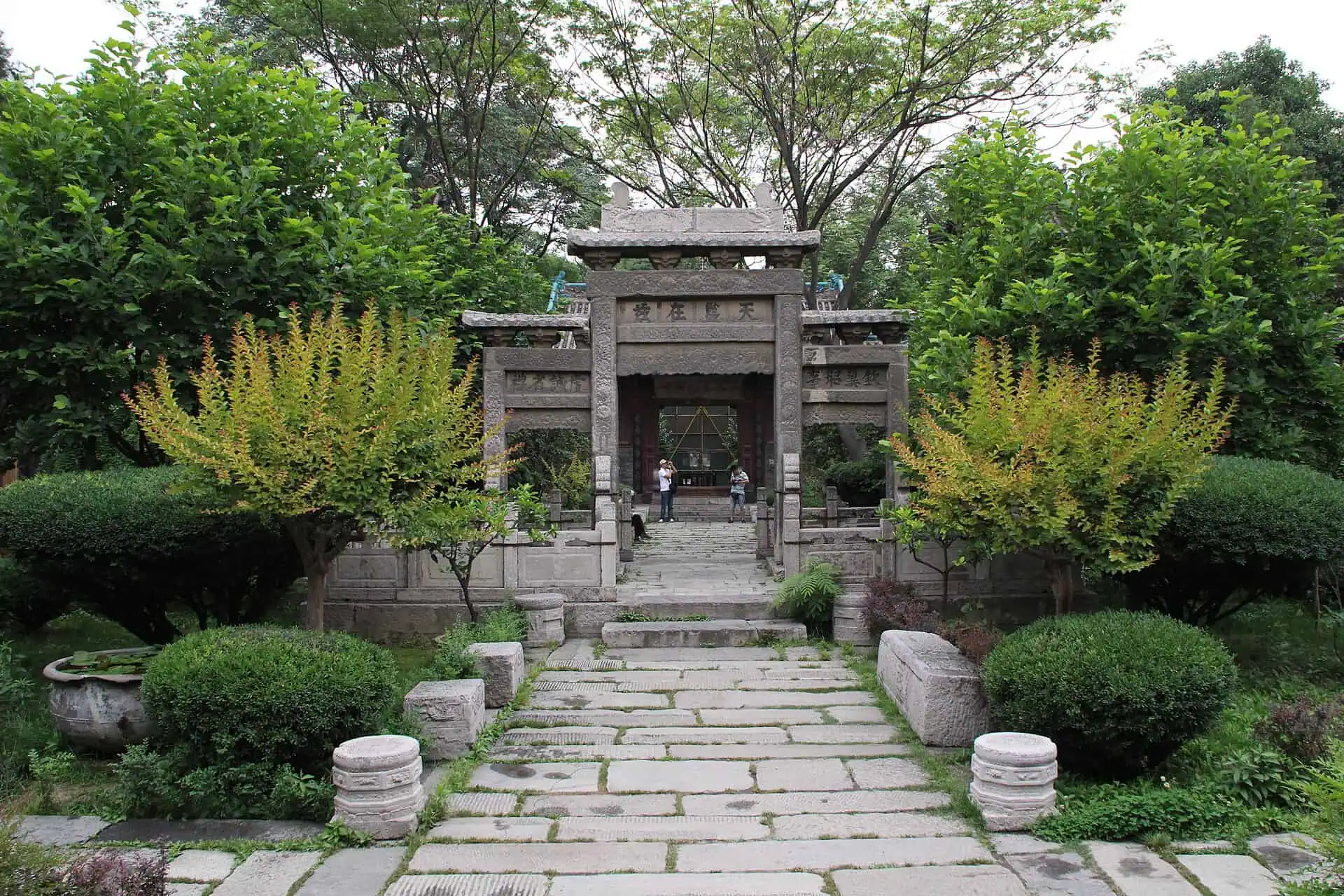
The Hui community and Islam in Xi'an
Ordering food in China: QR codes, pointing, and the no-tipping rule
Ordering food in Xi'an looks harder from the outside than it is. Menus live behind QR codes, English is rare, and the waiter does not want your tip — but between camera translation, the universal pointing method and the phrase boxes on our dish pages, you will eat very well with zero Chinese. These are the mechanics.
Hotels in Xi'an: what to actually book
Xi'an's hotel scene splits cleanly into three workable tiers: international five-stars that cost less than you'd pay at home, Chinese mid-range chains that are the best value in the city, and courtyard guesthouses for character. The two things that actually trip foreigners up — which area to pick and whether the hotel can register you at all — are both solvable in about ten minutes of reading. Start here.
Maps in China: why Google Maps fails, and what to use instead
Google Maps in China fails twice — it's blocked on mainland networks, and its pins sit 100–600 meters off reality thanks to China's scrambled map coordinates. The fix is easy: Apple Maps on iPhone, Amap on Android, and a few screenshots before you fly.
DiDi in English: ride-hailing in Xi'an without a Chinese number
DiDi is China's ride-hailing giant, and in 2026 it works end-to-end for foreigners: English interface, signup on your home phone number, payment by foreign card or through Alipay/WeChat. Set it up before you fly and every ride in Xi'an becomes a non-event.
Shared bikes in Xi'an: the last-kilometer answer
Xi'an's yellow and blue shared bikes turn the flat, spread-out city center into a 10-minute ride — unlocked with the Alipay or WeChat scan you already have, deposit-free, for about ¥1.5 per half hour. The one skill you need is parking inside the GPS zones.
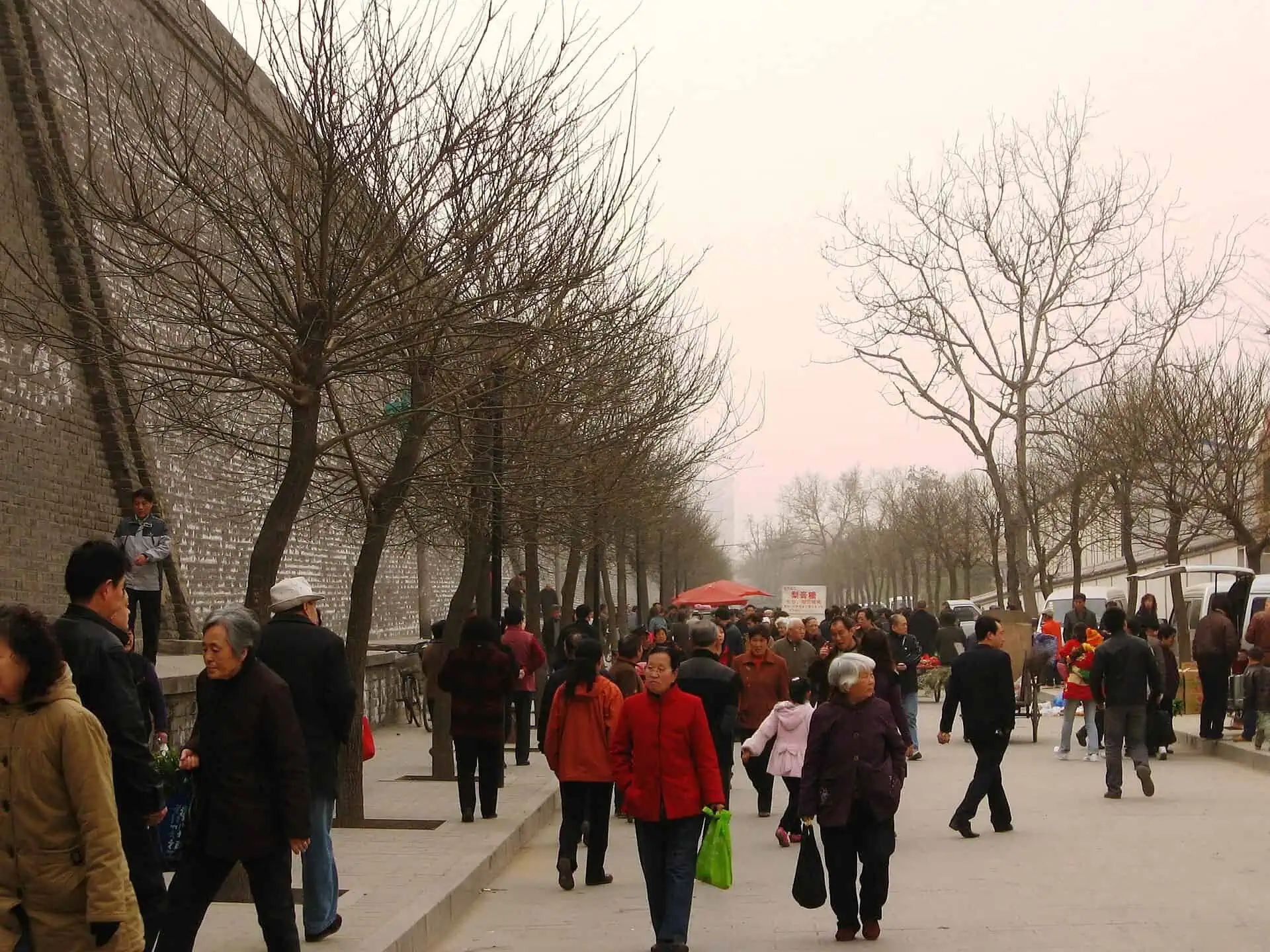
Market hours: Xi'an at dawn and after dark
Qinqiang: the bellowing opera that's the soul of Shaanxi
Qinqiang (秦腔) is Shaanxi's regional opera — the oldest of China's clapper operas, sung high, loud and raw to the crack of a wooden bangzi. It is not polite Peking opera; it is the sound of the loess plateau shouted back at itself, and locals call it the soul of Shaanxi. See it at Yisushe (易俗社), the century-old theatre a few minutes from the Bell Tower.
Shaanxi shadow puppetry: a 2,000-year show in a Muslim Quarter courtyard
Shadow puppetry (皮影戏) is one of China's oldest performing arts and Shaanxi runs one of its finest schools — leather figures moving behind a lit cloth, a master puppeteer voicing every role. See it on a daily loop at Gao's Grand Courtyard (高家大院), a Qing house at No.144 Beiyuanmen on the Muslim Quarter, often paired with the roaring Huayin Laoqiang folk singing.
Xi'an by season: Mid-Autumn, the film festival & the City Wall marathon
Is Xi'an safe for solo and women travelers? An honest answer
By the consensus of Western travel writing, Xi'an is one of the safer major Chinese cities for people traveling alone — violent crime against tourists is rare, and women walking at night inside the city wall report few problems. The risks worth planning for are mundane ones: pickpockets in the Muslim Quarter and Terracotta Army queues, scam touts, and the logistics of getting around without fluent Mandarin. Here is an honest, specific assessment — the reassurance and the caveats.
Riding the Xi'an metro: lines, fares and the airport line
Xi'an's metro is the spine of any visit — clean, bilingual, and within reach of nearly every sight, the airport and the Terracotta Army direction. Twelve lines are running as of 2026; in practice you'll lean on Line 2 through the centre, Line 14 to the airport and Line 9 out toward Lintong. Pay with the transit QR code in Alipay or WeChat and most rides cost ¥3–7.
The Shaanxi Dialect of Xi'an
The speech you hear around Xi'an is the Guanzhong dialect — a branch of Central Plains Mandarin, not a dialect of standard Mandarin, and not fully mutually intelligible with it. Locals take genuine pride in its Tang-dynasty capital pedigree, though linguistically it's a cousin of Tang court speech rather than a fossil of it. For travelers it's flavor, not a tool: everyone you'll deal with speaks standard Mandarin.
Xi'an in Summer: museums, mountains & long evenings
Xi'an is one of China's 'Four Furnaces' — June to August is genuinely hot and humid, with heat waves pushing toward 40°C. The fix is a rhythm, not a destination: museums and malls at midday, sights and street food at dawn or after dark, and a mountain escape if you can. Here's how to plan a summer trip without melting.
Studying in Xi'an: a practical guide for international students
Xi'an is one of China's classic student cities — over 50 universities, tuition that starts around ¥20,000 a year, and dorms cheap enough that living costs can stay under ¥2,500 a month. This guide covers the visas (X1 vs X2), the universities that host international students, what it really costs, and how to actually enjoy the city on a student budget.
Xi'an FAQ: 30 quick answers for first-time visitors
Do I need a visa? How many days? Can I drink the water? Is it safe? The 30 questions first-time Xi'an visitors actually ask, answered in a sentence each — with a link to the full guide for every one.
On video
Xi'an on video
What this place looks like on video.