Xi'an vs Beijing: how to split your China trip
The classic first-timer's dilemma, settled honestly: Beijing has the Forbidden City and the Great Wall, Xi'an has the Terracotta Army and a wall you can cycle — and they're different enough that most trips should include both. Here's what each city actually gives you, what it costs, and how to divide a week between them.
8 min read · 7 sections
The short version
- With 7 days or less, do both: 3–4 days Beijing + 3–4 days Xi'an, connected by a 4.5–6 hour high-speed train (~¥515 second class).
- History differs by era: Xi'an is Qin, Han and Tang (China's formative empires); Beijing is Ming, Qing and modern China.
- Xi'an is compact and walkable in the center; Beijing is vast — every sightseeing day there needs route planning.
- Xi'an is cheaper across hotels, food and admissions; Beijing costs more but has more sheer headline sights.
- Pick only Xi'an if it's your second China trip, you're following the Silk Road, or you prefer depth over checklist scale.
The short version
This isn't a rivalry with a winner — it's a division of labor. Beijing (北京, Běijīng) delivers the monumental late empire and the modern capital: the Forbidden City, the Great Wall, the Temple of Heaven, Tiananmen-scale everything. Xi'an (西安, Xī'ān) delivers the early empire and the Silk Road: the Terracotta Army (兵马俑, bīngmǎyǒng), a complete Ming city wall you can cycle on top of, and a food culture built for grazing.
The practical answer for most first trips: do both, and let the high-speed train stitch them together. The cities are 4.5–6 hours apart by rail, and a 3–4 / 3–4 day split is the standard template for a reason — our 3-day Xi'an itinerary covers Xi'an's half of it. Where people go wrong is treating Xi'an as an optional add-on or, worse, a day trip. It isn't. What follows is the honest comparison, category by category, so you can weight the split for your own trip.
History: same country, different millennia
The two cities anchor opposite ends of China's imperial story, and that — not any quality gap — is the real difference.
Xi'an (as Chang'an, 长安, Cháng'ān) was the capital of the dynasties that created China as a unified state: the Qin (秦, Qín) who standardized the script and buried the terracotta army, the Han (汉, Hàn) who opened the Silk Road, and the Tang (唐, Táng), when Chang'an was likely the largest and most cosmopolitan city on Earth. What you see is archaeology on a staggering scale: tomb pits, rammed-earth palace platforms, 1,300-year-old pagodas. The full arc is in our short history of Xi'an.
Beijing is the capital of the later empire and of China now: Ming and Qing palaces in walk-in condition, the Forbidden City (故宫, Gùgōng) as the intact seat of 24 emperors, the Great Wall (长城, Chángchéng) ridging the northern hills, and the 20th century — Tiananmen, the hutong (胡同, hútòng) lanes, the Olympic skyline — layered on top.
The honest verdict: if you're drawn to origins — how China became China, the Silk Road, the First Emperor — Xi'an has no equal. If you want the imperial greatest hits in their original, still-standing architecture, Beijing wins. Most travelers find the combination more satisfying than either alone, because the cities complete each other's story rather than repeat it.
Scale and pace
This is the difference you feel in your legs.
Xi'an is compact. The historic core fits inside the 14 km wall circuit, and the headline sights cluster: Bell Tower to Muslim Quarter is a ten-minute walk, and the metro knits up everything further out — pagoda, museums, even the Line 9 ride toward the Terracotta Army. Three to four days done well covers the core plus a Lintong day; you will not spend your trip in transit. The city also exhales in the evening — the wall lit up, the Grand Tang Ever-Bright City promenade — so nights are an attraction, not a recovery period.
Beijing is vast. The Forbidden City alone is a full day; the Great Wall sections (Mutianyu, 慕田峪, Mùtiányù, and friends) are half-to-full-day excursions 60–90 km out; the Summer Palace (颐和园, Yíhéyuán) is across town from the Temple of Heaven (天坛, Tiāntán) in a city where "across town" can mean 90 minutes. Four days is a working minimum, five is comfortable, and every day needs a route plan — you can't improvise Beijing the way you can improvise Xi'an.
If you travel to wander, Xi'an suits you. If you're a checklist athlete, Beijing will keep you busy as long as you can stand.
Food: snack city vs dining city
Two excellent food cities with opposite geometries.
Xi'an is a street-snack city — arguably China's best. The cuisine is wheat-and-lamb northwestern: hand-ripped biangbiang noodles (biángbiángmiàn), roujiamo flatbread burgers, yangrou paomo (羊肉泡馍, yángròu pàomó) bread soup, and a Muslim Quarter where dinner means grazing ten stalls for ¥30–50 total. Meals are fast, cheap and eaten standing; the city rewards appetite over reservation lists. Start with our Muslim Quarter eats guide.
Beijing is a restaurant city. Its icons are sit-down events: Peking duck (北京烤鸭, Běijīng kǎoyā) carved tableside, copper-pot mutton hotpot, dumpling houses and imperial-cuisine revivals — plus genuinely great grazing in the hutongs if you hunt for it. You'll spend more per meal (a good duck dinner runs ¥150–250 a head against Xi'an's ¥30 noodle night) and book further ahead.
Vegetarians and snackers do better in Xi'an; celebration dinners and culinary range do better in Beijing.
Crowds and costs
Xi'an is the cheaper trip, full stop. Hotels run roughly a tier below Beijing for the same quality — a ¥500–800 budget that gets a good 4–5★ in Xi'an buys a smaller, older room in the capital. Admissions tilt the same way: Xi'an's two big tickets are ¥120 (Terracotta Army) and ¥54 (City Wall); Beijing's Forbidden City is ¥40–60 by season, but you'll stack more paid sights per day, and Great Wall logistics (entry about ¥45 before the cable car — check current pricing — plus transport) add up. Food isn't close: Xi'an's street-eating pattern is dramatically cheaper than Beijing's restaurant pattern. Numbers for the Xi'an half are in what a Xi'an trip costs.
Crowds are a tie, with different pressure points. Both cities mob their headliners — the Terracotta Army between 10:00 and 14:30, the Forbidden City nearly always — and both require real-name advance booking for the top sights (the Forbidden City sells out days ahead in season; so does the Shaanxi History Museum's free quota). Beijing's crowds are bigger but spread over a huge area; Xi'an's are concentrated in a compact center, which makes holiday weeks there feel more intense. In both cases: weekdays, early mornings, and never a Chinese public holiday if you can help it.
The train that makes the split easy
The Beijing–Xi'an high-speed line is one of China's workhorse routes: around 40+ trains a day run from Beijing West (北京西, Běijīngxī) to Xi'an North (西安北, Xī'ānběi), the fastest covering it in about 4 hours 10 minutes and most G-trains landing in the 4.5–6 hour band. Second class costs about ¥515; first and business class run higher for more legroom. Book a few days ahead in normal weeks, further ahead in summer and around holidays — tickets are real-name against your passport, which you also use at the gate.
The alternative is the overnight sleeper: slower, but it converts travel time into a hotel night and arrives in the morning — budget travelers swear by it, light sleepers don't. Flying exists but rarely makes sense once you count airport time on both ends.
Everything about stations, booking and onboard life is in our high-speed rail guide — read it before your first China train day.
So: how to split it, and when to pick only Xi'an
The default answer for a first China trip of a week or less: 3–4 days each, train between them. Beijing gets the extra day if your dates are tight (it's bigger); Xi'an gets it if you add Mount Huashan or a second day trip — the 4–5 day Xi'an itinerary shows what that looks like. With 10+ days, stop thinking in either/or terms and add a third city — Chengdu and Shanghai both pair naturally by high-speed rail.
Pick only Beijing if it's your one China trip ever and the Forbidden City and Great Wall are non-negotiable, or if you're traveling with someone whose mobility makes long sightseeing days in a spread-out city preferable to transit-heavy day trips.
Pick only Xi'an if:
- It's your second (or later) China trip — you've done Beijing's monuments and want the deeper, older layer.
- You're following the Silk Road — Chang'an was its eastern terminus, and the Silk Road story reads differently when you're standing in it.
- You're on a tighter budget — the same money simply goes further here.
- You hate mega-city logistics — Xi'an gives you world-class sights with a small city's daily friction.
- You eat to travel — if dinner-as-grazing sounds better than dinner-as-reservation, this is your city.
And if you genuinely can't decide: flip the decision. Whichever you skip, you'll be back — the visa rules practically assume it (see visas and entry).
Questions, answered
Is Xi'an worth visiting if I'm already going to Beijing?
Yes — they cover different eras. Beijing has the Ming/Qing monuments and the modern capital; Xi'an has the Terracotta Army, the complete city wall you can cycle, and the Silk Road's starting point. A 4.5–6 hour high-speed train connects them, so most first trips do 3–4 days in each rather than choosing.
How many days should I spend in Xi'an vs Beijing?
Beijing needs 4–5 days (the city is vast and each major sight is a half-day minimum); Xi'an's compact core takes 3–4 days including the Terracotta Army day trip. On a 7-day trip, split 4 + 3 or 3.5 + 3.5.
Is Xi'an cheaper than Beijing?
Yes, noticeably. Equivalent hotels run a tier cheaper in Xi'an, street food dinners cost ¥30–50 versus Beijing's restaurant-led ¥100+, and the headline admissions (¥120 Terracotta Army, ¥54 City Wall) are modest. Beijing's costs stack up through more paid sights and Great Wall transport.
How do you get from Beijing to Xi'an?
High-speed train: 40+ daily departures from Beijing West to Xi'an North, fastest about 4h10m, second class around ¥515, real-name booking against your passport. Overnight sleepers save a hotel night; flying rarely beats the train once airport time is counted.
Can you visit Xi'an as a day trip from Beijing?
No — at 4.5–6 hours each way by the fastest trains, a day trip would be all transit. Xi'an needs an overnight minimum, and 3–4 days to do it properly. If you're that short on time, stay in Beijing and save Xi'an for the next trip.
Places in this story
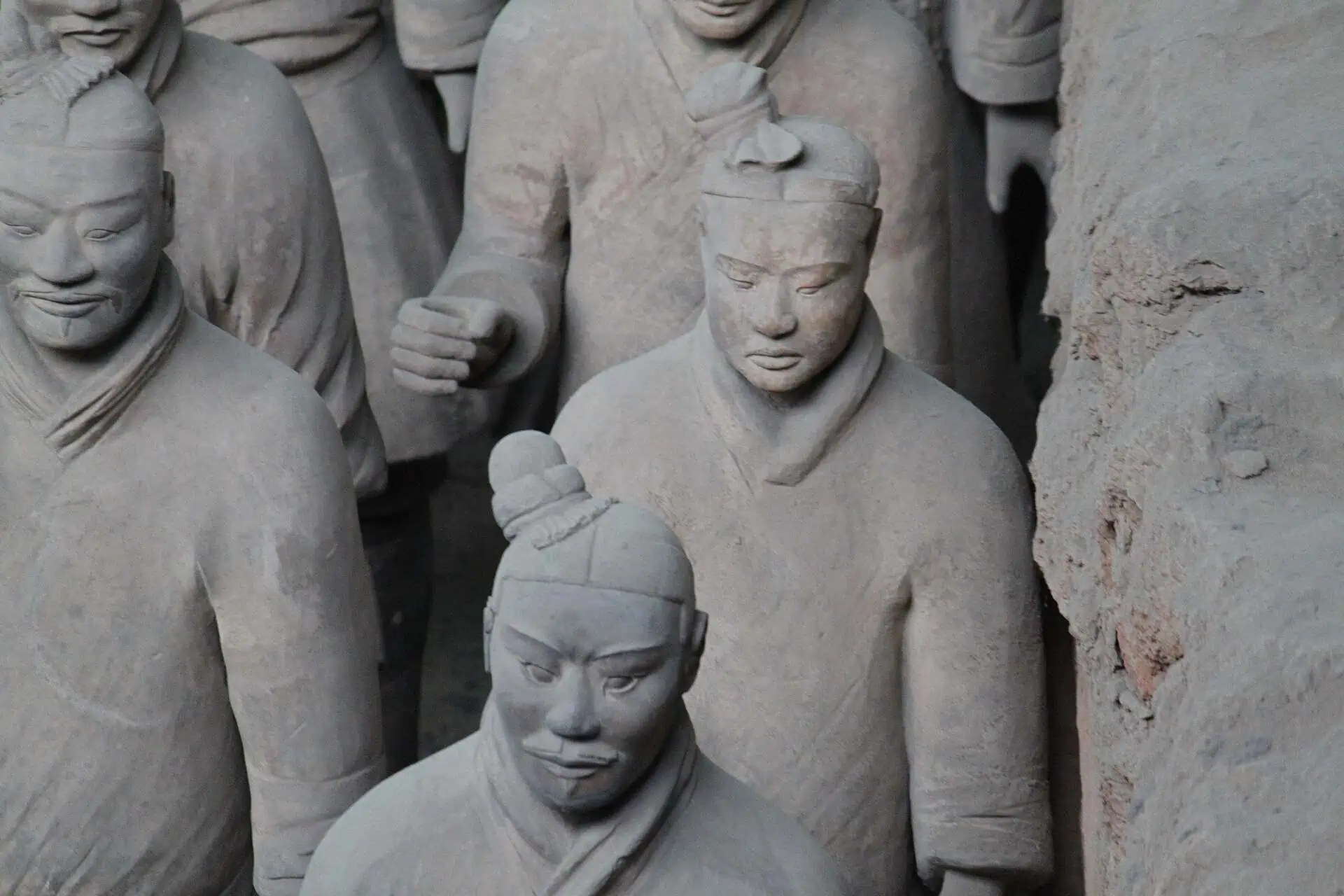
Terracotta Army
8,000 life-sized soldiers buried for China's First Emperor — and still on guard 2,200 years later.
Learn more →
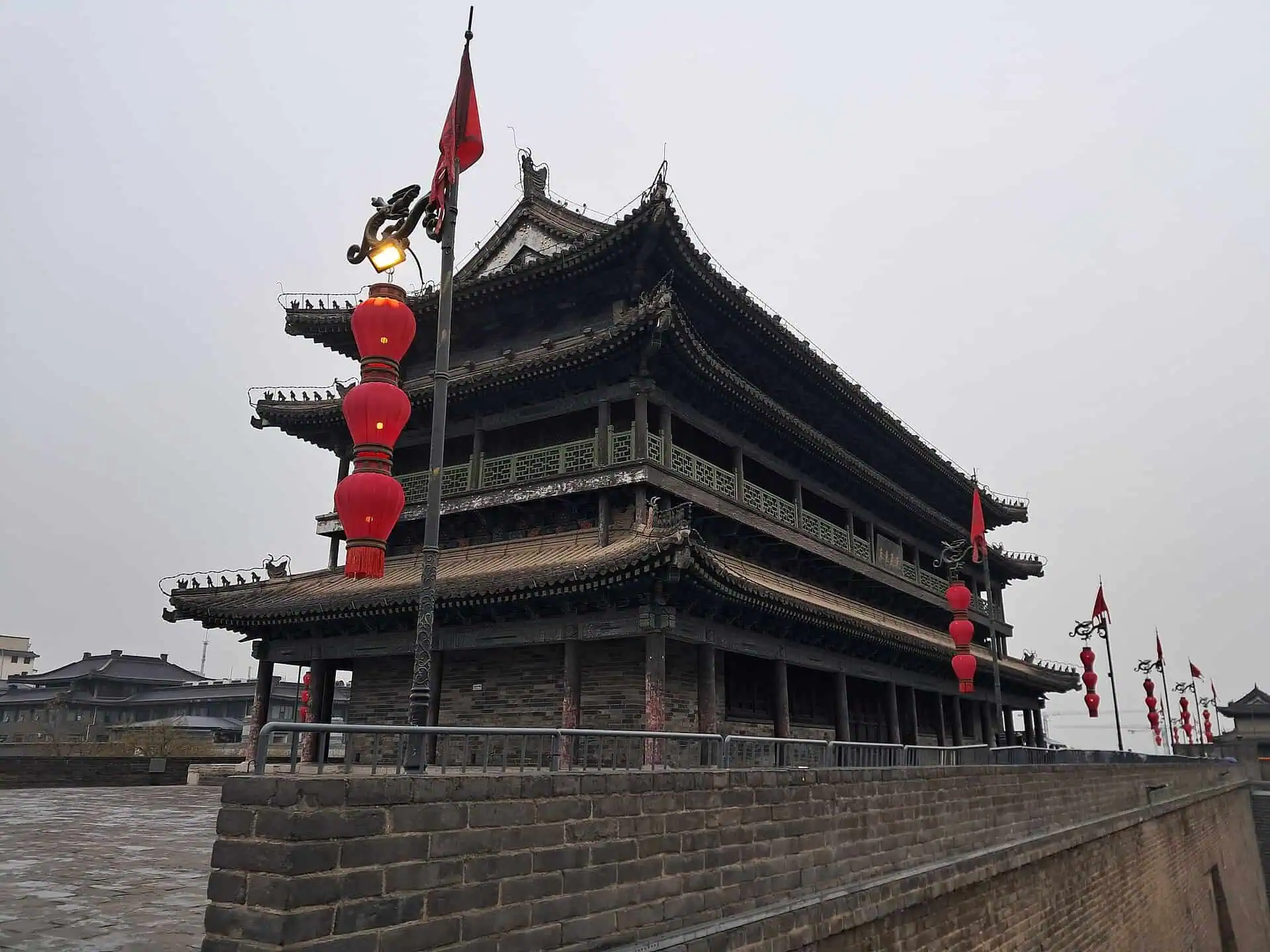
Xi'an City Wall
A 14-kilometer Ming dynasty rectangle you can cycle on top of — 650 years old and still the city's favorite commute.
Learn more →
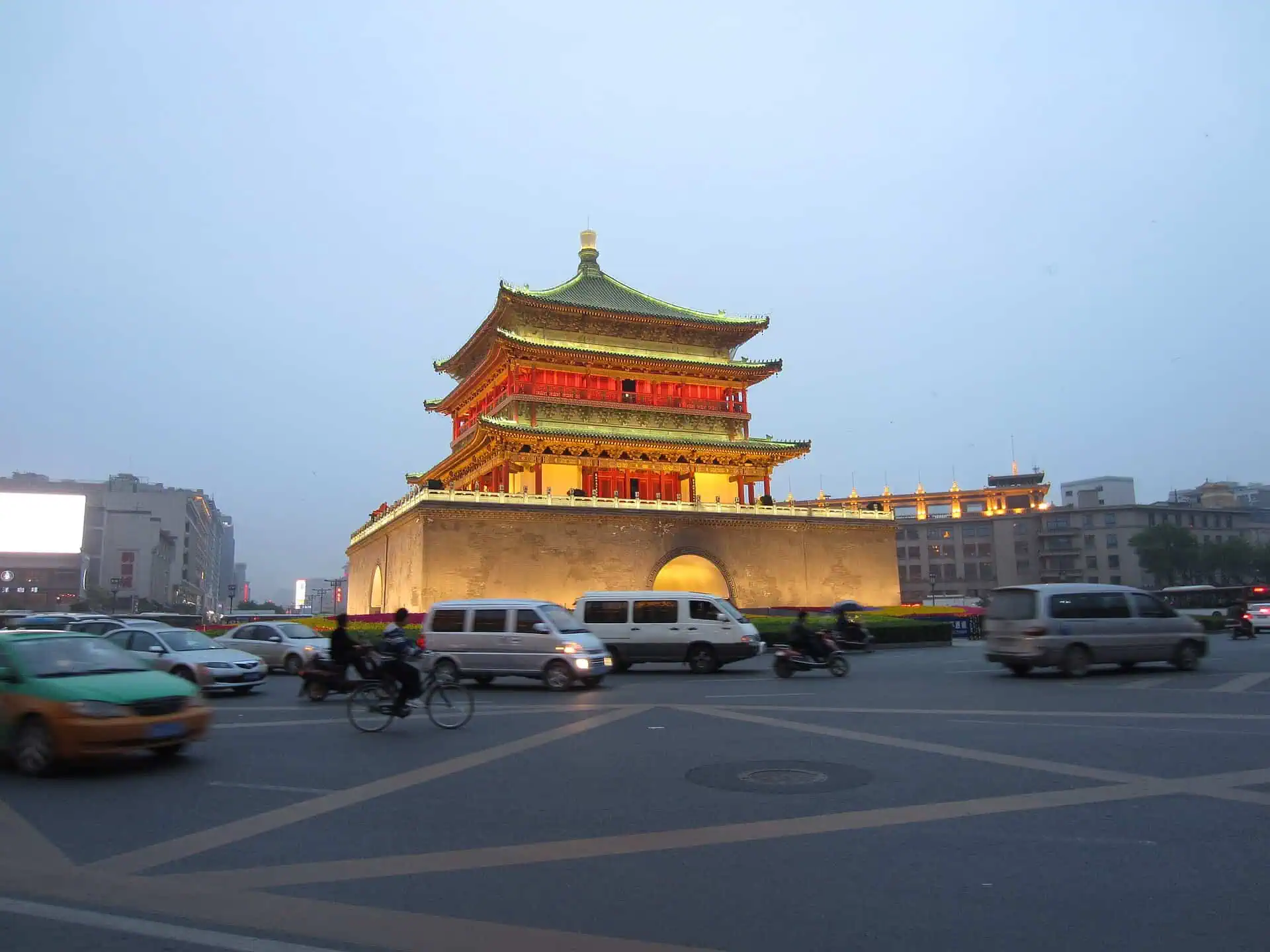
Xi'an Bell Tower
A Ming tower from 1384 at the dead center of the walled city — best admired at dusk, floodlit above the roundabout.
Learn more →
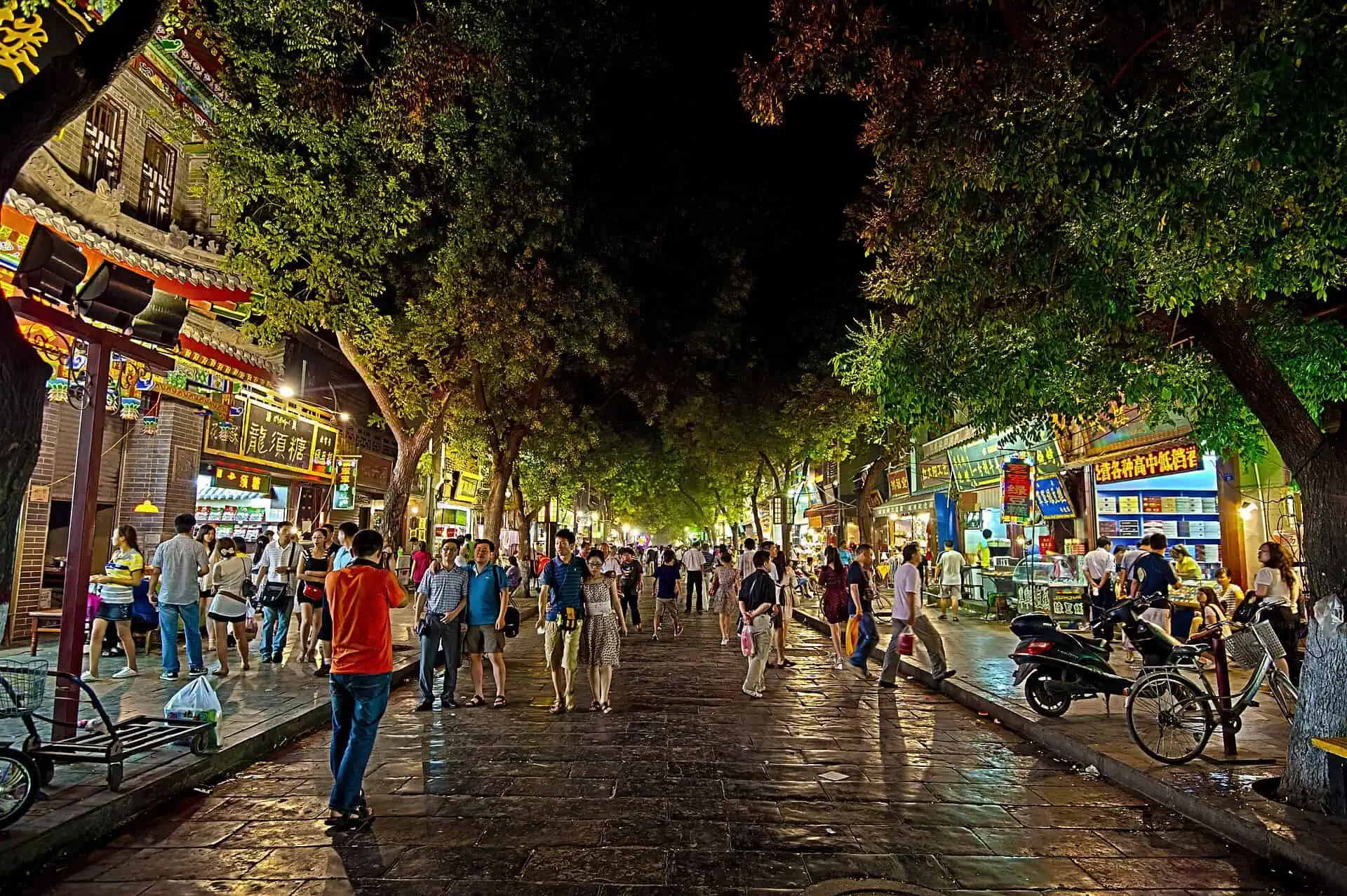
Muslim Quarter
Feeding Xi'an since the 700s — the loudest, smokiest, best-smelling streets of its Hui community.
Learn more →

Grand Tang Ever-Bright City
Two kilometers of free, floodlit Tang dynasty spectacle — the golden age, rebooted nightly.
Learn more →

Mount Huashan Day Trip
Sacred for 2,000 years, infamous for one plank path — China's most dramatic granite peaks, an hour from Xi'an by bullet train.
Learn more →
Keep exploring
Visas & entry: do you need one?
Probably less paperwork than you fear — and two of the doors now have their own deep-dive packages: the 30-day visa-free entry (~50 countries) and the 240-hour transit (55 countries, including the US). This page is the router: work out which door is yours, then read its package.
The 240-hour visa-free transit, explained
Ten days in China without a visa, if you're just passing through — including Americans. The rules, the traps, and how to run it through Xi'an.
The 30-day visa-free entry: who gets in free
Around 50 countries can now enter China for up to 30 days with no visa at all — no transit logic, no onward-ticket games. Most of Europe, the UK, Canada, Australia and more. The US is not on the list.