Where to Eat in the Muslim Quarter: A Street-by-Street Guide
The Muslim Quarter (回民街, Huímín Jiē) is Xi'an's loudest, smokiest, most delicious neighborhood — and its most touristed. The open secret is that almost nobody eating on the main strip is a local: the best food is one or two turns off it, at two-thirds of the price. Here's how the quarter is laid out, what to eat where, and how to dodge the traps.
7 min read · 4 sections
The short version
- The main strip, Beiyuanmen (北院门), is fine for atmosphere and snacks — but prices are inflated and the cooking is aimed at tour groups.
- Locals eat one lane over: Xiyangshi (西羊市), Dapiyuan (大皮院), and the Sajinqiao (洒金桥) area to the west.
- Priority eats: yangrou paomo (tear the bread yourself), beef roujiamo, sesame niangpi, guantang baozi, grilled skewers, persimmon cakes, fresh pomegranate juice.
- Everything is halal — this is the Hui Muslim district, so no pork anywhere; the roujiamo here is beef or lamb.
- Evenings (roughly 18:00–22:00) are busiest and best, when the grills fire up; mornings are for hula tang and zenggao.
- Payment is almost entirely QR code — set up Alipay or WeChat Pay before you go; carry a little cash as backup.
How the quarter is laid out
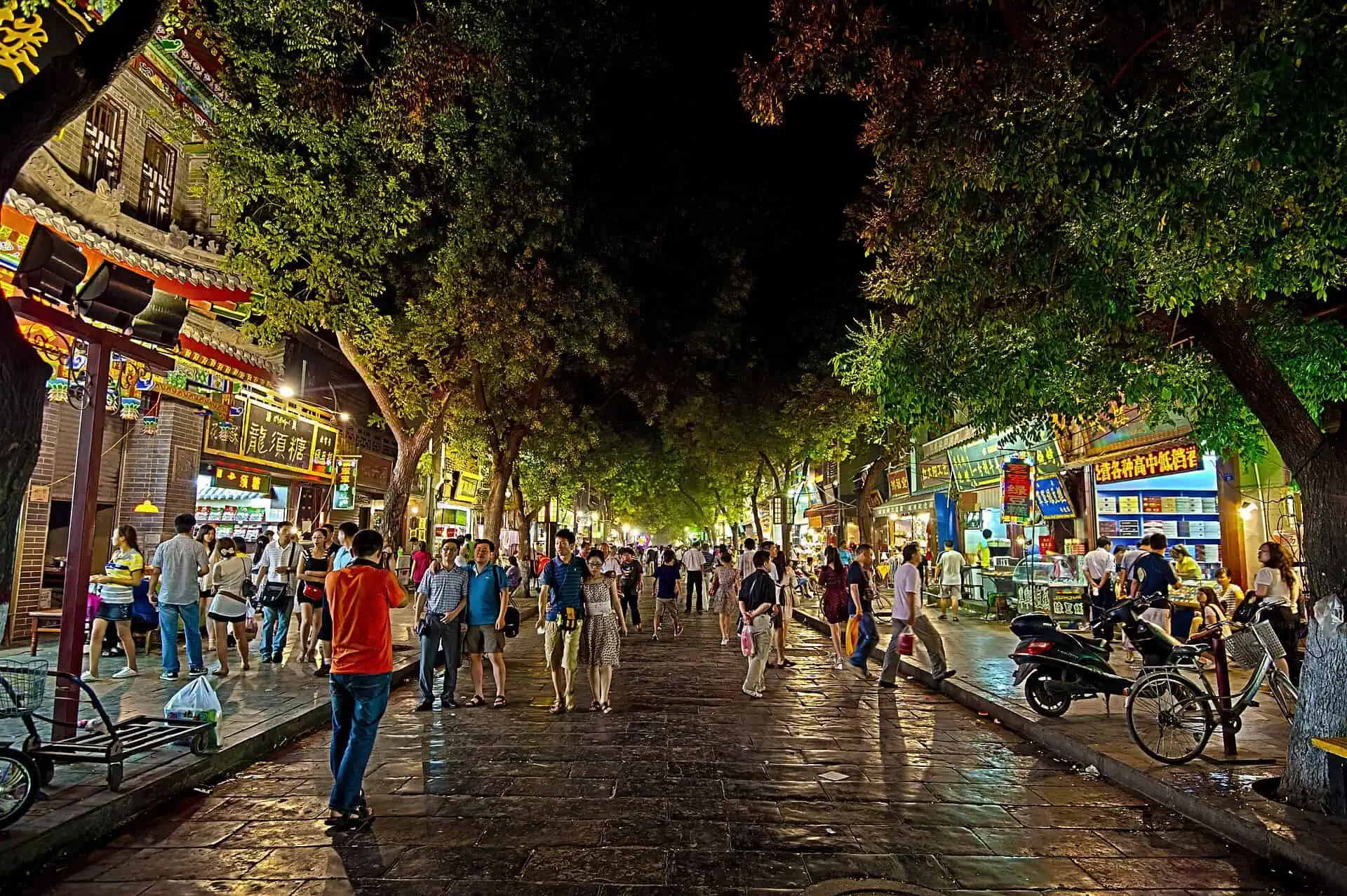
The Muslim Quarter fans out north of the Drum Tower (鼓楼, Gǔlóu), a few minutes' walk from the Bell Tower (钟楼, Zhōnglóu) at the center of the old city. What tour groups call "Muslim Street" is actually one street: Beiyuanmen (北院门, Běiyuànmén), a 500-meter pedestrian strip running straight north from the Drum Tower, walled on both sides with neon signs, souvenir shops and skewer grills. It's fun, photogenic and expensive by local standards.
The eating geography that matters runs perpendicular and parallel to it:
- Xiyangshi (西羊市, Xīyángshì) — the lane heading west off the middle of Beiyuanmen. Noticeably cheaper, noticeably better, still easy to find.
- Dapiyuan (大皮院, Dàpíyuàn) — another lane further north, running parallel to Xiyangshi. This is where several of the quarter's most respected names sit, and where the crowd starts to look local.
- Sajinqiao (洒金桥, Sǎjīnqiáo) — the area further west, outside the tourist core entirely: a working Hui neighborhood of paomo houses, grill stalls and breakfast spots where your fellow diners will be Xi'an residents, not tour groups. If you have one dinner to spend in the quarter, spend it here.
- Huajue Lane (化觉巷, Huàjué Xiàng) — the covered souvenir alley leading to the Great Mosque. Worth a browse for gifts, but eat elsewhere.
The rule of thumb is simple: the further you walk from the Drum Tower, the better the value and the better the food.
What to eat, stall by stall
Yangrou paomo (羊肉泡馍, yángròu pàomó) — the quarter's signature and Xi'an's great ritual dish. You're handed a dense flatbread and a bowl; you tear the bread into fingernail-sized pieces (this takes five to ten minutes and locals will judge your dedication); the kitchen then returns it drowned in rich lamb broth with noodles and sliced mutton. Tong Sheng Xiang (同盛祥) has been at it since 1920; Lao Sun Jia (老孙家) is the other famous house, and both have branches in the quarter. Order the ordinary (普通) bowl — the "premium" one is mostly more meat. Expect roughly ¥25–40.
Beef roujiamo — the halal answer to Xi'an's pork burger: chopped beef (sometimes lamb) spiked with cumin, stuffed in a toasted bun. Stalls line Beiyuanmen and Xiyangshi; pick one with a queue and a cook chopping to order, and expect to pay ¥10–15.
Guantang baozi (灌汤包, guàntāng bāo) — soup dumplings, done Hui-style with beef or lamb filling. Jia San (贾三灌汤包) on Beiyuanmen is the long-established name: nip a hole, drink the broth, then eat the dumpling with vinegar and chili.
Sesame niangpi (麻酱酿皮, májiàng niàngpí) — the quarter's own take on cold noodles: thick, chewy sheets dressed in sesame paste and chili oil rather than the vinegar-heavy Han style. Sheng Zhiwang (盛志望) in Dapiyuan is the famous counter; a bowl runs about ¥10. Grandma Hua's plum juice (花奶奶酸梅汤) nearby is the traditional chaser.
Biangbiang noodles — Hui-run shops in the quarter make halal versions of Xi'an's belt-wide biangbiang noodles with beef. If noodles are the priority, this is a respectable place for a bowl.
Grilled skewers (烤肉串, kǎoròu chuàn) — after dark the whole quarter smells of cumin and charcoal. Lamb is the default; the fat-marbled red-willow skewers (红柳烤肉) run about ¥10 each. Point, hold up fingers for quantity, pay by QR.
Persimmon cakes (柿子饼, shìzi bǐng) — discs of persimmon dough fried to order: crisp shell, molten center, sometimes stuffed with walnut or rose-sugar. A few yuan each; eat them hot, standing up, ideally twice.
Pomegranate juice (石榴汁, shíliu zhī) — Lintong, just east of Xi'an, grows some of China's best pomegranates, and stalls press them to order. Watch it being squeezed in front of you — and expect the price to climb the closer you are to the Drum Tower.
Breakfast, if you come early: rouwan hula tang (肉丸胡辣汤, ròuwán húlàtāng), the quarter's peppery beefball soup, and zenggao (甑糕, zènggāo), steamed glutinous rice layered with dates, sold off carts in the morning. Both are local-commuter food, cheap and filling.
Tourist traps and how to dodge them
- Main-strip price inflation. The same skewer, cake or juice costs meaningfully more on Beiyuanmen than two lanes west. Dodge it: browse the strip for the spectacle, buy on Xiyangshi, Dapiyuan or Sajinqiao. Wherever you buy, read the posted price board (明码标价) before ordering.
- The per-50-gram trick and "free sample" pressure. Dried-fruit, nougat and jerky counters press a taste on you, then quote a price that turns out to be per 50 grams (两, liǎng), not per half-kilo — a slice of fruit bar can land at ¥80. Dodge it: ask "这个是多少钱一斤?" (How much per jin/500 g?) and confirm the total before anything is cut. Politely decline samples you don't intend to buy; a smile and "bú yòng, xièxie" works.
- Pre-torn paomo. Some strip restaurants shortcut the ritual and bring your paomo with the bread already crumbled — or worse, pre-assembled. The dish is DIY by design; if they won't let you tear your own bread, eat paomo somewhere that will.
- "Time-honored brand" everything. Every third sign claims to be a century-old original (老字号, lǎozìhào). Most aren't. The famous names above are the real ones; otherwise, trust queues of locals over calligraphy.
- Fake "locals" with recommendations. Anyone outside a restaurant insisting it's the best in the quarter is on commission. The honest signal is a busy room full of people eating, not a tout with a laminated menu.
Practical notes
- Payments: the quarter runs on QR codes — Alipay and WeChat Pay at virtually every stall, including ¥5 snacks. Foreign cards are essentially useless here, so set up mobile payment before you arrive; a little cash works as backup but expect fumbling for change.
- Timing: evenings (roughly 18:00–22:00) are peak — grills going, crowds thick, atmosphere at its best. Weekday evenings are manageable; weekend and holiday evenings are a contact sport. Mornings are quiet and best for hula tang, zenggao and paomo without the wait.
- Halal everywhere: no pork is sold in the quarter and most eateries don't serve alcohol. It's a living religious neighborhood, not a theme park — the Great Mosque is a few lanes away — so modest dress and not waving street food around inside shops is appreciated.
- Getting there: metro Line 2 to Zhonglou (Bell Tower) station, then walk past the Drum Tower — see our getting around guide for tickets and transit apps.
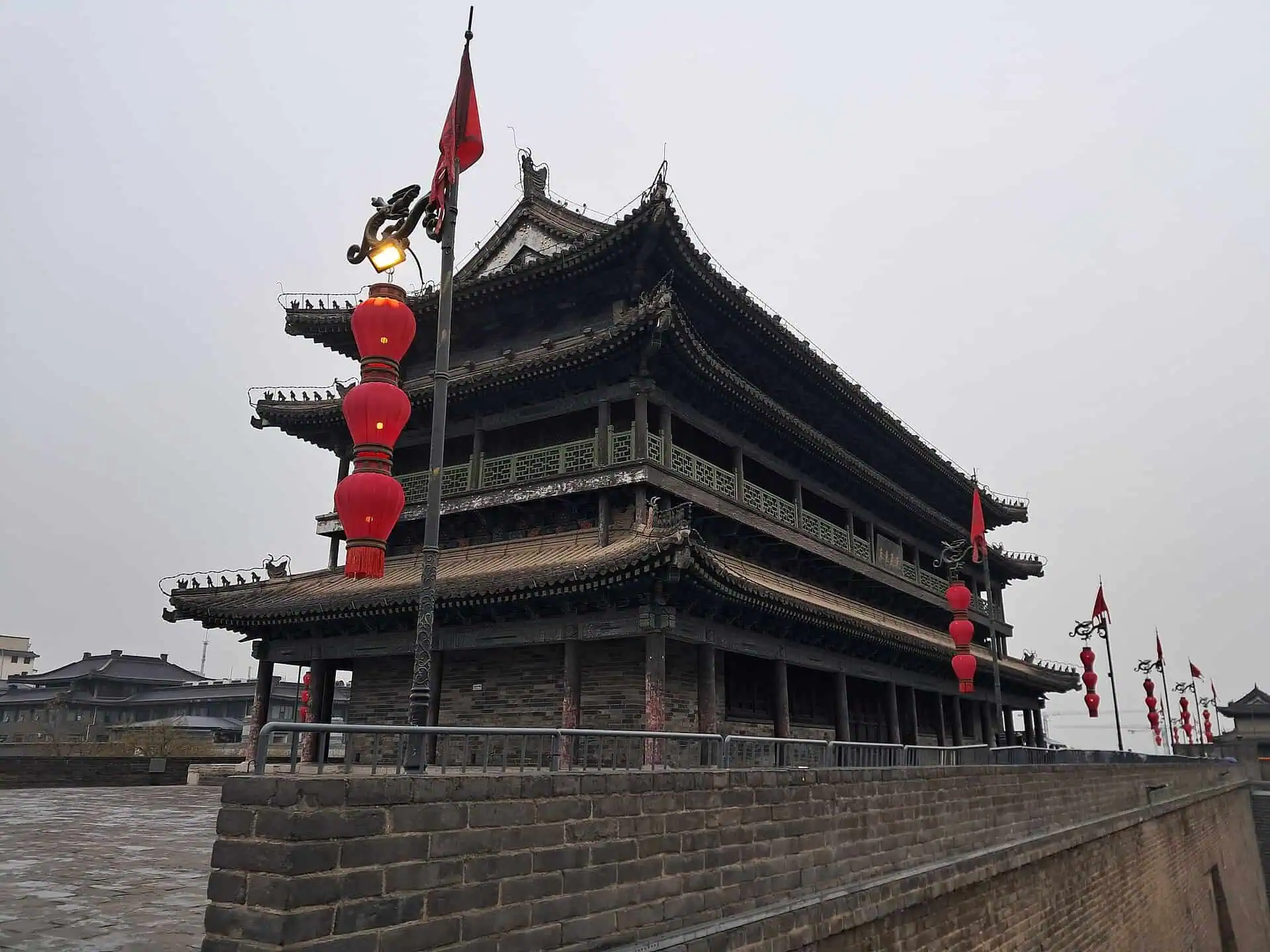
- Make an evening of it: the quarter pairs naturally with the Bell and Drum Towers and a sunset walk on the City Wall. Our 3-day itinerary slots it into a full Xi'an plan.
- Hygiene: choose stalls with high turnover — food cooked to order in front of a queue is the safest bet in any Chinese night market. Bottled or canned drinks only; skip ice.
Questions, answered
Is the food in the Muslim Quarter actually halal?
Yes. The quarter is the historic neighborhood of Xi'an's Hui Muslim community, and everything sold there is halal — no pork anywhere. The roujiamo is beef or lamb, the soup dumplings are beef or lamb, and most eateries don't serve alcohol.
Is the Muslim Quarter a tourist trap?
The main strip, Beiyuanmen, partly is — inflated prices and cooking aimed at tour groups. But Xiyangshi, Dapiyuan and especially the Sajinqiao area to the west are where locals actually eat, at local prices. With a little street selection, the quarter is one of the best eating experiences in China.
How much money do I need for an evening of eating?
Roughly ¥50–100 per person covers a full graze: skewers are about ¥10 each, a bowl of niangpi around ¥10, beef roujiamo ¥10–15, persimmon cakes a few yuan, and a sit-down yangrou paomo ¥25–40. Prices drift upward on the main strip and during holidays.
Can I pay with a foreign credit card or cash?
Not cards — virtually every stall takes only Alipay or WeChat Pay QR codes. Set up mobile payment before you arrive (both apps accept foreign cards now). A small amount of cash works as a backup, but change can be a problem at busy stalls.
What's the one thing I shouldn't miss?
Yangrou paomo, for the ritual as much as the flavor — tearing your own bread and eating the result is the most Xi'an thing you can do at a table. For pure street food, the beef roujiamo and hot persimmon cakes are the two bites to prioritize.
Places in this story
Keep exploring
Eating where locals eat: Yongxingfang, Sajinqiao & beyond
Every visitor finds the Muslim Quarter's main strip; almost none find where Xi'an actually eats. The local circuit splits in two directions: Yongxingfang (永兴坊), a curated one-stop sampler of food from across Shaanxi province by the East Gate, and Sajinqiao (洒金桥), an uncurated working Hui street where breakfast queues form before 8:00. Add the Dongxin Street night market and a couple of side lanes, and you can eat like a local for your entire trip.
Vegetarian & dietary needs in Xi'an
The honest version first: Xi'an's signature dishes are built on meat broth, and no menu in town marks vegetarian options. But the city also has a centuries-old Buddhist vegetarian tradition, a whole halal district where pork and lard can't follow you, and a street-food canon in which several of the best things contain no meat at all. Vegetarians who learn a dozen dishes and three phrases eat well here; strict celiacs should treat Xi'an as hard mode.
Halal eating in Xi'an
In most Chinese cities, halal travelers hunt restaurant by restaurant. In Xi'an you pick a neighborhood instead: the Hui Muslim community has been cooking here since the Tang dynasty, an entire district behind the Drum Tower sells no pork at all, and several of the city's signature dishes are halal by birth. Here's how to read the signs, what to eat, and what to watch for outside the quarter.