
Inside the City Wall: Bell Tower & South Gate
The easiest orientation in China: if you're within the Ming wall — a grid laid out in the 1370s and still the frame the city hangs on — you're in the old city. The rectangle of streets inside the City Wall (西安城墙, Xī'ān Chéngqiáng) is what locals mean by 城墙内 (Chéngqiáng Nèi) — "inside the wall" — and it's where Xi'an still keeps its center of gravity. The Bell Tower (钟楼, Zhōnglóu) stands at the exact crossroads of the grid, where the four great avenues meet; the Drum Tower (鼓楼, Gǔlóu) sits a few minutes west, guarding the entrance to the Muslim Quarter.
The character is busy, commercial and walkable — department stores and phone shops on the main arteries, quieter lanes of courtyard guesthouses and calligraphy shops behind them, especially around Shuyuanmen (书院门, Shūyuànmén) near the South Gate. It's also the most forgiving place in China to be a lost tourist: the grid is rigid, the wall is always somewhere on the horizon, and every wrong turn ends at a gate you can name. That gate, Yongningmen (永宁门, Yǒngníngmén), is the handsome face of the district: the wall's grandest restored entrance, the place to start a rampart walk or bike ride, and the backdrop for the evening light-up that makes the wall glow.
Eating is the district's quiet superpower. The Muslim Quarter's lanes cover the northwest corner — roujiamo, paomo and persimmon cakes within a 15-minute walk of most hotels — and the streets south of the Bell Tower fill up with noodle shops and barbecue after dark. The deeper cuts reward the curious: Sajinqiao (洒金桥, Sǎjīnqiáo) is the food street locals actually eat on, Xuexi Xiang is the Quarter's barbecue alley, and on Thursday and Sunday mornings the Xicang market fills the old granary lanes with birdcages and bargain hunters. Dawn people should aim for the Xiaonanmen morning market along the wall's base — breakfast with the whole neighborhood. Between meals there's the City God Temple on West Avenue, the all-Shaanxi food stalls of Yongxingfang by the northeast gate, the Ming-dynasty Guangren Temple in the northwest corner, and the 300-year-old Catholic church on Wuxing Street (五星街, Wǔxīng Jiē) hiding in the southwest lanes.
Transit is as simple as the map: metro Line 2 runs north–south straight through the district, with stations at Zhonglou (Bell Tower) and Yongningmen (South Gate), while Line 6 crosses it east–west at Zhonglou. Line 2 also runs directly to Xi'an North station for high-speed trains. Most of what you'll do on a first visit — the wall, the towers, the Quarter — sits within a 20-minute walk. Our 3-day itinerary spends its entire first day inside this rectangle, and Getting around Xi'an covers the metro basics.
Where to stay in this area
For a first visit, this is the answer. Staying inside the wall puts the three things you'll do most — the wall itself, the Bell and Drum Tower area, and the Muslim Quarter — within walking distance, with Line 2 on your doorstep for everything else. You can graze late and wander home without learning what a Xi'an taxi queue looks like at night.
The hotel stock runs the full ladder. Around the South Gate and along South Street you'll find the international five-stars and the city's polished high-end independents — best wall views, highest prices. The blocks around the Bell Tower are mid-range territory: reliable Chinese business chains plus a few international mid-market brands, ideal if you want location over lobby. The lanes near Shuyuanmen and the southwest corner hide small guesthouses and hostels, some in converted courtyards — the budget end, trading amenities for character.
Two practical notes: any major international booking platform covers Xi'an well, and every hotel in China registers foreign guests against a passport at check-in, so have yours ready. If you prefer newer towers and malls, the districts south of the wall are the alternative — but for a first-timer, inside the wall is Xi'an at its most convenient.
What's here

Xi'an City Wall
A 14-kilometer Ming dynasty rectangle you can cycle on top of — 650 years old and still the city's favorite commute.
Learn more →

Muslim Quarter
Feeding Xi'an since the 700s — the loudest, smokiest, best-smelling streets of its Hui community.
Learn more →

Xi'an Bell Tower
A Ming tower from 1384 at the dead center of the walled city — best admired at dusk, floodlit above the roundabout.
Learn more →

Xi'an Drum Tower
Built in 1380, four years before its famous sister — the tower whose drums closed every Xi'an day, and the gateway to the Muslim Quarter.
Learn more →

Great Mosque of Xi'an
A mosque founded under the Tang in 742 AD, dressed as a Chinese garden temple.
Learn more →

Forest of Steles (Beilin Museum)
Stone books since 1087 — nearly 3,000 steles, and the home of Chinese calligraphy itself.
Learn more →
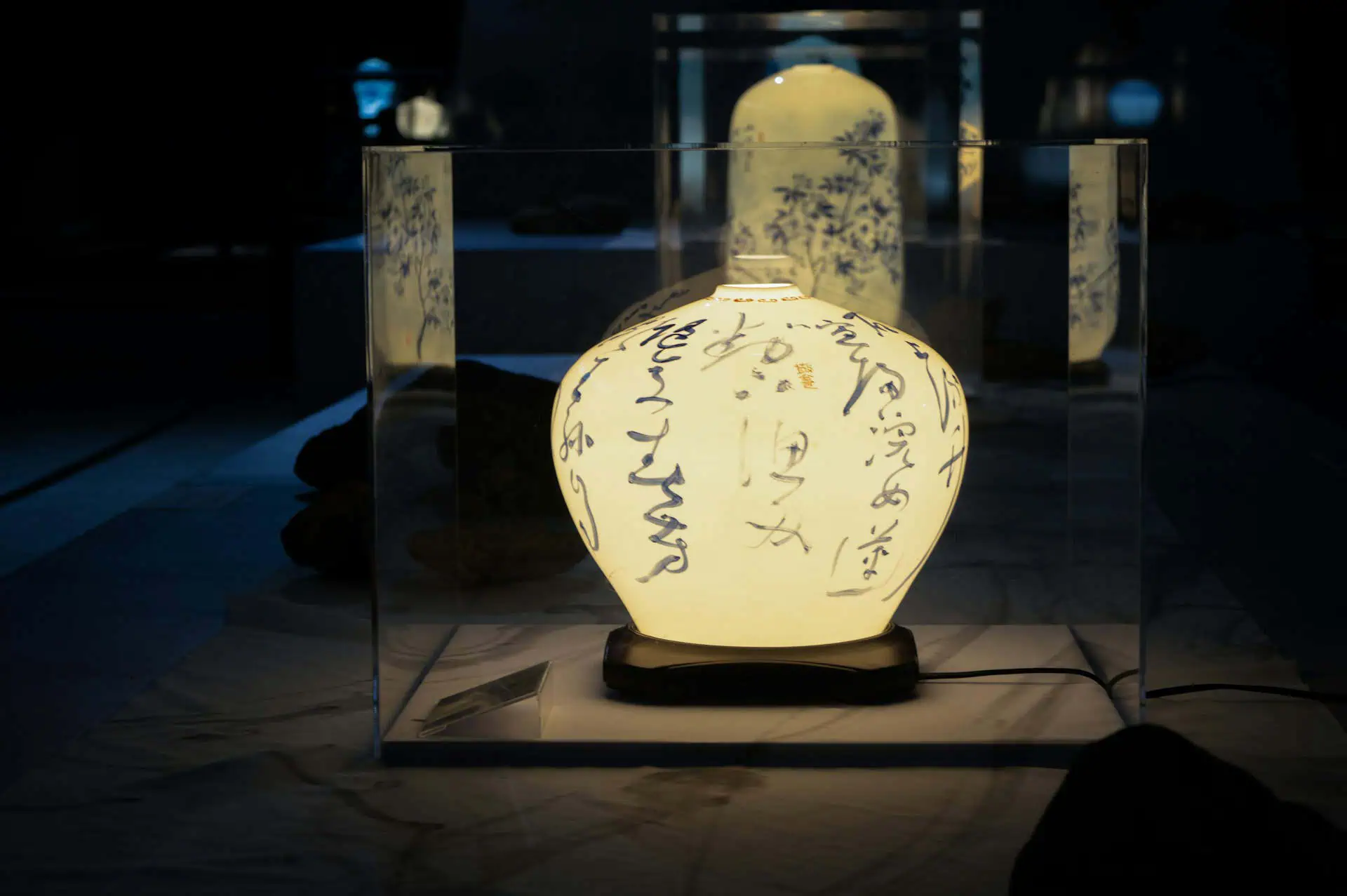
Shuyuanmen Ancient Culture Street
The scholars' lane behind the South Gate — four centuries of brushes, inkstones and seal carvers at work.
Learn more →
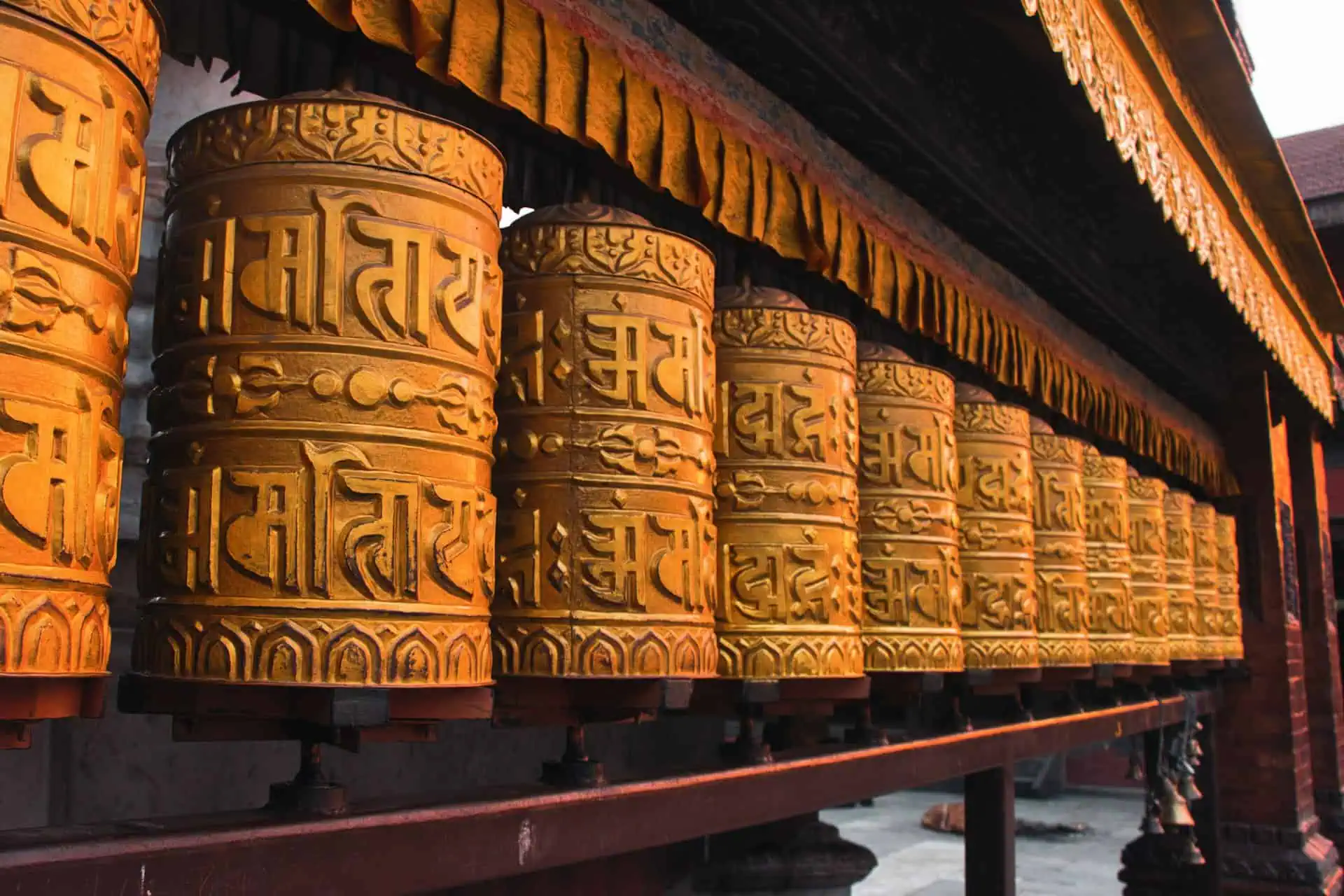
Guangren Temple
A slice of Lhasa planted inside Xi'an's wall in 1705 — Shaanxi's only Tibetan Buddhist monastery.
Learn more →
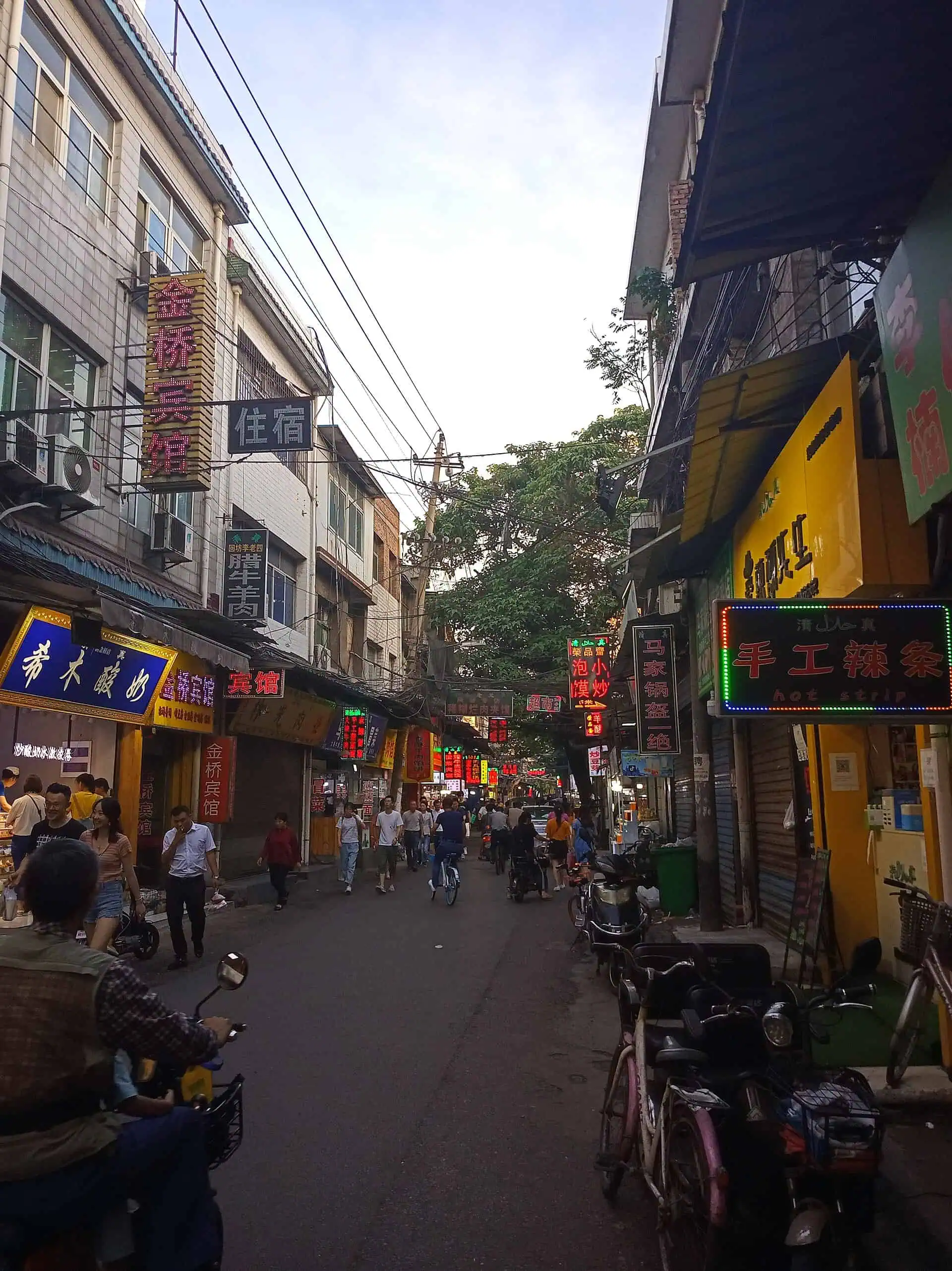
Sajinqiao Food Street
The food street Xi'an locals actually eat at — ten minutes' walk and a world away from the Muslim Quarter's tourist strip.
Learn more →
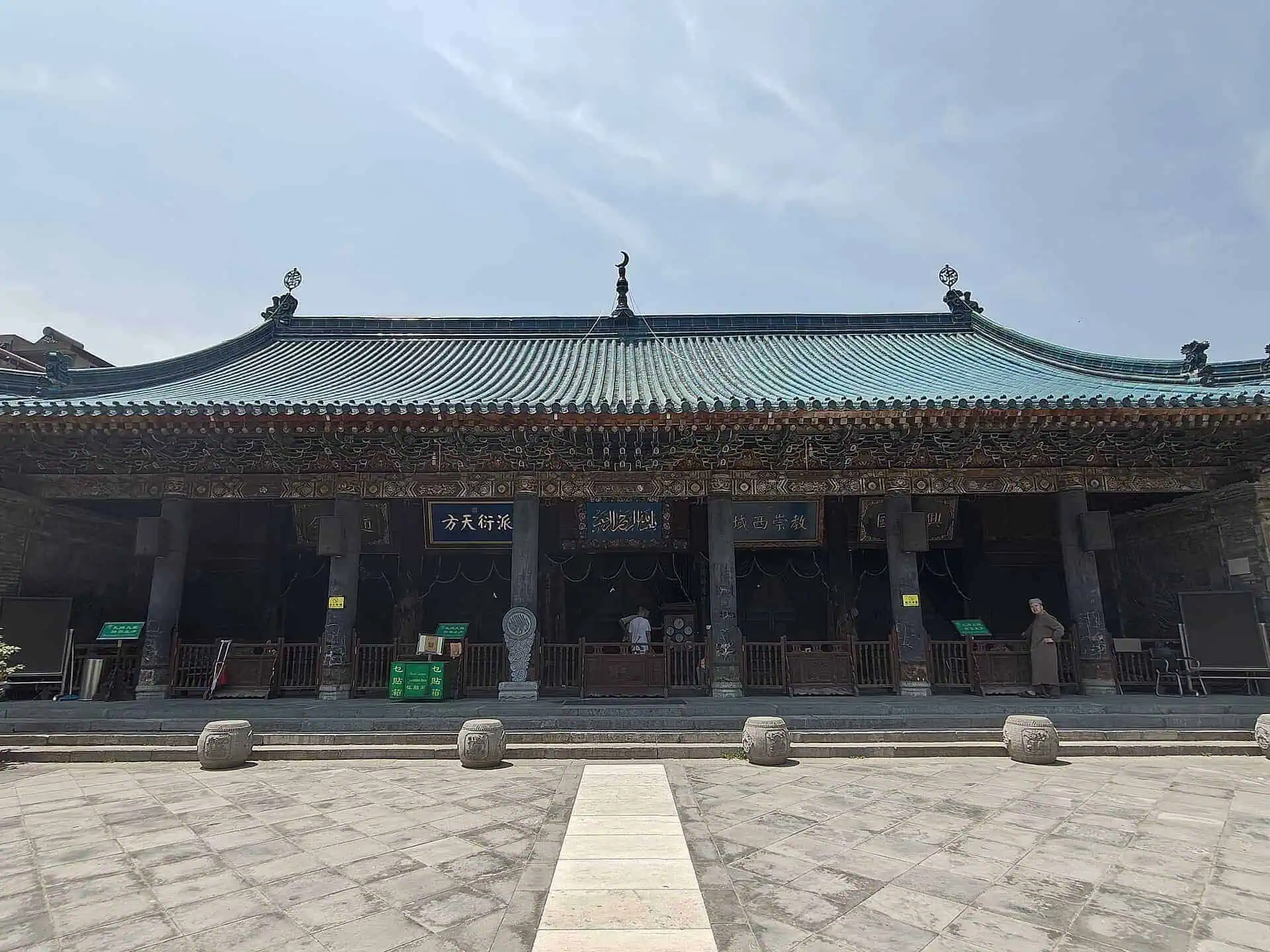
Daxuexi Lane
A 1,300-year-old mosque and the city's best sauce-glazed beef skewers, down one scruffy lane behind the Muslim Quarter.
Learn more →
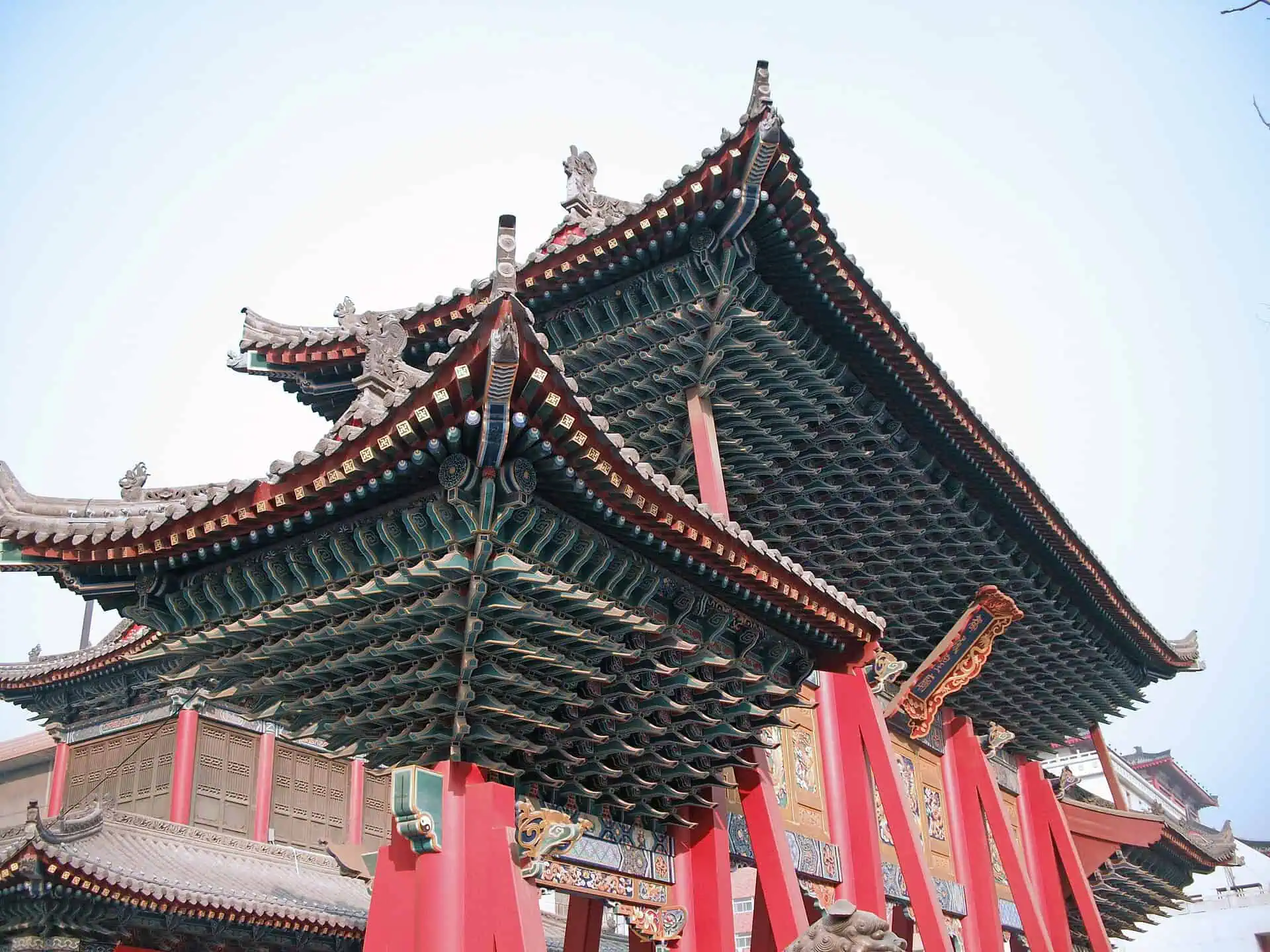
Xi'an City God Temple
Six hundred years of divine city administration, a plaque that became Xi'an's favorite joke, and the old town's best incense alley — free on West Avenue.
Learn more →

Xiaonanmen Morning Market
Breakfast at the foot of a 600-year-old wall — the best hour in Xi'an is over by 9 a.m.
Learn more →

Xicang Market
Cricket sellers, pigeon fanciers and junk stalls in the shadow of a Ming granary — Xi'an's oldest running flea market, two mornings a week only.
Learn more →
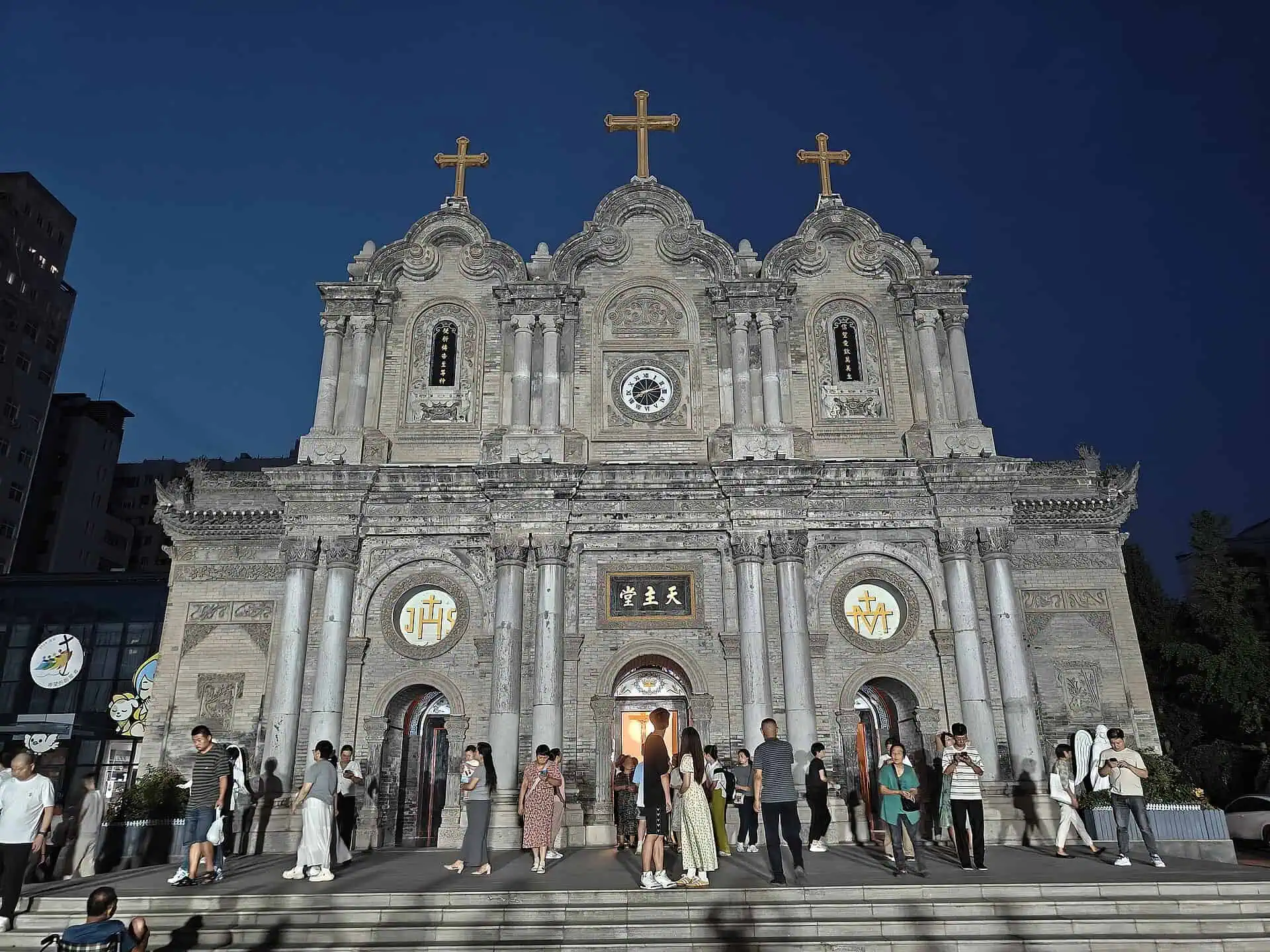
Wuxing Street Catholic Church
A 1716 Roman basilica wearing Chinese brick carving — Xi'an's most photogenic hybrid building.
Learn more →
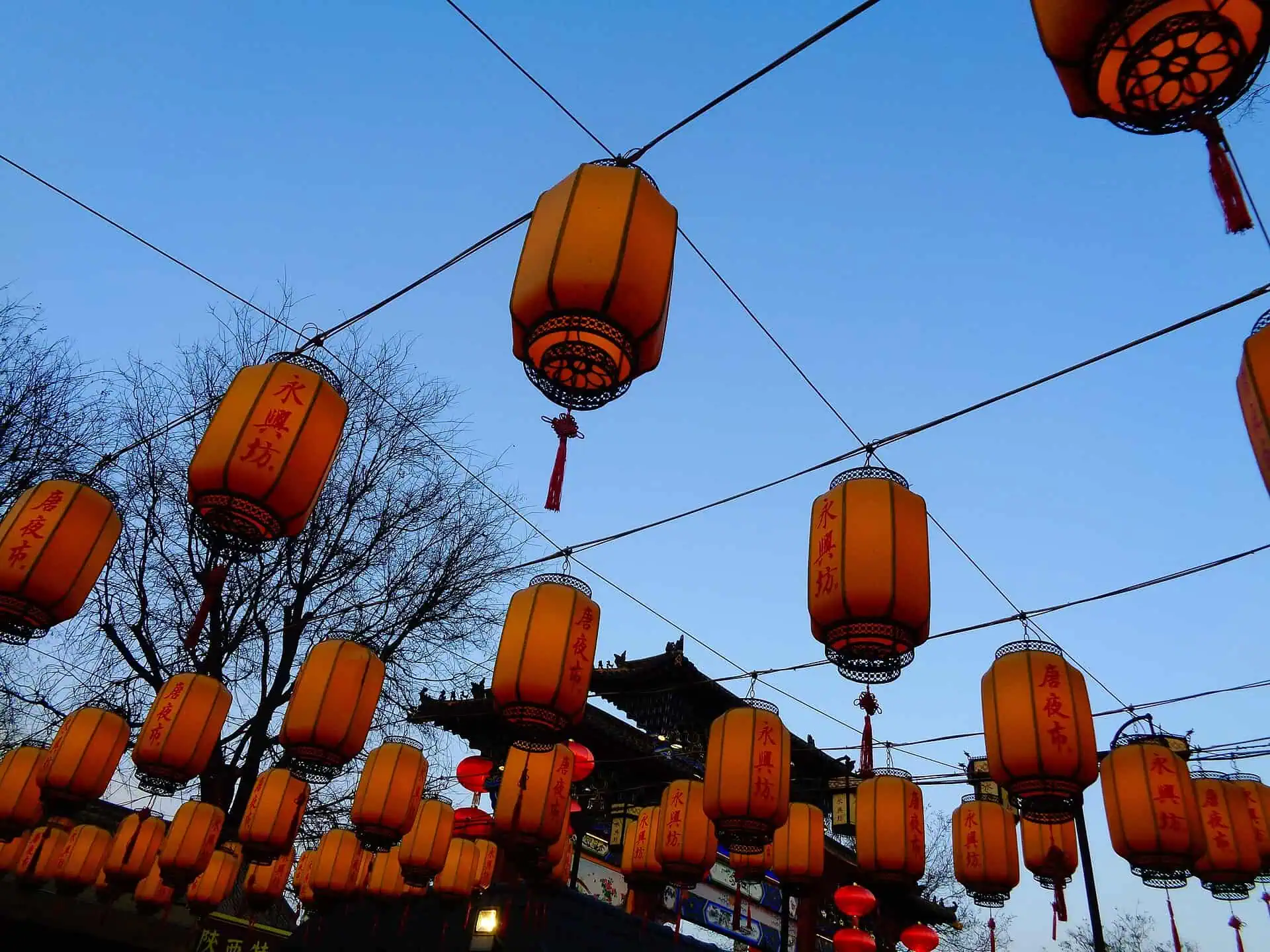
Yongxingfang
All 107 counties of Shaanxi's food packed into one walled block — touristy, efficient, and honestly useful.
Learn more →
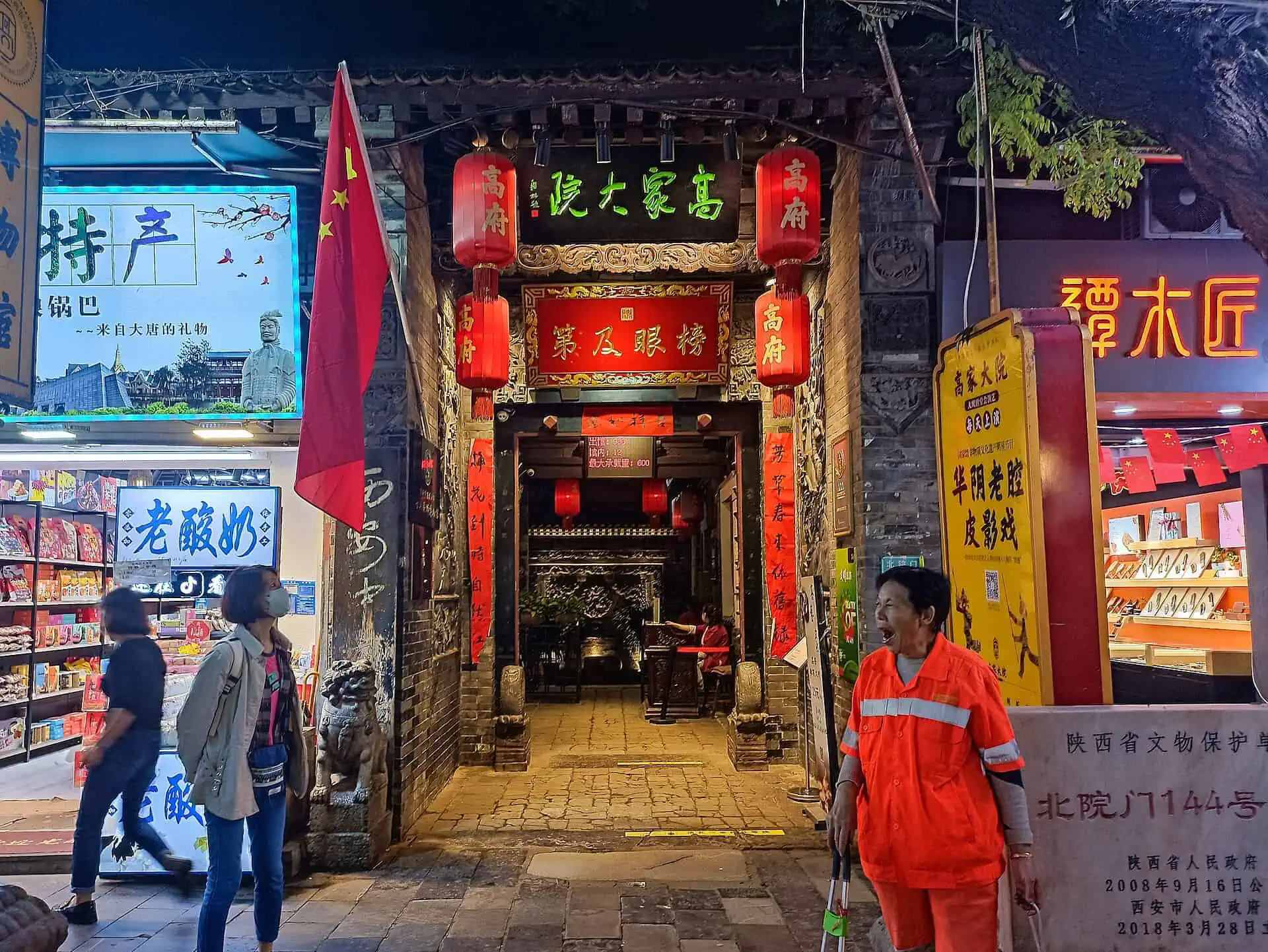
Gao's Grand Courtyard
A 1641 Ming courtyard and a UNESCO-listed shadow-puppet stage, hidden in plain sight on the Muslim Quarter.
Learn more →
Xi'an Railway Station (conventional rail)
The old city-centre station — slower trains, but you step out next to the wall.
Learn more →