Halal eating in Xi'an
In most Chinese cities, halal travelers hunt restaurant by restaurant. In Xi'an you pick a neighborhood instead: the Hui Muslim community has been cooking here since the Tang dynasty, an entire district behind the Drum Tower sells no pork at all, and several of the city's signature dishes are halal by birth. Here's how to read the signs, what to eat, and what to watch for outside the quarter.
8 min read · 6 sections
The short version
- Xi'an is China's easiest halal city: a Hui (回族) community rooted here since the Tang dynasty runs hundreds of kitchens across a district where pork simply doesn't exist.
- Learn two characters: 清真 (qīngzhēn) — 'pure and true' — the Chinese word for halal, usually on green-and-white signage, often with Arabic calligraphy.
- Much of the local canon is halal by birth: yangrou paomo, guantang baozi, hulatang, suantang shuijiao, zenggao and charcoal-grilled lamb skewers.
- Base your eating around the Muslim Quarter and Sajinqiao; beyond the center, 清真 restaurants cluster around every mosque and are easy to find on map apps.
- Outside 清真 kitchens, the traps are cooking wine (料酒) in marinades and lard (猪油) in Han pastries — 'no pork' on a menu is not the same as halal.
- The Great Mosque, founded in 742, is a working mosque in the heart of the quarter — prayer facilities plus one of the city's finest historic sights.
Why Xi'an is China's easiest halal city
When Xi'an was Chang'an, capital of the Tang dynasty and the eastern terminus of the Silk Road, Arab and Persian merchants settled here to trade. Their descendants — intermarried with Han Chinese over twelve centuries — are today's Hui (回族, Huízú), and they never left. The community still anchors the Huifang (回坊), the district behind the Drum Tower that visitors know as the Muslim Quarter: a working neighborhood of mosques, butchers, bakeries and hundreds of halal kitchens. The full story is in our history of the Hui community; the Silk Road background explains how they got here.
The practical result: where other Chinese cities offer a scattered handful of halal restaurants, Xi'an offers a halal district — international Muslim-travel guides rank its food street as the most famous in China, and for once the superlative is earned. Strict observers can eat for days without a single compromise, which is a genuinely rare thing in East Asia.
Reading 清真 signs
The marker you're looking for is 清真 (qīngzhēn) — literally "pure and true," the Chinese term for halal. It appears on restaurant signs, stall banners, butcher shops and packaged food, usually in green-and-white, often paired with Arabic calligraphy. A 清真 kitchen means no pork anywhere on the premises, halal-slaughtered meat, and cookware that has never touched pork — enforced by community expectation more than bureaucracy, and taken seriously.
Related vocabulary worth knowing:
- 回 (Huí) in a shop name signals Hui ownership — you'll see it in restaurant names all over the quarter.
- 清真 is the operational guarantee. When you see it, you're safe; when you don't, you're negotiating.
- Alcohol: most quarter eateries serve none at all, but a few licensed restaurants do sell beer. It's never hidden — if a fridge of Tsingtao is on display and that matters to you, simply choose the next place. There is always a next place.
Outside the quarter, 清真 signage appears across the whole city — halal noodle shops and Lanzhou-style beef-noodle counters are a reliable fallback in any district, including near the railway stations and the airport corridor.
The halal canon
The happy accident of Xi'an food is that much of its canon was born halal in these lanes. The essentials:
- Yangrou paomo (羊肉泡馍) — the community's ritual dish and Xi'an's signature bowl: you tear a dense flatbread into fingernail-sized pieces, the kitchen returns it drowned in rich lamb broth with noodles and sliced mutton. Long-established houses like Tong Sheng Xiang (同盛祥, at it since 1920) and Lao Sun Jia (老孙家) anchor the quarter. ¥25–40; order the ordinary bowl.
- Guantang baozi (灌汤包) — soup dumplings done Hui-style with beef or lamb filling. Jia San (贾三灌汤包) on the main strip is the long-established name: nip a hole, drink the broth, then eat with vinegar and chili.
- Hulatang (胡辣汤) — the quarter's breakfast: a peppery, thick soup with beef meatballs (肉丸胡辣汤), eaten with torn flatbread before work. Morning carts only — gone by 10:00.
- Suantang shuijiao (酸汤水饺) — beef or lamb dumplings served in a hot-and-sour broth sharp with vinegar and chili. Winter comfort food that works in July.
- Zenggao (甑糕) — steamed glutinous rice layered with jujube dates, sliced off morning carts. A hit TV drama set in Shaanxi made it nationally famous a few years back; the quarter's version is the original.
- Grilled skewers (烤肉串, kǎoròu chuàn) — lamb over charcoal, dusted with cumin and chili; the fat-marbled red-willow skewers run about ¥10 each. The quarter's evening perfume.
- Roujiamo — the halal version is chopped beef or lamb with cumin in a toasted bun, ¥10–15. Note carefully: the canonical downtown roujiamo is pork — only the quarter's beef and lamb version is halal.
- The meat-free bench: sesame niangpi (麻酱酿皮, cold noodles in sesame paste), persimmon cakes fried to order, and pomegranate juice pressed in front of you.
For stall-by-stall directions, our Muslim Quarter eats guide maps the lanes.
Where to eat
The Muslim Quarter lanes. Beiyuanmen (北院门), the main strip behind the Drum Tower, is the spectacle — come once, for the atmosphere. For better value and better cooking, shift one lane west to Xiyangshi (西羊市) and Dapiyuan (大皮院), where the crowd turns local. Everything in these lanes is halal; no pork is sold anywhere in the quarter.
Sajinqiao (洒金桥, Sǎjīnqiáo). A ten-minute walk northwest of the main strip, this working Hui neighborhood street is where Xi'an Muslims actually eat breakfast and dinner — paomo houses, grill stalls and morning carts, at prices below the tourist core. Our local-eats guide covers it alongside the city's other neighborhood food streets.
Beyond the center. Halal restaurants cluster around every mosque in the city, and 清真 noodle shops are a citywide safety net — searching 清真 in Apple Maps or Dianping works anywhere, including out near the Terracotta Army on a day trip. If you're staying inside the old town, you may never need to leave the quarter's orbit; our inside-the-wall area guide covers bases.
What to watch for
Outside 清真 kitchens, "no pork" and "halal" are not the same sentence. The hazards:
- Cooking wine (料酒, liàojiǔ). Standard in Han marinades, stir-fries and braises — invisible on the plate and rarely mentioned. If alcohol in cooking is a red line, unsigned restaurants are a negotiation you can't fully win.
- Lard (猪油, zhūyóu). Turns up in Han pastries, mooncakes, flaky baked snacks and some noodle doughs. This is the best argument for buying your baked goods inside the quarter, where the bakeries are Hui.
- Shared woks and fryers. A Han kitchen cooking a "beef" dish uses the same wok as tonight's pork. Strict observers should treat unsigned restaurants as off-limits rather than trying to engineer a safe order.
- Broth swaps. "Vegetable" noodle soups commonly sit in pork or chicken stock; at unsigned stalls there is no reliably halal bowl of soup.
- The roujiamo trap, again. Downtown shops advertise the same famous name — the filling is braised pork. The 清真 sign, not the dish name, is what you're checking.
None of this should scare you off eating widely: it just means doing your adventurous eating inside the quarter and your utilitarian eating at signed 清真 shops.
Prayer facilities and the Great Mosque
The Great Mosque (清真大寺, Qīngzhēn Dàsì) sits on Huajue Lane (化觉巷, Huàjué Xiàng) in the heart of the quarter — founded in 742 AD under the Tang, among the oldest mosques in China, and built as a series of Chinese temple courtyards rather than anything with domes and minarets. It remains a working mosque: five daily prayers, with Friday midday the busiest. Muslim visitors are normally admitted for prayer; non-Muslim visitors can tour the courtyards outside prayer times for a modest admission — modest dress and a low profile during services are expected, and the prayer hall itself is reserved for worshippers. Details are in our Great Mosque guide.
Beyond the Great Mosque, several smaller historic mosques dot the surrounding lanes — and the standout is the Da Xuexi Lane Mosque (大学习巷清真寺, Dà Xuéxí Xiàng Qīngzhēnsì), locally called the West Great Mosque (西大寺, Xī Dà Sì), two lanes west on Xuexi Lane. Its stele claims a 705 AD founding — earlier than the Great Mosque — and unlike its famous neighbor it is not a ticketed sight: free, open, a working parish mosque, so it's the quarter's best-kept alternative for prayer without the tourist crush. See our Da Xuexi Lane Mosque guide. Elsewhere in the city, hotel concierges and map apps (search 清真寺) point you to the nearest one.
Questions, answered
Is Xi'an halal-friendly for Muslim travelers?
Arguably the easiest city in China. A Hui Muslim community has run the district behind the Drum Tower since the Tang dynasty: hundreds of halal kitchens, no pork sold anywhere in the quarter, several historic mosques, and 清真-signed restaurants citywide. You can eat for days without a single compromise.
Is everything in the Muslim Quarter halal?
Yes, by tradition and community enforcement — this is a living Hui neighborhood, and no pork is sold anywhere in its lanes. Most eateries serve no alcohol; a few licensed restaurants do sell beer, openly displayed, so choose accordingly if that matters to you.
Is roujiamo halal?
Only the Muslim Quarter version, which is chopped beef or lamb with cumin. The canonical downtown roujiamo is braised pork — the dish name tells you nothing, so check for the 清真 sign rather than assuming.
What does the 清真 sign mean?
Qīngzhēn — literally 'pure and true' — is the Chinese term for halal. On a restaurant or food package it means no pork on the premises, halal-slaughtered meat and pork-free cookware. Look for the two characters, usually in green-and-white with Arabic calligraphy.
Can non-Muslims visit the Great Mosque in Xi'an?
Yes — the courtyards are open to visitors outside prayer times for a modest admission, and the Tang-dynasty Chinese-temple architecture makes it one of the city's finest historic sights. Dress modestly, keep a low profile during services, and note the prayer hall is reserved for worshippers.
What if I visit Xi'an during Ramadan?
Ramadan's dates shift about 11 days earlier each year (the next falls roughly Feb–Mar 2027), so check before you go. During the fast, some Hui eateries close or limit daytime hours, but the quarter's lanes come alive after iftar at sunset — arguably the most atmospheric time to eat there. Eid al-Fitr, marking the end of Ramadan, brings big celebrations and special prayers at the Great Mosque and the Da Xuexi Lane Mosque.
Places in this story
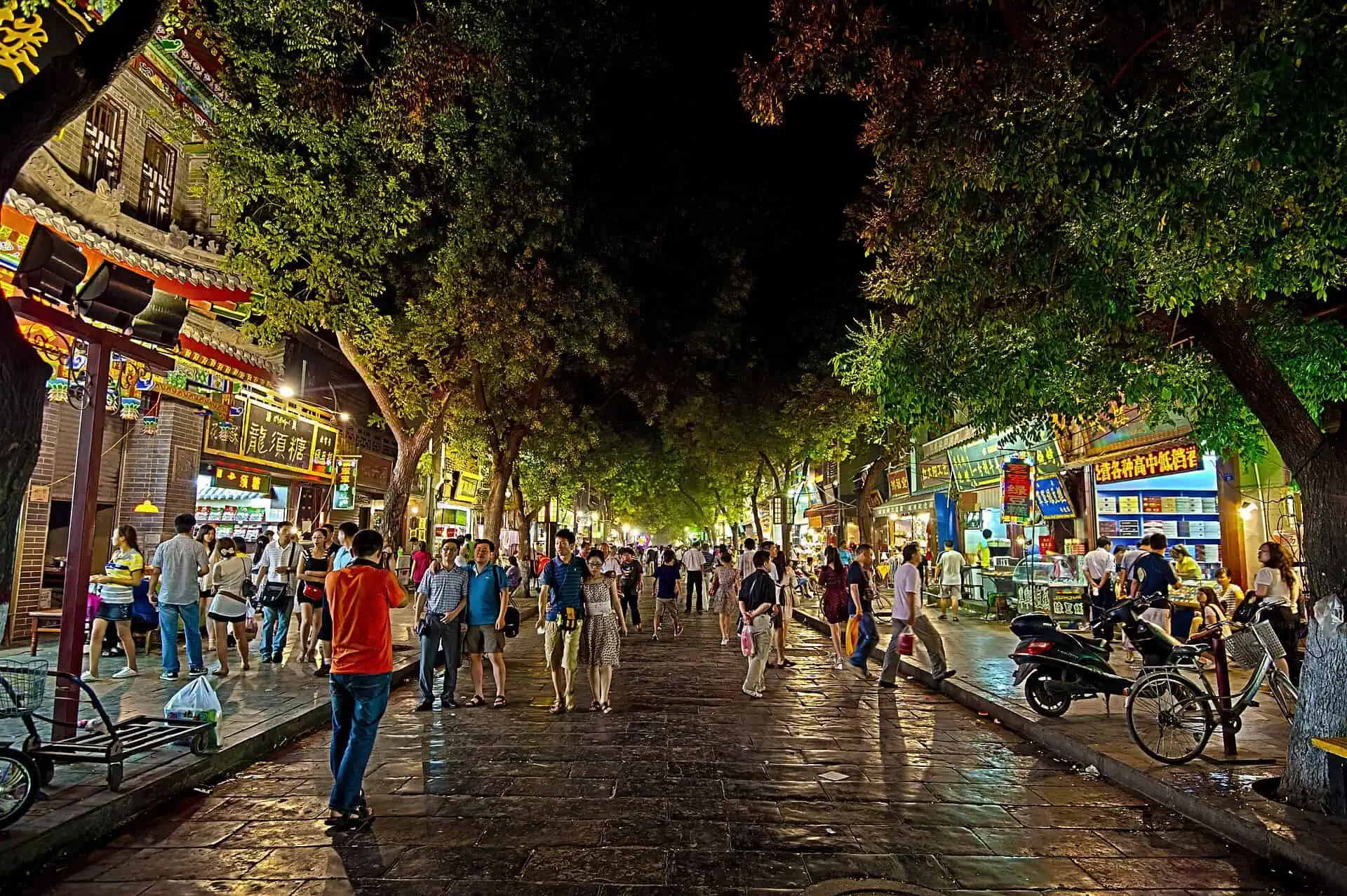
Muslim Quarter
Feeding Xi'an since the 700s — the loudest, smokiest, best-smelling streets of its Hui community.
Learn more →
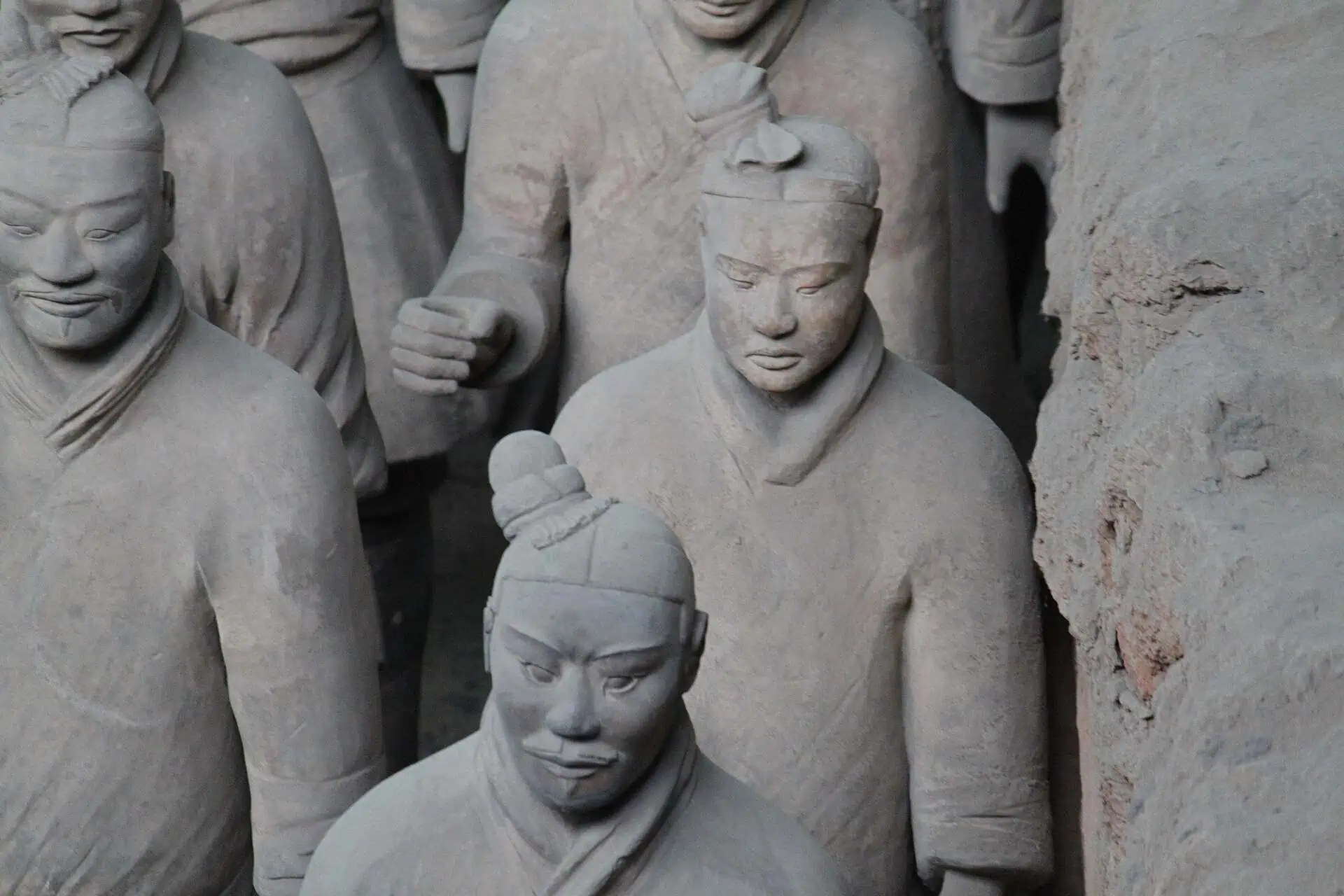
Terracotta Army
8,000 life-sized soldiers buried for China's First Emperor — and still on guard 2,200 years later.
Learn more →
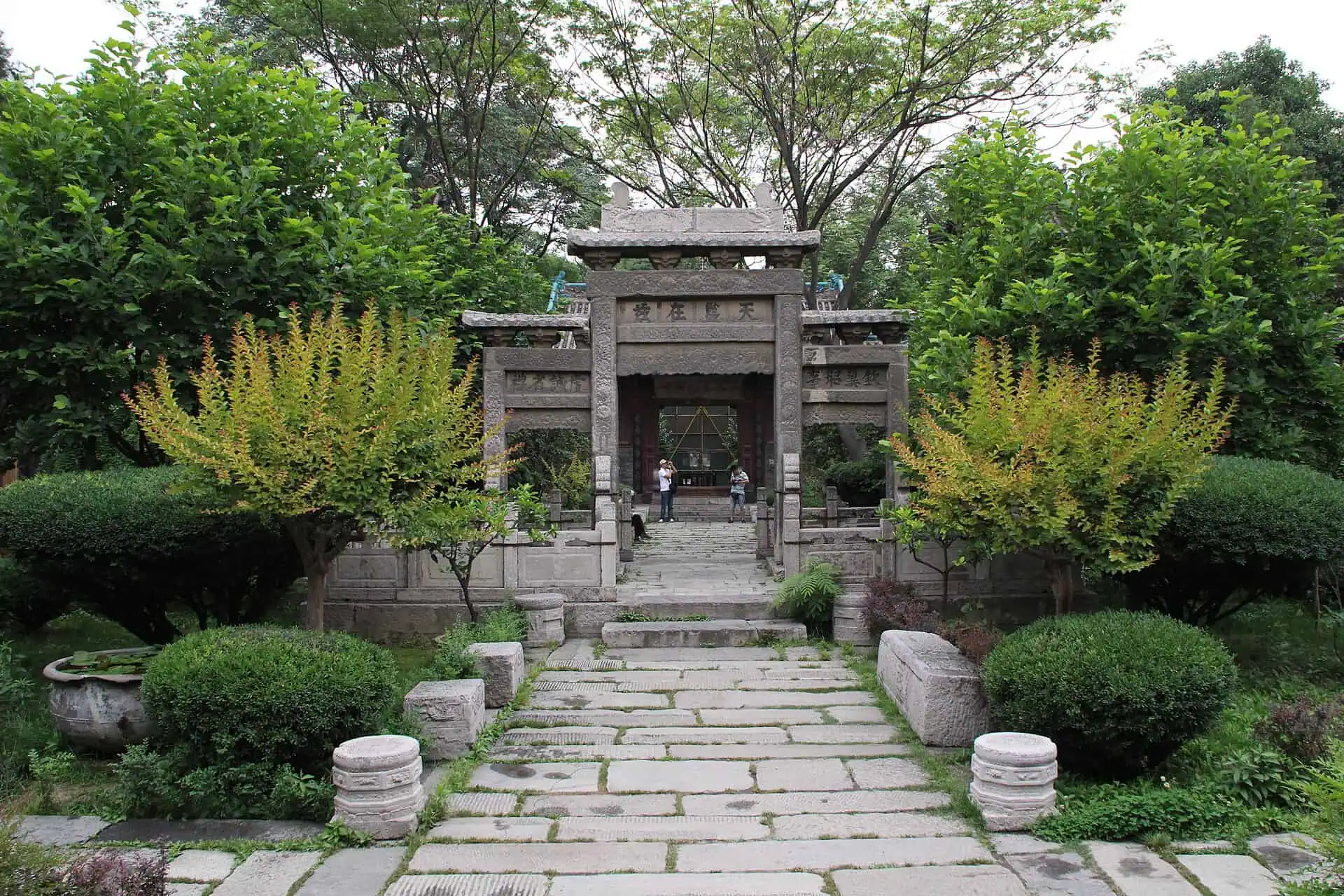
Great Mosque of Xi'an
A mosque founded under the Tang in 742 AD, dressed as a Chinese garden temple.
Learn more →
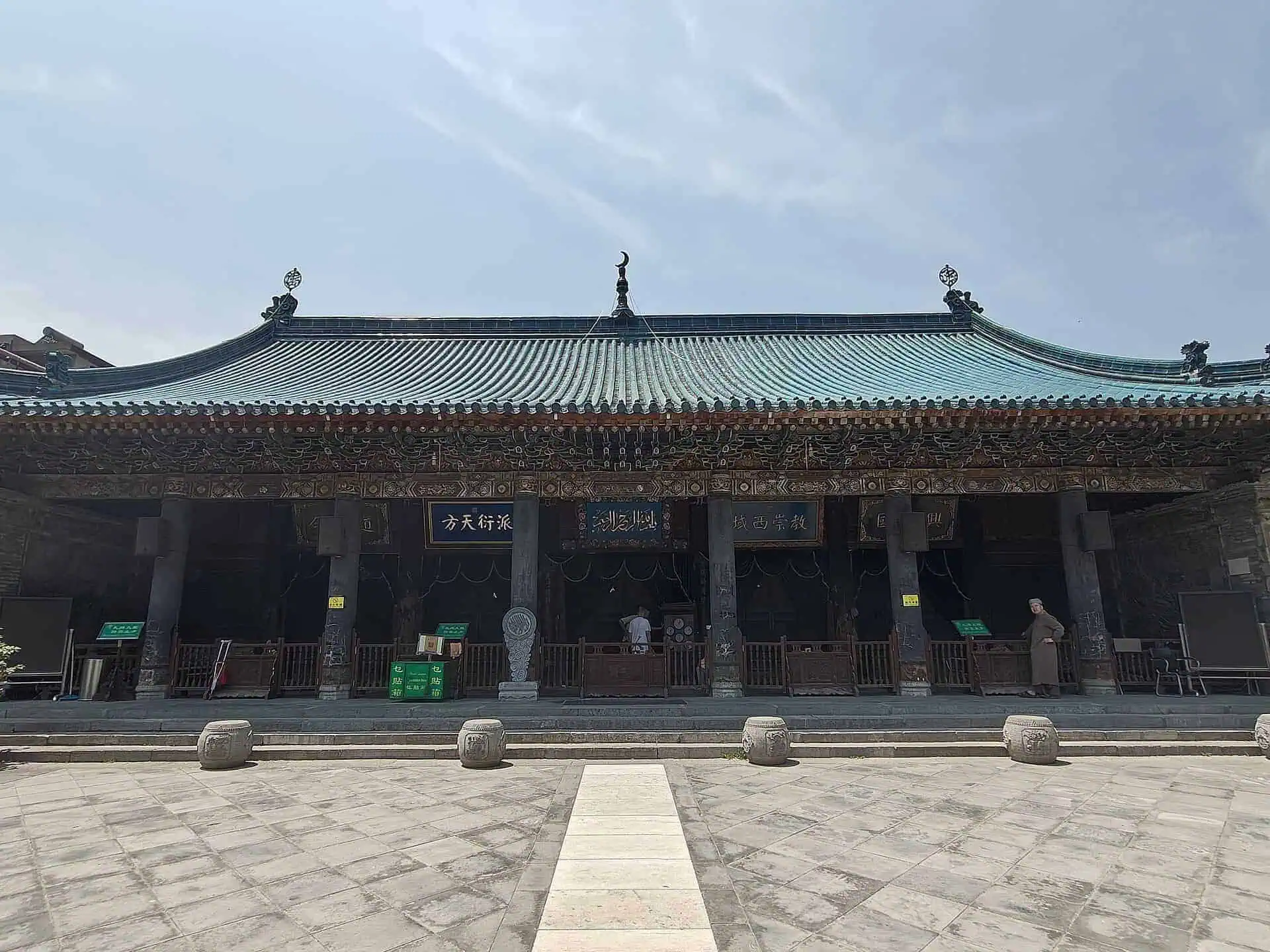
Daxuexi Lane
A 1,300-year-old mosque and the city's best sauce-glazed beef skewers, down one scruffy lane behind the Muslim Quarter.
Learn more →
Keep exploring
Where to Eat in the Muslim Quarter: A Street-by-Street Guide
The Muslim Quarter (回民街, Huímín Jiē) is Xi'an's loudest, smokiest, most delicious neighborhood — and its most touristed. The open secret is that almost nobody eating on the main strip is a local: the best food is one or two turns off it, at two-thirds of the price. Here's how the quarter is laid out, what to eat where, and how to dodge the traps.
Eating where locals eat: Yongxingfang, Sajinqiao & beyond
Every visitor finds the Muslim Quarter's main strip; almost none find where Xi'an actually eats. The local circuit splits in two directions: Yongxingfang (永兴坊), a curated one-stop sampler of food from across Shaanxi province by the East Gate, and Sajinqiao (洒金桥), an uncurated working Hui street where breakfast queues form before 8:00. Add the Dongxin Street night market and a couple of side lanes, and you can eat like a local for your entire trip.
Vegetarian & dietary needs in Xi'an
The honest version first: Xi'an's signature dishes are built on meat broth, and no menu in town marks vegetarian options. But the city also has a centuries-old Buddhist vegetarian tradition, a whole halal district where pork and lard can't follow you, and a street-food canon in which several of the best things contain no meat at all. Vegetarians who learn a dozen dishes and three phrases eat well here; strict celiacs should treat Xi'an as hard mode.