Shizi Bing (Fried Persimmon Cakes)
Shìzi Bǐng · say it: “shih-zuh bing”
- Spice
- Not spicy
- Typical price
- ¥3–10
- Dietary
- HalalVegetarianContains gluten
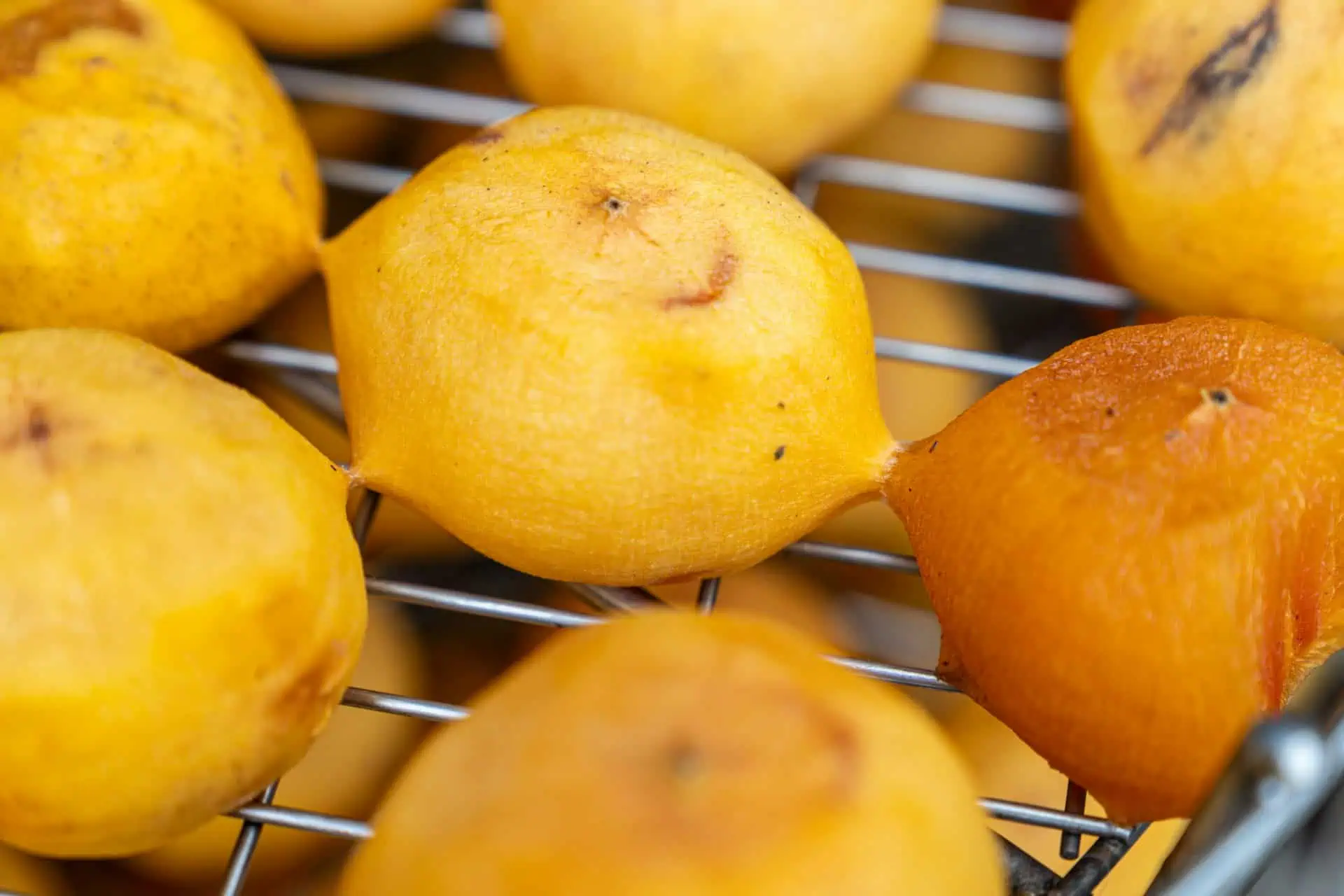
The fruit behind these cakes has been ripening on the slopes of Mount Li (骊山, Líshān) for well over a thousand years — the "fire-crystal" persimmons of Lintong (临潼, Líntóng), cultivated there since Tang times — and from the autumn harvest to the end of winter the Muslim Quarter still smells of them frying. Shizi bing (柿子饼, shìzi bǐng) — persimmon cakes, or in their full local glory huanggui shizi bing (黄桂柿子饼, huángguì shìzi bǐng), "yellow-osmanthus persimmon cakes" — start with huojing shizi (火晶柿子, huǒjīng shìzi): small, flame-orange, honey-sweet fruits.
The ripe fruit is peeled, mashed and worked into a soft dough with a little flour, wrapped around a filling of crushed walnut, sugar and osmanthus, then shallow-fried in vegetable oil until both sides go deep amber. What lands in your hand is crisp at the edges and molten in the middle — a cross between a doughnut and a very good mince pie, for a few yuan. Local legend ties the cakes to the rebel leader Li Zicheng (李自成, Lǐ Zìchéng), whose army was supposedly provisioned with them on the march; treat that as a good story rather than a date. What isn't legend is the seasonality: griddles fire up after the October persimmon harvest and fry through winter. Off-season you'll mostly meet packaged gift boxes, which are to the fresh article what a vending-machine croissant is to a bakery — skip them and eat something else.
Fillings to know: 原味 (yuánwèi, plain), 黄桂 (huángguì, osmanthus — the classic), 豆沙 (dòushā, red bean), 枣泥 (zǎoní, jujube) and 五仁 (wǔrén, "five kernels," a nut mix). The cakes are a halal, lard-free Muslim Quarter specialty — but the dough does contain wheat flour, so strict gluten-avoiders should sit this one out.
How to eat it
One rule matters: eat them hot, immediately, out of the paper they're handed to you in. The crisp shell softens within minutes, and a reheated persimmon cake is a different, sadder food. Bite carefully — the filling holds heat like lava — and give the walnut-and-osmanthus center a second to announce itself. One cake is a snack; two is most people's limit, because they're richer than they look.
The natural slot is the end of a Muslim Quarter evening: a steamer of soup dumplings or a beef roujiamo first, a persimmon cake for the walk back past the Drum Tower. If you have room for a second sweet, hunt down zenggao (甑糕, zènggāo), the steamed sticky-rice-and-jujube cake. The full street-by-street plan is in our Muslim Quarter eats guide; more sweets and staples on the Xi'an food hub.
Where to try it
Yiguzhai (伊古斋黄桂柿子饼)
An old Quarter shop that does little else, with the full filling lineup (plain, osmanthus, red bean, jujube, five-nut). Fried to order in season — the benchmark.
Read the guideBeiyuanmen and side-lane griddles
In season, griddles appear along the Quarter's main street and the lanes off it. Pick a stall frying fresh for a line of locals, not one selling from a stack of pre-made cakes.
Read the guideSeasonal street carts citywide
From late autumn, small carts near busy corners and markets across the city fry persimmon cakes through the evening. The standard is the same everywhere: made to order, eaten on the spot.