Shared bikes in Xi'an: the last-kilometer answer
Xi'an's yellow and blue shared bikes turn the flat, spread-out city center into a 10-minute ride — unlocked with the Alipay or WeChat scan you already have, deposit-free, for about ¥1.5 per half hour. The one skill you need is parking inside the GPS zones.
8 min read · 7 sections
The short version
- Two fleets matter: yellow **Meituan** bikes and blue **Hello** bikes (green Qingju bikes are a third you can treat the same way). Scan any of them with Alipay or WeChat — no separate app.
- Deposits are effectively gone: a verified Alipay/WeChat account rides deposit-free, foreign card and all.
- Pricing is ¥1.5 for the first 15 minutes, then ¥1 per 15 minutes after; if you'll ride daily, in-app weekly and monthly passes make rides nearly free.
- Park only inside the marked zones on the mini program's map — it's GPS-enforced with fines, and enforcement is strictest around the City Wall gates.
- Bikes shine inside the wall and around Qujiang (the Big Wild Goose Pagoda area). They're useless for the Terracotta Army or the airport — that's metro-plus-DiDi territory.
- Xi'an's bike lanes are genuinely good; its intersections are not. Ride defensively and bring no assumptions about right of way.
The short answer
Xi'an is one of China's great cycling cities: dead flat, laid out on a grid, with sights spaced at that awkward 1–3 km distance that's too far to enjoy walking and too short to bother with transit. Shared bikes are the answer. Scan the QR code on any yellow (Meituan, 美团) or blue (Hello, 哈啰) bike with Alipay or WeChat — the right mini program opens by itself — and pedal off. Rides cost about ¥1.5 per 30 minutes, and for most visitors there is no deposit anymore.
That's the whole system. The rest of this page is the three things that actually go wrong for foreigners — unlock hiccups, parking-zone fines, and intersection confidence — plus the one ride in Xi'an every cyclist should do. For how bikes fit alongside the metro and DiDi, see the getting around guide.
Unlocking a bike: two apps you already have
There is no bike app to install. If you've done your pre-flight app setup, you're already equipped:
- Find a bike. They're everywhere — metro exits, hotel streets, sight entrances. Yellow is Meituan, blue is Hello, green is Qingju; all three work the same way.
- Scan the QR code on the frame with Alipay's Scan button. For Hello bikes this opens the Hello mini program directly. If a Meituan bike hesitates in Alipay, scan it with WeChat instead — between the two super-apps, every bike in town opens.
- Accept the mini program's terms once (it uses your existing Alipay/WeChat identity — the real-name verification you did with your passport covers it), and the lock clicks open.
- To end the ride, park in a zone and push the lock closed — or tap "end ride" in the mini program on newer smart-lock bikes. The app confirms and charges your linked card automatically.
On deposits: the era of ¥99–299 cash deposits (and the horror stories about refunding them) is over. Both big fleets waive the deposit for accounts that pass the platform's credit check, and a normally verified Alipay or WeChat account — real name, linked card — passes it. If a bike ever does ask you for a deposit, scan a different brand instead.
What it costs
Per-ride pricing hovers around ¥1.5 per 30 minutes — though several fleets now meter in 15-minute blocks, so glance at the rate card the mini program shows before your first unlock. Either way, the math is trivial: a 20-minute ride from your hotel to the Muslim Quarter costs less than a metro ticket, and even an hour of wandering rarely tops ¥5.
If you're in Xi'an for several days and plan to ride daily, buy the weekly or monthly pass inside the mini program (typically ¥10–30 depending on promos) — it makes every ride under a set duration effectively free, which changes how you use the bikes: hop-on, hop-off, no mental meter running. One caution: the pass lives inside one brand's fleet. Buy it for the color that's actually parked outside your hotel.
Parking: the rules that actually bite
This is the part that costs tourists money. Shared bikes in Xi'an are zone-parked and GPS-enforced: the mini program's map shows marked parking areas, and when you end a ride outside one, the app charges a "dispatch fee" — a few yuan the first time, more if you make a habit of it. Repeat offenders get throttled prices or a suspended account.
The practical rules:
- End rides only where the app's map shows a parking zone — usually existing bike clusters along the curb. When in doubt, park where twenty other bikes are parked.
- Enforcement is strictest around the City Wall. The gate plazas and the stretch immediately outside the wall are heavily zoned; dumping a bike at the South Gate forecourt to run up for sunset is the classic way to earn a fine. Park at the marked racks a minute's walk away.
- Shared bikes can't go on the wall itself. The bicycles circling the ramparts are a separate on-wall rental (covered on the City Wall page); your street bike stays below.
- Pedestrian areas are walk-the-bike zones — the Muslim Quarter's lanes and the area around the Bell Tower are too crowded to ride. Locals dismount; copy them.
- Never park inside temple grounds, museum forecourts or scenic areas — even if the lock lets you, retrieval fees apply and security will not be charmed.
Where bikes shine in Xi'an — and where they don't
Inside the wall is shared-bike paradise: flat, gridded, and scaled so that Bell Tower to any gate is 10–20 minutes of easy pedaling. The streets just inside the wall (Shuncheng Road's tree-shaded run) are a pleasure in the morning before traffic builds. The Bell Tower to the Muslim Quarter is a five-minute ride that saves twenty minutes of walking each way.
Qujiang, the southern district, is the other sweet spot — wide modern avenues linking the Big Wild Goose Pagoda, its fountain square and the Tang Paradise area, with distances just long enough to make walking tedious.
Where bikes don't help: anything outside the urban core. The fleets are geofenced to central Xi'an — ride toward the boundary and the app warns you, then charges dispatch fees. The Terracotta Army sits 40 km east in Lintong, far outside every service zone; that's a metro-plus-bus or DiDi trip (the getting around guide compares them). Same story for the airport. And for the Shaanxi History Museum and other in-city sights, check the metro map first — if it's one stop, the train beats finding a parking zone at both ends.
The ride to save for: the moat at night
The single best shared-bike ride in Xi'an costs about ¥3: a slow loop around the City Wall's moat ring after dark. The wall is floodlit, the gate towers glow gold, and the ring road and greenway circling the moat park are calm once rush hour fades. The full circuit is roughly 14 km — call it an hour at tourist pace with photo stops — but even the southern stretch from the South Gate west or east along the water delivers the effect.
Two honest caveats. Stick to the ring road and designated greenway — the moat-side footpaths are pedestrian-only in stretches, and the app's zones will tell you where you may park for a closer look. And go after the dinner rush but before the parks empty out: 19:30–21:30 in summer is the sweet spot, when local families are out doing exactly the same ride. It's the best cheap evening in the city after the Muslim Quarter food crawl.
Safety, honestly
The good news is real: Xi'an's major roads have wide, physically separated bike lanes, the terrain is flat, and drivers are deeply accustomed to bikes — you're joining a traffic culture that expects you. For a confident city cyclist, Xi'an is easy mode.
The honest part:
- Intersections are the danger zone. Right-turning cars rarely yield, delivery e-scooters appear silently from every direction including the wrong way, and green lights are suggestions everyone negotiates. Slow down at every junction, make eye contact, and when a crossing feels beyond you, dismount and walk the bike through the pedestrian phase. No local will judge you; they do it too.
- No helmets. Shared bikes don't come with one and almost nobody wears one. If that bothers you, pack a folding helmet; if it doesn't, ride slower.
- Check the bike before unlocking mentally — squeeze the brakes, spin a wheel, glance at the tires. A dud costs you thirty seconds to swap; a brake failure at a junction is worse. Report broken bikes in the mini program and the ride is free.
- At night, assume you're invisible. The moat ride above is on well-lit roads, but your phone's flashlight pointed at the pavement is a worthwhile extra on side streets.
Treat intersections with respect and the rest takes care of itself — the bike lanes really are that good.
Questions, answered
Can foreigners use shared bikes in China?
Yes, easily. You don't need a Chinese phone number or a local app — scan the bike's QR code with Alipay or WeChat (set up with your passport and foreign card), accept the mini program's terms once, and ride. Your existing real-name verification covers everything.
Do Chinese shared bikes require a deposit?
Not anymore for most users. Meituan and Hello both waive deposits for accounts that pass the platform's credit check, and a normally verified Alipay or WeChat account — real-name plus a linked card — passes. If a specific bike ever requests a deposit, just scan a different brand.
How much do shared bikes cost in Xi'an?
Around ¥1.5 per 30 minutes, though some fleets meter in 15-minute blocks — the mini program shows the exact rate before you unlock. Weekly and monthly passes (roughly ¥10–30) make rides under a set duration nearly free, and are worth it if you'll ride daily.
Can I ride a shared bike to the Terracotta Army?
No. The Terracotta Army is about 40 km away in Lintong, far outside every fleet's GPS-fenced service zone — the app will warn you at the boundary and charge dispatch fees beyond it. Take metro Line 9 plus a local bus, or a DiDi (¥120–150), and save the bikes for inside the city wall and Qujiang.
What happens if I park a shared bike in the wrong place?
The app detects it by GPS and charges a dispatch fee of a few yuan, escalating with repeat offenses — and your account can be throttled or suspended. Zones are marked in the mini program's map and are strictest around the City Wall gates and pedestrian areas. When unsure, end the ride next to an existing cluster of parked bikes.
Places in this story
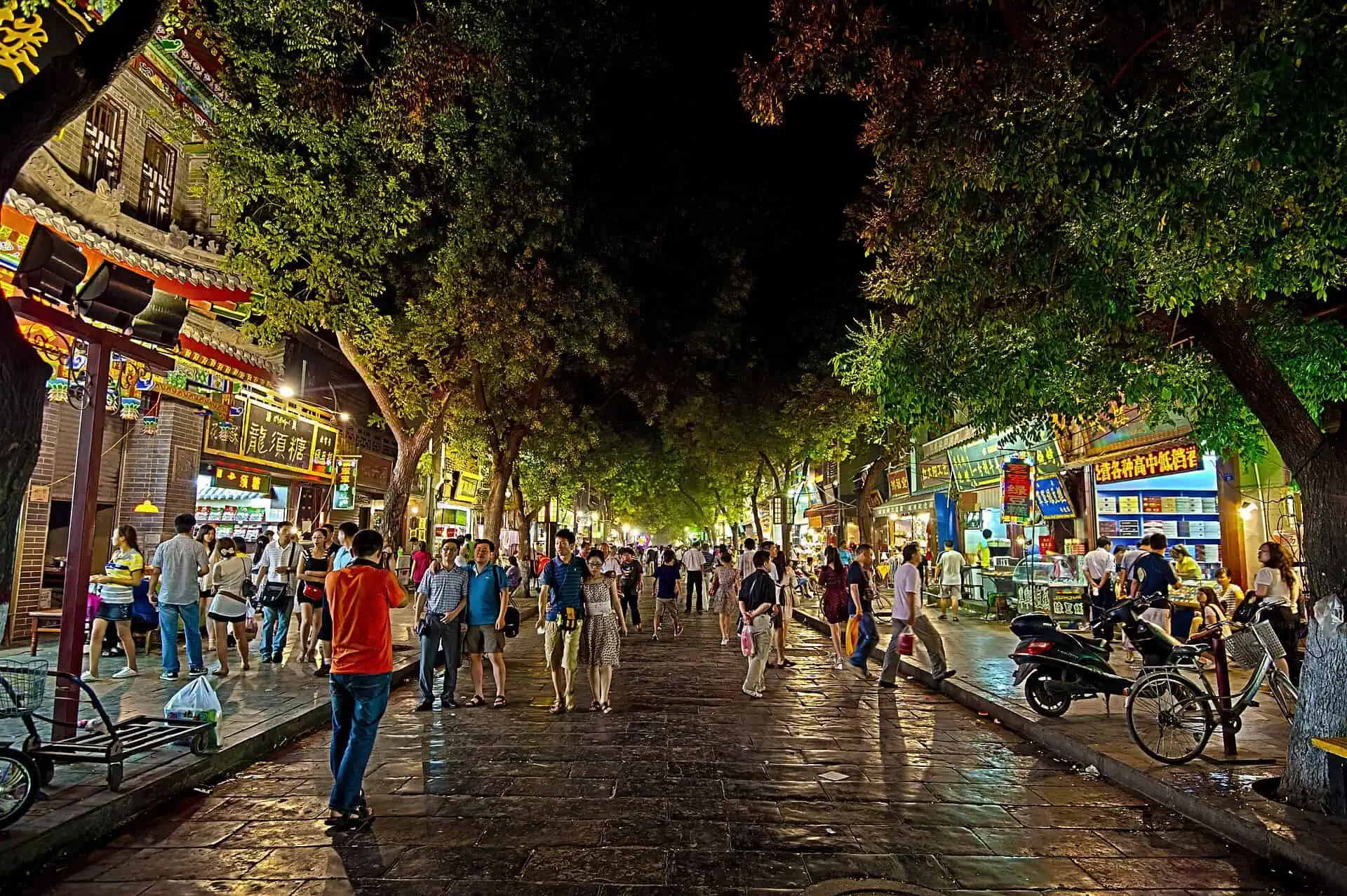
Muslim Quarter
Feeding Xi'an since the 700s — the loudest, smokiest, best-smelling streets of its Hui community.
Learn more →
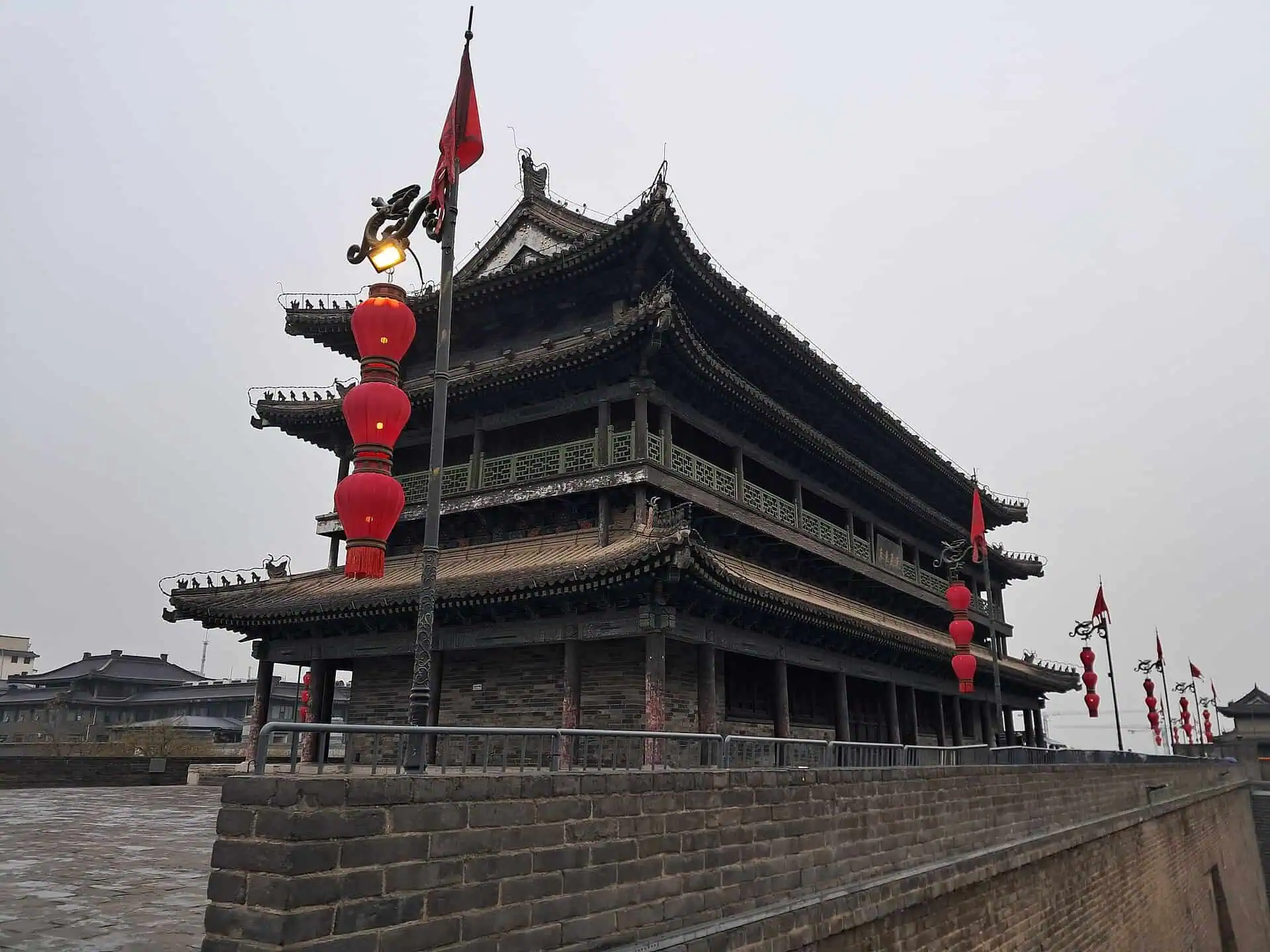
Xi'an City Wall
A 14-kilometer Ming dynasty rectangle you can cycle on top of — 650 years old and still the city's favorite commute.
Learn more →

Big Wild Goose Pagoda
A Tang brick pagoda raised in 652 AD for a monk's 17-year journey to India — still Xi'an's defining landmark.
Learn more →

Terracotta Army
8,000 life-sized soldiers buried for China's First Emperor — and still on guard 2,200 years later.
Learn more →

Shaanxi History Museum
Every layer of Xi'an's time stack under one roof — Zhou bronzes, Han gold and Tang treasure.
Learn more →
Keep exploring
Visas & entry: do you need one?
Probably less paperwork than you fear — and two of the doors now have their own deep-dive packages: the 30-day visa-free entry (~50 countries) and the 240-hour transit (55 countries, including the US). This page is the router: work out which door is yours, then read its package.
The 240-hour visa-free transit, explained
Ten days in China without a visa, if you're just passing through — including Americans. The rules, the traps, and how to run it through Xi'an.
The 30-day visa-free entry: who gets in free
Around 50 countries can now enter China for up to 30 days with no visa at all — no transit logic, no onward-ticket games. Most of Europe, the UK, Canada, Australia and more. The US is not on the list.