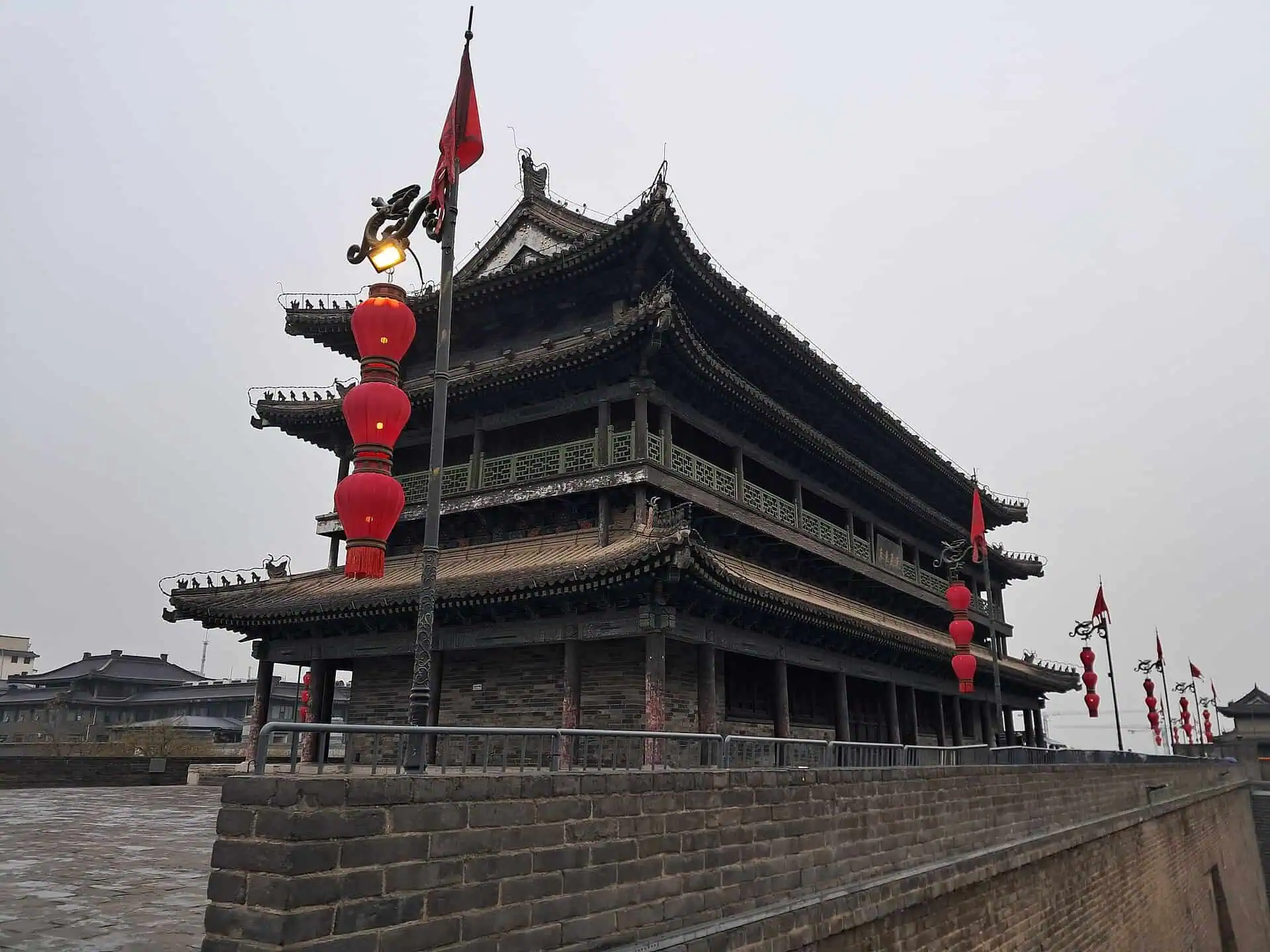
Xi'an City Wall
Xī'ān Chéngqiáng
A 14-kilometer Ming dynasty rectangle you can cycle on top of — 650 years old and still the city's favorite commute.
Entry
From ¥54
Hours
South Gate (Yongningmen) · Peak: 8:00
Time needed
1½–4 hours
Metro
Line 2 · Yongningmen (永宁门)
Built in the 1370s on Tang foundations, Xi'an's wall has been circled by soldiers, merchants, and now cyclists for 650 years — and it still defines the city's shape. Rent a bike at the South Gate in late afternoon, ride the full circuit as the light drops, and come down after dark with the gate towers lit up. If you do one thing inside the old town, make it this.
What you're looking at
Xi'an's wall is a near-perfect rectangle of grey brick and rammed earth, 13.7 km around and 12 m high, enclosing the entire old city. The current structure was built in the 1370s under the first Ming emperor, wrapped around the much older core of the Tang dynasty's imperial city wall — some of that Tang rammed earth is still inside the brick casing.
The four main gates are worth knowing by name: South Gate (永宁门, Yǒngníngmén), East Gate (长乐门, Chánglèmén), North Gate (安远门, Ānyuǎnmén) and West Gate (安定门, Āndìngmén). String the first characters together and they form a wish for eternal peace and stability — typical Ming messaging. Each gate had a barbican (a walled kill-zone between outer and inner gates), a gate tower and an archery tower; the South Gate's complex is the best preserved and the most photogenic, with the moat curving in front of it.
Up top, the wall is 12–14 m wide — a two-lane road in the sky. Watchtowers and ramparts repeat every couple of hundred meters. The pleasure is the perspective: inside the rectangle, low rooftops and the old town drifting toward the Bell Tower; outside it, glass towers and ring roads. For the backstory of the city it defended, read our short history of Xi'an.
Cycling the wall
This is the thing to do — walking the full circuit takes 3–4 hours and gets repetitive; on a bike the loop takes 1.5–2.5 hours with photo stops, and it's fun in a way ancient monuments rarely are.
- Renting: hire stations sit on top of the wall at the South Gate and other main gates. A single bike runs about ¥45 for 3 hours, a tandem about ¥90 — check the rental desk for current prices and the refundable deposit (¥100–200 depending on the desk). The bikes are heavy, wide-tired things built for brick; they suit the surface perfectly.
- The route: most people ride South → West → North → East and back to South. It's flat the whole way, though the old brick is genuinely bumpy — your wrists will know about it by the North Gate. You can return the bike at any rental station, so a half-loop is fine.
- Sun exposure: there is zero shade up there. In summer, bring a hat and water; gloves help with the vibration.
- Best trick: go up around 16:30–17:00 in summer. You ride in daylight, catch sunset from the west or north stretch, and descend after dark when the gate towers are floodlit. In cooler months, mid-afternoon works the same way.
Visiting strategy
Enter at the South Gate (永宁门, Yǒngníngmén). It has the longest opening hours of any gate (roughly 8:00–22:00), its own metro station, the biggest bike-rental stock and the best-preserved barbican. The other gates close earlier and have less going on.
Timing: summer midday on the wall is a skillet — go early or, better, late. Winter visits are underrated: the wall is empty and the air is clear, just bring a windproof layer. Around Chinese New Year a lantern fair takes over the southern stretch in the evenings (separate evening ticketing applies then — check dates if you're visiting in January or February).
Not a cyclist? Walk from the South Gate east or west for 30–45 minutes, watch the watchtowers go by, and come back down. You lose the full-circuit bragging rights but keep most of the atmosphere.
Pairing: the wall in the late afternoon flows naturally into dinner at the Muslim Quarter, a 20-minute walk or one metro stop away — it's exactly how our 3-day itinerary sequences the first evening.
Getting there
The South Gate sits at the bottom of South Street, dead south of the Bell Tower — you can see it from the tower itself.
- Metro: Line 2 to Yongningmen (永宁门) station; the exits put you right at the gate square by the moat. This is the easy option — see our getting around guide for riding the metro with Alipay.
- On foot: 10–15 minutes south from the Bell Tower down South Street, past the luxury malls and through the gate tunnel.
- Taxi/DiDi: ask for 永宁门 or 南门 ("South Gate"). Traffic around the gate square is slow at rush hour; the metro is faster after 17:00.
Practical notes
- Tickets: ¥54 at the gate window or via the official WeChat mini program; a passport isn't normally required. Your entry ticket is separate from bike rental — you pay both.
- Toilets: available up on the wall near the main gates and at intervals along the circuit; standards vary, carry tissues.
- Water: vendors sell drinks up top near the gates at tourist prices. Bring a bottle, especially if you're riding the full loop.
- Weather: the wall amplifies whatever the sky is doing — scorching at summer noon, windy in winter, slippery brick after rain (rental desks may pause hiring in heavy rain).
- Payments: gate windows and rental desks are set up for mobile payments; a little cash as backup never hurts.
- Kids: tandems and child seats exist at the bigger rental stations — the South Gate desk is your best bet.
- Accessibility / wheelchair: the ramparts are reached by stairs at every gate — there is no ramp. The one step-free way up is the elevator at Hanguang Gate (含光门) (confirm it is running on the day — it goes in and out of service). Once on top the surface is flat and wide enough to wheel along, though the old brick is uneven. Non-cyclists can ride the electric sightseeing carts that loop the wall.
Questions, answered
How long does it take to cycle the Xi'an City Wall?
The full 13.7 km loop takes 1.5–2.5 hours at an easy pace with photo stops — well inside the standard 3-hour rental. Walking the whole circuit takes 3–4 hours; most walkers do a section instead.
How much does the Xi'an City Wall cost?
Entry is ¥54 (students roughly half with ID). Bike rental is separate: about ¥45 for 3 hours for a single, ¥90 for a tandem, plus a refundable deposit.
Which gate should I enter at?
The South Gate (Yongningmen). It has the longest hours (about 8:00–22:00), metro Line 2 at its feet, the most bikes for rent and the best-preserved gate complex. Other gates close earlier.
Is the City Wall worth it if I don't cycle?
Yes — a 45-minute stroll from the South Gate at dusk still gives you the watchtowers, the moat views and the old-city-meets-new-skyline contrast. Cycling adds the full loop, not the atmosphere.
What is the best time of day to visit the Xi'an City Wall?
Late afternoon into dusk. You get daylight for riding, sunset from the ramparts, and the floodlit gate towers after dark. Avoid summer middays — there is no shade anywhere up top.
Keep exploring
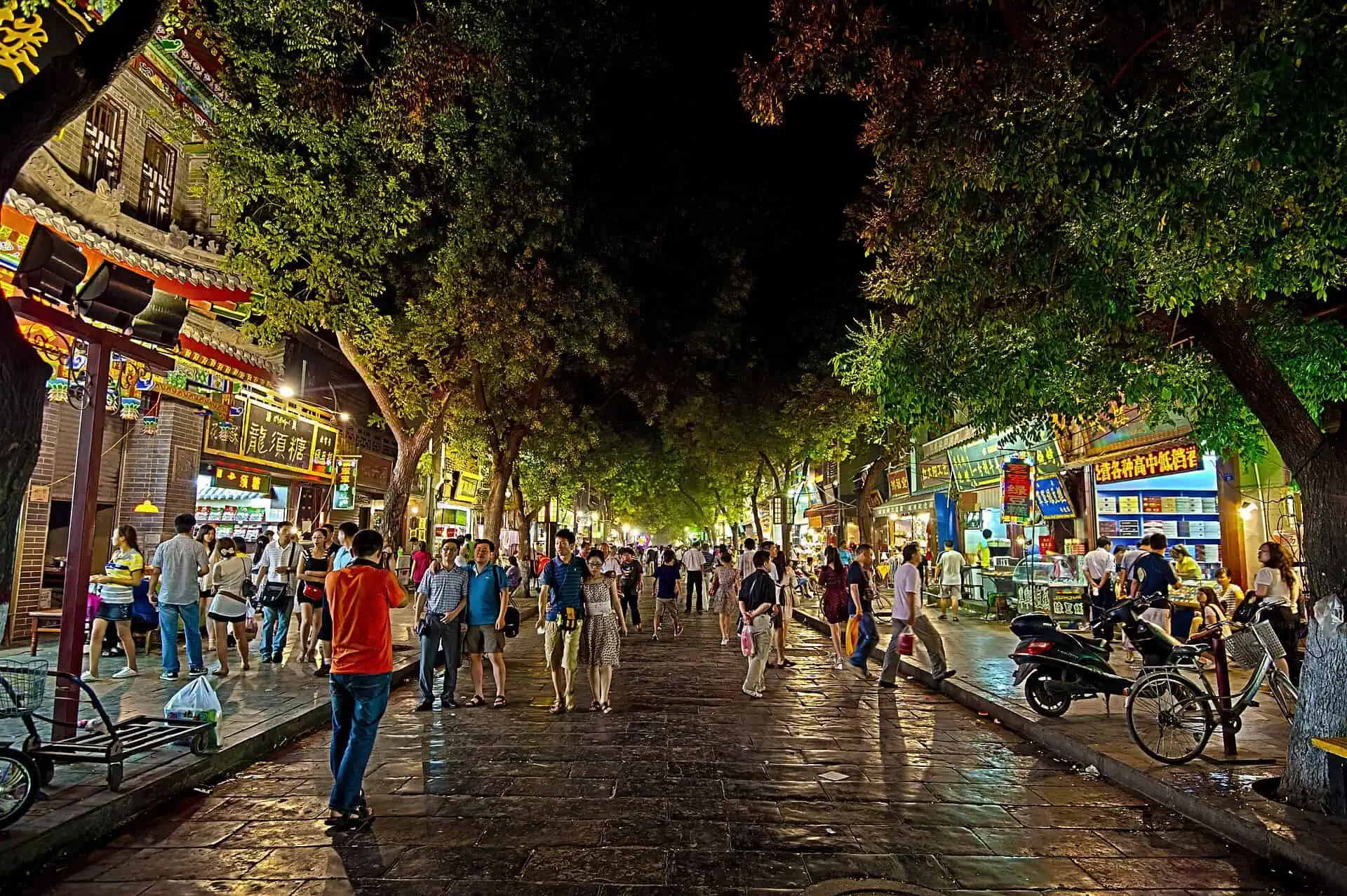
Muslim Quarter
Feeding Xi'an since the 700s — the loudest, smokiest, best-smelling streets of its Hui community.
Learn more →
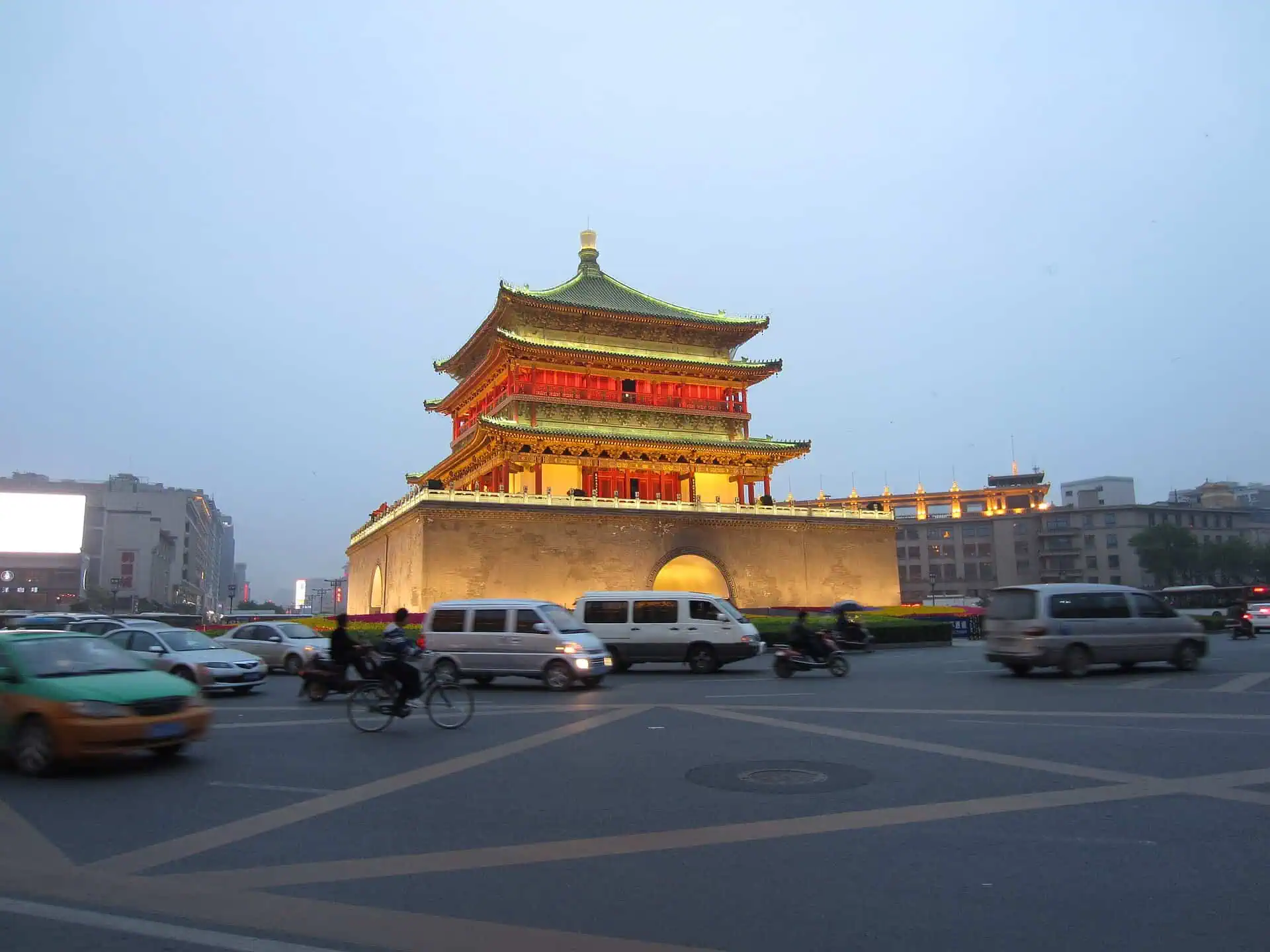
Xi'an Bell Tower
A Ming tower from 1384 at the dead center of the walled city — best admired at dusk, floodlit above the roundabout.
Learn more →
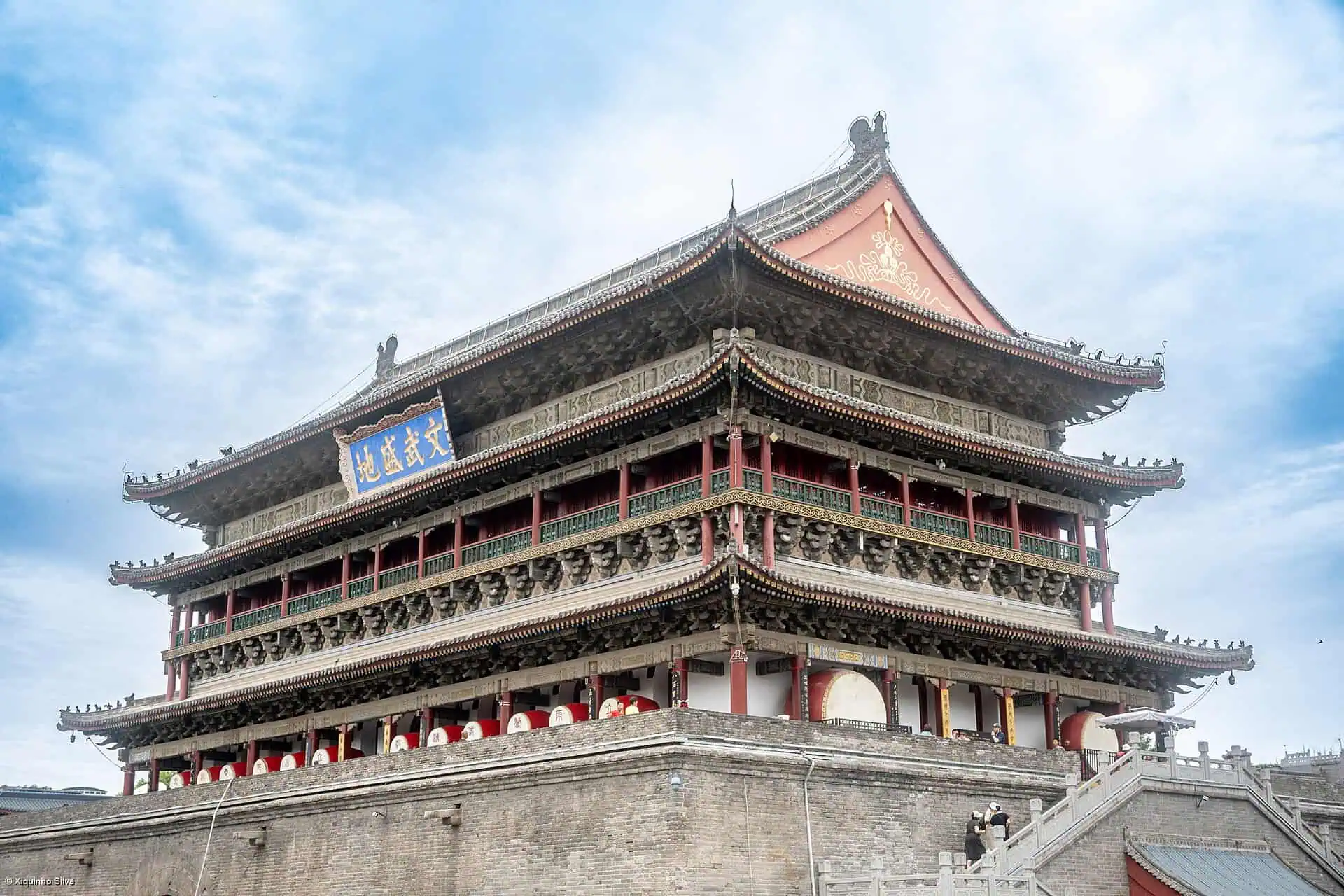
Xi'an Drum Tower
Built in 1380, four years before its famous sister — the tower whose drums closed every Xi'an day, and the gateway to the Muslim Quarter.
Learn more →
Related stories
The 240-hour visa-free transit, explained
Ten days in China without a visa, if you're just passing through — including Americans. The rules, the traps, and how to run it through Xi'an.
Money & payments: Alipay/WeChat Pay for foreigners
China runs on QR codes, and since 2023 foreigners can join in: link your Visa or Mastercard to Alipay and WeChat Pay, verify with your passport, and pay like a local. Set both apps up before you fly, carry a little cash as backup, and forget about tipping.
Getting to Xi'an: flights & XIY airport guide
Xi'an Xianyang International Airport (XIY) sits about 40 km northwest of the city. Almost no intercontinental flights land here, so most Western travelers connect through Beijing, Shanghai, Guangzhou, Hong Kong or Seoul — then take metro Line 14 or a ¥100–180 taxi into town.
Getting around: metro, buses, DiDi & taxis
Xi'an's metro covers everything a tourist needs for ¥2–8 a ride, with English signage throughout. For anywhere off the rails, DiDi (China's Uber, in English) is cheap and easy — and the walled center is compact enough to walk.
Internet, eSIM & VPNs: staying connected
Google, WhatsApp, Instagram and much of the Western internet are blocked on mainland Chinese networks. The clean fix is a travel eSIM, which routes your data outside the mainland so everything just works — no VPN required. Buy and install it before you leave home.
Booking attractions in Xi'an: the real-name reservation system explained
China's big sights run on real-name, timed-entry reservations tied to your passport — and Xi'an has the two hardest tickets in the country outside Beijing: the Terracotta Army and the Shaanxi History Museum. The good news: only those two genuinely require planning. Here's exactly what to book, when tickets release, and how to do it as a foreigner without a Chinese phone number.
Where to stay in Xi'an: the honest area-by-area guide
Xi'an is a compact city with a decisive metro, so the choice of base matters more for mood than logistics. For most first-timers the answer is inside the City Wall near the Bell Tower; below is every realistic alternative, with the character, the crowd it suits and what a room actually costs in each.
Best time to visit Xi'an: an honest month-by-month guide
Xi'an has two golden windows — late March to May, and September to early November — and two seasons that demand a reason: a furnace-hot summer and a cold, dry, wonderfully empty winter. Weather is only half the story, though; the Chinese holiday calendar can matter more than the temperature. Here's every month, with the traps marked.
The essential apps for Xi'an (and how to set them up)
China runs on its own app ecosystem, and Xi'an is no exception — but the setup is far easier than it used to be. Five apps cover payments, trains, taxis and maps, all work with a foreign phone number and bank card, and the whole job takes an evening at home before you fly.
Public holidays & crowds: when not to come
Chinese public holidays concentrate 1.4 billion people's travel into the same few weeks, and Xi'an is one of the country's most popular destinations. Two periods are genuinely best avoided — the October Golden Week and the Spring Festival season — while the smaller three-to-five-day holidays just demand earlier bookings and earlier mornings.
Health & safety in Xi'an: a calm, practical guide
Xi'an is one of the safest big cities you'll ever visit — violent crime against tourists is rare, and solo travelers, including women walking at night, report few problems. The genuine risks are mundane: traffic, trip hazards, tap water you shouldn't drink, winter air and summer heat. Here's how to handle each.
Xi'an with kids: the family playbook
Xi'an is one of China's easiest cities to do with children: a compact center, sights with genuine visual scale, and food kids actually eat. The trick is choosing the four or five things that land with young travelers — and skipping the ones that are homework.
Accessibility in Xi'an: an honest audit
Xi'an is a 3,000-year-old city running on modern infrastructure, and accessibility splits exactly along that line: the metro and the big modern museums are genuinely step-free, while anything involving a 600-year-old gate, tower or pagoda usually means stairs. Here's what works, what doesn't, and what to confirm before you fly.
What a trip to Xi'an actually costs: budget vs comfort
Xi'an is one of China's cheapest big tourist cities — street dinners for ¥20, hostel beds under ¥150, a metro that reaches every headline sight. But the Terracotta Army, a night show and a decent hotel add up fast. Here are two honest daily budgets, the real price of every big-ticket item, and the savings that actually work.
Xi'an vs Beijing: how to split your China trip
The classic first-timer's dilemma, settled honestly: Beijing has the Forbidden City and the Great Wall, Xi'an has the Terracotta Army and a wall you can cycle — and they're different enough that most trips should include both. Here's what each city actually gives you, what it costs, and how to divide a week between them.
Xi'an vs Luoyang: the two ancient capitals, compared honestly
Both cities claim thirteen dynasties, both are 1.5 hours apart by high-speed train, and they complement each other better than they compete: Xi'an has the Terracotta Army and Tang cosmopolitanism at full volume, Luoyang has the Longmen Grottoes and a slower, quieter, cheaper rhythm. Here's the category-by-category comparison, and how to fit both into one trip.
Where to Eat in the Muslim Quarter: A Street-by-Street Guide
The Muslim Quarter (回民街, Huímín Jiē) is Xi'an's loudest, smokiest, most delicious neighborhood — and its most touristed. The open secret is that almost nobody eating on the main strip is a local: the best food is one or two turns off it, at two-thirds of the price. Here's how the quarter is laid out, what to eat where, and how to dodge the traps.
Eating where locals eat: Yongxingfang, Sajinqiao & beyond
Every visitor finds the Muslim Quarter's main strip; almost none find where Xi'an actually eats. The local circuit splits in two directions: Yongxingfang (永兴坊), a curated one-stop sampler of food from across Shaanxi province by the East Gate, and Sajinqiao (洒金桥), an uncurated working Hui street where breakfast queues form before 8:00. Add the Dongxin Street night market and a couple of side lanes, and you can eat like a local for your entire trip.
Hanfu costume rental & photoshoot guide
Renting a Tang-style costume and having your photo taken against 1,300-year-old backdrops is Xi'an's signature tourist experience — and unlike most signature tourist experiences, it's actually good value. A full outfit with hair and makeup runs ¥100–300, the streets are so used to costumed visitors that nobody bats an eye, and the night scenery does the heavy lifting. Here's how to do it without getting upsold.
Xi'an at night: lights, shows & evening walks
Xi'an is a different city after dark — Tang-style streetscapes floodlit gold, a pagoda floating over fountain shows, gate towers glowing above the moat. The best of it is free: the Grand Tang Ever-Bright City pedestrian street alone is worth an evening, and the pagoda fountain show costs nothing. Add a late dinner in the Muslim Quarter and, in season, the open-air Song of Everlasting Sorrow, and your nights may outshine your days.
Self-guided Muslim Quarter food crawl
A timed, stop-by-stop walk through Xi'an's Muslim Quarter (回民街, Huímín Jiē) that starts at the Drum Tower at 17:30 and ends three hours later in a bowl of hot-and-sour dumplings. Eight stops, about ¥80–150 all-in, and a route that gets you off the tourist strip and onto the lanes where locals actually eat.
Nightlife & craft beer in Xi'an
Xi'an is not Shanghai — nobody flies here for the clubs. But the city has bar streets with real history clustered around the South Gate, a small but genuine craft beer scene, a working livehouse circuit, and KTV as a full-contact local pastime. Here's what's actually worth your evening, what it costs, and what to skip.
The photographer's Xi'an: best spots & times
Xi'an rewards photographers who plan around light, not locations. The city's great subjects — walls, towers, pagodas, night markets — are all floodlit after dark, which means the magic window is the same almost everywhere: the hour around sunset. Here's where to stand, when to be there, and the rules that can cost you your drone.
Autumn in Xi'an: ginkgo gold (November)
Every November, a single 1,400-year-old ginkgo tree in the Zhongnan Mountain foothills turns Xi'an's social feeds gold — tradition says Emperor Taizong planted it himself. Seeing it takes a free-but-competitive reservation and an hour's drive south; if you'd rather stay in the city, there are honest ginkgo spots inside the wall and a 10,000-tree forest at Hanyangling. Here's the timing, the booking drill, and what November in Xi'an is actually like.
Xi'an in winter: lantern festivals & lights (December–February)
Xi'an in winter is cold, dry and mostly crowd-free — and for about ten weeks around Chinese New Year it's also lit up like nowhere else in China. The City Wall Lantern Festival drapes giant illuminated sets across a 600-year-old rampart, the Tang quarter glows every night, and temple fairs fill the old town. Here's what the lights cost, when they run, and an honest take on the cold.
A short history of Xi'an (Chang'an)
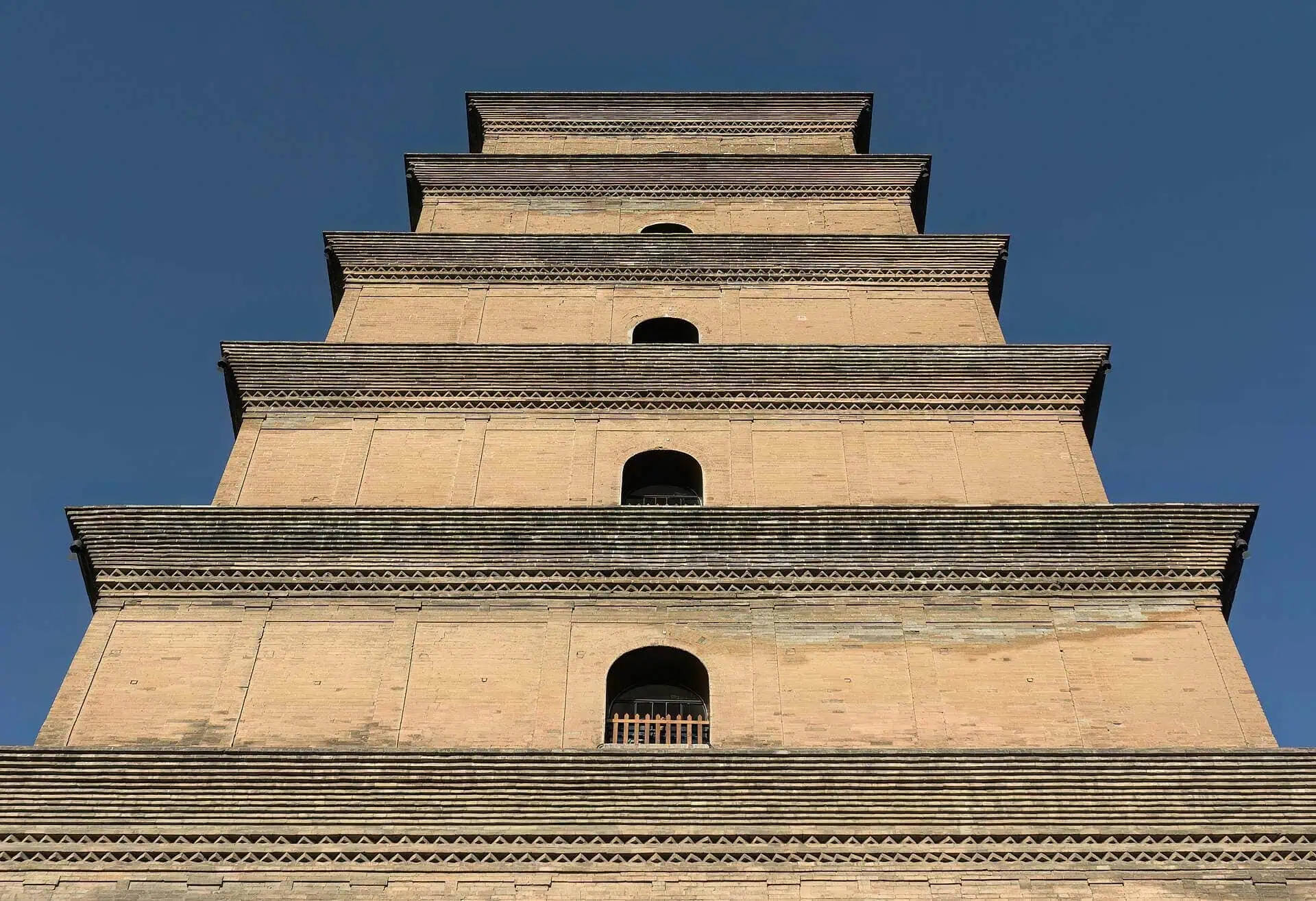
Chang'an in the Tang dynasty: the world's greatest city
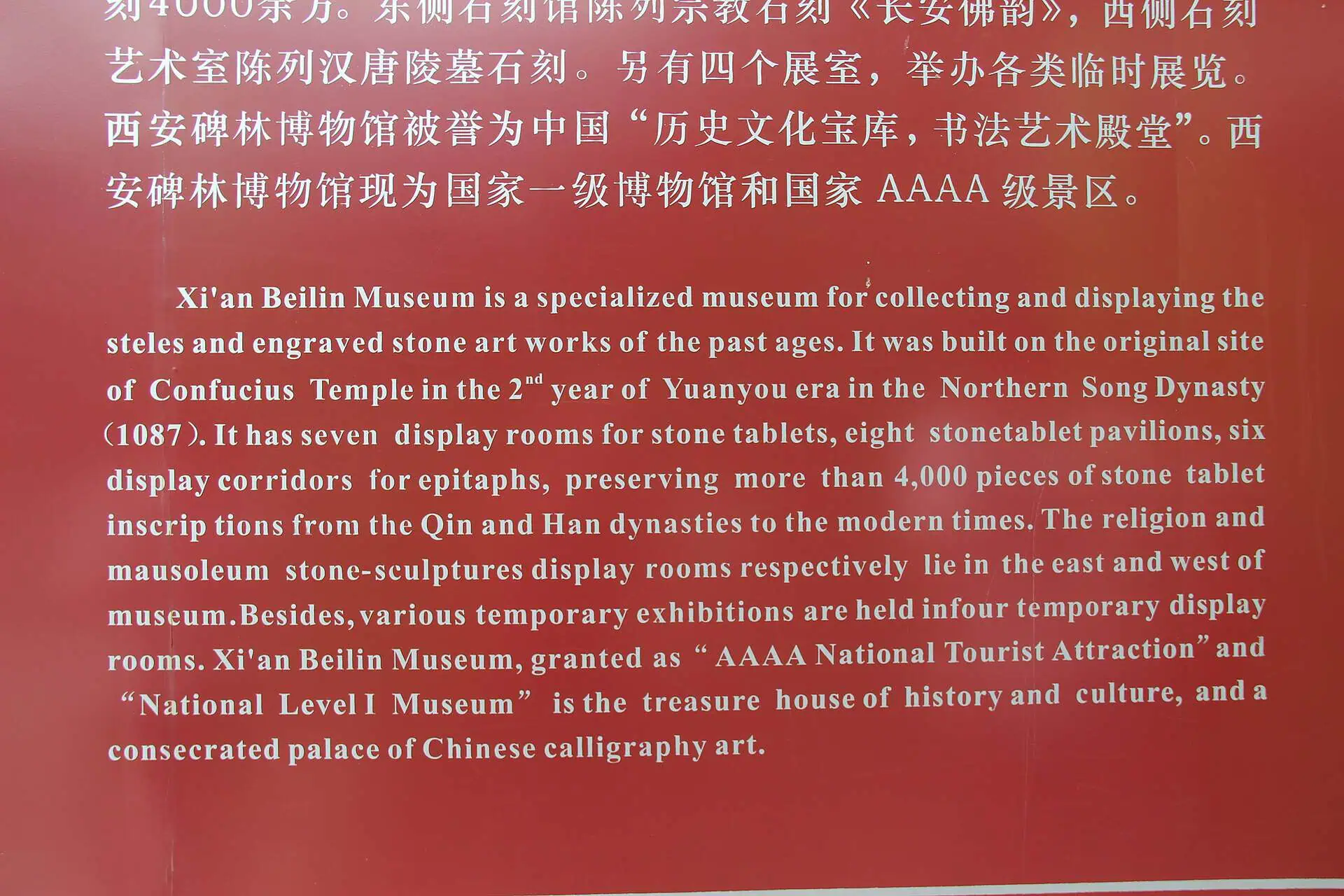
Thirteen dynasties: Xi'an as capital, a visual timeline
Hotels in Xi'an: what to actually book
Xi'an's hotel scene splits cleanly into three workable tiers: international five-stars that cost less than you'd pay at home, Chinese mid-range chains that are the best value in the city, and courtyard guesthouses for character. The two things that actually trip foreigners up — which area to pick and whether the hotel can register you at all — are both solvable in about ten minutes of reading. Start here.
Maps in China: why Google Maps fails, and what to use instead
Google Maps in China fails twice — it's blocked on mainland networks, and its pins sit 100–600 meters off reality thanks to China's scrambled map coordinates. The fix is easy: Apple Maps on iPhone, Amap on Android, and a few screenshots before you fly.
Shared bikes in Xi'an: the last-kilometer answer
Xi'an's yellow and blue shared bikes turn the flat, spread-out city center into a 10-minute ride — unlocked with the Alipay or WeChat scan you already have, deposit-free, for about ¥1.5 per half hour. The one skill you need is parking inside the GPS zones.
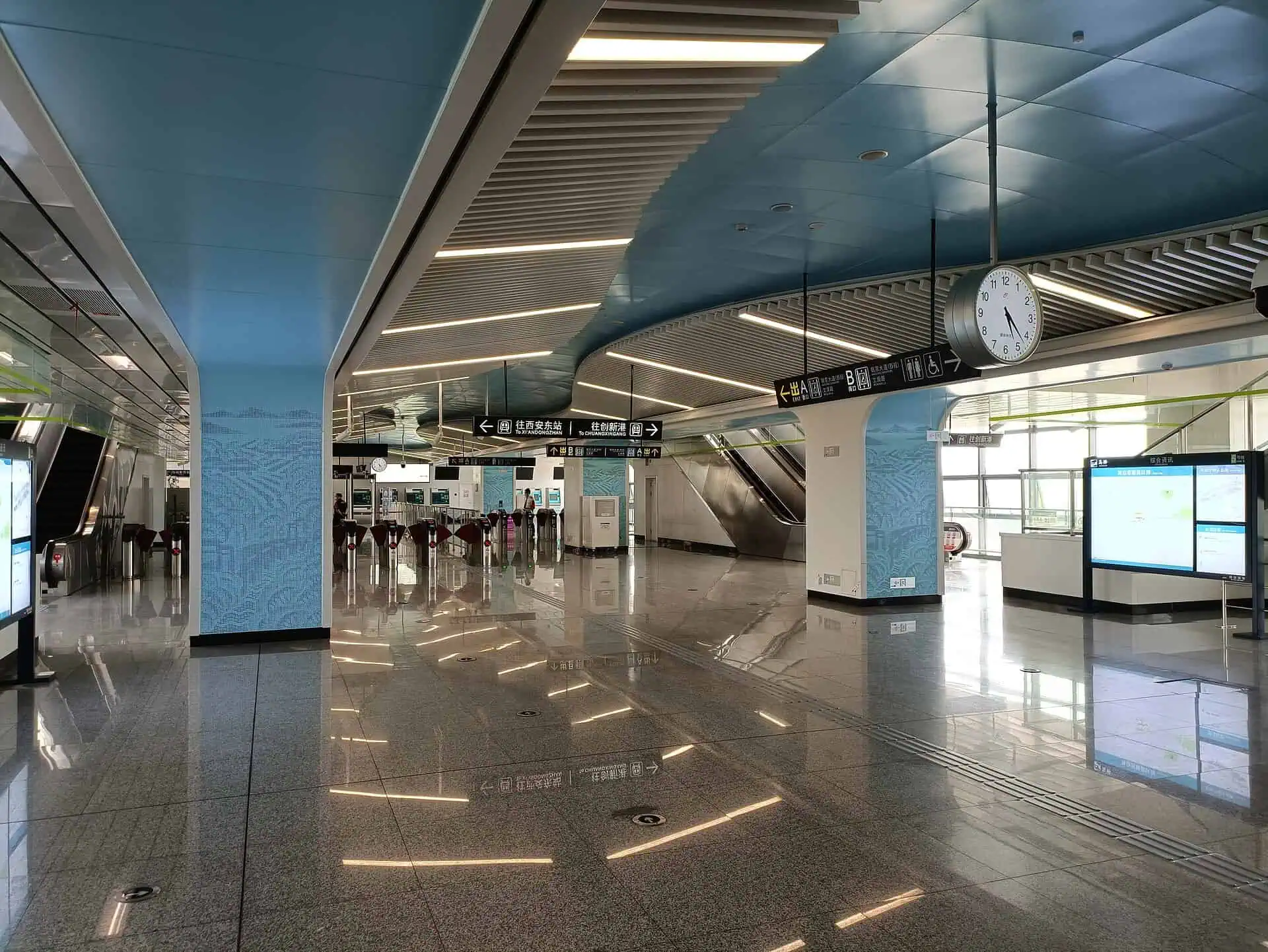
Slow travel in Xi'an: how to live here for a month
Xi'an by season: Mid-Autumn, the film festival & the City Wall marathon
What to pack for Xi'an: a consolidated, season-by-season checklist
Xi'an punishes over-packers and rewards layers. The city runs from furnace-hot summers (35°C+) to cold, dry winters (lows around −5°C), with spring and autumn as the mild sweet spot — so the clothing list changes entirely with the month. The non-negotiables barely change at all: pocket tissues for paperless toilets, a mask for winter air, a refillable bottle, and your passport, which doubles as your ticket at the big sights. Here's the whole list in one place.
Is Xi'an safe for solo and women travelers? An honest answer
By the consensus of Western travel writing, Xi'an is one of the safer major Chinese cities for people traveling alone — violent crime against tourists is rare, and women walking at night inside the city wall report few problems. The risks worth planning for are mundane ones: pickpockets in the Muslim Quarter and Terracotta Army queues, scam touts, and the logistics of getting around without fluent Mandarin. Here is an honest, specific assessment — the reassurance and the caveats.
Riding the Xi'an metro: lines, fares and the airport line
Xi'an's metro is the spine of any visit — clean, bilingual, and within reach of nearly every sight, the airport and the Terracotta Army direction. Twelve lines are running as of 2026; in practice you'll lean on Line 2 through the centre, Line 14 to the airport and Line 9 out toward Lintong. Pay with the transit QR code in Alipay or WeChat and most rides cost ¥3–7.
The Shaanxi Dialect of Xi'an
The speech you hear around Xi'an is the Guanzhong dialect — a branch of Central Plains Mandarin, not a dialect of standard Mandarin, and not fully mutually intelligible with it. Locals take genuine pride in its Tang-dynasty capital pedigree, though linguistically it's a cousin of Tang court speech rather than a fossil of it. For travelers it's flavor, not a tool: everyone you'll deal with speaks standard Mandarin.
Xi'an in Summer: museums, mountains & long evenings
Xi'an is one of China's 'Four Furnaces' — June to August is genuinely hot and humid, with heat waves pushing toward 40°C. The fix is a rhythm, not a destination: museums and malls at midday, sights and street food at dawn or after dark, and a mountain escape if you can. Here's how to plan a summer trip without melting.
Business travel in Xi'an: conventions, meetings and the rules of the room
Xi'an is a serious meetings city — a UFI-member convention center in the Chanba district, a 21,000 m² conference hotel, and a high-speed rail link that puts Beijing 4.5 hours away. This guide covers where the venues are, how to get to a meeting without being late, and the business-culture basics that actually matter: WeChat as your business card, hierarchy at the table, and the gift rules that quietly make a difference.
Student, senior & child discounts at Xi'an sights — the full table
Xi'an's big sights offer real discounts: students roughly half price at most attractions, seniors 65+ free at the Terracotta Army and most museums, children under 16 free at the flagship sights. The catch: it's physical ID at the gate, photos don't count, and some policies apply only to Chinese nationals. Here's the complete table.
On video
Xi'an on video
What this place looks like on video.