Business travel in Xi'an: conventions, meetings and the rules of the room
Xi'an is a serious meetings city — a UFI-member convention center in the Chanba district, a 21,000 m² conference hotel, and a high-speed rail link that puts Beijing 4.5 hours away. This guide covers where the venues are, how to get to a meeting without being late, and the business-culture basics that actually matter: WeChat as your business card, hierarchy at the table, and the gift rules that quietly make a difference.
7 min read · 4 sections
The short version
- Venues cluster in Chanba (Xi'an International Convention & Exhibition Center — UFI member, 72,000 m²; the adjacent Convention Center hotel has 55 meeting rooms).
- Getting around: metro Line 14 from the airport; Line 2/3/4 cross the business districts; DiDi (Chinese Uber) is the reliable door-to-door option.
- Beijing is 4.5 hours by high-speed rail — plan meetings on the same day as a return if you're transiting.
- Set up WeChat before you land: in China, scanning a QR code replaces exchanging business cards.
- Bring your passport to every venue — hotels, convention centers and sight tickets all require it for registration.
- Learn to say 'Gānbēi' (cheers) — but know that the 'drink challenge' at business dinners is optional for foreign guests; declining politely with tea is normal.
Where Xi'an does business
Xi'an's meetings infrastructure clusters in three places:
- Chanba (浐灞, Chǎnbà) — the big one. The Xi'an International Convention & Exhibition Center (西安国际会展中心) sits at 1399 Huizhan 1st Road in the Chanba Ecological District, a UFI-member venue founded 2017 with roughly 72,000 m² of hall space. Next door, the Xi'an International Convention Center hotel (2626 Shibo Avenue) adds 21,000 m² of meeting space across 55 banquet and multifunctional rooms — the two operate as one campus, and the hotel is the practical choice when your event is there.
- High-Tech Zone (高新区, Gāoxīn Qū) — the office belt. South-west of the wall, this is where Xi'an's tech and engineering companies have their headquarters, and where the international hotel brands concentrate. It's the right base for company visits and client meetings rather than conventions.
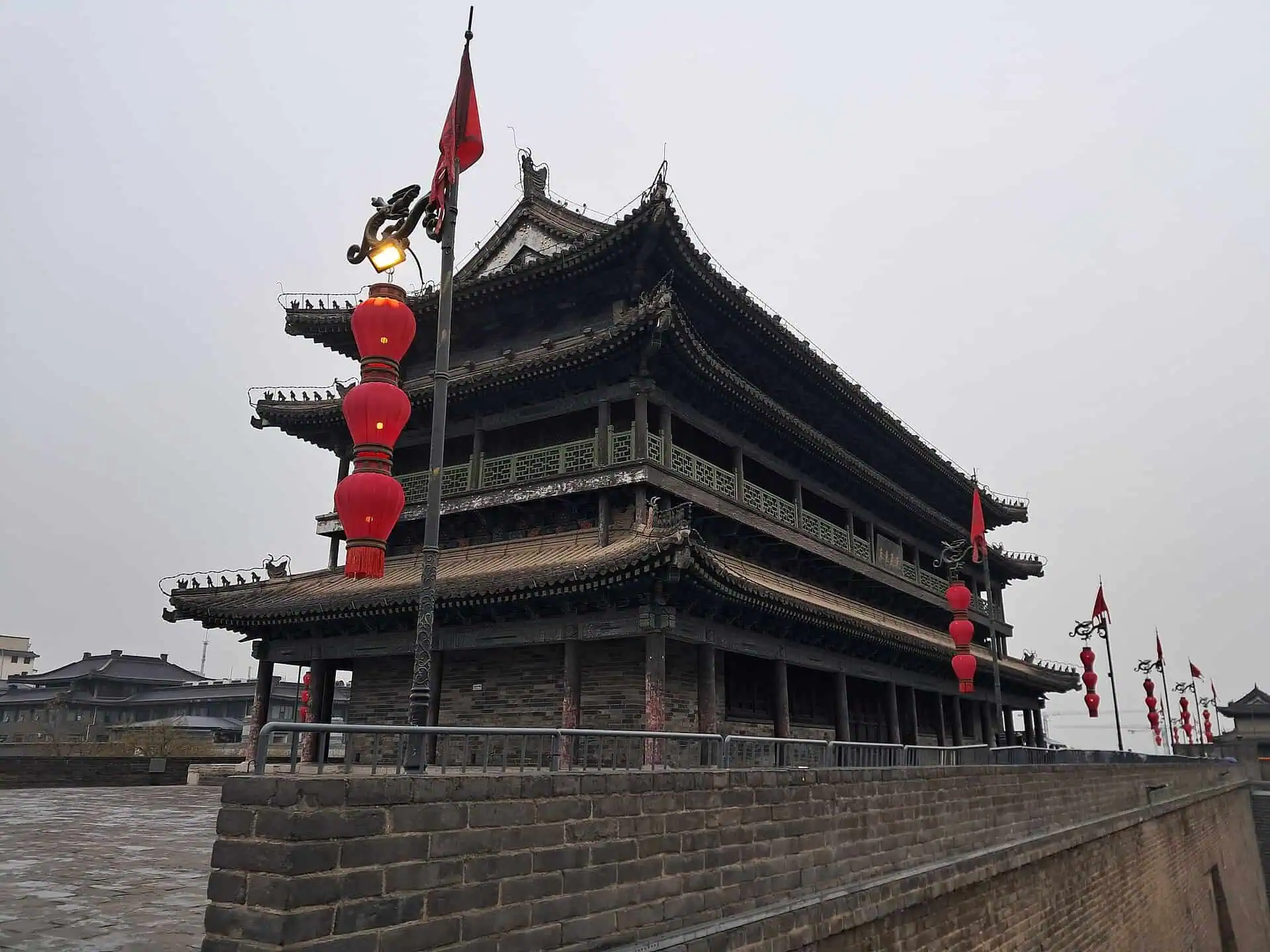
- Inside the wall — the executive option. The Bell Tower / South Gate hotels are where delegations historically stayed, and the City Wall view is the memory your guests will keep. Fine for meetings with Chinese partners who know the city; less convenient for the convention center.
Getting between them: the metro covers all three (Lines 2, 3 and 4 cross the wall, the High-Tech Zone and the north; Line 14 runs from the airport through to the north-west), and DiDi — China's Uber — is the door-to-door answer at ¥20–60 across town. Rides are booked in the DiDi app (English UI available) or through Alipay; see getting around Xi'an for the full picture.
Getting there without drama
The logistics that decide whether you make the 9 am meeting:
- From the airport: Xi'an Xianyang International Airport (XIY) is 40 km north-west of the city. Metro Line 14 runs straight from the terminal into the city — to the North Railway Station (for high-speed trains) in about 30 minutes, then change for Line 2. A taxi or DiDi takes 50–70 minutes depending on traffic; the airport is one of China's cheaper big-airport rides at roughly ¥120–180.
- From Beijing or Shanghai: the high-speed rail network makes Xi'an a genuinely convenient meetings stop — Beijing is about 4.5 hours (1,200 km), Shanghai about 6. The Xi'an North Railway Station (西安北站, Xī'ān Běizhàn) is on metro Line 2/4; trains run every 15–30 minutes in peak corridors. Book through 12306 (the official app; English UI available) — and note that real-name tickets mean your passport is your train ticket.
- Inside the city: metro fares are ¥2–8 and stations are clean, signed in English and CCTV-covered; the metro guide has the network map. For door-to-door, DiDi beats taxis for foreigners — the fare is fixed in the app, no cash needed, no language barrier at drop-off.
One timing note for conventions: Chinese events often start on the dot (the audience is seated and quiet by the stated time) but schedule keynote slots with generous buffers. Arrive 15 minutes early to any meeting where you're the guest — punctuality is the politeness that costs you the least.
The room rules that matter
The culture notes that will save you from looking like the tourist at the table:
WeChat is your business card. In China, the standard close of any meeting is not a paper card exchange — it's the QR-code scan: "Let me add you on WeChat." Set the app up before you fly, link a foreign card to WeChat Pay (it's supported), and expect to scan codes constantly. Paper business cards still circulate — carry yours, present it with both hands, and spend two seconds reading the card you receive before pocketing it. But the QR code is the relationship.
Hierarchy shapes the table. Seating at business dinners follows rank: the host sits facing the door, the guest of honor opposite them, the interpreter and support staff beside. Wait to be shown to your seat rather than claiming one. Toasts start from the host, who raises a glass to the room; your return toast is the graceful move. Gānbēi (干杯) — "bottoms up" — is a challenge when pressed on a round of baijiu (the rice liquor that arrives at every serious dinner). Foreign guests are genuinely not expected to match Chinese colleagues round-for-round; declining with tea and a smile, or sipping, is normal and respected. The polite refusal: "I'm not much of a drinker — but I'm happy to toast with tea."
Gifts, done right. At a first meeting, small and thoughtful beats expensive: a book about your country, good chocolate, a branded pen. What to avoid: clocks and umbrellas (both carry funeral connotations in Chinese), gifts with 4s in the price (the number sounds like "death"), and anything so lavish it feels like a transaction. If they give you a gift, accept with both hands and do not open it immediately — that's a difference from Western norms that surprises visitors.
The dinner itself is the meeting. Xi'an business culture runs on meals: the xiāngxí (banquet table with a lazy Susan) is where deals get decided, and a full dinner is a sign of respect, not a scheduling inconvenience. Accept invitations, eat a little of everything you're served, and when you decline a dish, decline early rather than picking at it. If you need help ordering or navigating the table, our etiquette guide has the deeper version.
The practical kit for a business trip
What to have sorted before your first meeting:
- Money. China is near-cashless: link Alipay and WeChat Pay to a foreign card before you fly, keep a few hundred yuan in cash as backup, and skip the ATMs. The full setup is in money and payments. Your expense-account receipt will be a QR code, not a paper slip — screenshot it.
- Connectivity. If your home number doesn't roam well, a local eSIM or SIM with a Chinese number is a business asset: Chinese contacts expect to reach you on WeChat, which works fine on any data plan. VPN questions for corporate environments are real — sort it before you land (internet & eSIM).
- Your passport, everywhere. Hotel registration, convention-center badges, and sight tickets all run on the passport. Scan it into your phone and keep the physical copy on you.
- An interpreter line. If your meeting will be in Chinese, book a professional interpreter rather than relying on a colleague's colleague — for contract-level discussions it pays for itself. Your embassy or a large local agency can recommend one; for informal situations, the essential phrases page covers the survival set.
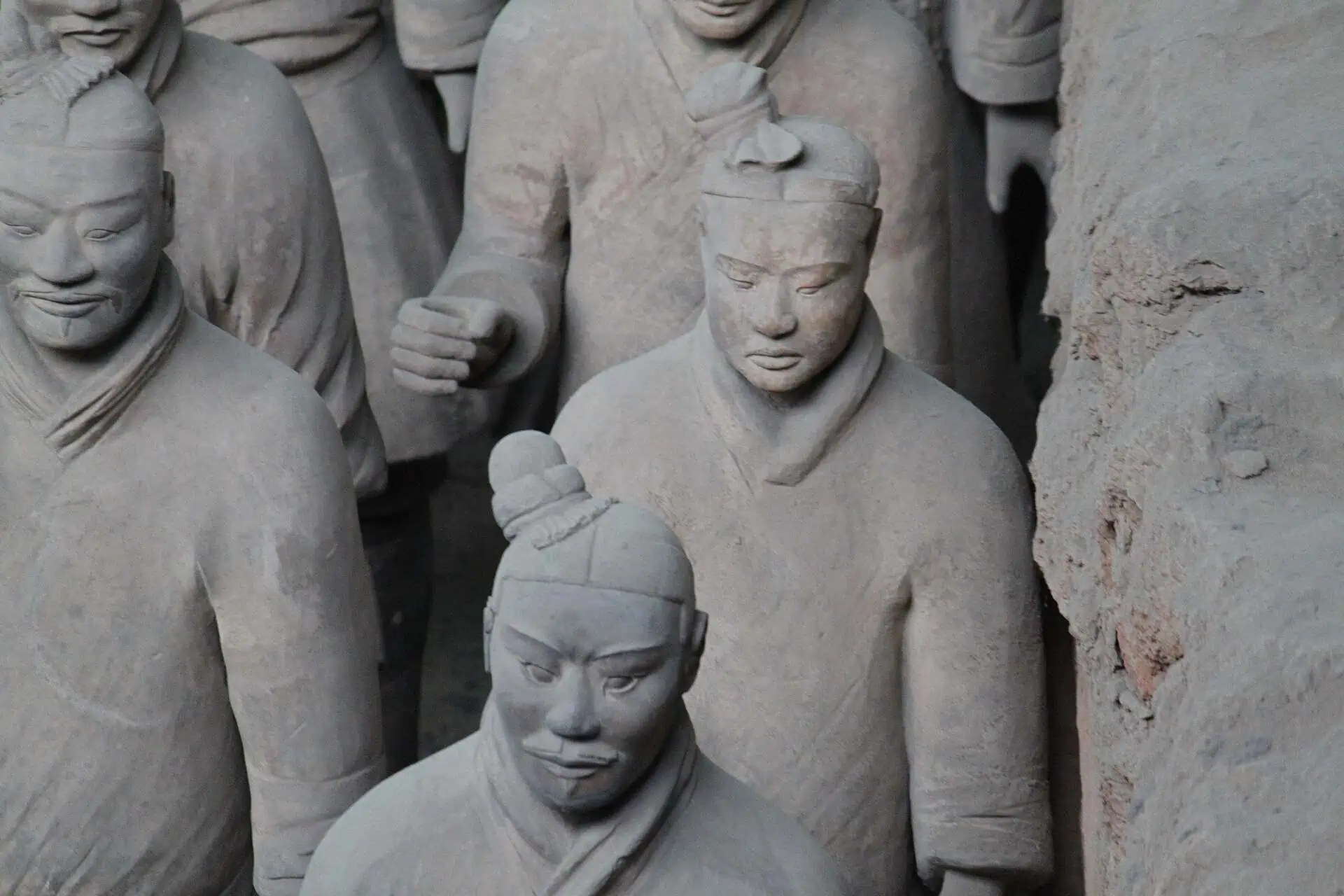
And when the meetings end: a day of Terracotta Army or a walk on the City Wall is the standard way Chinese hosts close a successful visit — take the invitation, it's part of the relationship.
Questions, answered
How do I get from Xi'an airport to a meeting?
Metro Line 14 runs from Xianyang International Airport into the city — about 30 minutes to the North Railway Station, then change for Line 2. A DiDi or taxi takes 50–70 minutes and costs roughly ¥120–180. For the Chanba convention district, take Line 3 east.
Where are Xi'an's convention venues?
The main one is the Xi'an International Convention & Exhibition Center in the Chanba Ecological District (1399 Huizhan 1st Road) — UFI member, about 72,000 m² of halls, with the adjacent Convention Center hotel adding 55 meeting rooms. Company-visit meetings typically happen in the High-Tech Zone south-west of the wall.
Do I need WeChat for business in Xi'an?
Practically yes. Chinese business culture runs on WeChat: contacts are exchanged by scanning QR codes, meeting logistics get arranged in group chats, and WeChat Pay works everywhere. Set it up before you fly and link a foreign card — it's the single most useful app you'll carry.
What should I bring to a business meeting in Xi'an?
Your passport (required for hotel and venue registration), paper business cards (present with both hands), a small gift if it's a first meeting — avoid clocks, umbrellas and anything with a 4 in the price — and Alipay/WeChat Pay set up on your phone. A VPN or roaming plan sorted before landing, too.
Is the baijiu drinking expected at business dinners?
Toasts will happen — the host raises a glass and you're expected to raise yours — but foreign guests are genuinely not expected to match Chinese colleagues round-for-round on baijiu. Declining with tea and a smile, or sipping, is normal and respected. Saying 'gānbēi' (cheers) with a full glass you don't drain is far better than draining glasses you can't handle.
Places in this story
Keep exploring
Visas & entry: do you need one?
Probably less paperwork than you fear — and two of the doors now have their own deep-dive packages: the 30-day visa-free entry (~50 countries) and the 240-hour transit (55 countries, including the US). This page is the router: work out which door is yours, then read its package.
The 240-hour visa-free transit, explained
Ten days in China without a visa, if you're just passing through — including Americans. The rules, the traps, and how to run it through Xi'an.
The 30-day visa-free entry: who gets in free
Around 50 countries can now enter China for up to 30 days with no visa at all — no transit logic, no onward-ticket games. Most of Europe, the UK, Canada, Australia and more. The US is not on the list.