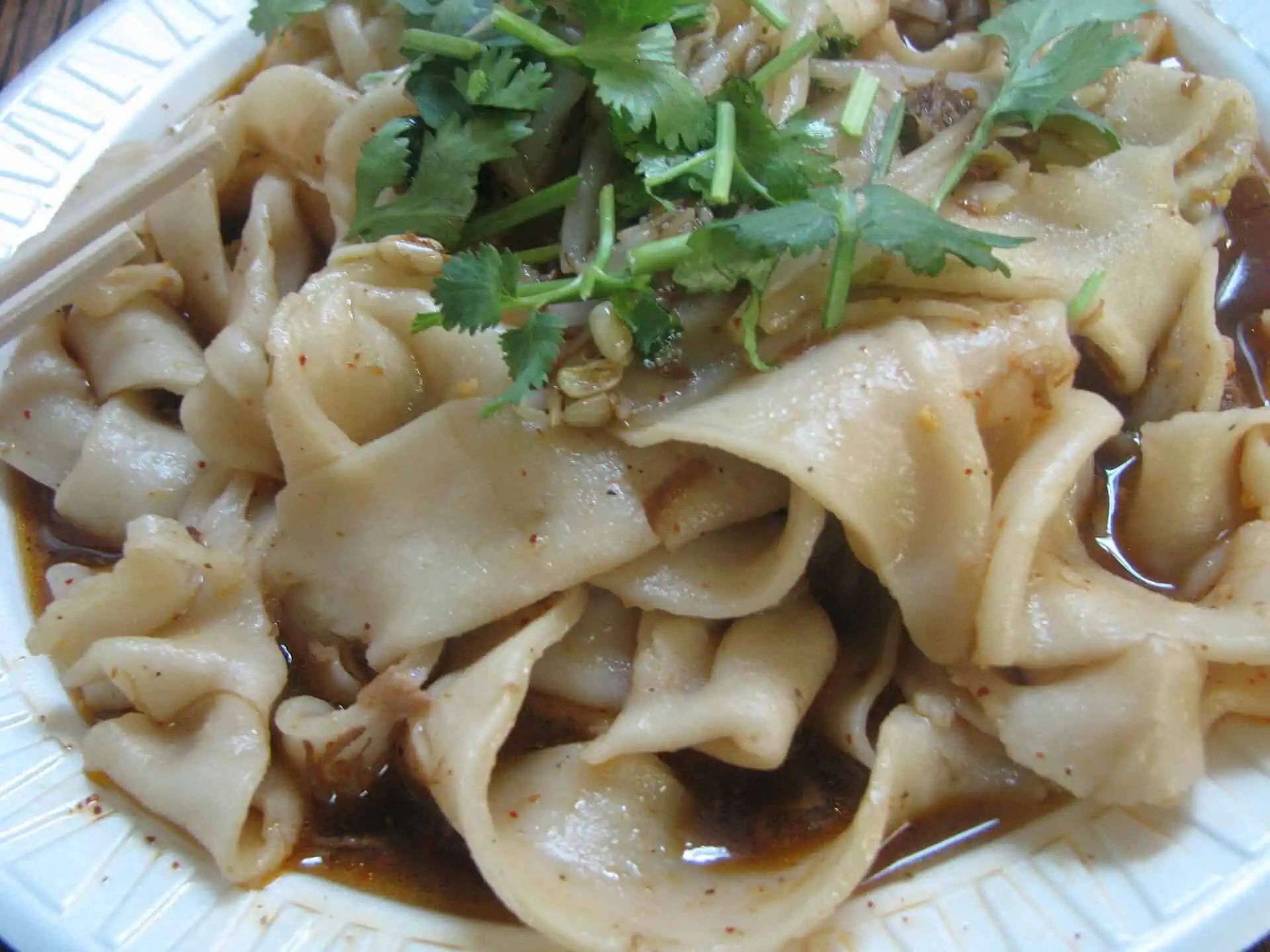
Biangbiang Noodles
Biángbiáng miàn · say it: “byang-byang myen”
- Spice
- Medium heat
- Typical price
- ¥15–30
- Dietary
- Contains gluten
Wheat has anchored Guanzhong farm cooking for three thousand years, and biangbiang noodles (biángbiáng面, biángbiáng miàn) are its showpiece: Shaanxi's belt-wide hand-pulled noodles — each strand as wide and as long as a trouser belt, which is why locals also call them kudai mian (裤带面, kùdài miàn, "belt noodles"). The name is onomatopoeia: "biang" is the sound of the dough slapping the counter as the noodle is stretched. The character it's written with is famously unwriteable — a 58-stroke construction combining elements for "speak," "horse," "moon," "knife" and more, which doesn't exist in standard dictionaries and can't be typed, so menus often print a drawing of it instead. The classic preparation is youpo (油泼, yóupō, "oil-splashed"): boiled noodles land in a bowl over raw garlic, scallions and a mound of chili flakes, and smoking-hot oil is poured over the top, flash-cooking the aromatics and glossing every strand. Black vinegar and usually a spoonful of diced pork or tomato-and-egg sauce finish the bowl. Vegetarian versions exist — ask for no meat and you'll typically get the tomato-egg or plain chili-oil treatment — but the default at many shops includes pork, so we mark the dish non-vegetarian. The texture is the real point: thick, chewy, slightly rough noodles that hold sauce the way no machine-cut noodle can. In the Muslim Quarter, Hui cooks make halal versions with beef.
How to eat it
Stir fast and eat fast. The noodles keep cooking in the hot oil and slide from springy to soft within minutes, so mix from the bottom the moment the bowl lands and don't let it sit while you photograph it. Slurping is expected — it cools the strands and spreads the sauce.
A small bowl of noodle-cooking water (面汤, miàntāng) often comes alongside, or free on request — locals sip it between bites, holding to the old Shaanxi belief that it aids digestion. Raw garlic cloves sit on most tables, and Xi'an people will tell you noodles without garlic lose half their flavor; peel a clove and take small bites between mouthfuls if you're brave. For the full local lunch, pair a bowl with a roujiamo — carb on carb is standard practice here. Portions are generous; one bowl is a meal for most appetites. See the Xi'an food hub for what to eat next, and our Muslim Quarter eating guide for the halal beef version.
Where to try it
Lao Li Jia (老李家)
A local standby that turns up on every Xi'an noodle shortlist; the classic order is youpo with everything on it.
Da Xi An (大嘻咹)
Another local favorite for the classic oil-splashed bowl, with branches around the city center.
Aihua Kudai Mian (爱骅裤带面)
A 30-plus-year-old belt-noodle shop near the South Gate (Yongningmen — the main entrance to the [City Wall](/en/attractions/city-wall)). Technically „belt noodles,” the same wide-noodle family; known for generous bowls around ¥20 and free noodle refills.
The First Noodle Under the Sun (天下第一面)
A long-running shop popular with first-time visitors — a reliable, no-surprises introduction to the dish.
On video
Xi'an on video
What this place looks like on video.