A short history of Xi'an (Chang'an)
How Xi'an (Chang'an) became the root of China — the ancient capital where the first unified empire was born, grew into the largest city on Earth, lost the throne, and where to see each chapter today.
Banpo: six thousand years before the emperors
Long before any emperor, people were already living well here. Around 6,000 years ago, a farming village of the Yangshao culture (仰韶, Yǎngsháo) stood at Banpo (半坡, Bànpō), on the eastern edge of modern Xi'an. Its people grew millet, kept pigs, hunted with bows, and fired painted pottery — red bowls brushed with fish and human-face designs that are now icons of Chinese prehistory. The village was ringed by a defensive ditch, and its layout is often read as a matrilineal community. Banpo is the quiet reminder that Xi'an's story doesn't start with the First Emperor — it starts with farmers who picked the right plain.
Zhou: kings on the Fen River
The first great dynasty to rule from this plain was the Zhou (周, Zhōu, c. 1046–256 BC). Their twin capital Fenghao (丰镐, Fēnghào) stood on the Fen River just west of today's city, and from it the early Zhou kings ran a ritual state whose bronze vessels still anchor Chinese museum collections. Geography explains the choice. The Guanzhong plain (关中, Guānzhōng) — the Wei River valley walled in by mountains and threaded with a handful of passes — was fertile, defensible, and close to the western frontier. Every later dynasty that made Xi'an its capital was buying the same real estate.
Qin: unification and the First Emperor
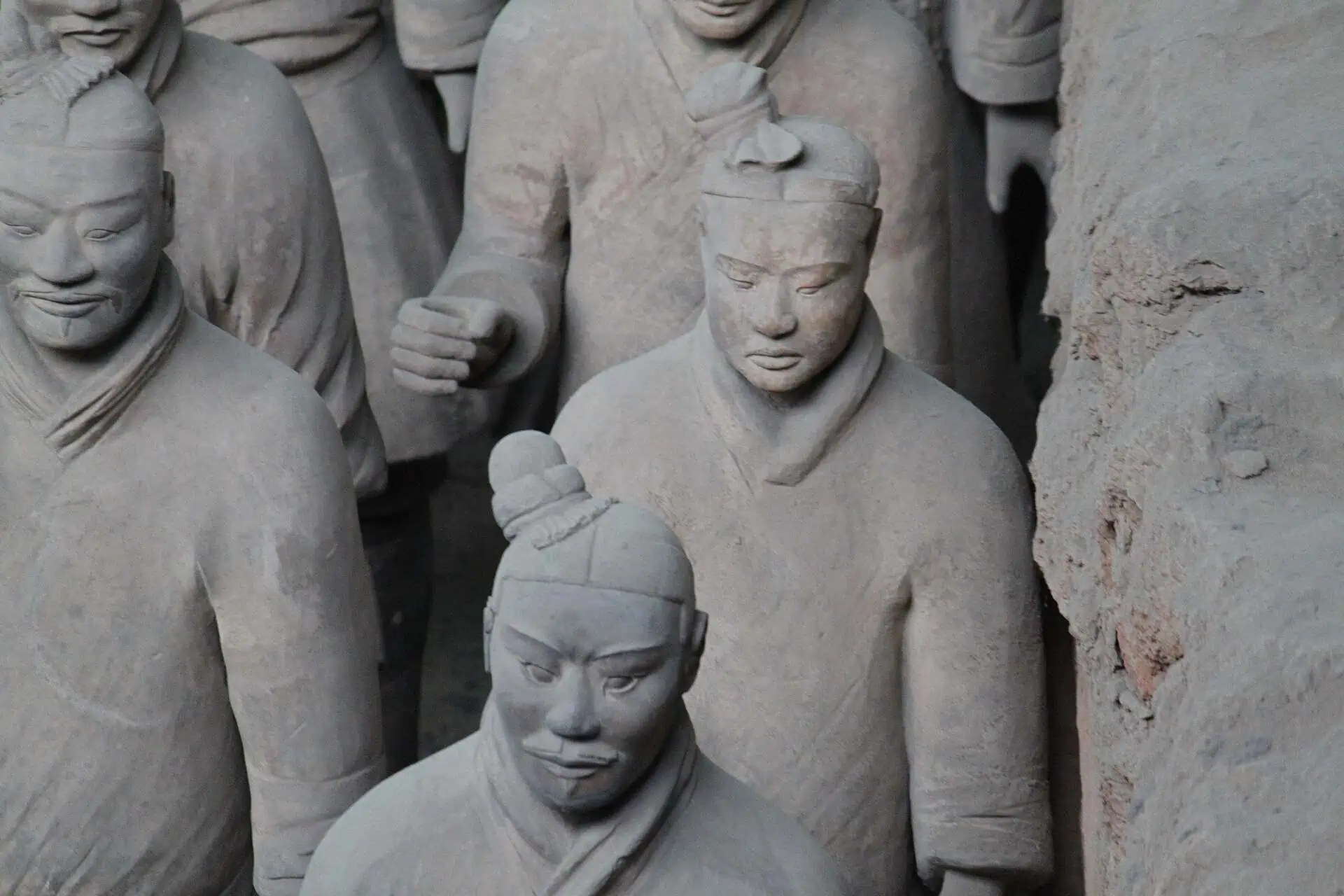
The Qin (秦, Qín) were a frontier state on the plain's western edge, tougher and more ruthless than their rivals. In 221 BC their king, Ying Zheng (嬴政, Yíng Zhèng), finished conquering the last of them and declared himself Qin Shi Huang (秦始皇, Qín Shǐhuáng) — First Emperor. In barely a decade of rule he standardized the script, the currency, weights and measures, even the axle widths of carts, and rammed straight imperial highways out from his capital at Xianyang (咸阳, Xiányáng), across the river from modern Xi'an. He also conscripted hundreds of thousands of laborers to build his tomb and its terracotta army. The dynasty collapsed three years after his death in 210 BC. The template he hammered together — one China, one script, one administration — lasted two thousand years. From this plain, the idea of one China was forged — which is why Xi'an, not Beijing or Nanjing, is called the root of the nation.
Han Chang'an and the Silk Road
The Han (汉, Hàn, 202 BC–220 AD) built a new capital just southeast of today's center and named it Chang'an (长安, Cháng'ān) — "Perpetual Peace." It grew into one of the largest cities on the planet, and under Emperor Wu (汉武帝, Hàn Wǔdì) it became the launch point of the most famous trade network in history. In 138 BC the emperor sent an envoy named Zhang Qian (张骞, Zhāng Qiān) west to find allies against the nomadic Xiongnu (匈奴, Xiōngnú). He came back thirteen years later with no alliance but a full report on Central Asia — and the missions, garrisons and caravans that followed became the Silk Road. Silk went west; horses, grapes, glass and eventually Buddhism came east, through Chang'an's gates.
Tang Chang'an: the largest city on Earth
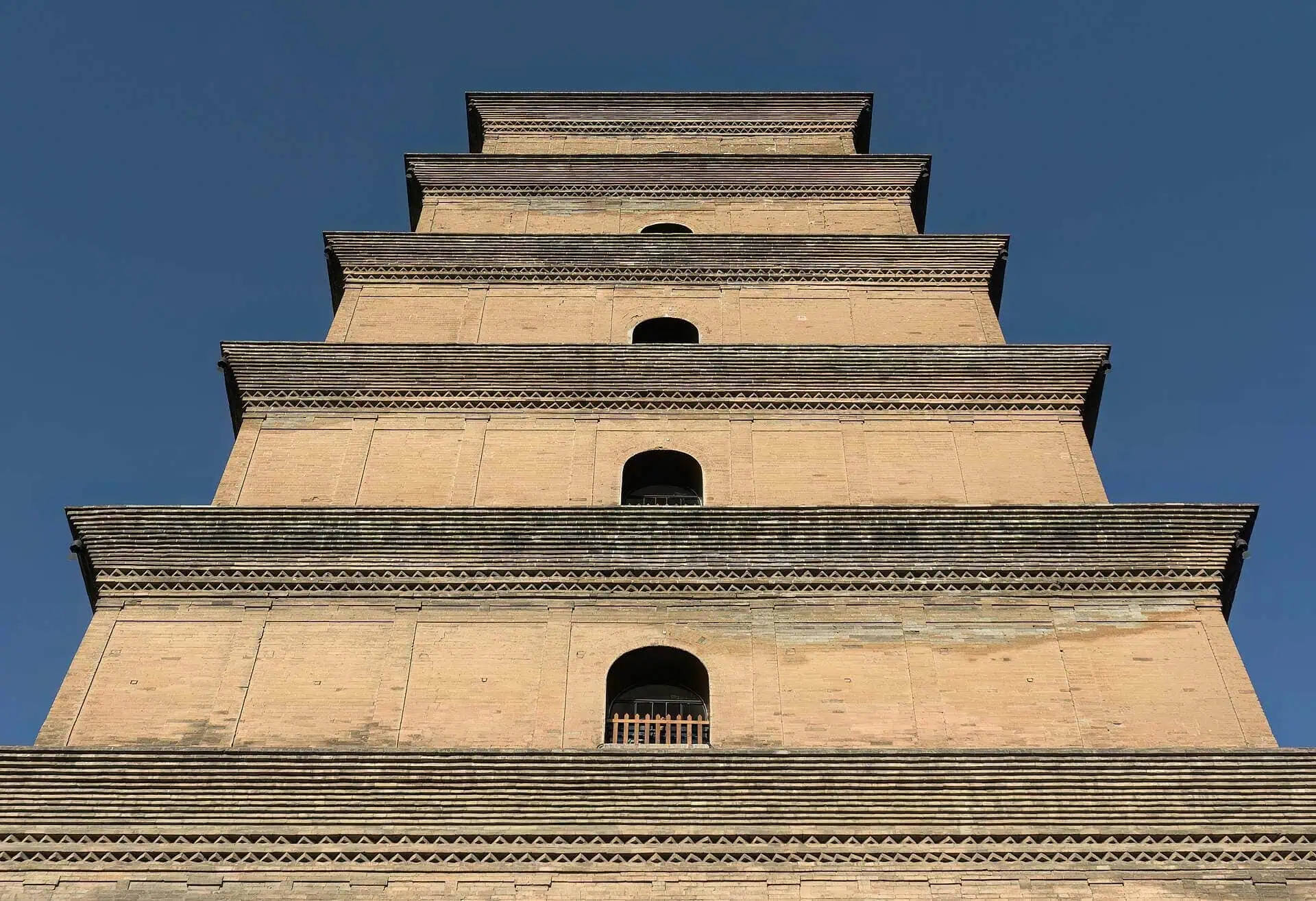
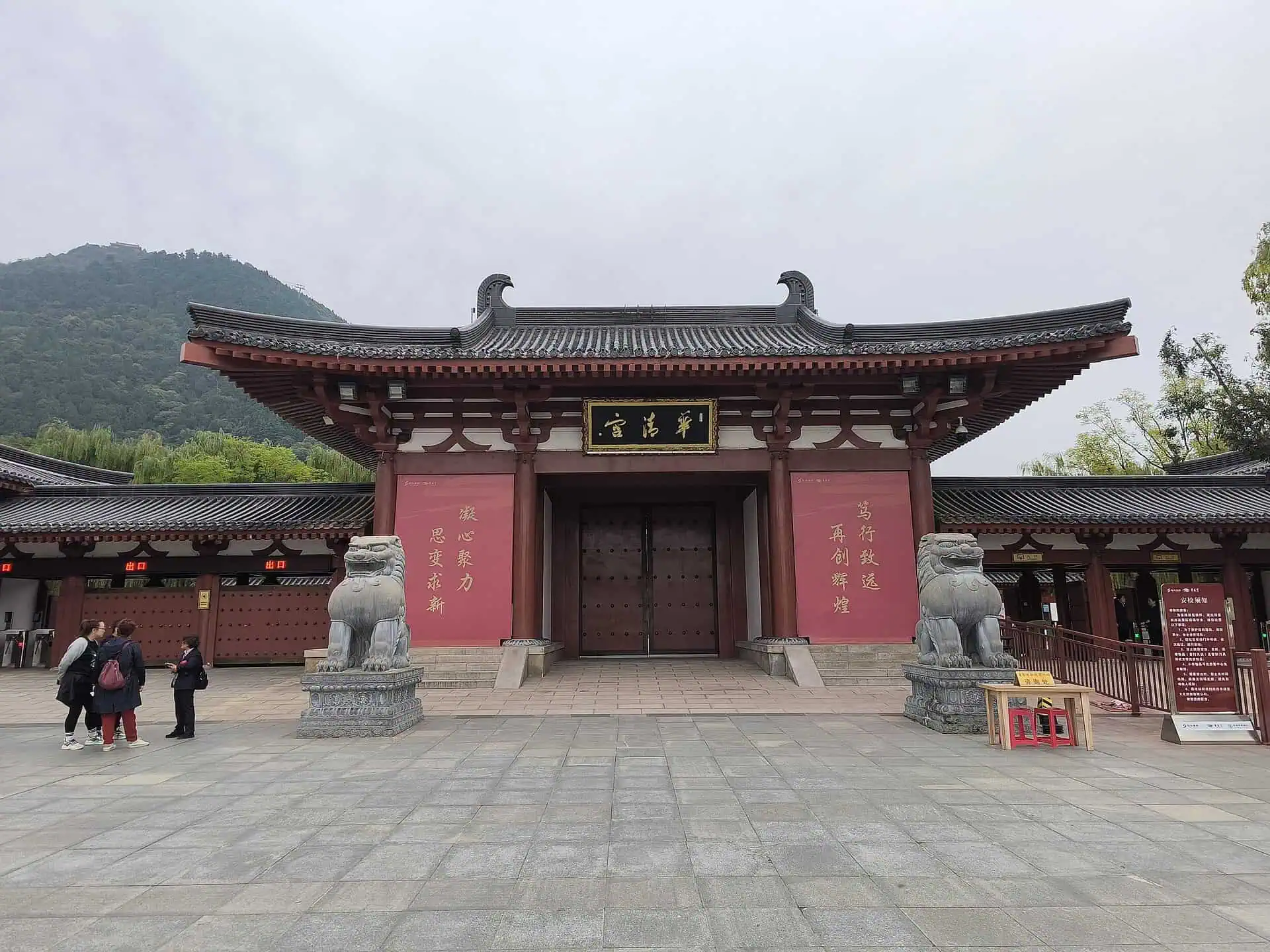
After centuries of division, the Sui (隋, Suí) reunified China and in 582 laid out a colossal planned capital on the plain — a perfect grid of walled wards. The Tang (唐, Táng, 618–907) inherited it, restored the name Chang'an, and presided over its golden age. At its peak, around a million people lived inside a wall circuit of roughly 36 km — almost certainly the largest city in the world, and surely the most cosmopolitan. Sogdian merchants ran the West Market, where Persian silver circulated; Turkic princes, Japanese monks and Korean students crowded the wards; Zoroastrian, Nestorian Christian and Manichaean temples operated alongside Buddhist monasteries. The monk Xuanzang (玄奘, Xuánzàng) returned from India with hundreds of sutras, and the Big Wild Goose Pagoda was built to house them. The imperial family kept a hot-spring retreat at Huaqing Palace, stage of China's most retold imperial romance — Emperor Xuanzong and Yang Guifei (杨贵妃, Yáng Guìfēi).
Decline, the Ming wall, and the modern city
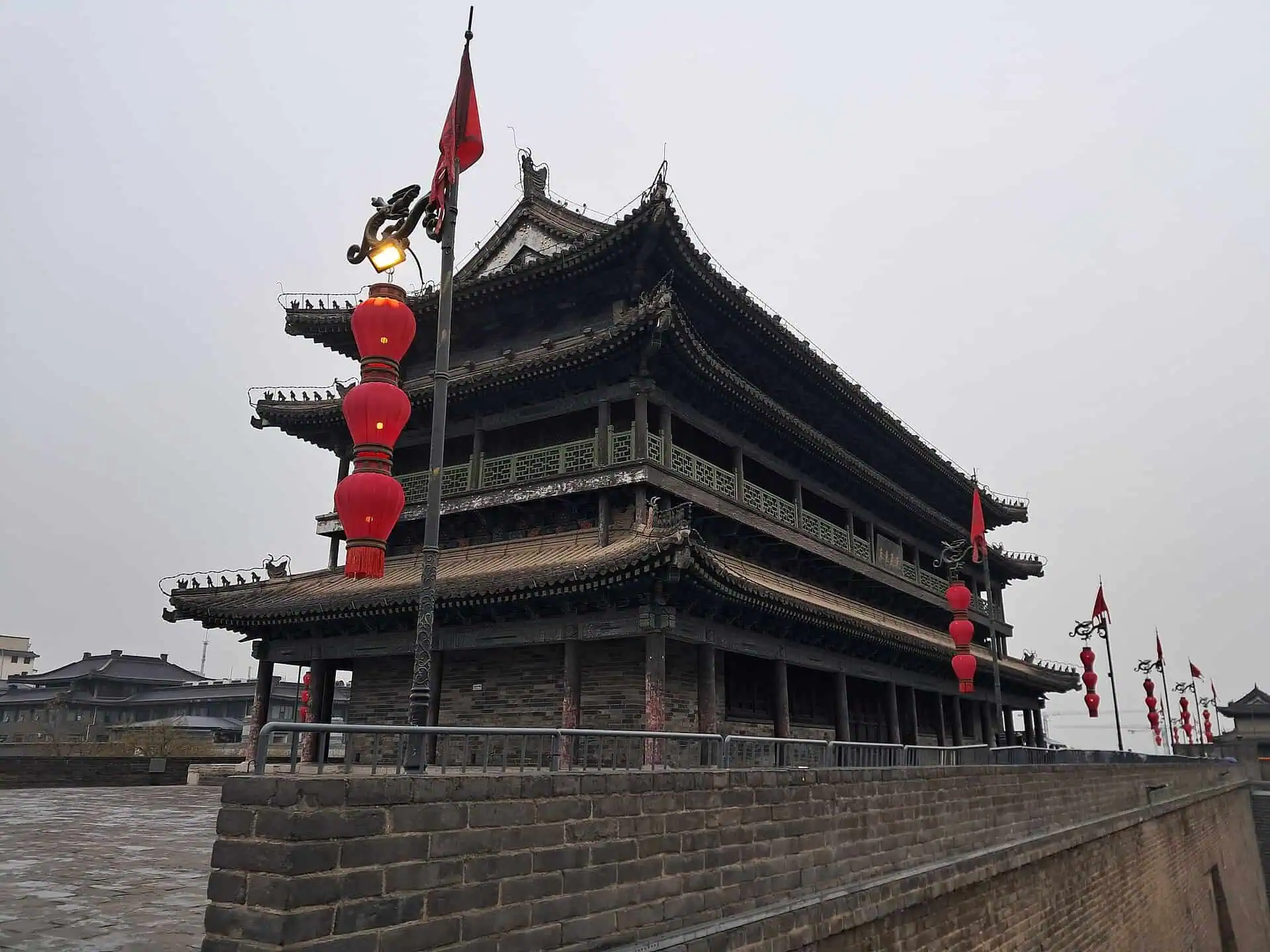
The end was ugly. The An Lushan rebellion (755–763) wrecked Tang power, and in the dynasty's final decades Chang'an was sacked more than once. When the Tang fell in 907, the capital moved east — and never came back. Xi'an spent the next thousand years as a big regional city rather than the center of the world. Its most visible monument dates from that long twilight: the city wall you see today was built by the Ming (明, Míng) in the 1370s, enclosing a much smaller city around the Bell Tower. The Ming also gave it its current name — Xi'an, "Western Peace." Then, in 1974, drought-stricken farmers digging a well in Lintong (临潼, Líntóng) hit a terracotta head, and modern Xi'an found its second life as the place where the world comes to meet ancient China.
Where to see this today
- Neolithic Banpo: the Banpo Museum, east of the center — the excavated village in situ (metro Line 1 to Banpo; no full page on this site yet).
- The First Emperor's Qin: the Terracotta Army — the underground garrison of that decade of unification.
- Han and Tang glory: the Shaanxi History Museum, the single best survey of everything above (free, but reserve a timed slot ahead; no full page yet).
- Tang romance: Huaqing Palace, the imperial hot-spring retreat at the foot of Mount Li.
- The Silk Road's living legacy: the Muslim Quarter, rooted in the merchants the caravans brought — the deeper story is in Xi'an and the Silk Road.
- The Ming city: the city wall itself, best seen from a bicycle on top.
- The Guanzhong landscape: Mount Huashan, the sacred granite peak the plain faces east.
Questions, answered
How many dynasties made Xi'an their capital?
The traditional count is thirteen, which is why you'll see Xi'an called the capital of 'thirteen dynasties.' The number depends on how you treat short-lived regimes, but the headline ones are the Western Zhou, Qin, Western Han, Sui and Tang.
What was Xi'an called before?
For most of imperial history it was Chang'an (长安), usually translated as 'Perpetual Peace.' Under the Qin the capital was Xianyang, across the river; the Western Zhou capital Fenghao stood just west. The Ming dynasty renamed the city Xi'an — 'Western Peace' — in 1369.
Was Xi'an really the start of the Silk Road?
Yes — under the Han and Tang, Chang'an was the network's eastern anchor: the place where goods leaving China were assembled and goods arriving were uncrated. The full story is in our article Xi'an and the Silk Road.
Why did Xi'an stop being China's capital?
After the Tang fell in 907, no dynasty moved back. The Guanzhong plain was environmentally strained after centuries of deforestation, shipping grain west up the Yellow River was ruinously expensive, and China's economic center of gravity had shifted southeast. Later capitals clustered in the east: Luoyang, Kaifeng, Nanjing and Beijing.
Places in this story
Terracotta Army
8,000 life-sized soldiers buried for China's First Emperor — and still on guard 2,200 years later.
Learn more →
Huaqing Palace & Hot Springs
Tang emperors soaked here in the 700s — China's most famous love story, and the site of a 1936 kidnapping that changed the country.
Learn more →
Xi'an City Wall
A 14-kilometer Ming dynasty rectangle you can cycle on top of — 650 years old and still the city's favorite commute.
Learn more →
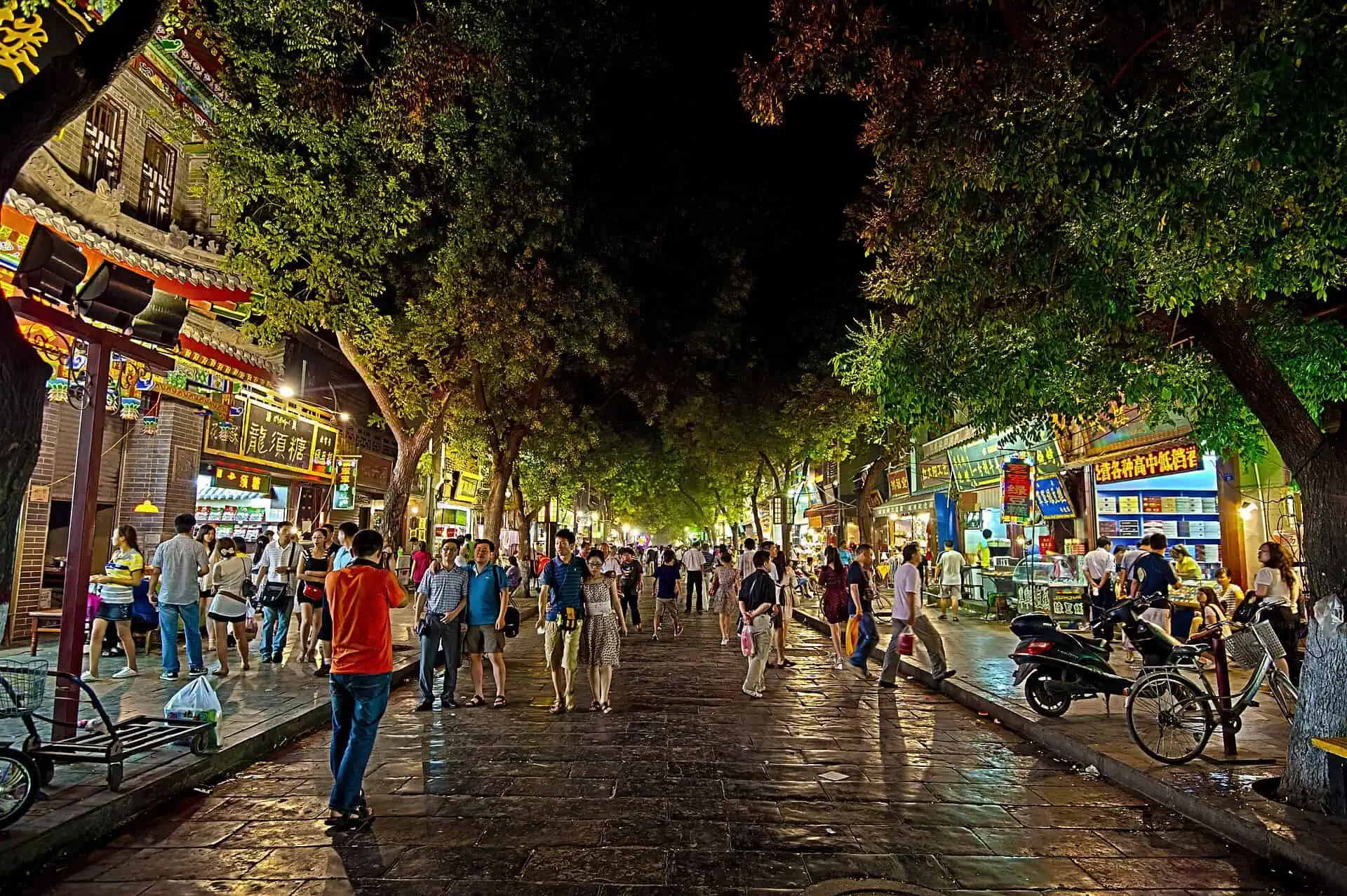
Muslim Quarter
Feeding Xi'an since the 700s — the loudest, smokiest, best-smelling streets of its Hui community.
Learn more →
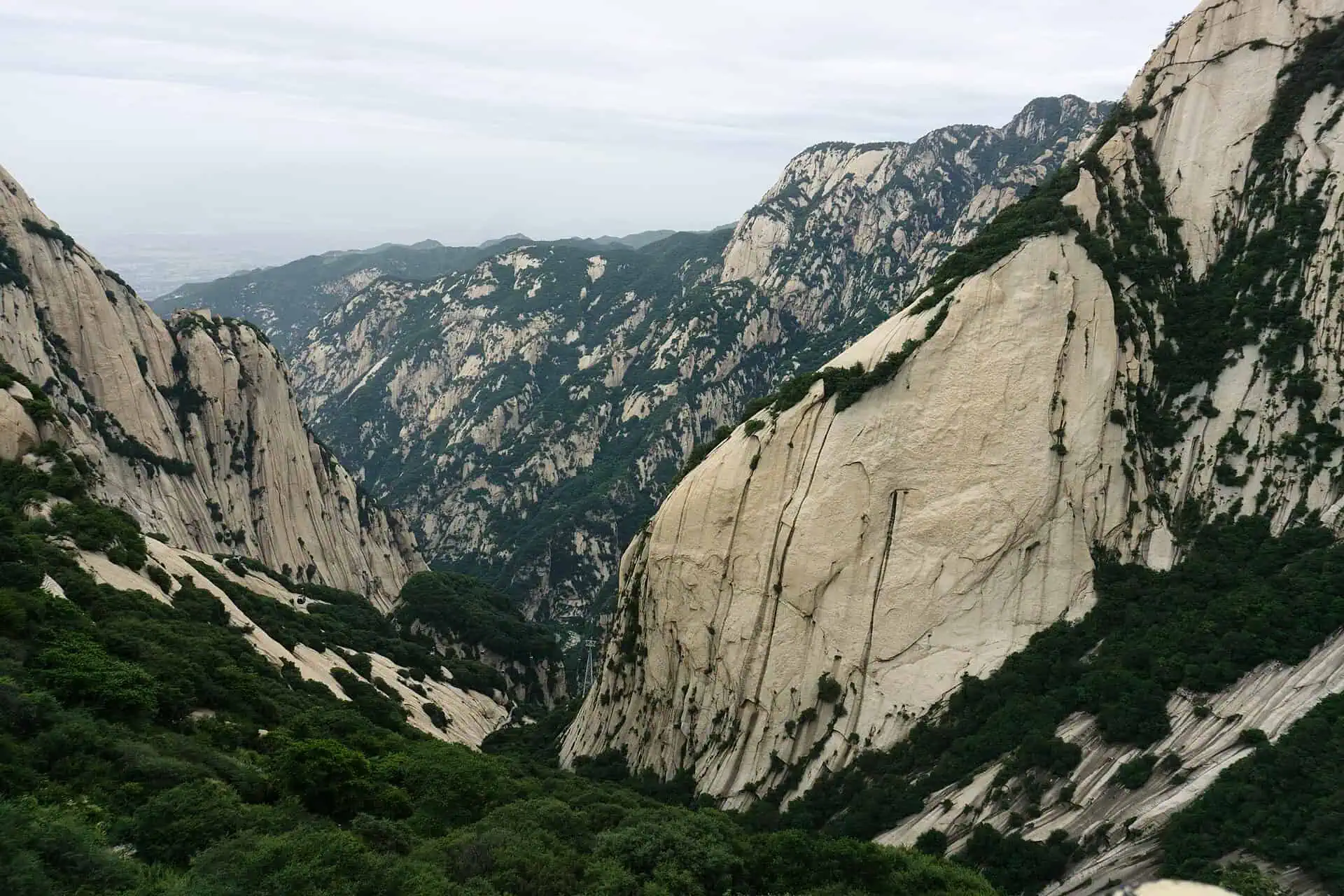
Mount Huashan Day Trip
Sacred for 2,000 years, infamous for one plank path — China's most dramatic granite peaks, an hour from Xi'an by bullet train.
Learn more →