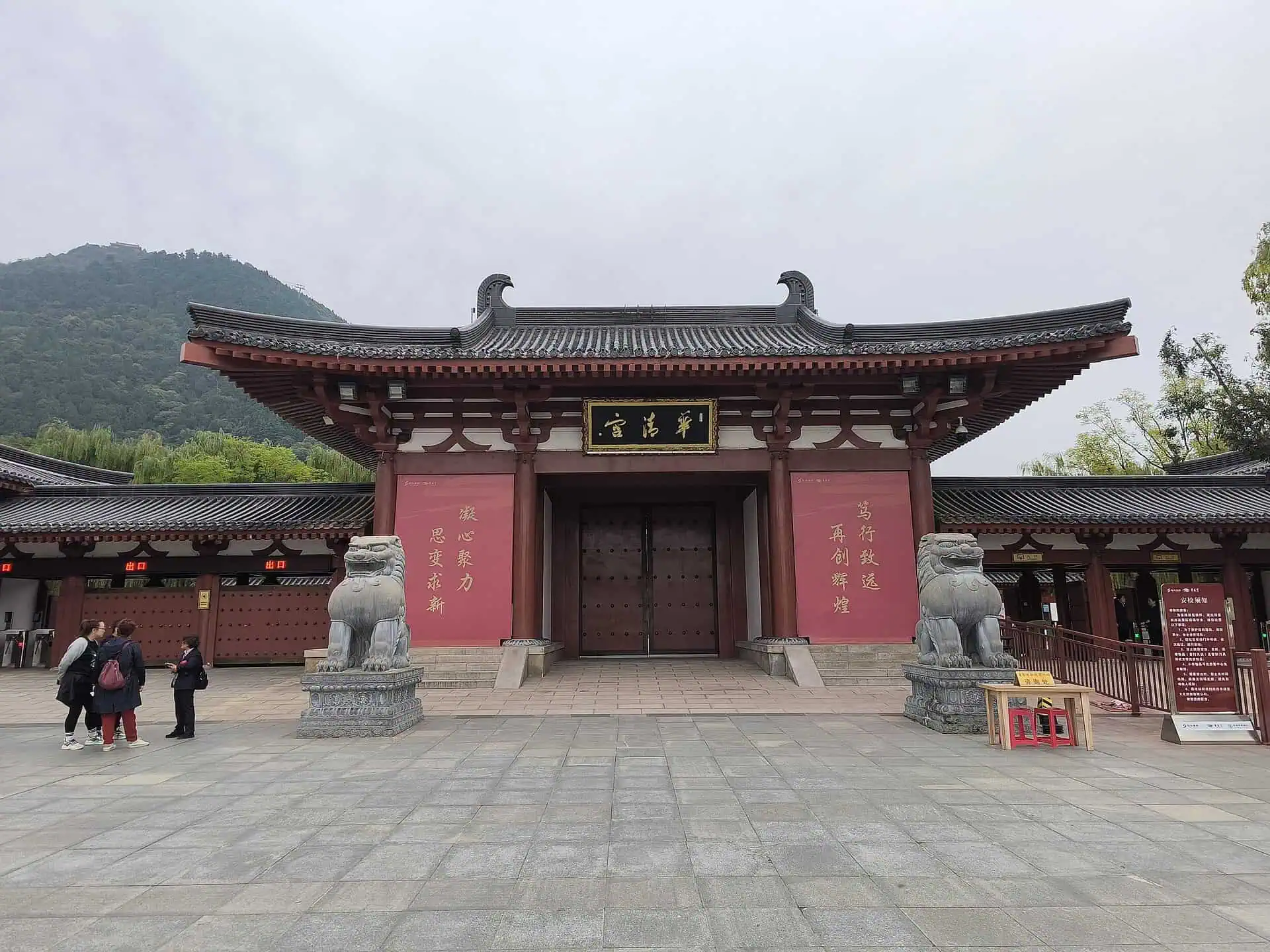
Huaqing Palace & Hot Springs
Huáqīng Gōng
Tang emperors soaked here in the 700s — China's most famous love story, and the site of a 1936 kidnapping that changed the country.
Entry
From ¥120
Hours
Mar–Nov · 7:30
Time needed
2–4 hours
Metro
Line 9 · Huaqing Pool (华清池) · C
Tang emperors were bathing in these hot springs in the 700s, and the water still runs warm — just know that Huaqing Palace won't knock you over the way the Terracotta Army does, since the buildings are reconstructions and the famous pools are small. But the two stories attached to this ground are superb, it sits directly on the Terracotta Army metro line, and the evening outdoor show is one of the best in China. As the second half of a Lintong day, it earns its ticket.
What you're looking at
For over a thousand years, emperors came to the hot springs at the foot of Mount Li (骊山, Lí Shān) to soak. The springs run a constant ~43 °C, and the site peaked in the 8th century, when Emperor Xuanzong (唐玄宗, Táng Xuánzōng) built a palace here and spent winters with his beloved consort Yang Guifei (杨贵妃, Yáng Guìfēi) — the most beautiful woman in the empire and, depending on who's telling it, the reason it nearly fell. Their romance ended in 756 when mutinous soldiers forced the emperor to have her strangled during the An Lushan rebellion. Bai Juyi's poem "Song of Everlasting Sorrow" (长恨歌, Chánghèn Gē) turned the tragedy into China's defining love story; more in our short history of Xi'an.
What you actually see: excavated Tang-era bathing pools — the Nine-Dragon Lake, the emperor's Lotus Pool, and the Haitang Pool (海棠汤, Hǎitáng Tāng) built for Yang Guifei herself — set in landscaped gardens with the mountain rising behind.
Then there's the second, stranger story. In December 1936, Chiang Kai-shek was staying in the Five-Room Hall (五间厅, Wǔjiān Tīng) here when his own generals moved to arrest him — the Xi'an Incident (西安事变, Xī'ān Shìbiàn). He fled up the mountain in his night clothes and was found hours later in a rocky crevice (a pavilion, 兵谏亭, marks the spot). The bullet holes from that night are still preserved in the hall's window frames. The kidnapping worked: it forced the Nationalists and Communists into a united front against Japan.
One honest framing: the pools and bullet holes are genuine; the halls around them are modern rebuilds. Come for the stories and the gardens, not for standing architecture.
Visiting strategy
Make it the second half of a Lintong day. The standard play: Terracotta Army at opening (8:30), lunch in Lintong town, then Huaqing Palace for the afternoon — it's two stops back toward the city on metro Line 9. Doing it in reverse drops you into the Army's midday bus crush.
On site (2–3 hours): start with the Tang pools around the lake, then the Five-Room Hall and the Xi'an Incident exhibits, then — if your legs are willing — take the cable car partway up Mount Li for views over the Wei River plain. The beacon tower on the summit is where King You of Zhou supposedly lit fake alarms to amuse his consort, a stunt that cost him his kingdom; it's a climb, not a stroll.
The evening show: "Song of Everlasting Sorrow" (长恨歌) stages the Xuanzong–Yang Guifei story on the lake itself, with the mountain as a lit backdrop — water stages, fire effects, hundreds of performers. It now runs year-round: the standard edition from roughly April to October, and since 1 December 2024 a winter "Ice & Fire" (冰火《长恨歌》) edition (December to February) that layers snow, ice and fire effects onto the same stage — three shows a night, starting earlier (around 18:30) than the summer version. Tickets from about ¥238 either season; it's one of the few Chinese mega-shows that lives up to its billing. Book ahead in peak season; show-only visitors don't need a day ticket.
Avoid weekend afternoons, when the Terracotta Army crowds spill over, and midday summer visits — the gardens have shade but the pool courtyards don't.
Getting there
The palace sits in Lintong District, about 30 km east of downtown Xi'an, directly on the Terracotta Army route.
- Metro Line 9 to Huaqing Pool (华清池) station, exit C — the entrance is a few minutes' walk. From the Terracotta Army, it's two stops back toward the city. This is the cheap, traffic-proof option; see our getting around guide.
- Taxi/DiDi from downtown takes 40–60 minutes depending on traffic.
- On a combined day: most visitors do the Terracotta Army first and finish here — our 3-day itinerary lays the day out hour by hour.
Practical notes
- The famous pools are display-only. If you want to actually soak, the hot-spring hotel inside the grounds sells bathing separately — pleasant in winter, skippable in July.
- Show logistics: the evening performance starts around dusk (multiple showings in peak season). If you're seeing it, either stay in Lintong for dinner or budget a long, slow day — the last metro back is your friend, check its time.
- Food: on-site options are forgettable. Eat in Lintong town between the two sights.
- Payments: tickets and the show are easiest via WeChat Pay or Alipay, or on Trip.com if you want English.
- Weather: summer afternoons are hot in the open pool courtyards; in winter the steaming pools against bare trees are atmospheric, and crowds vanish.
- Kids: the boat ride on the lake and the fish in the pools land better with children than the history does.
Questions, answered
Is Huaqing Palace worth visiting?
As an add-on to a Terracotta Army day, yes — it sits directly on the same metro line and the two stories here (Yang Guifei, the 1936 Xi'an Incident) are excellent. As a standalone trip from Xi'an, no — the buildings are reconstructions and the pools are small.
Can you bathe in the hot springs at Huaqing Palace?
Not in the historic pools — those are excavated Tang relics behind railings. The hot-spring hotel within the grounds sells bathing separately if you want the actual soak.
How do I combine Huaqing Palace with the Terracotta Army?
Do the Terracotta Army at opening (8:30), lunch in Lintong town, then Huaqing Palace in the afternoon — it's two stops back toward Xi'an on metro Line 9 (Huaqing Pool station). Add the evening lake show in season for a full day.
What is the Song of Everlasting Sorrow show?
An outdoor evening spectacular on Huaqing Palace's lake, retelling the love story of Emperor Xuanzong and Yang Guifei — water stages, fire effects, Mount Li lit up as the backdrop. It runs year-round: the standard edition roughly April–October plus a winter 'Ice & Fire' edition (December–February), from about ¥238, and show-only tickets don't require park entry. Book ahead in summer.
How much is Huaqing Palace and what are the hours?
Admission is ¥120 (students ¥60 with ID; children under 1.2 m and seniors 65+ free). Hours run roughly 7:30–19:00 in season and 7:30–18:00 in winter, with ticket sales stopping 30–40 minutes before close — confirm on the official 华清宫 WeChat account.
How long do you need at Huaqing Palace?
Two hours covers the pools, gardens and the Xi'an Incident halls at a comfortable pace; allow three if you take the cable car up Mount Li. The evening show adds another 70 minutes or so.
Keep exploring
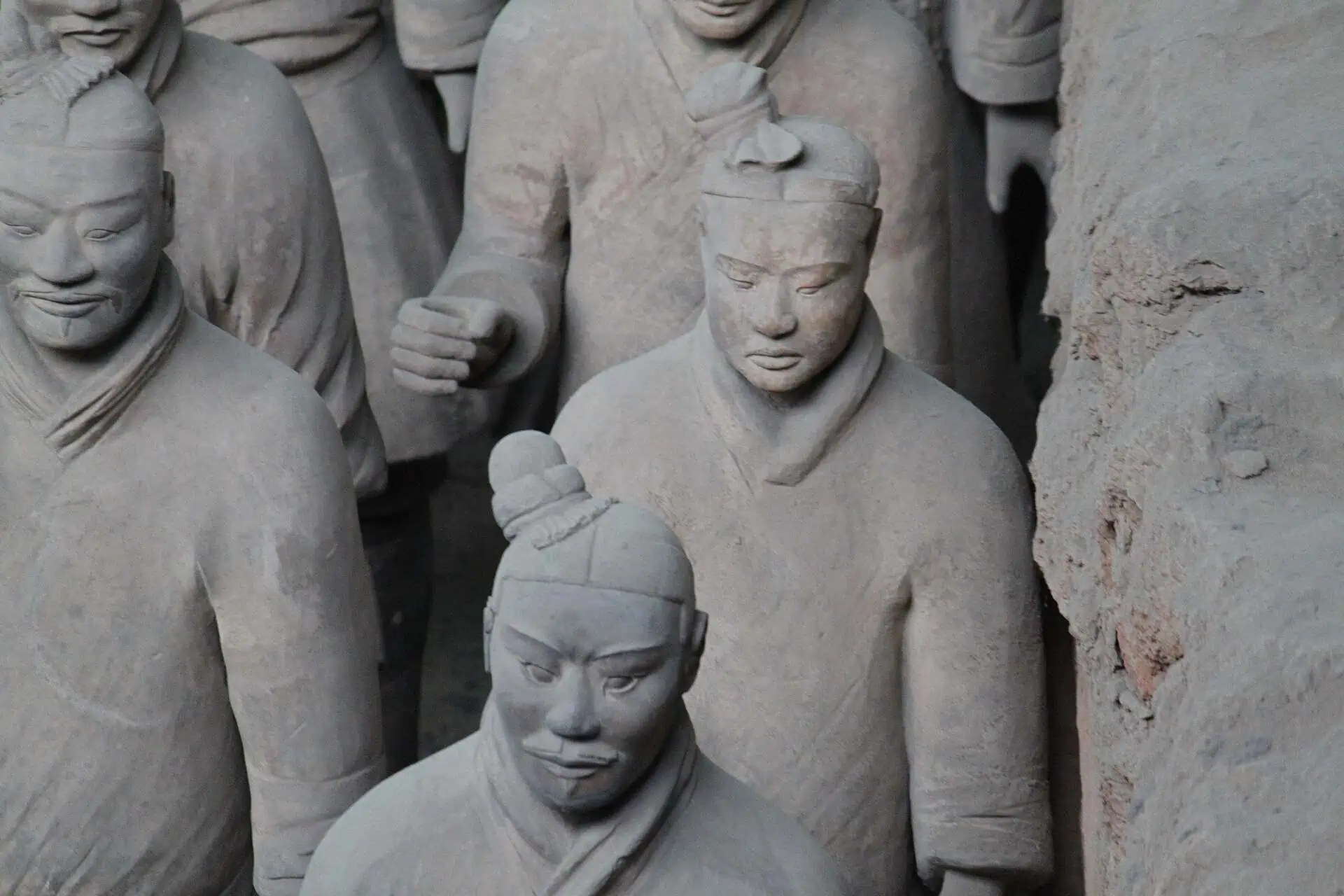
Terracotta Army
8,000 life-sized soldiers buried for China's First Emperor — and still on guard 2,200 years later.
Learn more →
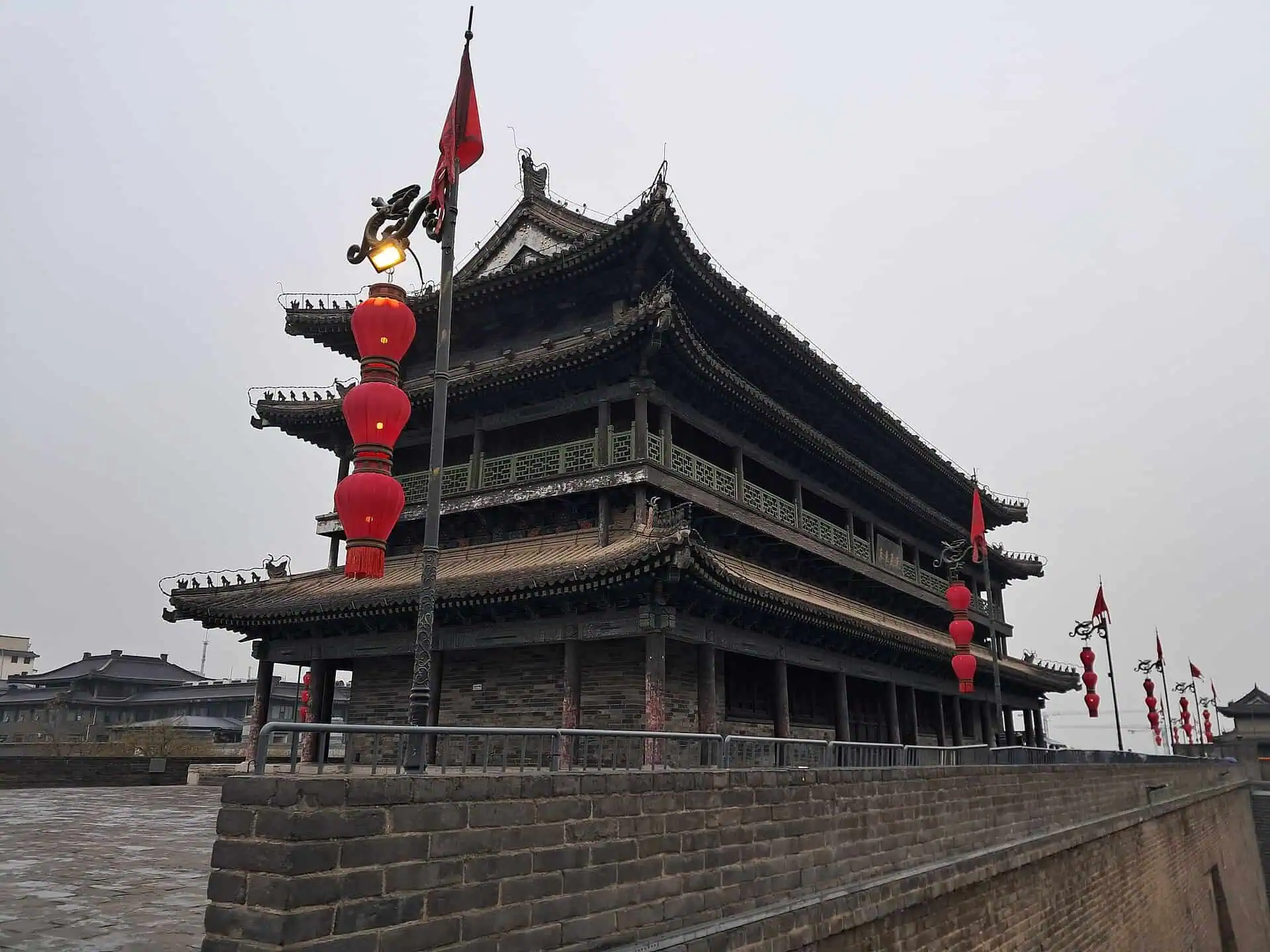
Xi'an City Wall
A 14-kilometer Ming dynasty rectangle you can cycle on top of — 650 years old and still the city's favorite commute.
Learn more →
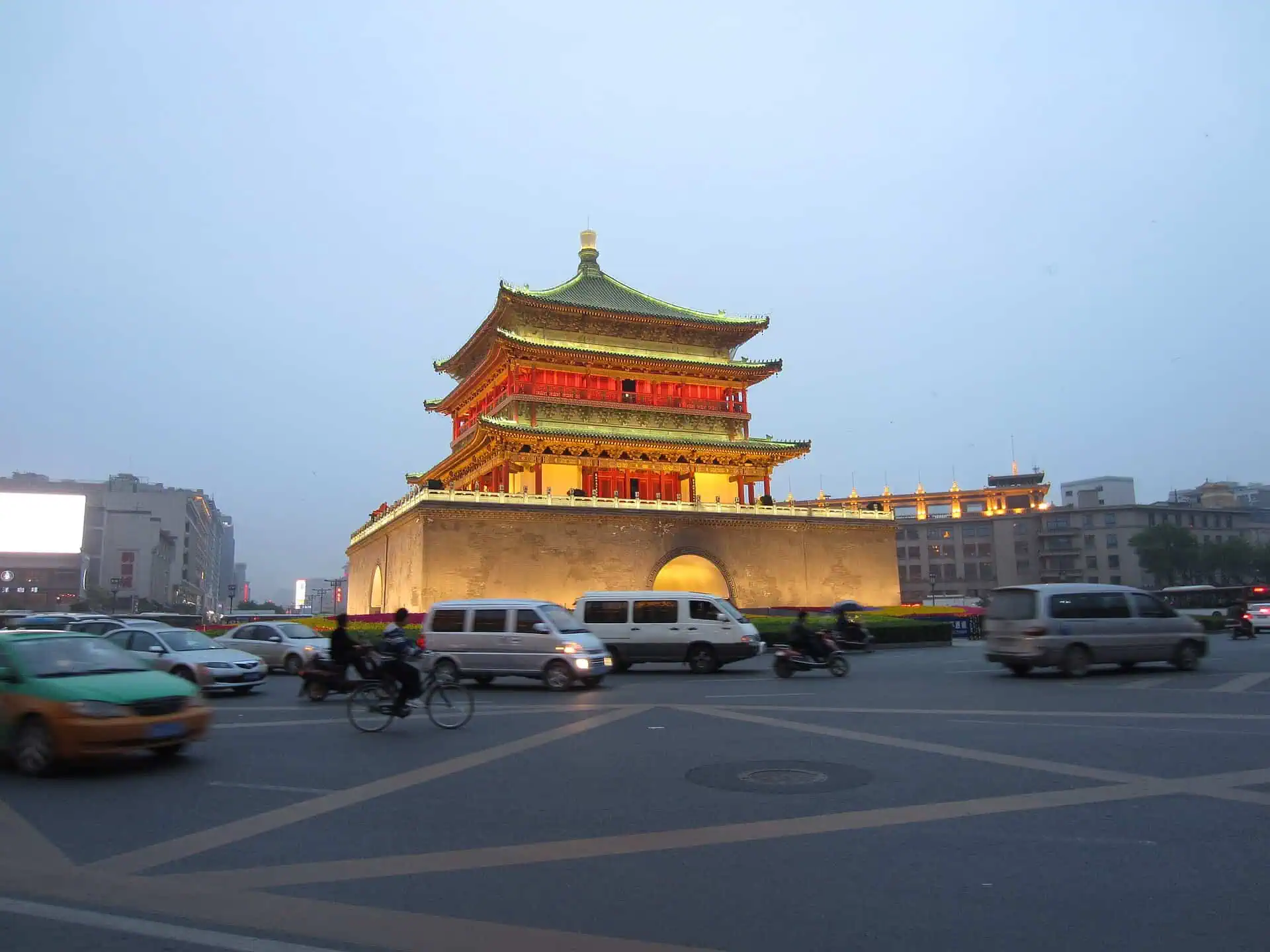
Xi'an Bell Tower
A Ming tower from 1384 at the dead center of the walled city — best admired at dusk, floodlit above the roundabout.
Learn more →
Related stories
Getting around: metro, buses, DiDi & taxis
Xi'an's metro covers everything a tourist needs for ¥2–8 a ride, with English signage throughout. For anywhere off the rails, DiDi (China's Uber, in English) is cheap and easy — and the walled center is compact enough to walk.
Where to stay in Xi'an: the honest area-by-area guide
Xi'an is a compact city with a decisive metro, so the choice of base matters more for mood than logistics. For most first-timers the answer is inside the City Wall near the Bell Tower; below is every realistic alternative, with the character, the crowd it suits and what a room actually costs in each.
What a trip to Xi'an actually costs: budget vs comfort
Xi'an is one of China's cheapest big tourist cities — street dinners for ¥20, hostel beds under ¥150, a metro that reaches every headline sight. But the Terracotta Army, a night show and a decent hotel add up fast. Here are two honest daily budgets, the real price of every big-ticket item, and the savings that actually work.
Xi'an at night: lights, shows & evening walks
Xi'an is a different city after dark — Tang-style streetscapes floodlit gold, a pagoda floating over fountain shows, gate towers glowing above the moat. The best of it is free: the Grand Tang Ever-Bright City pedestrian street alone is worth an evening, and the pagoda fountain show costs nothing. Add a late dinner in the Muslim Quarter and, in season, the open-air Song of Everlasting Sorrow, and your nights may outshine your days.
Autumn in Xi'an: ginkgo gold (November)
Every November, a single 1,400-year-old ginkgo tree in the Zhongnan Mountain foothills turns Xi'an's social feeds gold — tradition says Emperor Taizong planted it himself. Seeing it takes a free-but-competitive reservation and an hour's drive south; if you'd rather stay in the city, there are honest ginkgo spots inside the wall and a 10,000-tree forest at Hanyangling. Here's the timing, the booking drill, and what November in Xi'an is actually like.
A short history of Xi'an (Chang'an)
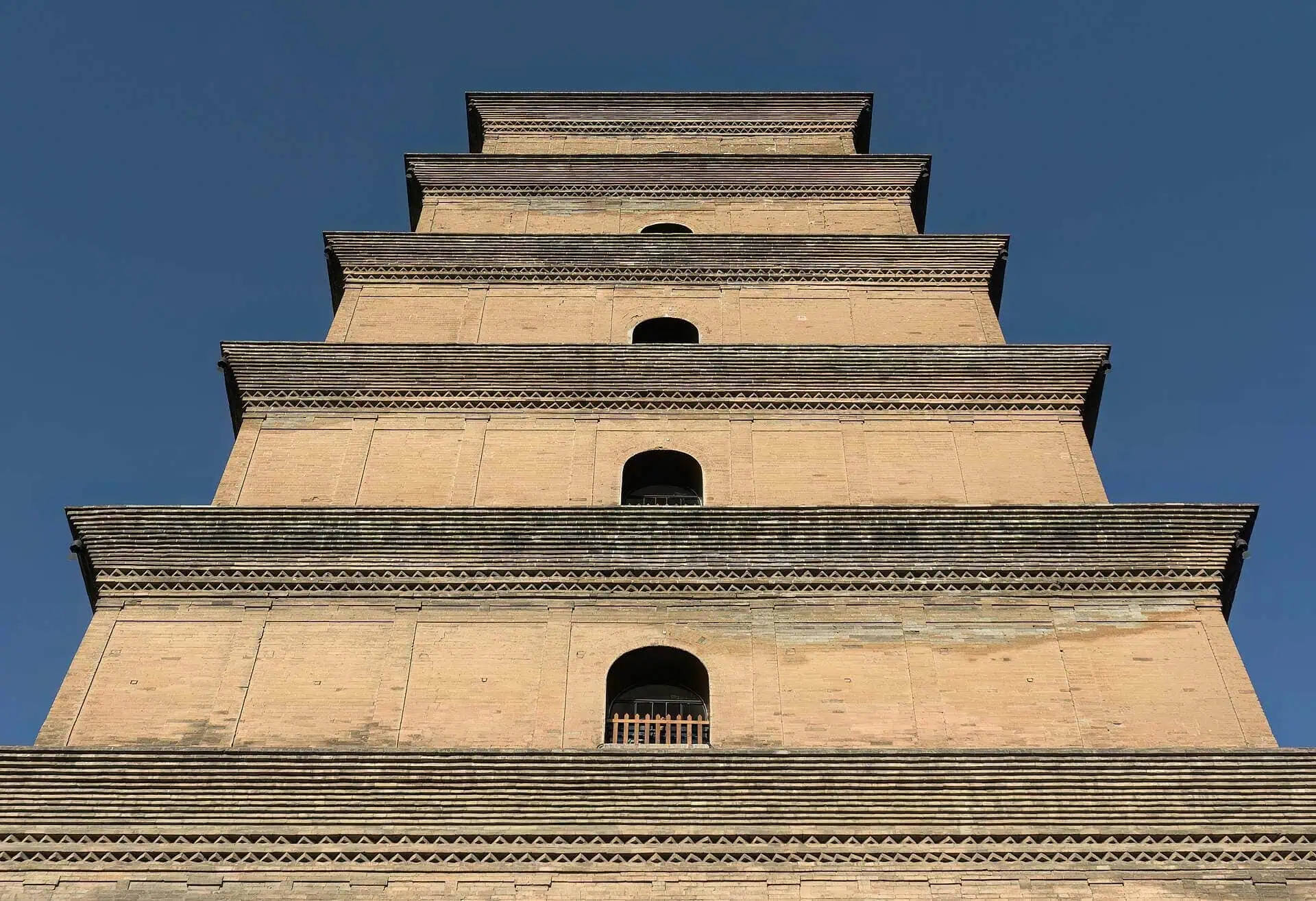
Chang'an in the Tang dynasty: the world's greatest city
Thirteen dynasties: Xi'an as capital, a visual timeline
Xi'an: group tour or DIY? Honest advice for first-timers
Xi'an is one of China's easiest cities to do yourself: a clean English-signed metro, tickets bookable on official apps, and every headline sight reachable without a guide. A group tour buys you transport, tickets and context — but the cheap ones add shopping stops and the Terracotta Army needs no explanation to move you. Here's when each makes sense, what a fair tour costs, and the pitfalls either way.
Student, senior & child discounts at Xi'an sights — the full table
Xi'an's big sights offer real discounts: students roughly half price at most attractions, seniors 65+ free at the Terracotta Army and most museums, children under 16 free at the flagship sights. The catch: it's physical ID at the gate, photos don't count, and some policies apply only to Chinese nationals. Here's the complete table.