Qinqiang: the bellowing opera that's the soul of Shaanxi
Qinqiang (秦腔) is Shaanxi's regional opera — the oldest of China's clapper operas, sung high, loud and raw to the crack of a wooden bangzi. It is not polite Peking opera; it is the sound of the loess plateau shouted back at itself, and locals call it the soul of Shaanxi. See it at Yisushe (易俗社), the century-old theatre a few minutes from the Bell Tower.
3 min read · 3 sections
The short version
- Qinqiang is Shaanxi's home opera — loud, high, clapper-driven, and far older than Peking opera.
- See it at Yisushe (易俗社) on East Street near the Bell Tower — one of the world's three oldest surviving theatres.
- The on-site century museum is free; ticketed evening shows run in the Grand Theatre — book on Damai/Ctrip or call the box office (029-87225555) to confirm the schedule.
- You won't follow the Shaanxi-dialect lyrics — go for the sound, the face paint, the acrobatics and the clapper rhythm.
What Qinqiang is
If Peking opera is China's court music, Qinqiang (秦腔, qínqiāng — "Qin tune") is its war cry. It is the oldest surviving member of the bangzi (梆子) clapper-opera family — the tradition that seeded most of northern Chinese opera — and it sounds like it: sung at the top of the voice, driven by a hardwood clapper cracked against a wooden block, backed by fiddles and suona horns. The male roles especially are bellowed, not sung, in a register that carries across a harvest field.
The style is genuinely old. Its roots run back toward the Qin dynasty's folk music, and it matured into its modern form in the Ming and Qing — which makes it centuries older than Peking opera. Its subject matter is its people's: border wars, wronged ministers, loyal generals, the loess-and-iron history of the northwest. Shaanxi people call Qinqiang qín rén de húnpò (秦人的魂魄), "the soul of the Qin people" — and once you hear it, at volume, in a room of locals, the description stops feeling like hyperbole.
Where to see it: Yisushe
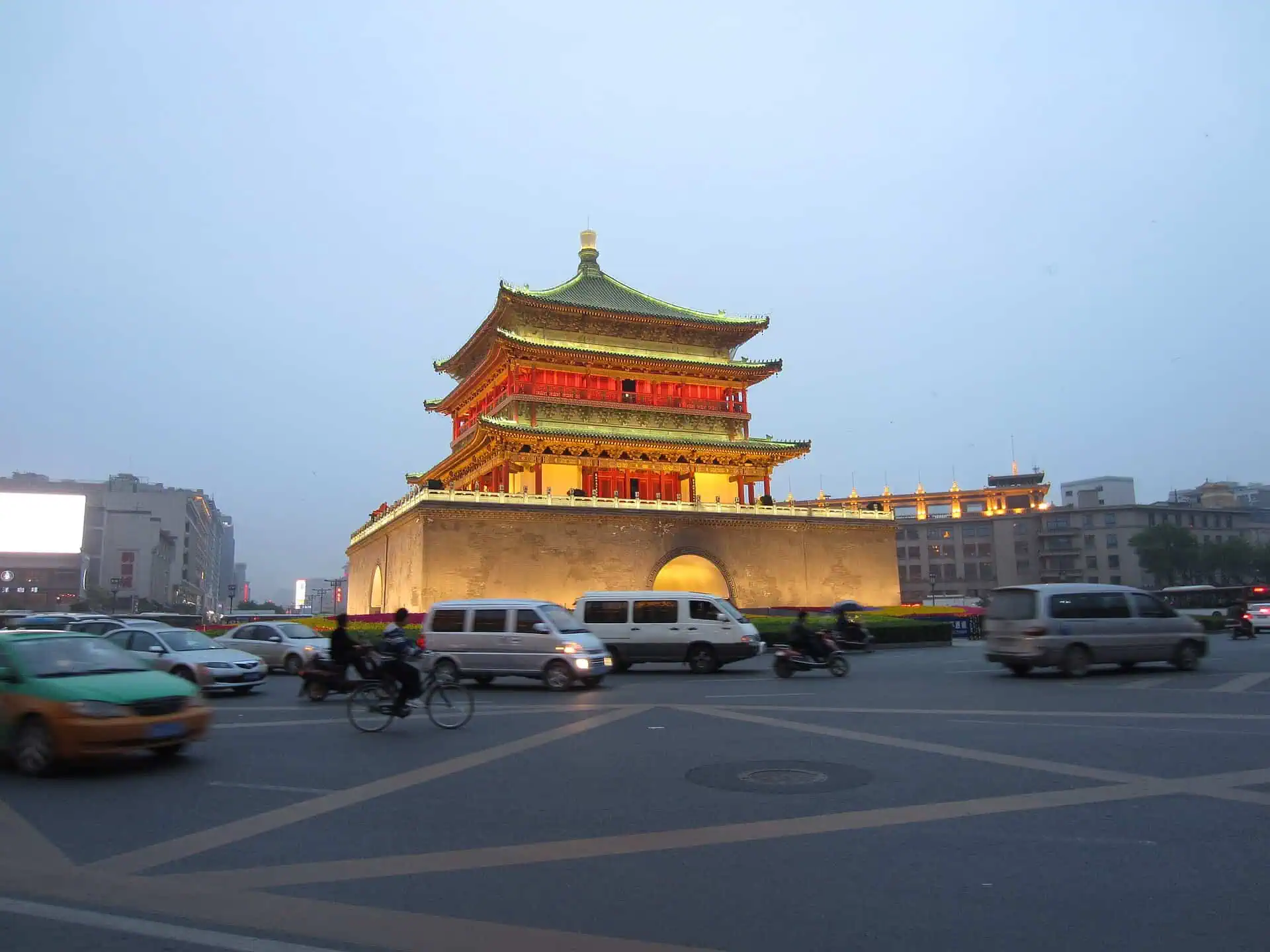
The place to hear it is Yisushe (易俗社), founded in 1912 as the Shaanxi Opera School and, by its own claim and general agreement, one of the three longest-surviving theatre institutions in the world (alongside Moscow's Bolshoi and the UK's Theatre Royal). It sits in the Yisushe Cultural District (易俗社文化街区), a short walk northeast of the Bell Tower on East Street (东大街, Dōngdàjiē).
The complex has three parts worth knowing. The Century Museum (百年博物馆) is free — scan a QR code at the door — and walks you through a hundred years of costumes, playbills and the school's remarkable founding mission (it was set up, literally, to reform society through opera). The Yisu Grand Theatre (易俗大剧院) is where the live Qinqiang performances happen, ticketed, on a proper stage. And the surrounding 80s-themed cultural lane is a nostalgia trip locals love. Walk over after dinner in the Muslim Quarter; the whole district is five minutes from the Bell Tower.
Watching it as a foreigner
Two honest notes. The lyrics are in Shaanxi-inflected Mandarin, sung in a high nasal register, so even fluent Mandarin speakers catch only fragments — you will not follow the plot. And the shows run long (a full evening, sometimes 2–3 hours with a break).
Neither should stop you. Qinqiang is a physical and musical spectacle before it is a literary one: the painted faces (脸谱), the exaggerated martial choreography, the clapper's crack, the sheer volume. Sit back, let the sound wash over you, watch the locals react (they know every beat), and treat it as you would a flamenco or a Peking opera on first encounter — the form is the content. Book on Damai (大麦) or Ctrip, or call the box office on 029-87225555 to confirm what's on the night you're free. For the broader performing-arts picture, pair it with Shaanxi shadow puppetry.
Questions, answered
Will I understand it if I don't speak Chinese?
No — and even Mandarin speakers struggle with the Shaanxi-dialect lyrics sung in a high register. You go for the sound, the painted faces, the acrobatics and the clapper rhythm, not the plot. Think of it like first-time flamenco or Peking opera.
How do I get tickets, and how much?
Book on Damai (大麦网) or Ctrip/Trip, or call the Yisushe box office (029-87225555) to confirm the schedule and buy at the door. Prices vary by show and seat. The on-site century museum is free regardless.
How long is a show, and is it good for kids?
A full evening, sometimes 2–3 hours with an interval. The loud, physical, martial style holds kids' attention better than a quiet opera would, but it's loud and long — judge by your own. The free museum is an easy 30-minute stop for any age.
Places in this story
Keep exploring
Hanfu costume rental & photoshoot guide
Renting a Tang-style costume and having your photo taken against 1,300-year-old backdrops is Xi'an's signature tourist experience — and unlike most signature tourist experiences, it's actually good value. A full outfit with hair and makeup runs ¥100–300, the streets are so used to costumed visitors that nobody bats an eye, and the night scenery does the heavy lifting. Here's how to do it without getting upsold.
Tang Dynasty show & dumpling banquet — worth it?
The Tang Dynasty Palace dinner show is Xi'an's longest-running tourist evening: a dumpling banquet followed by an hour of Tang court music and dance in a plush theater. It's polished, comfortable and unashamedly aimed at visitors — and whether it's ¥400 well spent depends entirely on who you are. Families and first-time visitors to China tend to love it; travelers chasing the raw and local should spend the evening at Ever-Bright City for free instead.
Xi'an at night: lights, shows & evening walks
Xi'an is a different city after dark — Tang-style streetscapes floodlit gold, a pagoda floating over fountain shows, gate towers glowing above the moat. The best of it is free: the Grand Tang Ever-Bright City pedestrian street alone is worth an evening, and the pagoda fountain show costs nothing. Add a late dinner in the Muslim Quarter and, in season, the open-air Song of Everlasting Sorrow, and your nights may outshine your days.