Market hours: Xi'an at dawn and after dark
Xi'an runs on a market clock that tourists mostly sleep through: produce and breakfast stalls under the city wall at 6am, a twice-weekly bird-and-junk bazaar on an old granary site, and grill smoke after dark. This is the city's circadian rhythm — when to show up, what each market is actually for, and how to shop it without being the obvious foreigner.
The dawn shift: Xiaonanmen morning market
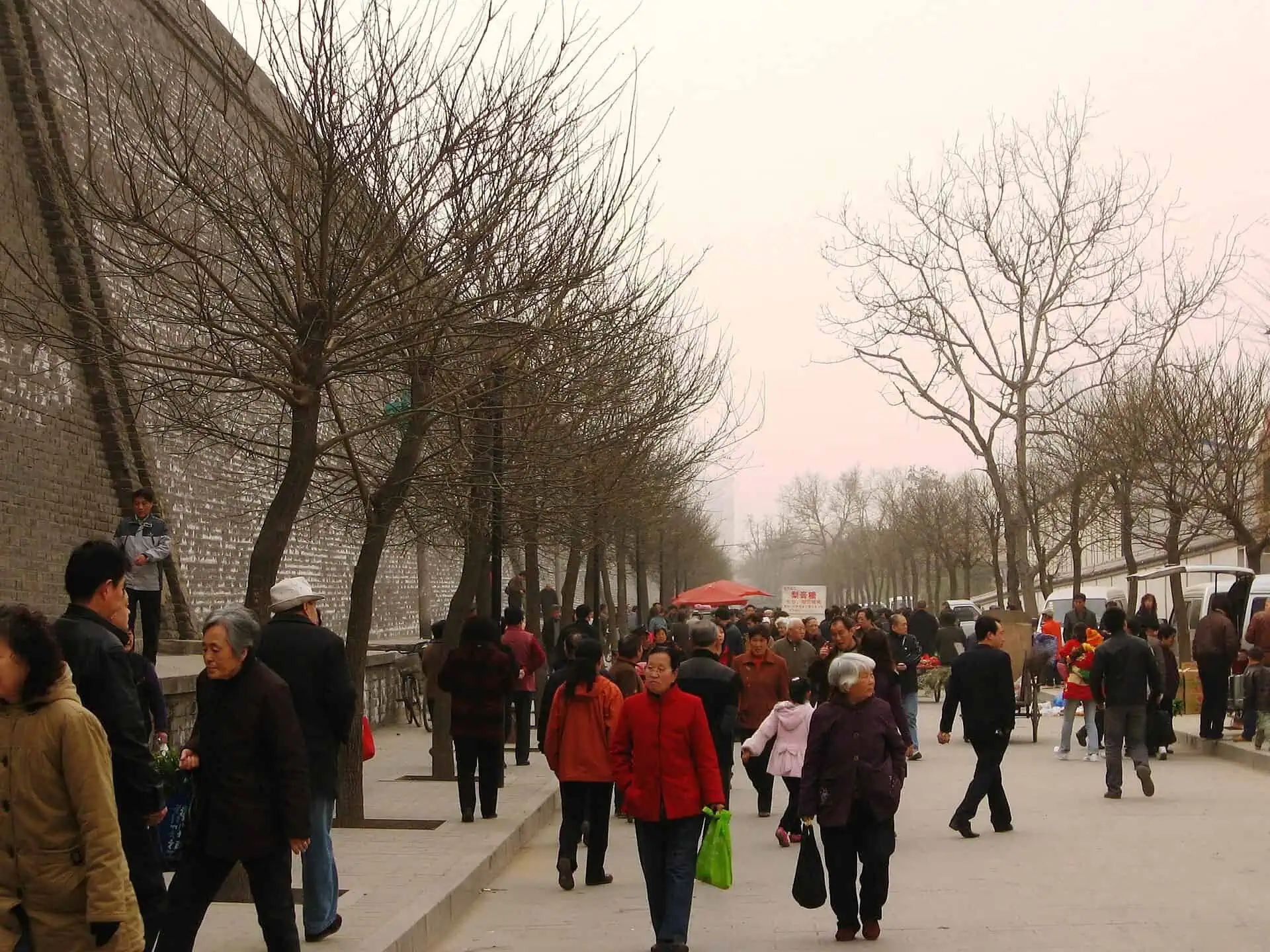
Every morning from 6:00 to 9:00, the lane under the south city wall between Xiaonanmen (小南门, Xiǎonánmén — formally 勿幕门, Wùmùmén, named for the 1911 revolutionary Jing Wumu 井勿幕) and Hanguangmen (含光门, Hánguāngmén) becomes a 342-meter working market: vegetable piles, tofu slabs, vinegar and spice stalls, and a line of breakfast vendors feeding the neighborhood before work. In winter the start slips toward 7:00. See our Xiaonanmen morning market page for the logistics.
The 6am logic is simple: this is a grocery run with breakfast attached, not an attraction. Locals buy the day's vegetables, then settle onto a low stool for a bowl of meatball hulatang (肉丸胡辣汤, about ¥8) or a wedge of zenggao (甑糕, the steamed rice-and-date cake, about ¥5). By 9:00 the stalls are packed up and the lane is just a lane again — arrive at 8:45 and you'll watch the market dissolve in front of you. Go early, eat standing, and remember the auntie squeezing past you with a bag of greens has right of way.
The Thursday & Sunday institution: Xicang
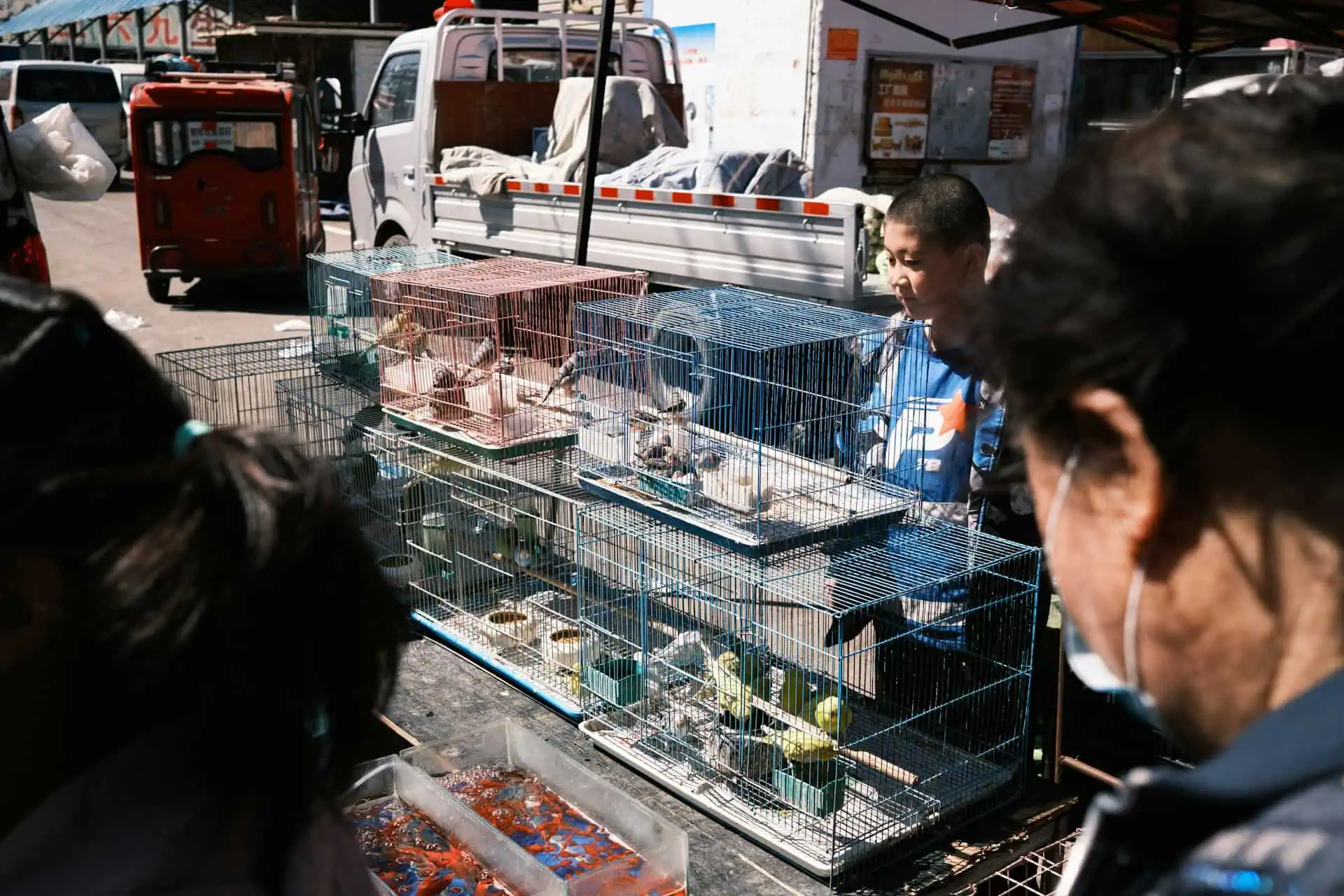
If Xiaonanmen is the city's pantry, Xicang (西仓, Xīcāng) is its attic. Every Thursday and Sunday, the lanes around Xicang North Alley (西仓北巷) in Lianhu District — a short walk northwest of the Muslim Quarter — fill with songbirds in bamboo cages, crickets, goldfish, pigeons, potted plants, old coins, Mao-era memorabilia, tangled electronics and honest-to-goodness junk. Locals still call it the 鸟市 (niǎoshì, "bird market"), and the old line is that you don't really know Xi'an until you've been.
The site earns the chaos: this was the Yongfeng granary (永丰仓, Yǒngfēng Cāng), a government grain depot in Ming and Qing times, and the market grew up in its lanes over the century-plus since the grain stopped. The four alleys have informal specialties — birds, flowers and fish to the north, second-hand curios to the west, clothes and dry goods to the south, and snack stalls to the east. Details on the Xicang market page.
Practical shape: it runs from early morning and is busiest before noon; by mid-afternoon the energy is spent. Go before 10:00, bring nothing you can't carry, and don't buy the first "antique" you're shown — or the fifth. The pleasure here is browsing, birdwatching-the-birdwatchers, and the bowl of yangrou paomo waiting for you ten minutes south.
The night shift: grills, skewers and the after-dark economy
Xi'an's night markets are really one long meal that starts around 18:00 and fades after midnight. The stops that matter:
- Dongxin Street night market (东新街夜市, Dōngxīn Jiē Yèshì) — the city's old-school night market, running since 1985 a few blocks east of the Bell Tower: fifty-odd vendors doing shaokao grills, casseroles, malatang and dumplings, roughly 18:00 to midnight. A 2024 renovation moved the stalls off the pavement into shopfronts, which cost it some atmosphere but none of the regulars.
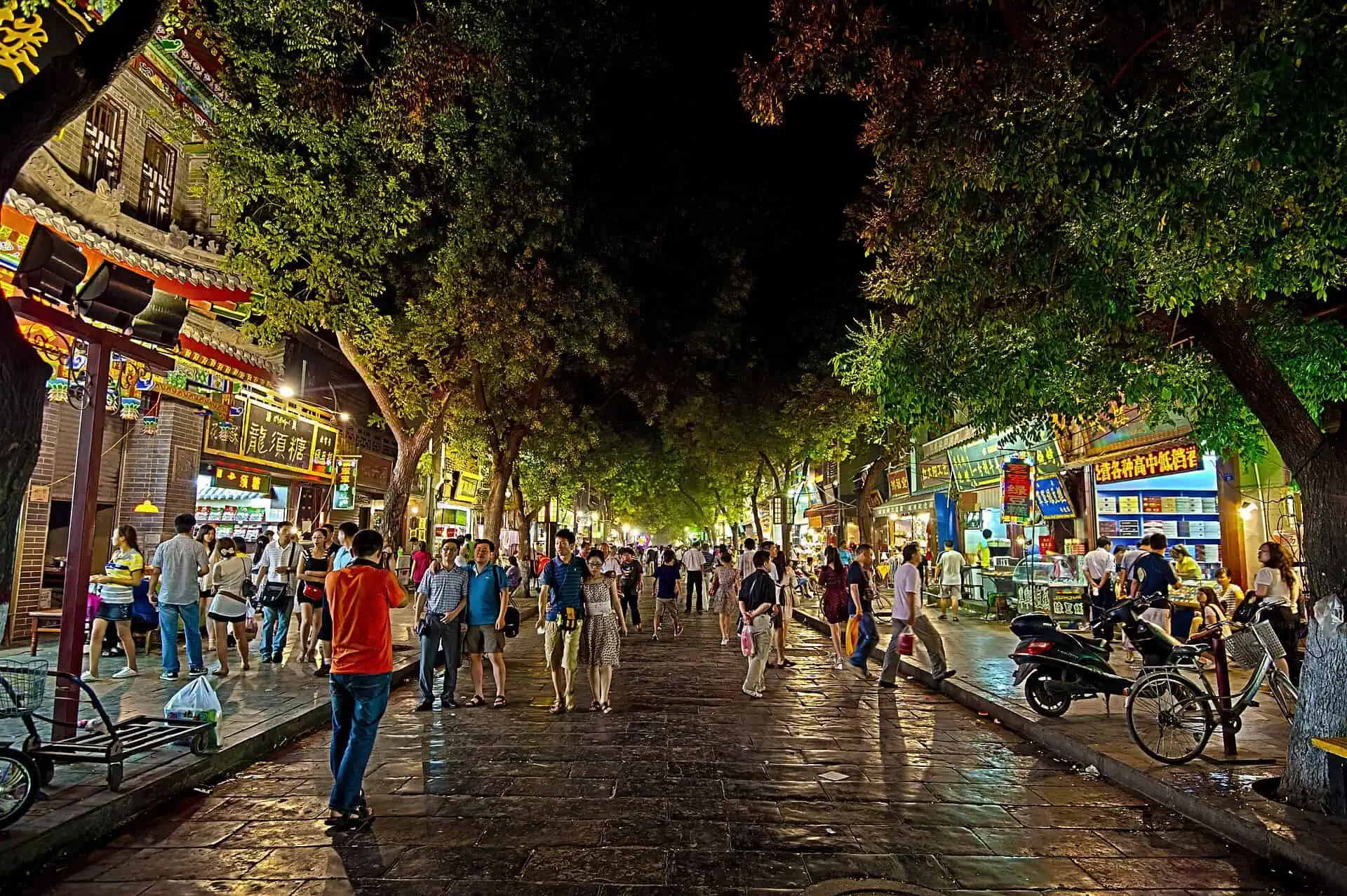
- Xuexi Xiang (学习巷, Xuéxí Xiàng) — a narrow Hui-run lane in the Muslim Quarter that becomes a wall of charcoal smoke after dark: lamb skewers at a few yuan each, grilled fish, bread baked on the grill. This is the late-night version of the Quarter, mostly locals, plastic stools, no ceremony.
- Sajinqiao (洒金桥, Sǎjīnqiáo) — the neighborhood eating street north of the tourist core, busy from dinner into the small hours with paomo shops, skewer stands and soup stalls. Less spectacle, better eating.
- Yongxingfang (永兴坊, Yǒngxìngfāng) — the managed, tourist-friendly option near Zhongshanmen (中山门) inside the east wall: a heritage-food courtyard gathering famous snack vendors from across Shaanxi, open roughly 9:30 to 22:00–23:00. It's curated rather than chaotic, and priced accordingly — but it's efficient, hygienic, and the one-night-stand choice if you want range without the hunt.
The honest guidance: if you have one evening, walk the Muslim Quarter from the Drum Tower side and drift into Xuexi Xiang when the smoke starts; if you have a second, do Sajinqiao. Yongxingfang is the fallback for picky eaters, early nights and anyone who wants a menu with pictures.
How to market like a local
- Pay by phone. Cash is legal but increasingly theoretical — even the grandma selling persimmons has a laminated QR code. Set up Alipay or WeChat Pay before you go (money & payments guide); a ¥5 zenggao is not the place to discover your card didn't link.
- Know when to bargain. Food, produce and anything with a marked price: never — prices are already at rock bottom and haggling over ¥2 marks you out instantly. Curios, "antiques" and second-hand goods at Xicang: always, cheerfully, starting around half the asking price, and be ready to walk away. Assume every old coin is new.
- Judge hygiene by turnover. The safe stall is the busy one: a queue of locals means the ingredients moved today. Look for food cooked to order over high heat, and be warier of anything pre-plated and sitting out. Bottled or boiled drinks only.
- Time it right. Morning markets: 6:30–8:00 is peak flavor and peak crowd; the stalls are gone by 9:00. Xicang: Thursday or Sunday, before 10:00. Night markets: from about 19:00, liveliest 20:00–23:00, with grill lanes like Xuexi Xiang running later on weekends.
- Mind your pockets and your step. Markets here are safe but dense; phones live in front pockets, and the floor hazards are skewer sticks and e-bikes, not people.
Questions, answered
What time is the Xiaonanmen morning market?
Daily from 6:00 to 9:00, along the lane under the south city wall between Xiaonanmen (Wumumen) and Hanguangmen — in winter it tends to start closer to 7:00. Go before 8:00 for the full spread; by 9:00 the stalls have packed up completely.
Which days is Xicang market open?
Thursdays and Sundays only, from early morning until early afternoon — busiest before noon, so aim to arrive by 10:00. It's in the lanes around Xicang North Alley in Lianhu District, a short walk northwest of the Muslim Quarter. Show up on any other day and you'll find quiet residential lanes.
Do I need cash at Xi'an's markets?
Effectively no — virtually every stall, down to the ¥5 breakfast vendors, takes Alipay or WeChat Pay QR codes, and some vendors will look pained if you hand over banknotes. Set up mobile payment before you go; cash works as a backup, but your phone is the wallet.
Are Xi'an's night markets safe to eat at?
Generally yes, if you pick by turnover: eat where locals are queuing, choose food cooked fresh over high heat, and skip pre-plated dishes that have been sitting out. The Dongxin Street market moved into shopfronts after a 2024 renovation, and managed food streets like Yongxingfang are the most conservative option. A busy grill stall at 21:00 is usually a safer bet than a quiet one at any hour.
Places in this story
Xiaonanmen Morning Market
Breakfast at the foot of a 600-year-old wall — the best hour in Xi'an is over by 9 a.m.
Learn more →
Muslim Quarter
Feeding Xi'an since the 700s — the loudest, smokiest, best-smelling streets of its Hui community.
Learn more →
Xicang Market
Cricket sellers, pigeon fanciers and junk stalls in the shadow of a Ming granary — Xi'an's oldest running flea market, two mornings a week only.
Learn more →
Xi'an Bell Tower
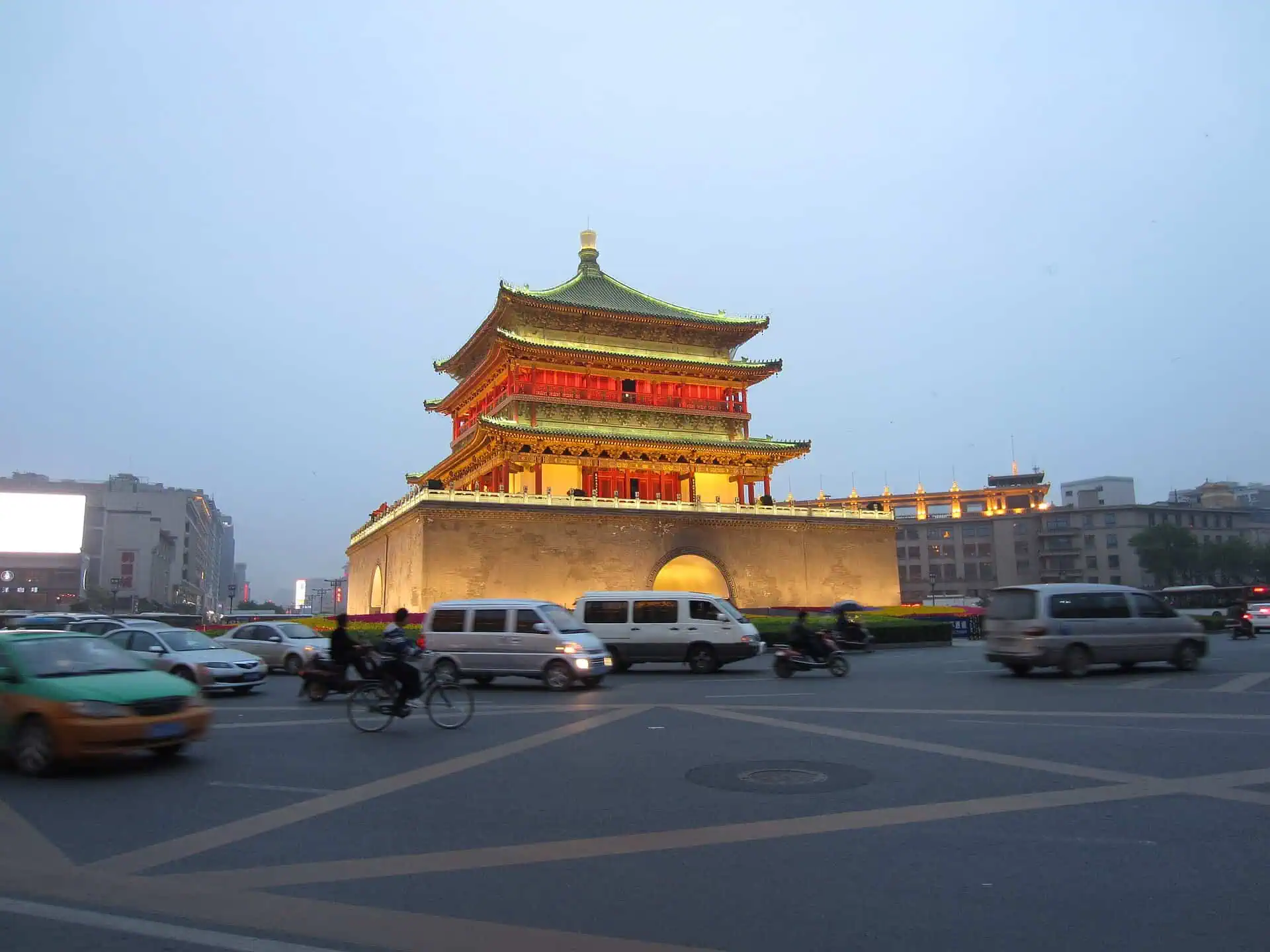
A Ming tower from 1384 at the dead center of the walled city — best admired at dusk, floodlit above the roundabout.
Learn more →
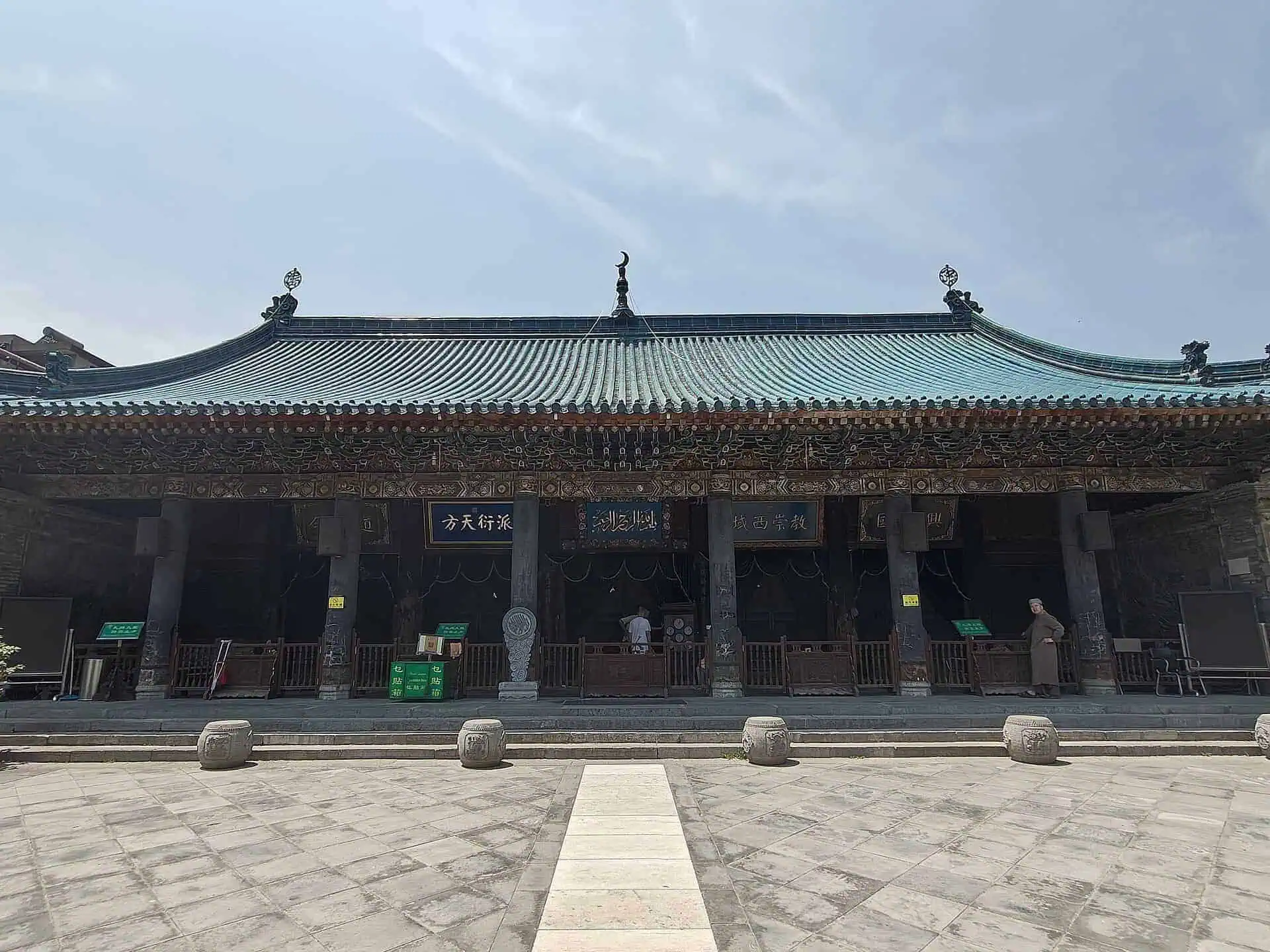
Daxuexi Lane
A 1,300-year-old mosque and the city's best sauce-glazed beef skewers, down one scruffy lane behind the Muslim Quarter.
Learn more →
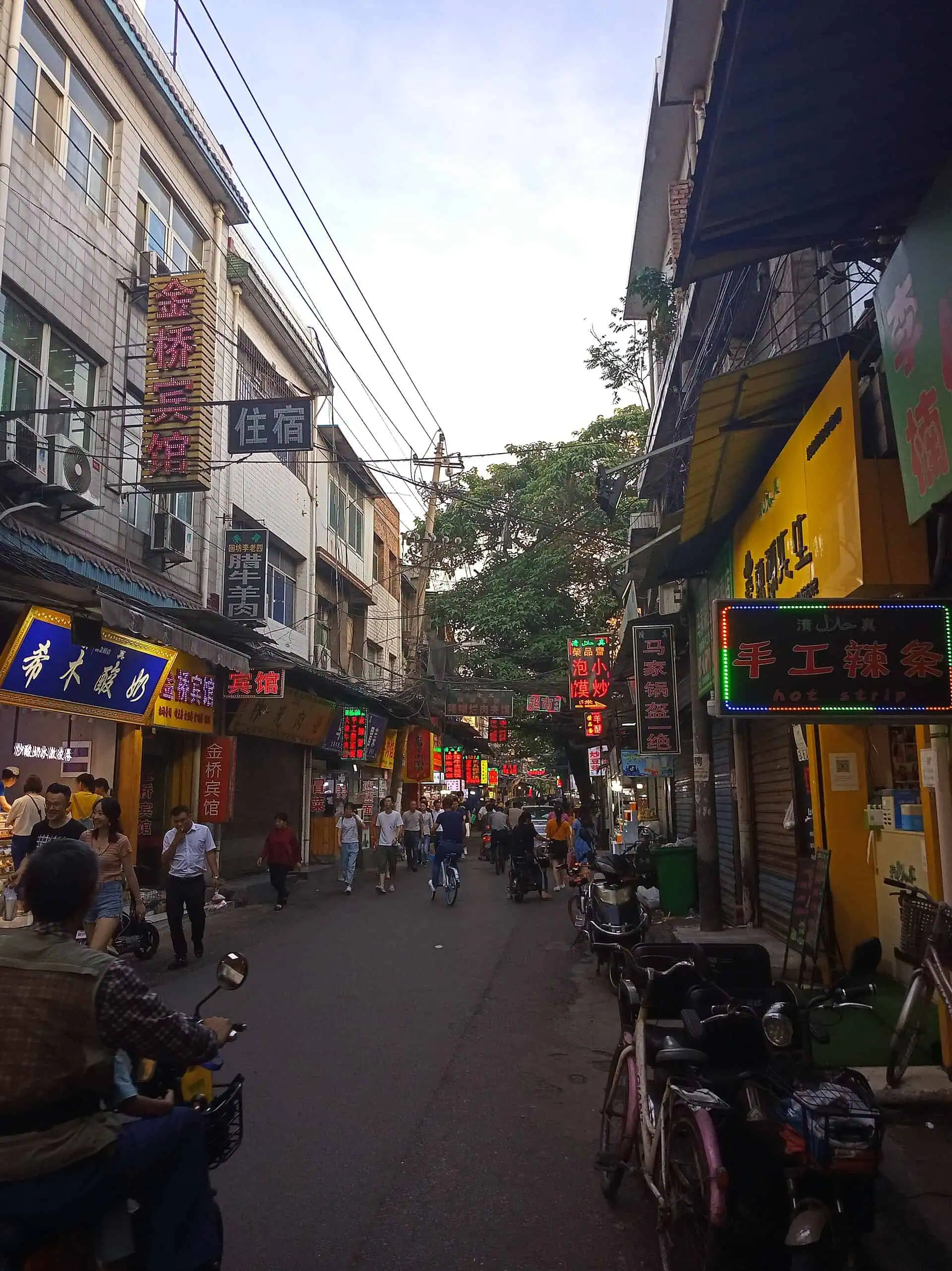
Sajinqiao Food Street
The food street Xi'an locals actually eat at — ten minutes' walk and a world away from the Muslim Quarter's tourist strip.
Learn more →
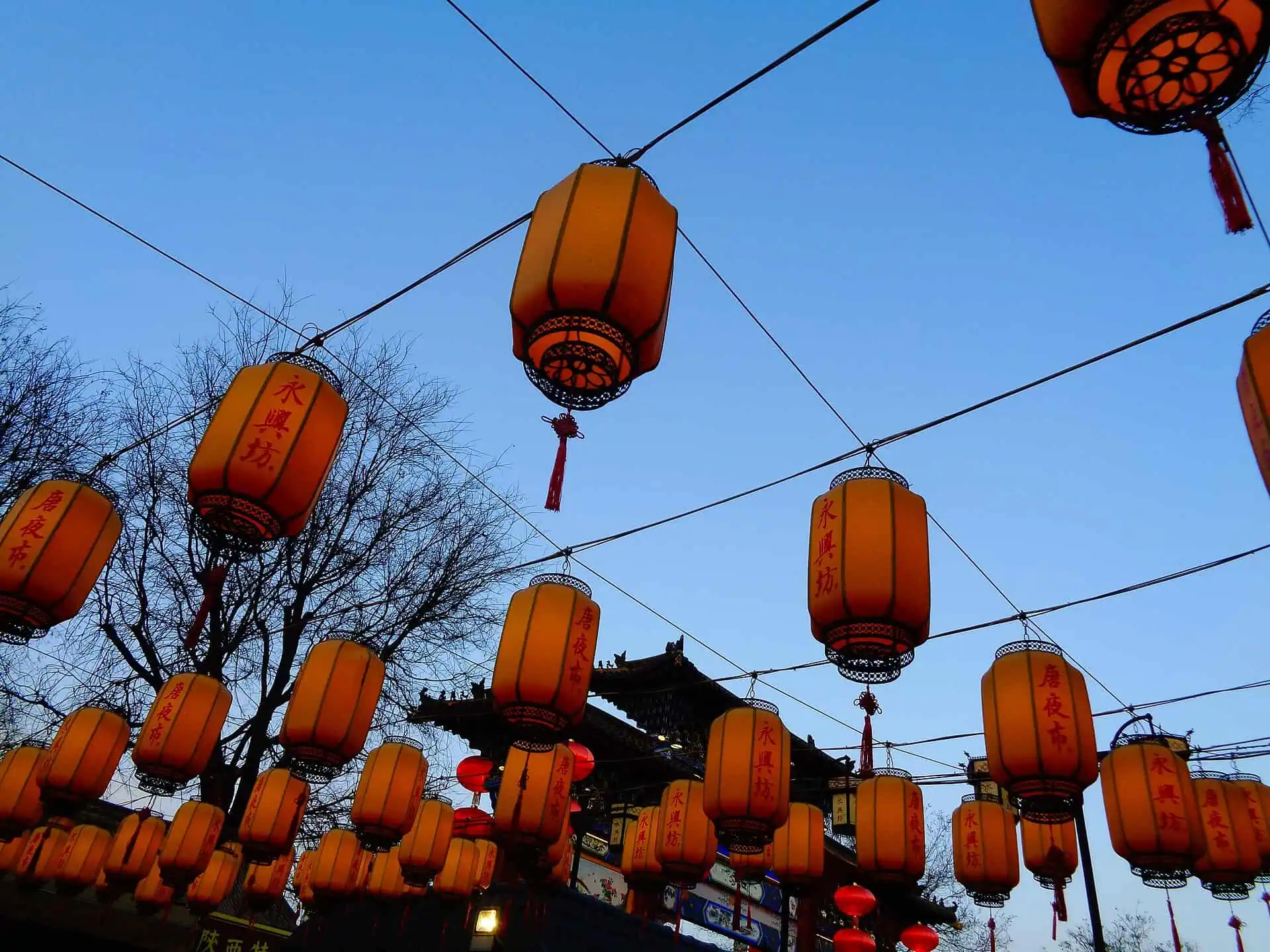
Yongxingfang
All 107 counties of Shaanxi's food packed into one walled block — touristy, efficient, and honestly useful.
Learn more →
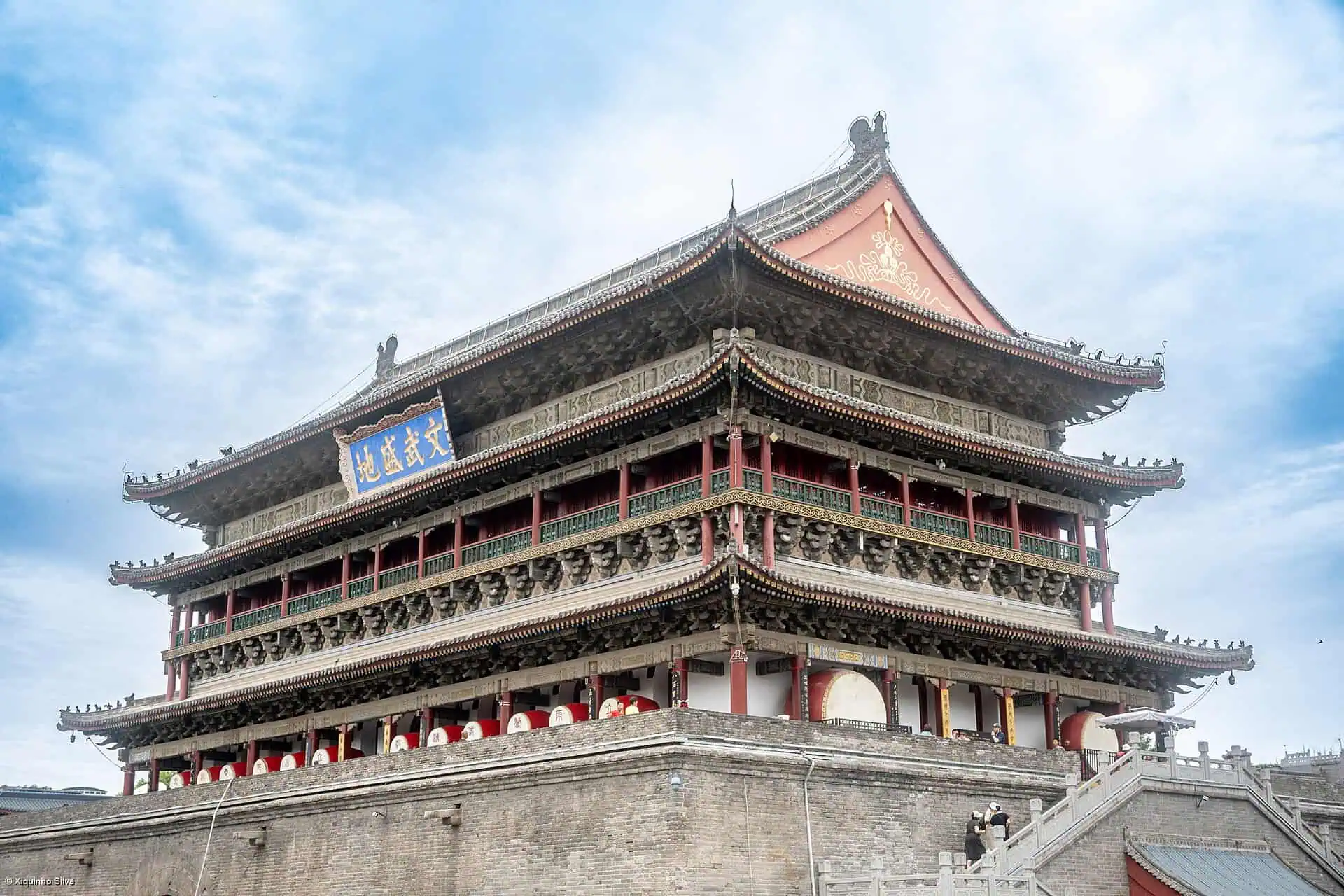
Xi'an Drum Tower
Built in 1380, four years before its famous sister — the tower whose drums closed every Xi'an day, and the gateway to the Muslim Quarter.
Learn more →
Keep exploring
Hanfu costume rental & photoshoot guide
Renting a Tang-style costume and having your photo taken against 1,300-year-old backdrops is Xi'an's signature tourist experience — and unlike most signature tourist experiences, it's actually good value. A full outfit with hair and makeup runs ¥100–300, the streets are so used to costumed visitors that nobody bats an eye, and the night scenery does the heavy lifting. Here's how to do it without getting upsold.
Tang Dynasty show & dumpling banquet — worth it?
The Tang Dynasty Palace dinner show is Xi'an's longest-running tourist evening: a dumpling banquet followed by an hour of Tang court music and dance in a plush theater. It's polished, comfortable and unashamedly aimed at visitors — and whether it's ¥400 well spent depends entirely on who you are. Families and first-time visitors to China tend to love it; travelers chasing the raw and local should spend the evening at Ever-Bright City for free instead.
Xi'an at night: lights, shows & evening walks
Xi'an is a different city after dark — Tang-style streetscapes floodlit gold, a pagoda floating over fountain shows, gate towers glowing above the moat. The best of it is free: the Grand Tang Ever-Bright City pedestrian street alone is worth an evening, and the pagoda fountain show costs nothing. Add a late dinner in the Muslim Quarter and, in season, the open-air Song of Everlasting Sorrow, and your nights may outshine your days.