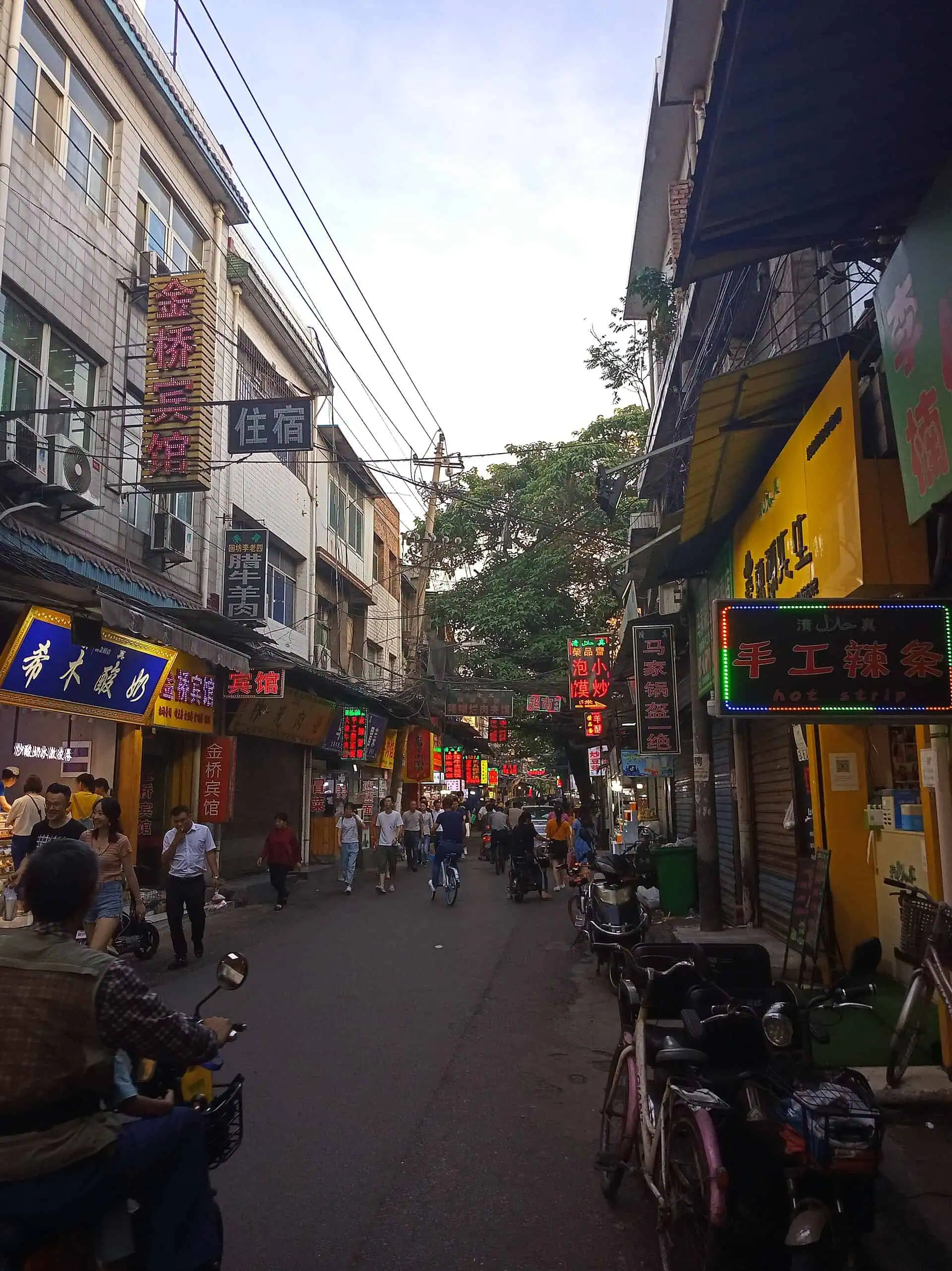
Sajinqiao Food Street
Sǎjīnqiáo
The food street Xi'an locals actually eat at — ten minutes' walk and a world away from the Muslim Quarter's tourist strip.
Entry
Free
Hours
Mon–Sun · stalls from ~10:00, busiest 17:00
Time needed
1–2 hours
Metro
Line 1 · Sajinqiao (洒金桥)
Sajinqiao (洒金桥, Sǎjīnqiáo — "Sprinkle-Gold Bridge") is where people who live inside the wall go for dinner: paomo shops, skewer grills and dumpling counters lining a working Hui street, priced for regulars rather than tour groups. The trade-off is zero polish — you'll eat standing next to parked scooters, and a few stalls are just ordinary. If food is why you travel, skip one evening on the main drag and eat here instead.
What you're looking at
Everyone photographs the Muslim Quarter's main strip on Beiyuanmen; almost nobody eats there twice. Locals will tell you the real kitchen of the 回坊 (Huífāng, the Hui Muslim quarter) is Sajinqiao, a street and web of lanes on the quarter's western edge, a ten-minute walk northwest of the Drum Tower.
There's no gate, no stage, no costumed staff — just shopfront after shopfront with the woks visible from the street. The names regulars swear by: 刘信 (Liú Xìn) for yangrou paomo and its wok-fried cousin xiǎochǎo pàomó (小炒泡馍), 马二 (Mǎ Èr) for sour-soup dumplings, 杨天玉 (Yáng Tiānyù) for cured-beef roujiamo (from about ¥20), plus skewer grills (烤肉, kǎoròu) that fire up at dusk and persimmon cakes (柿子糊塌) fried to order. Come back at dawn and 马文章胖子甑糕 — Fatty's zenggao, a steamed rice-and-jujube cake — sets up near the Laowu Lane junction around 6:30, ¥5 a small tub, gone by mid-morning.
Everything here is Hui-run and halal; the Sajinqiao Old Mosque, one of the quarter's seven historic mosques, sits a short walk north. For the bigger picture, see our Muslim Quarter food guide.
Visiting strategy
Come at dusk, come hungry. The street peaks between 17:00 and 22:00. The method: order small portions, share everything, and keep moving — paomo at one shop, ten skewers at the next, dumplings to finish. You can eat very well for about ¥50 a head.
Morning is a different mission: if you want Fatty's zenggao, be there before 8:00 — it's a sellout stall, not a sit-down experience.
Pair it with: on Thursday or Sunday mornings, the Xicang bird-and-flea market is five minutes away on foot — do the market first, then eat here. The Tibetan Buddhist Guangren Temple is also a ten-minute walk north and makes a good quiet counterweight before the feast.
Payment: QR codes rule; many stalls are cash-allergic in practice. Read our money and payments guide before you come.
Getting there
The street has its own metro station — the planners knew what they were doing.
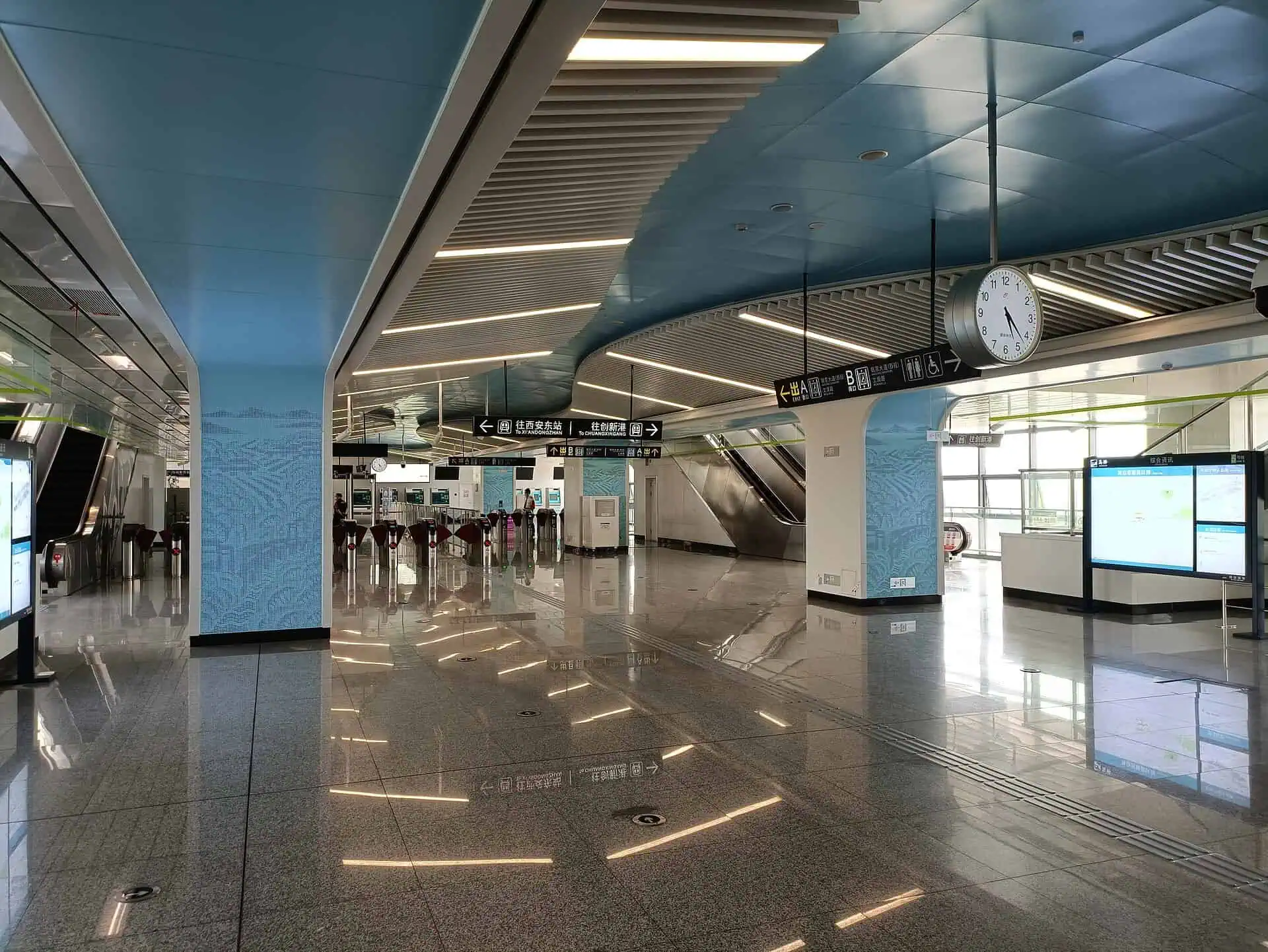
- Metro: Line 1 to Sajinqiao station (洒金桥); you surface essentially on the strip.
- On foot: 15–20 minutes northwest from the Bell Tower, through the back lanes of the Muslim Quarter — the walk itself is half the point.
- Taxi/DiDi: ¥10–15 from anywhere inside the wall. See getting around Xi'an for the metro card basics.
Practical notes
- Seating: scarce. Many counters are stand-and-eat or share-a-plastic-stool. Paomo shops have tables; skewer grills often don't.
- Toilets: none on the street worth mentioning — use the metro station or a mall before you commit.
- Halal: the whole strip is Hui-run, which makes it one of the easiest places in China to eat halal — still, look for the 清真 sign. No pork, and bringing outside alcohol is bad form. See our halal guide.
- Traffic: the lane is shared with scooters and delivery trikes. Keep kids close.
- Kids: they'll love the skewers and persimmon cakes; nobody will mind noise here.
Questions, answered
Sajinqiao vs the Muslim Quarter main street — which is better?
For eating, Sajinqiao wins: same cuisine, lower prices, a local crowd. The Beiyuanmen strip is better theater for a first night — lanterns, crowds, spectacle. Do one evening on each if you can.
What time should I go to Sajinqiao?
Between 17:00 and 22:00 for the full grill-and-wok scene. The only reason to come in the morning is the zenggao stall near Laowu Lane, which sells out by mid-morning.
Is the food on Sajinqiao halal?
Yes — this is the heart of the Hui quarter and stalls are overwhelmingly Muslim-run, with 清真 (halal) signage. No pork is sold. Treat it as you would a Muslim neighborhood anywhere: no outside alcohol.
How much money do I need for a night of eating on Sajinqiao?
About ¥40–60 per person gets you paomo, a handful of skewers and dumplings — roughly half of what the same crawl costs on the tourist strip. Bring QR payment set up; small bills as backup.
Keep exploring
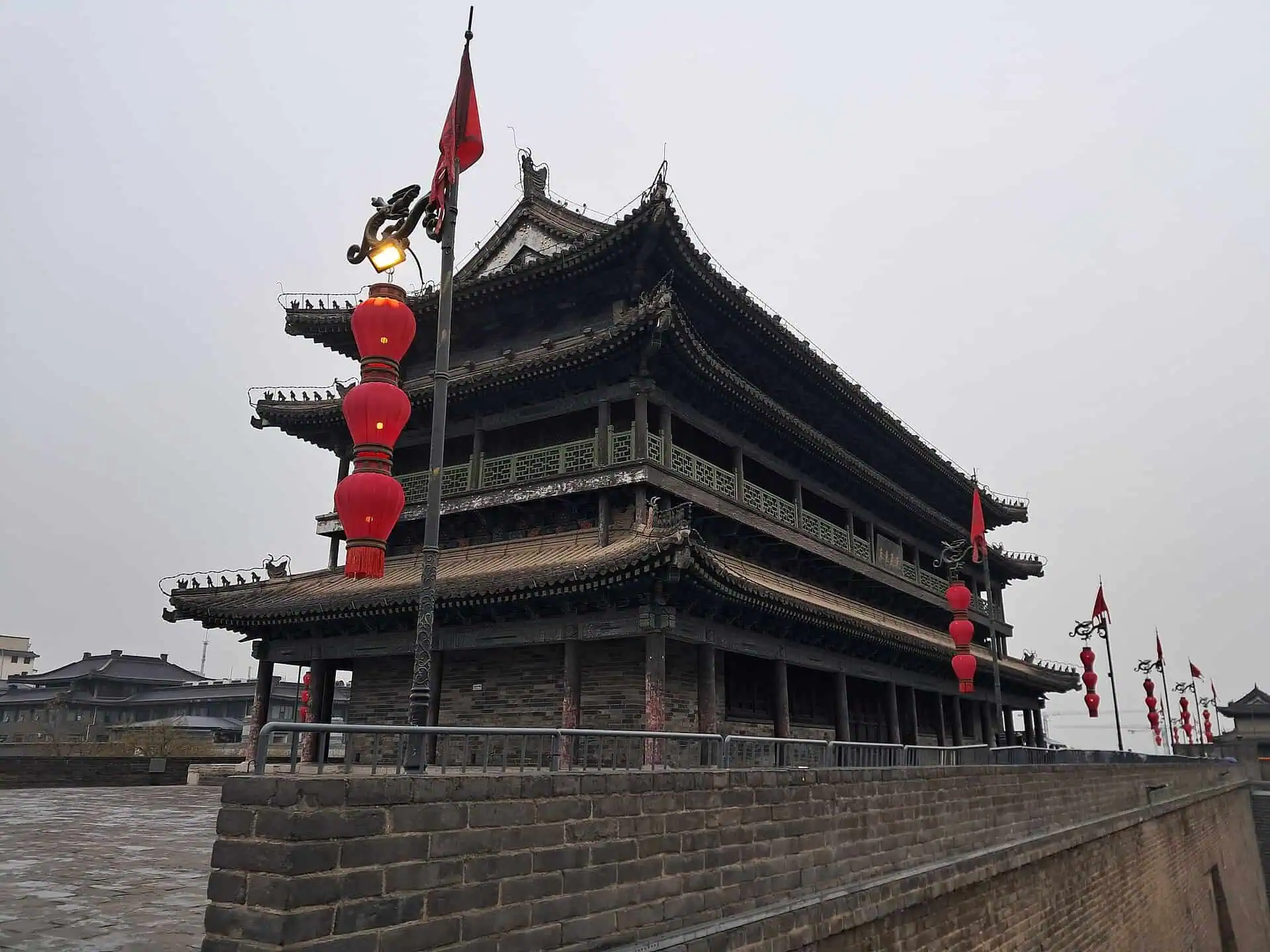
Xi'an City Wall
A 14-kilometer Ming dynasty rectangle you can cycle on top of — 650 years old and still the city's favorite commute.
Learn more →
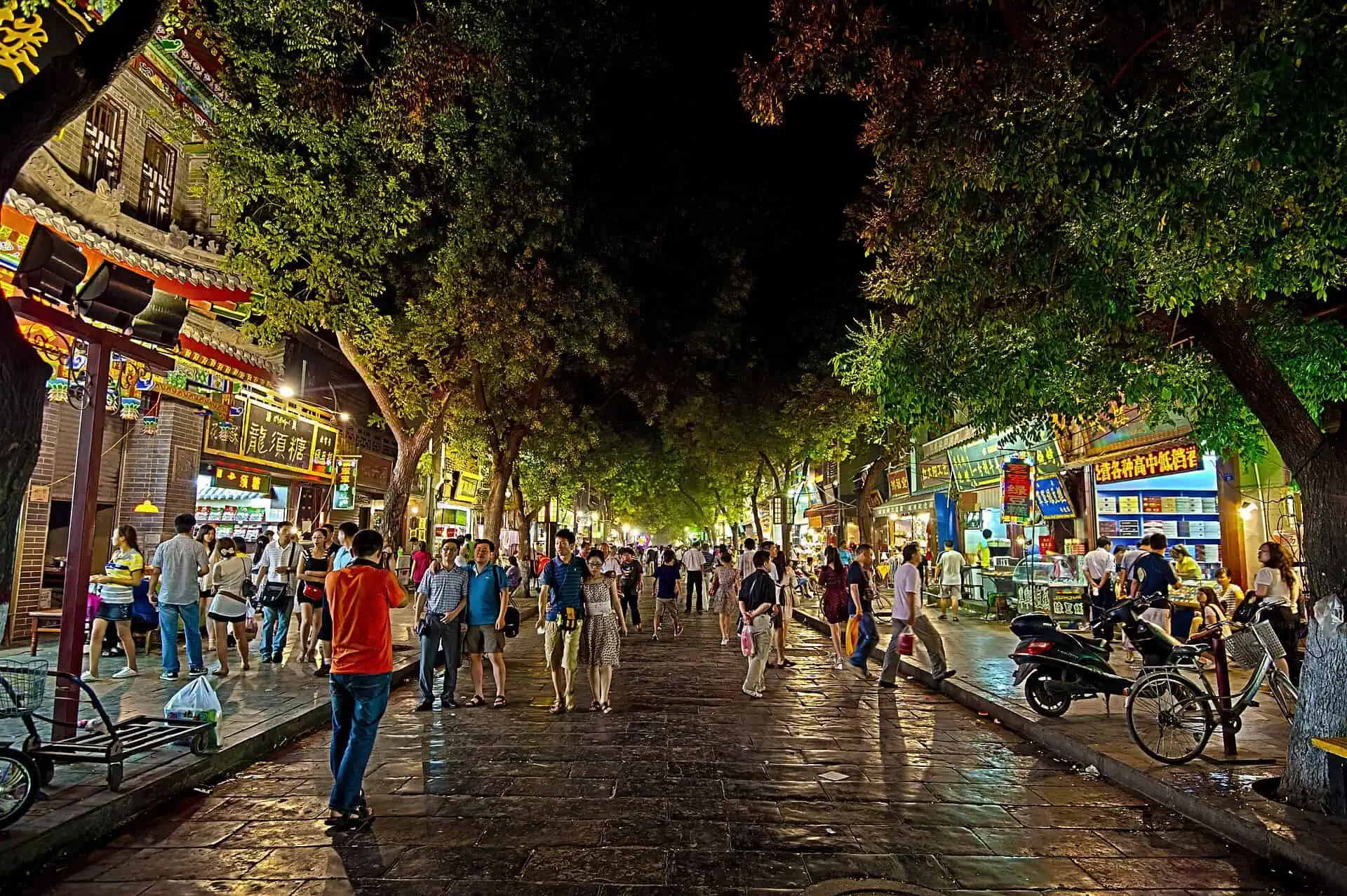
Muslim Quarter
Feeding Xi'an since the 700s — the loudest, smokiest, best-smelling streets of its Hui community.
Learn more →
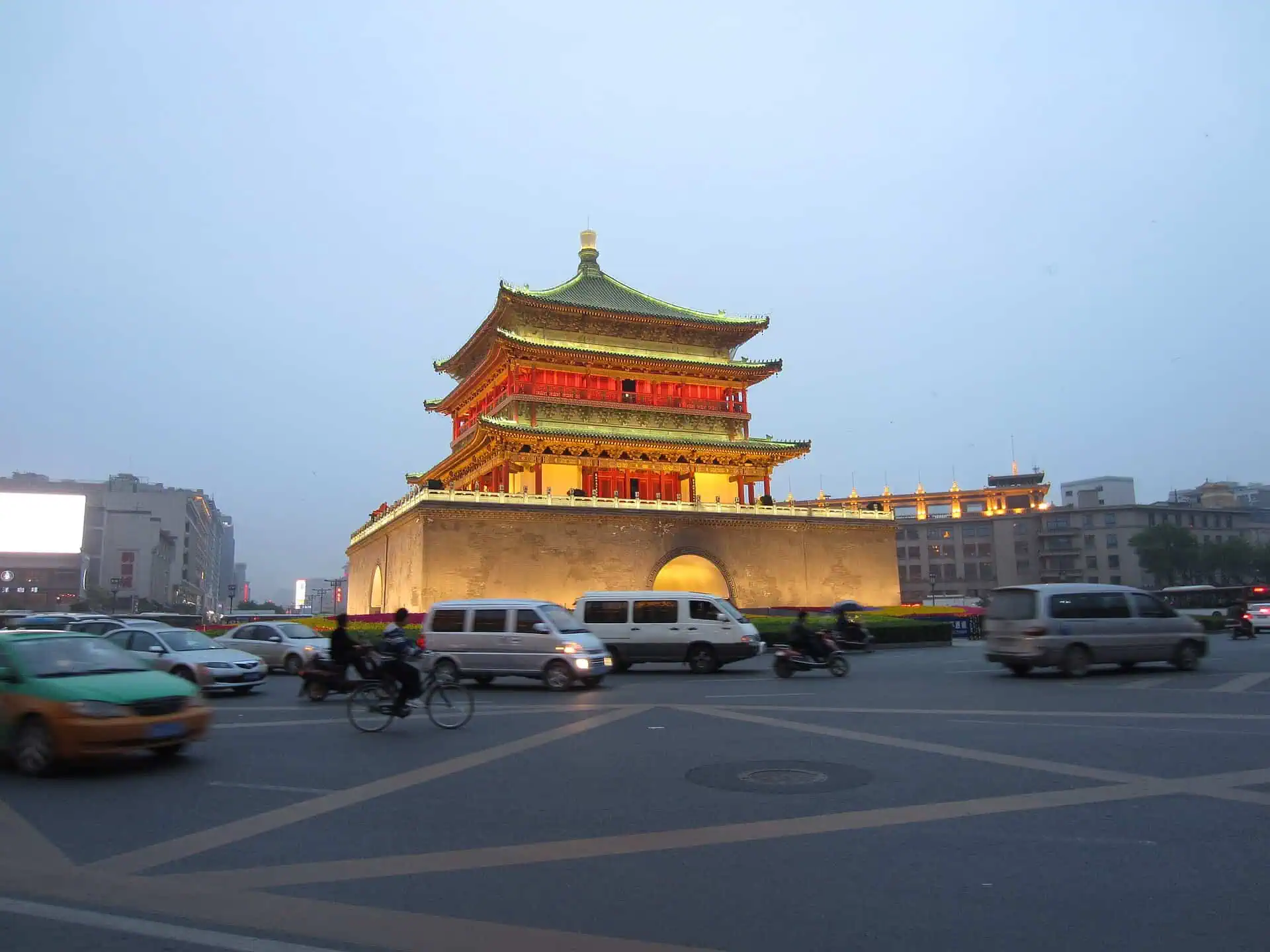
Xi'an Bell Tower
A Ming tower from 1384 at the dead center of the walled city — best admired at dusk, floodlit above the roundabout.
Learn more →
Related stories
Shopping in Xi'an: what's actually worth buying
Most of what's sold to tourists in Xi'an is factory stock you could buy anywhere in China — but a few things are genuinely local and worth suitcase space: a seal carved with your name on Shuyuanmen, a proper museum-shop terracotta figure, fu brick tea, and Shaanxi's dried persimmons. Here's what to buy, what to skip, and how the haggling works.
Slow travel in Xi'an: how to live here for a month
Market hours: Xi'an at dawn and after dark