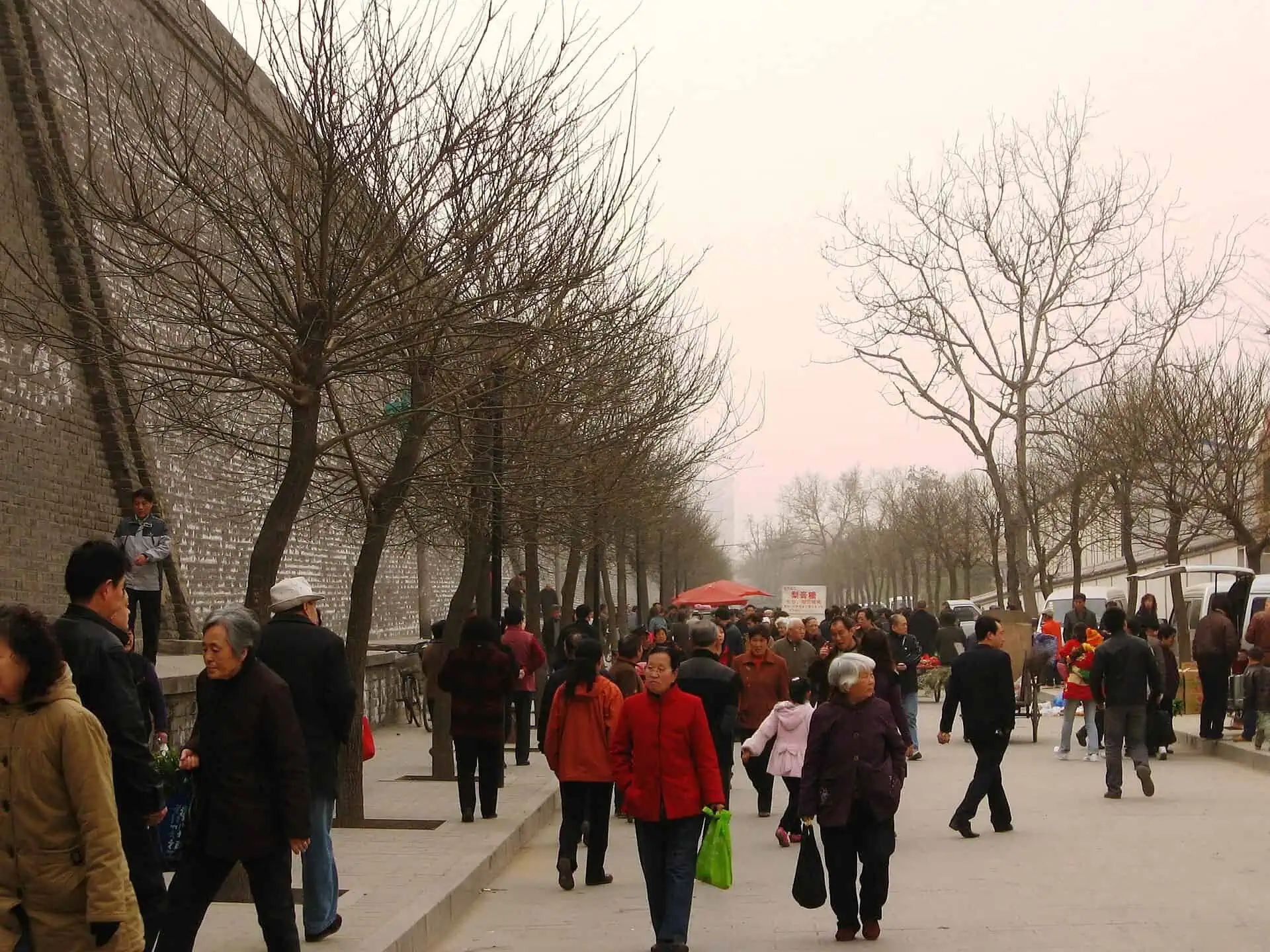
Breakfast in Xi'an: the city's most local meal, mapped
Xi'an saves its most local food for 6–10 a.m. The breakfast canon — hulatang with youtiao, zenggao, doufunao, baozi, jianbing — where to eat each one, what it costs, and why you must arrive before the streets wind down at ten.
Breakfast is the real Xi'an food scene
Visitors queue for biangbiang noodles at noon; locals know the city's food soul is sold before ten. Breakfast here is wheat, soup and steam — built for a farmer's morning, priced for everyone, and eaten standing at tiny tables on plastic stools. It's also the cheapest good eating you'll do in China: a full local breakfast runs ¥5–15. Our one-day local life itinerary starts this way for a reason.
The canon: five breakfasts, one week
1. Hulatang + youtiao (胡辣汤 + 油条) — the classic pairing: a peppery, gloopy beef-and-vegetable soup, dunked with fried dough sticks. Winter morning fuel. Our hulatang page has the full story. 2. Zenggao (甑糕) — sticky rice layered with red dates and beans, steamed in a centuries-old pot; sweet, dense, ¥5. See the zenggao page. 3. Doufunao (豆腐脑) — silken tofu in a savory or spicy broth; the Muslim Quarter does a standout version. 4. Baozi (包子) — steamed buns by the stack; for the soup-in-a-dumpling experience, see guantang baozi. 5. Jianbing (煎饼) — the griddle crepe with egg and crisp cracker, made in front of you; the safest breakfast for the squeamish.
Where to eat it
The strategy is simpler than any list: find where old men are eating standing up. Concretely, three zones cover it: the Xiaonanmen morning market (6:30 open, near the South Gate; hulatang central), Sajinqiao in the Muslim district (the deep end — doufunao, beef baozi, the works), and any lane off the Muslim Quarter's main drag. Our morning and night markets piece walks the full circuit with prices.
The ten o'clock rule
Breakfast streets wind down by 9:30–10:00 — stalls sell out and vanish. This is the one meal in Xi'an you cannot sleep in for. Set an alarm once; a 7 a.m. breakfast walk through Xiaonanmen, with the wall on one side and steam on the other, will be among your best memories of the city. Pair it with the local eats guide for the rest of the day's eating.
Questions, answered
What is the most typical Xi'an breakfast?
Hulatang (peppery beef soup) with youtiao (fried dough sticks) — the pairing most locals would name first. Zenggao (sticky rice with red dates) is the sweet runner-up.
How much does breakfast cost in Xi'an?
¥5–15 for a full local breakfast including a drink. Even the famous stalls rarely exceed ¥20 per person.
Is street breakfast safe for foreigners?
At busy stalls, yes — high turnover means fresh food. Follow the standard rule: eat where the crowd is, watch the griddle or pot working, and skip anything lukewarm. See our health and safety guide for the general rules.
Places in this story
Keep exploring
Where to Eat in the Muslim Quarter: A Street-by-Street Guide
The Muslim Quarter (回民街, Huímín Jiē) is Xi'an's loudest, smokiest, most delicious neighborhood — and its most touristed. The open secret is that almost nobody eating on the main strip is a local: the best food is one or two turns off it, at two-thirds of the price. Here's how the quarter is laid out, what to eat where, and how to dodge the traps.
Eating where locals eat: Yongxingfang, Sajinqiao & beyond
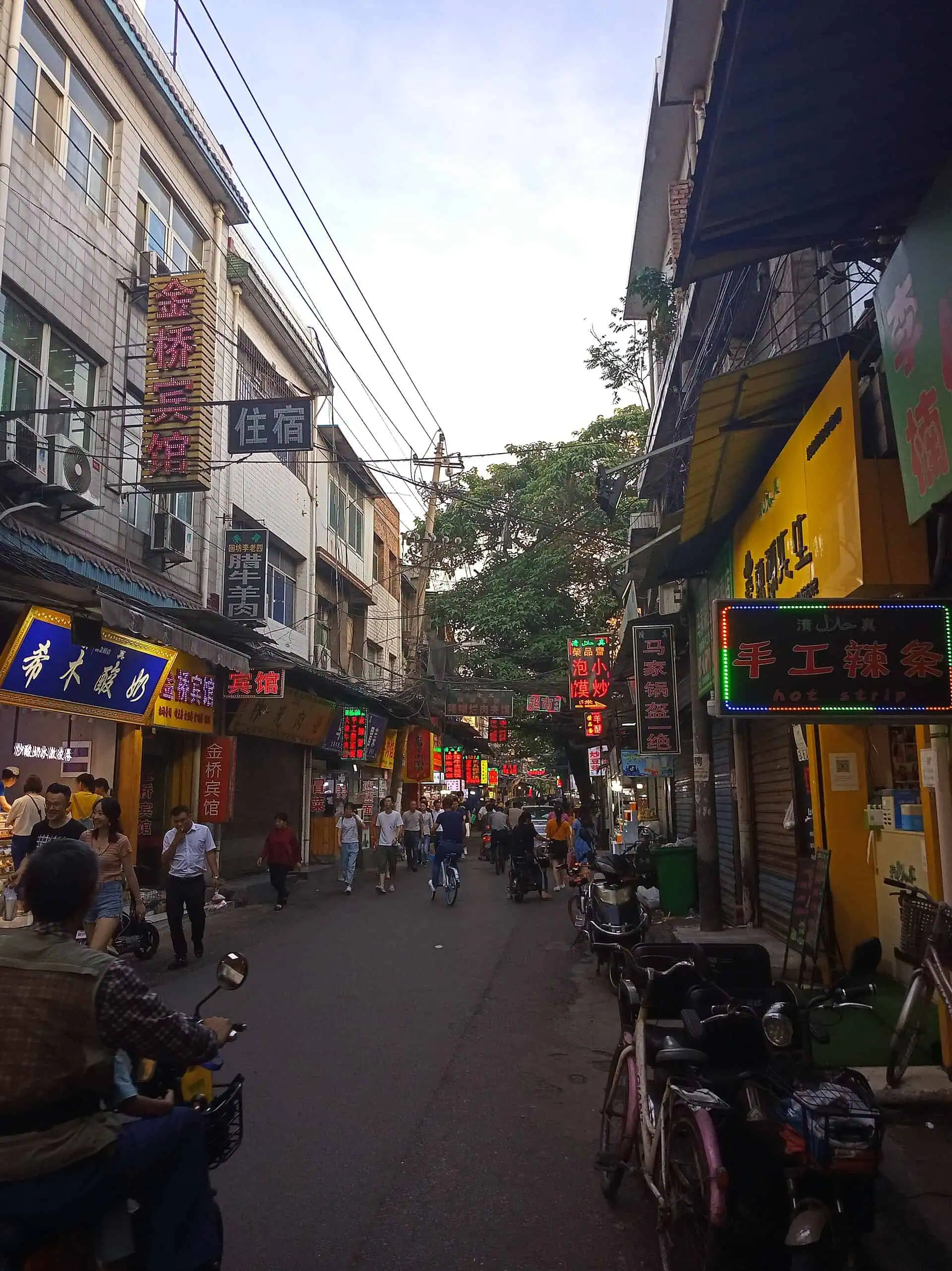
Every visitor finds the Muslim Quarter's main strip; almost none find where Xi'an actually eats. The local circuit splits in two directions: Yongxingfang (永兴坊), a curated one-stop sampler of food from across Shaanxi province by the East Gate, and Sajinqiao (洒金桥), an uncurated working Hui street where breakfast queues form before 8:00. Add the Dongxin Street night market and a couple of side lanes, and you can eat like a local for your entire trip.
Vegetarian & dietary needs in Xi'an
The honest version first: Xi'an's signature dishes are built on meat broth, and no menu in town marks vegetarian options. But the city also has a centuries-old Buddhist vegetarian tradition, a whole halal district where pork and lard can't follow you, and a street-food canon in which several of the best things contain no meat at all. Vegetarians who learn a dozen dishes and three phrases eat well here; strict celiacs should treat Xi'an as hard mode.