Xicang Market
Xīcāng
Cricket sellers, pigeon fanciers and junk stalls in the shadow of a Ming granary — Xi'an's oldest running flea market, two mornings a week only.
Entry
Free
Hours
Thu & Sun only · dawn
Time needed
1–2 hours
Metro
Line 1 · Sajinqiao (洒金桥)
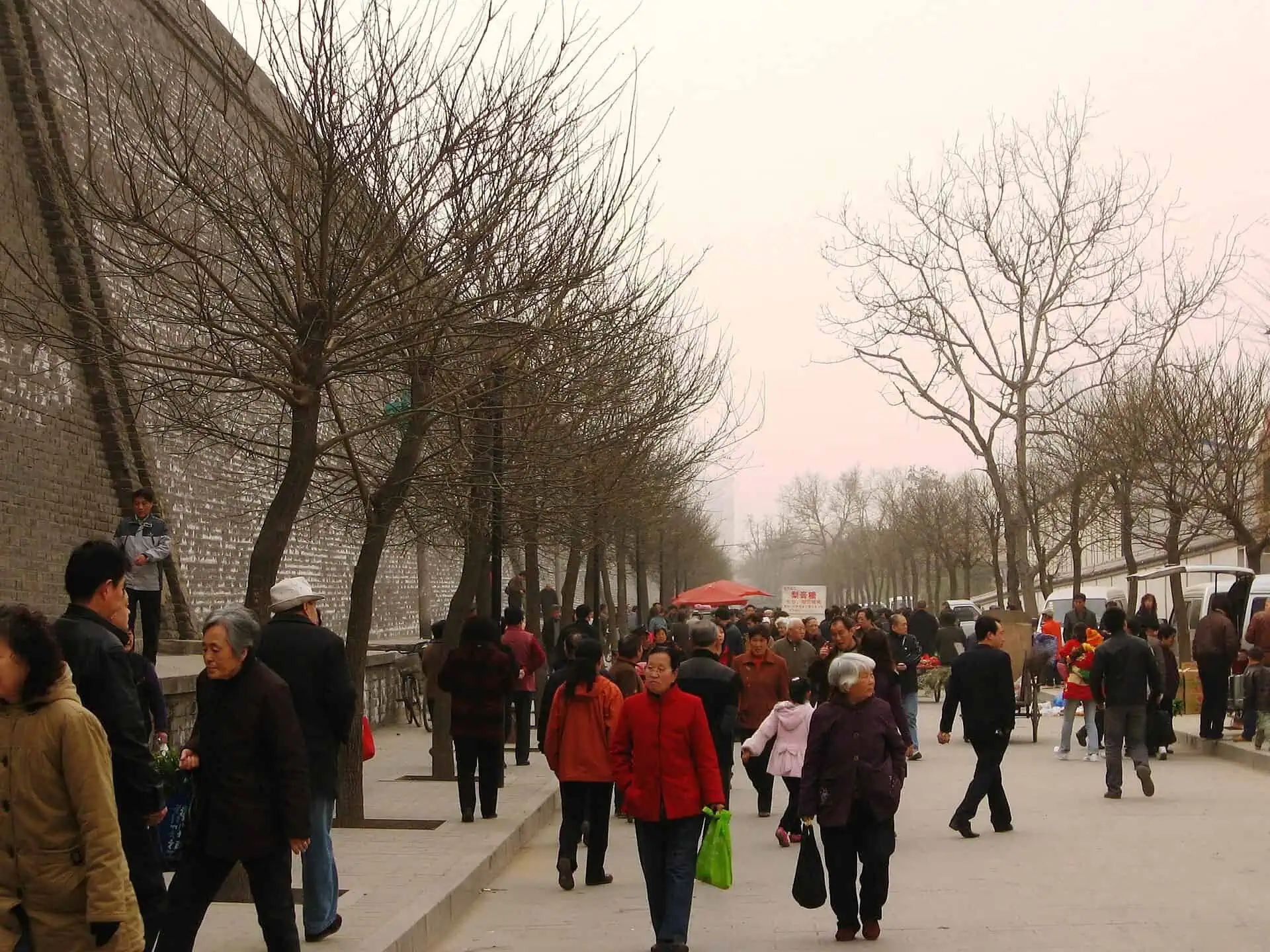
Xicang (西仓, Xīcāng — "West Granary") is a bird, insect and junk market that has traded on the footprint of a Ming government granary for well over a century, every Thursday and Sunday morning without fail. It's dusty, loud, entirely Chinese-speaking and has nothing a tourist is meant to buy — which is exactly the point. The catch is the calendar: if your Xi'an days don't include a Thursday or Sunday morning, don't bother coming; the lanes are just lanes.
What you're looking at
Four lanes — East, West, South and North Xicang Lane — box in a square block behind Miaohou Street, in the northwest of the Hui quarter. The block was once 永丰仓 (Yǒngfēng Cāng), the Yongfeng granary: a state grain store first established under the Sui and re-established on this site in the Ming, paired with an "East Granary" across town — hence West Granary. One weathered late-Qing granary building still stands inside the block, listed as a protected historic building in 2024.
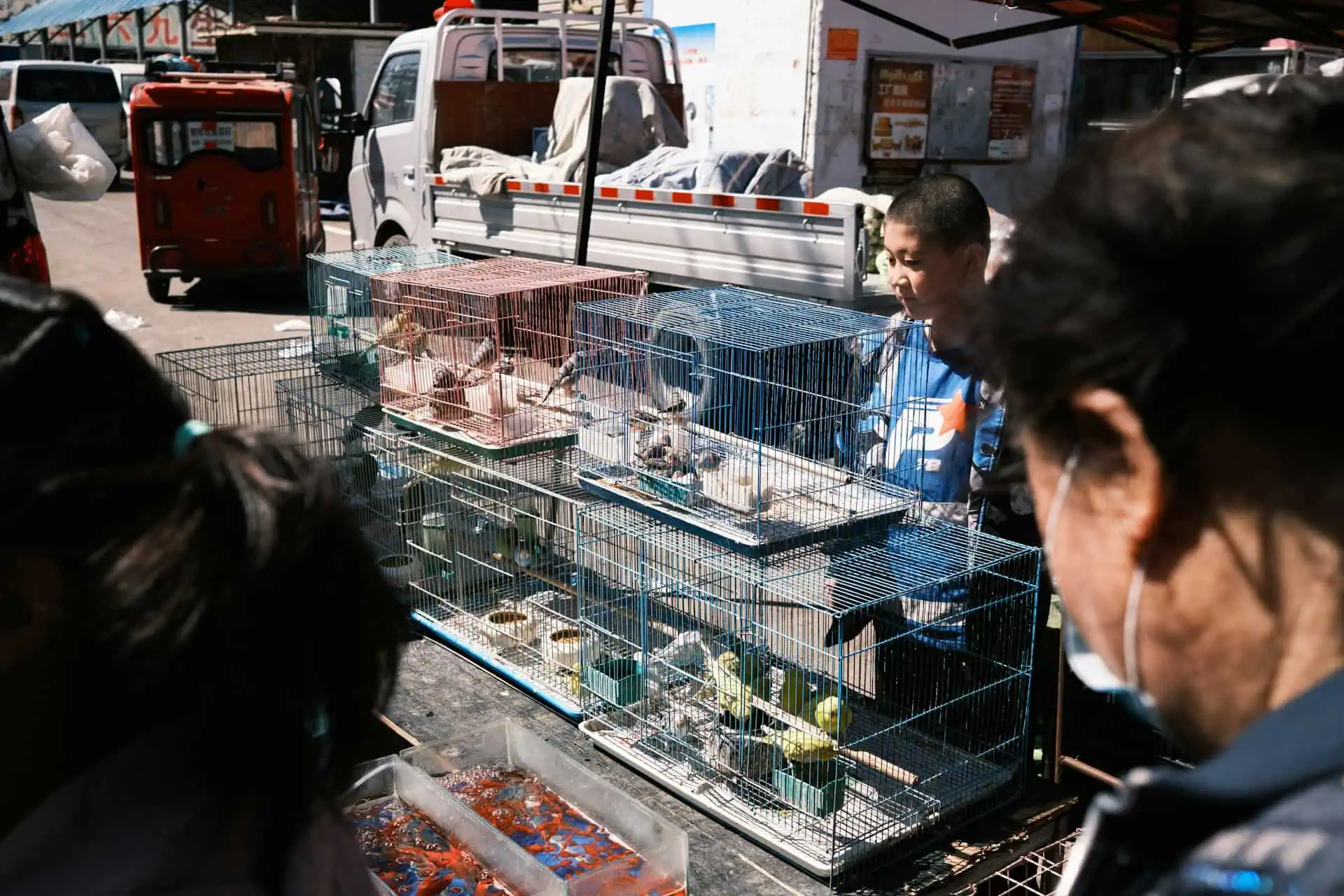
The market grew out of Qing-dynasty leisure culture: bannermen came to the nearby drill ground to walk their songbirds and fight their crickets, and vendors gathered to serve them. It never stopped. On market mornings the lanes jam with bamboo birdcages, clay cricket pots, homing pigeons, goldfish in plastic bags, flower seedlings, rabbit hutches — and a sprawling second-hand trade in tools, radios, old coins, Mao-era bric-a-brac and true junk. Xi'an people say 不知西仓,不算地道的西安人 — "if you don't know Xicang, you're not a real Xi'an local." It's the rawest surviving piece of the city's older street life inside the wall.
Visiting strategy
Arrive 8:00–10:00. Stallholders set out at dawn; the crowd peaks around 10:00 and the whole thing dissolves by early afternoon. Thursday is calmer than Sunday; both are the same market.
How to walk it: make a slow loop of the four lanes. You're here to watch — old men inspecting crickets with the seriousness of diamond graders, pigeon men comparing birds, a knife-sharpener working a foot-pedal wheel. Photograph the goods freely; ask before pointing a lens at faces.
Buying: small plants, caged insects and birds can't come home with you — customs will see to that — but the second-hand stalls yield keepers: enamel cups, old propaganda posters, brass bits. Bargain gently; start around half the asking price. Our souvenir guide covers what's actually exportable.
Pair it with: Sajinqiao food street is five minutes south — market first, paomo after, a perfect Thursday. The back lanes link naturally to the Muslim Quarter if you keep walking east.
Getting there
The market sits between Sajinqiao and North Guangji Street, behind Miaohou Street (庙后街), in the heart of the quarter — no signage, you just follow the people carrying birdcages.
- Metro: Line 1 to Sajinqiao station (洒金桥), then a 10-minute walk north into the lanes.
- On foot: about 15 minutes northwest of the Drum Tower through the back of the Muslim Quarter.
- Taxi/DiDi: ask for 庙后街西仓; older drivers may know it better as 鸟市, "the bird market." Navigation tips in our maps guide.
Practical notes
- Days matter: Thursday and Sunday mornings only. Every other day, it's silent residential lanes.
- Payment: QR everywhere, cash accepted by the older junk sellers.
- Sensitivities: animals in small cages are the product here; if that's distressing for you or your kids, give it a miss.
- Footwear: dusty lanes, spilled seed, occasional cage-cleaning water — leave the white sneakers at the hotel.
- Facilities: public toilets on Miaohou Street; no cafés inside the market — eat on Sajinqiao afterward.
Questions, answered
Which days is Xicang Market open?
Thursday and Sunday only, from dawn until early afternoon — a tradition it has kept for over a century, rain or shine. On any other day the four lanes are just quiet residential alleys.
Can I buy a bird or cricket at Xicang as a souvenir?
You can buy one, but you can't take it home — live animals and insects won't clear customs. Treat the market as a spectacle to watch, and do your actual souvenir shopping at the second-hand stalls.
What was Xicang historically?
The site was the Yongfeng granary, a government grain store with roots in the Sui dynasty, re-established here under the Ming. The market grew from Qing-era bird-walking and cricket-fighting culture around the old drill ground, and never stopped. One late-Qing granary building survives.
Is Xicang Market worth visiting as a tourist?
Only on a Thursday or Sunday morning, and only if you enjoy markets for their own sake — there's no food court, no English, nothing curated. As a window on old Xi'an street life it's unmatched; as an 'attraction,' it makes no effort at all.
Keep exploring
Xi'an City Wall
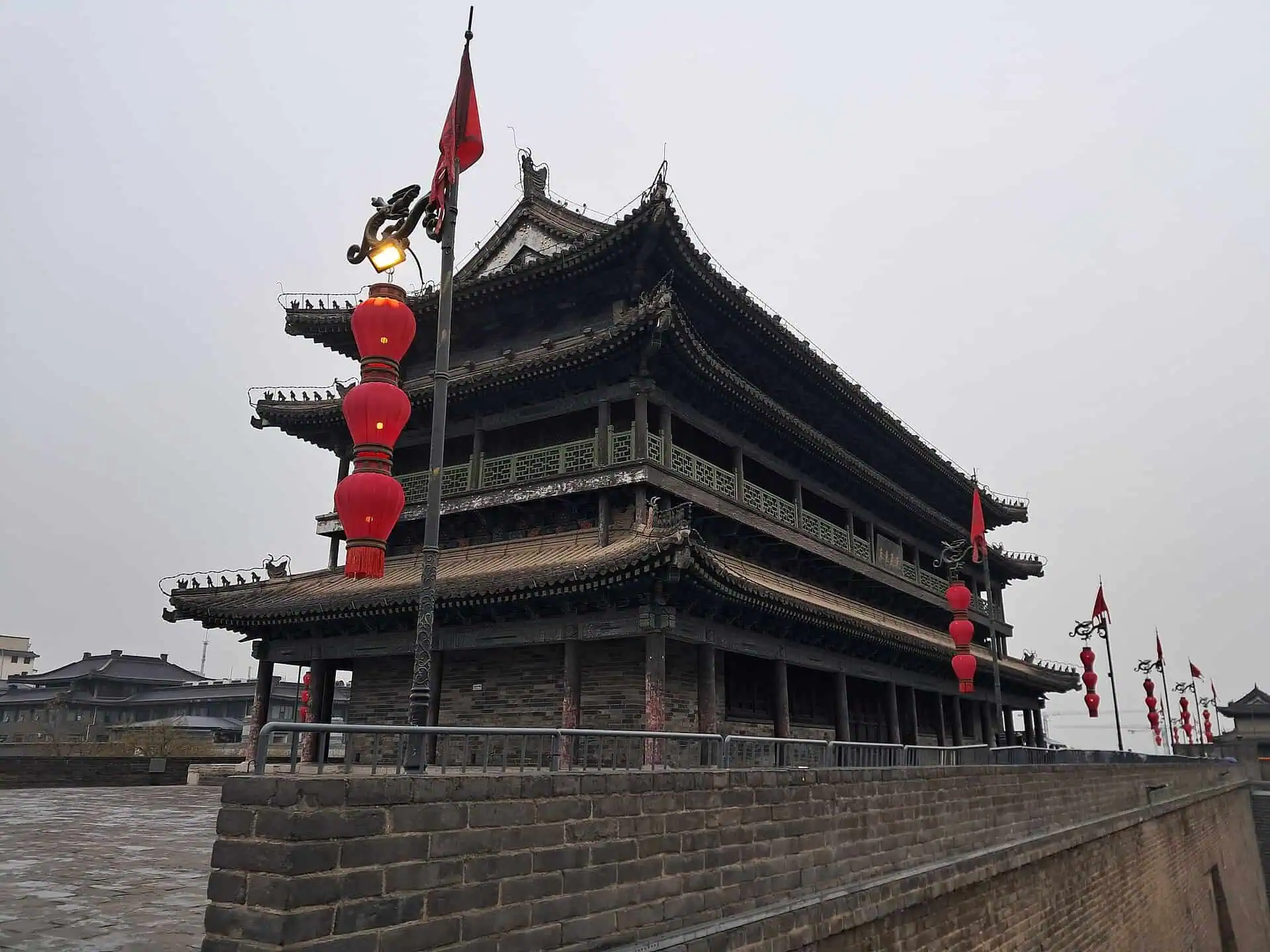
A 14-kilometer Ming dynasty rectangle you can cycle on top of — 650 years old and still the city's favorite commute.
Learn more →
Muslim Quarter
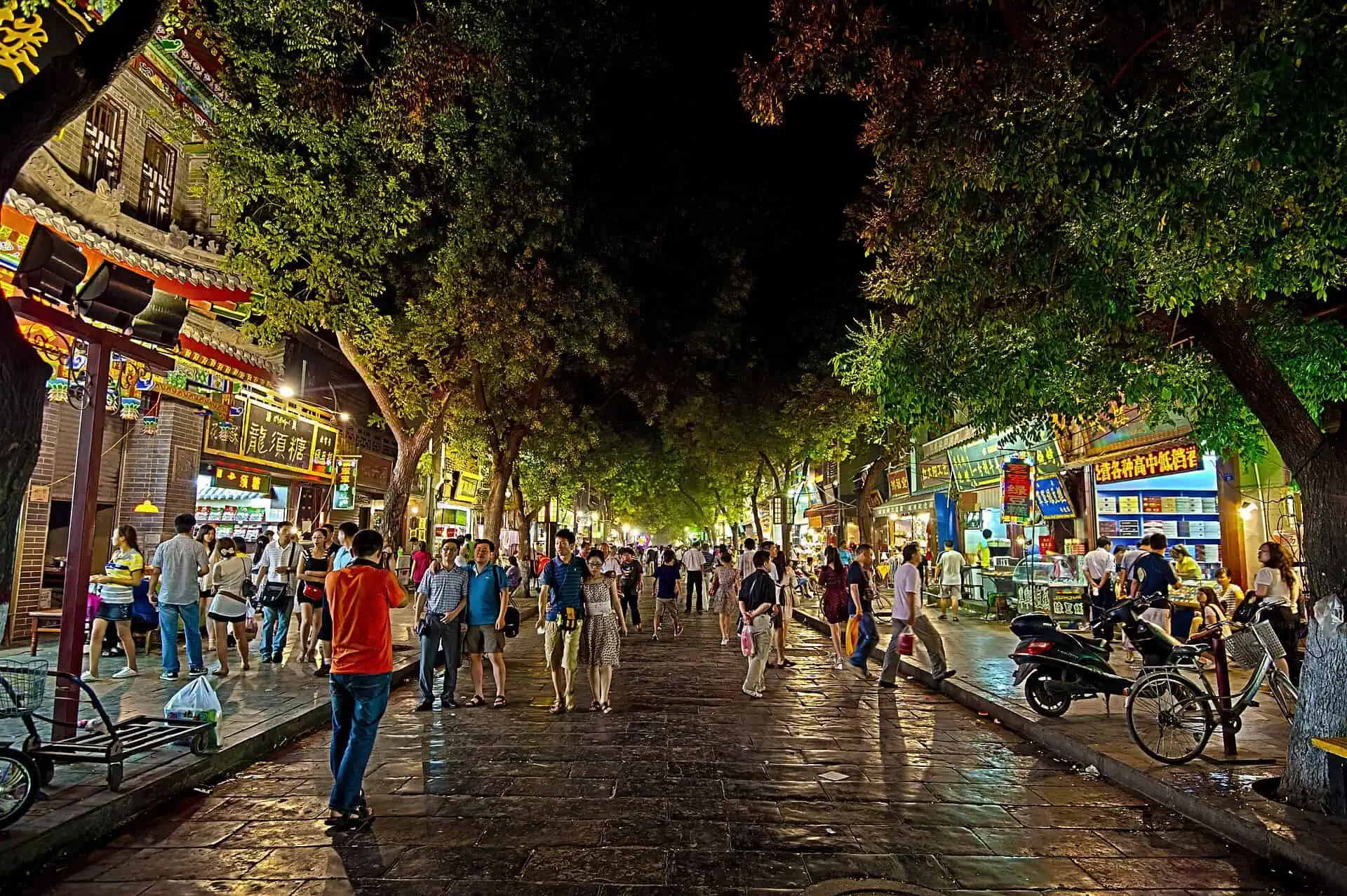
Feeding Xi'an since the 700s — the loudest, smokiest, best-smelling streets of its Hui community.
Learn more →
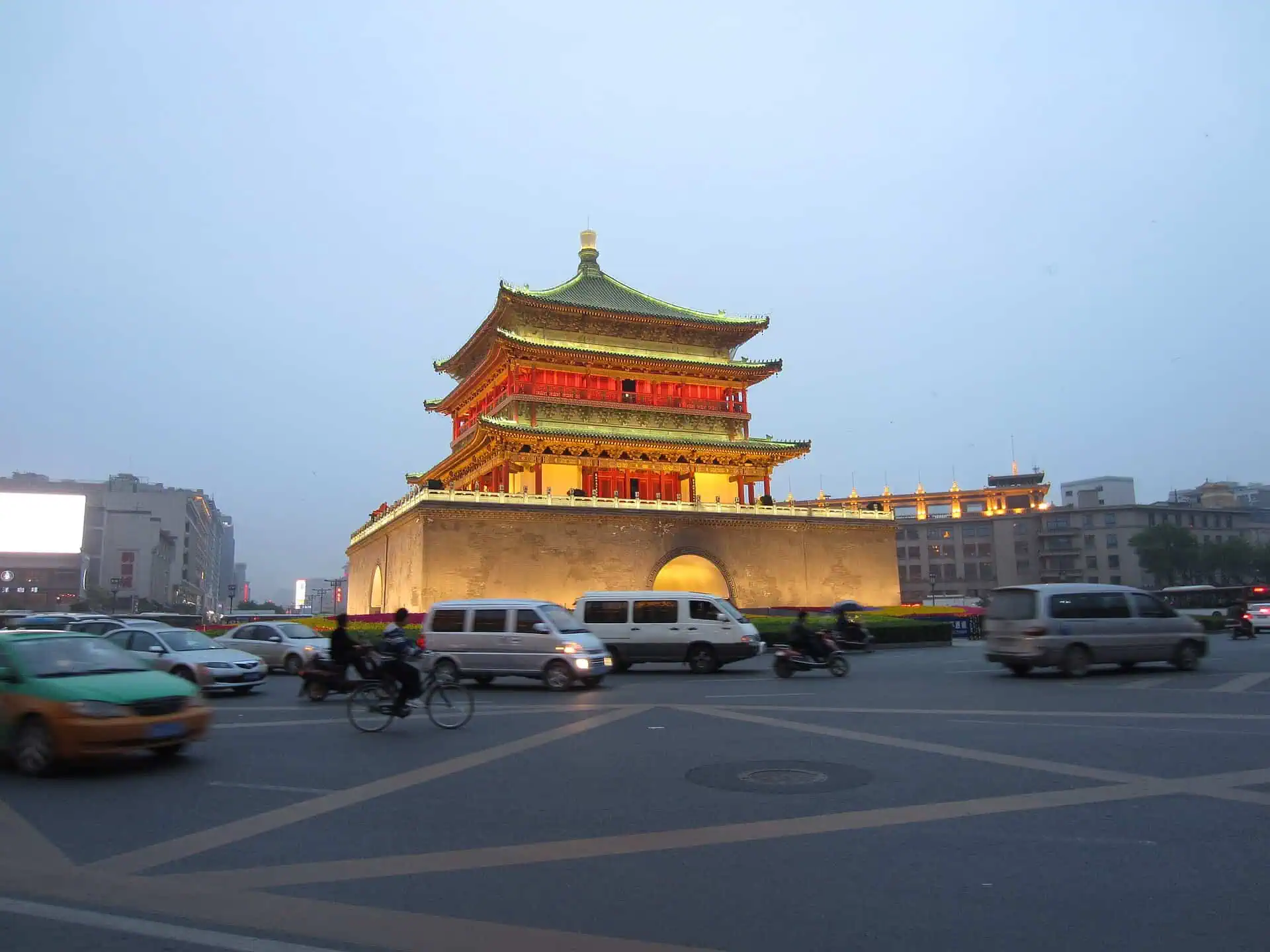
Xi'an Bell Tower
A Ming tower from 1384 at the dead center of the walled city — best admired at dusk, floodlit above the roundabout.
Learn more →
Related stories
Shopping in Xi'an: what's actually worth buying
Most of what's sold to tourists in Xi'an is factory stock you could buy anywhere in China — but a few things are genuinely local and worth suitcase space: a seal carved with your name on Shuyuanmen, a proper museum-shop terracotta figure, fu brick tea, and Shaanxi's dried persimmons. Here's what to buy, what to skip, and how the haggling works.
Slow travel in Xi'an: how to live here for a month