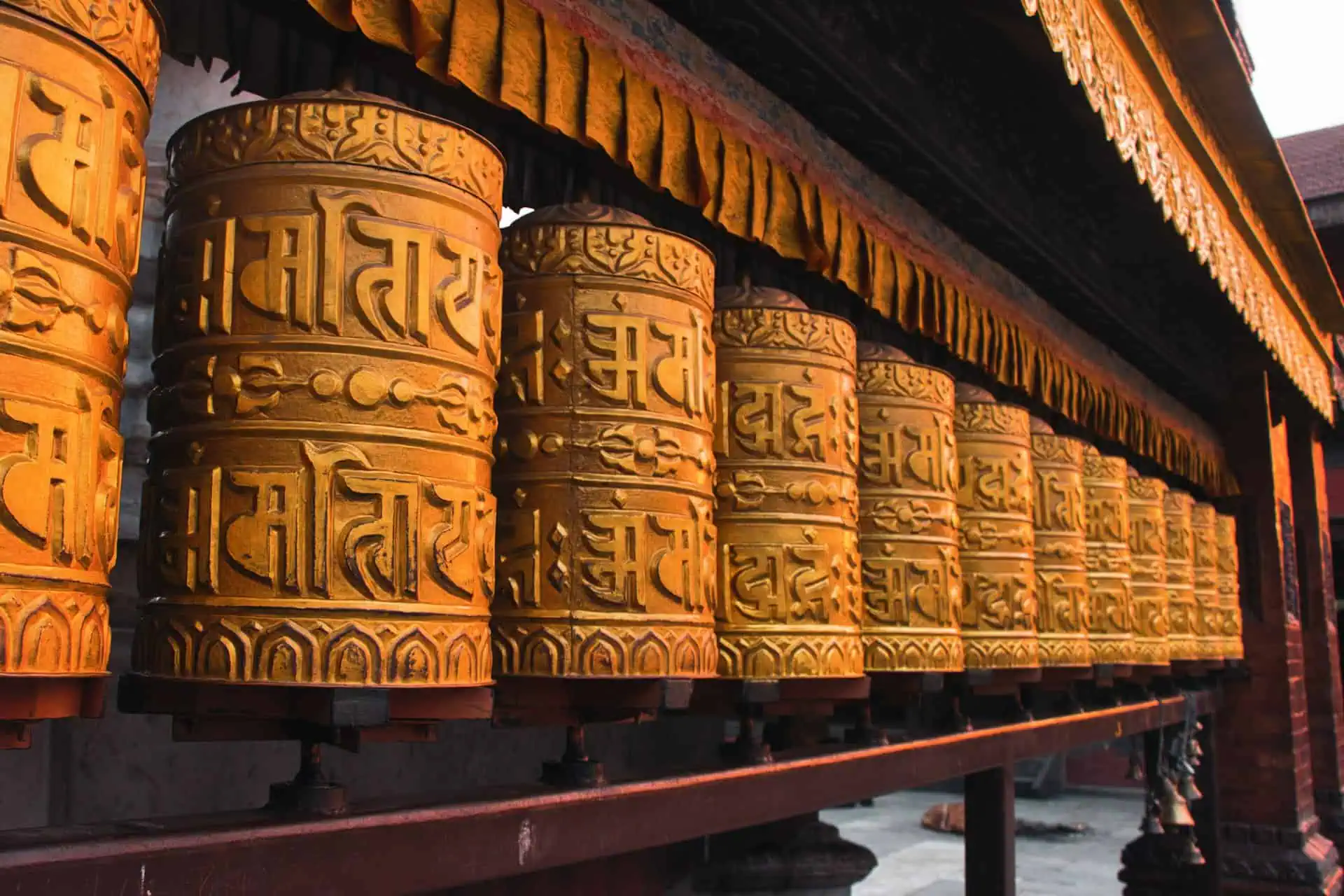
Guangren Temple
Guǎngrén Sì
A slice of Lhasa planted inside Xi'an's wall in 1705 — Shaanxi's only Tibetan Buddhist monastery.
Entry
Free
Hours
Mon–Sun · Summer (May
Time needed
45 min–1½ hours
Metro
Line 1 · Yuxiangmen (玉祥门) · D
Built in 1705 for Tibetan Buddhist envoys to the Qing court, this golden-roofed monastery still tucks a slice of Lhasa into the wall's quiet northwest corner — prayer wheels spinning under a skyline that looks entirely Han Chinese. It's free, uncrowded, and genuinely moving — an easy hour for anyone temple-curious, and a fascinating contrast to the Great Mosque across town.
What you're looking at
Guangren Temple (广仁寺, Guǎngrén Sì) was founded in 1705 under the Kangxi Emperor, when Qing emperors were busy cementing ties with Tibet and Mongolia. It is Shaanxi's only Tibetan Buddhist (Gelug, or "Yellow Hat") monastery — which makes it an anomaly: a piece of the Himalayan world planted inside the most Han of Chinese cities, a fifteen-minute walk from the Muslim Quarter and its thousand years of Islam.
The layout follows the Chinese temple plan — gate, courtyards, halls on a central axis — but everything above eye level is Tibet: gilded roofs, dharma wheels flanked by deer, strings of prayer flags, rows of copper prayer wheels that visitors spin as they pass. The main hall honors Green Tara (绿度母, Lǜ Dùmǔ), the beloved female bodhisattva of compassionate action, to whom this temple is specifically dedicated — rare enough in China that Tibetan pilgrims detour here.
The details to linger on: the Kangxi Emperor's own stele in the entrance pavilion (imperial calligraphy explaining why he built the place), the Tang-dynasty Buddha head preserved inside, the thangka paintings and butter-lamp scent in the side halls, and the ancient trees of the rear courtyard — the calmest corner in the city center. Resident monks still live and chant here; morning prayers are audible if you come early.
Visiting strategy
Come in the morning. The temple opens at 8:00 and for the first hour it's mostly local worshippers lighting incense rather than visitors — the atmosphere is at its best, and you may catch chanting.
How long: 45 minutes to an hour covers it at a thoughtful pace. This is a small complex — the reward is texture, not scale.
Etiquette that matters here: this is a working monastery. Dress modestly (shoulders and knees covered), don't photograph monks or worshippers without asking, step around — never over — thresholds, and spin prayer wheels clockwise. Donation boxes and incense are optional; the small shop selling thangka prints and blessed cords supports the temple.
Pair it with: Baxian An, the city's working Taoist temple, on the old town's east side — together they make a "living religion" half-day that almost no foreign visitor thinks to do. The Great Mosque completes the triangle of Xi'an's three faiths.
Getting there
The temple sits in the northwest corner inside the City Wall, at 152 Northwest 1st Road — a quiet residential lane with no big signage until you're almost there.
- Metro: Line 1 to Yuxiangmen station (玉祥门, exit D), then a 5-minute walk north into the lanes.
- Taxi/DiDi: ¥10–15 from anywhere inside the wall.
- On foot: about 20 minutes northwest from the Bell Tower — a pleasant walk through ordinary old-town streets that tourists never see.
Practical notes
- Cost: free entry, no reservation — just walk in.
- Facilities: basic toilets on site; no café — the little shops on the lane outside sell water and snacks.
- Festivals: around Tibetan New Year (Losar, February/March) the temple fills with pilgrims and butter-sculpture displays — the single most atmospheric day to visit, and the most crowded.
- Kids: fine for a short visit; prayer wheels are child-magnets. Keep voices down in the halls.
- Combine with a wall walk: the northwest corner of the City Wall is the least-visited stretch — cycling it after the temple makes a good quiet-hour pairing.
Questions, answered
Is Guangren Temple worth visiting?
If you have any interest in Tibetan Buddhism or living temples, yes — it's free, central, and unlike anything else in Xi'an. It's a 45-minute visit, so pair it with Baxian An or the Muslim Quarter rather than crossing town for it alone.
What is special about Guangren Temple in Xi'an?
It's Shaanxi's only Tibetan Buddhist monastery, founded in 1705 by the Kangxi Emperor, and dedicated to Green Tara. Gilded roofs, prayer wheels and thangkas — Tibetan religious art in the middle of a Han Chinese old town.
Do you need tickets for Guangren Temple?
No — entry is free and no reservation is needed. It's open roughly 8:00–17:30 daily, last entry around 17:00.
Can tourists visit Guangren Temple, or is it only for worshippers?
Tourists are welcome — it's both an active monastery and an open sight. Visitors just need to behave as guests: modest dress, no photos of monks without permission, quiet in the halls.
Keep exploring
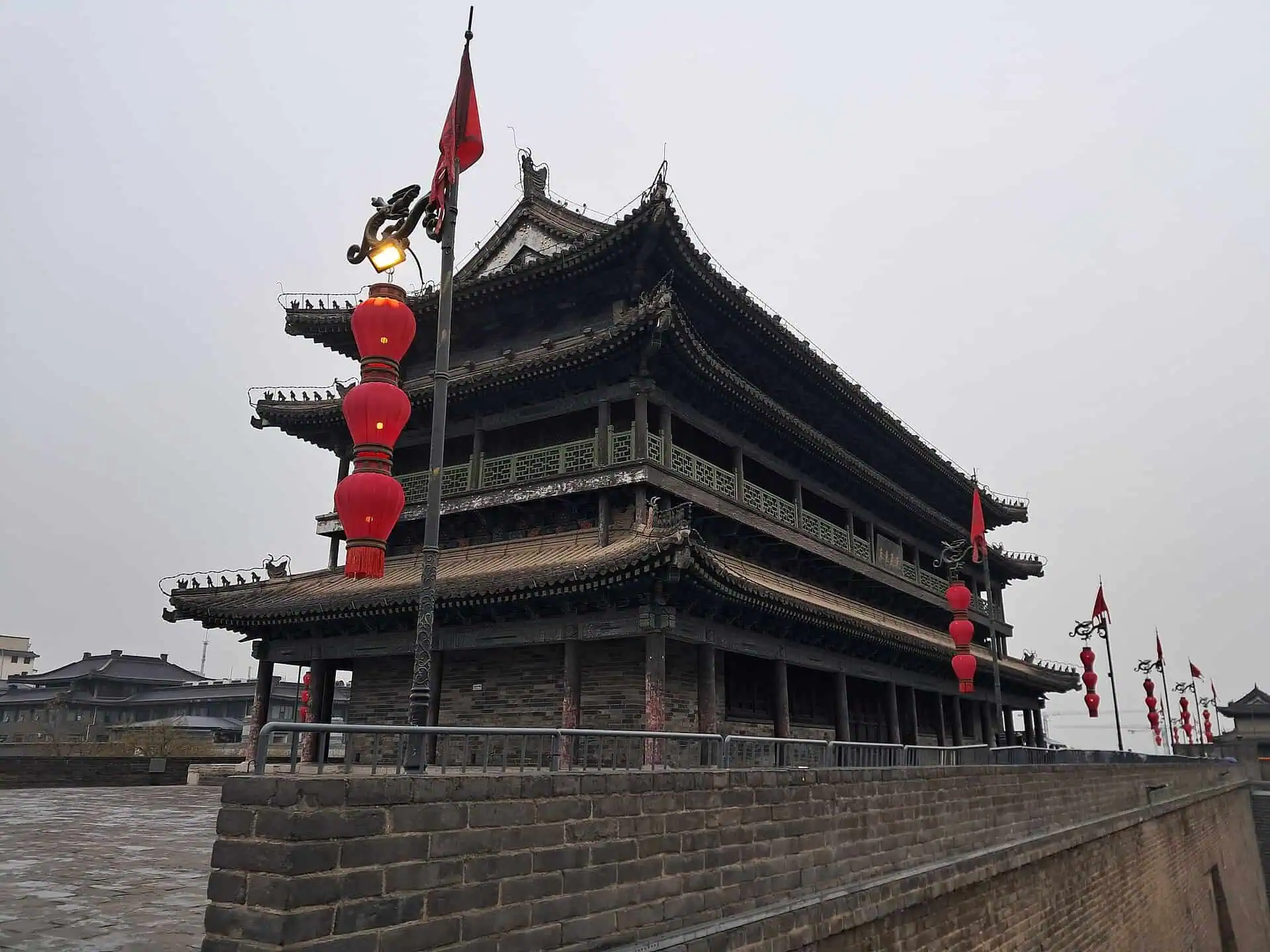
Xi'an City Wall
A 14-kilometer Ming dynasty rectangle you can cycle on top of — 650 years old and still the city's favorite commute.
Learn more →
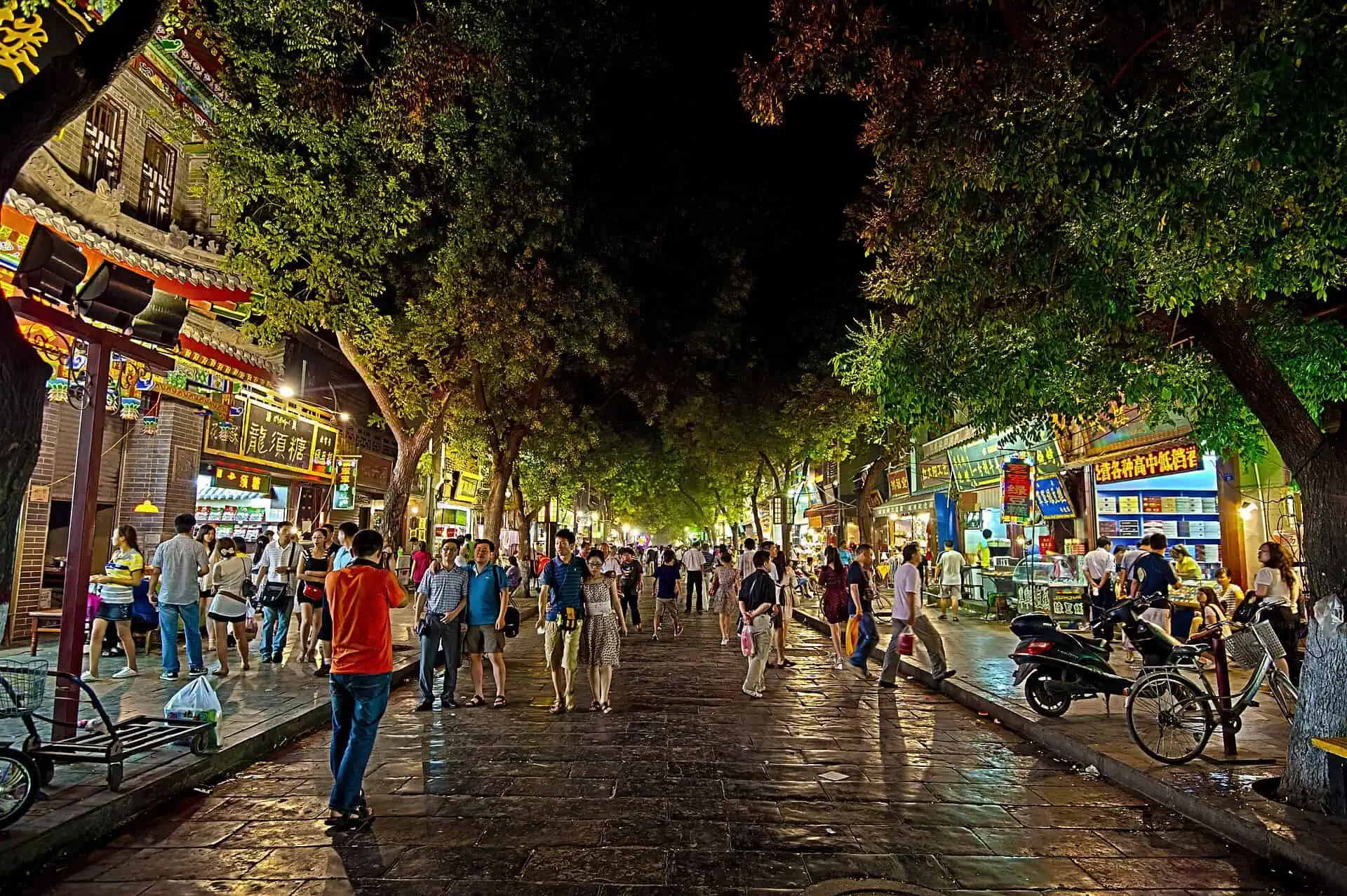
Muslim Quarter
Feeding Xi'an since the 700s — the loudest, smokiest, best-smelling streets of its Hui community.
Learn more →
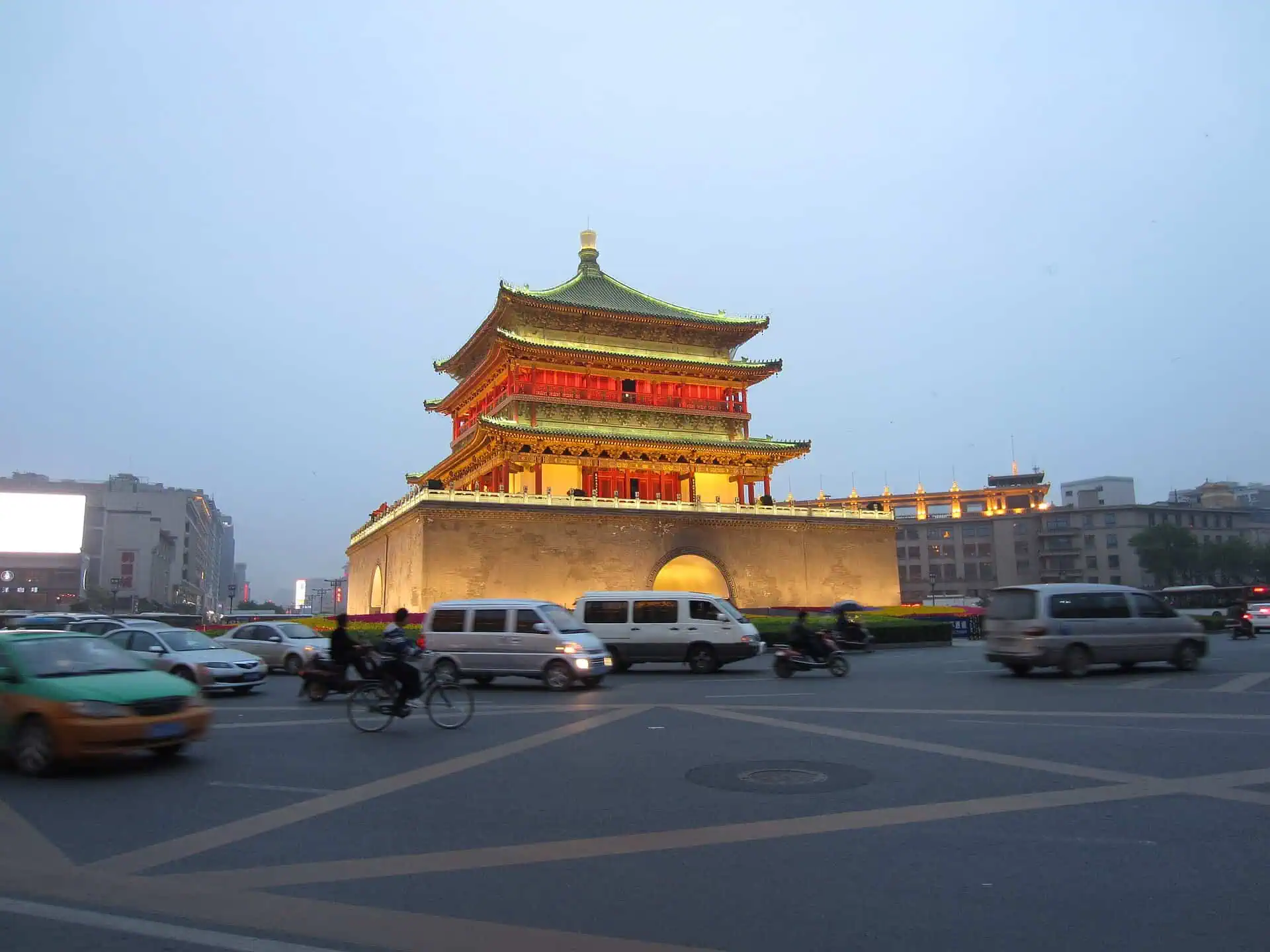
Xi'an Bell Tower
A Ming tower from 1384 at the dead center of the walled city — best admired at dusk, floodlit above the roundabout.
Learn more →