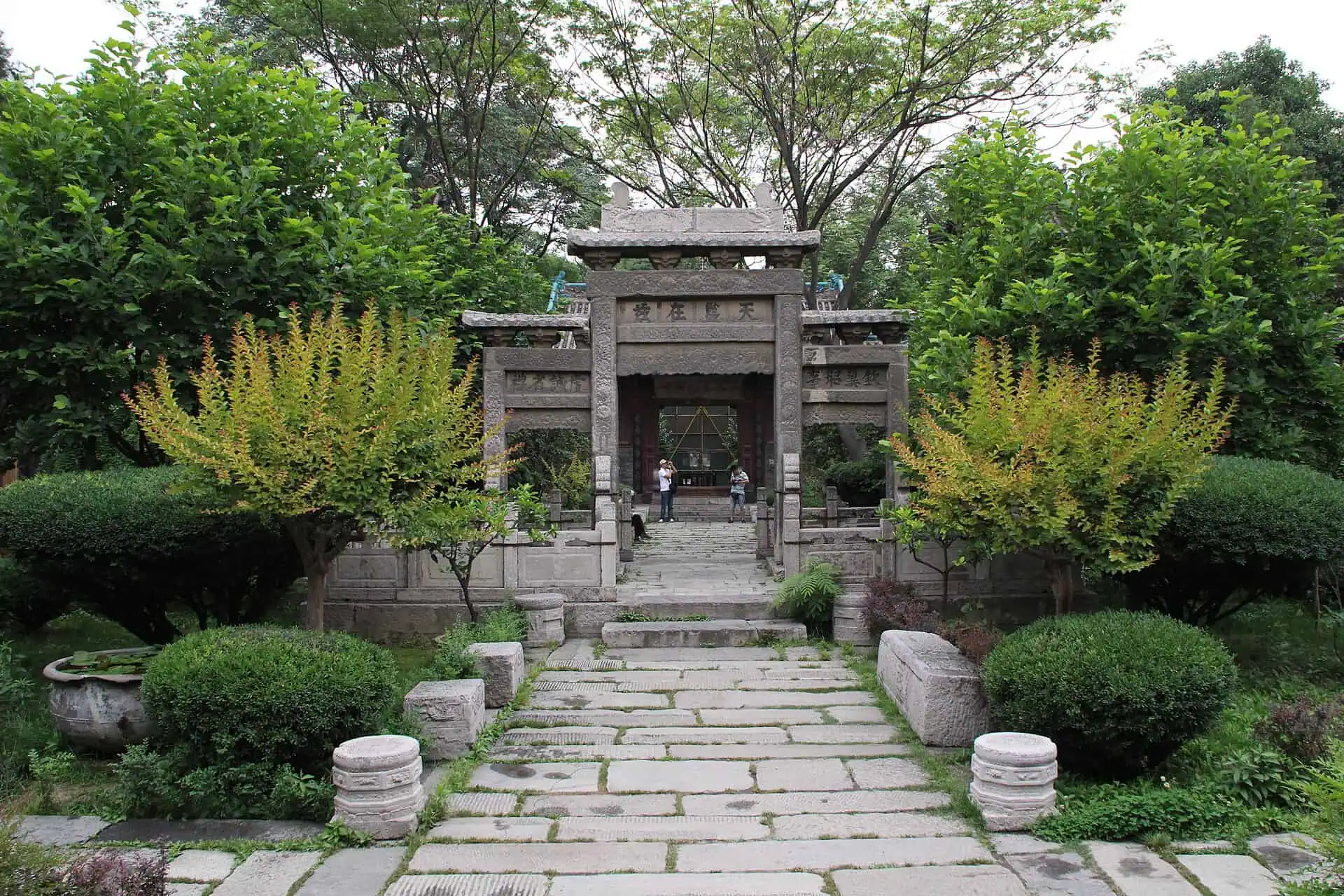
Great Mosque of Xi'an
Huàjuéxiàng Qīngzhēndàsì
A mosque founded under the Tang in 742 AD, dressed as a Chinese garden temple.
Entry
From ¥25
Hours
Mon–Sun · Peak season (May
Time needed
45 min–1½ hours
Metro
Line 2 · Bell Tower (钟楼)
A mosque whose founding is traced back to 742 AD hides down a souvenir lane in the Muslim Quarter — and it's built like no mosque you've seen. The courtyards, pavilions and gardens are pure Chinese temple architecture; the Arabic calligraphy and the west-facing prayer hall tell you what it really is. At ¥25 it's the one paid sight in the quarter that earns its ticket. Remember it's a working mosque: dress modestly and steer clear of prayer times.
What you're looking at
The Great Mosque of Xi'an (化觉巷清真大寺, Huàjuéxiàng Qīngzhēndàsì) is traditionally dated to 742 AD, when Islam was still young and Xi'an was the Tang capital at the end of the Silk Road. The founding is legend-tinged — what you actually walk through today is mostly Ming and Qing construction, rebuilt and expanded between the 14th and 18th centuries. Either way, it ranks among the oldest and best-preserved mosques in China.
The shock is the architecture. There are no domes and no minaret in the Middle Eastern sense. Instead, the mosque unfolds along a Chinese central axis: five courtyards, ornamental gates, tiled roofs with upturned eaves, and gardens. The minaret is the Shengxin Tower (省心楼, Shěngxīn Lóu), a three-story Chinese pavilion. The Phoenix Pavilion (凤凰亭, Fènghuáng Tíng) sits mid-axis like something from a classical garden. Only at the far western end does the building declare itself: a prayer hall with a turquoise-tiled roof, oriented toward Mecca, its walls covered in Arabic calligraphy worked into Chinese-style panels — Koranic verses written with the flourish of brush art.
Stone steles in Chinese and Arabic record centuries of repairs, including one inscribed with calligraphy attributed to the Song master Mi Fu. The whole complex is a physical argument that Islam in China didn't stay foreign — it put down roots and spoke the local architectural language. The mosque remains the religious center of the Hui community that runs the surrounding Muslim Quarter.
Visiting strategy
Worth the ¥25? Yes. The Muslim Quarter outside is free and fun, but it's food and spectacle; the mosque is the substance — the reason this neighborhood exists. If you only pay for one sight in the quarter, make it this one.
Timing. Allow 45–60 minutes, up to 90 if you sit in the gardens. Mid-morning on a weekday is calmest. Avoid Friday roughly 11:30–14:00: the weekly congregational prayer fills the complex, and tourists are asked to keep out of the way or wait. Daily prayers bring smaller, brief restrictions. Ramadan and Eid days are fascinating but crowded, and access rules tighten — be prepared to simply come back later.
Respect the working mosque. This is not a museum with a mosque theme. Worshippers pray here five times a day. The prayer hall itself is reserved for them — look in from the doorway, don't step inside, and never walk in front of someone praying. Photograph the courtyards freely; ask before photographing people.
Finding the gate is half the fun. The entrance hides at the end of Huajue Lane (化觉巷, Huàjuéxiàng), a narrow alley of souvenir stalls running off the Beiyuanmen food street. The lane gets quieter and cheaper as you approach the mosque end.
Getting there
The mosque sits inside the Muslim Quarter, in the lanes northwest of the Drum Tower, at the heart of the old town inside the wall.
- Metro: Line 2 to Bell Tower (钟楼) station, then a 10–15 minute walk — past the Bell Tower, west to the Drum Tower, into the Beiyuanmen food street, then left into Huajue Lane. Follow the souvenir stalls to the small ticket window at the end.
- Taxi/DiDi: ask for 化觉巷清真大寺 or 鼓楼 (Drum Tower). You'll be dropped at the pedestrian-zone edge; the last stretch is on foot either way.
- On foot: an easy add-on to any Muslim Quarter visit — allow the walk through the crowds to take longer than the map suggests.
Practical notes
- Dress code: modest dress is required — cover shoulders and knees. Women are not required to wear a headscarf in the courtyards, but shorts and tank tops will get you turned away or glared at.
- Prayer times: five times daily; the midday Friday prayer is the big one. If you hit a closure, go eat and return — the halal food guide has you covered for the neighborhood.
- If you're coming to pray: admission is free for Muslims — tell the staff at the gate. The Friday congregational prayer (Jumu'ah) begins around 12:50 (Dhuhr time), and the complex fills with local Hui worshippers. Wudu/ablution facilities are on-site, and there's a separate women's prayer area on the 2nd floor of the prayer hall. Prayer times shift with the seasons — check IslamicFinder or MuslimPro for today's Xi'an times. For a free, less-touristy working mosque two lanes away, the Da Xuexi Lane Mosque (西大寺) is the quarter's quiet alternative.
- Tickets: buy at the window at the lane entrance. Payment by WeChat Pay/Alipay is standard — see our payments guide.
- Toilets: basic; the malls around the Bell Tower are a better bet before you dive into the lanes.
- Guides: official site guides sometimes offer short tours near the entrance for a small fee — worthwhile if you want the steles and calligraphy decoded.
- Pairing: the mosque takes under an hour, so fold it into a Muslim Quarter evening — mosque at 16:00, food street at dusk. Our etiquette guide covers the broader do's and don'ts at religious sites in China.
Questions, answered
Can non-Muslims visit the Great Mosque of Xi'an?
Yes. The courtyards, gardens, steles and pavilions are open to ticket-holding visitors of any faith. The main prayer hall is reserved for worshippers — you can look in from the doorway but not enter. Expect restricted access around prayer times, especially midday Friday.
How much does it cost to enter the Great Mosque?
About ¥25 per adult from March to November and ¥15 in the December–February low season; students pay around ¥15 with ID. Buy at the small ticket window where Huajue Lane meets the bazaar — no advance booking needed.
What should I wear to the Great Mosque of Xi'an?
Modest clothing: covered shoulders and knees for everyone. Women don't need a headscarf for the outdoor courtyards, but avoid shorts, short skirts and tank tops. It's an active place of worship, not just a monument.
I'm Muslim — can I pray at the Great Mosque, and do I pay the ¥25?
Yes, and admission is free for Muslims — tell the staff at the gate you've come to pray. It's an active mosque with five daily prayers; the Friday congregational prayer (Jumu'ah) is around 12:50 (Dhuhr time). Wudu/ablution facilities are on-site, and there's a separate women's prayer area on the 2nd floor of the prayer hall. Check IslamicFinder or MuslimPro for exact seasonal prayer times in Xi'an.
How long does a visit to the Great Mosque take?
45–60 minutes covers the five courtyards at a comfortable pace; up to 90 if you linger in the gardens and study the steles. It pairs naturally with the Muslim Quarter food street right outside.
Is the Great Mosque inside the Muslim Quarter?
Yes — it's tucked down Huajue Lane, a narrow souvenir alley off the Beiyuanmen food street behind the Drum Tower. The gate is easy to miss: walk the lane to its quieter far end and look for the ticket window.
When was the Great Mosque of Xi'an built?
Tradition dates the founding to 742 AD, early Tang dynasty, which would make it one of China's oldest mosques. The buildings standing today are mostly Ming and Qing dynasty work (14th–18th centuries), repeatedly rebuilt and restored on the ancient site.
Keep exploring
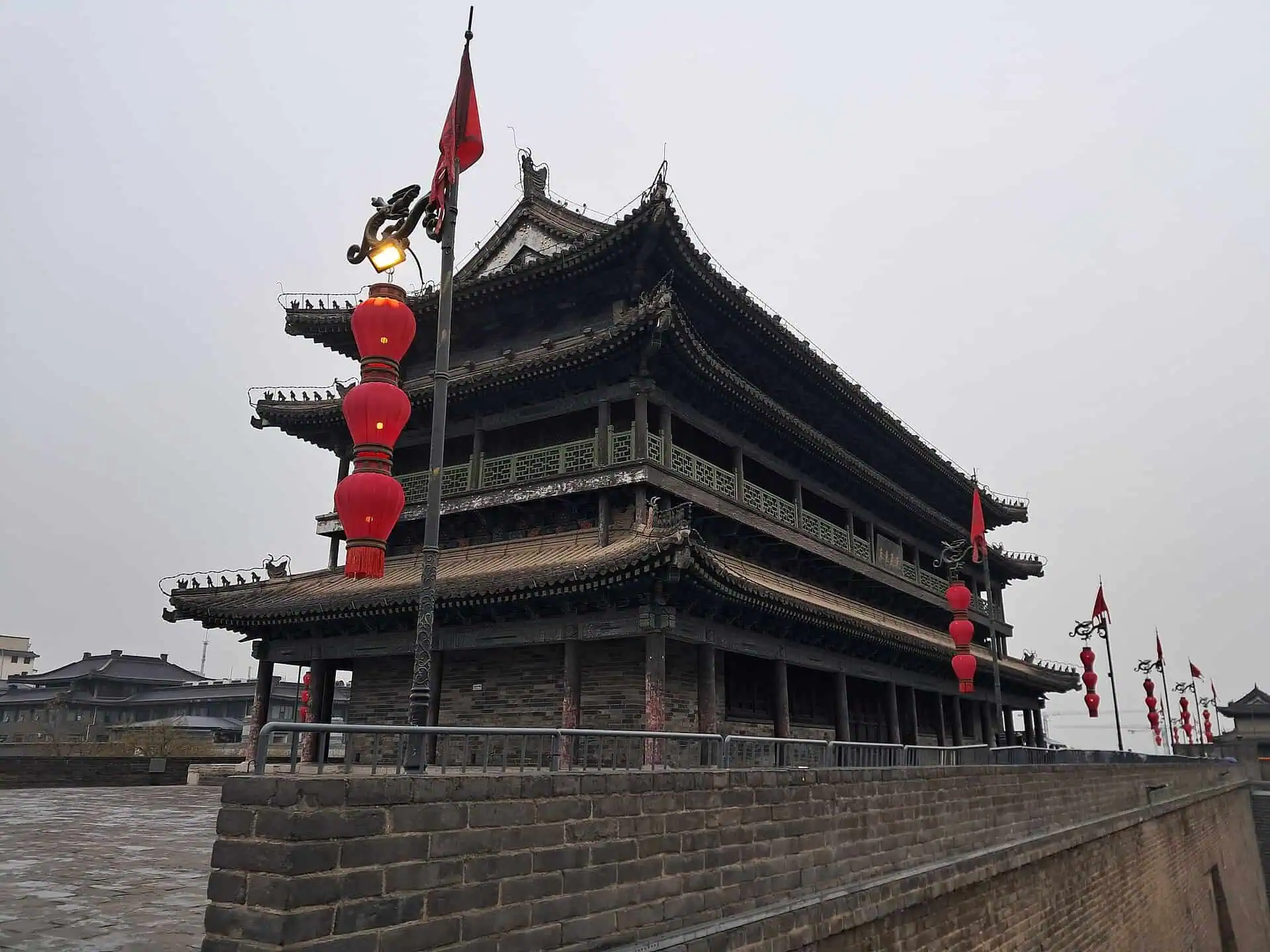
Xi'an City Wall
A 14-kilometer Ming dynasty rectangle you can cycle on top of — 650 years old and still the city's favorite commute.
Learn more →
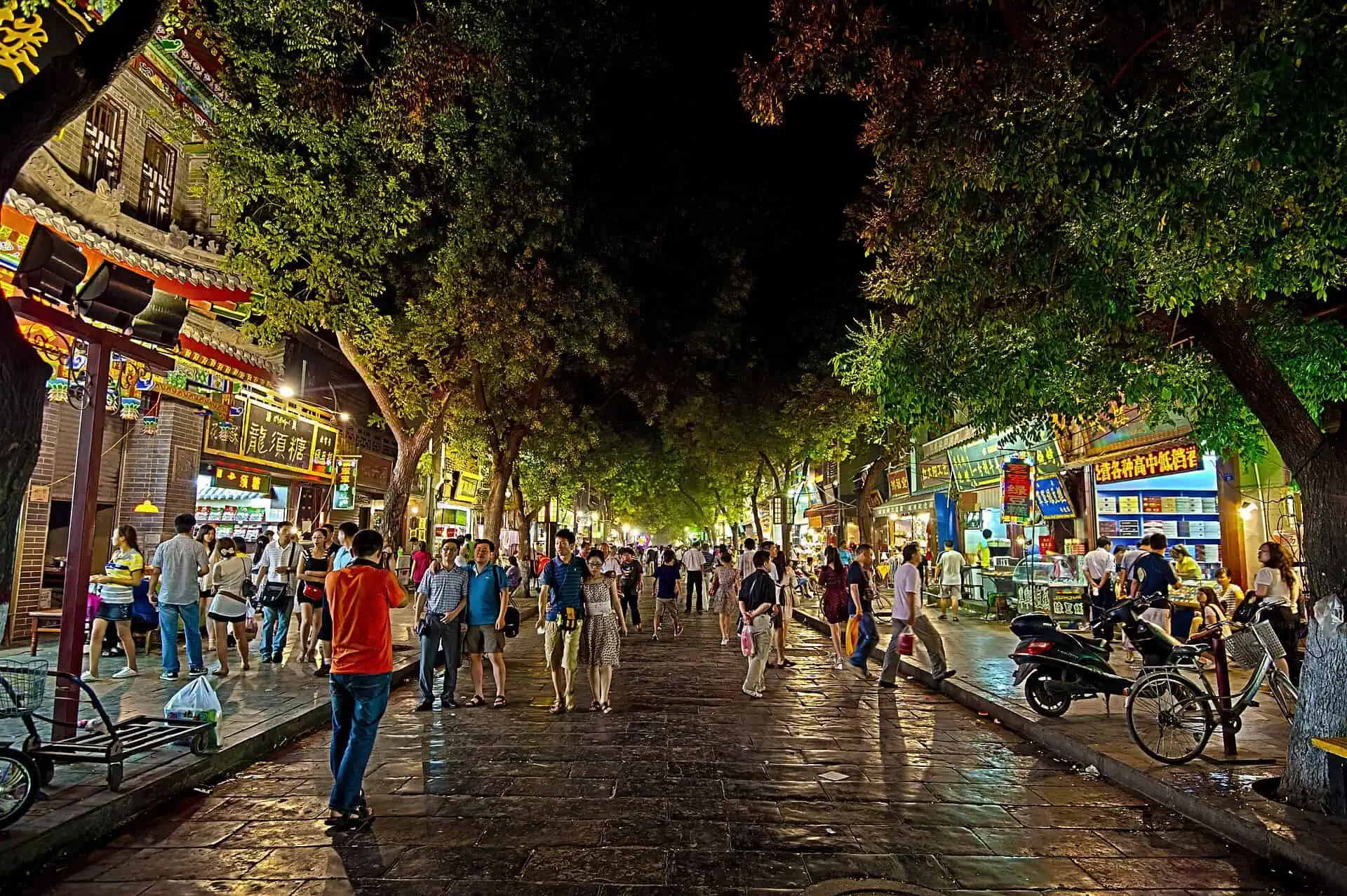
Muslim Quarter
Feeding Xi'an since the 700s — the loudest, smokiest, best-smelling streets of its Hui community.
Learn more →
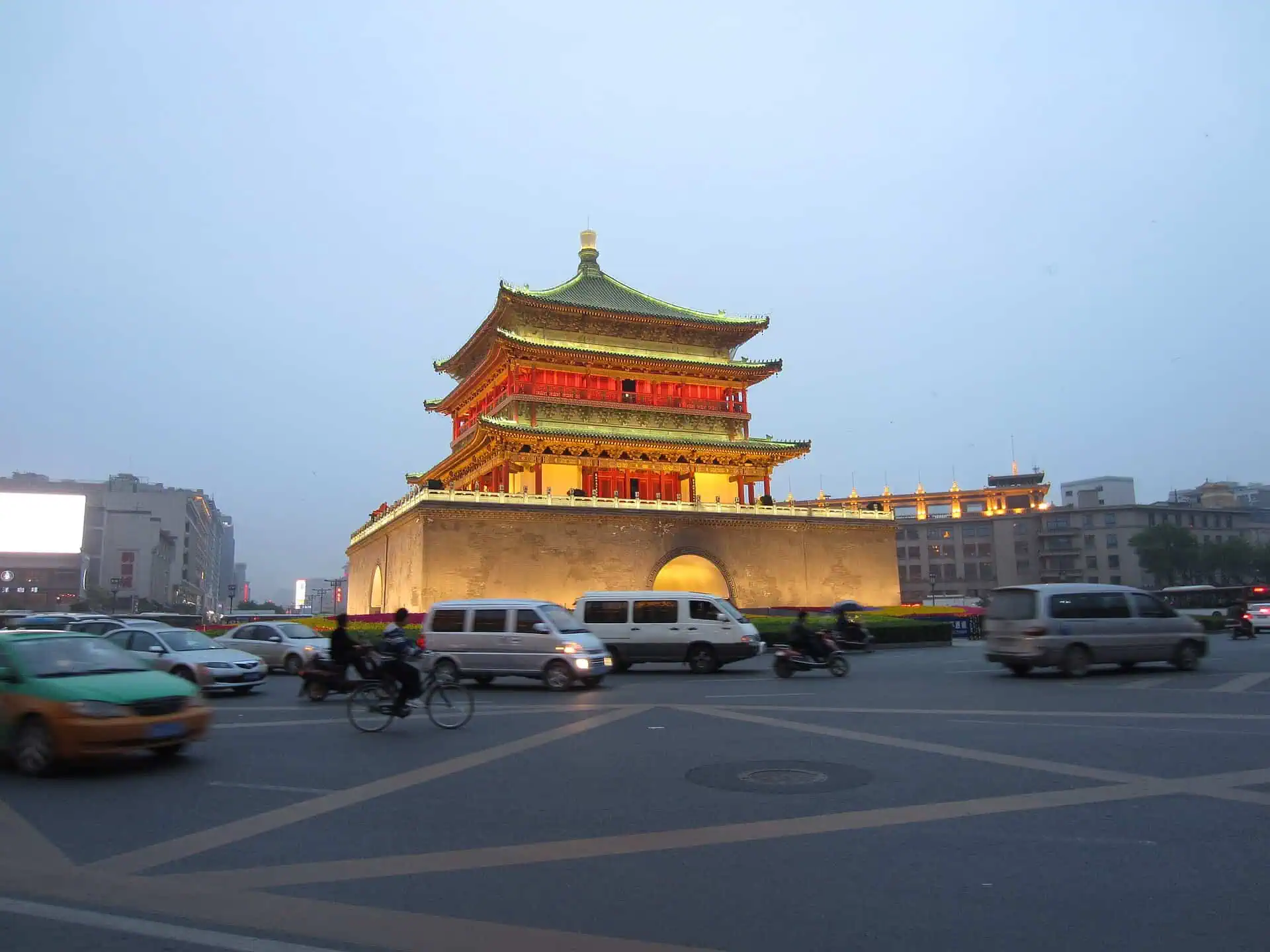
Xi'an Bell Tower
A Ming tower from 1384 at the dead center of the walled city — best admired at dusk, floodlit above the roundabout.
Learn more →
Related stories
Etiquette in Xi'an: what actually matters
Most China etiquette advice is written for business dinners, not tourists. The real list is short: one chopstick taboo, a young-and-imperfect queue culture, some camera manners, and a simple money rule — bargain at stalls, tip nowhere. Here's how to move through Xi'an without stepping on anyone.
Halal eating in Xi'an
In most Chinese cities, halal travelers hunt restaurant by restaurant. In Xi'an you pick a neighborhood instead: the Hui Muslim community has been cooking here since the Tang dynasty, an entire district behind the Drum Tower sells no pork at all, and several of the city's signature dishes are halal by birth. Here's how to read the signs, what to eat, and what to watch for outside the quarter.
Nightlife & craft beer in Xi'an
Xi'an is not Shanghai — nobody flies here for the clubs. But the city has bar streets with real history clustered around the South Gate, a small but genuine craft beer scene, a working livehouse circuit, and KTV as a full-contact local pastime. Here's what's actually worth your evening, what it costs, and what to skip.
The Hui community and Islam in Xi'an
What to pack for Xi'an: a consolidated, season-by-season checklist
Xi'an punishes over-packers and rewards layers. The city runs from furnace-hot summers (35°C+) to cold, dry winters (lows around −5°C), with spring and autumn as the mild sweet spot — so the clothing list changes entirely with the month. The non-negotiables barely change at all: pocket tissues for paperless toilets, a mask for winter air, a refillable bottle, and your passport, which doubles as your ticket at the big sights. Here's the whole list in one place.
Is Xi'an safe for solo and women travelers? An honest answer
By the consensus of Western travel writing, Xi'an is one of the safer major Chinese cities for people traveling alone — violent crime against tourists is rare, and women walking at night inside the city wall report few problems. The risks worth planning for are mundane ones: pickpockets in the Muslim Quarter and Terracotta Army queues, scam touts, and the logistics of getting around without fluent Mandarin. Here is an honest, specific assessment — the reassurance and the caveats.
On video
Xi'an on video
What this place looks like on video.