Daxuexi Lane
Dàxuéxí Xiàng
A 1,300-year-old mosque and the city's best sauce-glazed beef skewers, down one scruffy lane behind the Muslim Quarter.
Entry
Free
Hours
Mon–Sun · lane open 24h; mosque roughly 8:00
Time needed
45 min–1½ hours
Metro
Line 6 · Guangji Street (广济街)
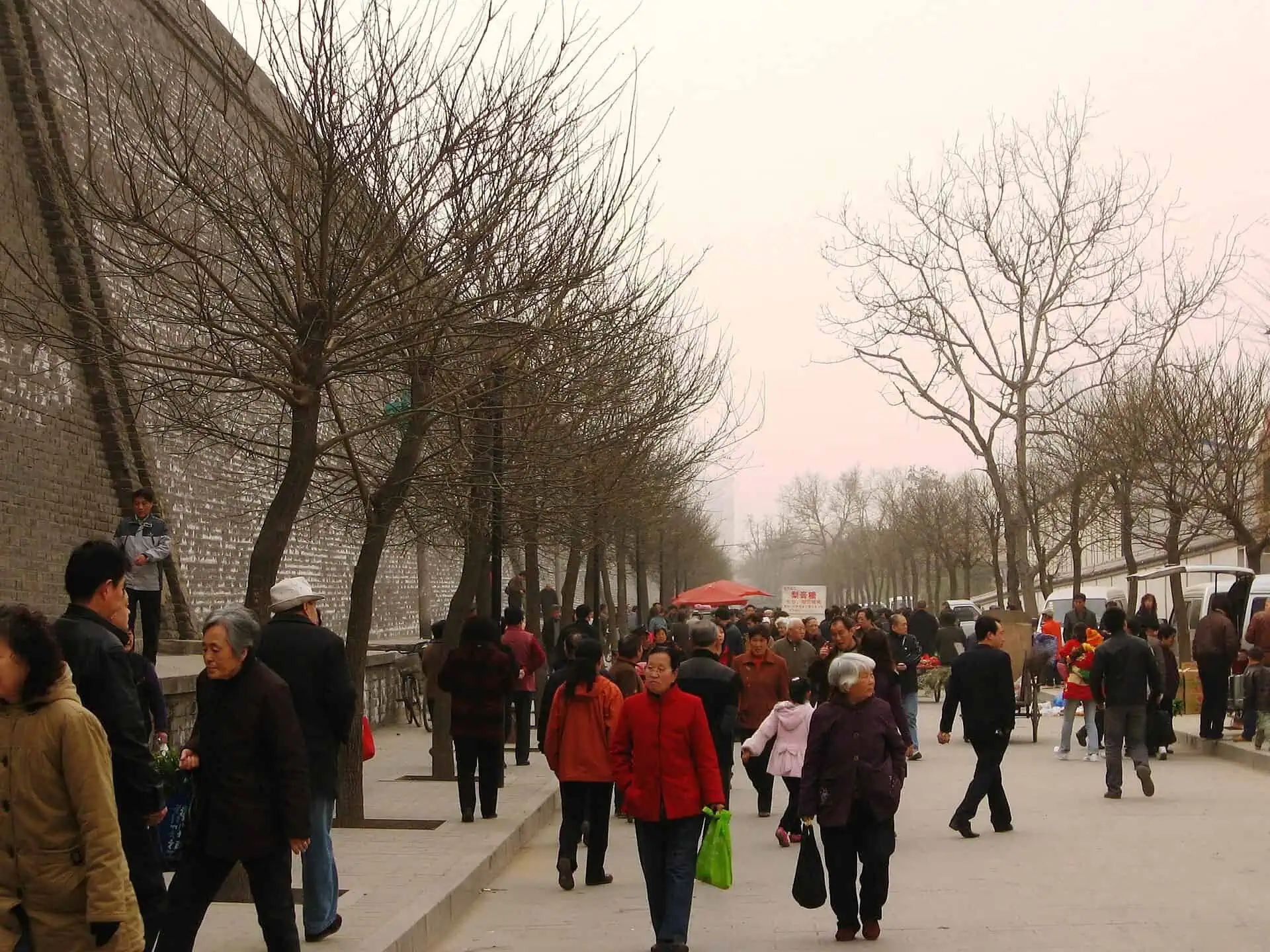
Daxuexi Lane (大学习巷, Dàxuéxí Xiàng — "Great Learning Lane") is the Muslim Quarter with the tourist layer scraped off: a working lane of grill shops and barbers, with Xi'an's oldest mosque — founded, its steles say, in 705 AD — halfway up it. Don't expect the Great Mosque's manicured courtyards or any English; the reward is a neighborhood mosque in daily use and skewers locals queue for. Worth the detour if the polished quarter left you cold.
What you're looking at
The lane's name is a piece of Tang-dynasty memory: legend holds that foreign envoys and students from the western regions were quartered here to learn Tang court ritual — literally, to study. The community stayed, and the lane has been Muslim ever since.
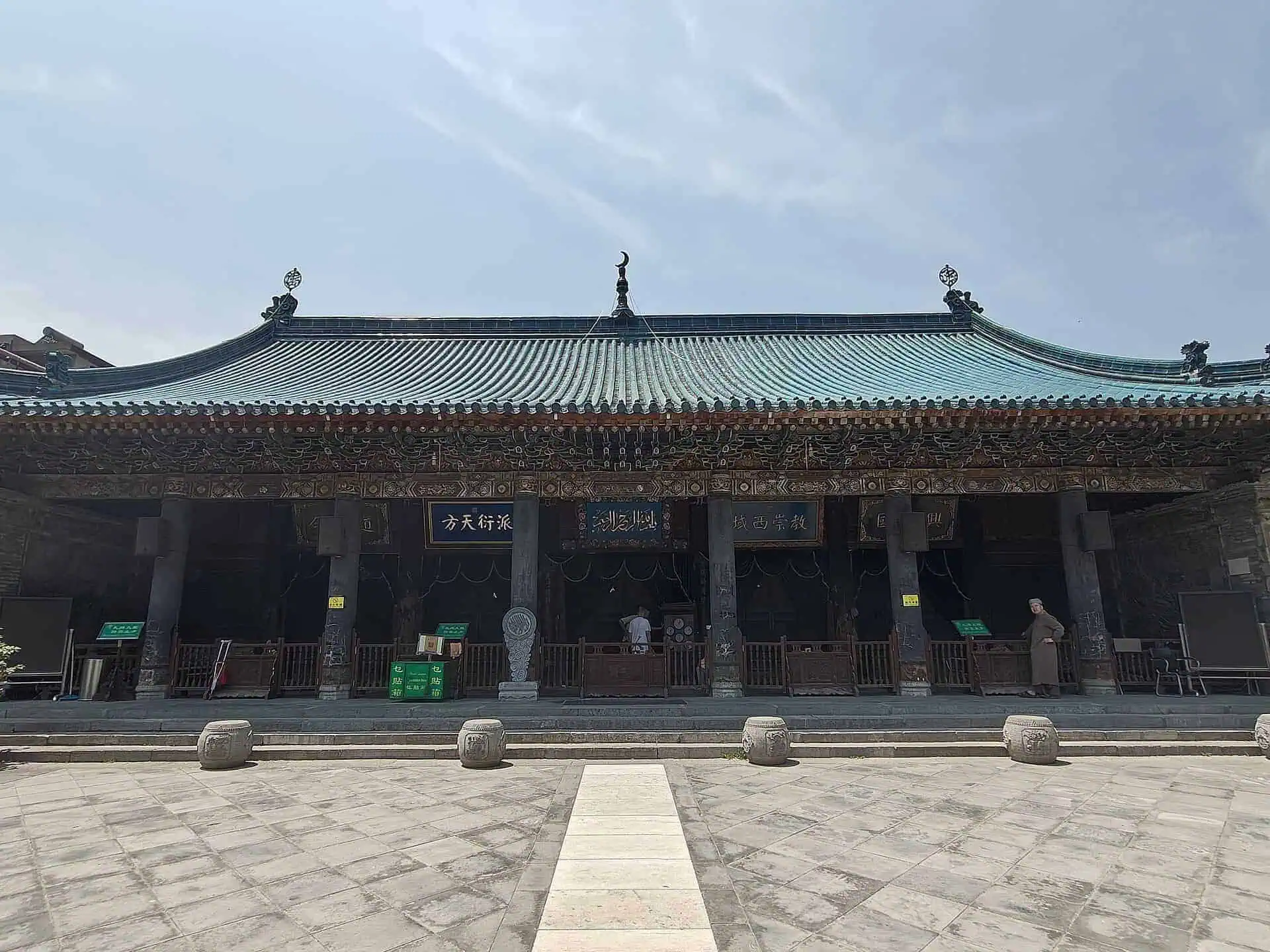
Halfway up, behind a modest gate, stands the Daxuexi Lane Mosque (大学习巷清真寺) — the "West Great Mosque" to locals. Stone inscriptions inside date its founding to 705 AD, which would make it Xi'an's oldest mosque, older in origin than the famous Great Mosque across the quarter. Admiral Zheng He — himself a Muslim — is said to have sponsored a rebuilding in 1413. Architecturally it's the classic Chinese-mosque sleight of hand: timber halls with tiled roofs and courtyard axes that read as pure temple, until you notice the Arabic calligraphy where a Buddhist hall would hang Sanskrit, and the prayer hall facing west instead of south.
Around it, the lane does what Hui lanes do: feeds people. Daxuexi Lane is known among locals for 酱汁烤肉 (jiàngzhī kǎoròu) — beef and tendon skewers brushed with a dark savory sauce rather than just cumin and chili, eaten with flatbread. For the community's thousand-year backstory, read the Hui of Xi'an.
Visiting strategy
Come late afternoon into evening. See the mosque between prayer times (mid-afternoon is a safe window), then eat as the grills light up toward 18:00.
Mosque etiquette: this is a working congregation, not a ticketed sight — it's free and visitors are generally welcome in the courtyards outside prayer times. Cover shoulders and knees, keep out of the prayer hall during services, don't photograph worshippers, and ask before entering any hall interior. Friday midday, give the whole thing a miss.
Eating: skewers are ordered by the handful and priced per stick — point at what the next table is having. A sauce-skewer dinner with flatbread and sour-plum drink runs about ¥40 a head.
Pair it with: the City God Temple is five minutes east on West Avenue — an easy Taoist-to-Muslim diptych — and Sajinqiao's food street is a ten-minute walk north.
Getting there
The lane runs north off West Avenue (西大街), just west of the Guangji Street crossing, deep inside the Muslim Quarter's southwest corner.
- Metro: Line 6 to Guangji Street station (广济街), then a 5-minute walk west along West Avenue to the lane entrance.
- On foot: about 12 minutes southwest of the Bell Tower.
- Taxi/DiDi: ask for the lane mouth on West Avenue — drivers know 大学习巷口. Under ¥15 from anywhere inside the wall.
Practical notes
- Cost: free — both the lane and the mosque.
- Language: no English signage, no English menus. Pointing works; our ordering food guide covers the gestures.
- Halal: the entire lane is halal — no pork, and bringing beer from outside is poor manners. More in our halal guide.
- Lighting: the lane is dim after dark and scooters thread through it; watch your step and your kids.
- Photography: fine on the street and in the mosque courtyard; never during prayers.
Questions, answered
Can non-Muslims visit the Daxuexi Lane Mosque?
Yes — it's free and visitors are welcome in the courtyards outside prayer times, dressed modestly. The prayer hall itself is for worshippers; don't enter during services or photograph people praying. Friday midday, skip the visit entirely.
How is it different from the Great Mosque?
The Great Mosque is grander — walled garden courtyards, ticketed entry, tour groups. Daxuexi Lane Mosque is older by its founding date (705 AD), smaller, free, and functioning as a pure neighborhood mosque. See both; they're a ten-minute walk apart.
What is Daxuexi Lane famous for eating?
Sauce-glazed grilled skewers (酱汁烤肉) — beef and tendon brushed with a savory sauce instead of the usual cumin-chili dust, wrapped in flatbread. Several old grill shops on the lane have loyal local followings.
Why is it called 'Great Learning Lane'?
Legend says Tang-dynasty Chang'an quartered foreign envoys and students here to learn court ritual — the „great learning.” The Muslim community that grew from those western residents never left, and the name stuck for 1,300 years.
Keep exploring
Xi'an City Wall
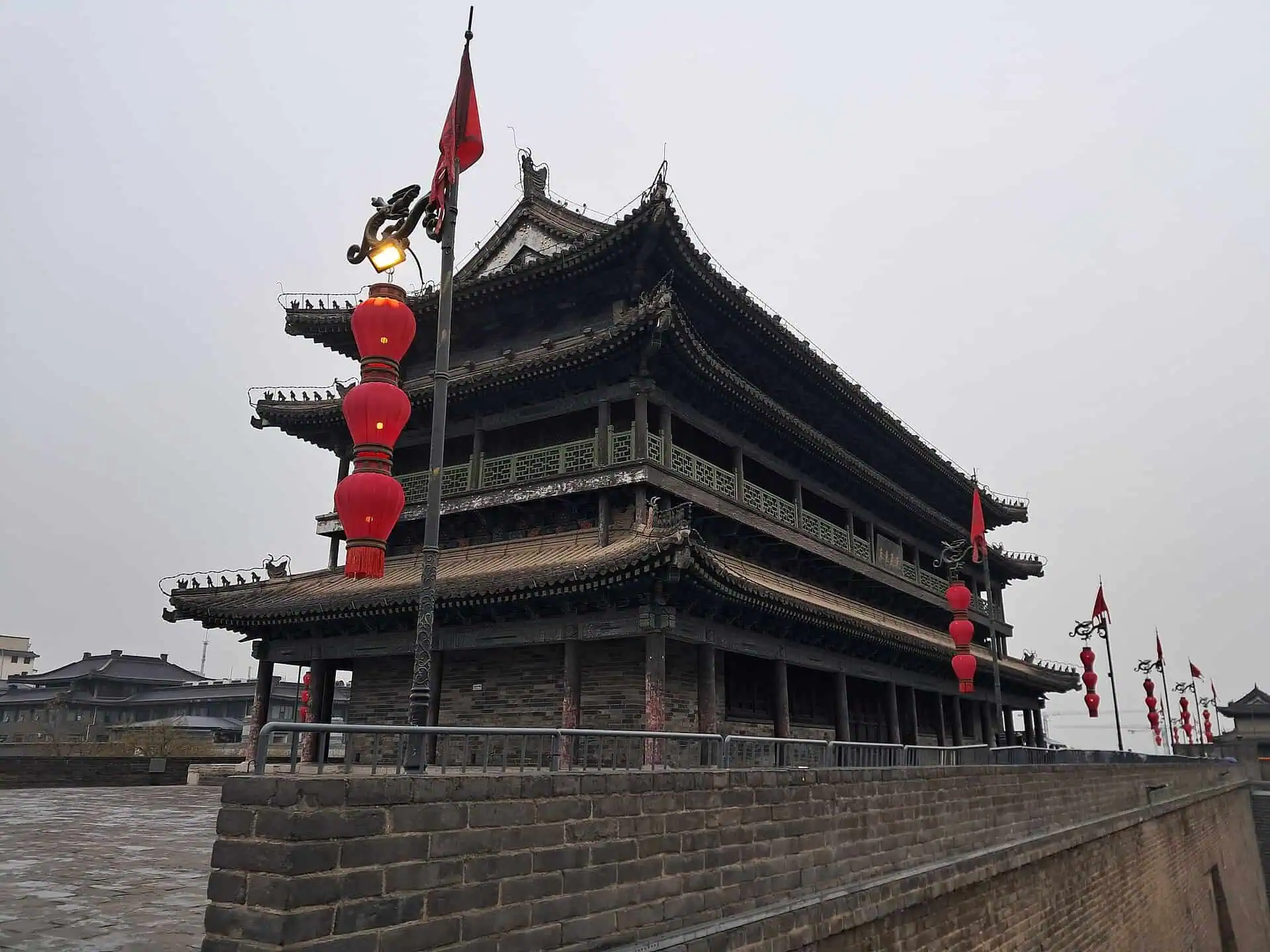
A 14-kilometer Ming dynasty rectangle you can cycle on top of — 650 years old and still the city's favorite commute.
Learn more →
Muslim Quarter
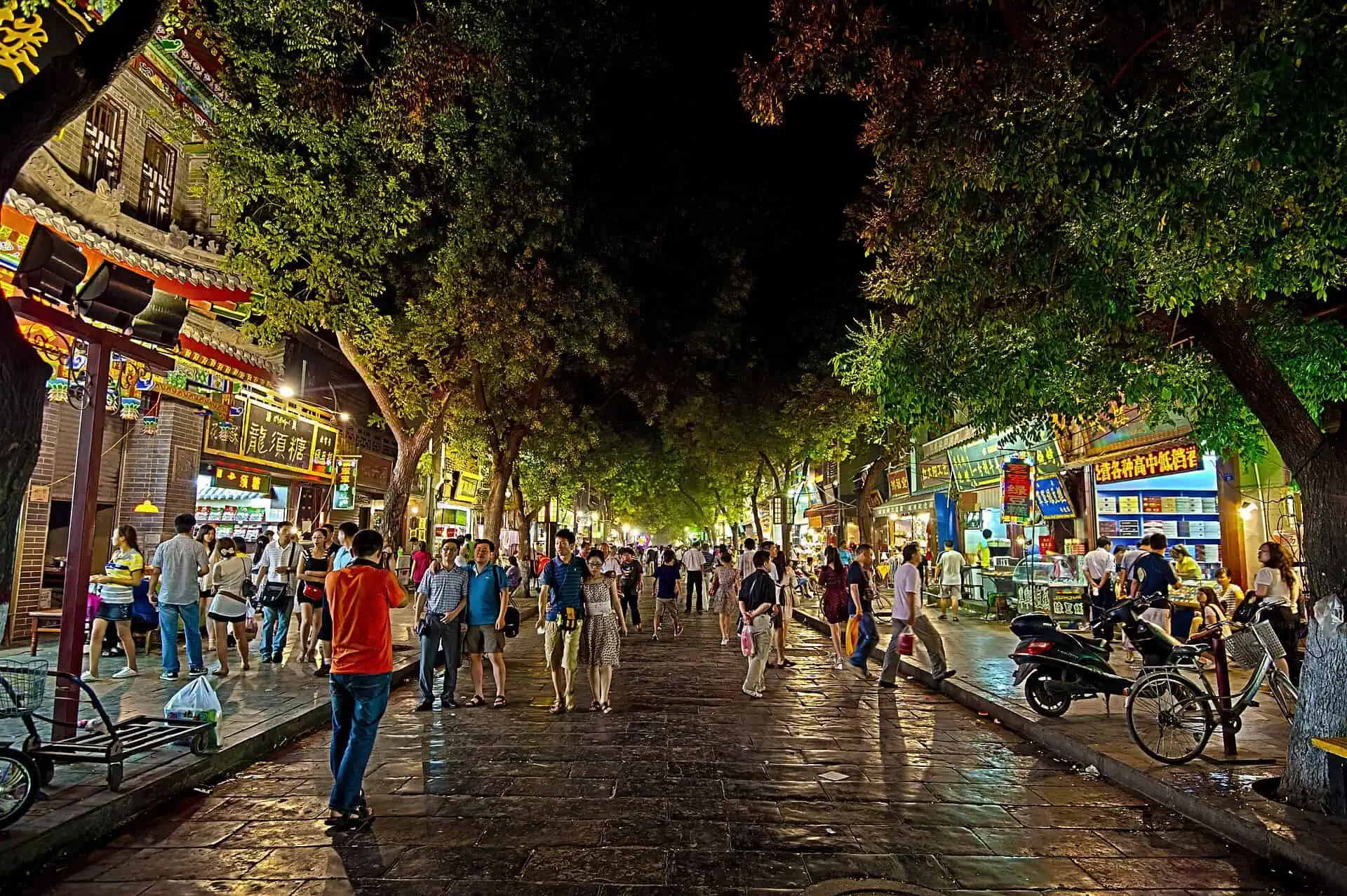
Feeding Xi'an since the 700s — the loudest, smokiest, best-smelling streets of its Hui community.
Learn more →
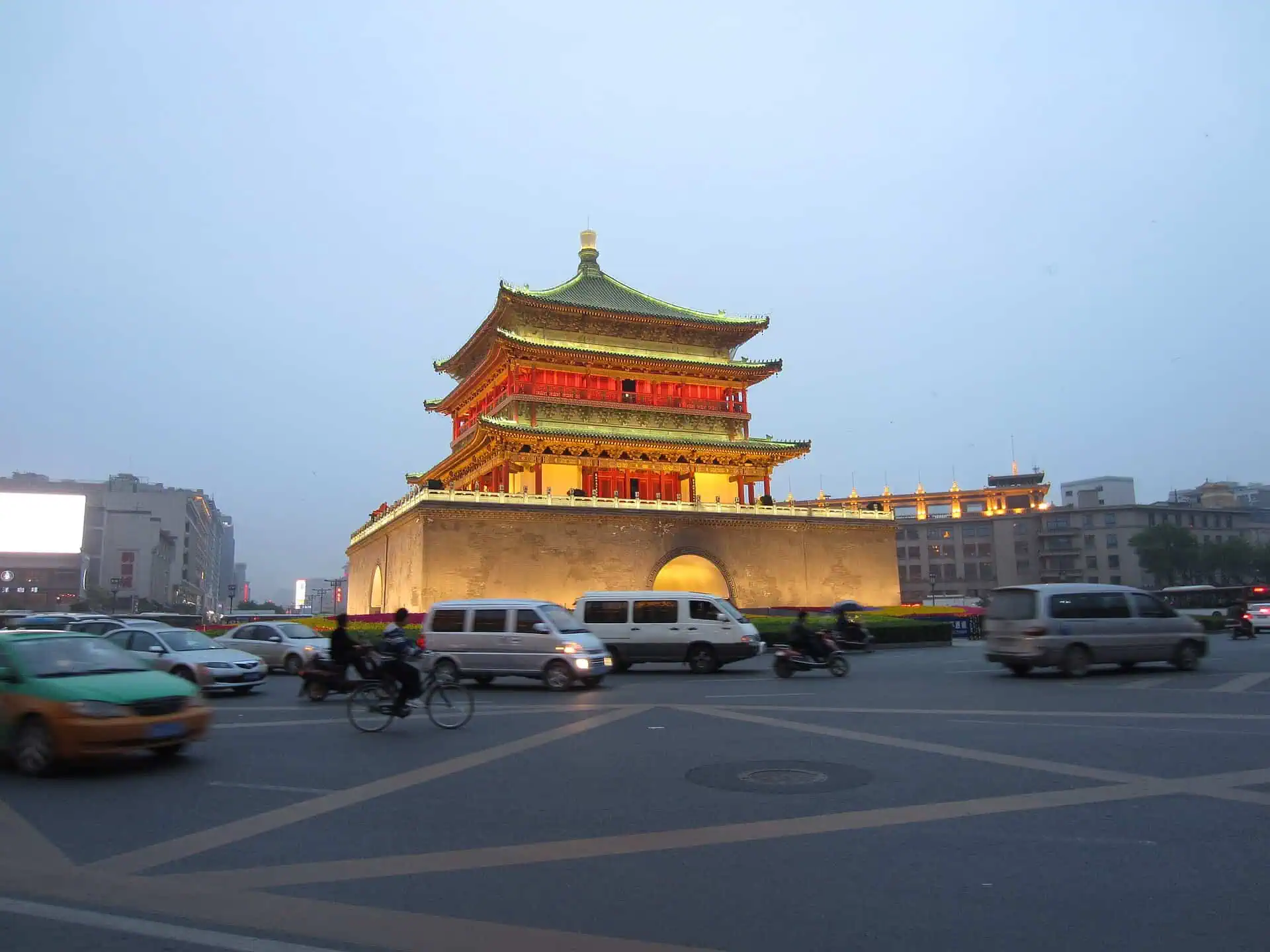
Xi'an Bell Tower
A Ming tower from 1384 at the dead center of the walled city — best admired at dusk, floodlit above the roundabout.
Learn more →
Related stories
Halal eating in Xi'an
In most Chinese cities, halal travelers hunt restaurant by restaurant. In Xi'an you pick a neighborhood instead: the Hui Muslim community has been cooking here since the Tang dynasty, an entire district behind the Drum Tower sells no pork at all, and several of the city's signature dishes are halal by birth. Here's how to read the signs, what to eat, and what to watch for outside the quarter.