Xi'an City God Temple
Dūchénghuáng Miào
Six hundred years of divine city administration, a plaque that became Xi'an's favorite joke, and the old town's best incense alley — free on West Avenue.
Entry
Free
Hours
Mon–Sun · 8:30
Time needed
30 min–1 hours
Metro
Line 6 · Guangji Street (广济街) · A1
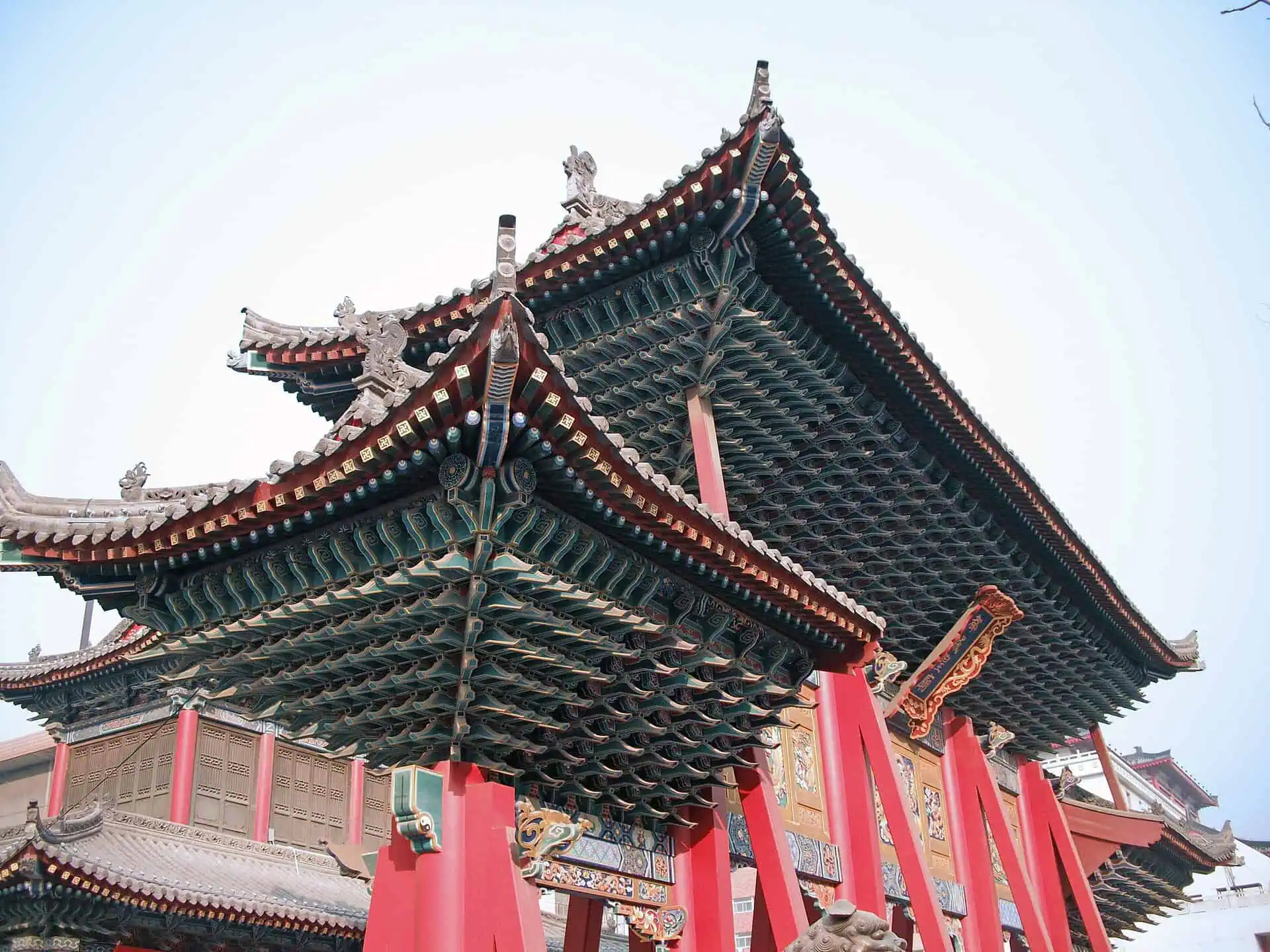
The Duchenghuang Miao (都城隍庙, Dūchénghuáng Miào) is no ordinary city god temple: founded in 1387, it once governed the city gods of the entire northwest, ranking with Beijing and Nanjing as one of China's three 'capital' temples. Fire and time shrank it to a fraction of its Ming footprint, so manage expectations — what remains is essentially one magnificent hall, some archways, and a superb little market lane of incense and ritual goods. Thirty to forty-five minutes, free, and best folded into a Muslim Quarter wander rather than a trip of its own.
What you're looking at
Every Chinese city once had a city god — a divine magistrate handling the spiritual paperwork of the dead, the doomed and the wronged. Xi'an's was promoted: this temple, founded in 1387 under the Hongwu Emperor and moved to this site in 1432, was the capital-level (都, dū) city god temple overseeing the whole northwest, one of only three in the empire. The god on duty is Ji Xin (纪信), the Han general who dressed as his lord Liu Bang and rode out to die in his place — burned alive by Xiang Yu for the deception. Loyalty made him a god; Xi'an made him its own.
The compound burned in 1723 and was famously rebuilt with timber salvaged from the dismantled Ming Prince of Qin palace. What survived the centuries is the main hall with its rare hipped roof and blue glazed tiles — a serious piece of Ming architecture standing in a shopping district. The full backstory sits within our short history of Xi'an.
Then there's the plaque. The great paifang on West Avenue, the temple's front door, carries four characters: 你来了么 — "So… you've come?" It's meant as a moral prompt (the god has been watching your conduct), but in deadpan Xi'an humor it reads like the city god checking you in at reception. Deeper in, a second archway answers: 来了就好 — "Good that you're here." Locals love it; it's become the city's best-known temple meme.
Visiting strategy
Thirty to forty-five minutes covers it. Enter through the paifang off West Avenue, work up the axis to the main hall, read the plaques, watch the incense traffic. Mornings see the most worshippers; the smoke and the murmured business with the god are the atmosphere.
Don't skip the approach lane. The alley feeding the temple from the street is a miniature market of religious goods — incense coils the size of truck tires, spirit money, candles, talismans, brass statues. It's one of the more photogenic working lanes in the old town, and it costs nothing.
Pair it with: Daxuexi Lane and its ancient mosque are five minutes west — Taoism and Islam in one hour. Add Baxian An, the city's big working Taoist monastery, on another day if temple culture grabs you. The Muslim Quarter main lanes are a short walk north for lunch.
Getting there
The temple sits directly on West Avenue (西大街), the old town's main east-west street, at number 129 — look for the towering paifang.
- Metro: Line 6 to Guangji Street station (广济街, exit A1) — you surface practically at the gate.
- On foot: 10 minutes west of the Bell Tower along West Avenue.
- Taxi/DiDi: under ¥15 from anywhere inside the wall.
Practical notes
- Cost: free, no reservation. Incense and donation boxes are optional; fortune-tellers outside are not part of the temple — a polite no suffices.
- Etiquette: working temple — step over thresholds, keep quiet in the halls, photograph the architecture freely but ask before shooting worshippers or altar interiors.
- Smoke: the incense volume is real; if you're asthmatic, keep to the outer courtyards.
- Facilities: no visitor facilities to speak of; cafés and toilets are along West Avenue.
- Festivals: Chinese New Year and the city god's birthday (dates shift with the lunar calendar) bring opera performances and crowds — atmospheric but packed.
Questions, answered
What does the '你来了么' plaque mean at Xi'an's City God Temple?
It reads „So… you've come?” — a traditional moral prompt meaning the city god has been watching your behavior all along. Xi'an people read it with a straight face as the god greeting you at the door, and it's become a beloved local joke. A second archway inside answers: 来了就好, „Good that you're here.”
Is the Xi'an City God Temple free?
Yes — entry is free and no reservation is needed. It's open roughly 8:30–17:30 daily, right on West Avenue by Guangji Street metro station.
What is a city god temple, exactly?
The city god (城隍, chénghuáng) was a city's divine magistrate in Chinese folk and Taoist belief — handling the souls of the local dead and judging earthly wrongs. Xi'an's temple was 'capital' rank, supervising the city gods of the whole northwest; the god honored here is Ji Xin, a Han general who died saving Liu Bang.
How long do you need at the City God Temple?
Thirty to forty-five minutes, including the incense-goods alley outside. It's a single-axis compound much reduced from its Ming scale — fold it into a Muslim Quarter or West Avenue walk rather than dedicating a trip.
Keep exploring
Xi'an City Wall
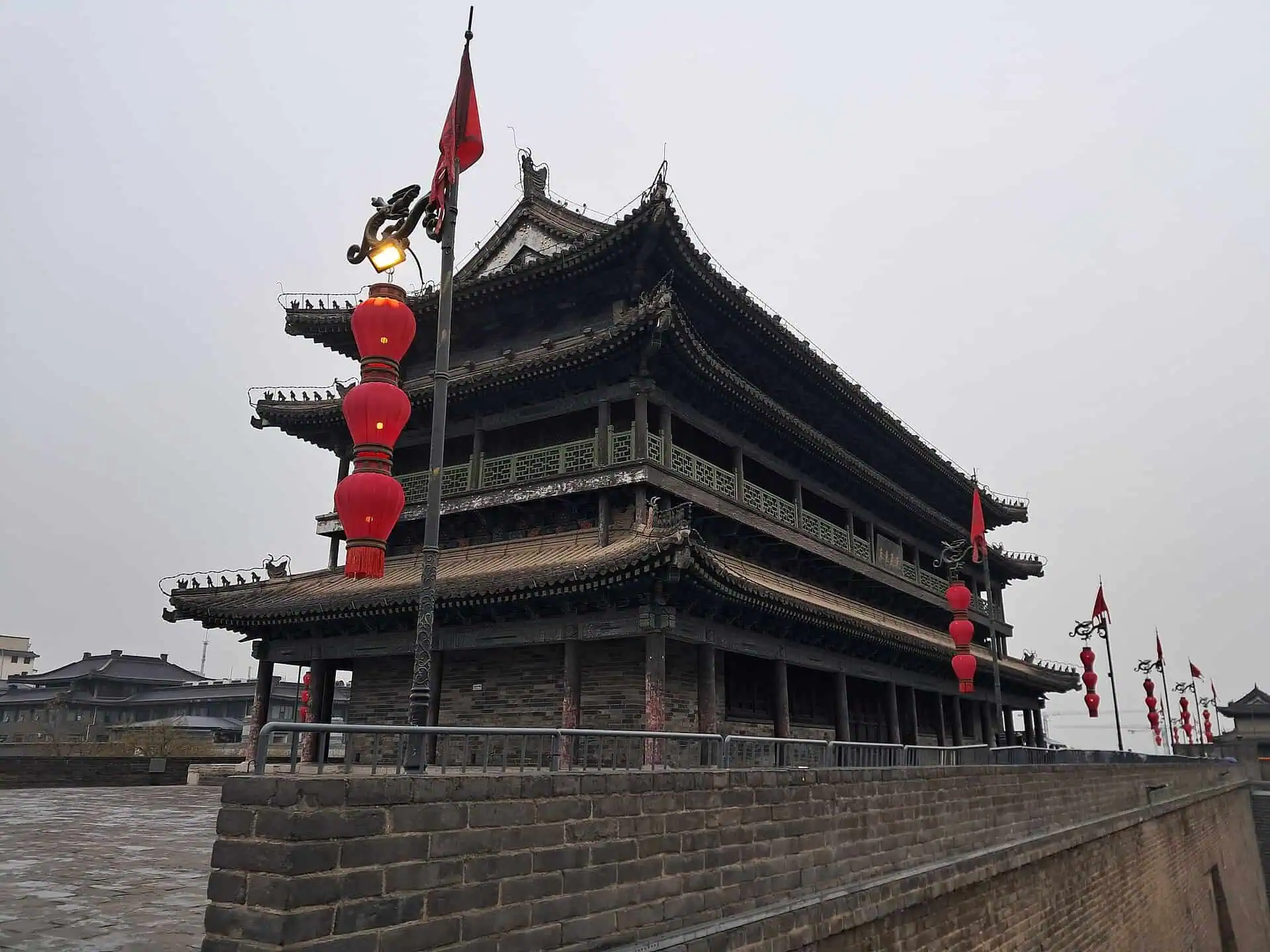
A 14-kilometer Ming dynasty rectangle you can cycle on top of — 650 years old and still the city's favorite commute.
Learn more →
Muslim Quarter
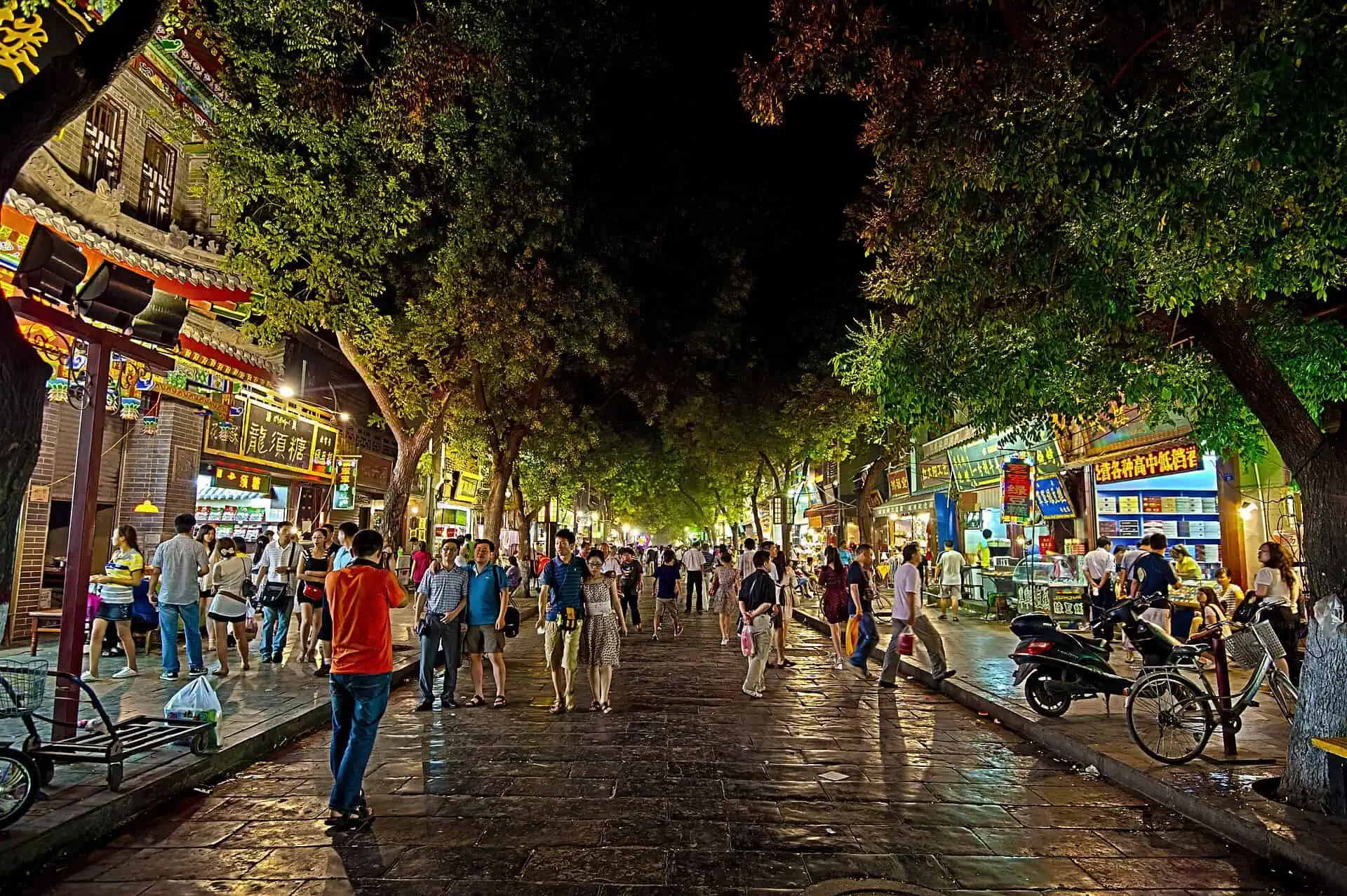
Feeding Xi'an since the 700s — the loudest, smokiest, best-smelling streets of its Hui community.
Learn more →
Xi'an Bell Tower
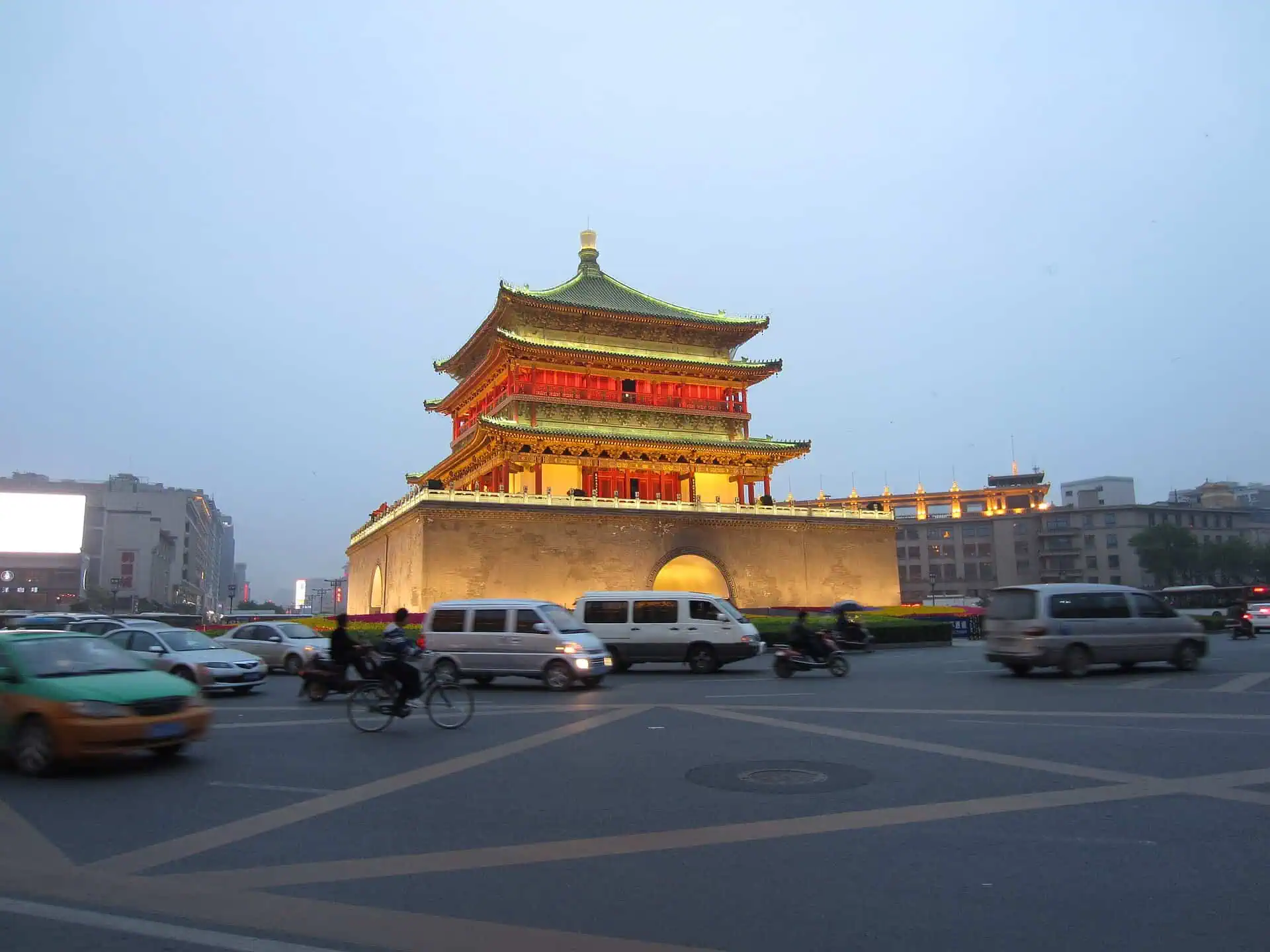
A Ming tower from 1384 at the dead center of the walled city — best admired at dusk, floodlit above the roundabout.
Learn more →