Modern Xi'an: the city beyond the postcards
Twelve metro lines, a glass-tower tech district, and a night economy that keeps the southeast glowing — the Current Time chapter of the City of Time.
The short version
- Modern Xi'an lives mostly outside the wall: Gaoxin's tech towers, Qujiang's new cultural district, and a metro that opened in 2011 and already runs 12 lines.
- The best 'modern' evening is free: Qujiang Pool Park at dusk, then the Ever-Bright City after dark.
- Metro Line 14 links the airport and the high-speed station straight into the grid — land and ride like a local.
- If you want the 21st-century city, stay one night in Qujiang or Gaoxin, not just inside the wall.
The city that never makes the brochure
Every Xi'an photo set shows the same four things: warriors, wall, towers, food street. All true. But the city of 13 million people is mostly none of that — it's a fast-growing provincial capital with one of China's biggest university populations, a semiconductor and aerospace industry clustered in the southwest, and construction cranes that have been busy for three decades.
The surprise for most Western visitors is how normal-modern it all is: contactless everything, a spotless metro, delivery scooters, coffee chains next to 600-year-old gates. This page is the antidote to the postcard version — where to see the living, building, 2026 version of Xi'an.
Gaoxin: the glass towers
The High-Tech Industries Development Zone (高新区, Gāoxīn Qū) in the southwest is Xi'an's second downtown: glass office towers, wide avenues, international hotels and the city's densest cluster of decent western restaurants. Samsung and Huawei both have major campuses here, which is why the coffee is better than it has any right to be.
There's nothing to "see" in the sightseeing sense — that's the point. Come at dusk for a walk down Jinye Road (锦业路, Jǐnyè Lù) when the towers light up, and you'll understand that Xi'an's economy doesn't run on terracotta.
The metro: the fastest way to feel the new city
Xi'an's metro opened in 2011 — late for a city this size — and then built at full sprint. Twelve lines are now operating, with Line 14 connecting the airport and the Xi'an North high-speed rail hub directly into the network. Trains are new, signage is bilingual, and stations like the interchange at Xiaozhai (小寨, Xiǎozhài) move more people in an hour than the wall gates moved in a year.
If you ride one thing for the experience, ride Line 14 in from the airport on arrival day — it's the cleanest possible introduction to the modern city. Practical details live in Getting around Xi'an.
Qujiang: the new cultural district
South of the old city, the Qujiang New District (曲江新区, Qǔjiāng Xīnqū) is where Xi'an invested its culture money: the rebuilt Qujiang Pool Park, the concert hall and art museum cluster, wide pedestrianized streets, and the Grand Tang Ever-Bright City — which, yes, is a themed reconstruction, but it's also simply where the whole city goes out at night.
For the full modern-local evening: sunset jog-walk around Qujiang Pool, dinner at one of the malls on the district's west edge, then join the crowd on the Ever-Bright boulevard. Add the Chang'an Twelve Hours block next door if you want the immersive version. More night options in Xi'an at night and the nightlife guide.
Worth knowing
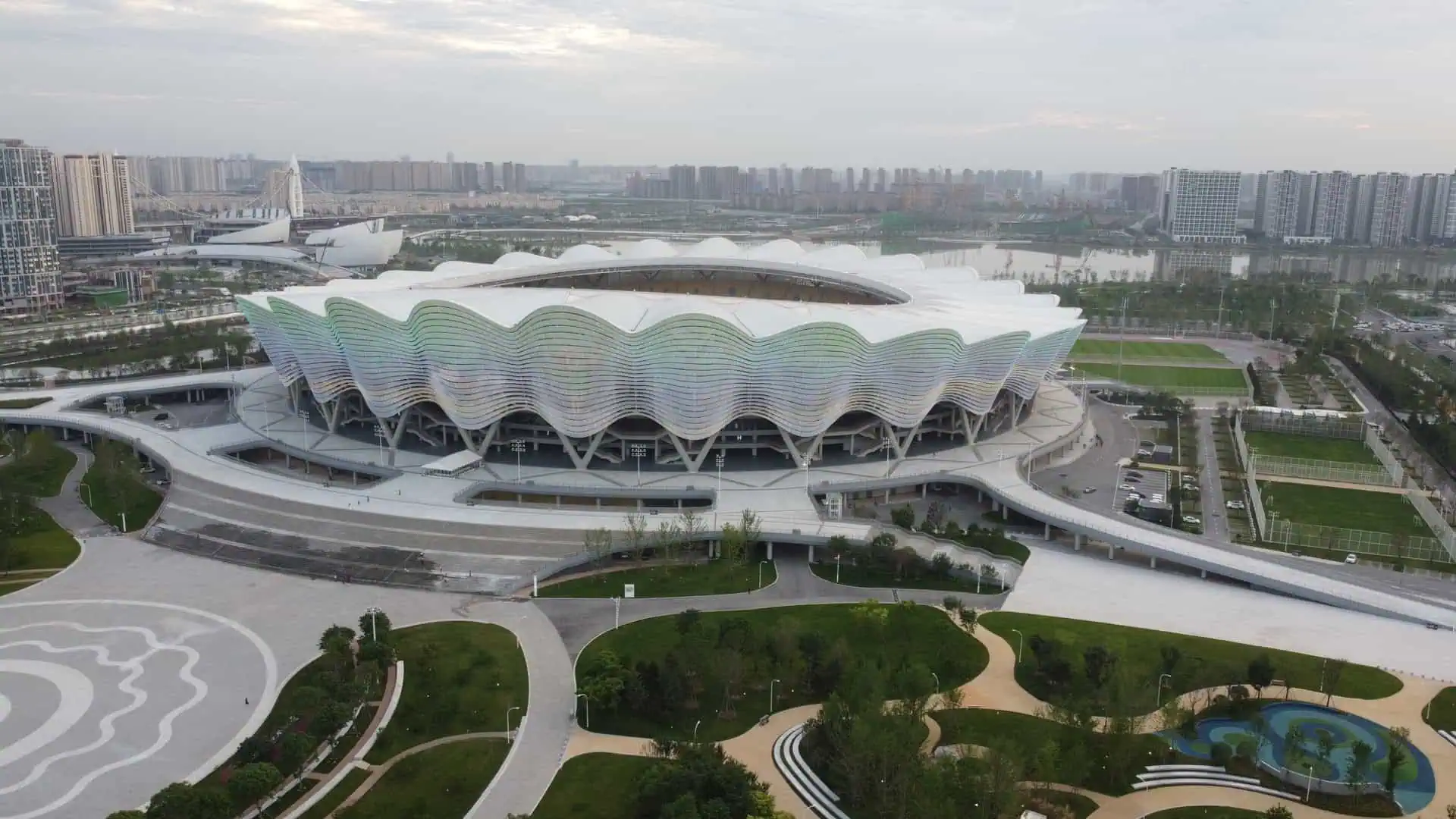
- The northeast is the green chapter: the Chanba Ecological Area (浐灞生态区, Chǎnbà Shēngtài Qū) — river wetlands, the 2021 National Games stadium, and the region's expo grounds — is the city's "new lungs" showcase.
- Universities matter here: Xi'an has one of China's largest student populations; the Xiaozhai (小寨) area is the student-flavored district — cheap eats, bookshops, energy.
- Yongxingfang (永兴坊, Yǒngxìng Fāng) is the modern city's curated answer to the Muslim Quarter: a managed food street showcasing dishes from all over Shaanxi province. More in where locals eat.
Questions, answered
Is Xi'an a modern city?
Yes — 13 million people, 12 metro lines, a major tech industry, and every modern convenience. The famous historic core is a small part of the actual city; most of Xi'an is a fast-growing modern provincial capital.
Where can I see modern Xi'an's skyline?
The Gaoxin district around Jinye Road has the densest cluster of towers — best at dusk. For a free viewpoint, the City Wall's southwest corner at sunset gives you old ramparts in front and new towers behind: the whole time stack in one frame.
Is modern Xi'an worth a day of my trip?
Half a day. Do Gaoxin or Xiaozhai in the afternoon and Qujiang after dark — it rounds out the picture of what the city actually is, and the evening half is genuinely fun rather than educational.
Places in this story
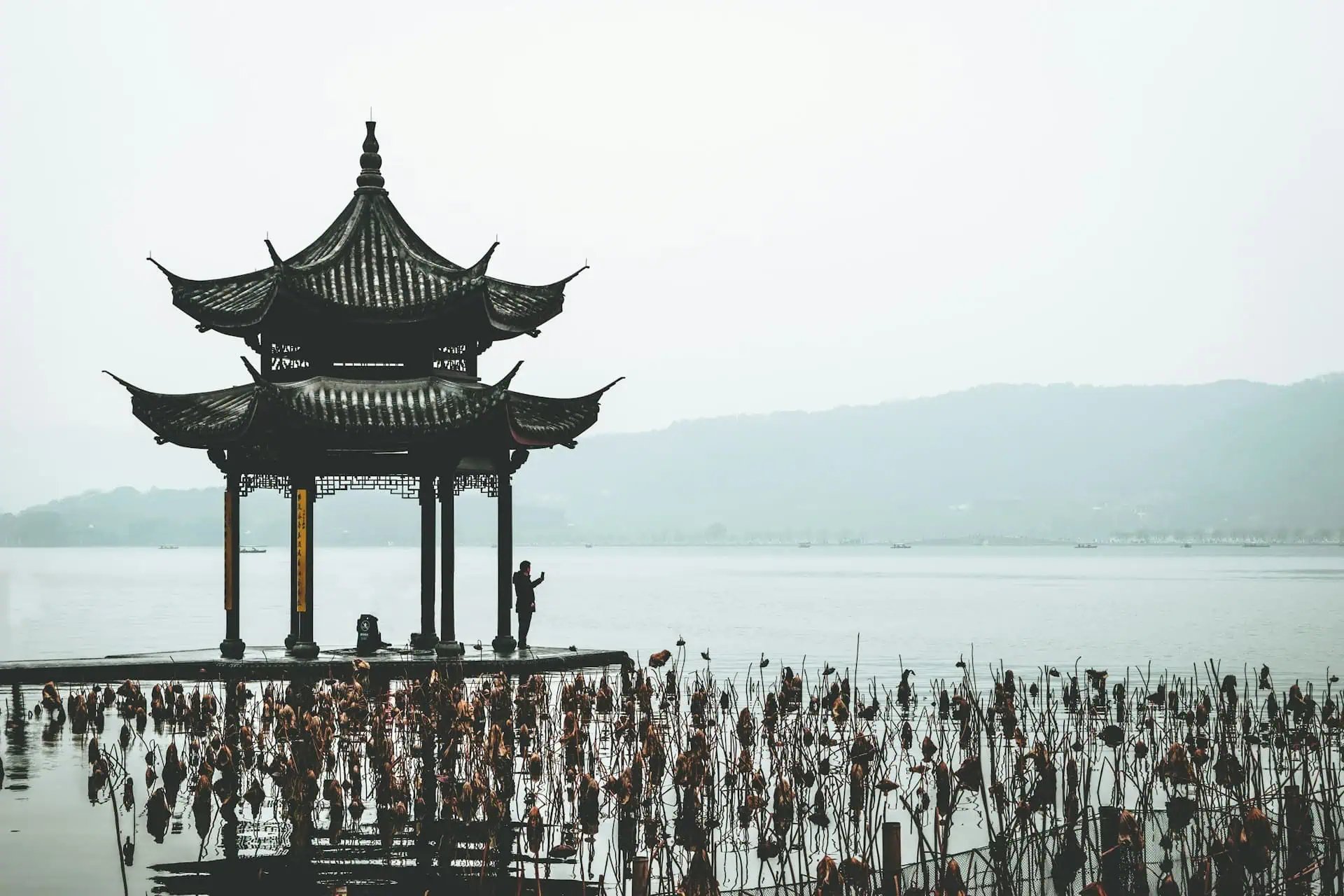
Qujiang Pool Heritage Park
The Tang dynasty's favorite party lake, lost for a thousand years and refilled in 2008 — evening jogs and poetry-stone sunsets.
Learn more →
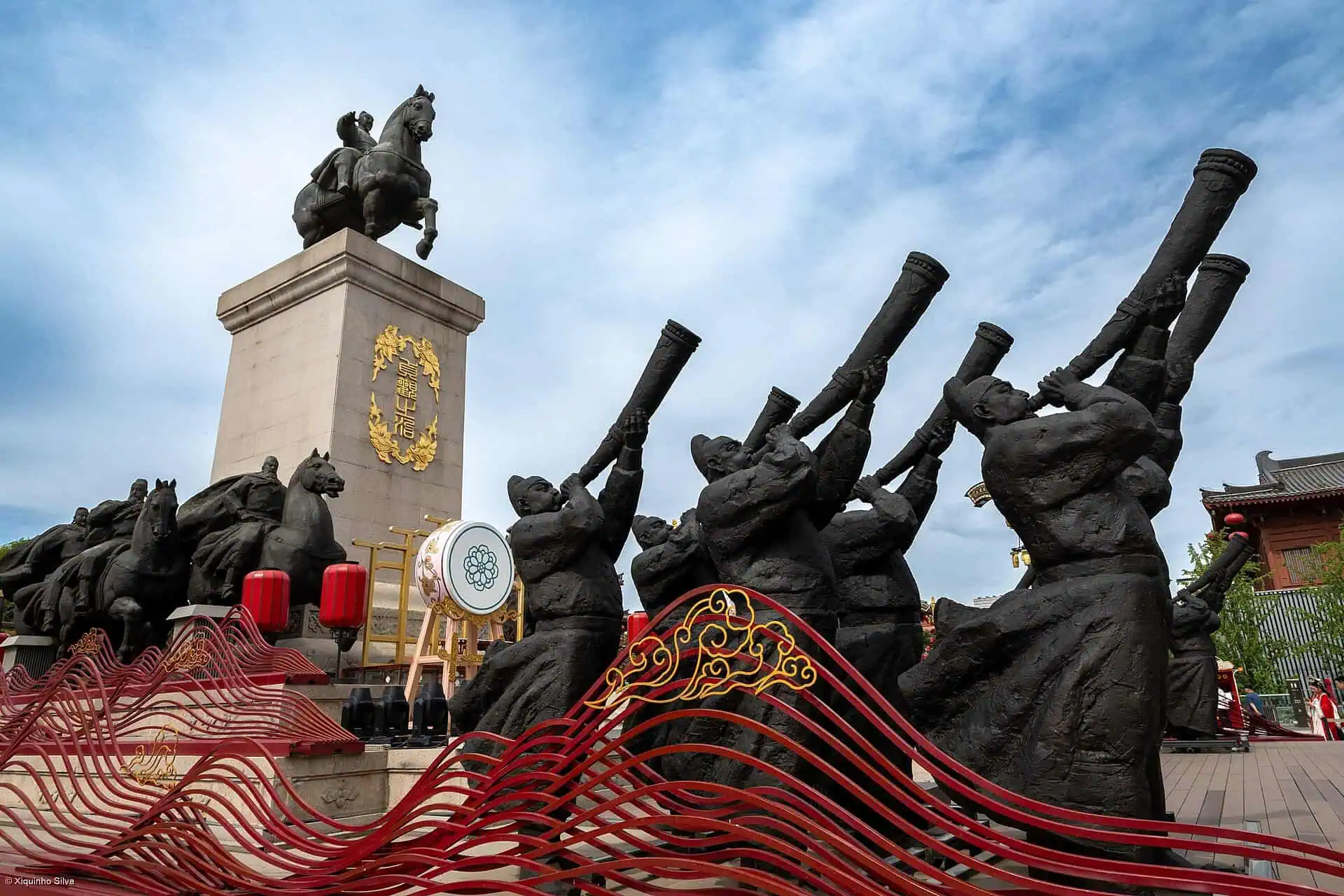
Grand Tang Ever-Bright City
Two kilometers of free, floodlit Tang dynasty spectacle — the golden age, rebooted nightly.
Learn more →
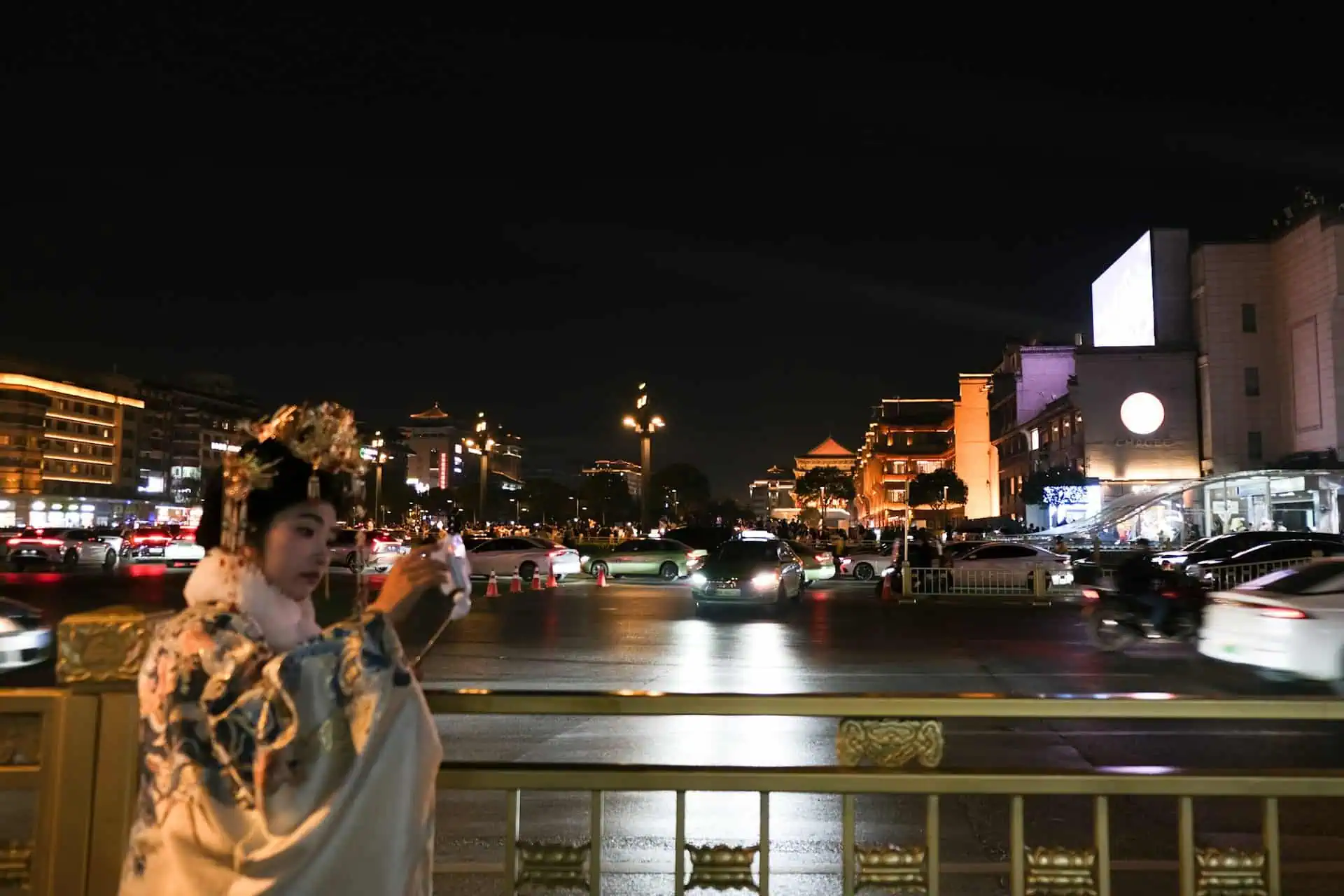
Chang'an Twelve Hours
A Tang-dynasty street rebuilt indoors in 2022 — costumed staff, hourly shows, and the best themed mall in China.
Learn more →
Keep exploring
Hanfu costume rental & photoshoot guide
Renting a Tang-style costume and having your photo taken against 1,300-year-old backdrops is Xi'an's signature tourist experience — and unlike most signature tourist experiences, it's actually good value. A full outfit with hair and makeup runs ¥100–300, the streets are so used to costumed visitors that nobody bats an eye, and the night scenery does the heavy lifting. Here's how to do it without getting upsold.
Tang Dynasty show & dumpling banquet — worth it?
The Tang Dynasty Palace dinner show is Xi'an's longest-running tourist evening: a dumpling banquet followed by an hour of Tang court music and dance in a plush theater. It's polished, comfortable and unashamedly aimed at visitors — and whether it's ¥400 well spent depends entirely on who you are. Families and first-time visitors to China tend to love it; travelers chasing the raw and local should spend the evening at Ever-Bright City for free instead.
Xi'an at night: lights, shows & evening walks
Xi'an is a different city after dark — Tang-style streetscapes floodlit gold, a pagoda floating over fountain shows, gate towers glowing above the moat. The best of it is free: the Grand Tang Ever-Bright City pedestrian street alone is worth an evening, and the pagoda fountain show costs nothing. Add a late dinner in the Muslim Quarter and, in season, the open-air Song of Everlasting Sorrow, and your nights may outshine your days.