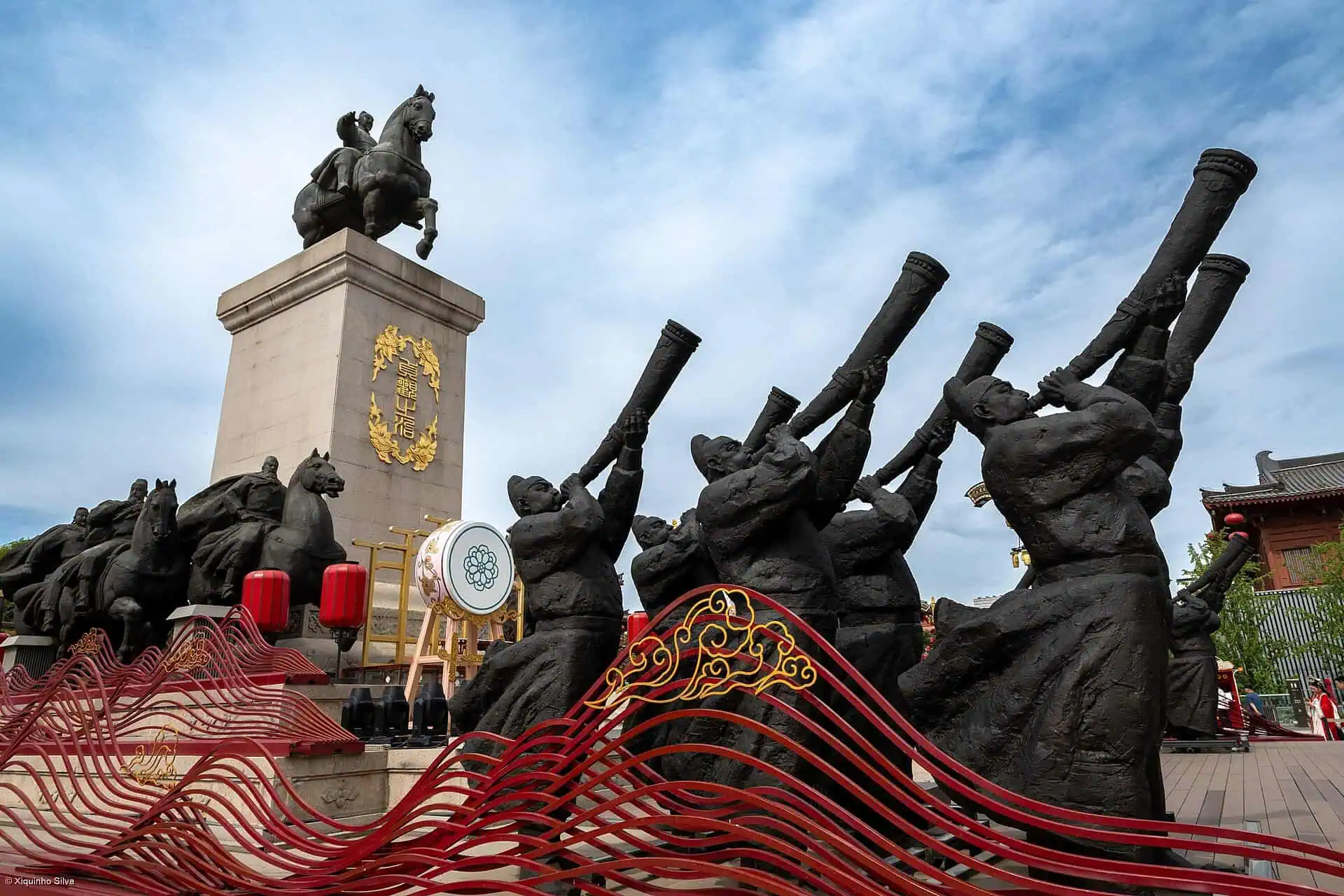
Grand Tang Ever-Bright City
Dàtáng Bùyèchéng
Two kilometers of free, floodlit Tang dynasty spectacle — the golden age, rebooted nightly.
Entry
Free
Hours
Mon–Sun · Open street, 24 hours
Time needed
1½–3 hours
Metro
Line 3 · Dayanta (大雁塔) · B
This is the Tang golden age, rebooted for the 21st century: Xi'an staging its own glory days as a free nightly street party, running south from the Big Wild Goose Pagoda. The roly-poly dancers that went viral across China are here, so are Tang-dance mini-shows, light-slicked facades and crowds in rented hanfu. Gaudy, packed and completely sincere — on a weekday night it's the most fun free evening in the city. On holiday weekends, it's a stress test.
What you're looking at
The Grand Tang Ever-Bright City (大唐不夜城, Dàtáng Bùyèchéng — "Great Tang City That Never Sleeps") is a 2.1 km pedestrian boulevard running south from the Big Wild Goose Pagoda down Yanta South Road. Let's be clear about what it is: a 21st-century stage set. The Tang dynasty it celebrates ended in 907 AD, and every lantern, bronze emperor and sweeping roofline here is modern — a deliberate, extravagant recreation of Chang'an (长安, Cháng'ān), the Tang capital that stood on this ground (our Tang Chang'an history tells the real story).
What you get is a sculpture avenue — emperor Li Shimin on horseback, the poet Li Bai (李白, Lǐ Bái) mid-ode, clusters celebrating the Zhenguan (贞观, Zhēnguān) and Kaiyuan (开元, Kāiyuán) golden ages — flanked by Tang-styled facades hiding malls, concert halls and snack streets. After dark the whole strip lights up, and small stages along the route host free performances in rotation: Tang court dance, pipa (琵琶, pípa) players, acrobats, a robed "Li Bai" trading improvised verse with the crowd.
Two phenomena made the street famous. First, the roly-poly dancers (不倒翁, bùdǎowēng): performers in full Tang dress balanced on weighted hemispheres, swaying out over the audience to brush outstretched hands — a 2019 viral sensation that pulled millions of visitors here and still draws a tight ring of phones every evening. Second, the hanfu (汉服) crowds: on any given night a remarkable share of the visitors are in rented Tang costume, turning the whole street into a mass immersion exercise. Rent your own — our hanfu photoshoot guide explains how — and you become part of the set.
A third signature is 盛唐密盒 (Shèng Táng Mì Hé, "Tang Secret Box") — a street-stage act where two actors playing the Tang ministers Fang Xuanling and Du Ruhui, the duo known as "Fang schemes, Du decides" (房谋杜断), pull tourists onstage for a rapid-fire history, geography and math quiz, all improvised banter and "Tang treasure" prizes for right answers. It went viral in spring 2023 and still draws one of the biggest phone-circles on the strip after the dancers.
One honest freshness note on the roly-poly act: the dancer who made it famous — 冯佳晨 (Feng Jiachen, known as 皮卡晨 / "Pikachen") — went viral in 2019 and departed the street in March 2026 after seven years. The act continues with successors, so you'll still see the tumbler performance — just not the one the original billion-view videos made famous.
Visiting strategy
Walk it one way, north to south, after dark. Start at the pagoda's South Square around 19:00 — right after the fountain's evening show, which dovetails perfectly — and drift south with the current. Shows at the small stages repeat in loops through the evening; there's no single schedule to chase, and the local rule works fine: if you see a circle of phones forming, something is about to start. The roly-poly performers draw the biggest rings — arrive 15 minutes early if it's on your must list.
Allow 1.5–2.5 hours for the full strip with show stops. One-way beats up-and-back: at the south end (around Kaiyuan Square, 开元广场), grab a DiDi out rather than hiking back north against the crowd.
The honest crowd math: weekday evening, lively and lovely. Weekend, a slow shuffle. Chinese public holiday, one of the most crowded pedestrian zones in the country — police run one-way flows, entry points close intermittently, and the Dayanta metro station can restrict entry in the evenings. Check our public holidays guide before picking your night, and if your dates land on one, go after 21:30 when the worst has ebbed.
Daytime visits: don't. Without the lights and stages it's an ordinary shopping street with big statues. The entire point is 19:00–22:30.
Eating: the snack stalls are fine but priced for tourists. Better: eat first (the Joy City mall by the pagoda's North Square has a proper food floor), then stroll. Save a food-focused evening for the Muslim Quarter on another night — or compare the two in our Xi'an at night guide.
Getting there
The strip hangs directly off the Big Wild Goose Pagoda's South Square in the Qujiang district.
- Metro: Lines 3 and 4 to Dayanta (大雁塔) station, exits B or C. Walk south through the fountain square and past the Xuanzang statue — the pedestrian street begins at the pagoda's south side. Total walk from the metro to the strip's entrance: about 15 minutes. Our getting around guide covers riding the metro.
- Taxi/DiDi: about 20 minutes and ¥20–25 from the Bell Tower; ask for 大唐不夜城 or 大雁塔南广场 (South Square). Evening traffic around the pagoda is slow — the metro often wins.
- Leaving: after 22:00, taxi queues at both ends get long and the roads around the squares jam. The cleanest exit is the metro from Dayanta (check your app for the last train, usually around 23:00) — or walk to the south end and DiDi out while everyone else queues at the north.
The whole evening pairs with a Big Wild Goose Pagoda afternoon; our 3-day itinerary schedules exactly this pairing.
Practical notes
- Cost: free — street, light shows and stage performances all included. Your only costs are snacks, costume rental and whatever the malls sell you.
- Show times: stages run roughly 19:00–22:30; the day's lineup is posted on boards along the street and circulates on WeChat/Rednote. Don't stress the schedule — wander and you'll hit half a dozen.
- Kids: great for older kids (lights, statues, spectacle); with small children, keep hands held — the crowd density after 19:30 on weekends is no joke.
- Power bank: you'll shoot more video than you plan to, and rental power banks in the malls require mobile payment set up.
- Toilets: use the malls along the strip (Joy City at the north end is the reliable option).
- Weather: fully outdoors. Summer evenings are warm but lively; winter strips the crowds and adds crispness — dress for standing still in the cold. Rain kills the stage shows.
- Valuables: in dense crowds, phones and wallets live in front pockets. It's safe, but holiday-night density rewards the habit.
Questions, answered
Is Grand Tang Ever-Bright City free?
Yes — completely. It's a public pedestrian street: entry, the light displays and all the stage performances cost nothing. You only pay for snacks, souvenirs and hanfu rental.
What time are the shows at Grand Tang Ever-Bright City?
Free stage performances run in rotation roughly 19:00–22:30 every evening at small stages along the street. There's no single fixed schedule — boards along the strip post the day's lineup, and any gathering circle of phones means a show is about to start.
How long do you need at Grand Tang Ever-Bright City?
1.5–2.5 hours to walk the 2.1 km strip one way with stops at a few stages. Combine it with the Big Wild Goose Pagoda's fountain show at 19:00 for a full free evening.
How crowded is Grand Tang Ever-Bright City?
Weekday evenings are busy but pleasant; weekends are a slow shuffle; Chinese public holidays are extreme — one-way pedestrian flows, intermittent entry closures and metro restrictions at Dayanta station. On holiday nights, go after 21:30 or pick another evening.
Is Grand Tang Ever-Bright City worth visiting during the day?
Honestly, no. By day it's an ordinary retail street with large statues. The lights, costumes and free stage shows — the entire experience — happen after dark, roughly 19:00–22:30.
How do I get to Grand Tang Ever-Bright City?
Metro Lines 3 or 4 to Dayanta station (exits B/C), then walk about 15 minutes south past the Big Wild Goose Pagoda — the pedestrian street starts at its South Square. A taxi from the Bell Tower costs roughly ¥20–25.
Keep exploring
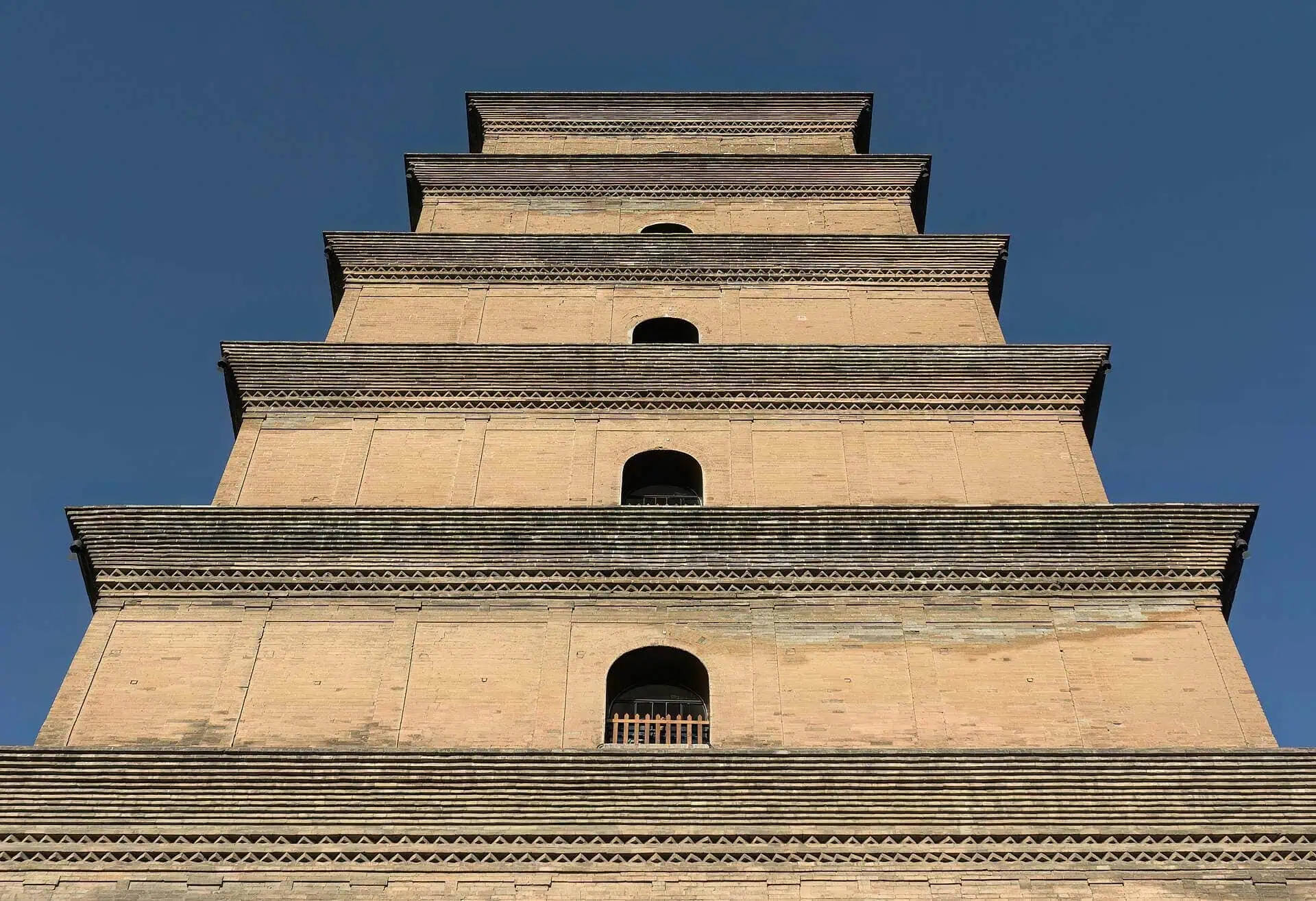
Big Wild Goose Pagoda
A Tang brick pagoda raised in 652 AD for a monk's 17-year journey to India — still Xi'an's defining landmark.
Learn more →
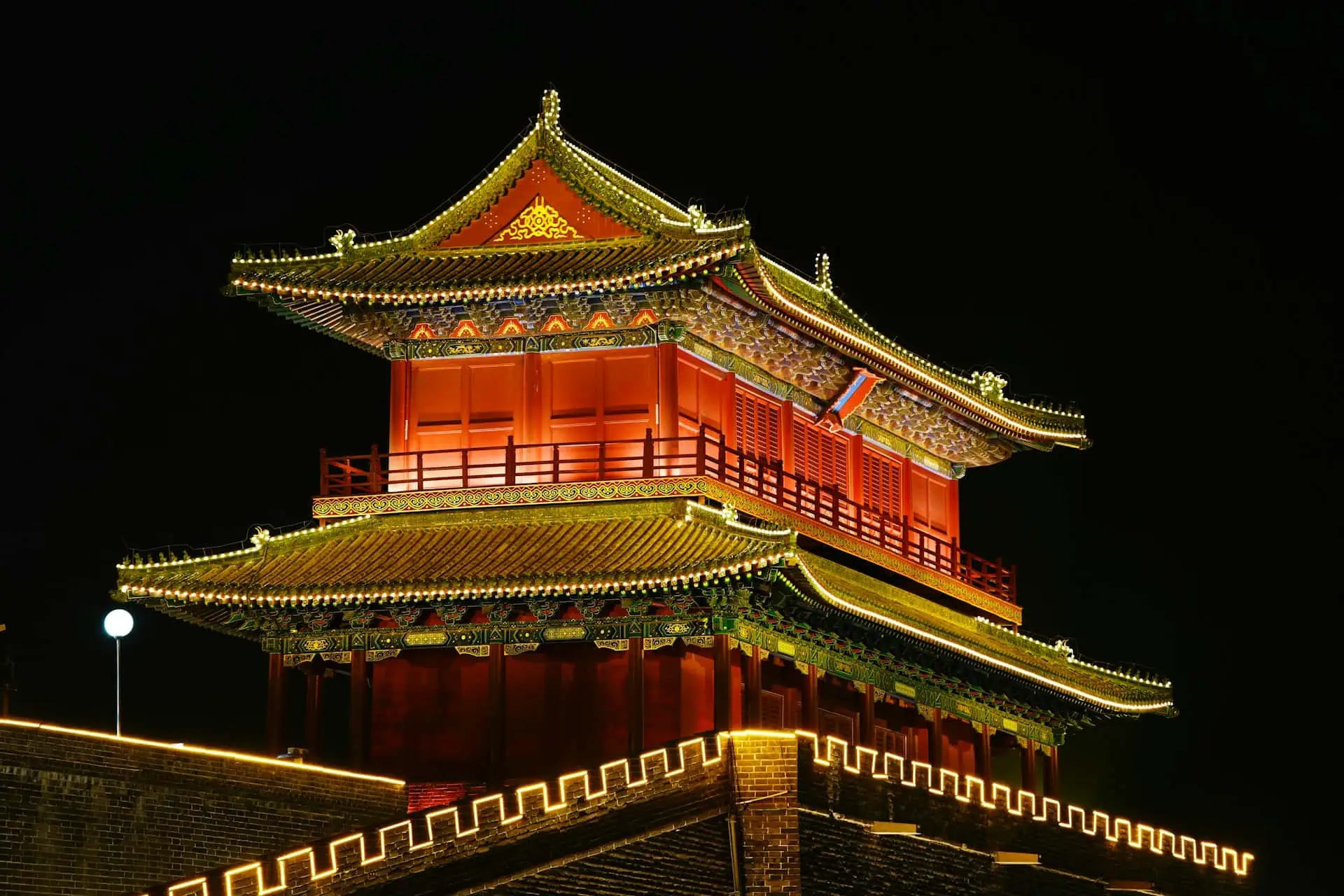
Tang Paradise
A royal Tang garden reimagined in 2005 — artificial, enormous, and genuinely beautiful after dark.
Learn more →
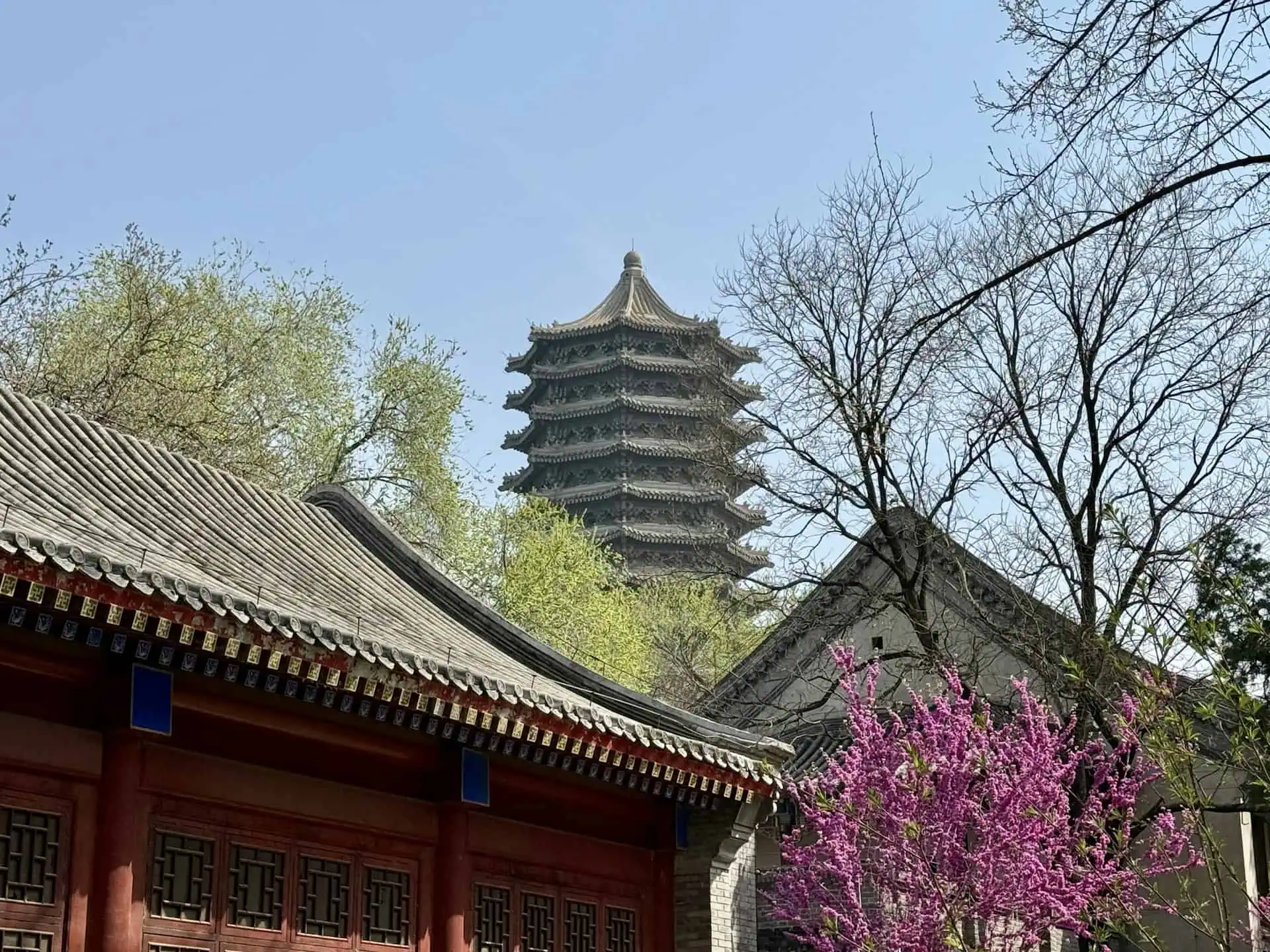
Qinglong Temple
The Tang temple that sent Buddhism to Japan in 804 AD — and still draws half of Xi'an every cherry blossom season.
Learn more →
Related stories
Where to stay in Xi'an: the honest area-by-area guide
Xi'an is a compact city with a decisive metro, so the choice of base matters more for mood than logistics. For most first-timers the answer is inside the City Wall near the Bell Tower; below is every realistic alternative, with the character, the crowd it suits and what a room actually costs in each.
Xi'an with kids: the family playbook
Xi'an is one of China's easiest cities to do with children: a compact center, sights with genuine visual scale, and food kids actually eat. The trick is choosing the four or five things that land with young travelers — and skipping the ones that are homework.
Accessibility in Xi'an: an honest audit
Xi'an is a 3,000-year-old city running on modern infrastructure, and accessibility splits exactly along that line: the metro and the big modern museums are genuinely step-free, while anything involving a 600-year-old gate, tower or pagoda usually means stairs. Here's what works, what doesn't, and what to confirm before you fly.
What a trip to Xi'an actually costs: budget vs comfort
Xi'an is one of China's cheapest big tourist cities — street dinners for ¥20, hostel beds under ¥150, a metro that reaches every headline sight. But the Terracotta Army, a night show and a decent hotel add up fast. Here are two honest daily budgets, the real price of every big-ticket item, and the savings that actually work.
Xi'an vs Beijing: how to split your China trip
The classic first-timer's dilemma, settled honestly: Beijing has the Forbidden City and the Great Wall, Xi'an has the Terracotta Army and a wall you can cycle — and they're different enough that most trips should include both. Here's what each city actually gives you, what it costs, and how to divide a week between them.
Shopping in Xi'an: what's actually worth buying
Most of what's sold to tourists in Xi'an is factory stock you could buy anywhere in China — but a few things are genuinely local and worth suitcase space: a seal carved with your name on Shuyuanmen, a proper museum-shop terracotta figure, fu brick tea, and Shaanxi's dried persimmons. Here's what to buy, what to skip, and how the haggling works.
Hanfu costume rental & photoshoot guide
Renting a Tang-style costume and having your photo taken against 1,300-year-old backdrops is Xi'an's signature tourist experience — and unlike most signature tourist experiences, it's actually good value. A full outfit with hair and makeup runs ¥100–300, the streets are so used to costumed visitors that nobody bats an eye, and the night scenery does the heavy lifting. Here's how to do it without getting upsold.
Tang Dynasty show & dumpling banquet — worth it?
The Tang Dynasty Palace dinner show is Xi'an's longest-running tourist evening: a dumpling banquet followed by an hour of Tang court music and dance in a plush theater. It's polished, comfortable and unashamedly aimed at visitors — and whether it's ¥400 well spent depends entirely on who you are. Families and first-time visitors to China tend to love it; travelers chasing the raw and local should spend the evening at Ever-Bright City for free instead.
Xi'an at night: lights, shows & evening walks
Xi'an is a different city after dark — Tang-style streetscapes floodlit gold, a pagoda floating over fountain shows, gate towers glowing above the moat. The best of it is free: the Grand Tang Ever-Bright City pedestrian street alone is worth an evening, and the pagoda fountain show costs nothing. Add a late dinner in the Muslim Quarter and, in season, the open-air Song of Everlasting Sorrow, and your nights may outshine your days.
Nightlife & craft beer in Xi'an
Xi'an is not Shanghai — nobody flies here for the clubs. But the city has bar streets with real history clustered around the South Gate, a small but genuine craft beer scene, a working livehouse circuit, and KTV as a full-contact local pastime. Here's what's actually worth your evening, what it costs, and what to skip.
The photographer's Xi'an: best spots & times
Xi'an rewards photographers who plan around light, not locations. The city's great subjects — walls, towers, pagodas, night markets — are all floodlit after dark, which means the magic window is the same almost everywhere: the hour around sunset. Here's where to stand, when to be there, and the rules that can cost you your drone.
Cherry blossoms in Xi'an: Qinglong Temple & beyond (March–April)
Xi'an's cherry blossom season runs roughly mid-March to mid-April, and the classic place to see it is Qinglong Temple — a Tang dynasty temple with a 1,200-year-old connection to Japan, where hundreds of Japanese-donated cherry trees bloom against old temple walls. Entry is free but you'll need a reservation, weekends are a contact sport, and if you miss the petals, April's peonies are the consolation prize. Here's how to time it.
Xi'an in winter: lantern festivals & lights (December–February)
Xi'an in winter is cold, dry and mostly crowd-free — and for about ten weeks around Chinese New Year it's also lit up like nowhere else in China. The City Wall Lantern Festival drapes giant illuminated sets across a 600-year-old rampart, the Tang quarter glows every night, and temple fairs fill the old town. Here's what the lights cost, when they run, and an honest take on the cold.
Chang'an in the Tang dynasty: the world's greatest city
Modern Xi'an: the city beyond the postcards
Xi'an by season: Mid-Autumn, the film festival & the City Wall marathon
Xi'an in Summer: museums, mountains & long evenings
Xi'an is one of China's 'Four Furnaces' — June to August is genuinely hot and humid, with heat waves pushing toward 40°C. The fix is a rhythm, not a destination: museums and malls at midday, sights and street food at dawn or after dark, and a mountain escape if you can. Here's how to plan a summer trip without melting.
Studying in Xi'an: a practical guide for international students
Xi'an is one of China's classic student cities — over 50 universities, tuition that starts around ¥20,000 a year, and dorms cheap enough that living costs can stay under ¥2,500 a month. This guide covers the visas (X1 vs X2), the universities that host international students, what it really costs, and how to actually enjoy the city on a student budget.