Cherry blossoms in Xi'an: Qinglong Temple & beyond (March–April)
Xi'an's cherry blossom season runs roughly mid-March to mid-April, and the classic place to see it is Qinglong Temple — a Tang dynasty temple with a 1,200-year-old connection to Japan, where hundreds of Japanese-donated cherry trees bloom against old temple walls. Entry is free but you'll need a reservation, weekends are a contact sport, and if you miss the petals, April's peonies are the consolation prize. Here's how to time it.
7 min read · 5 sections
When the blossoms actually happen
The season is short and it moves. In a typical year, Xi'an's cherry blossoms run from mid-March to mid-April, with the peak usually in the last week of March and the first days of April. A warm February can pull the whole thing two weeks earlier; a cold spring pushes it back just as far. In 2026, for reference, Qinglong Temple's official blossom festival ran March 12 to April 12, and the best blooms arrived late March.
The practical consequence: don't build a rigid itinerary around a specific "peak weekend" you picked three months out. If blossoms are a priority, travel within a wider window (say, March 20 – April 8) and keep one flexible morning you can swap around once you're in China and can see real bloom reports. The temple's WeChat account and Xi'an local media post daily blossom status during the season, and any hotel concierge in town can tell you what's actually open.
Early and late in the window you'll see different things: late-winter varieties (cold-hardy kanhi cherries) bloom first, the fluffy pink somei-yoshino-type canopies hit peak around the turn of April, and late double-blossom cherries carry into mid-April. Missing "peak" by a few days is rarely a disaster.
Qinglong Temple: the classic spot
Qinglong Temple (青龙寺, Qīnglóng Sì) is where Xi'an takes cherry blossoms seriously, and the reason is historical. In 804 the Japanese monk Kūkai (空海, Kūhǎi) — founder of Shingon Buddhism and one of the most revered figures in Japanese religious history — came to this temple and studied esoteric Buddhism under the master Huiguo (惠果, Huìguǒ) before carrying the teachings home to Japan. Japanese pilgrims and organizations have been donating cherry trees to the temple for decades in his honor, and the grounds now hold hundreds of trees across a dozen-plus varieties. When they bloom, it's the closest thing to a Japanese hanami scene you'll find in China — pale canopies over Tang-style roofs and stone memorials, with a memorial hall to Kūkai on site. See our Qinglong Temple guide for the full story.
The practical details:
- Entry is free, but you must reserve. Book a timed slot through the temple's official WeChat account (search 西安市青龙寺遗址 in WeChat). Slots are released three days ahead at 18:00 and popular weekend sessions go fast — set an alarm.
- Sessions: morning (8:30–12:30) or afternoon (12:30–17:00). The grounds run 8:30–18:00, last entry 17:00.
- Getting there: metro Lines 3 and 5 both stop at Qinglong Temple station (青龙寺站) — see getting around Xi'an for how the metro works. It's an easy hop from anywhere central.
- Who skips the queue: visitors over 65 with ID are exempt from the reservation rule.
Go on a weekday morning session if your trip allows it. You'll still share the temple with a few hundred people, but you'll get your photos.
Beyond Qinglong: peonies, lakeside walks
Qinglong Temple is the headline, but spring in Xi'an keeps rolling after the cherries drop:
- Xingqing Palace Park (兴庆宫公园, Xīngqìnggōng Gōngyuán) — a free public park on the grounds of Emperor Xuanzong's Tang palace, a short ride east of the wall. It has its own spring blossoms, but the real show follows the cherries: peonies (牡丹, mǔdān) in April, massed around the Aloeswood Pavilion, where the poet Li Bai once improvised verses about Yang Guifei among the flowers. If your dates land in mid-April, this is arguably better than the cherries. See the Xingqing Palace Park guide.
- Qujiang Pool Park (曲江池遗址公园, Qǔjiāngchí Yízhǐ Gōngyuán) — the restored Tang pleasure lake south of the city, free and open. Blossoming cherries and peaches line the lakeside paths, and the crowd density is a fraction of Qinglong's. It pairs naturally with the Big Wild Goose Pagoda area nearby — do the pagoda in the afternoon and walk the lake toward sunset. Details in the Qujiang Pool Park guide.
If you want the full spring-city day: Qinglong Temple in the morning, lunch in town, Xingqing or Qujiang Pool in the afternoon, and the Ever-Bright City after dark.
Crowds and photo strategy
The honest version: blossom season at Qinglong Temple is popular the way a free, beautiful, metro-accessible event in a city of 13 million is popular. The reservation system caps the numbers, so it never becomes unsafe or fully unbearable — but on weekend afternoons you will photograph more strangers than petals, and the 18:00 slot release three days out turns into a race. Weekdays are calmer by an order of magnitude. Rain is your secret ally: a drizzly morning scatters the crowds and drops photogenic petals on the stone paths.
Field notes for photographers:
- Take the 8:30 session. First-entry light is soft, the temple roofs catch it, and you get 30–60 minutes before the mid-morning build-up.
- Shoot up, not out. Frame canopies against sky or temple architecture to crop out the crowd at ground level. A phone's 2x or 3x lens is ideal; you don't need a big camera.
- Backlight the petals. Shooting toward the sun through the blossoms gives them the glow everyone wants; expose for the petals, not the background.
- Embrace the hanfu crowd. Half the people there are in rented Tang costume doing the same shoot you are — they're part of the scene, and frankly they make it. If you want in, our hanfu photoshoot guide explains how the rental studios work.
Fitting blossoms into a spring trip
Late March to mid-April is one of the two best windows to visit Xi'an at all (the other is October) — mild days, everything in bloom, and the summer heat and crowds still weeks away. If your dates are flexible, this is when to come; our best time to visit guide weighs the trade-offs month by month.
A blossom-season day slots cleanly into a standard 3-day itinerary: give the Terracotta Army its usual full morning on day one, then use a second morning for Qinglong Temple (temple plus blossoms takes 2–3 unhurried hours), and keep the afternoon for the Big Wild Goose Pagoda quarter. Nothing about blossom season conflicts with the main sights — it just adds a morning you book three days ahead and a camera roll you'll actually keep.
Questions, answered
When is cherry blossom season in Xi'an?
Roughly mid-March to mid-April, with the peak usually in the last week of March and the first days of April. The exact timing shifts up to two weeks either way with the year's weather, so check current bloom reports close to your dates.
Is Qinglong Temple free during cherry blossom season?
Yes, entry is free — but a timed reservation is mandatory during blossom season. Slots are released three days ahead at 18:00 via the temple's official WeChat account (西安市青龙寺遗址), and weekend sessions go fast. Visitors over 65 with ID are exempt from booking.
Where else can I see cherry blossoms in Xi'an?
Qujiang Pool Park has lakeside cherries and peaches with far smaller crowds, and Xingqing Palace Park follows in April with the city's best peony display. Qinglong Temple remains the densest and most atmospheric cherry display.
What if I miss the cherry blossom peak in Xi'an?
Late double-blossom cherries run into mid-April, and April brings the peonies at Xingqing Palace Park — a genuinely equal attraction. Spring weather makes sightseeing pleasant regardless of what's blooming.
How do I get to Qinglong Temple?
Metro Lines 3 and 5 both stop at Qinglong Temple station (青龙寺站), right by the site. During blossom season the grounds are open 8:30–18:00 with last entry at 17:00, split into morning and afternoon entry sessions.
Places in this story
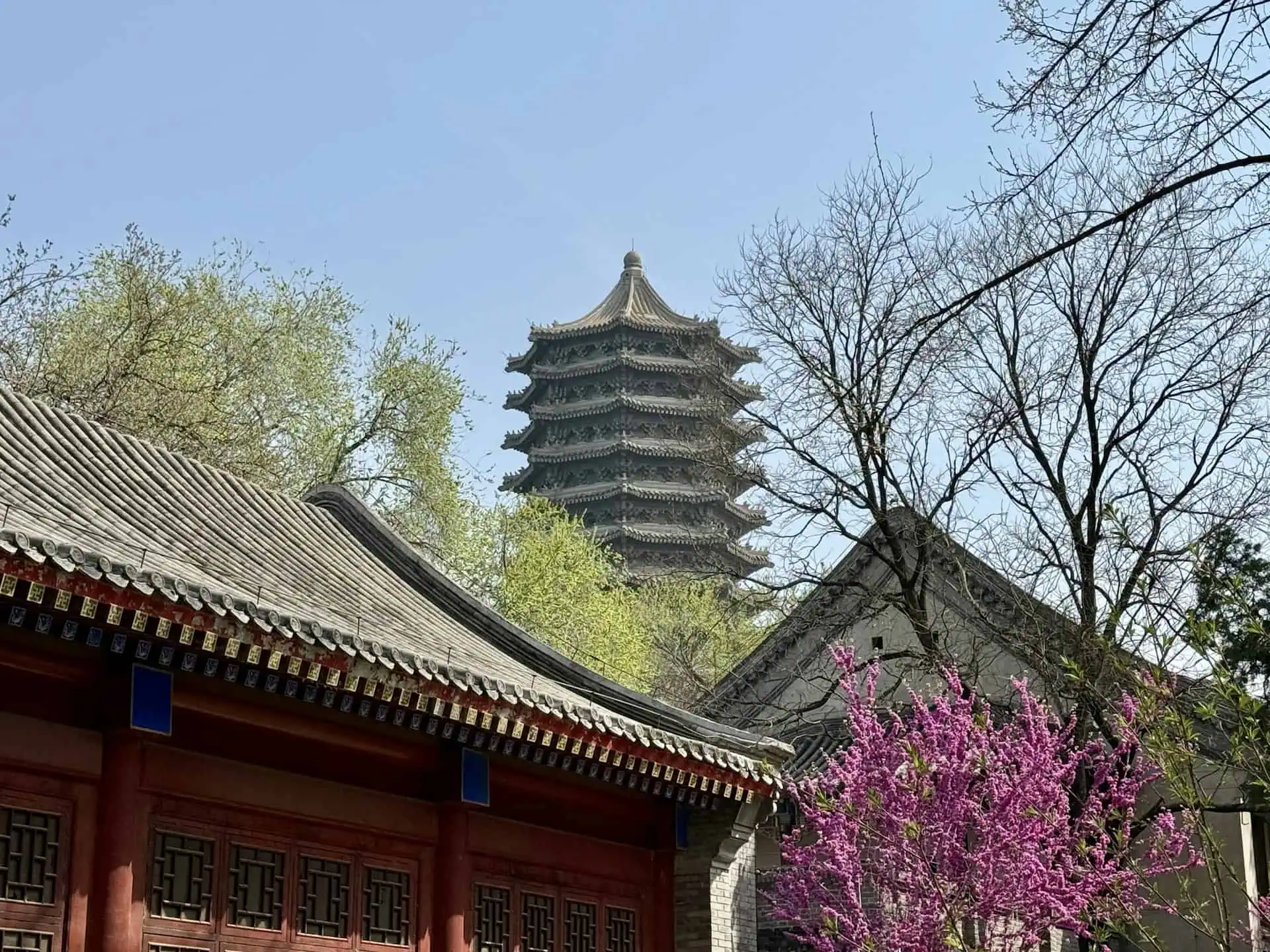
Qinglong Temple
The Tang temple that sent Buddhism to Japan in 804 AD — and still draws half of Xi'an every cherry blossom season.
Learn more →
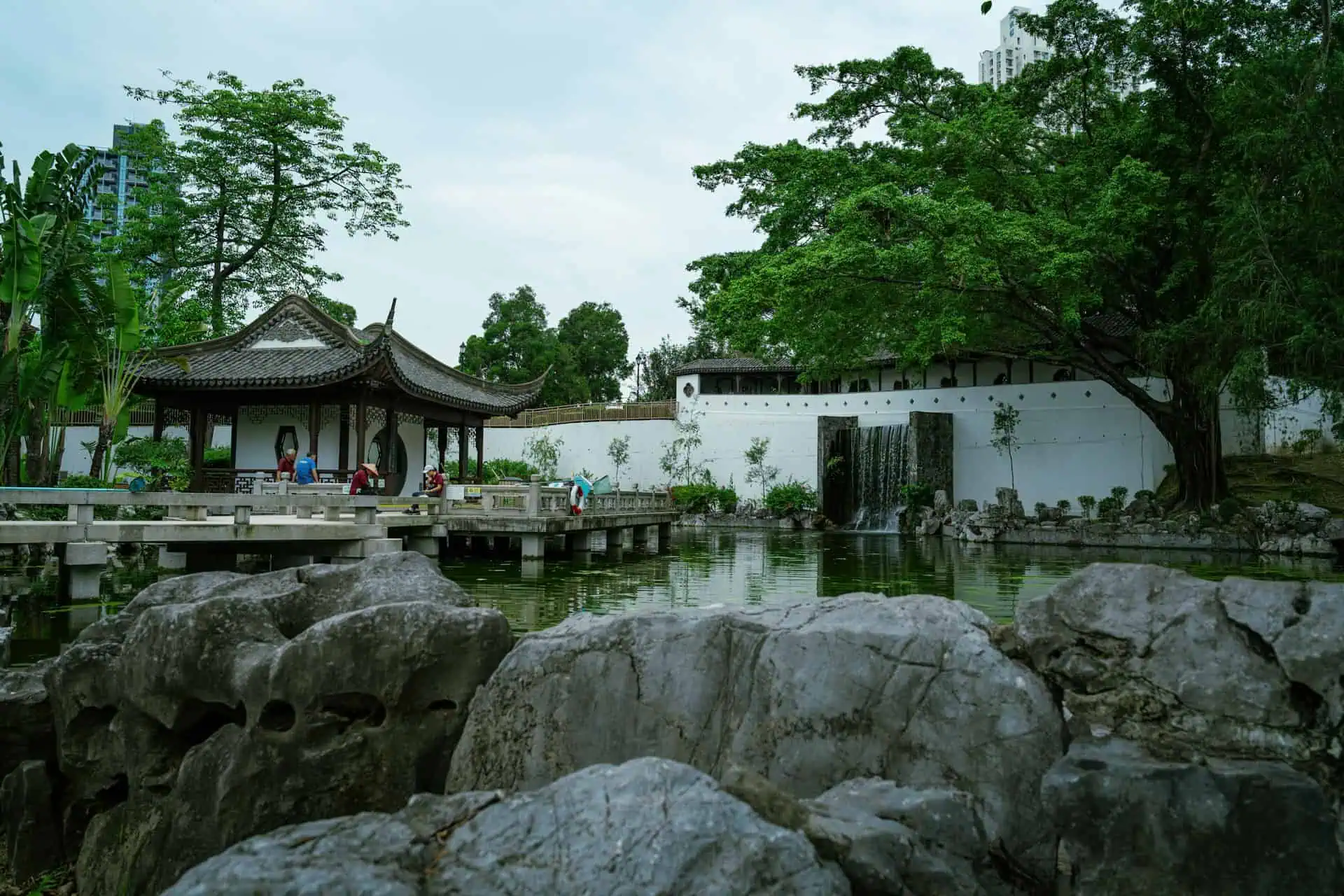
Xingqing Palace Park
Emperor Xuanzong's Tang pleasure palace, 1,300 years on — now Xi'an's favorite living room.
Learn more →
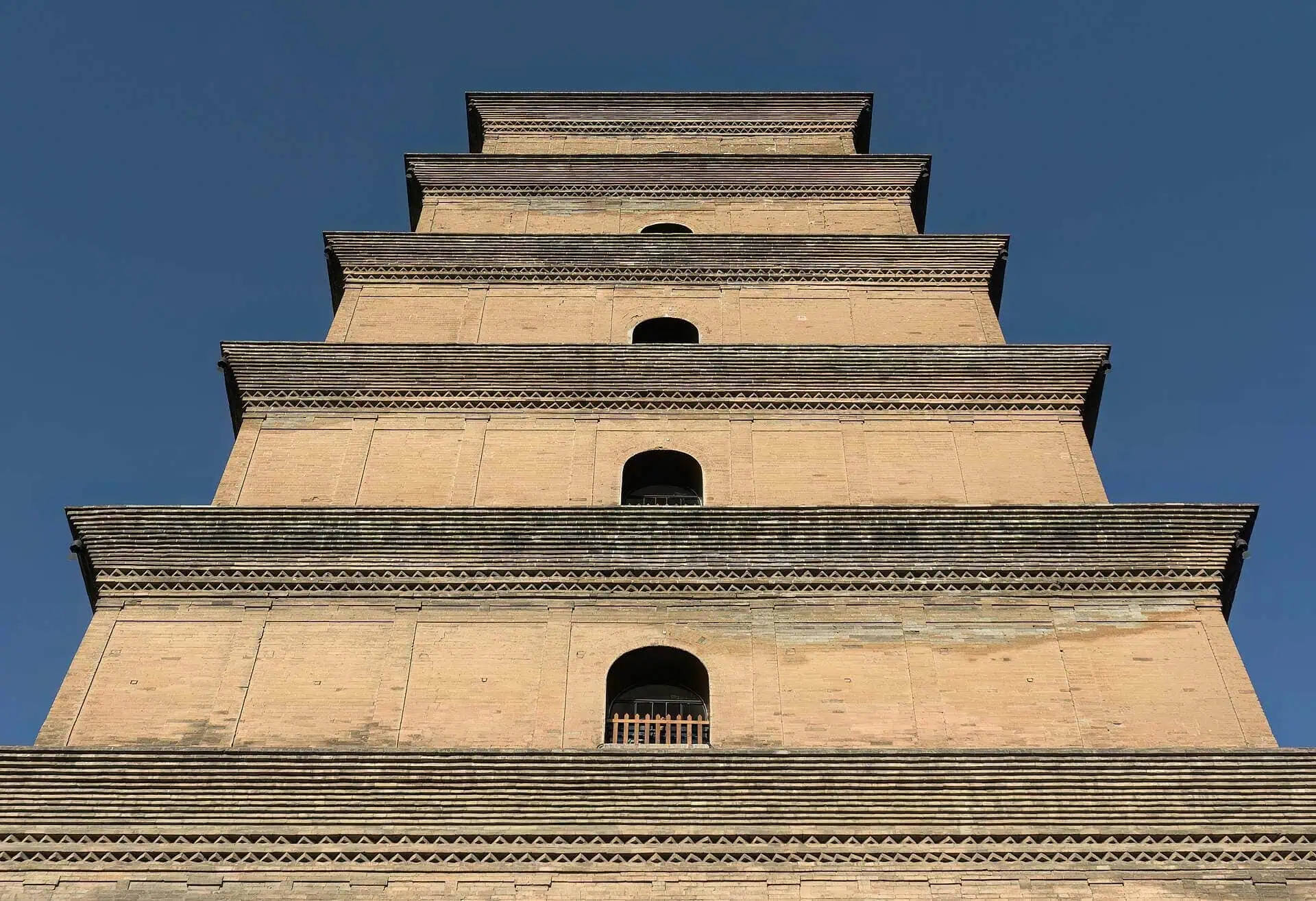
Big Wild Goose Pagoda
A Tang brick pagoda raised in 652 AD for a monk's 17-year journey to India — still Xi'an's defining landmark.
Learn more →
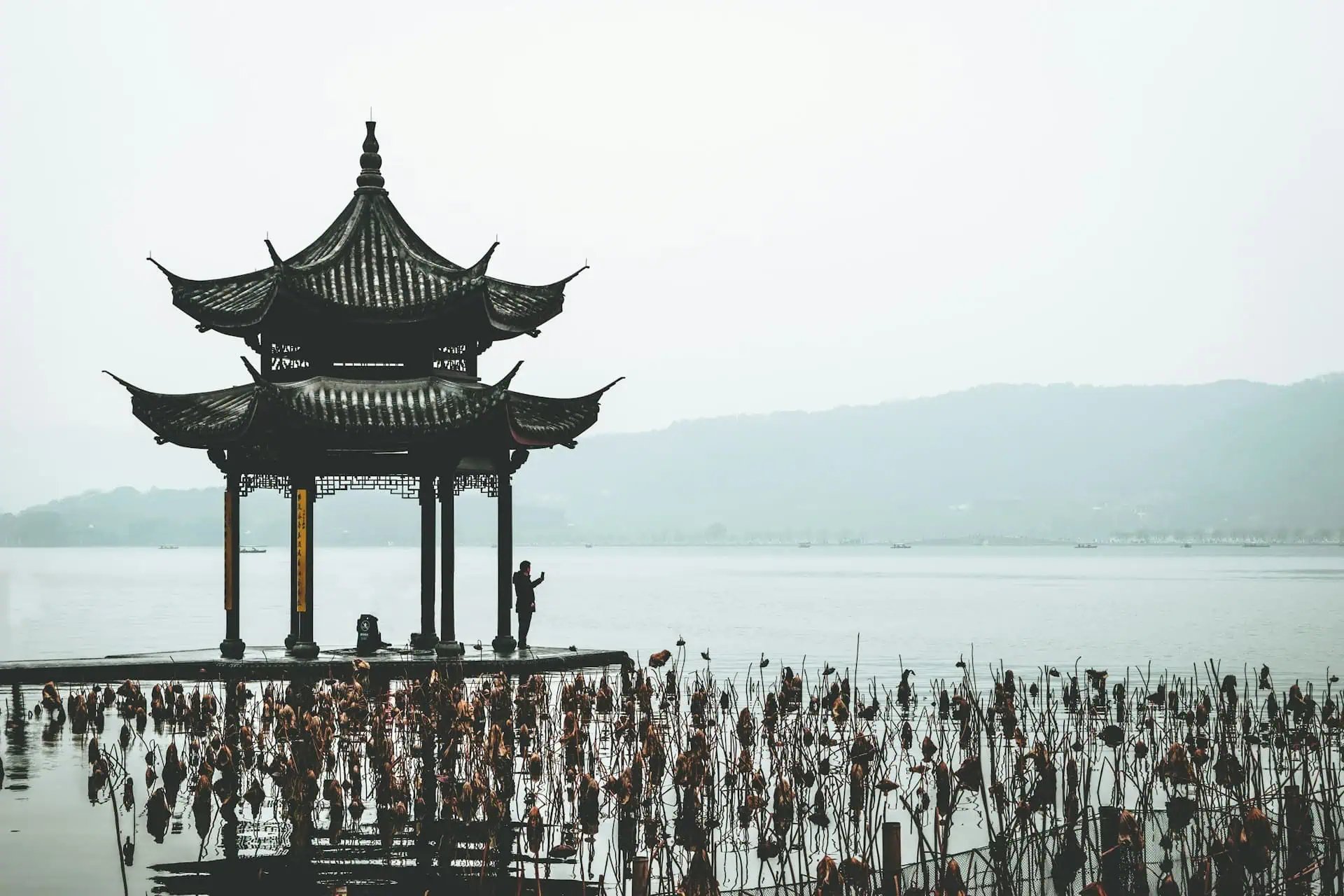
Qujiang Pool Heritage Park
The Tang dynasty's favorite party lake, lost for a thousand years and refilled in 2008 — evening jogs and poetry-stone sunsets.
Learn more →

Grand Tang Ever-Bright City
Two kilometers of free, floodlit Tang dynasty spectacle — the golden age, rebooted nightly.
Learn more →
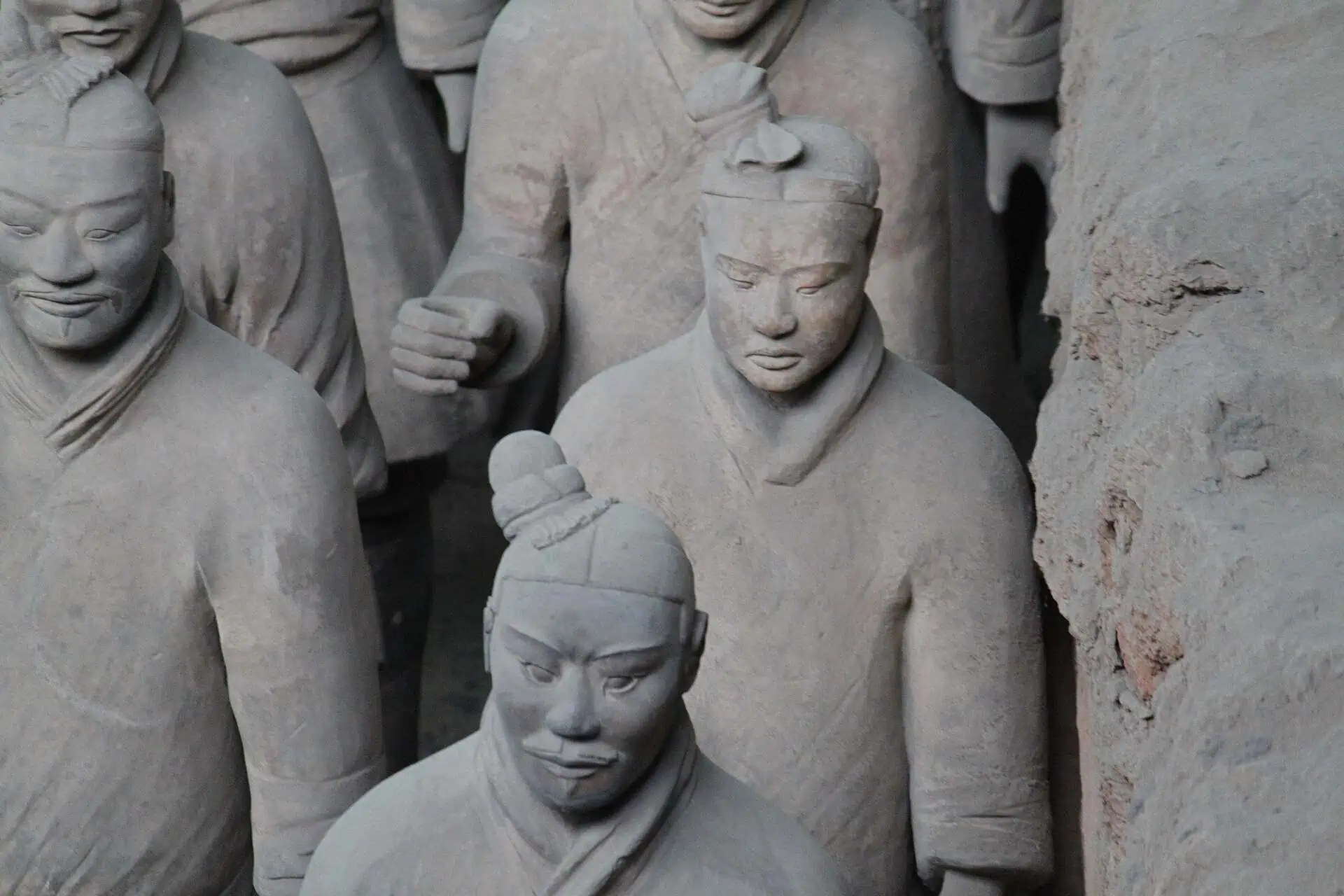
Terracotta Army
8,000 life-sized soldiers buried for China's First Emperor — and still on guard 2,200 years later.
Learn more →
Keep exploring
Hanfu costume rental & photoshoot guide
Renting a Tang-style costume and having your photo taken against 1,300-year-old backdrops is Xi'an's signature tourist experience — and unlike most signature tourist experiences, it's actually good value. A full outfit with hair and makeup runs ¥100–300, the streets are so used to costumed visitors that nobody bats an eye, and the night scenery does the heavy lifting. Here's how to do it without getting upsold.
Tang Dynasty show & dumpling banquet — worth it?
The Tang Dynasty Palace dinner show is Xi'an's longest-running tourist evening: a dumpling banquet followed by an hour of Tang court music and dance in a plush theater. It's polished, comfortable and unashamedly aimed at visitors — and whether it's ¥400 well spent depends entirely on who you are. Families and first-time visitors to China tend to love it; travelers chasing the raw and local should spend the evening at Ever-Bright City for free instead.
Xi'an at night: lights, shows & evening walks
Xi'an is a different city after dark — Tang-style streetscapes floodlit gold, a pagoda floating over fountain shows, gate towers glowing above the moat. The best of it is free: the Grand Tang Ever-Bright City pedestrian street alone is worth an evening, and the pagoda fountain show costs nothing. Add a late dinner in the Muslim Quarter and, in season, the open-air Song of Everlasting Sorrow, and your nights may outshine your days.