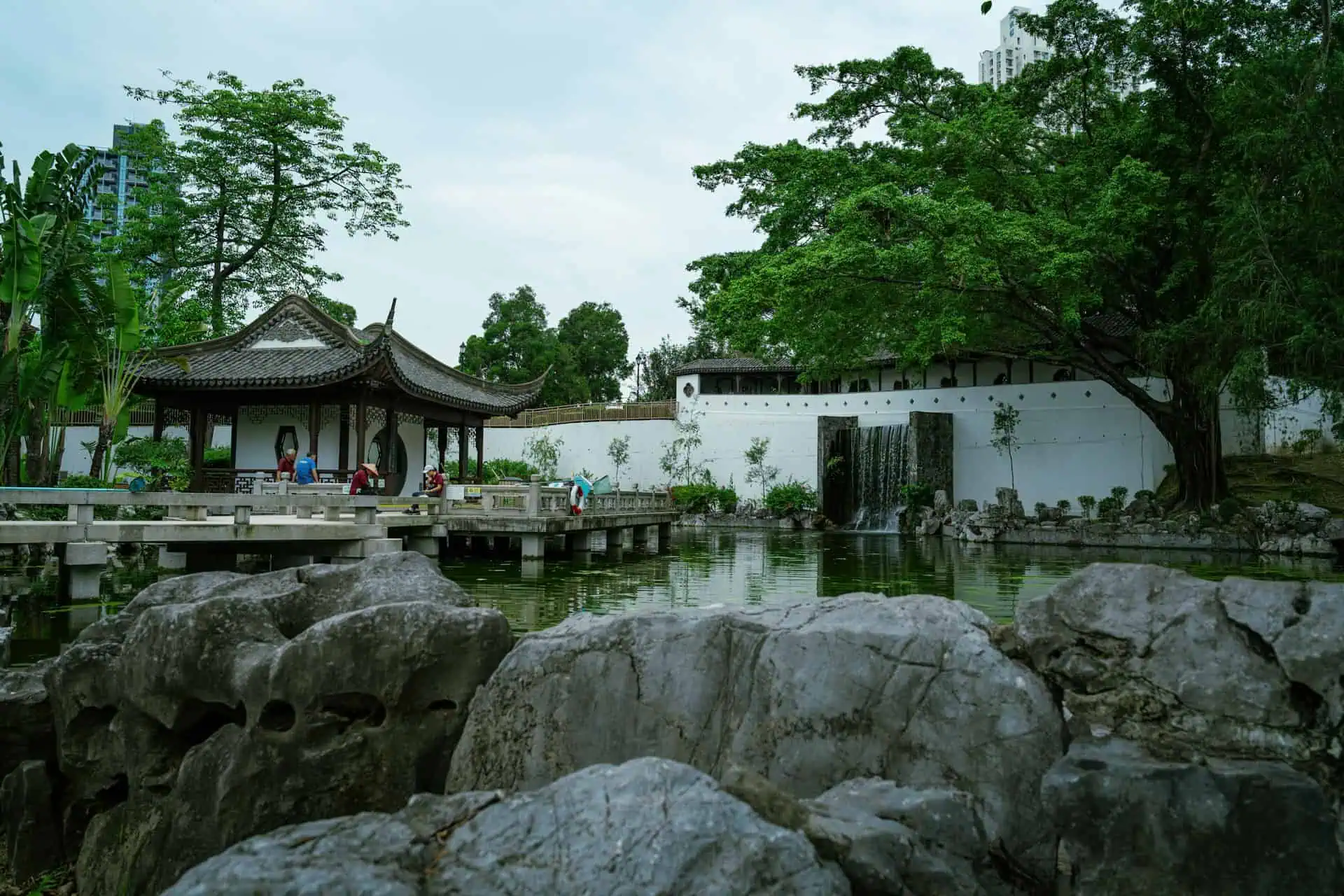
Xingqing Palace Park
Xīngqìnggōng Gōngyuán
Emperor Xuanzong's Tang pleasure palace, 1,300 years on — now Xi'an's favorite living room.
Entry
Free
Hours
Mon–Sun · 6:00
Time needed
1–2 hours
Metro
Line 6 · Jiaotong University · Xingqing Palace (交通大学·兴庆宫)
On the grounds where Emperor Xuanzong's Tang court held sway 1,300 years ago, Xingqing Palace Park (兴庆宫公园, Xīngqìnggōng Gōngyuán) is our 'watch Xi'an relax' recommendation: a free, central public park. Nothing standing is Tang — but the tai chi at dawn, the boat lake, the water-calligraphy grandpas and the April peonies are the real thing. Come for an hour of local life, not for monuments.
What you're looking at
Beneath the lawns is one of the three great palace complexes of Tang Chang'an. Xingqing Palace (兴庆宫, Xīngqìnggōng) began as the princely residence of Li Longji; when he took the throne as Emperor Xuanzong (唐玄宗, Táng Xuánzōng, r. 712–756), he expanded it into a working palace, and for much of his long reign he and his celebrated consort Yang Guifei (杨贵妃, Yáng Guìfēi) preferred it to the stiffer official palaces across the city. This was the pleasure palace — music, polo, parties on the lake.
The most famous evening happened at the Chenxiang Pavilion (沉香亭, Chénxiāng Tíng), the "aloeswood pavilion," in front of its peony beds. Court tradition says the poet Li Bai (李白, Lǐ Bái) was summoned — already drinking — to celebrate the peonies and the lady, and produced the Qingpingdiao (清平调, Qīngpíngdiào) songs on the spot: "Clouds recall her robes, flowers recall her face." The palace went into decline after the An Lushan rebellion shattered Xuanzong's reign, and disappeared at the dynasty's end.
What you walk through today is a 1958 public park built on the palace grounds — one of Xi'an's oldest. Xingqing Lake (兴庆湖, Xīngqìng Hú) at its center was dug by volunteer brigades, and the pavilion and halls are mid-century rebuilds on historic footprints. The continuity is in the use, not the fabric: this has been the neighborhood's garden for nearly 70 years, and the neighborhood still treats it that way. For the palace era it belongs to, see our Tang Chang'an history.
Visiting strategy
This is not a checklist sight — it's the place to recover from checklist sights. The strategy is timing:
- Dawn to about 9:00 is the best hour. The park fills with tai chi groups, fan dancers, sword forms, erhu players and men painting calligraphy on the pavement in water. Nobody performs for you; that's the point.
- Late afternoon to sunset is the second-best: boat traffic on the lake, families out, good light on the pavilion.
- April brings the park's famous peonies — the same flower Li Bai wrote about — alongside an annual tulip and peony show that opens in late March. Expect cheerful weekend crowds and superb people-watching.
- October–November trades flowers for ginkgo gold along the paths — see our autumn ginkgo guide for the season.
Rent a pedal boat if the mood strikes, walk the lake loop, sit on a bench. An hour is fine; two if you're decompression-touring. The park pairs naturally with nearby Qinglong Temple — especially in cherry blossom season — or as the slow morning after an evening at the City Wall.
Getting there
The park sits just southeast of the City Wall, opposite Xi'an Jiaotong University — easy from anywhere central.
- Metro Line 6 to Jiaotong University · Xingqing Palace station (交通大学·兴庆宫), then a 5–10 minute walk to the gates. It's the simplest route from most of the city.
- DiDi or taxi from the Bell Tower area costs about ¥15–25 and takes roughly 15 minutes. Ask for the south gate (南门) on Xianning West Road.
There are several gates; the south side puts you straight at the lake and the pavilion area.
Practical notes
- Cost: free, always. Boats charge a small hourly fee at the dock — pay by app.
- Food: park kiosks are basic (tea, ice cream, instant coffee). The streets around the university gates across the road are full of student-priced noodle and roujiamo shops — eat there instead.
- Toilets: near the main gates and along the loop.
- Shade: decent tree cover, but summer midday is still hot — morning and evening are the local hours for a reason.
- Kids: boats, open lawns and space to run; a good low-stakes stop on a family day (see Xi'an with kids).
Questions, answered
Is Xingqing Palace Park free?
Yes — entry is completely free, no ticket or booking needed. Only extras like the lake boats charge a small fee.
What are the opening hours of Xingqing Palace Park?
Roughly 6:00 to 22:00 daily, with last entry around 21:30. Dawn is the best time to visit for tai chi and local morning life.
What is there to do in Xingqing Palace Park?
Watch local life — tai chi, dancing, water calligraphy — walk the lake loop, rent a boat, and in April see the famous peonies and tulip show. It's a relaxation stop, not a monument stop.
How do I get to Xingqing Palace Park by metro?
Take Line 6 to Jiaotong University · Xingqing Palace station (交通大学·兴庆宫), then walk 5–10 minutes to the gates. A DiDi from the Bell Tower area costs about ¥15–25.
Is Xingqing Palace Park worth visiting?
Yes if you want to see how Xi'an actually lives — it's the city's most-loved public park, built on Tang palace grounds. Skip it if you're short on time and prioritizing standing historical architecture.
Keep exploring
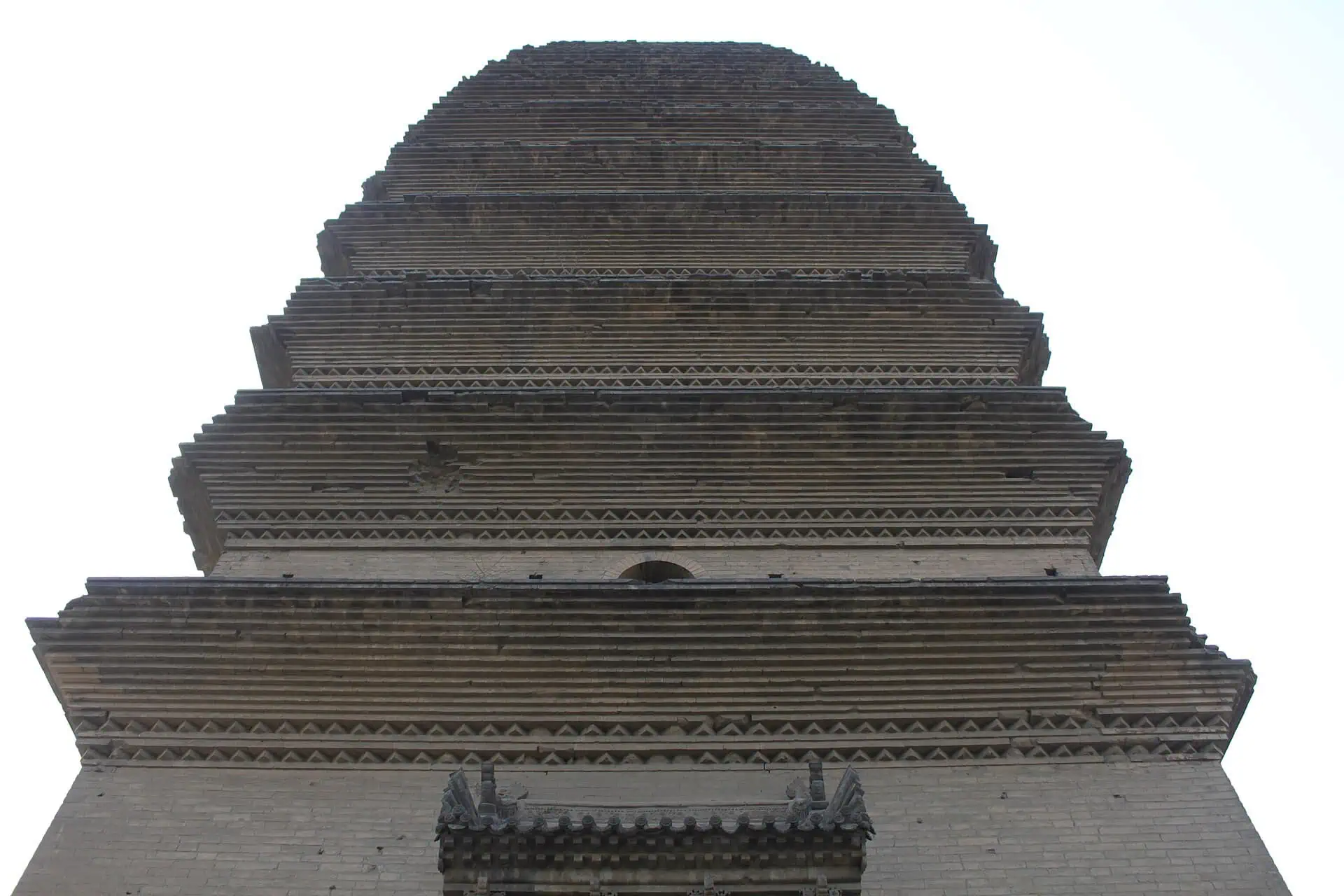
Small Wild Goose Pagoda & Xi'an Museum
A Tang pagoda from 707 AD that outlasted China's deadliest earthquake — free, calm, and half the crowds.
Learn more →
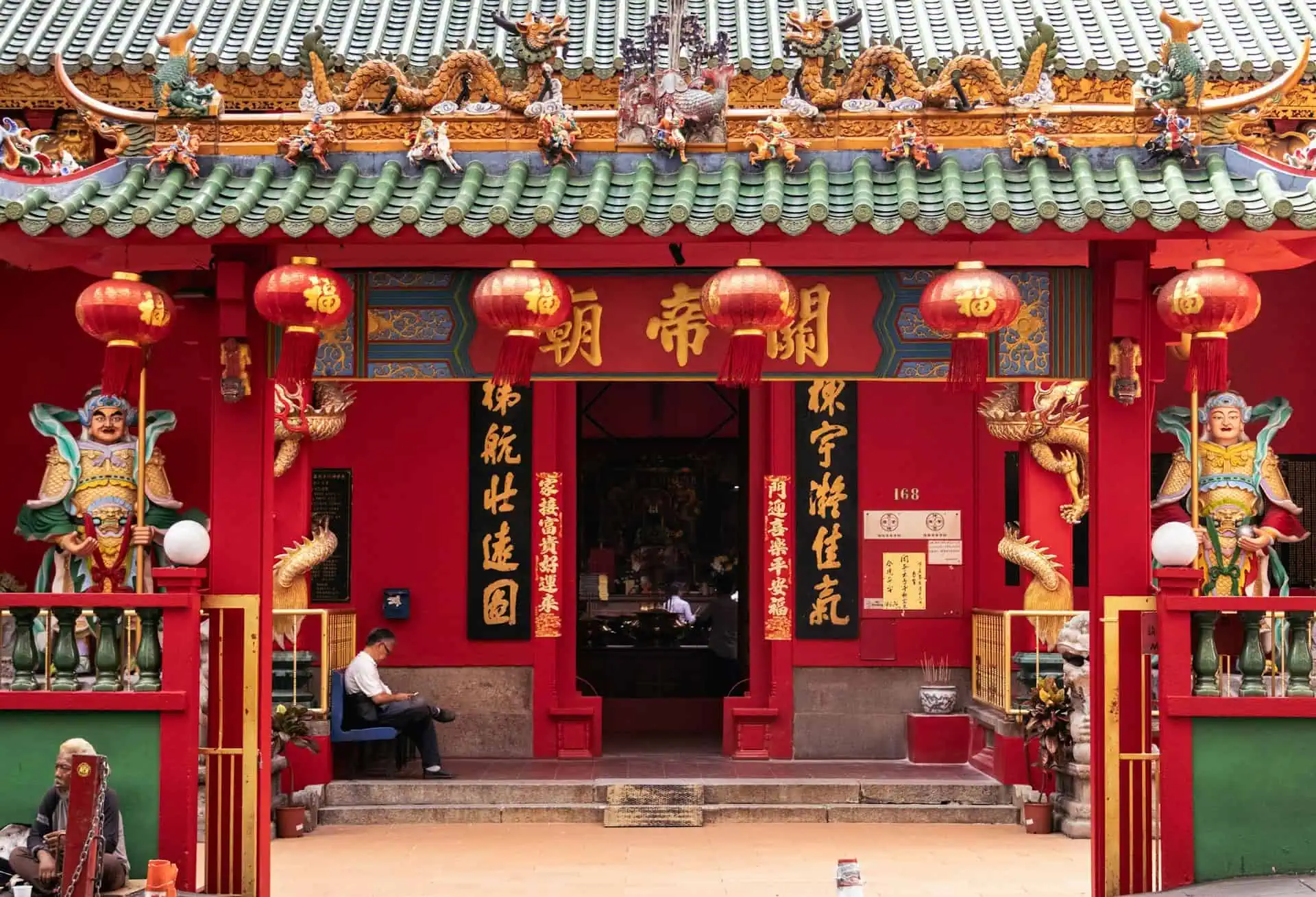
Baxian An (Temple of the Eight Immortals)
Xi'an's working Taoist temple — centuries of incense, fortune-tellers, and almost no tourists.
Learn more →
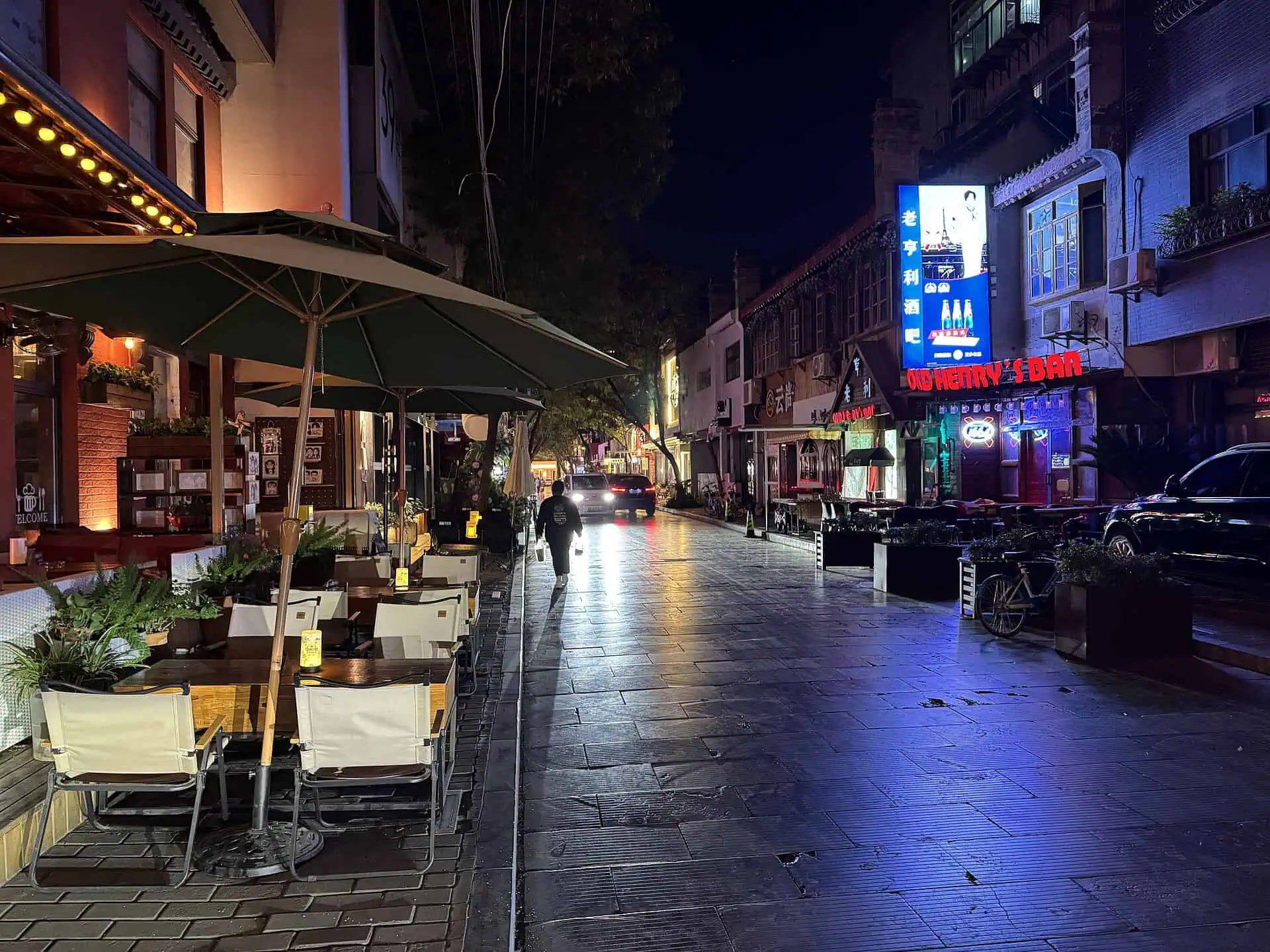
Defu Lane
Xi'an's original coffee-and-cocktail street, one grey-brick block inside the South Gate.
Learn more →
Related stories
Cherry blossoms in Xi'an: Qinglong Temple & beyond (March–April)
Xi'an's cherry blossom season runs roughly mid-March to mid-April, and the classic place to see it is Qinglong Temple — a Tang dynasty temple with a 1,200-year-old connection to Japan, where hundreds of Japanese-donated cherry trees bloom against old temple walls. Entry is free but you'll need a reservation, weekends are a contact sport, and if you miss the petals, April's peonies are the consolation prize. Here's how to time it.
Autumn in Xi'an: ginkgo gold (November)
Every November, a single 1,400-year-old ginkgo tree in the Zhongnan Mountain foothills turns Xi'an's social feeds gold — tradition says Emperor Taizong planted it himself. Seeing it takes a free-but-competitive reservation and an hour's drive south; if you'd rather stay in the city, there are honest ginkgo spots inside the wall and a 10,000-tree forest at Hanyangling. Here's the timing, the booking drill, and what November in Xi'an is actually like.