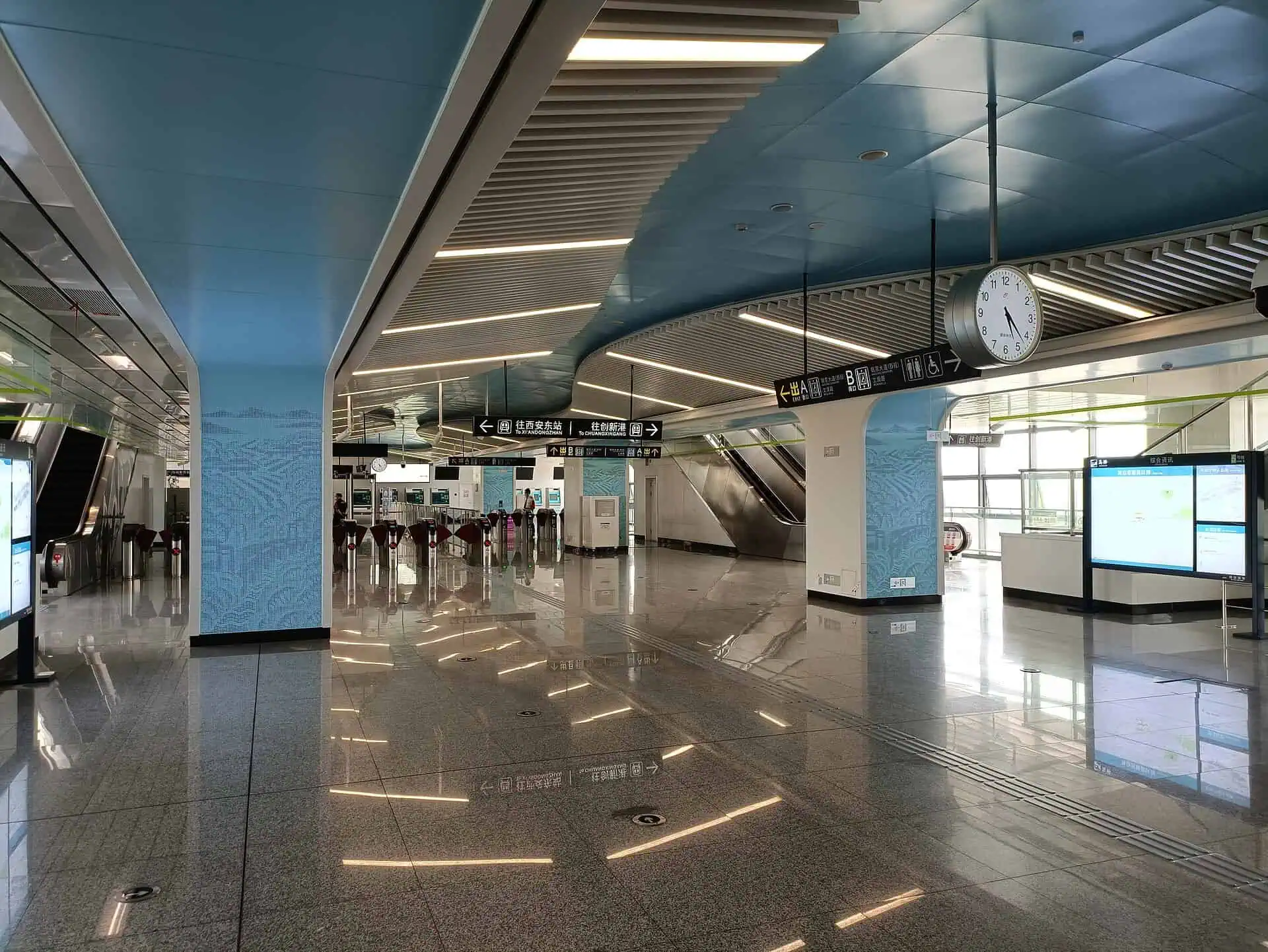
Small Wild Goose Pagoda & Xi'an Museum
Xiǎoyàntǎ (Xī'ān Bówùyuàn)
A Tang pagoda from 707 AD that outlasted China's deadliest earthquake — free, calm, and half the crowds.
Entry
Free
Hours
Peak season · 9:00
Time needed
2–3 hours
Booking
Required
Metro
Line 2 / 5 · Nanshaomen (南稍门)
Standing since 707 AD and carrying the scars of the earthquakes it outlasted, the smaller of Xi'an's two Tang pagodas is the more pleasant visit: a working temple park where locals practice tai chi under the scholar trees, and a genuinely good free city museum on the same ticket. It won't give you the big postcard moment of its famous sibling — it gives you a morning that feels like Xi'an rather than like a queue.
What you're looking at
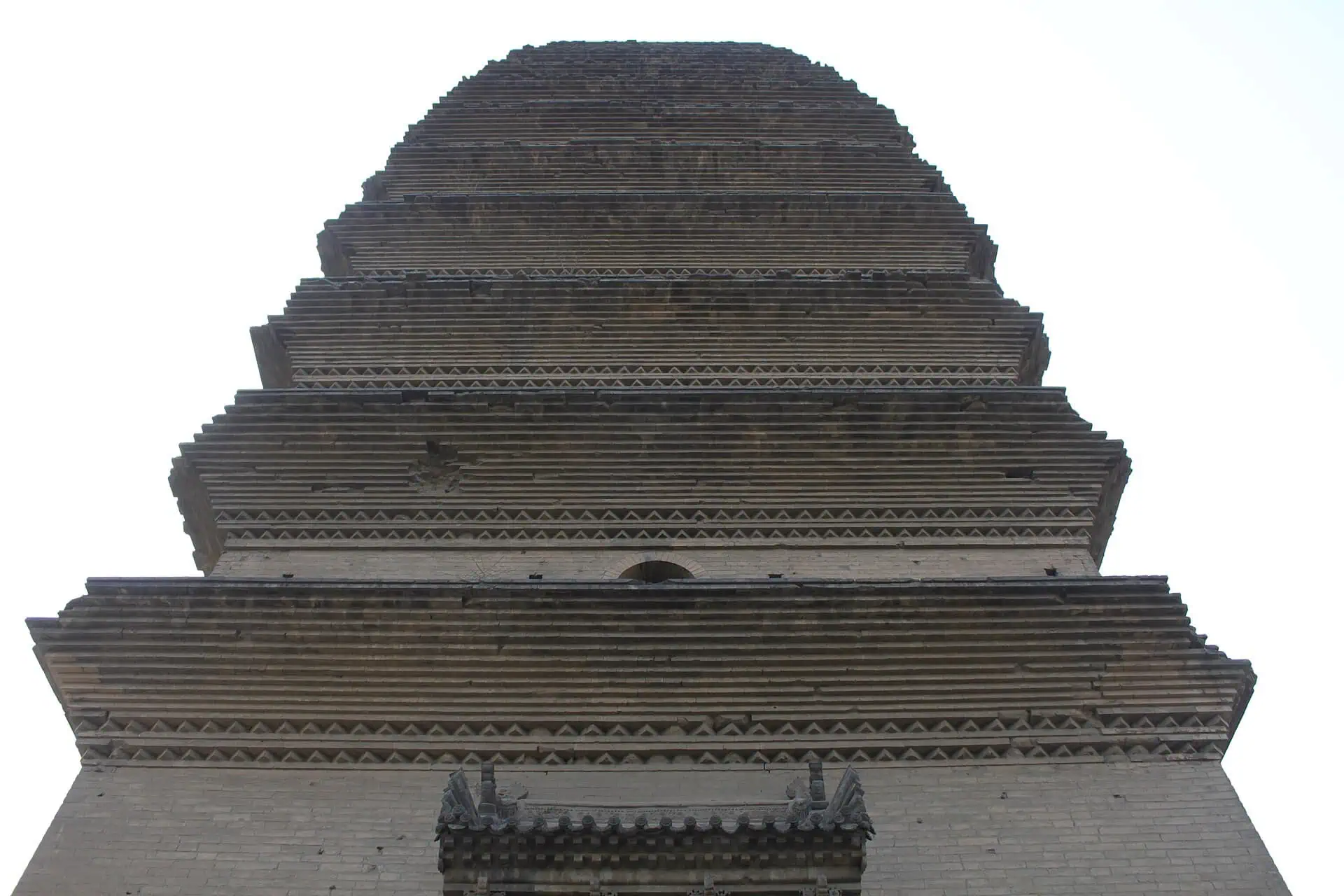
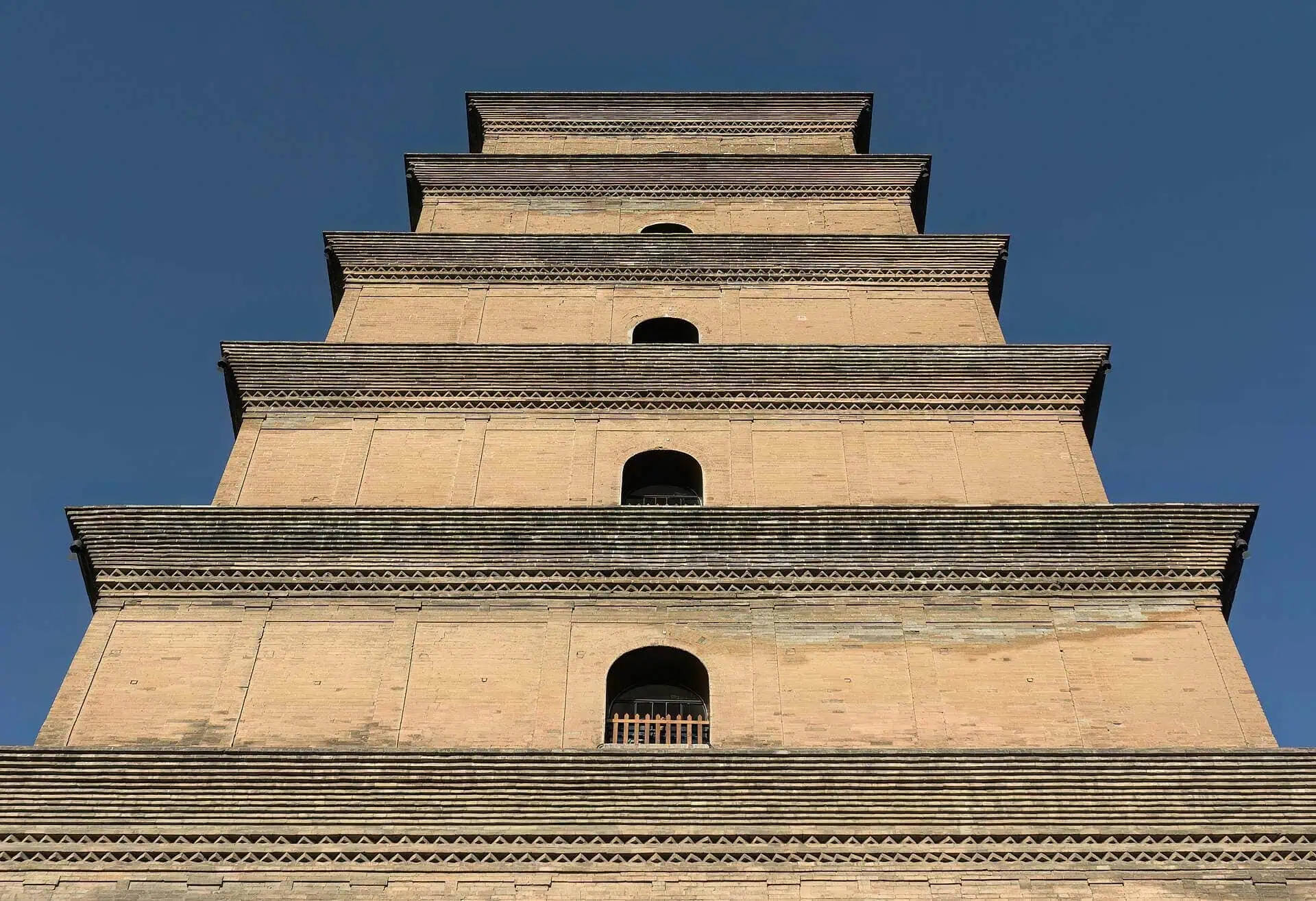
The Small Wild Goose Pagoda (小雁塔, Xiǎoyàntǎ) went up in 707–709 AD as part of Jianfu Temple (荐福寺, Jiànfú Sì), one of Tang Chang'an's great Buddhist translation centers — the monk Yijing (义净, Yìjìng) stored and translated the scriptures he'd hauled back by sea from India here. It was built as a fifteen-story brick tower; what you see today is thirteen stories and about 43 meters, and the flat, truncated top is the point of the story.
In January 1556, the deadliest earthquake in recorded history hit Shaanxi — the Huaxian quake, which killed hundreds of thousands — and sheared the top two stories clean off. Temple chronicles add the better tale: an earlier quake in 1487 split the pagoda from crown to base, and a second shock in 1521 shook the crack closed again. Whether or not you believe the self-healing masonry, the tower's survival is real, and the slightly wounded silhouette is more affecting than a pristine one would be.
Three things to do on site:
- The pagoda itself — a dense-eave brick tower, square in plan, elegant rather than grand. An interior stair exists but has been closed at times for conservation; ask at the gate if climbing matters to you.
- Jianfu Temple and its bell — the temple's great iron bell was cast in 1192 (Jin dynasty). The "morning bell of the wild goose pagoda" (雁塔晨钟, Yàntǎ Chénzhōng) counts among the traditional Eight Sights of Guanzhong, and you can strike it yourself for a small fee.
- Xi'an Museum (西安博物院, Xī'ān Bówùyuàn) — the modern museum on the same grounds, opened in 2007, with around 130,000 objects covering the city's whole arc. The scale model of Tang Chang'an's grid is the single best way to understand the city you're standing in; the Buddhist sculpture and jade galleries are strong too. If the Shaanxi History Museum is sold out, this is not a consolation prize — it's a calmer museum with a tighter story.
Visiting strategy
Come in the morning. The park is at its best before 10:00, when locals are doing tai chi, sword routines and ballroom dancing under the trees — and the light on the pagoda is at its kindest. Do the museum first (it fills slightly later), then the temple and bell, then circle the pagoda as you leave.
The honest comparison with the Big Wild Goose Pagoda: the big one has the Xuanzang story, the fountain show and the crowds, and charges for both the grounds and the climb. The small one is free, greener, and feels like a neighborhood park with a 1,300-year-old tower in it. If you have three days, do both — they tell different halves of the Tang Chang'an story. If you have one day and must choose, pick by temperament: spectacle versus calm.
Combine it with: the city wall at Yongning Gate (South Gate), about 15 minutes on foot — pagoda and museum in the morning, wall walk in the afternoon. That pairing anchors day two of our 3-day itinerary.
Seasonal note: the temple's old ginkgo trees turn the grounds gold in November — see autumn in Xi'an. Spring brings magnolias against the brick.
Budget your time: 1.5–2 hours for the museum plus an unhurried loop of the park; 3 hours if you read every label.
Getting there
The pagoda and museum share a walled park on Youyi West Road, just south of the city wall — easy to reach from anywhere central; see our getting around Xi'an guide for the metro basics.
- Metro Line 2 or 5 to Nanshaomen (南稍门), then about a 10-minute walk west along Youyi Road to the main gate.
- DiDi or taxi from the Bell Tower costs roughly ¥15–20 and takes about 10 minutes.
- On foot from the city wall's South Gate area: about 15 minutes, most of it along shaded streets.
Use the main (north) entrance on Youyi West Road; the driver box below shows the address in Chinese.
Practical notes
- Passport: entry is free but real-name — you'll scan in with the passport you reserved with. Keep it handy.
- Food: nothing memorable inside the park. Eat around Nanshaomen station, or make this the morning half of a day that ends with a Muslim Quarter food crawl.
- Toilets: available in the park and inside the museum.
- Photography: welcome in the park; the pagoda photographs best from the southeast corner of the grounds, especially in morning light.
- Climbing: the interior stair opens and closes with conservation work — treat any climb as a bonus, not a promise.
- Kids: a good low-stress museum for children — open park space to decompress in, a bell to strike, and none of the Shaanxi History Museum's crowd pressure. More ideas in Xi'an with kids.
Questions, answered
Is the Small Wild Goose Pagoda free?
Yes — the park and Xi'an Museum are both free, but you need a real-name reservation via the Xi'an Museum (西安博物院) WeChat account. Outside holidays, same-week slots are usually easy; bring your passport for entry.
Small Wild Goose Pagoda vs Big Wild Goose Pagoda — which should I visit?
The Big Wild Goose Pagoda has the famous Xuanzang connection, the fountain show and the crowds, and charges admission. The Small Wild Goose Pagoda is free, quieter, set in a local park, and comes with the excellent Xi'an Museum. With two or more days, do both; choosing one is a question of spectacle versus calm.
Why does the Small Wild Goose Pagoda have a flat top?
The 1556 Shaanxi earthquake — the deadliest in recorded history — sheared off the top two of its original fifteen stories. Temple chronicles also record an earlier quake splitting the tower in 1487 and a later one shaking the crack shut in 1521.
Can you climb the Small Wild Goose Pagoda?
Sometimes. There is an interior stair, but it closes periodically for conservation and was shut for stretches in recent years. Ask at the gate on the day — don't build the visit around it.
What day is the Xi'an Museum closed?
Tuesdays, except public holidays. Peak-season hours are roughly 8:30–18:00 and off-season 9:00–17:30, with last entry about an hour before closing. The surrounding park keeps longer hours than the museum galleries.
How long do you need at the Small Wild Goose Pagoda?
About 2 hours covers the museum's highlights, the Jianfu Temple bell and a slow loop of the pagoda. Allow 3 if you're a label-reader or visiting when the ginkgo trees turn in November.
Keep exploring
Xingqing Palace Park
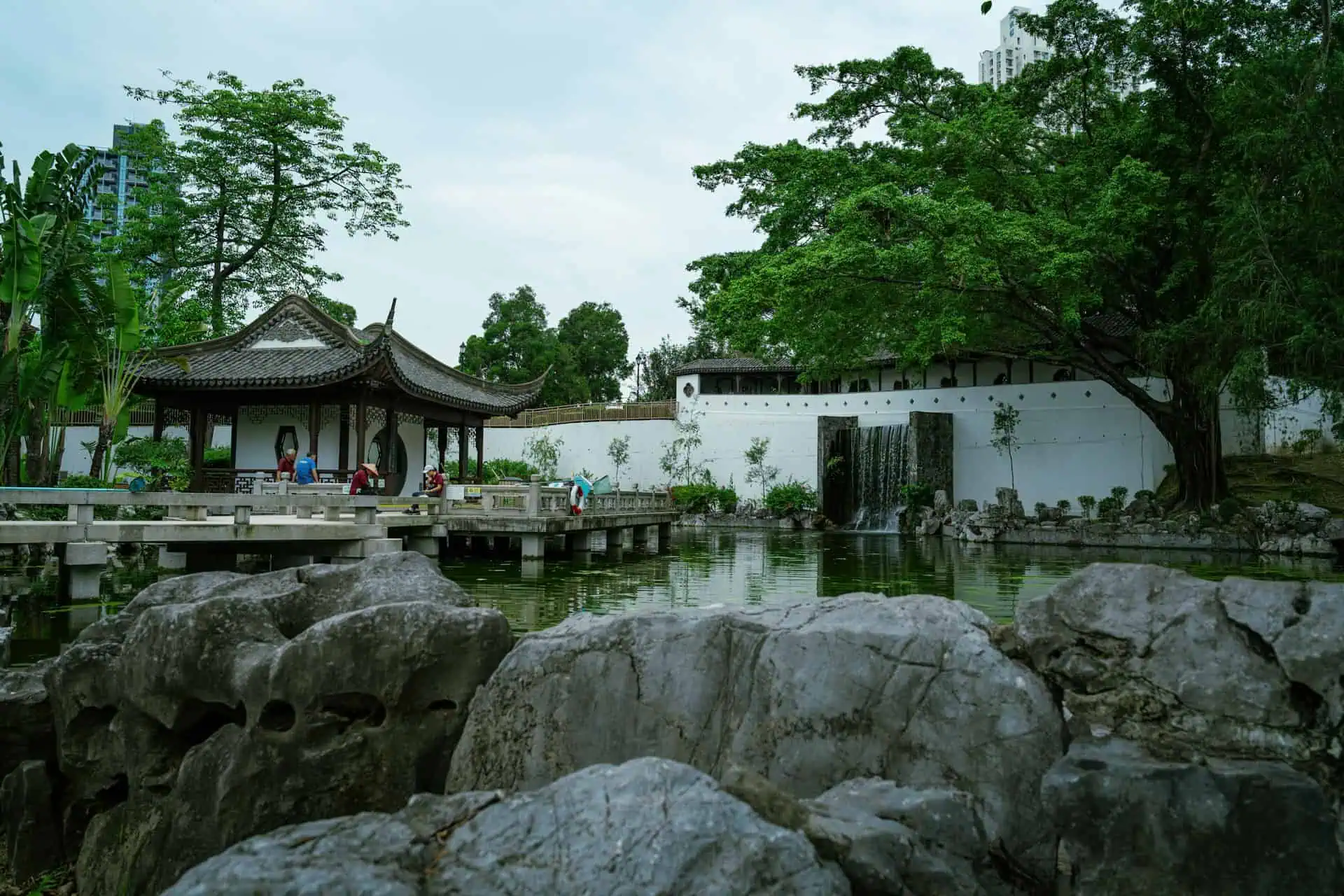
Emperor Xuanzong's Tang pleasure palace, 1,300 years on — now Xi'an's favorite living room.
Learn more →
Baxian An (Temple of the Eight Immortals)
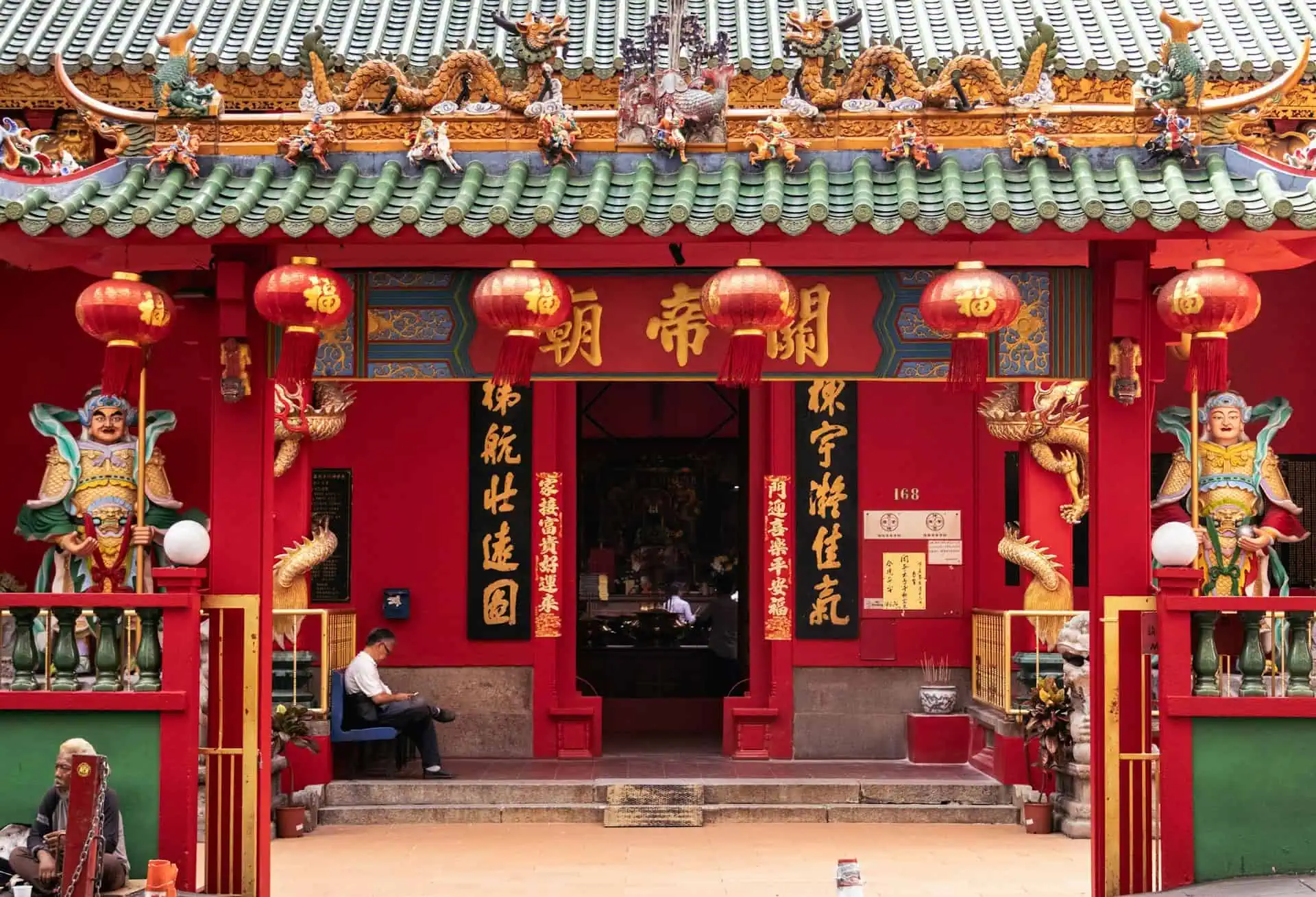
Xi'an's working Taoist temple — centuries of incense, fortune-tellers, and almost no tourists.
Learn more →
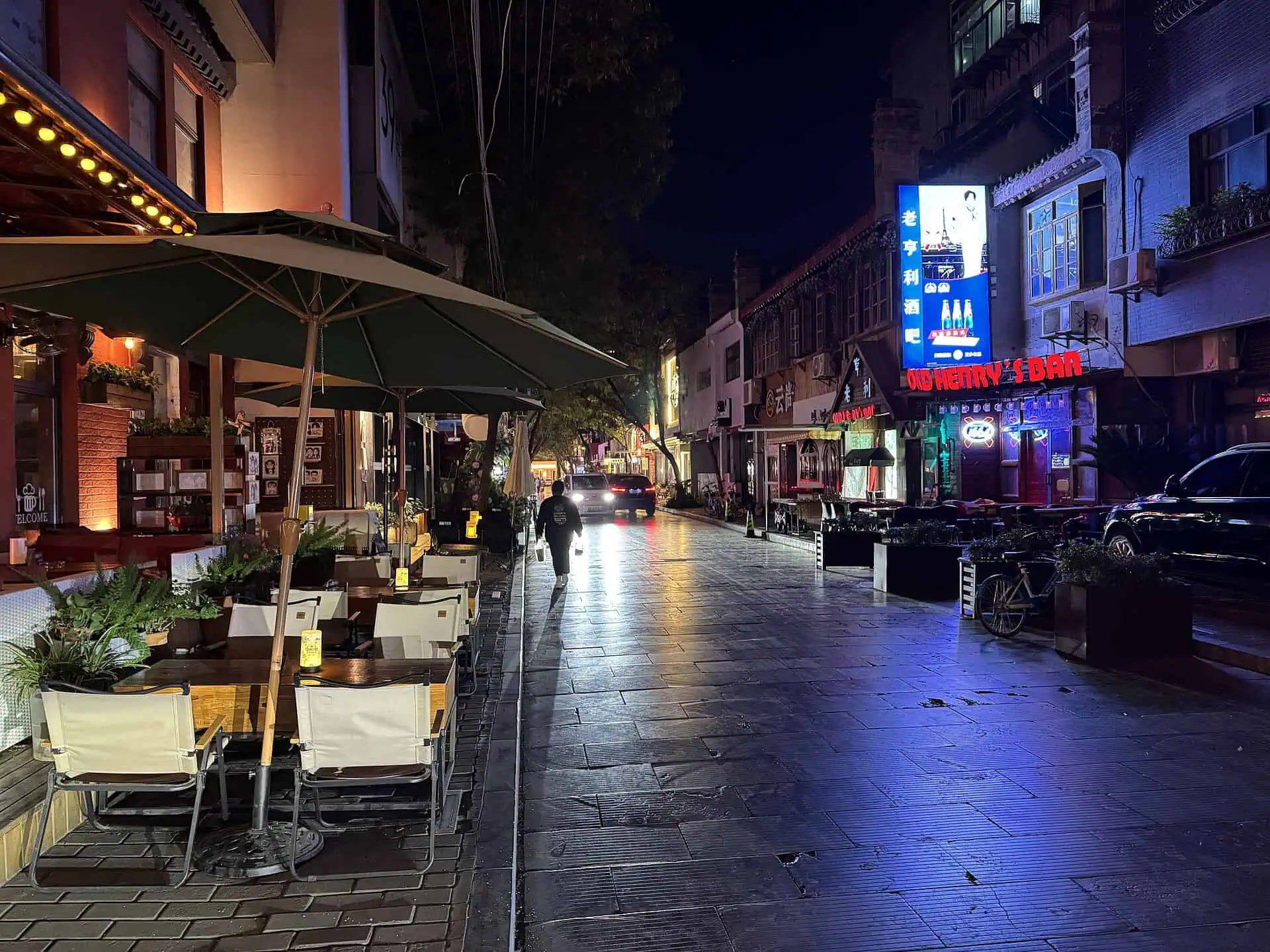
Defu Lane
Xi'an's original coffee-and-cocktail street, one grey-brick block inside the South Gate.
Learn more →
Related stories
Public holidays & crowds: when not to come
Chinese public holidays concentrate 1.4 billion people's travel into the same few weeks, and Xi'an is one of the country's most popular destinations. Two periods are genuinely best avoided — the October Golden Week and the Spring Festival season — while the smaller three-to-five-day holidays just demand earlier bookings and earlier mornings.
Xi'an with kids: the family playbook
Xi'an is one of China's easiest cities to do with children: a compact center, sights with genuine visual scale, and food kids actually eat. The trick is choosing the four or five things that land with young travelers — and skipping the ones that are homework.
Accessibility in Xi'an: an honest audit
Xi'an is a 3,000-year-old city running on modern infrastructure, and accessibility splits exactly along that line: the metro and the big modern museums are genuinely step-free, while anything involving a 600-year-old gate, tower or pagoda usually means stairs. Here's what works, what doesn't, and what to confirm before you fly.
Tang Dynasty show & dumpling banquet — worth it?
The Tang Dynasty Palace dinner show is Xi'an's longest-running tourist evening: a dumpling banquet followed by an hour of Tang court music and dance in a plush theater. It's polished, comfortable and unashamedly aimed at visitors — and whether it's ¥400 well spent depends entirely on who you are. Families and first-time visitors to China tend to love it; travelers chasing the raw and local should spend the evening at Ever-Bright City for free instead.
Autumn in Xi'an: ginkgo gold (November)
Every November, a single 1,400-year-old ginkgo tree in the Zhongnan Mountain foothills turns Xi'an's social feeds gold — tradition says Emperor Taizong planted it himself. Seeing it takes a free-but-competitive reservation and an hour's drive south; if you'd rather stay in the city, there are honest ginkgo spots inside the wall and a 10,000-tree forest at Hanyangling. Here's the timing, the booking drill, and what November in Xi'an is actually like.
Chang'an in the Tang dynasty: the world's greatest city
Thirteen dynasties: Xi'an as capital, a visual timeline