Yongxingfang
Yǒngxīngfāng
All 107 counties of Shaanxi's food packed into one walled block — touristy, efficient, and honestly useful.
Entry
From ¥5
Hours
Mon–Sun · 10:00
Time needed
2–4 hours
Metro
Line 1 · Chaoyangmen (朝阳门)
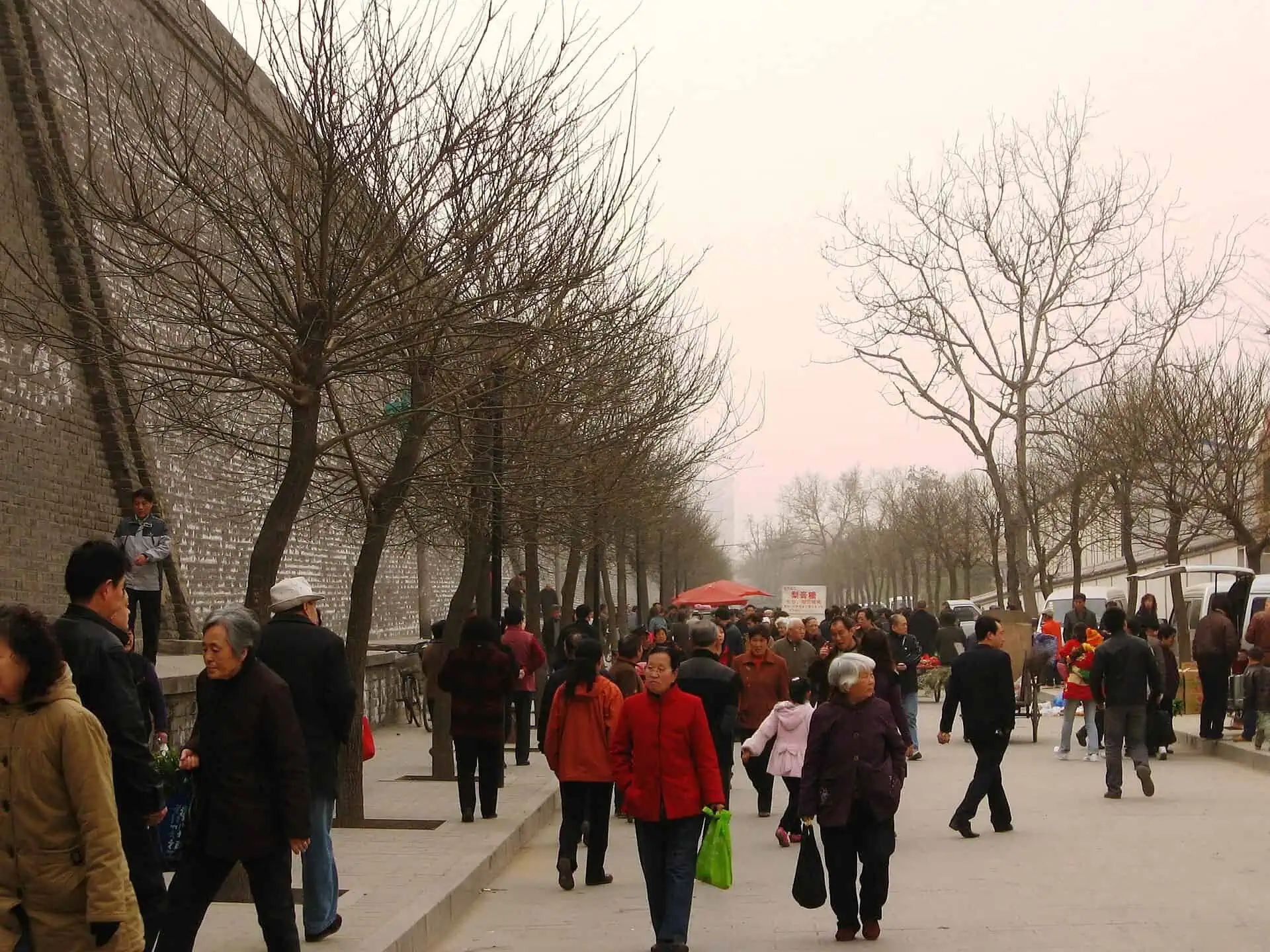
Yongxingfang (永兴坊, Yǒngxīngfāng) is a purpose-built heritage food block inside the city wall's northeast corner, gathering specialty stalls from all 107 counties of Shaanxi into one walkable grid — plus the bowl-smashing wine ritual that made it internet-famous. Yes, it's curated, crowded and aimed at visitors; it's also free to enter, genuinely delicious in places, and the single most efficient way to eat beyond the [Muslim Quarter](/en/attractions/muslim-quarter) greatest hits. If you have a week, eat your way through the real neighborhoods instead. If you have two days, this block earns its keep.
What you're looking at
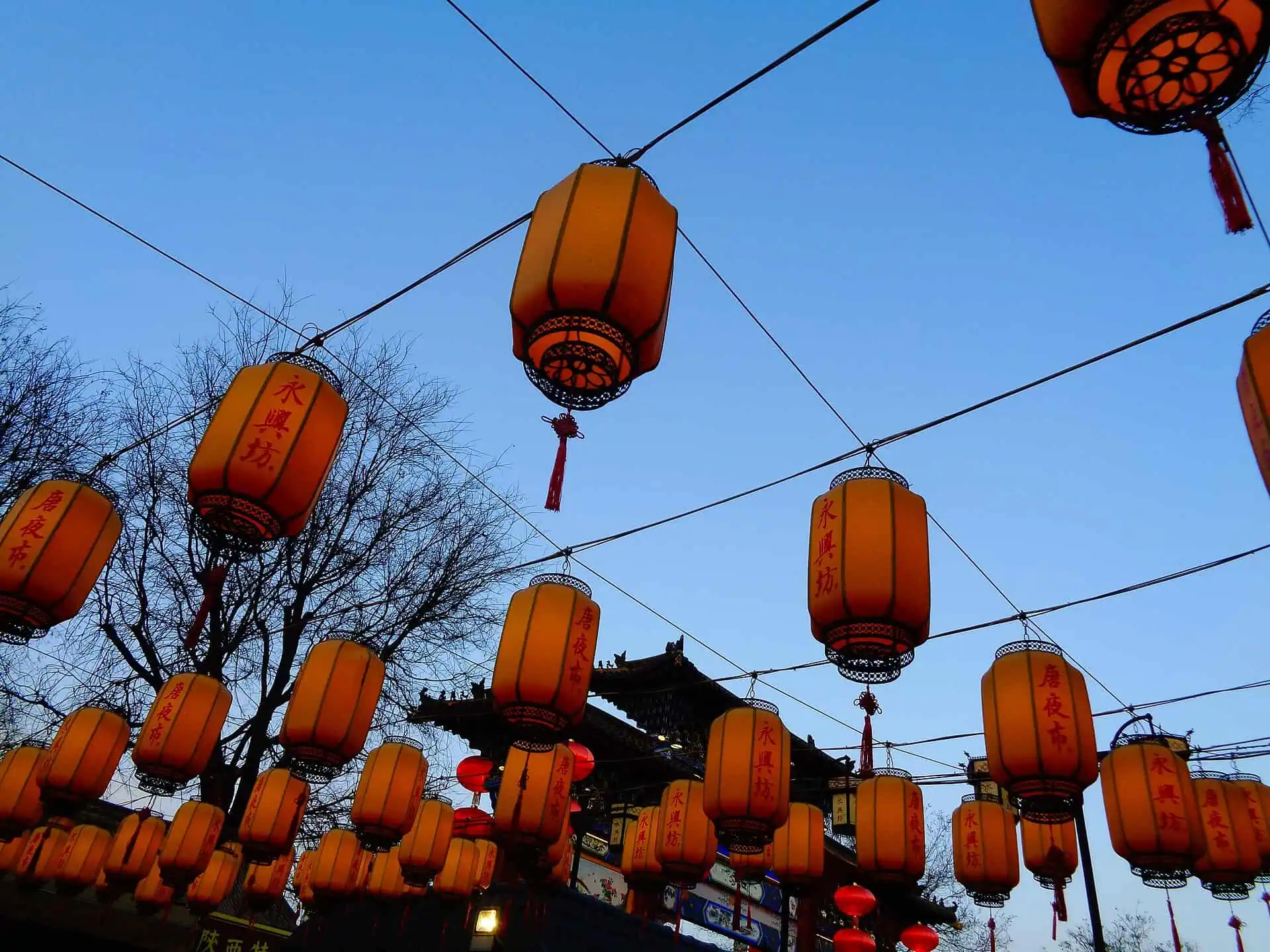
The block stands on the site of the Tang-dynasty residence of Wei Zheng (魏征, Wèi Zhēng), the famously blunt chancellor of Emperor Taizong — a piece of trivia the site trades on hard, though nothing Tang survives above ground. What you actually get is a walled grid of retro-style lanes built in 2014, organized by region: Guanzhong Street (关中街) for the Xi'an plain's noodles and breads, Northern Shaanxi Street (陕北街) for loess-plateau lamb, potato and buckwheat dishes, and Southern Shaanxi Street (陕南街) for the rice-and-river-food cooking of the Qinling's far side.
The concept is "intangible heritage food" (非遗美食): each stall represents a county specialty, many run by officially recognized inheritors of a dish's technique. That sounds like marketing, and partly is — but it also means you'll find things here that rarely appear in Xi'an restaurants, like northern Shaanxi yangyu caca (洋芋擦擦, grated-potato cakes) or southern Ankang steamed noodles.
Then there's the bowl-smashing wine (摔碗酒, shuāiwǎn jiǔ): you drink a small bowl of rice wine, wish, and hurl the bowl into a rubble pit of smashed ceramics. It went viral on Douyin in 2018 and briefly made this block more crowded than the Muslim Quarter. The queue is shorter now; the smashing is still cathartic. Free shadow-puppet snippets and Qinqiang opera bursts run on the small stages most evenings.
Visiting strategy
Come hungry and come at 17:00–19:00. Stalls are fully open, the evening performances start, and the block looks its best as the lanterns come on. Lunch hours work too; late night it winds down.
Eat by region, not by impulse. The grid layout is the point: do one lap to scout, then eat two or three dishes per regional street, sharing everything. Most snacks run about ¥10–20 a portion. Prioritize what you can't get elsewhere in Xi'an — northern and southern Shaanxi stalls — over the Guanzhong dishes you can eat better in the wild; our local eats guide tells you which classics deserve a dedicated trip.
Payment: everything is Alipay/WeChat QR — sort that before you fly (see our money and payments guide). Almost no stall takes cash happily, and none take cards.
Skip if: you have 4+ days and an appetite for hunting real neighborhood joints — start with the Muslim Quarter food crawl and Sajinqiao instead, and treat Yongxingfang as optional.
Getting there
The block sits just inside Zhongshan Gate (中山门), also called Xiaodongmen (小东门, the Little East Gate), in the wall's northeast stretch — inside the old town inside the wall.
- Metro: Line 1 to Chaoyangmen station (朝阳门), then walk about 10 minutes north along the wall's inner side to Zhongshan Gate; the entrance is just inside the gate.
- Taxi/DiDi: ask for 永兴坊; about ¥15 from the Bell Tower.
- On foot/by bike: about 25 minutes on foot from the Bell Tower along East Street, or an easy shared-bike ride — see our getting around guide.
Practical notes
- Cost: entry is free and you pay per stall — a filling graze for two runs about ¥100 total.
- Crowds: national holidays turn the lanes into a shuffle; check our public holidays and crowds guide if your dates are flexible. Weekday evenings are busy but moving.
- Toilets: free public toilets inside the block — cleaner than most street-food areas.
- Kids: excellent for families — short distances, endless novelty, performances, and the bowl-smashing is supervised and soft-landing. See Xi'an with kids.
- Dietary notes: pork and lard feature heavily on the Guanzhong and southern streets; halal options exist but are limited — for a halal feast, the Muslim Quarter remains the answer.
- Souvenirs: the same heritage branding extends to packaged goods (chili oil, vinegars, dried noodles) — decent quality, gift-ready, priced for tourists.
Questions, answered
Is Yongxingfang better than the Muslim Quarter?
They do different jobs. The Muslim Quarter is a real, chaotic Hui neighborhood with a thousand years of history and the best lamb in town. Yongxingfang is a curated, cleaner, easier block covering the whole province — better for breadth and for short trips, worse for atmosphere. Do both if you can.
What is the bowl-smashing wine at Yongxingfang?
You buy a small bowl of rice wine (about ¥5), make a wish, drink it and smash the empty bowl into a pit of broken pottery — a ritual borrowed from Shaanxi folk custom that went viral in 2018 and made the block famous. The smashing pit is impossible to miss; just follow the sound of breaking ceramics.
Do you need tickets for Yongxingfang?
No — entry to the block is free and no reservation is needed. You pay per food stall, roughly ¥10–20 per snack, by mobile payment.
How long do you need at Yongxingfang?
Two to three hours with eating and a performance stop; one hour if you just walk it. Combine with the City Wall's east section or the Daming Palace area on the same side of town.
Keep exploring
Xi'an City Wall
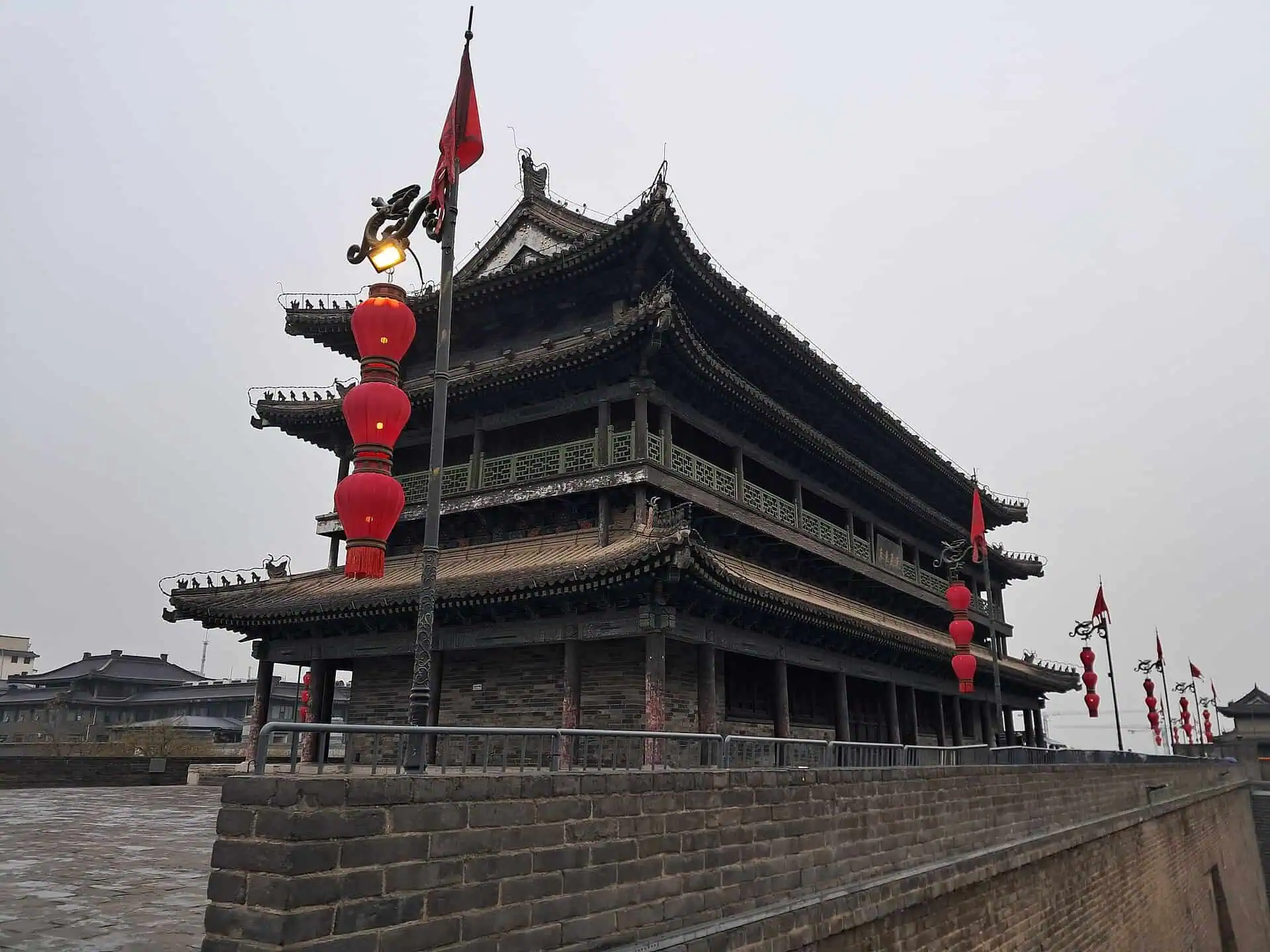
A 14-kilometer Ming dynasty rectangle you can cycle on top of — 650 years old and still the city's favorite commute.
Learn more →
Muslim Quarter
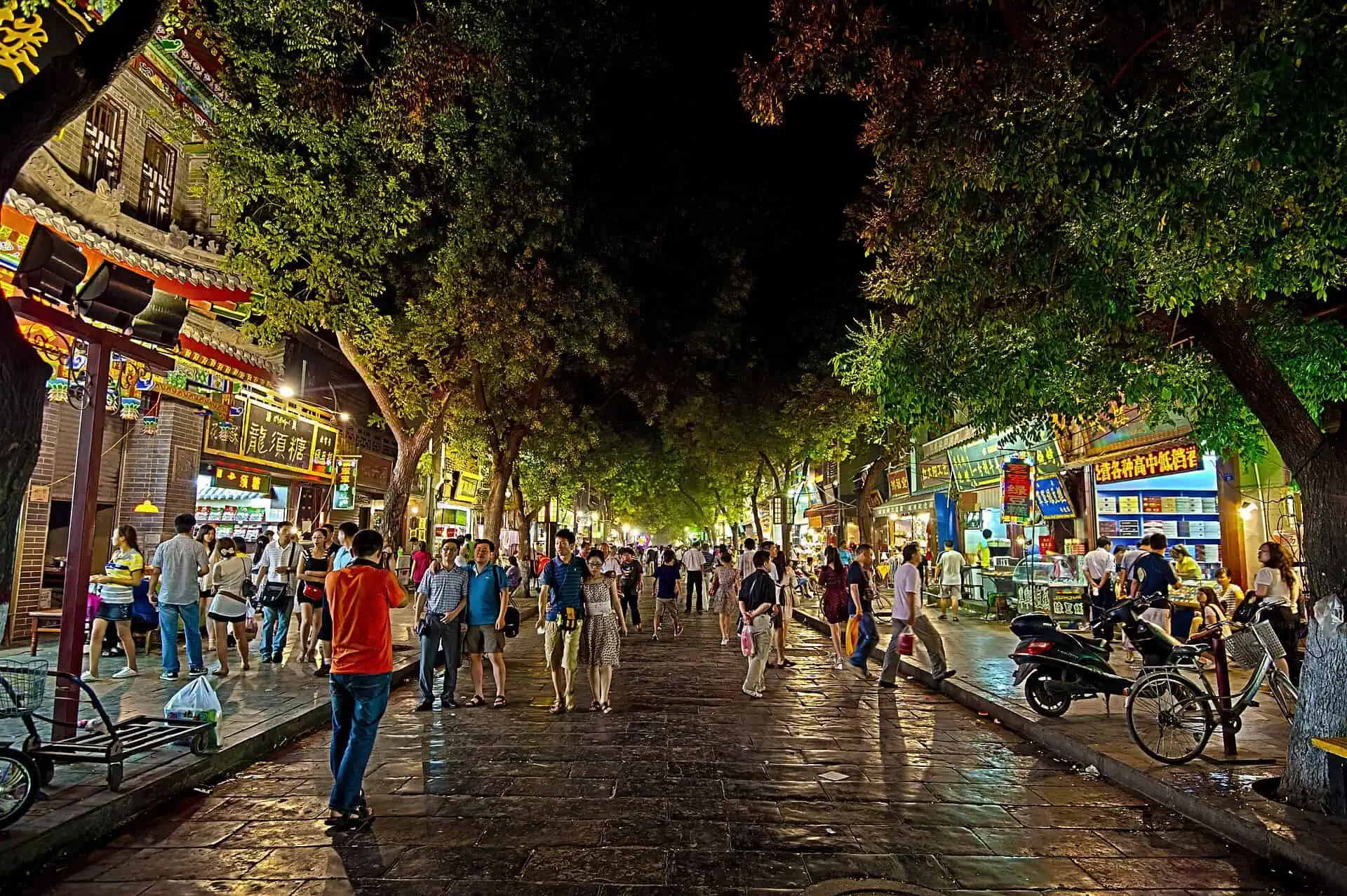
Feeding Xi'an since the 700s — the loudest, smokiest, best-smelling streets of its Hui community.
Learn more →
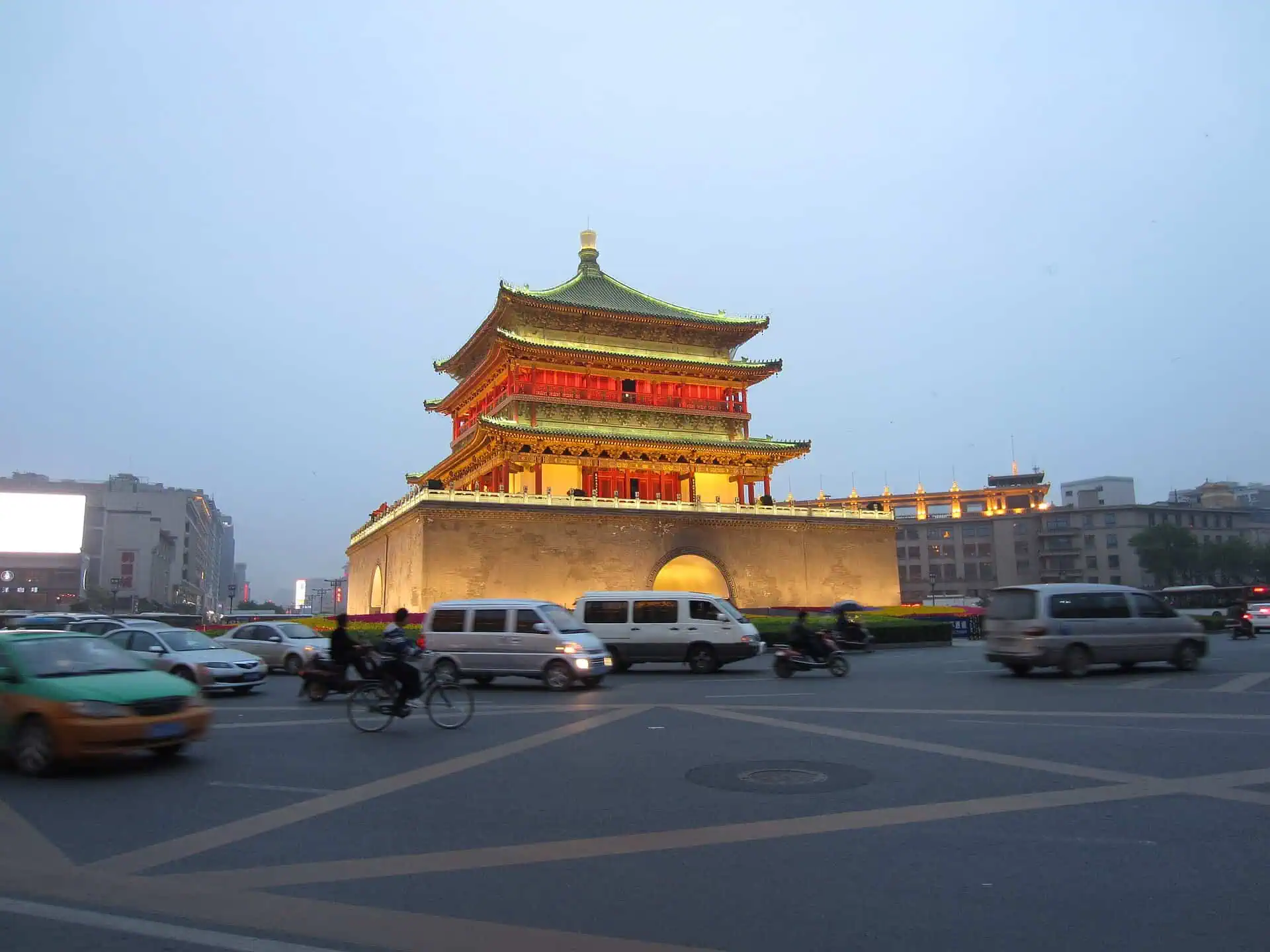
Xi'an Bell Tower
A Ming tower from 1384 at the dead center of the walled city — best admired at dusk, floodlit above the roundabout.
Learn more →