Getting around: metro, buses, DiDi & taxis
Xi'an's metro covers everything a tourist needs for ¥2–8 a ride, with English signage throughout. For anywhere off the rails, DiDi (China's Uber, in English) is cheap and easy — and the walled center is compact enough to walk.
7 min read · 7 sections
The short version
- The metro is your default: clean, bilingual, ¥2–8 per ride, running roughly 6:00–23:30.
- Line 2 is the tourist spine — Xi'an North station, Bell Tower and the City Wall's south gate. Line 9 reaches Lintong (Terracotta Army country), Line 14 serves the airport.
- Pay with the transit QR code in Alipay or WeChat — no card, no tokens needed.
- DiDi has an English app, takes foreign cards, and most in-city rides cost ¥10–40.
- Regular taxis use meters; have your destination written in Chinese.
- Inside the city wall, walking is often fastest — the center is compact.
The short answer
Use the metro for anything near a line, DiDi for everything else, and your feet for the walled center. That trio covers every trip in this guide — you will not need to decipher a bus route unless you want to. Set up two things on day one: the transit QR code in Alipay or WeChat (gates open with a beep), and DiDi with your card linked. Both are covered in the payments guide and below — and like your entry paperwork and phone data, they're pre-flight jobs, not curbside ones.
The metro: your default
Xi'an's metro has expanded fast — as of July 2026 there are twelve lines (1, 2, 3, 4, 5, 6, 8, 9, 10, 14, 15 and 16), and any map older than a year is missing something. Trains are clean, air-conditioned and punctual; stations have bilingual signage and announcements in Mandarin and English. Fares are distance-based, ¥2–8 for typical tourist trips, and service runs roughly 6:00 to 23:30 depending on the line.
The lines you'll actually use:
- Line 2 — the spine. Runs north–south through the city: Xi'an North railway station → Zhonglou/Bell Tower (钟楼) → Yongningmen (永宁门), the south gate of the City Wall → Xiaozhai for the Shaanxi History Museum area. You'll ride this daily.
- Line 9 — Lintong and the Terracotta Army direction. Runs east to Huaqing Pool (华清池) for Huaqing Palace, with a short bus or taxi hop onward to the Terracotta Army. The budget alternative to a tour.
- Line 14 — the airport line. XIY airport ↔ Xi'an North station, where it meets Lines 2 and 4.
- Line 4 — the pagoda line. Xi'an North ↔ the Big Wild Goose Pagoda and the Tang Paradise area.
- Line 6 — Muslim Quarter side. Qiaozikou station puts you a short walk from the Muslim Quarter lanes.
Interchanges are well signed in English; platform screen doors are standard, so mind the gap is not part of the experience.
Paying for rides
The transit QR code is the way. In Alipay, tap "Transport" on the home screen, select Xi'an, and a QR code appears — hold it over the gate scanner, walk through, and the fare debits your linked card automatically. WeChat has the same thing in its mini-programs (search 乘车码). One code works for metro and buses.
If you'd rather not use your phone: station machines sell single-journey tokens (tap English, pick your destination station, pay by QR or cash), and gates accept them with a tap-in, slot-in-on-exit. There are no paper tickets and no day passes worth bothering with at these prices — ten rides cost less than one London single.
For buses: routes are extensive and fares are ¥1–2, paid with the same transit QR. Honestly, with the metro plus DiDi, most visitors never need one — the exception is the last mile in Lintong, where local buses (602/613) bridge Huaqing Pool station and the Terracotta Army for a couple of yuan.
Buses: the resident's secret
Stay longer than a few days and the bus stops being scary — it becomes the tool the metro isn't. Buses go everywhere the rails don't, run ¥1–2 flat (¥2 on air-conditioned decks), and take the same transit QR you already use in the metro — no new setup, ever. Two honest rules: numbers and stop announcements are Mandarin-only on most routes (follow your blue dot in Amap, which shows the next stop in real time), and buses thin out after 21:00 — late evening belongs to DiDi. The trick that wins locals over: board at the front, scan as you get ON, and grab a seat fast — drivers here accelerate like they mean it.
DiDi: the easiest fallback
DiDi is China's ride-hailing giant — Uber sold its China operation to them — and it works beautifully for foreigners. The app has a full English interface, you register with your home phone number, link a Visa or Mastercard, and payment happens in-app at the end of the ride. You can also call a DiDi from inside Alipay without installing anything extra.
Typical costs: ¥10–20 for short hops inside the wall, ¥25–40 for cross-town rides, and ¥100–150 out to the airport. That's often cheaper than a hailed taxi, and it solves the language problem at the root — you enter the destination in English (it handles Chinese place names), the driver navigates, nobody has to say anything. If the driver calls you (they sometimes do, to confirm the pickup point), the in-app translation tools or a simple "我在定位点" (I'm at the pin) from the app's phrase shortcuts will do. One caution: at the airport and big stations, use the designated ride-hailing pickup zones shown in the app — drivers can't stop at the curb.
Regular taxis
Xi'an's taxis are plentiful, honest and metered — flagfall is around ¥10, and most rides inside the wall come in at ¥10–20. A green light in the windshield means available. Rush hour (roughly 7:30–9:00 and 17:30–19:30) and rain are when they vanish; that's DiDi time.
The one non-negotiable: have your destination in Chinese. Few drivers speak English. The reliable system is to pull up the attraction page on this site and point — every attraction guide has a "show your driver" box with the name and address in Chinese, like the one on the Terracotta Army page. Hotel business cards from reception work the same way for the ride home. Insist on the meter (打表, "da biao") — at ranks it's automatic; anyone quoting a flat fare to a tourist sight is freelancing. Ask for the receipt (发票) if you want a record of the car.
Bikes and walking
Shared bikes — Meituan (yellow), Hello (blue) and Qingju (green) — sit on every corner, unlocked by scanning the frame QR with Alipay or WeChat. Rides cost about ¥1.5 per 30 minutes and are the best way to cover the flat 3–4 km distances between, say, the Bell Tower and the Small Wild Goose Pagoda. Bike lanes are wide and separated on major roads; ride like the locals do and you'll be fine. The classic ride, though, is on top of the City Wall itself — rental stations up there lease bikes by the hour for the 14 km circuit.
Walking is the surprise winner inside the city wall: the Bell Tower, Drum Tower, Muslim Quarter and the south gate are all within a 20–30 minute stroll of each other, through streets that are attractions in themselves. Xi'an drivers treat pedestrian crossings as advisory — cross with a local, make eye contact, and don't assume a green man grants protection. For a walking-first way to structure your days, the 3-day itinerary groups sights by neighborhood.
Questions, answered
Does Xi'an have a metro?
Yes — a big one. As of 2026, twelve lines are in service, including Line 2 through the Bell Tower and the City Wall's south gate, Line 9 out to Huaqing Pool in Lintong, and Line 14 to the airport. Fares are ¥2–8, and signage and announcements are bilingual.
How do tourists pay for the Xi'an metro?
The easiest way is the transit QR code inside Alipay or WeChat — scan it at the gate and the fare charges to your linked foreign card automatically. Alternatively, station machines sell single-journey tokens with an English interface, payable by QR or cash.
Is DiDi available in English?
Yes. The DiDi app has a full English interface, registers with a foreign phone number, and accepts international Visa and Mastercard. You can also call DiDi rides from within Alipay. Most rides within central Xi'an cost ¥10–40.
Are taxis expensive in Xi'an?
No — they're among the cheaper big-city taxis you'll use. Flagfall is around ¥10, most rides inside the city wall cost ¥10–20, and even the 40 km run to the airport is only ¥100–180. Always use the meter; flat-fare offers to tourist sights are a mark-up in disguise.
Can you walk around central Xi'an?
Yes — the area inside the Ming city wall is compact: Bell Tower, Drum Tower, Muslim Quarter and the south gate are all within a 20–30 minute walk of each other. Just stay alert at crossings, where a green light doesn't guarantee cars will stop.
Show your phone · tap to play
All emergency cards请带我去这个地址。
Qǐng dài wǒ qù zhège dìzhǐ.
Please take me to this address.
多少钱?
Duōshao qián?
How much?
请打表。
Qǐng dǎbiǎo.
Please use the meter.
地铁站在哪里?
Dìtiězhàn zài nǎlǐ?
Where is the metro station?
请慢一点说。
Qǐng màn yìdiǎn shuō.
Please speak more slowly.
请再说一遍。
Qǐng zài shuō yí biàn.
Please say that again.
Places in this story
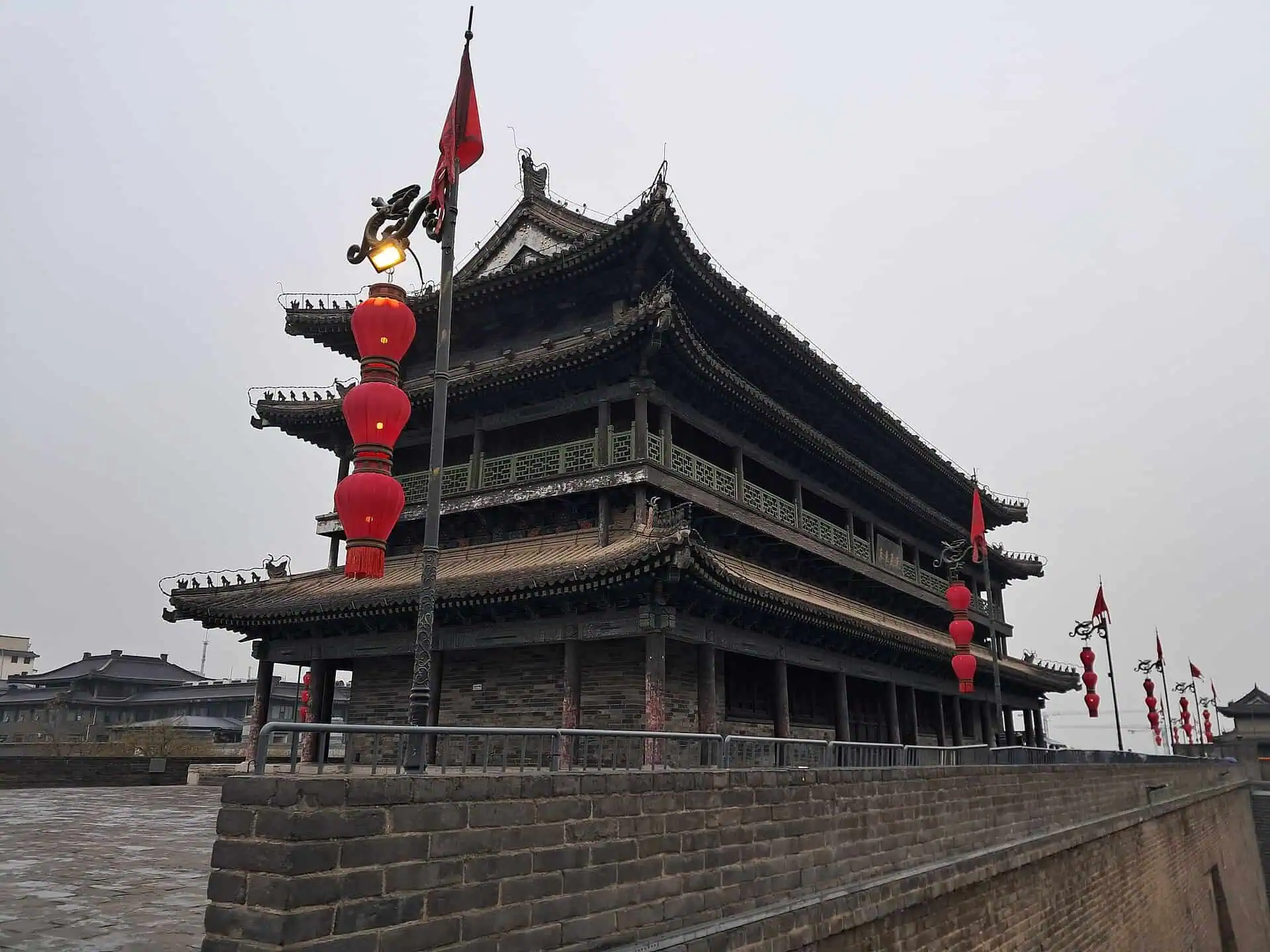
Xi'an City Wall
A 14-kilometer Ming dynasty rectangle you can cycle on top of — 650 years old and still the city's favorite commute.
Learn more →
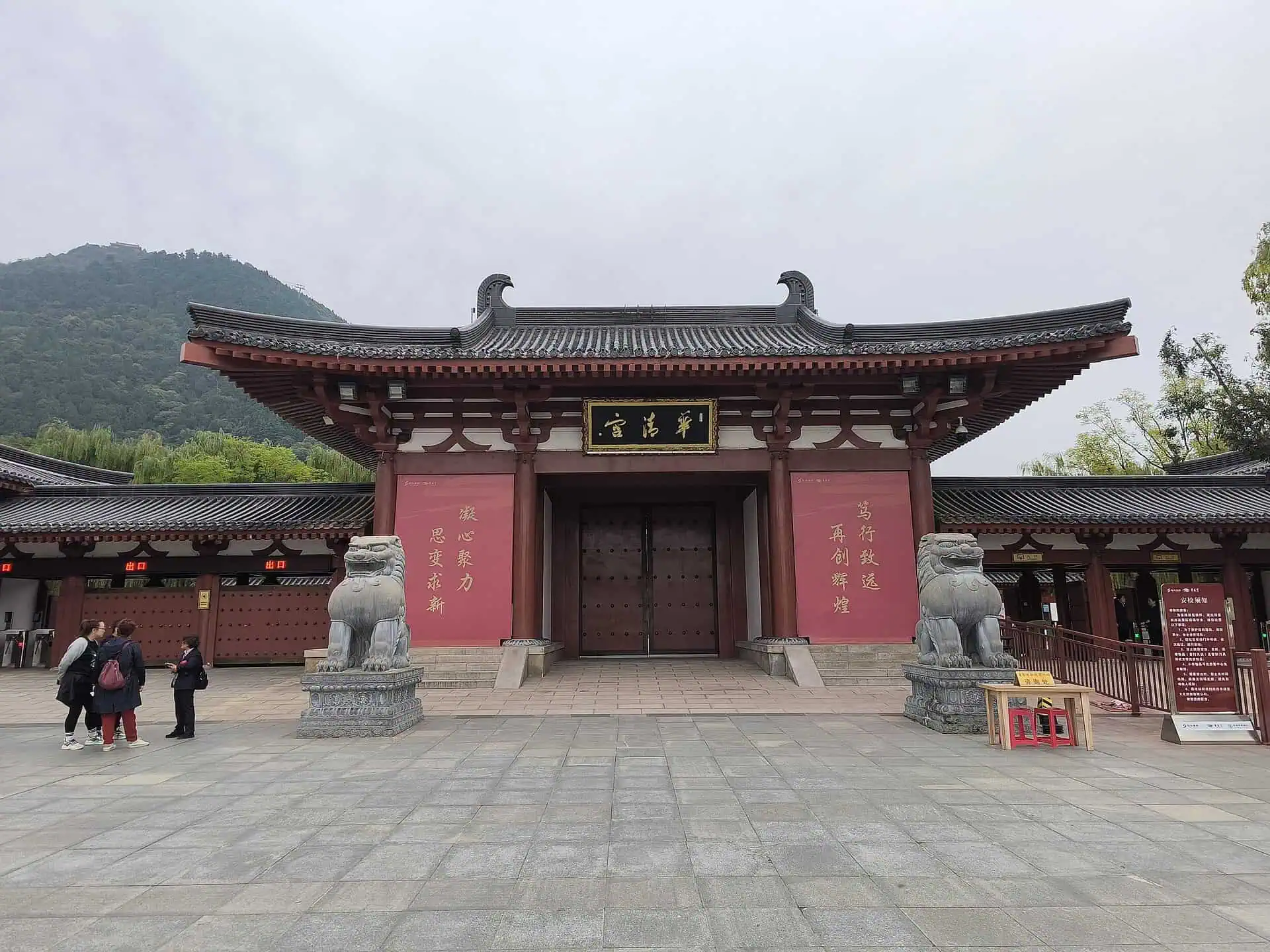
Huaqing Palace & Hot Springs
Tang emperors soaked here in the 700s — China's most famous love story, and the site of a 1936 kidnapping that changed the country.
Learn more →
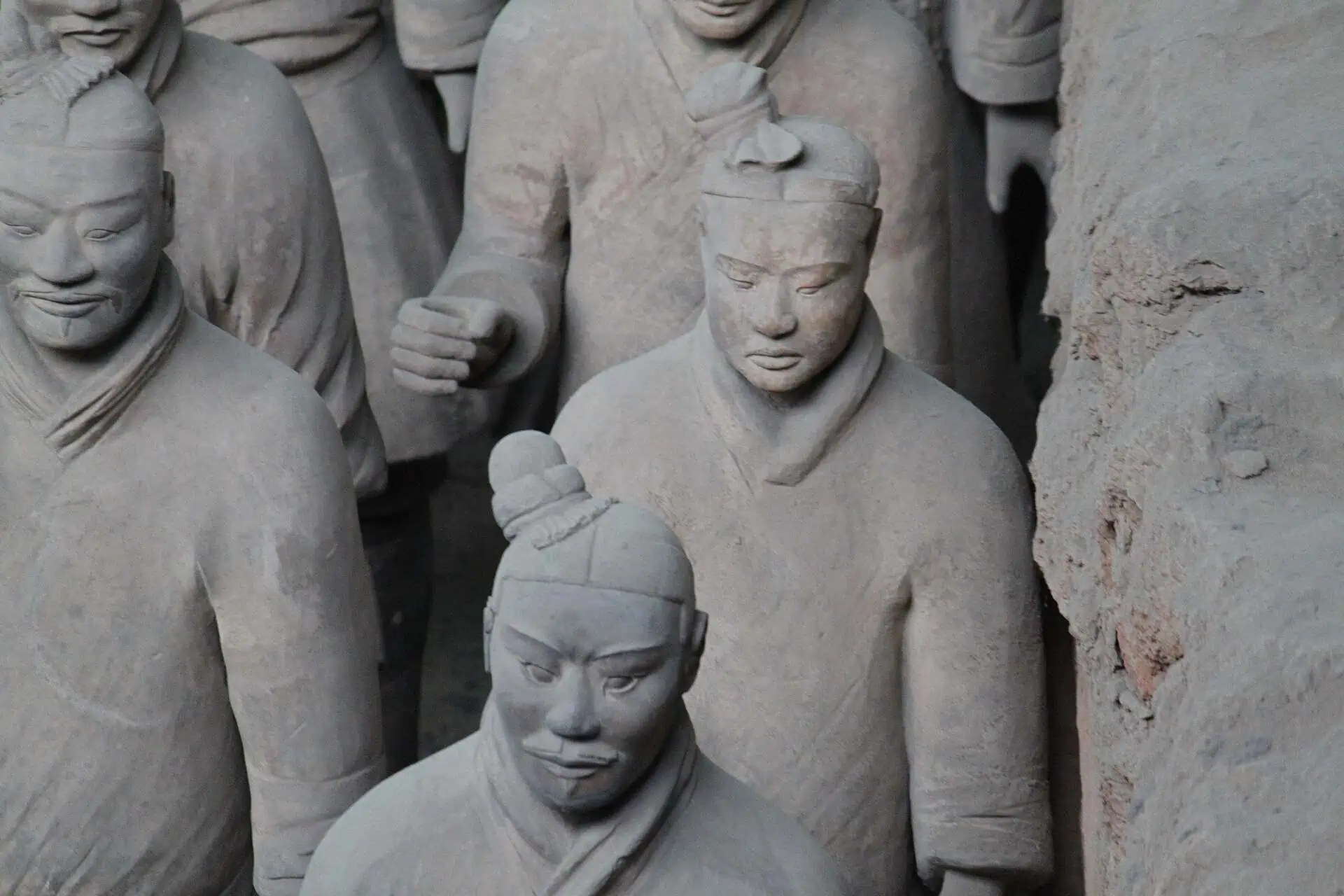
Terracotta Army
8,000 life-sized soldiers buried for China's First Emperor — and still on guard 2,200 years later.
Learn more →
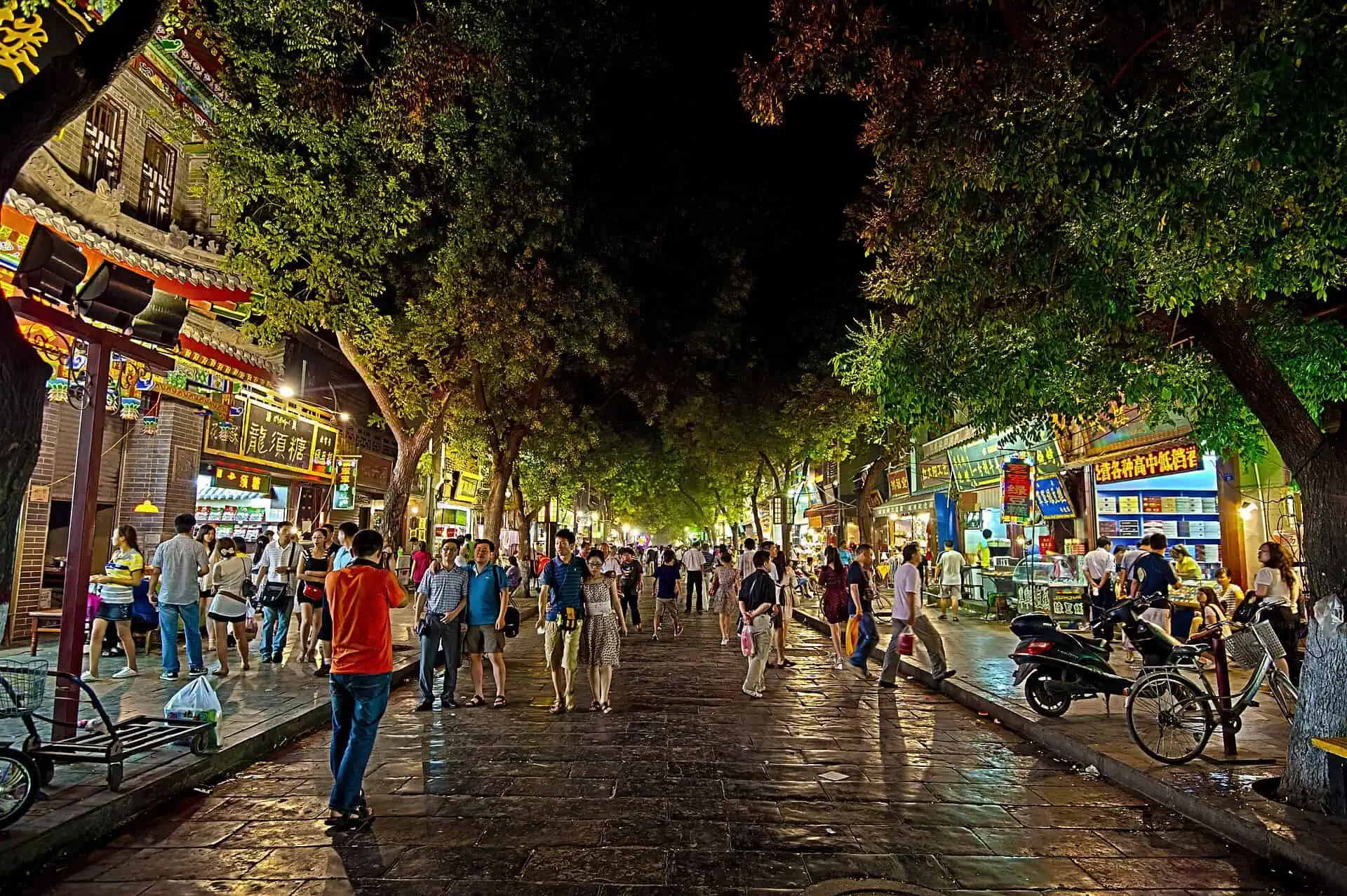
Muslim Quarter
Feeding Xi'an since the 700s — the loudest, smokiest, best-smelling streets of its Hui community.
Learn more →
Keep exploring
Visas & entry: do you need one?
Probably less paperwork than you fear — and two of the doors now have their own deep-dive packages: the 30-day visa-free entry (~50 countries) and the 240-hour transit (55 countries, including the US). This page is the router: work out which door is yours, then read its package.
The 240-hour visa-free transit, explained
Ten days in China without a visa, if you're just passing through — including Americans. The rules, the traps, and how to run it through Xi'an.
The 30-day visa-free entry: who gets in free
Around 50 countries can now enter China for up to 30 days with no visa at all — no transit logic, no onward-ticket games. Most of Europe, the UK, Canada, Australia and more. The US is not on the list.