The 240-hour visa-free transit, explained
Ten days in China without a visa, if you're just passing through — including Americans. The rules, the traps, and how to run it through Xi'an.
4 min read · 5 sections
Entry rules change often — always confirm details with the official source before you fly.
Official source: China National Immigration AdministrationThe short version
- Citizens of 55 countries — including the US, UK, Canada, Australia and most of the EU — can transit through China visa-free for up to 240 hours (10 days).
- You must hold a confirmed onward ticket to a THIRD country or region (Hong Kong and Macao count). Round trips home do not qualify.
- Xi'an's XIY airport is an eligible port; under the 240-hour policy you can travel across the 24 participating provinces (cross-province is allowed).
- Your hotel registers you automatically; remote-area stays need a police-station registration within 24 hours.
- The clock starts at midnight after arrival. Confirm your eligibility on the NIA site before you book.
What's your visa status?
Pick your country to see whether you need a visa to enter China.
What this actually is
Since December 2024, China's visa-free transit window is 240 hours — ten days — up from the old 144. It's the single biggest opening for Western travelers to China in years: fly into an eligible port, spend up to ten days, fly out to somewhere else. No embassy, no application, no fee.
The catch is in the word "transit": this is not a tourist visa. China lets you in on the logic that you are on your way somewhere else. Understand that logic and the rules make sense; ignore it and you'll get stopped at check-in.
Am I eligible?
Three tests, all must pass:
- Passport. You hold an ordinary passport from one of the 55 eligible countries — the US, UK, Canada, Australia, New Zealand, and most of Europe (EU plus Norway, Switzerland and others) are all in. The list grew steadily through 2024–2025 (Indonesia was added in June 2025), so check the current NIA list before booking.
- Onward ticket. A confirmed ticket out of China to a third country or region within 240 hours of arrival — and "third" means not the country you arrived from. US → Xi'an → Hong Kong works. US → Xi'an → US does not. (Hong Kong and Macao count as third destinations; Taiwan counts too for this purpose.)
- Route. You must enter and exit through eligible ports. Xi'an Xianyang International (XIY) is one of them, as are Beijing, Shanghai, Chengdu, Guangzhou and dozens of others.
The rules that actually bite
- The onward ticket is checked at check-in, before you board your flight to China. If you can't show it, the airline won't let you board — they pay the fine for carrying you back. Have it printed or on your phone.
- The 240 hours start at 00:00 the day AFTER you arrive. Landing at 23:00 on the 1st means day one is the 2nd. Don't cut your exit flight to the last hour — delays happen.
- Stay inside the permitted area — which is bigger than under the old 144-hour rule. The 240-hour policy lets you travel freely across the 24 participating provinces (Beijing, Shanghai, Shaanxi, Sichuan, Guangdong and more); cross-province trips are explicitly allowed, so arriving in Shanghai and taking the high-speed train to Xi'an is fine. Provinces NOT on the list (e.g. Tibet, Xinjiang, Inner Mongolia) are off-limits. All of our Xi'an + day trips sit inside the zone.
- Registration within 24 hours. Any hotel does this automatically at check-in. If you stay with friends or in a rural guesthouse, you must register at the local police station yourself within 24 hours — this is enforced and fines are real.
- One entry per transit. If your itinerary leaves mainland China and comes back, the second leg needs its own eligibility (or a visa).
Running it through Xi'an — the playbook
Xi'an is arguably the best transit city in China for this: the two biggest sights compress beautifully into 48–72 hours, and the visa-free layover itinerary is built exactly for it.
Arrival at XIY: follow the 240-hour transit signs to the special inspection counter, present passport + onward ticket + arrival card. Then metro Line 14 into the city in under an hour.
A realistic split: Day 1 — land, check in near the Bell Tower, City Wall at dusk, Muslim Quarter dinner. Day 2 — the Terracotta Army early, back by mid-afternoon, evening flight out. With 3–4 days, add the Shaanxi History Museum and the pagoda district.
Payments and internet don't wait: set up Alipay or WeChat Pay and your eSIM or VPN before you fly — both are painful to improvise on arrival.
If this doesn't fit
Two neighboring doors:
- Your country might have full 30-day visa-free entry (no transit logic, no onward-ticket rule) — most of the EU, UK, Canada, Australia and more. That's the better deal if you're eligible: the 30-day visa-free package.
- Everyone else applies for a standard tourist visa. The overview router is visas & entry.
Questions, answered
Can Americans use the 240-hour visa-free transit?
Yes — US citizens are on the 55-country list. As of July 2026, the US is NOT in the separate 30-day visa-free scheme, so the 240-hour transit is the practical visa-free route for Americans.
Does Hong Kong count as a third destination?
Yes — Hong Kong, Macao and Taiwan all count as third countries/regions for the onward-ticket rule. A route like US → Xi'an → Hong Kong → US works.
Can I leave Xi'an and travel around China on the 240-hour transit?
Yes — under the 240-hour policy you can travel across all 24 participating provinces, so arriving in Shanghai and taking the high-speed train to Xi'an, or hopping over to Beijing, is allowed. Only provinces NOT on the 24-province list (e.g. Tibet, Xinjiang) are off-limits. Within the zone, move freely.
What if my onward flight is delayed past 240 hours?
Airline delays with proof are handled case-by-case at the border — but don't plan to the edge. Book your exit comfortably inside the window; the count starts at midnight after arrival day.
Do I need to register with police?
Hotels do it automatically at check-in. Only if you stay in private accommodation or a rural guesthouse do you need to register at a police station within 24 hours — and it's enforced.
Places in this story
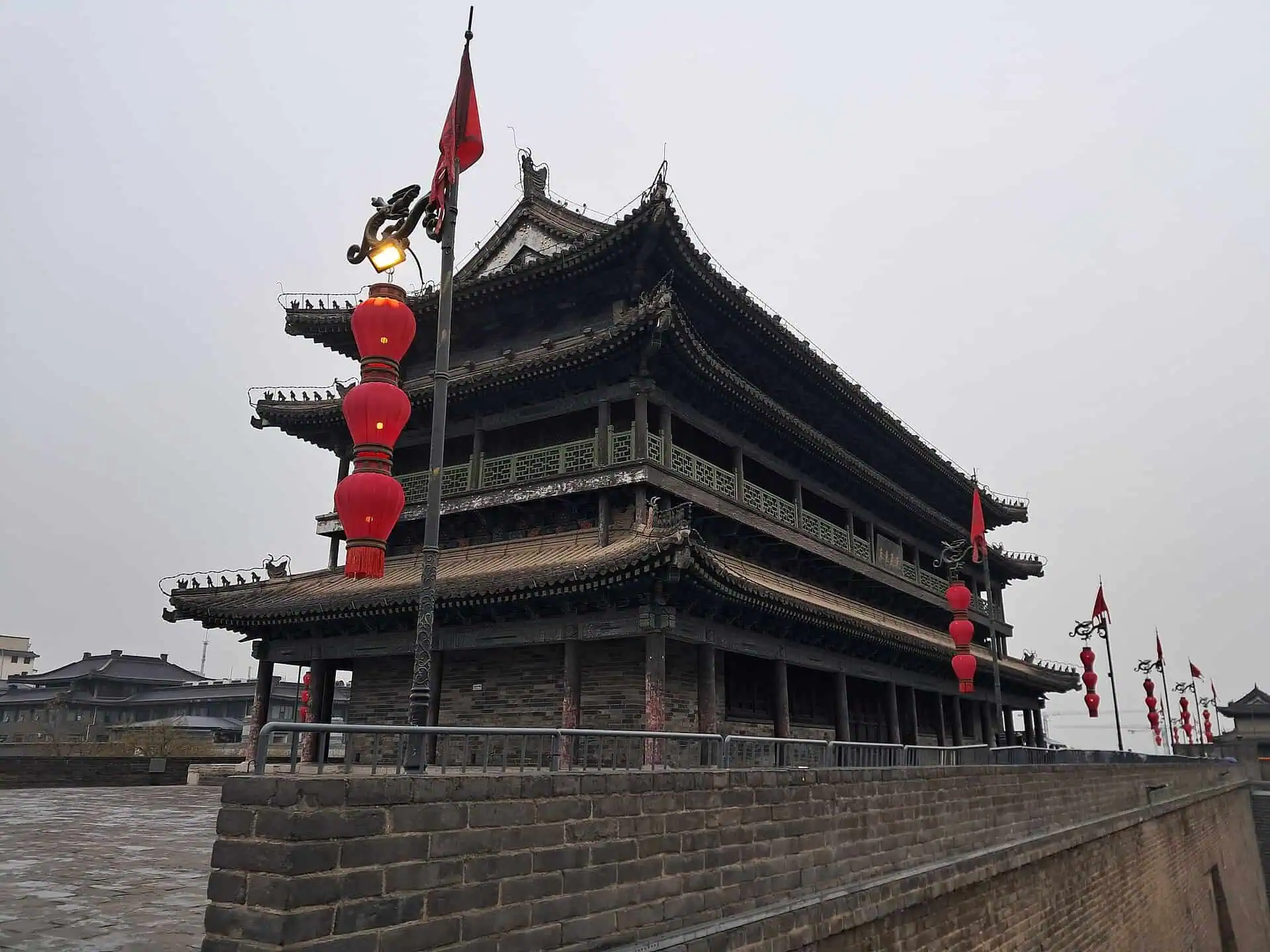
Xi'an City Wall
A 14-kilometer Ming dynasty rectangle you can cycle on top of — 650 years old and still the city's favorite commute.
Learn more →

Muslim Quarter
Feeding Xi'an since the 700s — the loudest, smokiest, best-smelling streets of its Hui community.
Learn more →

Terracotta Army
8,000 life-sized soldiers buried for China's First Emperor — and still on guard 2,200 years later.
Learn more →

Shaanxi History Museum
Every layer of Xi'an's time stack under one roof — Zhou bronzes, Han gold and Tang treasure.
Learn more →
Keep exploring
Visas & entry: do you need one?
Probably less paperwork than you fear — and two of the doors now have their own deep-dive packages: the 30-day visa-free entry (~50 countries) and the 240-hour transit (55 countries, including the US). This page is the router: work out which door is yours, then read its package.
The 30-day visa-free entry: who gets in free
Around 50 countries can now enter China for up to 30 days with no visa at all — no transit logic, no onward-ticket games. Most of Europe, the UK, Canada, Australia and more. The US is not on the list.
Money & payments: Alipay/WeChat Pay for foreigners
China runs on QR codes, and since 2023 foreigners can join in: link your Visa or Mastercard to Alipay and WeChat Pay, verify with your passport, and pay like a local. Set both apps up before you fly, carry a little cash as backup, and forget about tipping.