Is Xi'an safe for solo and women travelers? An honest answer
By the consensus of Western travel writing, Xi'an is one of the safer major Chinese cities for people traveling alone — violent crime against tourists is rare, and women walking at night inside the city wall report few problems. The risks worth planning for are mundane ones: pickpockets in the Muslim Quarter and Terracotta Army queues, scam touts, and the logistics of getting around without fluent Mandarin. Here is an honest, specific assessment — the reassurance and the caveats.
9 min read · 7 sections
The short version
- Xi'an is one of the safer major Chinese cities for solo and women travelers — violent crime against tourists is rare. The real risks are pickpocketing, scams and transit friction, not physical danger.
- Guard your phone and wallet in the densest crowds: the Muslim Quarter at dusk, the Terracotta Army queues, and packed city buses.
- Use DiDi, not street taxis — drivers often won't stop for foreigners, and the app removes the route-and-fare argument entirely.
- Walking at night inside the city wall is fine: well-lit, busy, and patrolled well past midnight.
- Don't drink the tap water — sealed bottled or boiled only. Brushing teeth is fine.
- Street harassment is low; what to mind is dress at temples and mosques, not on the street.
- Your phone carries the whole trip — maps, translation, payments and rides all live in apps, with little English offline. Set them up before you fly.
The short answer
The honest, short version: yes. Across Western travel writing and the reports of solo visitors, Xi'an sits among the safer major Chinese cities for people on their own — and that holds for women. Violent crime against tourists is rare, the kind of street harassment that defines "unsafe" in some cities is uncommon, and the center stays busy, lit and policed well past midnight.
That is not the same as "nothing will go wrong." The threats worth planning for are petty and logistical, not physical: a phone lifted from an open pocket in the Muslim Quarter crush, a tout who wants to sell you something, a street taxi that will not stop for you, a menu you cannot read. This page is about those — the things that actually happen — so you can plan for the real Xi'an rather than an imaginary one. For the medical side of staying well, our separate health and safety guide is the companion read.
What the real risks are
Petty theft in crowds. Pickpocketing and bag-snatching are the crimes you are most likely to meet, and they cluster where the crowds do: the Muslim Quarter at dinner time, the queues at the Terracotta Army, the blocks around the Bell Tower, and packed city buses. A zippered crossbody bag and a phone kept in a front pocket handle almost all of it. It is opportunistic, not aggressive — you are not being targeted, you are standing next to a thief in a tight space.
Scam touts. Two patterns to know. The "practice English" tea-house scam — friendly strangers invite you to a tea ceremony, then a bill for hundreds of dollars arrives and the staff make leaving awkward — is well documented in Beijing and Shanghai and follows tourists anywhere they gather; it is less reported in Xi'an but not unknown. The Xi'an-specific version is the fake Terracotta "museum" on the road out to Lintong: an unofficial "guide" or driver diverts you to a private "excavation site" or "emperor's tomb" before you reach the real pits. The fix for both is the same rule: do not follow a stranger to a place they recommend, and buy Terracotta tickets through the official channel described in our booking guide. If a tout is offering it, it is not a deal.
Transit friction. This is the one that catches people out: getting around is harder than the low crime rate would suggest, because of language. A street you cannot read, a driver who cannot understand your destination, a ticket window with no English — these are the everyday frictions of solo travel here, and the next two sections are about handling them.
Getting around: DiDi over street taxis
Here is the single most useful sentence in this guide for a solo traveler: use DiDi, not street taxis. Street taxis in Xi'an often will not stop for foreigners — the driver assumes a language standoff and rolls past. The DiDi app (which has an English interface) sets the destination, route and fare before you get in, which removes the argument entirely, and you pay through the app so there is no cash confusion. Rides are cheap; a cross-town hop inside the wall is a handful of yuan.
Two taxi-rank exceptions worth knowing: the official ranks at Xi'an Xianyang Airport (XIY) and the high-speed rail stations are regulated and perfectly fine if DiDi fails you. What is never fine is following someone who walks up to you inside the terminal offering a "taxi" — that is a tout, not a driver. The full mechanics — linking a foreign card to DiDi, finding the English toggle, working the airport queue — are in our getting around guide, along with the metro, which is signed, cheap and the easiest backup of all.
Being out at night
Walking at night inside the city wall is one of the pleasures of Xi'an, and it is safe. The old town is well lit, the main streets stay busy until late, and the Muslim Quarter is at its best and busiest after dark — the crowd density is itself the safety. The wall itself is illuminated and monitored, and walking or cycling it after sunset is a standard evening activity rather than a risk.
Normal big-city judgment applies: stick to lit streets, keep your bag closed in the thickest crowds, and if a lane feels empty and unlit, take the brighter one. You will rarely need that caution inside the wall. For the after-dark city in full — the Big Wild Goose Pagoda fountain show, the night markets, the wall lit up — see Xi'an at night.
Harassment, attention and temples
Street harassment is low by global standards. Catcalling is uncommon, and unwanted attention is more likely to take the form of curiosity — a long stare, or a request for a photo with you — than anything that feels threatening. If someone does bother you, a firm "bù" (不, no) and stepping into the nearest shop or hotel lobby ends it; staff will back you up.
Where dress genuinely matters is temples and mosques, not the street. At the Great Mosque and other active religious sites, cover your shoulders and knees; a headscarf is not required in the courtyards, but shorts and tank tops will get you turned away. Our etiquette guide covers the broader do's and don'ts. On the street, dress for the weather — Xi'an summers are genuinely hot, and comfort is the real constraint, not modesty.
Your phone is the whole trip
The hardest part of Xi'an for a solo traveler is rarely danger — it is friction, and almost all of that friction lives in your phone. There is very little English offline: signs, menus, taxi drivers and ticket windows mostly are not translated. You will lean on apps for maps, translation, payments and rides, and the trip is markedly harder without them set up before you land.
The kit that matters, with the page for each: a translation app and the rest of the essential apps; a map that actually works in China (maps in China); mobile payment so you are not hunting cash (money and payments); DiDi; and connectivity that does not depend on a blocked foreign SIM (internet, eSIM and VPN). Sort these before you fly — getting to Xi'an lays out the arrival sequence — and keep a handful of Mandarin phrases for the moment the phone dies.
The loneliness angle is real and worth naming plainly. Solo travel in a place where you do not read the language can feel isolating even when it is perfectly safe — the phone-dependence is part of why. Build in small wins that make the city familiar: a coffee shop you return to, a food street you learn by heart, a walking route you trust. By the third day Xi'an stops feeling foreign, and that is when it gets good.
Health, water and if something goes wrong
Do not drink the tap water. This holds across mainland China, Xi'an included: the water may meet standards leaving the plant, but aging pipes make it unreliable at the tap. Drink sealed bottled water — cheap, sold on every corner — or boiled water; brushing your teeth with tap is fine. The full health picture, including summer heat, winter air quality and vaccinations, is in our health and safety guide.
If something goes wrong, the emergency numbers are 110 for police, 120 for ambulance and 119 for fire — free to dial from any phone, though English-speaking operators are not guaranteed, so your hotel front desk is usually your fastest interpreter in a crisis. Xi'an's main international-friendly hospital is the Xi'an International Medical Center in the High-Tech Zone; details and how to reach it are in the health guide. For context on the city overall, the 3-day itinerary shows how the pieces fit together — a workable plan is itself a form of safety.
Questions, answered
Is Xi'an safe for solo female travelers?
Yes — by the consensus of Western travel writing, Xi'an is one of the safer major Chinese cities for women traveling alone. Violent crime against tourists is rare and street harassment is low. The risks worth planning for are petty: pickpocketing in crowded spots, scam touts, and the logistics of getting around without fluent Mandarin.
Is it safe to walk around Xi'an at night?
Yes, inside the city wall. The old town is well lit, the main streets stay busy until late, and the Muslim Quarter is at its busiest after dark — foot traffic is itself the safety. The illuminated city wall is a standard evening walk. Apply normal big-city judgment: stick to lit streets and keep your bag closed in the thickest crowds.
Should I take street taxis or use DiDi in Xi'an?
Use DiDi. Street taxis often will not stop for foreigners because of the language barrier, and the app removes the route-and-fare argument by setting destination and price before you get in. The exception is the official taxi ranks at Xi'an Xianyang Airport and the high-speed rail stations, which are regulated and fine if DiDi fails you. Never follow a tout who offers you a ride.
What should I wear as a woman in Xi'an?
On the street, dress for the weather — Xi'an summers are hot and modesty is not the constraint. Where dress matters is at temples and mosques: cover your shoulders and knees at the Great Mosque and other active religious sites. A headscarf is not required in mosque courtyards, but shorts and tank tops will get you turned away.
Can I drink the tap water in Xi'an?
No. Tap water across mainland China, Xi'an included, is not considered safe to drink straight from the tap — aging pipes can compromise it after treatment. Drink sealed bottled water (cheap and sold everywhere) or boiled water. Brushing your teeth with tap water is fine.
What scams should I watch for in Xi'an?
Two. The tea-house scam — strangers befriend you, invite you to a tea ceremony, then present an enormous bill — is mainly reported in Beijing and Shanghai but follows tourists everywhere. The Xi'an-specific trap is a fake Terracotta Army 'museum' or 'tomb' that drivers or touts divert you to on the way to Lintong. The rule for both: never follow a stranger to a place they recommend, and book major sights through official channels.
Places in this story
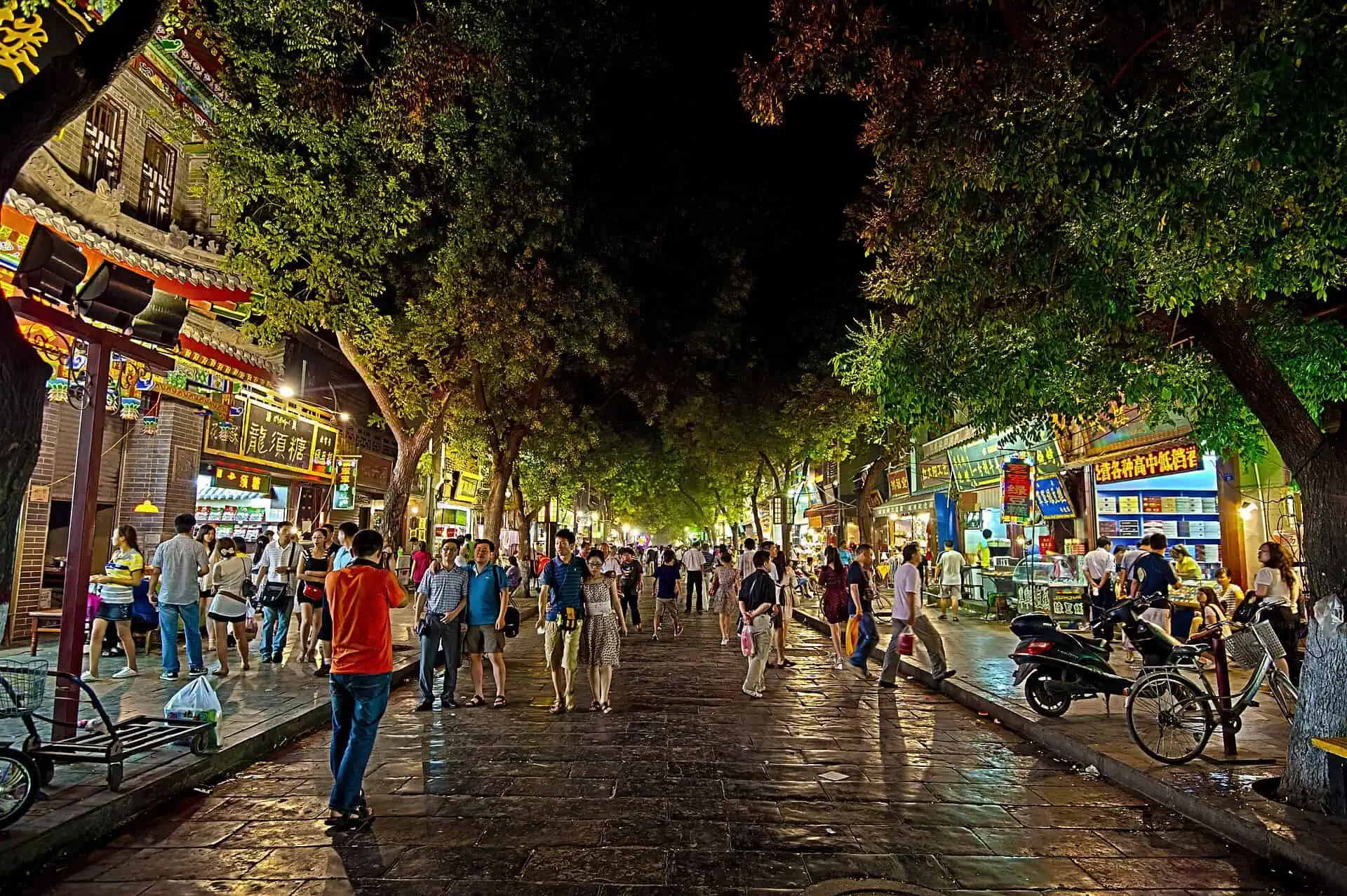
Muslim Quarter
Feeding Xi'an since the 700s — the loudest, smokiest, best-smelling streets of its Hui community.
Learn more →
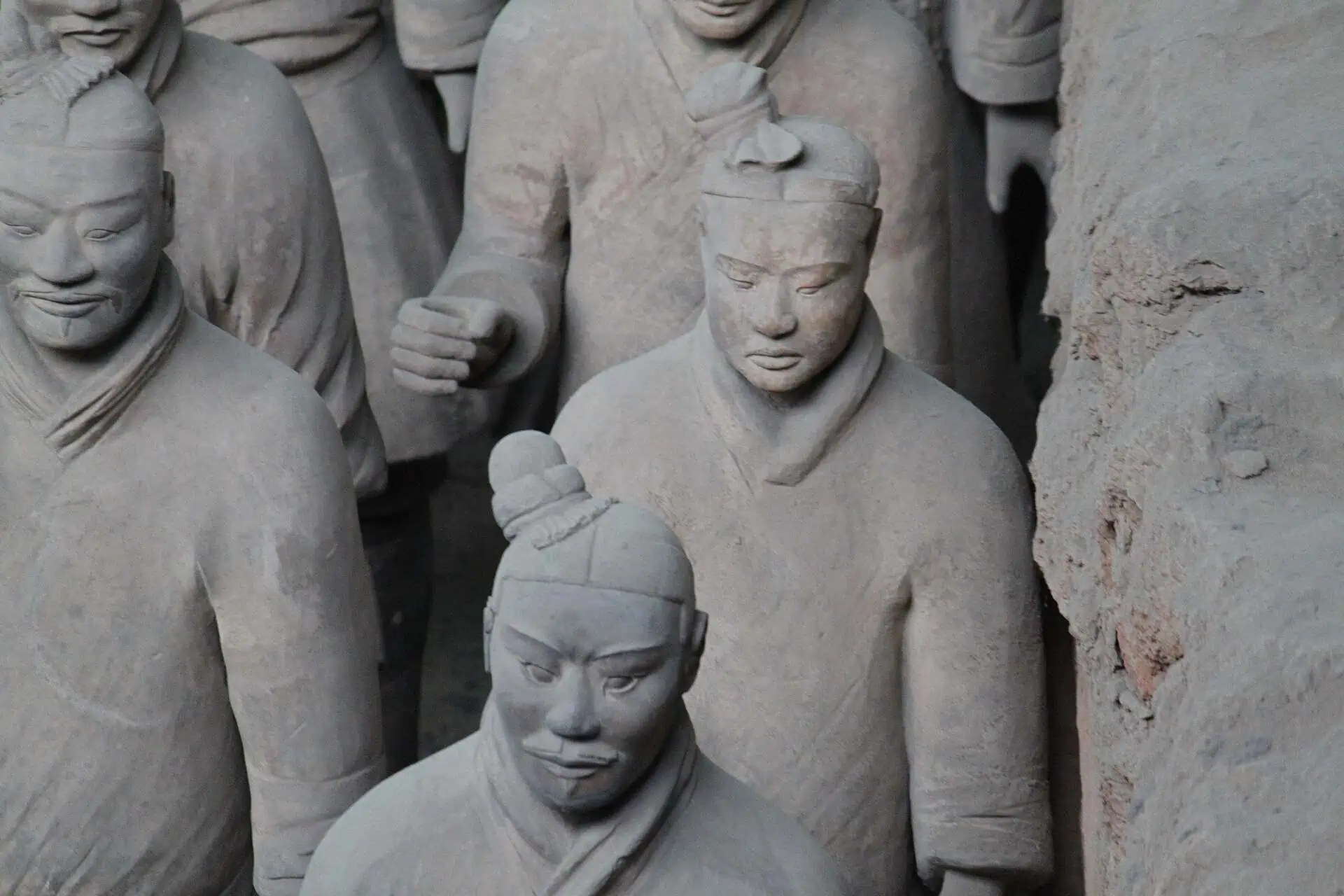
Terracotta Army
8,000 life-sized soldiers buried for China's First Emperor — and still on guard 2,200 years later.
Learn more →
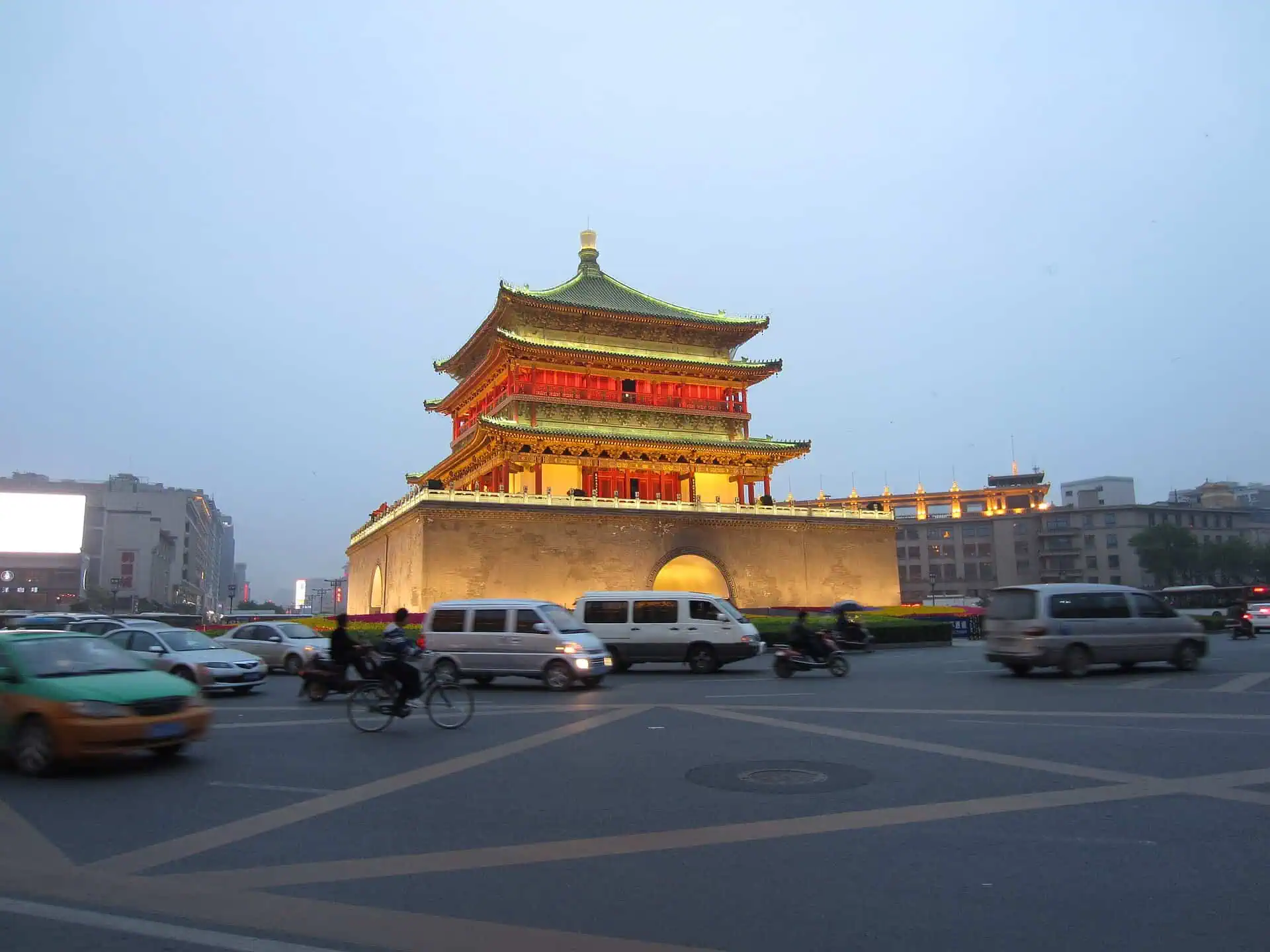
Xi'an Bell Tower
A Ming tower from 1384 at the dead center of the walled city — best admired at dusk, floodlit above the roundabout.
Learn more →
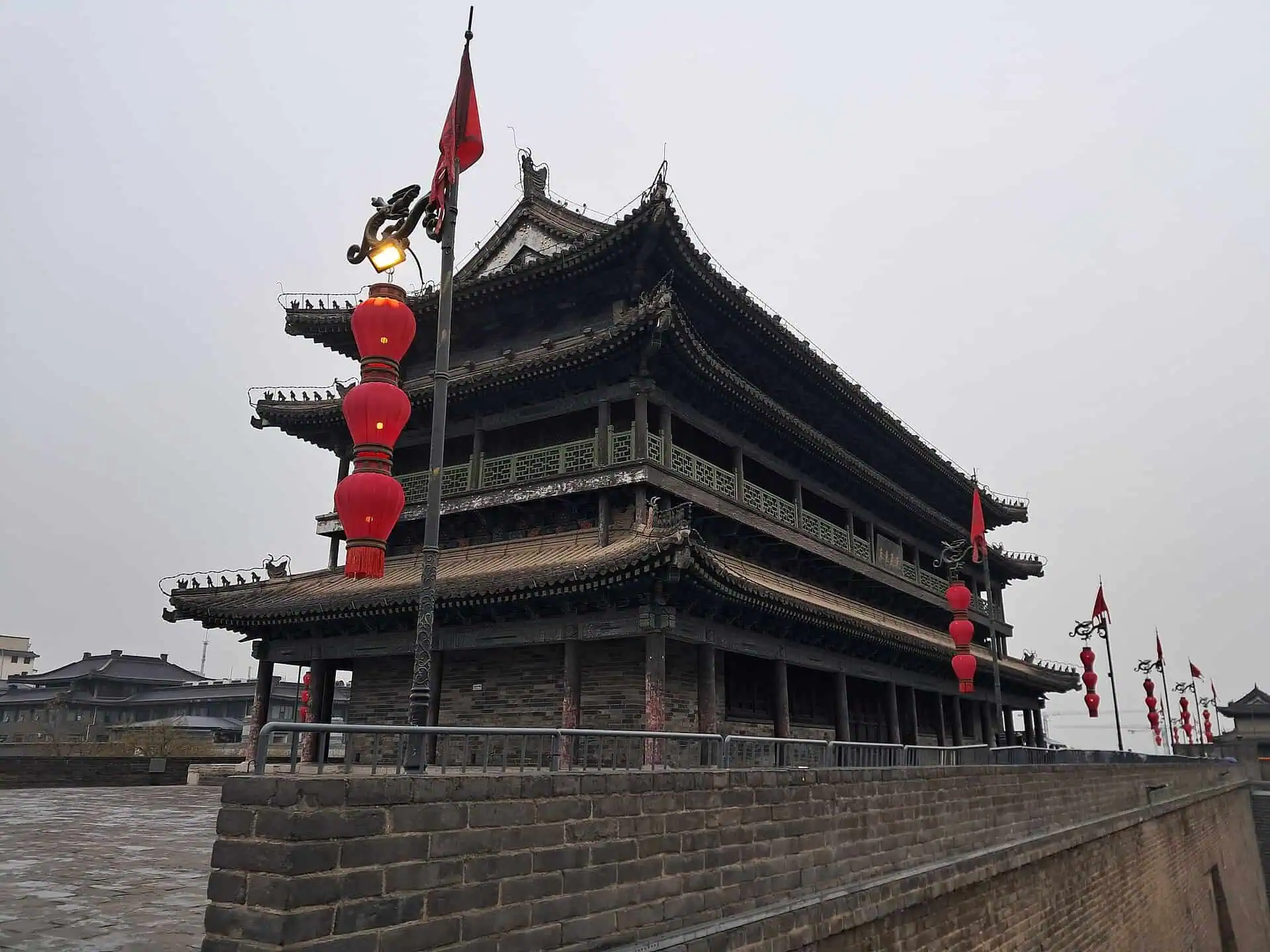
Xi'an City Wall
A 14-kilometer Ming dynasty rectangle you can cycle on top of — 650 years old and still the city's favorite commute.
Learn more →

Great Mosque of Xi'an
A mosque founded under the Tang in 742 AD, dressed as a Chinese garden temple.
Learn more →
Keep exploring
Visas & entry: do you need one?
Probably less paperwork than you fear — and two of the doors now have their own deep-dive packages: the 30-day visa-free entry (~50 countries) and the 240-hour transit (55 countries, including the US). This page is the router: work out which door is yours, then read its package.
The 240-hour visa-free transit, explained
Ten days in China without a visa, if you're just passing through — including Americans. The rules, the traps, and how to run it through Xi'an.
The 30-day visa-free entry: who gets in free
Around 50 countries can now enter China for up to 30 days with no visa at all — no transit logic, no onward-ticket games. Most of Europe, the UK, Canada, Australia and more. The US is not on the list.