Forest of Steles (Beilin Museum)
Xī'ān Bēilín Bówùguǎn
Stone books since 1087 — nearly 3,000 steles, and the home of Chinese calligraphy itself.
Entry
From ¥85
Hours
Daily · 9:00
Time needed
1½–3 hours
Booking
Required
Metro
Line 2 · Yongningmen (永宁门) · D
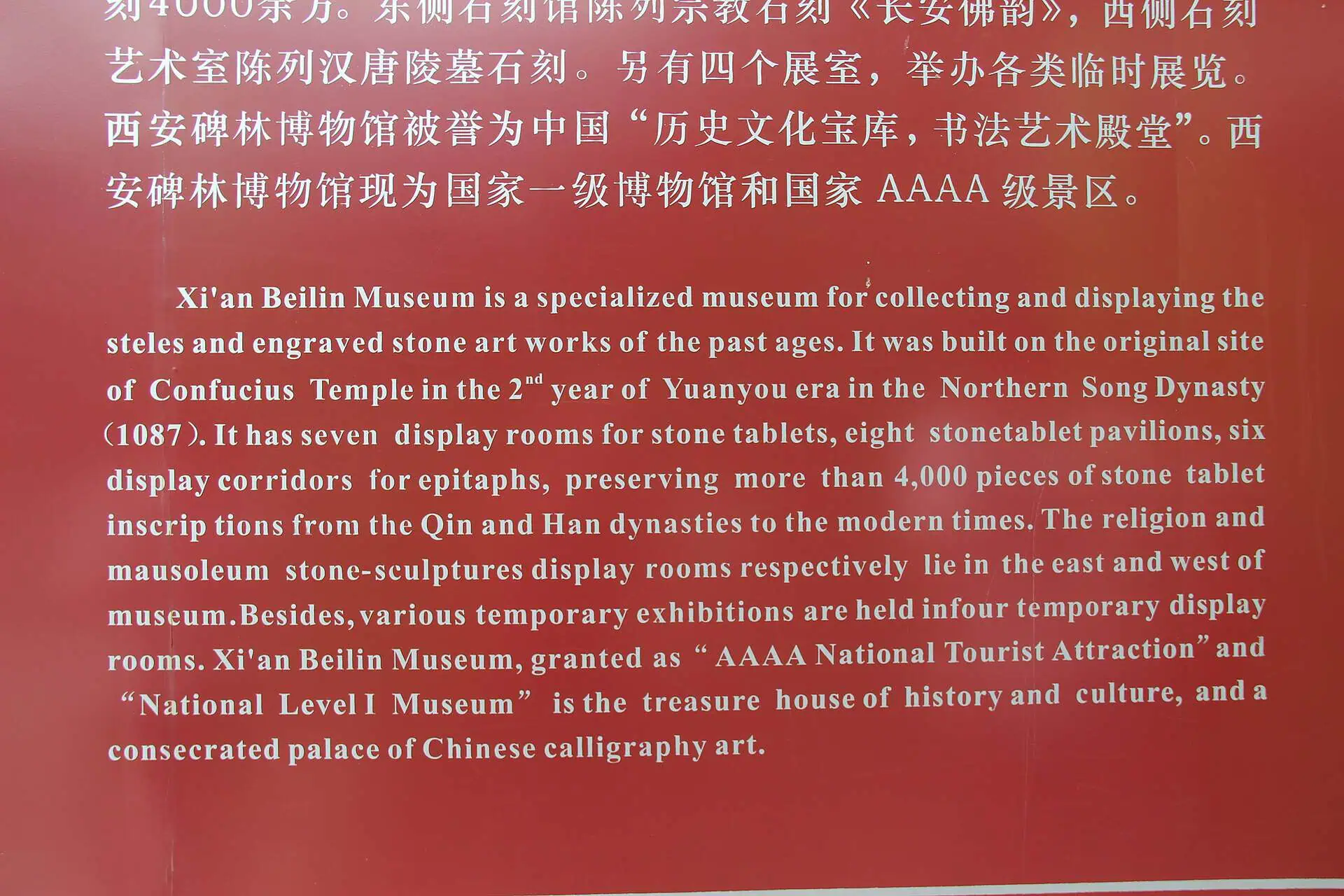
Since 1087, Xi'an has kept its most precious library in stone: nearly 3,000 engraved steles, including the Confucian classics carved under the Tang. If Chinese calligraphy, history or old books move you at all, this quiet courtyard complex near the South Gate is unmissable. If they don't, an hour here will still show you why the Chinese revere the written character like no other civilization.
What you're looking at
In 1087, during the Northern Song dynasty, officials gathered the most important engraved stones in the former capital and moved them into one courtyard for safekeeping. Nine centuries later, that collection — the Forest of Steles (碑林, Bēilín) — is still growing, and it remains the greatest assembly of stone-engraved texts in China.
The heart of the museum is the Kaicheng Stone Classics (开成石经): the complete Confucian canon — over 650,000 characters — carved onto 114 stone slabs in 837 AD as the definitive, uncorrupted edition of the books every scholar in the empire had to master. Before printing, this was how you froze a text in time. Standing in front of them is like standing in front of a Tang-dynasty printing press that never needed ink.
Around them, the collection reads like a hall of fame of Chinese calligraphy. Rubbings made from these stones taught generations of Chinese children to write: the stele of Yan Zhenqing (颜真卿), whose heavy, upright Tang style is still the first model students copy; Huaisu's (怀素) wild cursive, which looks like a thunderstorm captured in ink; and the Nestorian Stele — a 781 AD slab documenting the arrival of Christianity in Tang China, in Chinese and Syriac, one of the most remarkable East-meets-West documents anywhere. Look for the stone elephants and rhinoceroses outside too: monumental sculpture from imperial tomb avenues, brought here for protection.
The museum occupies the old Confucius Temple grounds — a series of quiet courtyards with stone thresholds, ancient cypresses and roofed galleries. It is one of the calmest major sights in Xi'an, and one of the least crowded.
Visiting strategy
Who should prioritize this: anyone with an interest in calligraphy, books, or Chinese history beyond the blockbuster level. This is the connoisseur's Xi'an museum — the one people who live here bring their visiting scholar friends to.
How long: 90 minutes covers the highlights; calligraphy fans should budget 2–3 hours. Go in the morning for near-empty galleries.
A route that works: start with the Stone Classics hall (the scale is the point), then the calligraphy galleries chronologically so the styles evolve in front of you, then the Nestorian Stele, finishing with the outdoor stone sculpture. Rubbing demonstrations are sometimes held in the side halls — ask at the entrance.
Pair it with the neighborhood: the museum sits inside the South Gate, a two-minute walk from Shuyuanmen Ancient Culture Street, where seal carvers and brush sellers carry on the same tradition in commercial form. The City Wall's south gate is five minutes away — the combo ticket (¥120) makes the pairing official.
Common mistake: rushing. The steles reward slow looking — pick two or three and actually read the translations rather than skimming a hundred slabs.
Getting there
The museum is tucked just inside the City Wall at 15 Sanxue Street, immediately southeast of the South Gate (Yongningmen).
- Metro: Line 2 to Yongningmen station (exit D), walk through the gate and turn left along the wall — about 8 minutes on foot, most of it down the lovely Shuyuanmen lane.
- Taxi/DiDi: anywhere inside the wall is a ¥10–15 hop.
- On foot: from the Bell Tower, it's a straight 15-minute walk south down Nandajie.
Practical notes
- Tickets: walk-up is normally fine; the ¥120 combo with the City Wall saves money if you're doing both (sold at either sight).
- Rubbings to take home: museum-shop rubbings are made from the actual steles and start around ¥100 — the single most meaningful souvenir in Xi'an. See our souvenir guide for the full picture.
- English support: key steles have English labels; the audio guide (rent at the entrance) is worth it here more than at most museums.
- Toilets & seating: courtyard benches throughout; toilets near the entrance and rear courtyard.
- Kids: older children who write any Chinese will get a kick out of seeing the originals of their copybook characters; younger ones will be bored within the hour.
- Accessibility: single-level courtyards but uneven stones and thresholds; manageable with assistance.
Questions, answered
Is the Forest of Steles worth visiting if I can't read Chinese?
Yes, with adjusted expectations. The scale of the Stone Classics, the monumental sculpture, and the Nestorian Stele (which has English context) land without literacy. Calligraphy as pure visual art also works — Huaisu's cursive needs no translation.
How long do you need at the Beilin Museum?
90 minutes for the highlights, 2–3 hours if calligraphy or epigraphy is your thing. It pairs naturally with Shuyuanmen street and the City Wall south gate for a full half-day.
What is the Nestorian Stele?
A limestone slab erected in 781 AD recording the arrival and early history of Nestorian Christianity in Tang China — written in Chinese and Syriac. It's one of the most important documents of early East–West contact, and it sits in the museum's second hall.
Can I buy rubbings of the steles?
Yes — the museum shop sells rubbings taken from the original stones (from about ¥100 up by size and fame). They're authentic, meaningful, and pack flat. Shuyuanmen street outside also sells them, quality varying.
Is the Forest of Steles the same as the Stele Forest?
Yes — Beilin (碑林) literally means 'forest of steles.' The museum's English name has been rendered both ways; the official name is Xi'an Beilin Museum.
Keep exploring
Xi'an City Wall
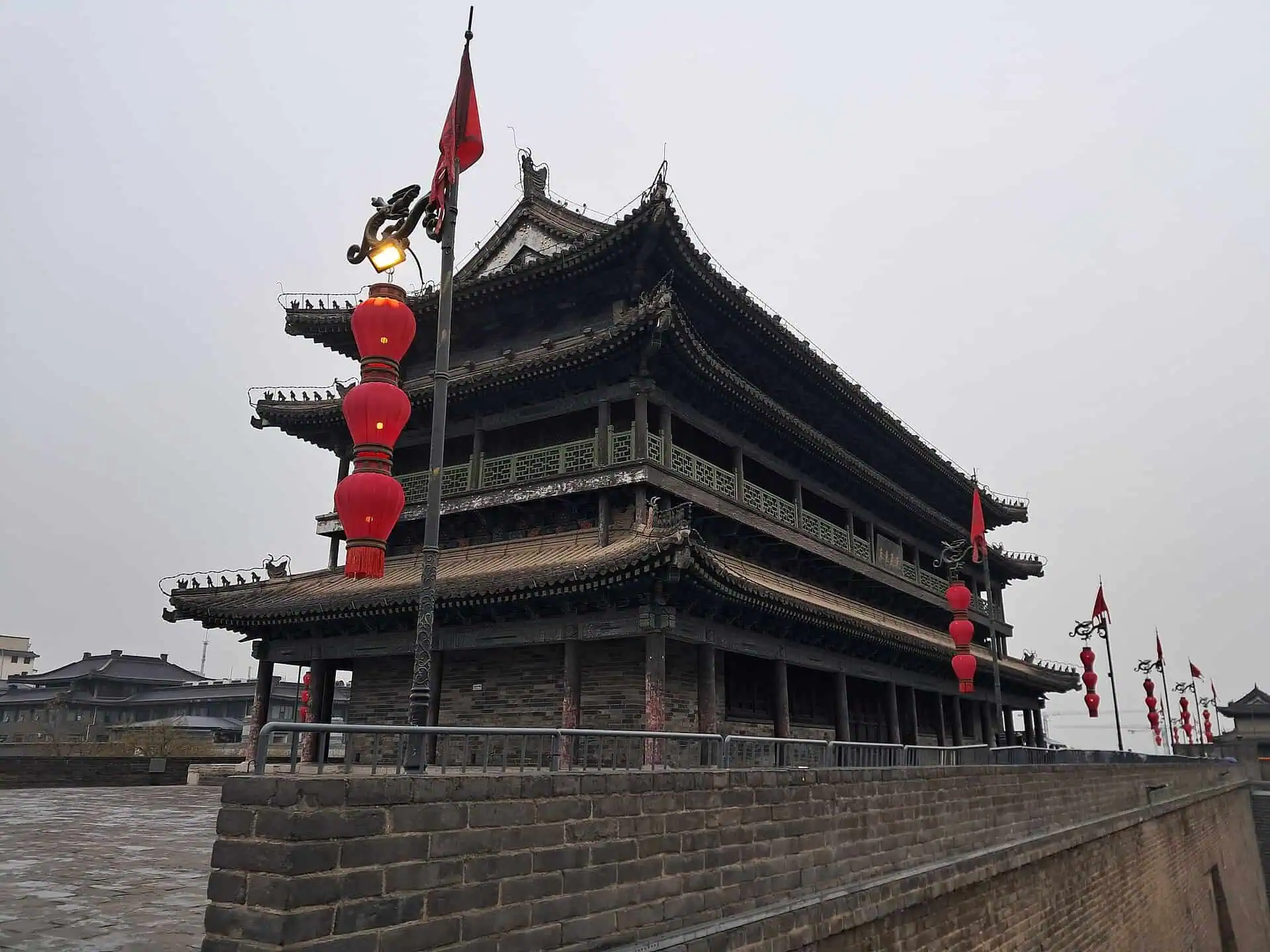
A 14-kilometer Ming dynasty rectangle you can cycle on top of — 650 years old and still the city's favorite commute.
Learn more →
Muslim Quarter
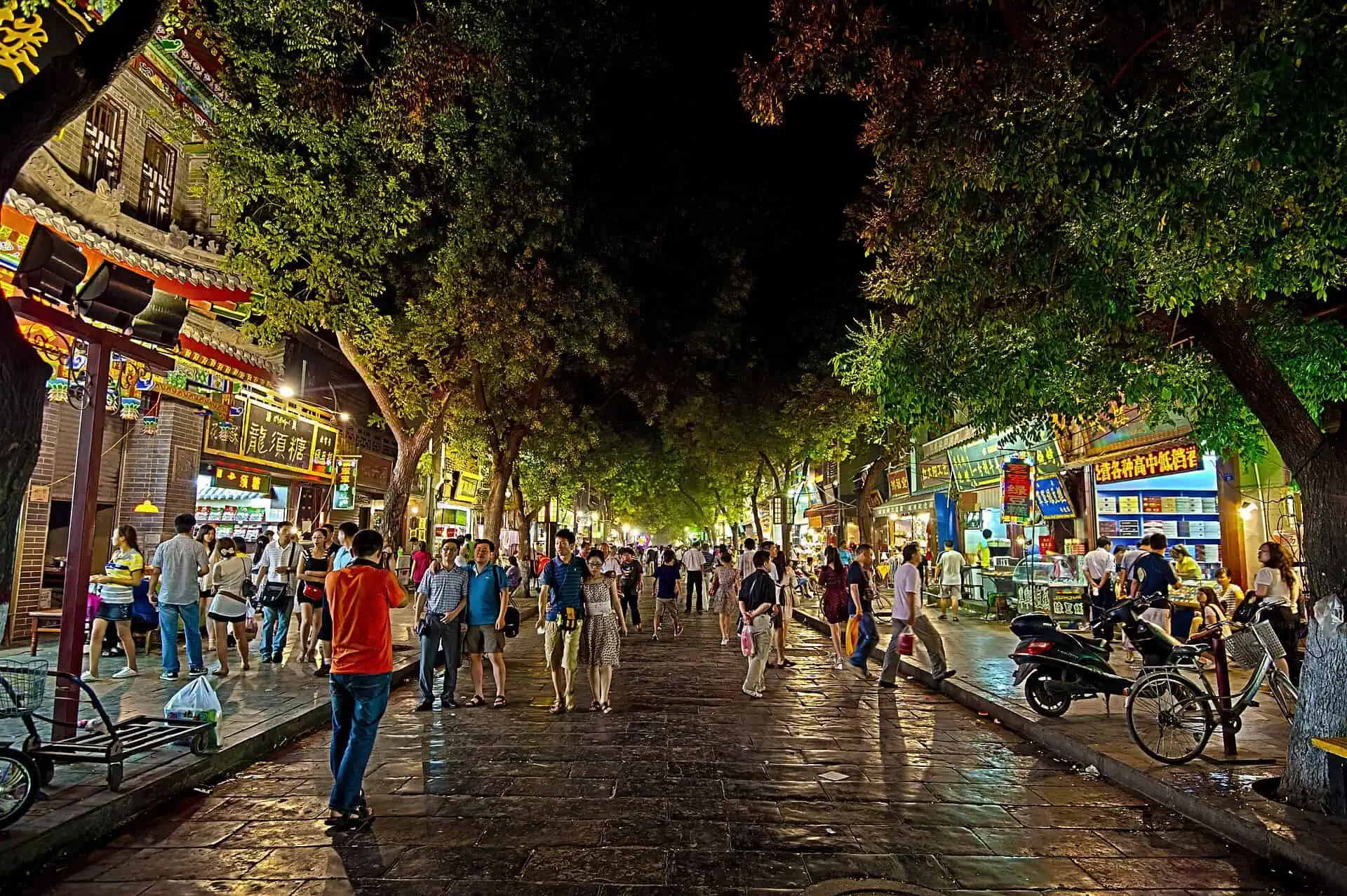
Feeding Xi'an since the 700s — the loudest, smokiest, best-smelling streets of its Hui community.
Learn more →

Xi'an Bell Tower
A Ming tower from 1384 at the dead center of the walled city — best admired at dusk, floodlit above the roundabout.
Learn more →
Related stories
Public holidays & crowds: when not to come
Chinese public holidays concentrate 1.4 billion people's travel into the same few weeks, and Xi'an is one of the country's most popular destinations. Two periods are genuinely best avoided — the October Golden Week and the Spring Festival season — while the smaller three-to-five-day holidays just demand earlier bookings and earlier mornings.
Health & safety in Xi'an: a calm, practical guide
Xi'an is one of the safest big cities you'll ever visit — violent crime against tourists is rare, and solo travelers, including women walking at night, report few problems. The genuine risks are mundane: traffic, trip hazards, tap water you shouldn't drink, winter air and summer heat. Here's how to handle each.
Xi'an with kids: the family playbook
Xi'an is one of China's easiest cities to do with children: a compact center, sights with genuine visual scale, and food kids actually eat. The trick is choosing the four or five things that land with young travelers — and skipping the ones that are homework.
Shopping in Xi'an: what's actually worth buying
Most of what's sold to tourists in Xi'an is factory stock you could buy anywhere in China — but a few things are genuinely local and worth suitcase space: a seal carved with your name on Shuyuanmen, a proper museum-shop terracotta figure, fu brick tea, and Shaanxi's dried persimmons. Here's what to buy, what to skip, and how the haggling works.
Chang'an in the Tang dynasty: the world's greatest city
Thirteen dynasties: Xi'an as capital, a visual timeline
What to pack for Xi'an: a consolidated, season-by-season checklist
Xi'an punishes over-packers and rewards layers. The city runs from furnace-hot summers (35°C+) to cold, dry winters (lows around −5°C), with spring and autumn as the mild sweet spot — so the clothing list changes entirely with the month. The non-negotiables barely change at all: pocket tissues for paperless toilets, a mask for winter air, a refillable bottle, and your passport, which doubles as your ticket at the big sights. Here's the whole list in one place.
Student, senior & child discounts at Xi'an sights — the full table
Xi'an's big sights offer real discounts: students roughly half price at most attractions, seniors 65+ free at the Terracotta Army and most museums, children under 16 free at the flagship sights. The catch: it's physical ID at the gate, photos don't count, and some policies apply only to Chinese nationals. Here's the complete table.
On video
Xi'an on video
What this place looks like on video.