Hanyangling Mausoleum
Hàn Jǐngdì Yánglíng Bówùyuàn (Hànyánglíng)
A Han emperor's underground court, begun in 153 BC — half-sized figures under a glass floor, without the crowds.
Entry
From ¥55
Hours
Mar – Nov · 8:30
Time needed
2–3 hours
Booking
Required
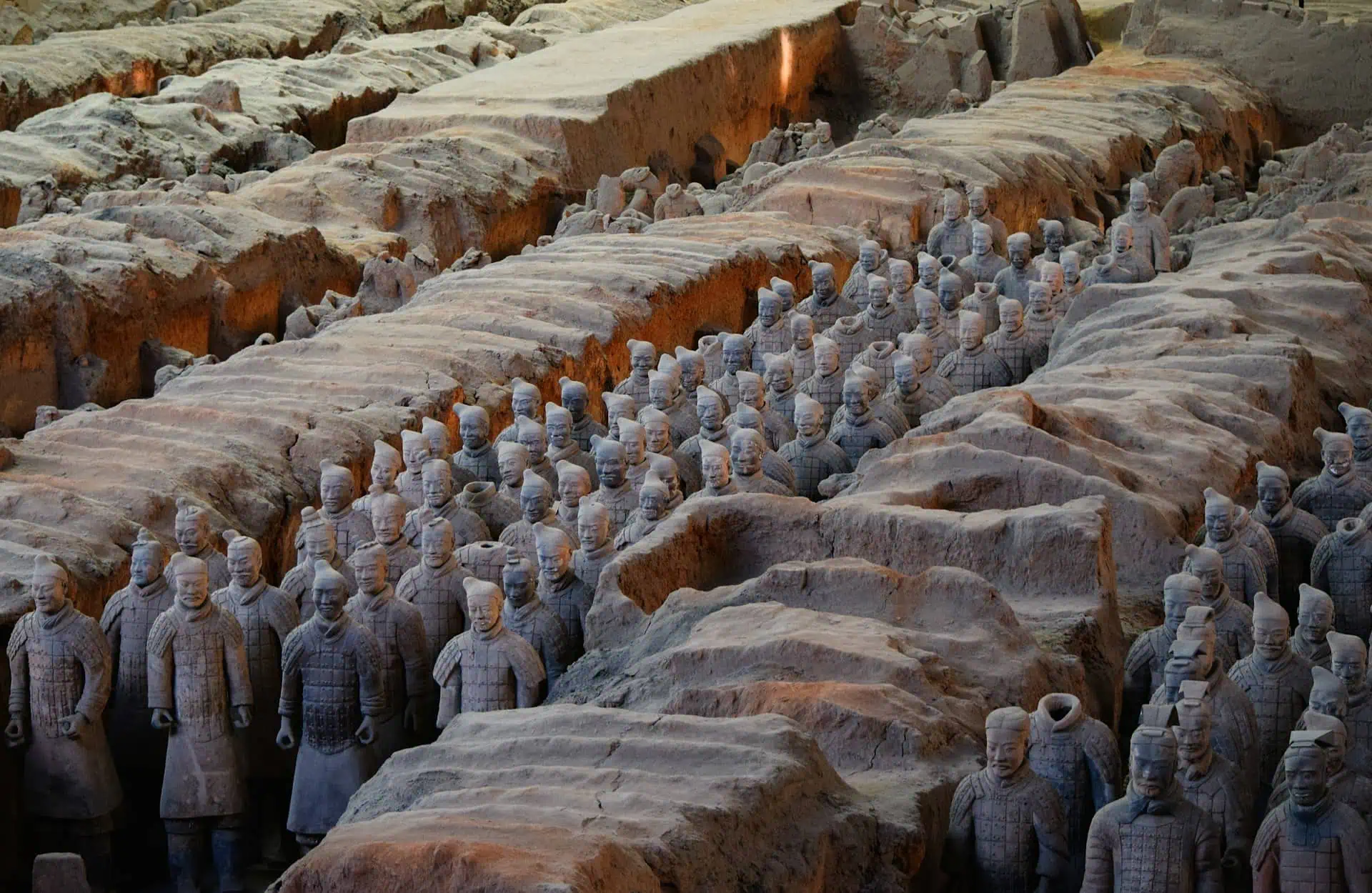
Hanyangling (汉阳陵, Hànyánglíng) has been holding court since 153 BC — and if the First Emperor's army is the blockbuster, this is the director's cut. The tomb of Han Emperor Jingdi holds thousands of half-sized court figures — once dressed in silk with wooden arms, now eerily bare — and you view them through glass floors directly over the excavation pits. It is quieter, subtler and far less visited than its Qin cousin, and it sits on the airport side of the city, which makes logistics easier than you'd think.
What you're looking at
Hanyangling is the joint tomb of Emperor Jing of Han (汉景帝, Hàn Jǐngdì, r. 157–141 BC) and his Empress Wang (王皇后, Wáng Huánghòu). Jingdi's reign — paired with his father's as the "Rule of Wen and Jing" (文景之治, Wénjǐng zhī Zhì) — was the Han dynasty's deep breath: taxes cut, wars paused, granaries filled. His son, Emperor Wu (汉武帝, Hàn Wǔdì), would spend that inheritance building an empire. The tomb was excavated from 1990, after workers building the airport highway stumbled onto the burial pits.
The figures here tell a different story from the First Emperor's war machine. Tens of thousands of pottery people about 60 cm tall — one-third life size — were buried as the emperor's afterlife household: soldiers, servants, entertainers and, unusually, clearly marked eunuchs. When they went into the ground they were dressed in silk robes with articulated wooden arms. Two millennia of damp rotted the cloth and the arms away, which is why the ranks you see today are rows of nude, armless torsos — strangely more haunting for it. Around them runs a terracotta barnyard: pigs, dogs, goats, sheep and horses by the thousand, the pantry of a peaceful court rather than a battle formation.
The viewing arrangement is the best in China. The underground exhibition hall — built in 2006 over a group of the tomb's outer burial pits (外藏坑, wàicángkēng) — puts you on glass floors and walkways directly above the trenches, with the figures still lying in the soil where archaeologists left them. Lighting is low and hushed; on a weekday morning you may have whole pits to yourself. A separate archaeological gallery displays the finest individual pieces up close, and the twin tomb mounds of emperor and empress rise out of the flat farmland beyond — both unexcavated.
Visiting strategy
Is it worth it? If you have any appetite left after the Terracotta Army, yes — the two sites complete each other. Qin gives you scale and military theater; Han gives you intimacy and the strangest details (the armless ranks, the eunuchs, the pottery pigs). Many repeat visitors and professional guides quietly prefer Hanyangling precisely because the crowds never show up. If you only have time or tolerance for one terracotta site and want maximum spectacle, stick with Pit 1.
Route: start in the archaeological exhibition hall for context (30–40 minutes), then take the shuttle or walk to the underground pits — the highlight — and finish with a stroll toward the tomb mounds. Two to three hours covers it without rushing.
Timing: there is no bad time. Weekends bring local families but nothing like the tour-bus waves at the Qin site; weekday mornings feel nearly private. Low season (December–February) is emptier still, though the site park is bleak in a north-Shaanxi wind.
The smart pairing: Hanyangling sits about 20 minutes from Xi'an Xianyang International Airport, so the classic move is an arrival or departure day — see the airport corridor area guide and our visa-free layover itinerary for how to slot it in. Pairing it with the Qianling Mausoleum makes a strong "two imperial tombs" day for dynasty nerds. Avoid doing it the same day as the Terracotta Army — warrior fatigue is real, and the sites are on opposite sides of the city.
Getting there
The mausoleum is in Weicheng District, Xianyang — about 20 km north of the Bell Tower, on the road to the airport. There is no metro anywhere near it. Three realistic options:
- DiDi or taxi is the default: roughly ¥60–100 and 30–45 minutes from downtown, or about 20 minutes from the airport terminals. The catch is the return — drivers rarely cruise the site, so book your pickup in the app (see essential apps) before you disappear underground.
- Tourist bus 4 (游4路) runs from City Library station (市图书馆, metro Line 2, exit D) with a few morning departures (around 8:30, 10:20 and 12:00 at last check) and afternoon returns. Cheap but inflexible — confirm the current schedule with your hotel before building a day around it.
- Organized day tours frequently combine Hanyangling with the Terracotta Army; worth considering if you want both without the transport wrangling, though it's a long day.
Coming straight off a flight is genuinely practical: luggage storage is usually available at the visitor center (ask at the desk), and getting into Xi'an from the airport passes this way anyway.
Practical notes
- Food: nothing on site is worth eating. Bring snacks, or eat before/after in the city.
- Payments: walk-up tickets are normal, but have Alipay or WeChat Pay ready — ticket windows, shuttle carts and shops are all mobile-first.
- Photography: non-flash photography is generally tolerated in the underground gallery; the light is dim, so steady your phone against the glass.
- Temperature: the underground hall stays cool year-round — welcome in August, but bring a layer in spring and autumn.
- Kids: the glass floors over real dig pits land well with children; the site park is big and exposed, so use the shuttle carts.
- Context: our short history of Xi'an places the Han tomb-building era in the bigger story if you want it before you go.
Questions, answered
Is Hanyangling worth visiting if I've already seen the Terracotta Army?
Yes — it's the perfect complement. The Qin pits give you scale; Hanyangling gives you intimacy, with half-sized court figures viewed through glass floors directly over the excavation trenches, and a fraction of the crowds.
How much is the Hanyangling ticket and where do I buy it?
About ¥55 per adult (older guides quote ¥65–90, so seasonal pricing may apply — check on arrival). Walk-up purchase is usually fine outside holidays; you can also book on Trip.com or the museum's WeChat account. Bring your passport.
How do I get to Hanyangling from Xi'an?
DiDi or taxi is easiest: 30–45 minutes and roughly ¥60–100 from downtown. Budget option is tourist bus 4 from City Library station (metro Line 2, exit D) with a few morning departures. There's no metro to the site.
Why do the Hanyangling figures have no arms or clothes?
They were buried fully dressed in silk robes with articulated wooden arms. Two thousand years underground rotted the wood and fabric away, leaving the nude, armless pottery torsos you see today — originally they looked like dressed, movable dolls.
Can I visit Hanyangling on a layover at Xi'an airport?
It's the best-suited major sight in Xi'an for exactly that — about 20 minutes by car from the terminals. With a 6+ hour layover it's very doable; luggage storage is usually available at the visitor center. Book the return DiDi in advance.
How long does Hanyangling take?
Allow 2–3 hours for the exhibition hall, the underground pits and a walk to the tomb mounds. With transport from downtown Xi'an it fills a relaxed half day.
Keep exploring
Xi'an Xianyang International Airport (XIY)
The northwest's main gateway — and easier to leave than it looks.
Learn more →
Terracotta Army
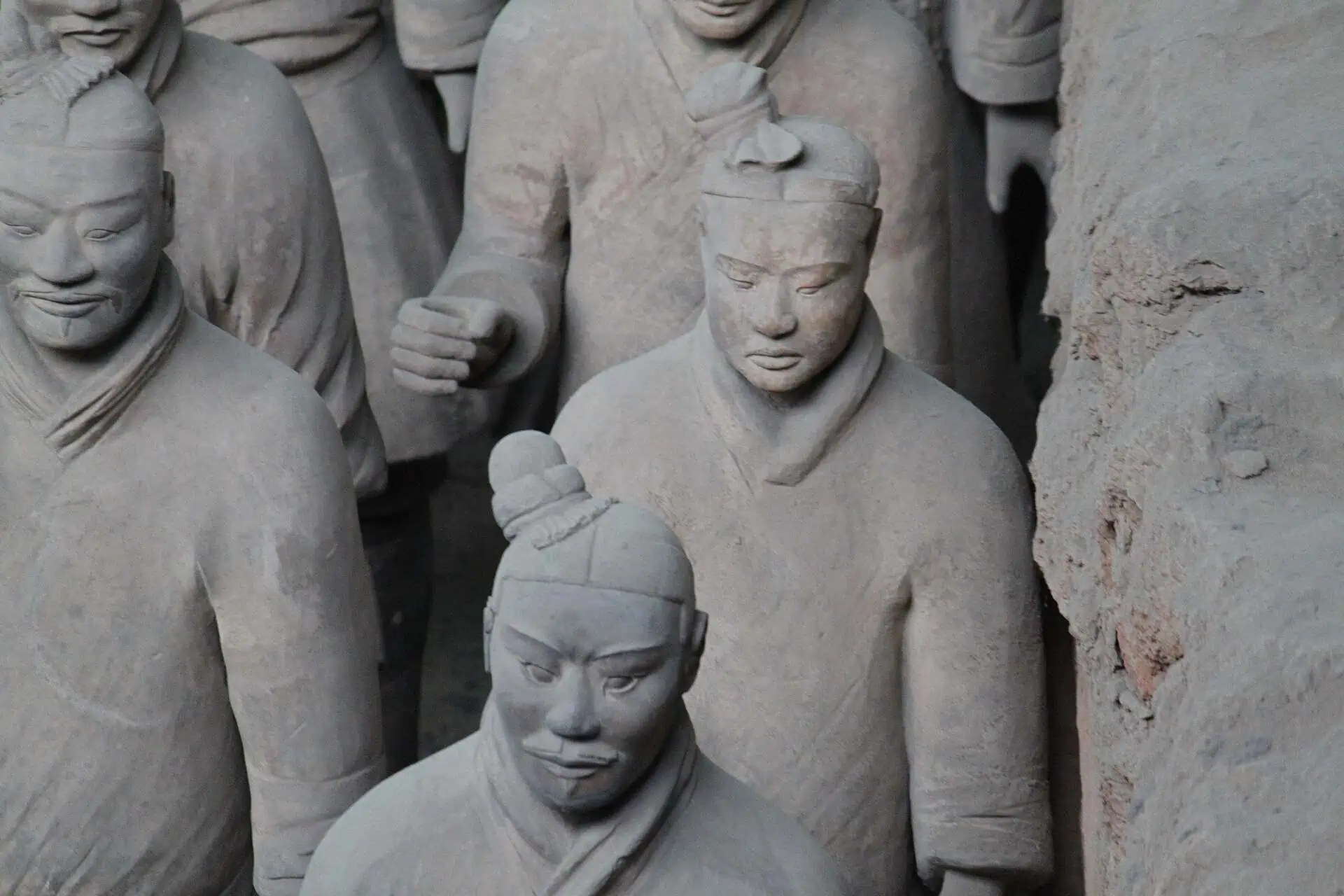
8,000 life-sized soldiers buried for China's First Emperor — and still on guard 2,200 years later.
Learn more →
Shaanxi History Museum
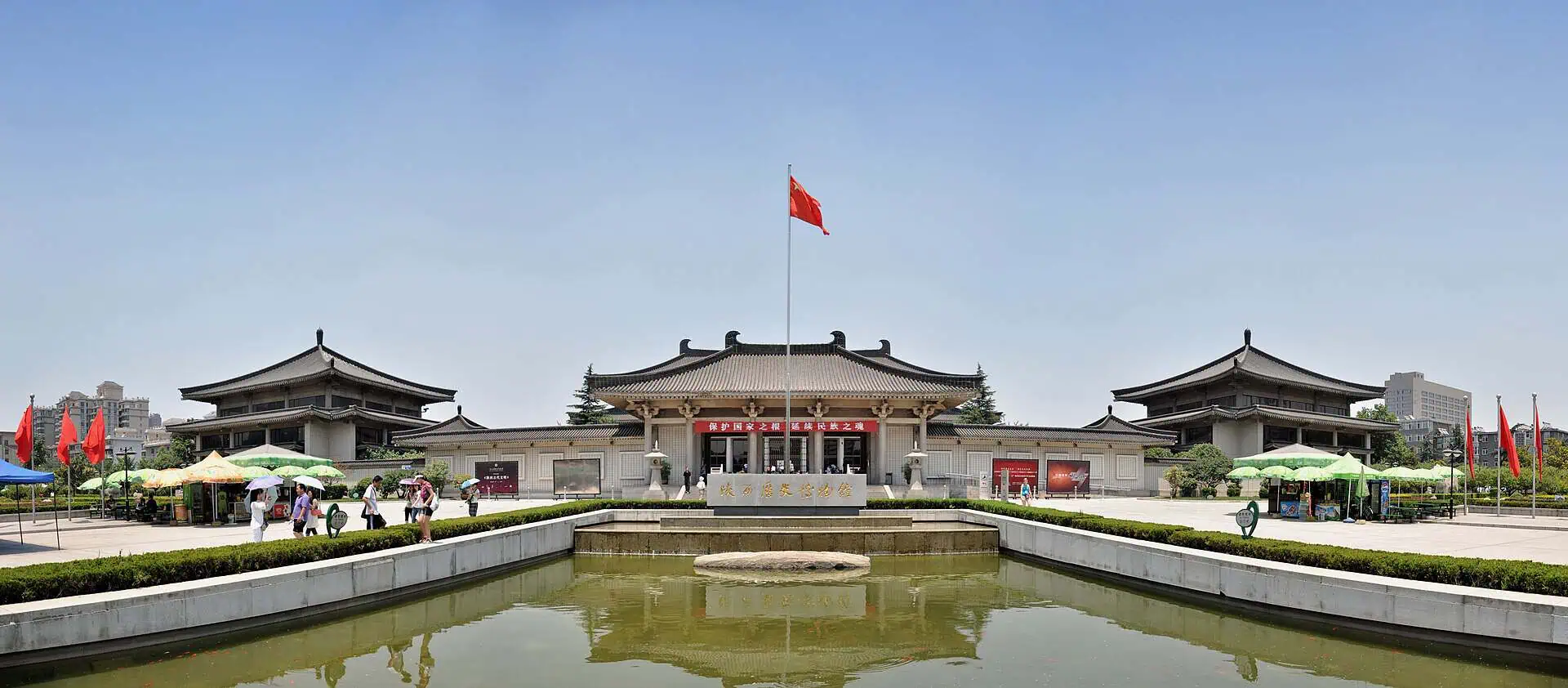
Every layer of Xi'an's time stack under one roof — Zhou bronzes, Han gold and Tang treasure.
Learn more →
Related stories
Public holidays & crowds: when not to come
Chinese public holidays concentrate 1.4 billion people's travel into the same few weeks, and Xi'an is one of the country's most popular destinations. Two periods are genuinely best avoided — the October Golden Week and the Spring Festival season — while the smaller three-to-five-day holidays just demand earlier bookings and earlier mornings.
Autumn in Xi'an: ginkgo gold (November)
Every November, a single 1,400-year-old ginkgo tree in the Zhongnan Mountain foothills turns Xi'an's social feeds gold — tradition says Emperor Taizong planted it himself. Seeing it takes a free-but-competitive reservation and an hour's drive south; if you'd rather stay in the city, there are honest ginkgo spots inside the wall and a 10,000-tree forest at Hanyangling. Here's the timing, the booking drill, and what November in Xi'an is actually like.
Qin Shi Huang and the story of the Terracotta Army