Qianling Mausoleum
Qiánlíng
Since 705 AD, China's only female emperor has slept beside her husband in a tomb no one has ever opened.
Entry
From ¥100
Hours
Daily · Peak (Mar
Time needed
6–8 hours
For over 1,300 years, Wu Zetian — the only woman to rule China as emperor in her own name — has slept beside her husband, the Tang emperor Gaozong, in the only one of the eighteen Tang imperial mausoleums never successfully robbed. There's no excavated spectacle here: what you get is a kilometer-long spirit way of Tang stone sculpture, a deliberately blank stele, 61 headless foreign envoys, and the mural-lined tombs of three young royals destroyed by Wu Zetian's court. For Tang-history people it's one of the most atmospheric sites in the region; spectacle-seekers should know what they're signing up for.
What you're looking at
Qianling (乾陵, Qiánlíng) holds two emperors: Tang Gaozong (唐高宗, Táng Gāozōng, d. 683) and his empress Wu Zetian (武则天, Wǔ Zétiān, 624–705). Wu Zetian did what no other woman in Chinese history managed — after decades ruling through her husband and sons, she took the throne outright in 690, declared her own Zhou dynasty, and governed for fifteen years before being forced from power months before her death. She was buried beside Gaozong on Mount Liang, 80 km northwest of Xi'an, in 706. No other tomb anywhere contains two emperors.
It's also the only Tang imperial tomb never successfully robbed. The mountain itself is the tomb — Tang emperors abandoned mound-building and cut their burial chambers into natural peaks — and the sealed stone entrance passage was found intact by a 1958 survey. Rebel armies dug for it, a warlord shelled it, and the mountain kept its secret. It has never been excavated, and current policy is to leave it closed, so whatever is inside — and for a tomb of that rank, the guesses run wild — stays inside.
What you visit is above ground and around the mountain:
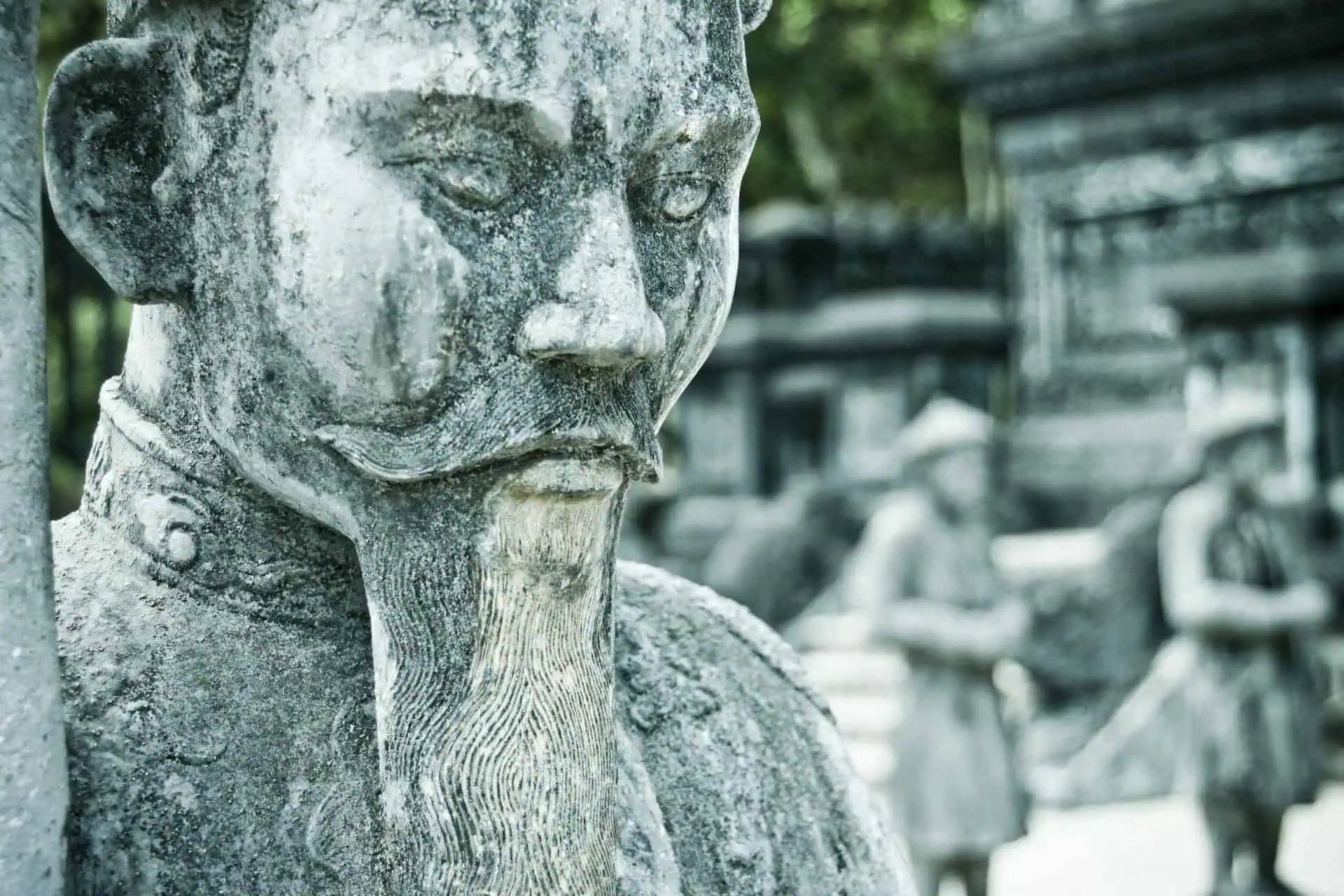
- The spirit way (神道, shéndào) — a kilometer-long ceremonial avenue climbing between the mountain's twin breast-shaped peaks, lined with Tang stone sculpture: rows of officials, winged horses (翼马, yìmǎ), and a rare relief of an ostrich, an animal that reached Chang'an as Silk Road tribute.
- The wordless stele (无字碑, Wúzìbēi) — erected for Wu Zetian, famously blank. Modesty, arrogance, or a dare to posterity to judge her? Later dynasties covered it in graffiti-commentary anyway.
- The 61 foreign envoys (六十一蕃臣像, Liùshíyī Fānchén Xiàng) — life-sized stone figures of ambassadors and tribal leaders who attended Gaozong's funeral, each once named on its back. All are headless — the heads were lost over the centuries, with earthquakes the usual suspect. It's an eerie, powerful lineup.
- The satellite tombs — seventeen royal burials ring the mountain; three are open. Princess Yongtai (永泰公主墓, Yǒngtài Gōngzhǔ Mù) houses the site museum; the princes Yide (懿德太子墓) and Zhanghuai (章怀太子墓) are nearby. All three young royals died in the bloodletting of Wu Zetian's court — Yongtai and Yide in 701 for gossiping about her favorites — and were reburied here with honors after her fall. Their tomb passages carry some of the finest Tang murals anywhere: court ladies, polo players, hunting processions.
Visiting strategy
Is it worth it? Depends what you came for:
- Tang-history people: yes. You approach the tomb the way funeral processions did, on foot up the spirit way, ending at a blank stele and a locked mountain. The atmosphere is the exhibit. If you've read about Tang Chang'an, this is where it becomes physical.
- Spectacle-seekers: probably not. There is no pit of warriors here — it's a stone avenue, a stele pavilion, three tomb ramps and a grass-covered mountain. If that sounds thin, spend the day on the Terracotta Army or Mount Huashan instead.
A route that works: start at the visitor center by Princess Yongtai's tomb — buy the combined ticket and the ¥20 shuttle pass. See her tomb and the museum first (the famous court-ladies mural, 宫女图, Gōngnǚ Tú), then shuttle or walk the spirit way up to the wordless stele and the 61 envoys, and finish with the Yide and Zhanghuai tombs plus the replica Tang crypt if you have the legs. Three to four hours total.
About the murals: the great paintings in the satellite tombs are mostly faithful replicas in situ — the finest originals hang in the paid mural gallery of the Shaanxi History Museum. Seeing the originals there and the actual tombs here makes a genuinely satisfying pairing.
The classic combo is Famen Temple, about 45 minutes away by road — the two anchor Xi'an's western day-trip circuit, and most tours bundle them.
Don't skip lunch: Qian county town is the ancestral home of guokui, the giant baked wheat "helmet" of the Guanzhong plain — dense, crusty, and built for travelers. The local version with tofu pudding is the county's proud breakfast.
Getting there
Qianling sits on Mount Liang, 6 km north of Qian county town (乾县, Qián Xiàn) and about 80 km northwest of Xi'an. Realistic options:
- High-speed train + taxi (best DIY): Xi'an North (西安北站) → Qianxian station (乾县) in about 30 minutes on the Yinchuan-bound line — see our high-speed rail guide for booking. From Qianxian station it's a 15–20 minute taxi to the tomb area. Flexible, fast, and lets you return whenever you're done.
- Day tour: the painless version. Tours from Xi'an pair Qianling with Famen Temple and handle every transfer — compare on Trip.com.
- Tourist bus 游3: a direct bus has long run from the east square of Xi'an Railway Station, departing around 8:00 and returning about 15:00 — roughly 2 hours, about ¥18 one way. It suspends in winter and schedules shift; treat it as a bonus if it's running, not a plan.
- Hired car: about 1.5 hours via the airport/Fuyin expressways. Sensible for a group combining Qianling and Famen Temple on their own schedule; negotiate the day rate with waiting time included.
Bring your passport and working mobile payments; tickets, shuttles and county-town lunches all run on QR codes.
Practical notes
- Exposure: the spirit way is a long open ridge — hat, water and sunscreen from May to September; in winter it's bleak, windy and oddly beautiful.
- Buy the shuttle pass (¥20). The satellite tombs, visitor center and spirit way are spread over several kilometers; walking everything is possible but eats your afternoon.
- Underground sections: the tomb passages slope steeply down with steps at the chambers. Claustrophobes and anyone with knee trouble can skip the ramps and keep the museum and the ridge.
- Tickets: ¥122 combined in season (lower in winter) covers everything; students half price with ID. The visitor center is at Princess Yongtai's tomb.
- Facilities: toilets at the visitor center and the stele pavilion; food options near the site are limited — Qian county town, ten minutes away, is the lunch move.
- Combine sensibly: Qianling plus Famen Temple is a full but satisfying day. Qianling plus anything else is too much.
Questions, answered
Who is buried at Qianling?
Two emperors: the Tang emperor Gaozong (d. 683) and his empress Wu Zetian (624–705), who went on to rule in her own name as China's only female emperor, founding a short-lived Zhou dynasty. She was interred beside him in 706, making Qianling the only tomb in China — and arguably anywhere — to hold two emperors.
Has Qianling ever been excavated or robbed?
No to both. It's the only one of the eighteen Tang imperial mausoleums never successfully robbed — rebel armies dug for it and a warlord shelled it without finding the way in. A 1958 survey located the sealed stone entrance passage intact. There are no plans to excavate; Chinese archaeological policy is to leave imperial tombs closed.
Why is Wu Zetian's stele at Qianling blank?
Nobody knows — that's the point of the mystery. The wordless stele (无字碑) was erected without an inscription, which readers take either as supreme modesty (her deeds beyond words), supreme confidence (posterity may write its own verdict), or politics her successors couldn't resolve. Later dynasties scratched their own commentary onto it anyway.
How do I get to Qianling from Xi'an?
Best DIY: high-speed train from Xi'an North to Qianxian station (~30 minutes), then a 15–20 minute taxi. A tourist bus (游3) runs from Xi'an Railway Station's east square in season (~2 hours, ~¥18). Most visitors take a day tour combining Qianling with Famen Temple; a hired car is about 1.5 hours.
How much does Qianling cost?
The peak-season combined ticket (March–November) is ¥122 and covers the mausoleum, the Yongtai Princess Tomb with the Qianling Museum, the Yide and Zhanghuai Prince Tombs and the replica Tang crypt. Winter admission is lower and students pay half. The internal shuttle bus between the spread-out sites is ¥20 and worth it.
Can I visit Qianling and Famen Temple in one day?
Yes — it's the standard western-corridor combination and most Xi'an day tours do exactly that; the two sites are about 45 minutes apart by road. With a hired car you can do both comfortably. By public transport, choose one.
Keep exploring
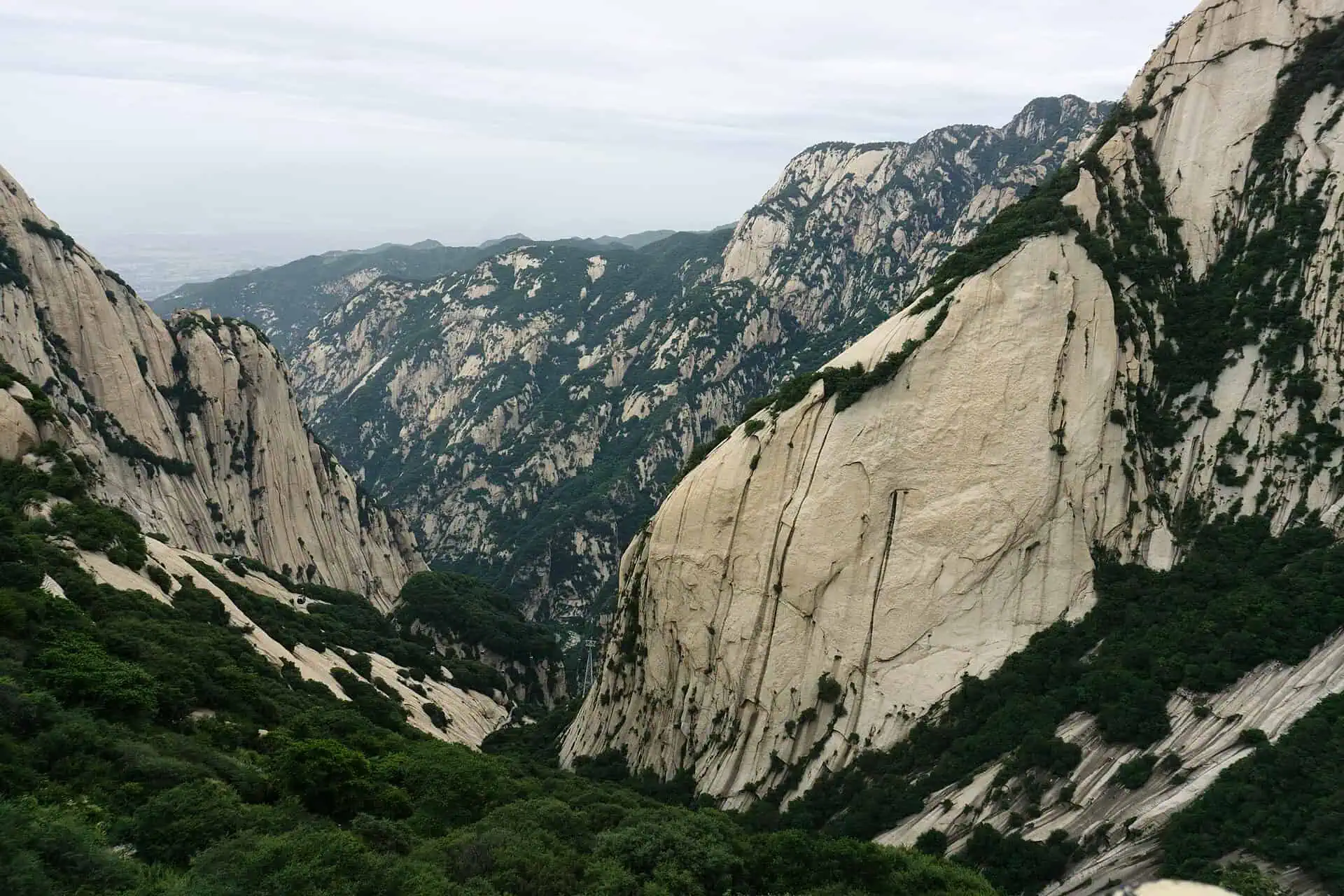
Mount Huashan Day Trip
Sacred for 2,000 years, infamous for one plank path — China's most dramatic granite peaks, an hour from Xi'an by bullet train.
Learn more →
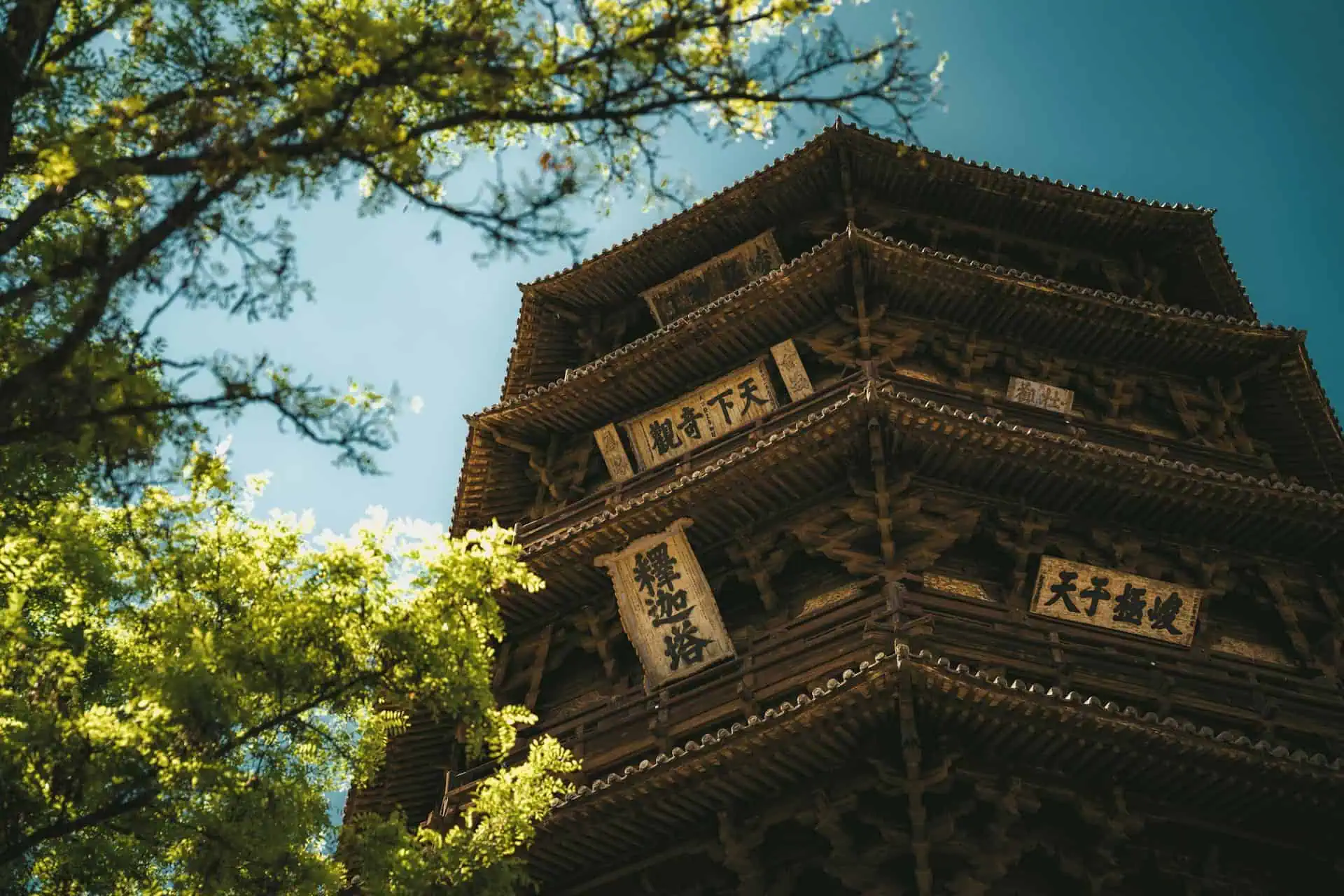
Famen Temple
A Buddha finger bone sealed in a Tang crypt in 874 AD, the treasure vault beside it, and one very large diamond — 120 km west of Xi'an.
Learn more →
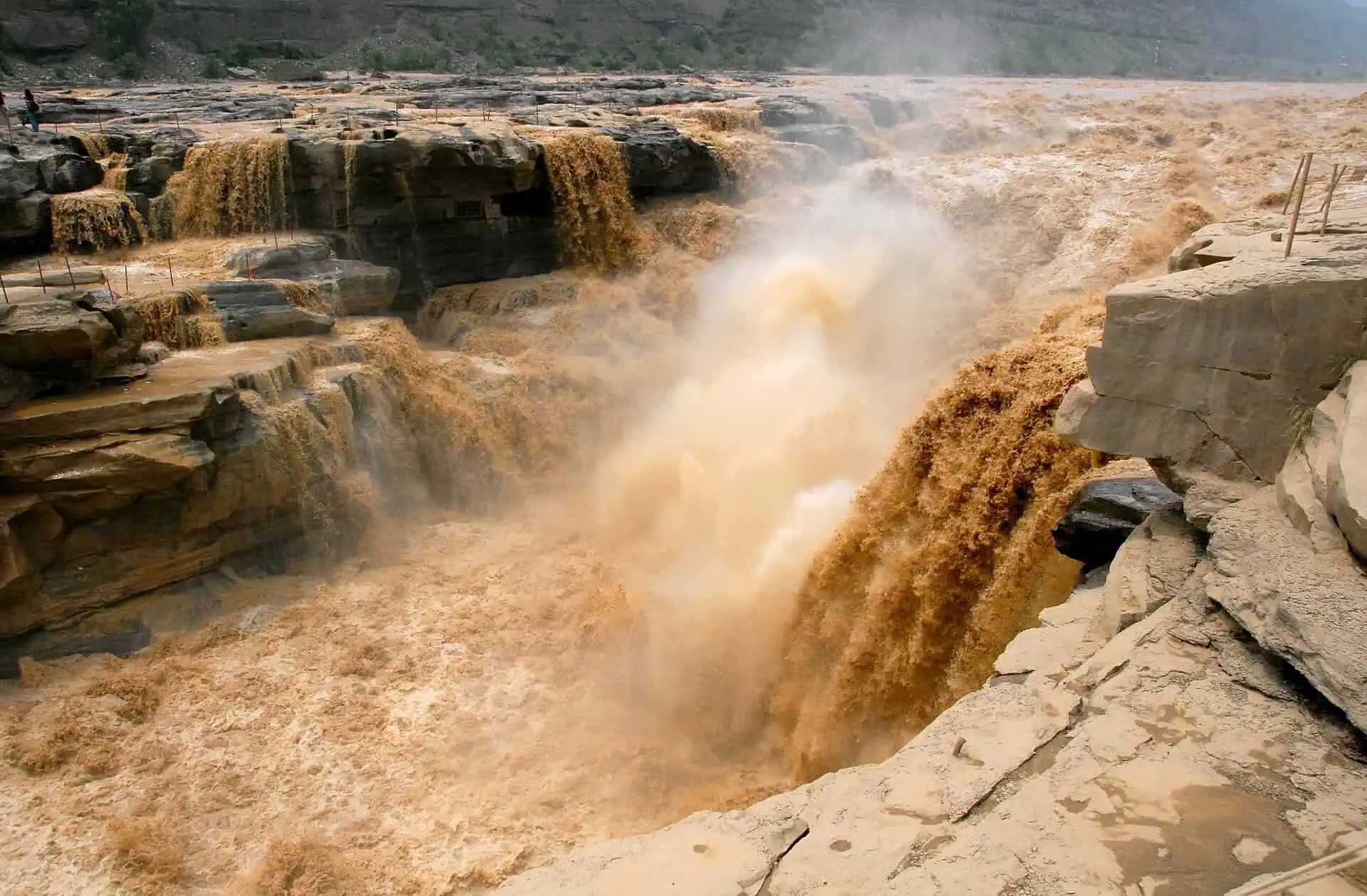
Hukou Waterfall
The Yellow River's temper, carved into rock since before any dynasty — the mightiest amber falls in China, four hours by road from Xi'an.
Learn more →