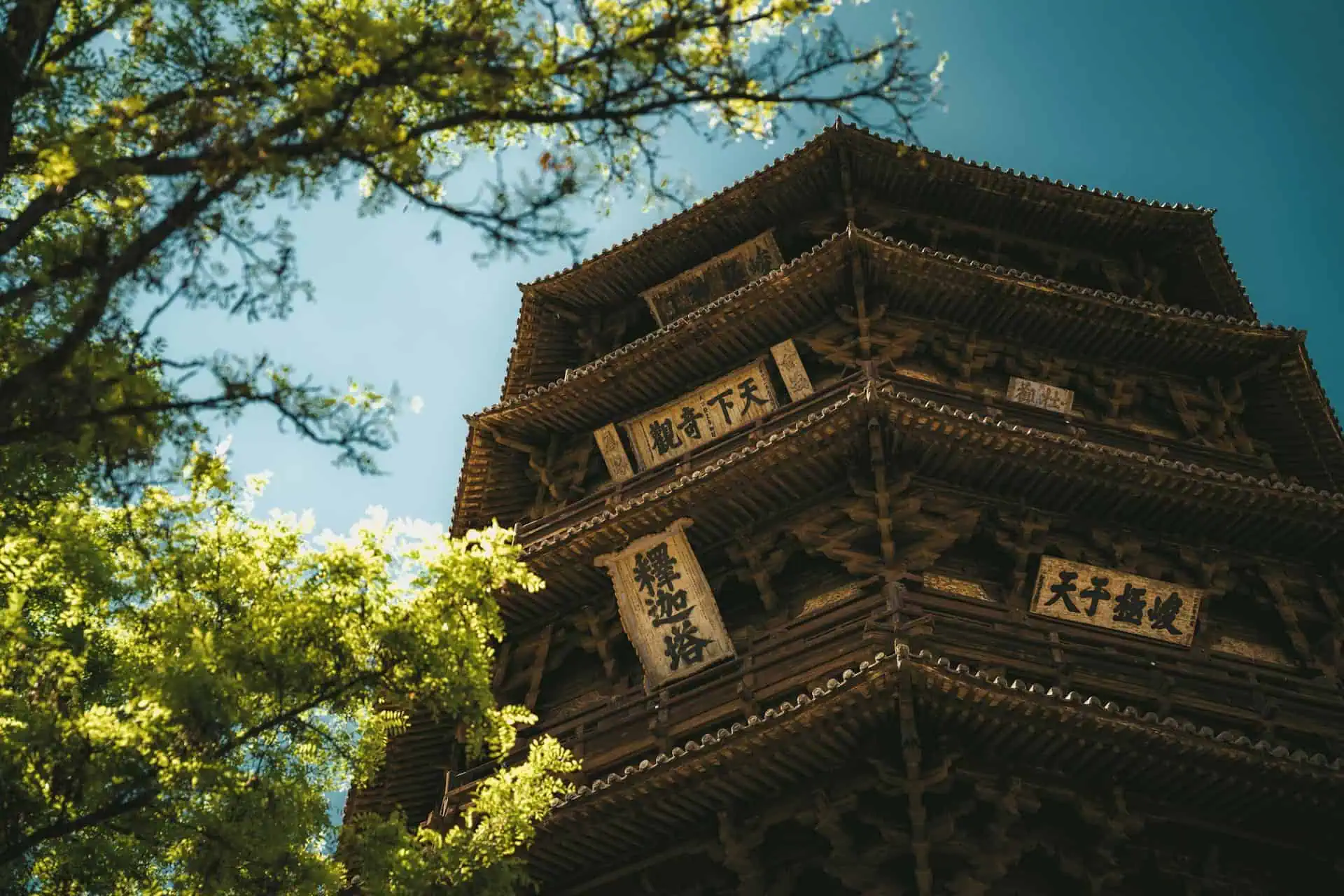
Famen Temple
Fǎmén Sì
A Buddha finger bone sealed in a Tang crypt in 874 AD, the treasure vault beside it, and one very large diamond — 120 km west of Xi'an.
Entry
From ¥78
Hours
Mar 1 – Nov 30 · 8:30
Time needed
7–9 hours
In 874 AD, Tang emperors sealed a finger bone of the Buddha — one of Buddhism's most important relics — into an underground crypt here along with a treasury of gold and silver, and there it all sat for 1,113 years until 1987, when the greatest Tang dynasty treasure hoard ever found came back to light. The museum holding that treasure is world-class; the colossal 2009 namaste stupa built to house the relic is more spectacle than substance. At 120 km each way it's a committed day trip: essential for Buddhist pilgrims and Tang-art lovers, optional for everyone else.
What you're looking at
Famen Temple (法门寺, Fǎmén Sì) is one of China's oldest Buddhist temples, founded around the 2nd century AD, and famous ever since for housing what tradition holds to be a finger bone of the historical Buddha — a relic (舍利, shèlì, from the Sanskrit sarira) said to have reached China in the wave of relic distributions credited to the Indian emperor Ashoka. When the Tang made nearby Chang'an their capital, the temple became a dynastic shrine: roughly once a generation, emperors escorted the relic into the palace in processions of staggering expense. The scholar-official Han Yu protested the extravagance in a famous memorial of 819 and was exiled for his trouble — which tells you how seriously the court took this bone.
The relic was presumed legend until 1981, when half of the temple's ancient brick pagoda collapsed after heavy rain. Clearing the base in 1987, archaeologists broke into a sealed underground crypt (地宫, dìgōng), untouched since 874. Inside sat the finger bone — plus three decoy "shadow" bones planted to fool robbers — and over two thousand objects the Tang court had donated with it. It remains arguably the greatest single hoard of Tang art ever found.
The modern site has three parts, and they are not equal:
- The treasure museum (珍宝馆, Zhēnbǎoguǎn) — the real reason to come. The crypt's contents live here: a set of eight nested reliquary caskets, a gilded silver ritual staff nearly two meters long, gold and silver incense vessels and tableware, and pieces of mi-se celadon (秘色瓷, mìsè cí), the legendary "secret-color" porcelain whose recipe was lost for a thousand years — these are the objects that proved what the texts described. This museum alone rivals anything in the Shaanxi History Museum.
- The old monastery and True Body Pagoda — the atmospheric heart: working temple halls, the rebuilt pagoda, and the entrance to the Tang crypt below it.
- The namaste stupa (合十舍利塔, Héshí Shělì Tǎ) — a 148-meter diamond-shaped tower designed to read as two hands pressed in prayer, completed in 2009 at the far end of a 1.2 km processional boulevard. The finger bone is enshrined beneath it. Architecturally it's monumental kitsch; on relic-display days it fills with pilgrims and the atmosphere carries it.
Visiting strategy
Is it worth it? Honest verdict by traveler type:
- Buddhist pilgrims: unquestionably — this is one of the holiest sites in Chinese Buddhism.
- Tang-art and archaeology lovers: yes. The crypt treasure is a once-in-a-lifetime collection, and the crowds are a fraction of the Terracotta Army's.
- Casual visitors with three days in Xi'an: no. Two-plus hours each way is a lot for a site whose best room is a museum — the city itself has plenty. Spend the day in town instead; our 3-day itinerary covers the essentials.
The relic question drives everything. The true finger bone is raised into the stupa's viewing hall only on weekends, public holidays, and the 1st and 15th days of the lunar month, roughly 10:00–16:00. On ordinary weekdays you'll see the shadow bones at crypt level instead. If witnessing the relic matters to you, plan your whole Xi'an trip around those days — but know that pilgrims arrive by the coachload and the viewing hall gets intense. Casual visitors are honestly better off on a quiet weekday.
A route that works: go straight to the treasure museum first, while it's empty — it's the highlight and it deserves an unhurried hour. Then the old monastery and the crypt entrance. Finally, walk or ride the electric cart down the boulevard to the namaste stupa. Budget 2.5–4 hours on site.
The classic pairing is the Qianling Mausoleum, about 45 minutes away by road — joint tomb of Emperor Gaozong and Wu Zetian. Day tours from Xi'an combine both, and that bundle is the most painless way to do Famen Temple at all.
Getting there
The temple sits in Fufeng County (扶风县, Fúfēng Xiàn), Baoji, about 120 km west of Xi'an. Realistic options, best first:
- Day tour: the standard play. Tours from Xi'an bundle transport, tickets and usually the Qianling Mausoleum on the same day — compare prices on Trip.com and read what's included. Zero logistics, fixed schedule.
- Direct coach: buses to Famen Temple leave from Xi'an's Chengxi coach station (城西客运站; Metro Line 1, Hancheng Lu station 汉城路) with morning departures around 8:30 and 9:40, taking about 2 hours. Some fares bundle admission (~¥158 total). Schedules shrink in low season — confirm the day before at the station or on a travel app.
- High-speed rail + taxi: Xi'an North (西安北站) → Yangling South (杨陵南) in about 30 minutes, roughly ¥30 in second class — see our high-speed rail guide for how booking works. From Yangling South it's a 30–40 minute taxi ride, or a Fufeng-bound local bus (~¥5–10) that stops near the temple. This is the most flexible DIY option and the easiest way to control your return time.
- Hired car: 1.5–2 hours via the G30 Lianhuo expressway. Worth negotiating if you're combining with Qianling on your own schedule.
However you go, bring your passport and have mobile payments working — tickets, carts and carts full of vegetarian snacks all run on QR codes out here.
Practical notes
- Food: there's a temple vegetarian canteen and a row of forgettable tourist restaurants at the gate. Eat a big breakfast in Xi'an, or time lunch for Fufeng county town on the way back.
- Dress and behave for a living monastery: covered shoulders and knees, quiet voices in the halls, no photographing worshippers. On relic days the stupa hall is a devotional space, not a photo op.
- Photography: generally fine outdoors; no flash in the museum, and respect any no-photo signage around the relic hall.
- Timing the day: coaches and tours get you back to Xi'an by late afternoon or early evening. If you DIY by train, the last useful departures from Yangling South run into the evening — check when you book outbound.
- Tickets: gate price is ¥100 in season (¥90 in winter), but online platforms frequently undercut it. Discounts for students and seniors with ID.
- Skip the "guides" who approach in the parking lot; the museum labels are decent and audio guides are available at the entrance.
Questions, answered
When is the Buddha's finger bone on display at Famen Temple?
The true relic is raised for public viewing on weekends, Chinese public holidays, and the 1st and 15th days of each lunar month, roughly 10:00–16:00. On ordinary weekdays you see the Tang-era 'shadow' relics at crypt level instead. Schedules can shift — confirm via the official WeChat account before planning your trip around it.
Is Famen Temple worth visiting from Xi'an?
For Buddhist pilgrims and Tang-art lovers, absolutely — the treasure museum holding the 1987 crypt finds is world-class. For casual visitors with limited time, probably not: it's 120 km each way and Xi'an's own museums cover similar ground. It's a committed full-day trip, usually paired with the Qianling Mausoleum.
How do I get from Xi'an to Famen Temple?
Three realistic ways: a day tour (usually bundled with Qianling), a direct coach from Chengxi coach station (~2 hours, morning departures), or the high-speed train from Xi'an North to Yangling South (~30 min, ~¥30) plus a 30–40 minute taxi. A hired car takes 1.5–2 hours via the G30 expressway.
How much does Famen Temple cost?
Admission is ¥100 from March to November and ¥90 in winter, covering the stupa, monastery and treasure museum. Online platforms (Trip.com, the official WeChat account) often sell below gate price, and students and seniors get discounts with valid ID.
Can I visit Famen Temple and Qianling Mausoleum in one day?
Yes — it's the classic western-corridor combination, and most Xi'an day tours do exactly that. The two sites are about 45 minutes apart by road. Doing both DIY in one day is only realistic with a hired car; by public transport, pick one.
What was found in the Famen Temple crypt?
A stone vault sealed in 874 and opened in 1987, containing the Buddha finger-bone relic, three decoy 'shadow' bones, and over two thousand Tang court donations: nested gold and silver reliquary caskets, a gilded ritual staff, incense vessels, tableware, silk, and the first identified pieces of legendary mi-se 'secret-color' celadon. The collection is displayed in the on-site treasure museum.
Keep exploring
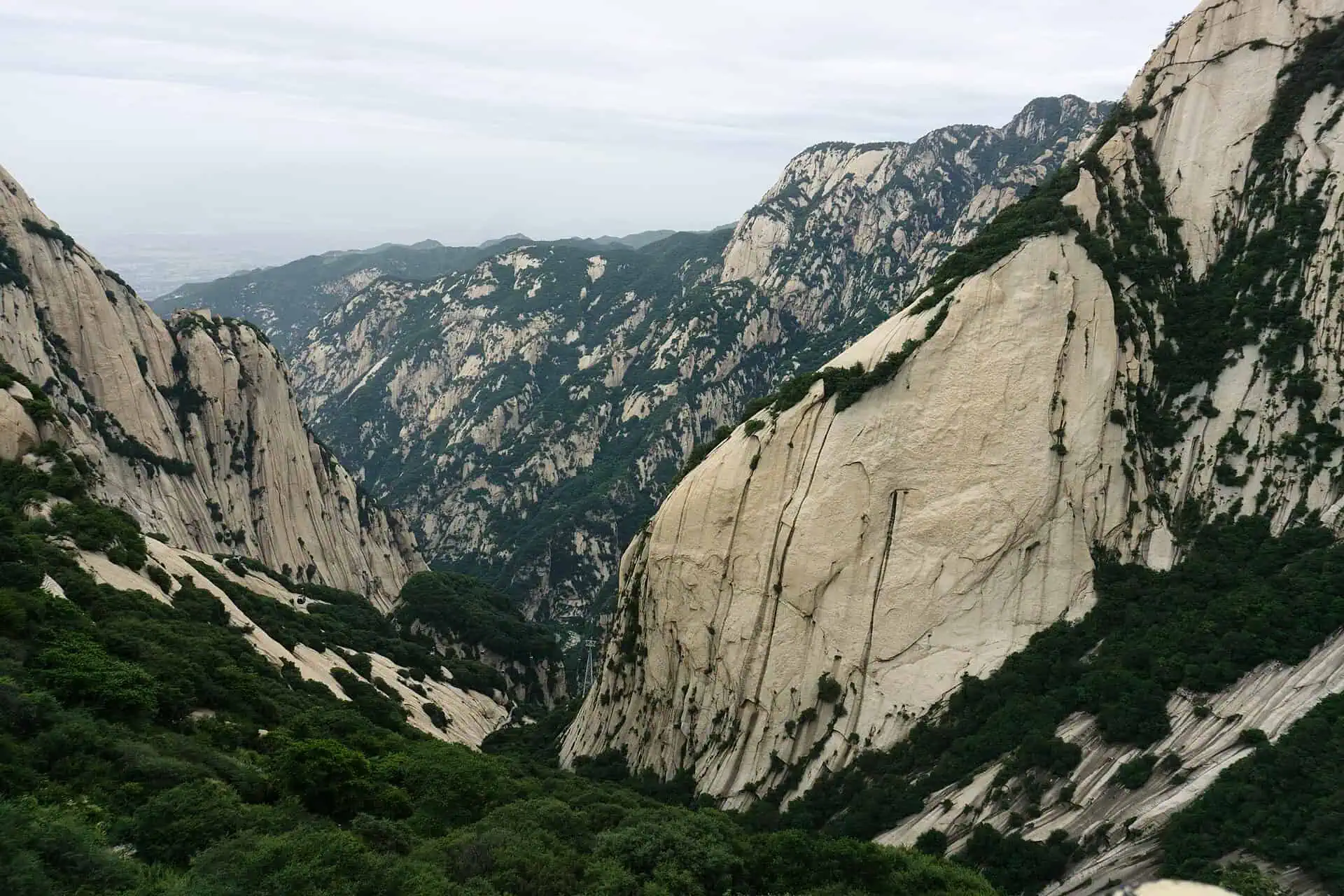
Mount Huashan Day Trip
Sacred for 2,000 years, infamous for one plank path — China's most dramatic granite peaks, an hour from Xi'an by bullet train.
Learn more →
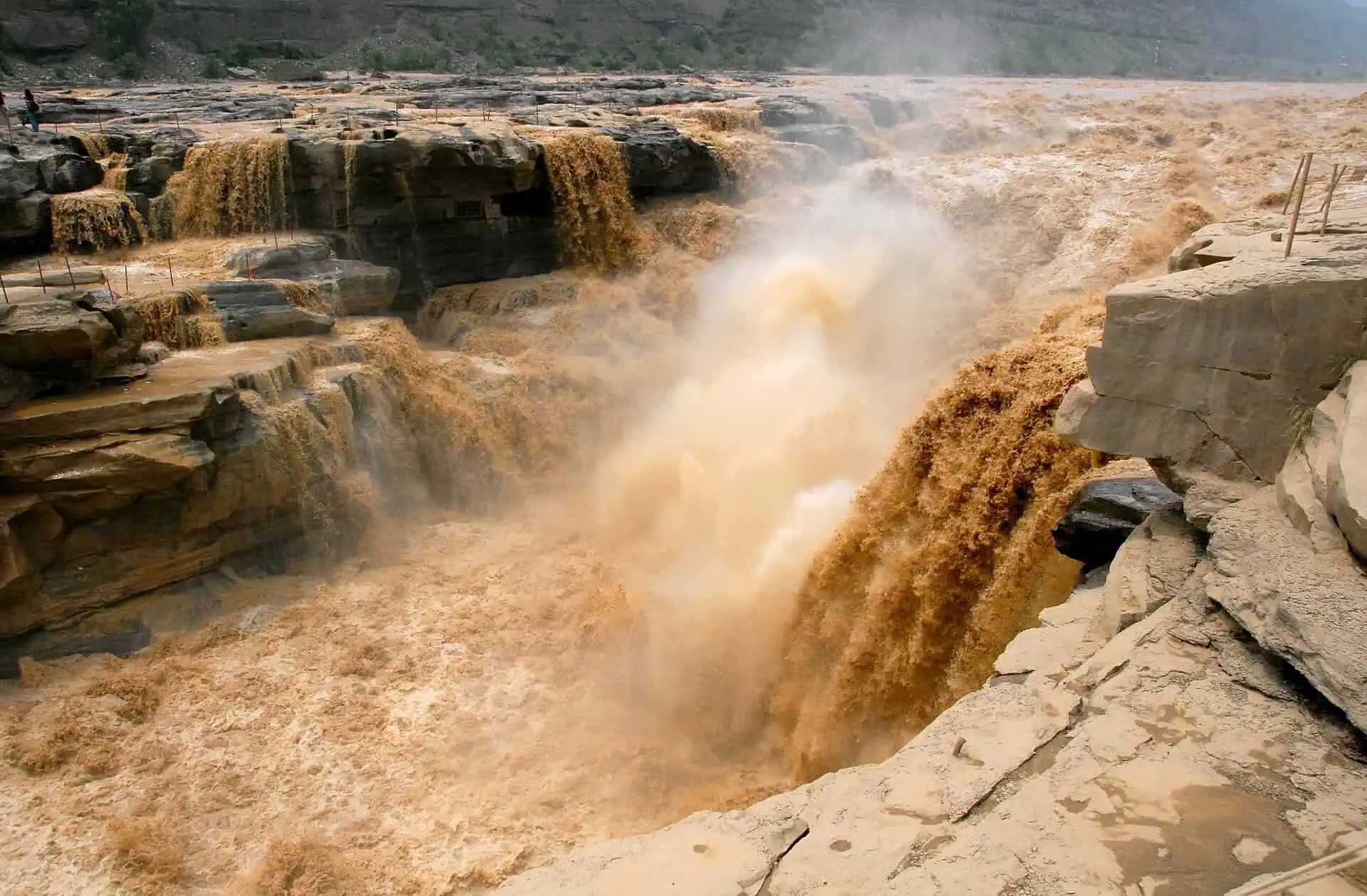
Hukou Waterfall
The Yellow River's temper, carved into rock since before any dynasty — the mightiest amber falls in China, four hours by road from Xi'an.
Learn more →
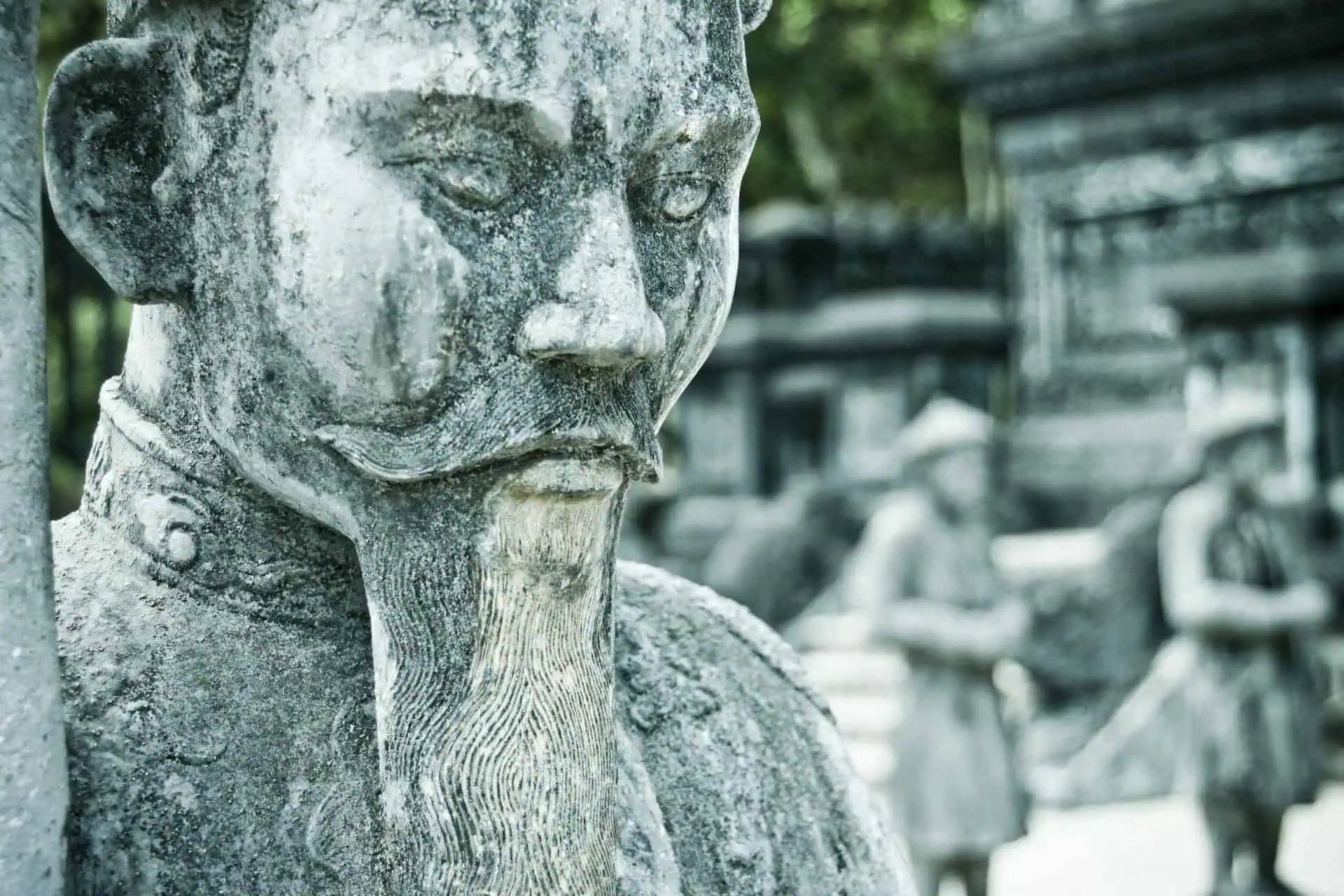
Qianling Mausoleum
Since 705 AD, China's only female emperor has slept beside her husband in a tomb no one has ever opened.
Learn more →