Hukou Waterfall
Húkǒu Pùbù
The Yellow River's temper, carved into rock since before any dynasty — the mightiest amber falls in China, four hours by road from Xi'an.
Entry
From ¥100
Hours
Daily (Shaanxi side) · Peak: 7:30
Time needed
10–12 hours
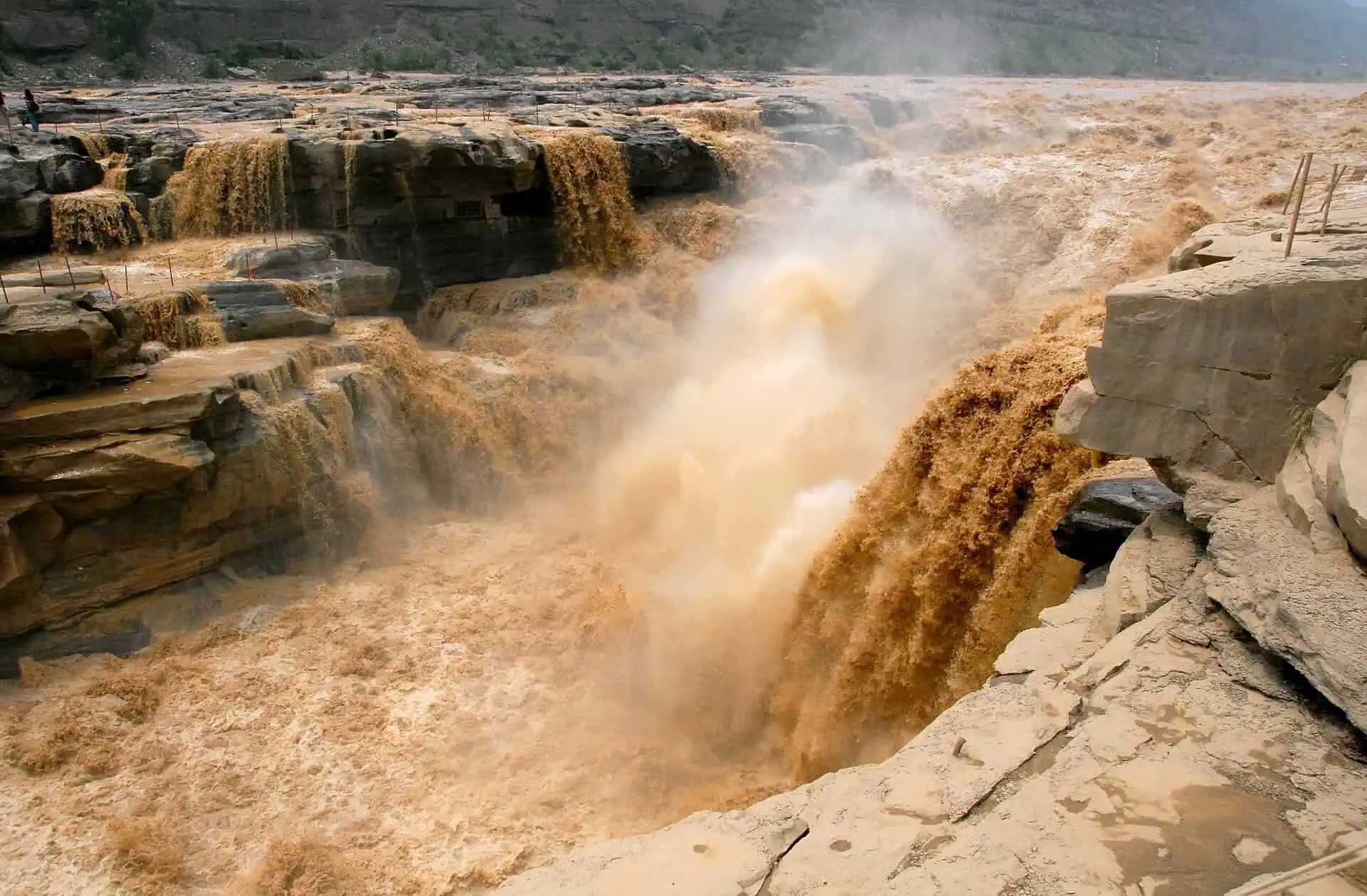
Long before any dynasty, the Yellow River was already carving this gorge, and Hukou Waterfall is where the slow brown ribbon still turns violent: the whole river forced into a 50-meter rock slot, dropping 20 meters into a stone trough under a permanent cloud of amber spray. The catch is the journey — four-plus hours each way by road for an hour or two at the falls. In high-water season it's one of the great natural spectacles in China; in low water it's a long drive for a modest cascade.
What you're looking at
The Yellow River (黄河, Huáng Hé) is the mythic river of Chinese civilization — the "cradle of the nation" and, for just as long, "China's Sorrow" for its catastrophic floods. For most of its length it looks disappointingly tame: a slow, silt-laden current pinned between dikes. At Hukou Waterfall (壶口瀑布, Húkǒu Pùbù, "Kettle Spout") it snaps. The river, over 200 meters wide upstream, is funneled into a gorge barely 50 meters across and pours some 20 meters down into a narrow stone trough, throwing up a wall of spray you hear well before you see the falls themselves.
The color is the story. The water carries loess silt scoured off the plateau upstream, and at high flow the cascade looks less like falling water than falling liquid earth — a churning, gold-brown torrent. This is the second-largest waterfall in China and the largest yellow waterfall in the world; a previous generation of Chinese ¥50 banknotes carried its image, and the 1939 Yellow River Cantata (黄河大合唱, Huánghé Dàhéchàng) took its fury from scenes like this.
The falls sit exactly on the provincial border: the Shaanxi side (宜川县, Yíchuān Xiàn) and the Shanxi side (吉县, Jí Xiàn) are two separate scenic areas staring at the same cascade across the gorge, each with its own ticket. The Shaanxi side is the standard trip from Xi'an, with a broad panoramic terrace. The Shanxi side gets you closer and more head-on, and has a "dragon cave" gallery (龙洞, Lóng Dòng) descending toward water level — when high water hasn't flooded it. You don't need both; the waterfall is the same animal from either bank.
Visiting strategy
The honest math first: four-plus hours each way by road for 60–90 minutes at the falls. The site itself is compact — one great view, a few angles, done. Whether that's a good trade depends entirely on the season and on you.
Worth it if:
- You come in high water. Peak flow windows are September to November (the autumn floods known as 壶口秋风, "Hukou autumn wind," often with rainbows in the spray) and April–May (the 桃花汛, "peach-flower flood," when mountain snowmelt swells the river). At full flow the falls are genuinely thunderous — one of the great natural sights in China.
- You're a waterfall person, a geography person, or you simply want to see the Yellow River once in your life at its most alive.
Skip it if:
- It's deep winter low water. The frozen "ice falls" of December–February have their fans — and the Shaanxi side has run free-entry promotions in recent winters — but it's a long, cold day for a reduced river.
- You have three days or fewer in Xi'an. The Terracotta Army, the city itself and Mount Huashan all give more per hour of travel.
- Long bus rides make you miserable. There is no shortcut — no rail line goes anywhere near.
Which side? From Xi'an, the Shaanxi side (¥90 including the mandatory shuttle bus from the gate to the viewpoints). The Shanxi side (~¥100, separate ticket) offers the closer, head-on angle and the dragon cave, but reaching it from Xi'an adds a cross-river detour of around 30 km to the highway bridge. Pick the Shaanxi side unless you're a completist with a driver.
The realistic format is an organized day tour — hotel pickup around 6:30–7:00, back around 19:00, transport and ticket bundled. DIY is possible (below) but the bus schedule turns the day into a puzzle with one solution. Check our best-time-to-visit guide before committing to a month, and avoid Chinese holiday weeks — see public holidays and crowds.
Getting there
The falls are about 300 km northeast of Xi'an as the road runs, in Yichuan County, Yan'an. Options in order of realism:
- Organized day tour: how most people do it, and rightly. Pickup around 6:30–7:00, roughly twelve hours round trip, ticket bundled; compare operators on Trip.com and check whether the Shaanxi-side shuttle and lunch are included. English-speaking options exist in high season.
- Direct bus: a Hukou line runs from Xi'an's Fangzhicheng coach station (纺织城客运站, at the east end of Metro Line 1) — about 4 hours, ~¥97.5 one way, with morning departures and a mid-afternoon return that makes a same-day trip possible but tight. Schedules vary by season and demand: confirm at the station or on a travel app a day or two before, and don't build the plan around the last bus of the day.
- Via Yichuan: coaches from Xi'an to Yichuan county town, then a local transfer for the last stretch — only sensible if you're sleeping over.
- Hired car/driver: about 3.5–4 hours via expressway. The comfortable option for a group; negotiate a day rate including waiting time, and expect it to cost several times the bus fare.
Our getting-around guide covers coach stations, DiDi and how intercity transport works if you're piecing it together yourself.
Practical notes
- You will get sprayed. At high water the mist reaches the viewing platforms. Bring a light rain jacket, protect your phone and camera, and pack a lens cloth.
- The rocks are wet and uneven. Wear grippy shoes, stay behind the railings, and take closure notices seriously — flash flooding is real in the rainy season.
- Almost no shade. Hat, sunscreen and water from May to September.
- Food: basic tourist canteens at the site, priced accordingly. Eat at the highway service areas or bring snacks; dinner will be back in Xi'an — the Muslim Quarter rewards a long day.
- Motion sickness: much of the route is ordinary expressway, but the final stretch winds through loess-plateau hills. Sit forward, bring tablets if you're prone.
- Time on site: one to two hours is plenty — don't expect a full-day attraction. The day is about the river, and the journey is the price.
- Payments: everything runs on QR codes out here — have Alipay or WeChat Pay set up before you leave Xi'an.
Questions, answered
Is Hukou Waterfall worth the trip from Xi'an?
In high-water season, for waterfall and geography lovers, yes — the Yellow River at full flow is one of China's great natural spectacles. Otherwise the math is brutal: eight-plus hours of road for an hour or two at the falls. With three days or fewer in Xi'an, spend them in the city and at Huashan instead.
How do I get from Xi'an to Hukou Waterfall?
Most people take an organized day tour (~12 hours round trip, ticket included). Independently, a direct bus runs from Fangzhicheng coach station (~4 hours, ~¥97.5 one way, seasonal schedules), or a hired car takes 3.5–4 hours via expressway. There is no practical train option.
When is the best time to visit Hukou Waterfall?
September to November (autumn floods, often with rainbows) and April to May (spring snowmelt, the 'peach-flower flood') have the most dramatic water. Summer is high water too but heavy rain can close the site. December to February brings low water and frozen 'ice falls' — photogenic, but a long cold day; the Shaanxi side has run free-entry winter promotions in recent years.
How long does a Hukou Waterfall day trip take?
Plan on 10–12 hours total: around four hours each way by road and one to two hours at the falls themselves. Tours leave Xi'an around 6:30–7:00 and return around 19:00.
How much is the Hukou Waterfall ticket?
The Shaanxi side — the standard visit from Xi'an — costs ¥90 including the mandatory shuttle to the viewpoints. The Shanxi side is a separate scenic area with its own ~¥100 ticket. Children under 1.2 m and seniors over 65 enter free with ID; students pay half.
Which side of Hukou Waterfall is better, Shaanxi or Shanxi?
From Xi'an, the Shaanxi side: easier to reach, with a broad panoramic terrace. The Shanxi side offers a closer, more head-on view and a 'dragon cave' gallery down toward the water, but adds a cross-river detour and a second ticket. The waterfall is the same from both banks — most visitors should just take the Shaanxi side.
Keep exploring
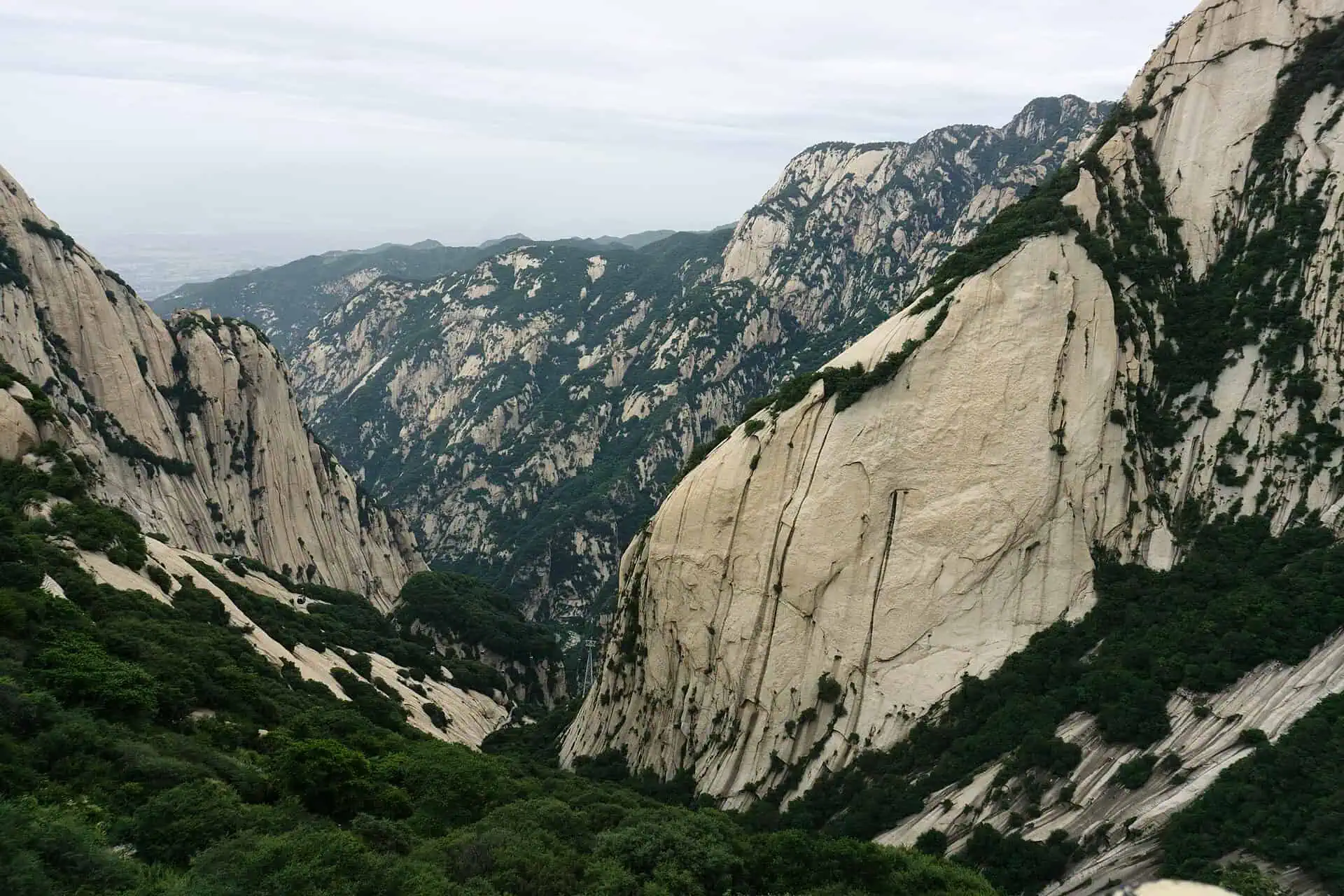
Mount Huashan Day Trip
Sacred for 2,000 years, infamous for one plank path — China's most dramatic granite peaks, an hour from Xi'an by bullet train.
Learn more →
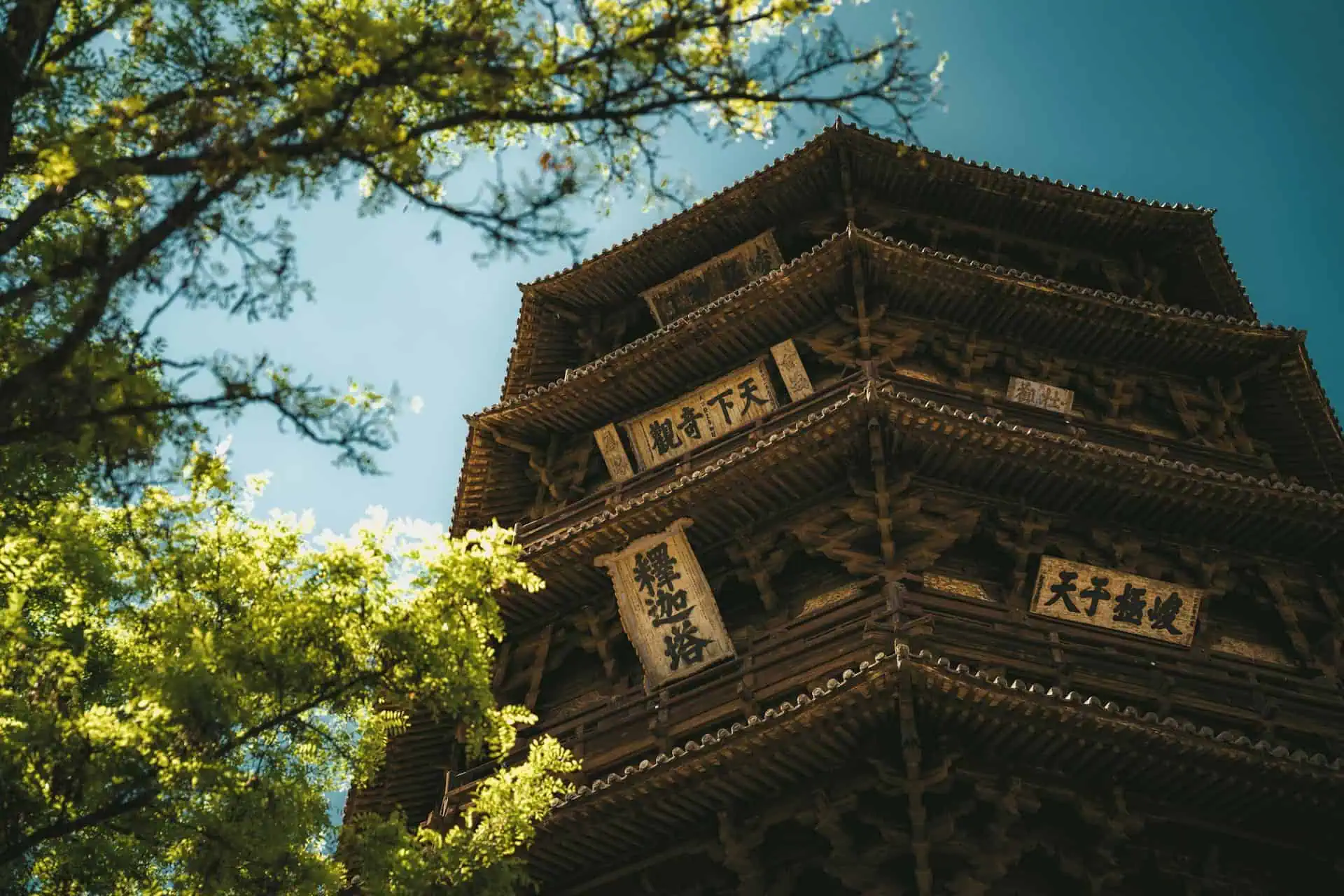
Famen Temple
A Buddha finger bone sealed in a Tang crypt in 874 AD, the treasure vault beside it, and one very large diamond — 120 km west of Xi'an.
Learn more →
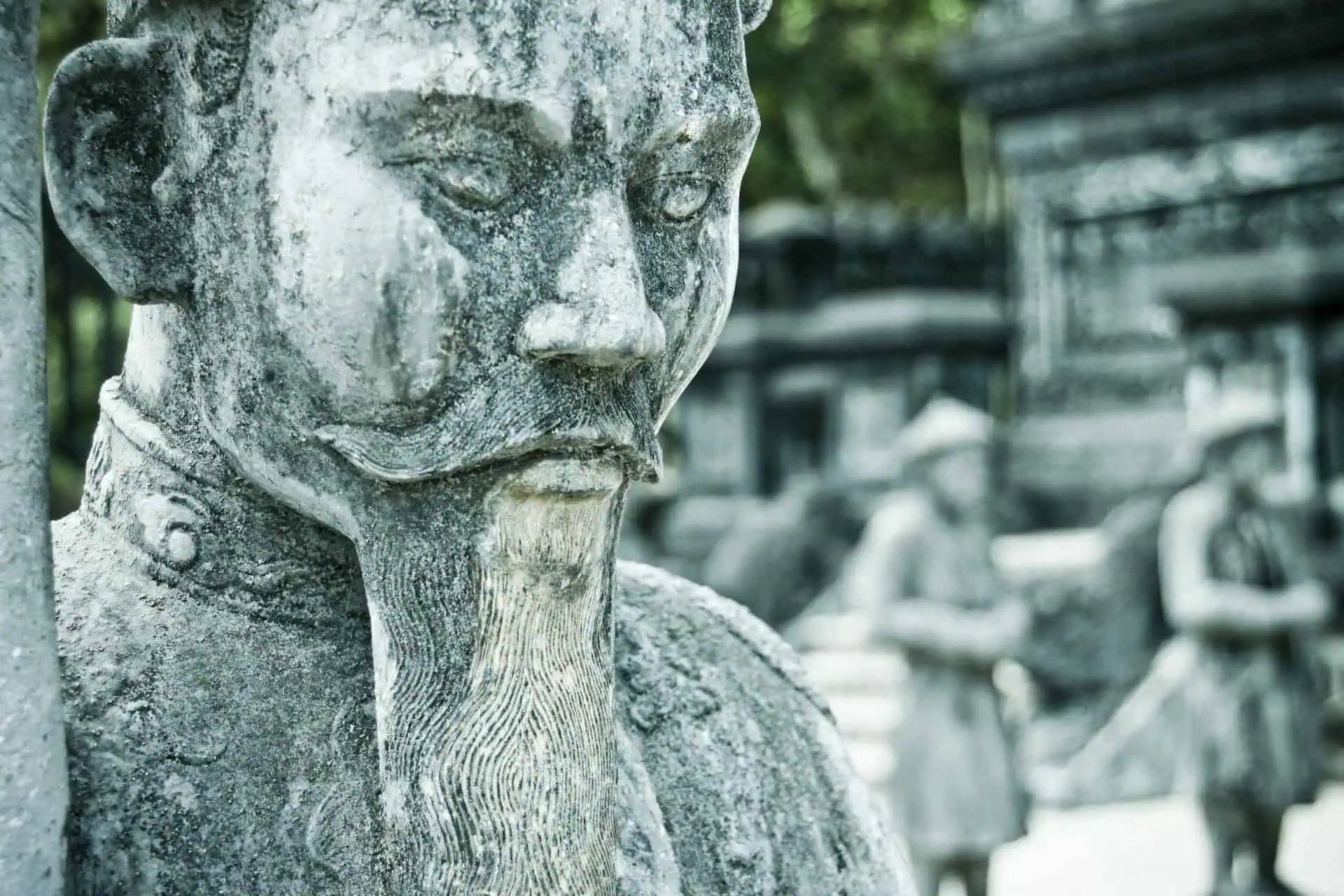
Qianling Mausoleum
Since 705 AD, China's only female emperor has slept beside her husband in a tomb no one has ever opened.
Learn more →