Xi'an in January: Weather, Crowds & Things to Do
January is Xi'an's coldest and driest month — and, outside the Chinese New Year spike, its quietest and cheapest. Daytime highs hover around 5°C (41°F), nights drop below freezing, and the city's indoor-heavy sights (the Terracotta Army pits, the Shaanxi History Museum) become the smart core of any itinerary. Here is what January is actually like, day by day.
5 min read · 5 sections
The short version
- Coldest month of the year: highs around 5°C (41°F), nights around −4°C (25°F), very dry with only occasional snow.
- Crowds are the year's thinnest — except the Chinese New Year travel spike, which lands in late January some years and February in others.
- Around Chinese New Year, the City Wall hosts an evening lantern fair with separate evening ticketing; winter light displays run across the city.
- Plan indoor-first: the Terracotta pits are enclosed and heated-ish, museums are empty, and winter haze (heating season) argues against long outdoor days anyway.
- Hotel prices are at their annual low outside the New Year window; trains and attraction tickets rarely sell out except during the holiday itself.
January at a glance
January is deep winter in Xi'an: cold, dry and grey, but also the month when the city belongs to travellers rather than tour groups. If you dress for it and keep a flexible indoor/outdoor split, you get the Terracotta Army without the crowds and hotel rates you will not see again until December.
| Typical range | |
|---|---|
| Daytime high | about 5°C (41°F) |
| Night low | about −4°C (25°F) |
| Rain days | roughly 2–3 (occasional snow instead) |
| Crowd level | Low — spiking to Peak around Chinese New Year |
For how January compares with the rest of the year, see our best time to visit guide and the full Xi'an weather breakdown.
Weather and what it means for your plans
Expect hard frost most mornings, daytime highs that struggle past 5°C (41°F), and air dry enough that lip balm counts as equipment. Snow falls a few times in an average January — light, usually melting within a day — but when it settles on the City Wall or the Big Wild Goose Pagoda grounds, those become the photo shoots of the year. Days are short: the sun sets not long after 6 pm, so plan outdoor sightseeing for the middle of the day and evenings indoors or under lights.
Two January-specific realities shape the plan. First, winter is heating season, and on still, cold days haze can settle over the plain — check the AQI daily and swap an outdoor day for museums if it climbs past 150. Second, the cold makes standing-in-line sightseeing genuinely miserable, which is exactly why January works: the Terracotta Army's pits are indoors, the Shaanxi History Museum and the Xi'an Museum are warm, and the Muslim Quarter's food stalls are at their most appealing when the steam is rising off a bowl of hulatang at −4°C.
Crowds, prices and booking lead times
For most of January you will share even the Terracotta Army with manageable numbers, and the City Wall cycle track is often close to empty. Hotels drop to their cheapest rates of the year, and mid-range rooms can be booked two or three days out without drama. Trains from Beijing or Chengdu have seats close to departure.
The exception is Chinese New Year (chūnjié), which falls in late January in some years and mid-February in others — check the exact dates for your travel year before booking anything. In the holiday week, domestic family travel surges: trains sell out the moment bookings open, hotel prices jump, and the lantern fair evenings pack the City Wall. The full mechanics of the holiday calendar are in our public holidays and crowds guide — if your trip overlaps chūnjié, book trains and hotels several weeks ahead and expect peak-crowd conditions at the headline sights on the first two festival days.
What's special in January
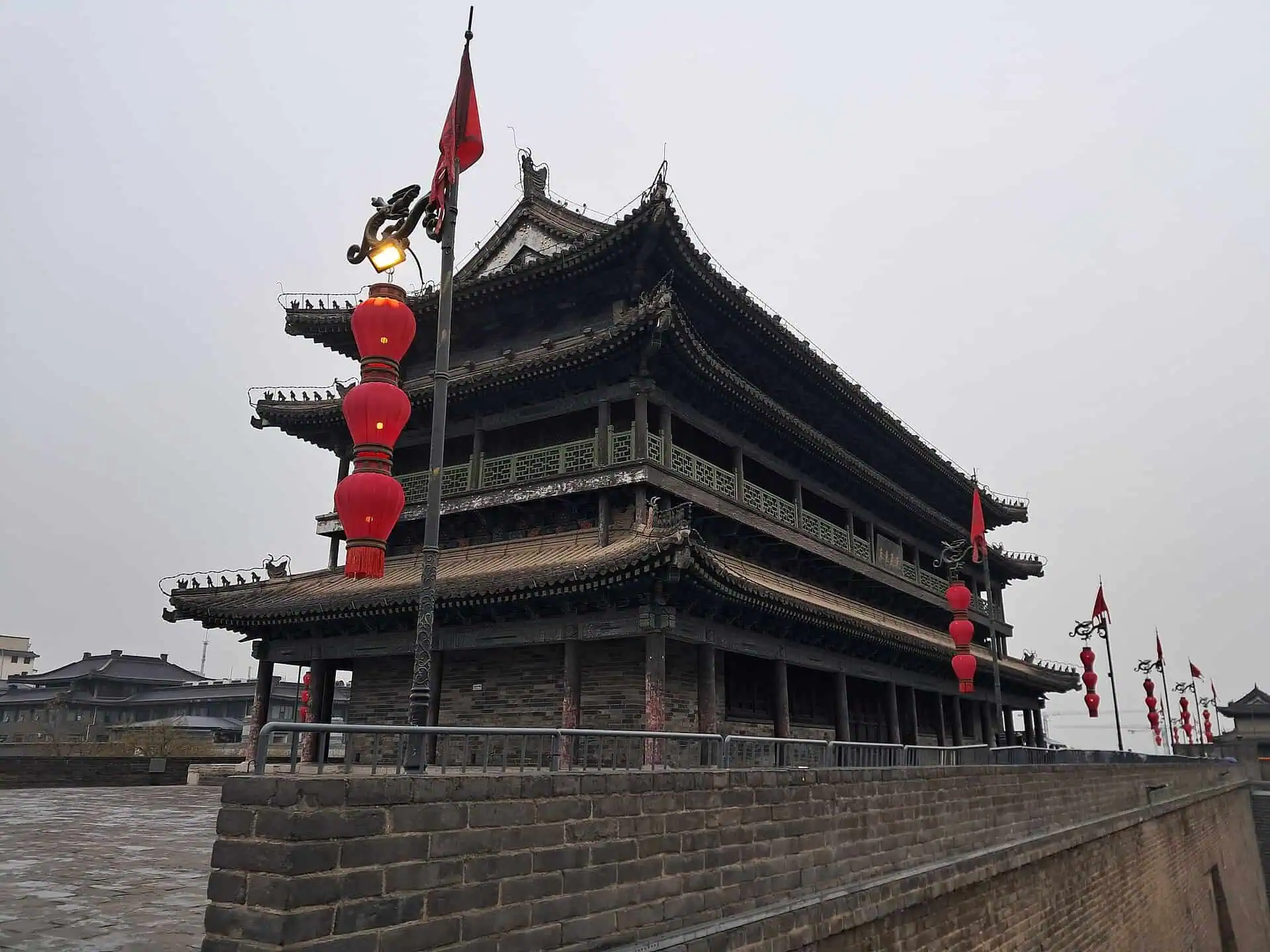
The City Wall lantern fair. In the weeks around Chinese New Year, the South Gate section of the City Wall fills with enormous illuminated lantern installations, best after dark via separate evening ticketing — it is one of the most atmospheric things the city does all year, and it pairs naturally with the broader winter lights displays across town.
Snow-photo odds. They are real but not reliable: a couple of snowy mornings a month on average. Locals photograph the wall's crenellations under snow the same way Londoners photograph Hyde Park — if you wake to white, change your plan and go immediately.
Winter food at its best. January is the natural habitat of mutton soup: yangrou paomo (bread soaked in rich lamb broth) and hulatang were invented for this weather. Queue with students at a morning hulatang stand and you are doing Xi'an the way residents do it in January.
Empty museums. With school groups absent until the holiday, the Shaanxi History Museum's Tang murals and bronzes can be enjoyed at conversation volume rather than football-match volume.
Practical tips for January
- Pack a real winter coat, plus thermal base layers, hat, gloves and grippy shoes for icy pavements. Indoor spaces are well heated, so dress in layers you can shed.
- Carry an N95 or KN95 mask for hazy days — standard local practice, and genuinely useful during heating season.
- Work with the short days, not against them: outdoor sights between roughly 10 am and 4 pm (the warmest, brightest stretch), lights-and-lanterns or dinners after dark.
- Moisturise everything. The combination of freezing outdoors and heated indoors cracks skin fast; locals run humidifiers in hotel rooms.
- Book around the holiday, not into it: the quietest, cheapest stretch is typically the week or two before Chinese New Year, when festive decorations are already up but the travel wave has not started.
Questions, answered
Is January a good time to visit Xi'an?
Yes, if you are dressed for it. You trade mild weather for the year's thinnest crowds, lowest prices and occasional wall-under-snow photos, and most headline sights are indoors anyway. Avoid the actual Chinese New Year week unless you want the festival atmosphere — that specific week is the one crowded, expensive window of the month.
What should I wear in Xi'an in January?
A proper insulated coat over thermal layers, plus hat, gloves and warm shoes — mornings sit below freezing. Indoors (trains, museums, malls) is heated to shirt-sleeve level, so layer rather than wear one giant jumper. Add an N95 mask for hazy days and lip balm for the dry air.
Are there festivals or closures in January?
Chinese New Year is the big one, moving between late January and mid-February year to year, with the City Wall lantern fair in the evenings around it. Sights stay open through the holiday — the wall, the pagodas and the Terracotta Army do their biggest business then. Note that museums such as the Shaanxi History Museum close on Mondays (open on holiday Mondays).
How far ahead should I book for January?
Outside Chinese New Year: barely at all — hotels two or three days ahead, train tickets a few days, attraction tickets the night before. If your dates overlap the New Year holiday, flip that entirely: book trains and hotels several weeks ahead, since that week is one of China's heaviest travel periods.
Places in this story
Keep exploring
Visas & entry: do you need one?
Probably less paperwork than you fear — and two of the doors now have their own deep-dive packages: the 30-day visa-free entry (~50 countries) and the 240-hour transit (55 countries, including the US). This page is the router: work out which door is yours, then read its package.
The 240-hour visa-free transit, explained
Ten days in China without a visa, if you're just passing through — including Americans. The rules, the traps, and how to run it through Xi'an.
The 30-day visa-free entry: who gets in free
Around 50 countries can now enter China for up to 30 days with no visa at all — no transit logic, no onward-ticket games. Most of Europe, the UK, Canada, Australia and more. The US is not on the list.