Maoling (Mausoleum of Emperor Wu of Han)
Màolíng
The largest Han imperial tomb — and the stone warhorse that trampled a Xiongnu warrior.
Entry
From ¥75
Hours
Daily · Apr
Time needed
2–4 hours
Maoling is the tomb of Emperor Wu (汉武帝, 156–87 BC), the Han ruler who pushed China's borders to the edge of the western deserts and whose reign was the Western Han's peak. It is the biggest of the Western Han imperial tombs, a flat-topped earthen mound the size of a small hill out on the Xingping plain west of Xi'an. The reason to make the trip, though, is the Maoling Museum next door, built on the tomb of the general Huo Qubing — whose 16 surviving Han stone carvings are among the masterpieces of early Chinese sculpture. Pair it with [Qianling](/en/day-trips/qianling-mausoleum) for a two-imperial-tomb day.
The tomb and the emperor
Emperor Wu (Han Wudi, 汉武帝刘彻) ruled the Han for 54 years and turned it into a superpower: he opened the Silk Road, fought the Xiongnu nomads to a standstill, absorbed much of what is now southern China, and bankrupted the treasury doing it. He is buried at Maoling, an earthen pyramid some 40 km west of Xi'an that took 53 years to build and was once surrounded by a small city of attendants' graves, ritual halls, and the tombs of his favourite ministers.
The mound itself is just a mound — looted empty long ago, like every Han royal tomb that did not hide a sealed crypt. The reason to come is what surrounds it.
The Huo Qubing carvings
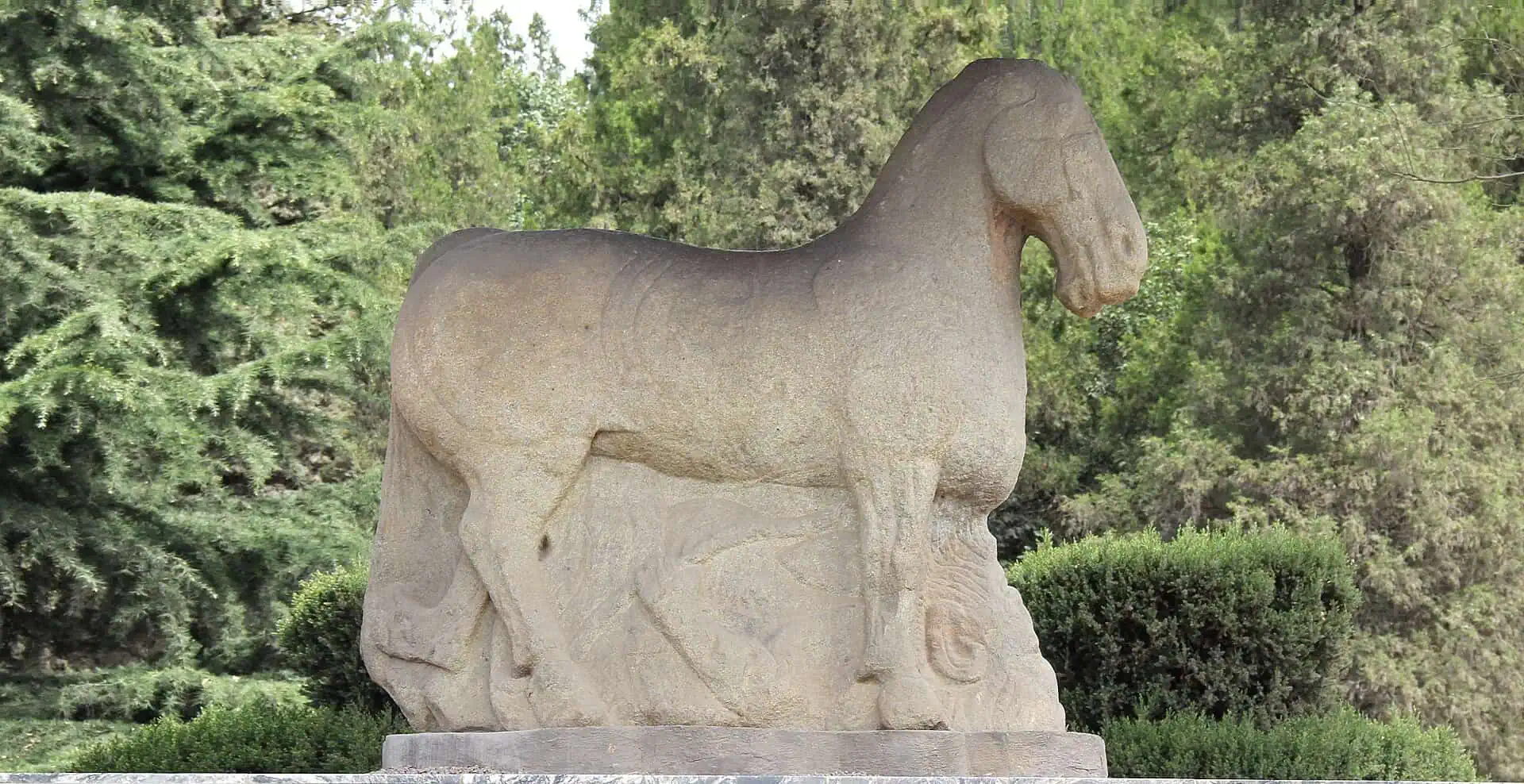
Adjacent to Maoling sits the tomb of Huo Qubing (霍去病), the general who, as a teenager, led Han cavalry deep into Xiongnu territory and died at 24. Emperor Wu ordered his tomb shaped like the Qilian Mountains where he won his fame, and scattered across it are 16 monumental stone carvings — the earliest surviving large-scale stone sculpture in China and the reason art historians make the trip.
The most famous is the "Horse trampling a Xiongnu warrior" (马踏匈奴): a stocky Han warhorse standing over a defeated nomad, carved from a single granite boulder with astonishing economy — a few chisel blows suggesting muscle, face, weapon. There is also a crouching tiger, a boar, a toad, an "ox" and a "horse ready to leap," all done in the same bold, barely-finished style that lets the raw rock show through. They feel shockingly modern for objects made in 117 BC, and they live outdoors on the tomb where they were placed — no glass, no vitrines.
Getting there & pairing it
Maoling is about 40 km west of Xi'an, near Xingping — 45–60 minutes by DiDi or taxi, or a slow ~2-hour tourist bus from the city. The honest move is to combine it with Qianling, the joint tomb of Wu Zetian and Gaozong further west: both are Han/Tang imperial mausoleums on the same plain, and a car-and-driver day hits both comfortably. Going to Maoling alone for a half-day is doable but thin — the carvings are worth the trip, the lone earthen mound is not.
Questions, answered
Is the tomb itself worth seeing?
Not really — it is an earthen mound, long since looted. The reason to come is the adjacent Maoling Museum and the 16 Han stone carvings on Huo Qubing's tomb. Go for the sculpture, not the pyramid.
How does Maoling compare to Qianling?
Both are imperial mausoleums on the Xianyang plain west of Xi'an. Maoling (Han, Emperor Wu) has the peerless stone carvings; Qianling (Tang, Wu Zetian) has the intact spirit-way of stone figures and a more spectacular setting. If you can only do one, Qianling is the more complete experience; Maoling is for the sculpture-lover.
Can I do Maoling and Qianling in one day?
Yes — they are about 40 km apart on the same plain, and a car-and-driver day from Xi'an covers both with a lunch stop. It is one of the best history-themed day trips out of the city.
Keep exploring
Mount Huashan Day Trip
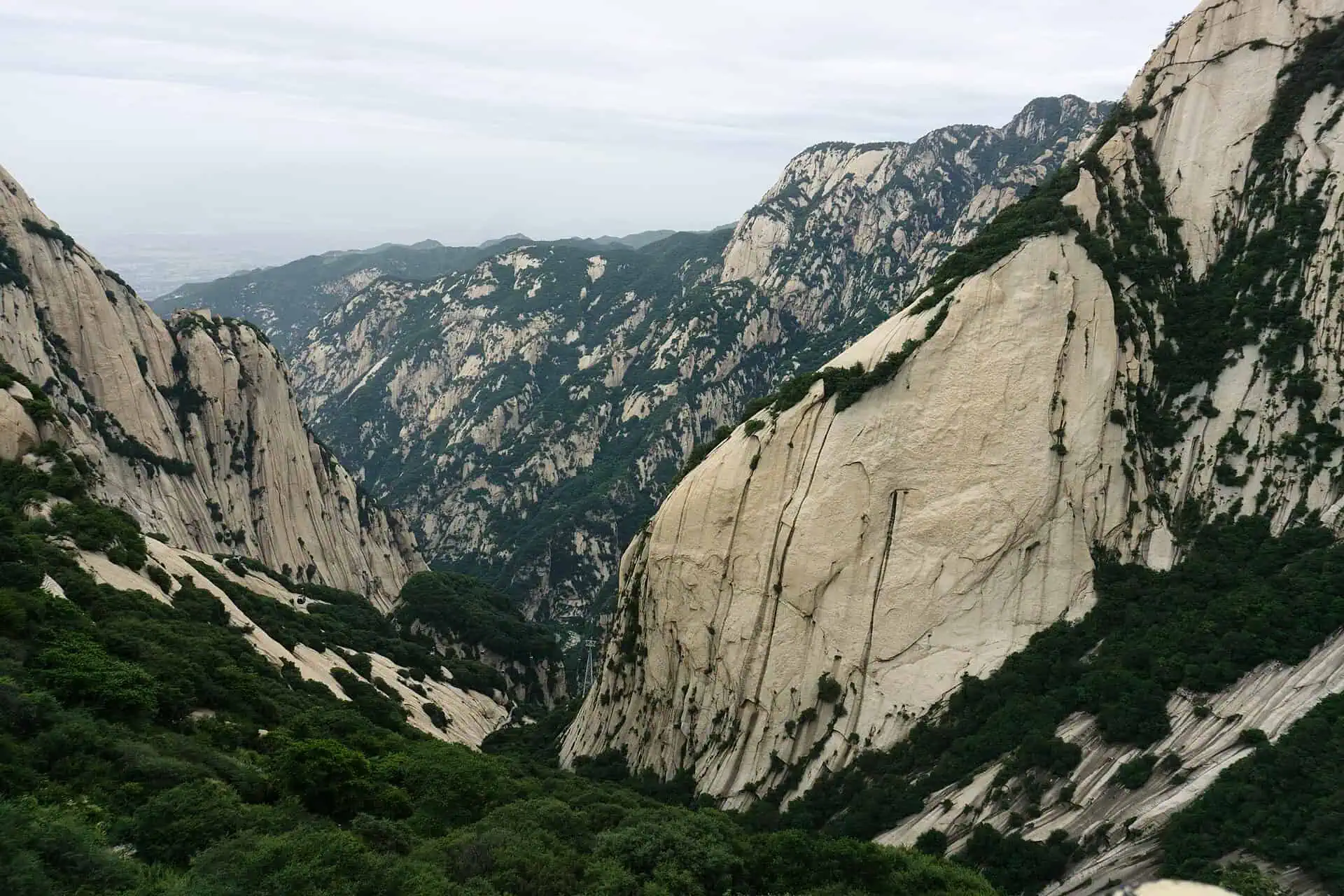
Sacred for 2,000 years, infamous for one plank path — China's most dramatic granite peaks, an hour from Xi'an by bullet train.
Learn more →
Famen Temple
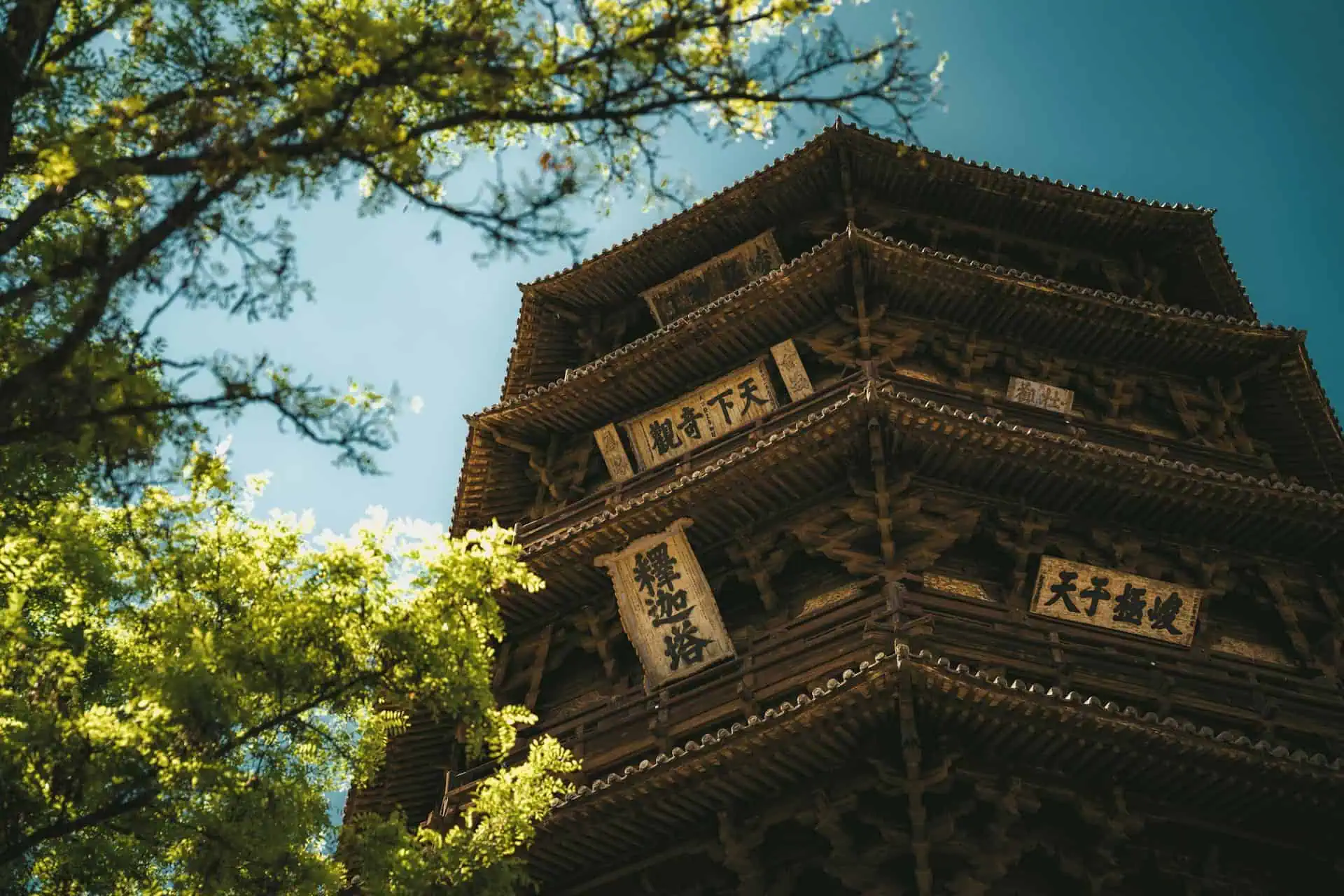
A Buddha finger bone sealed in a Tang crypt in 874 AD, the treasure vault beside it, and one very large diamond — 120 km west of Xi'an.
Learn more →
Hukou Waterfall
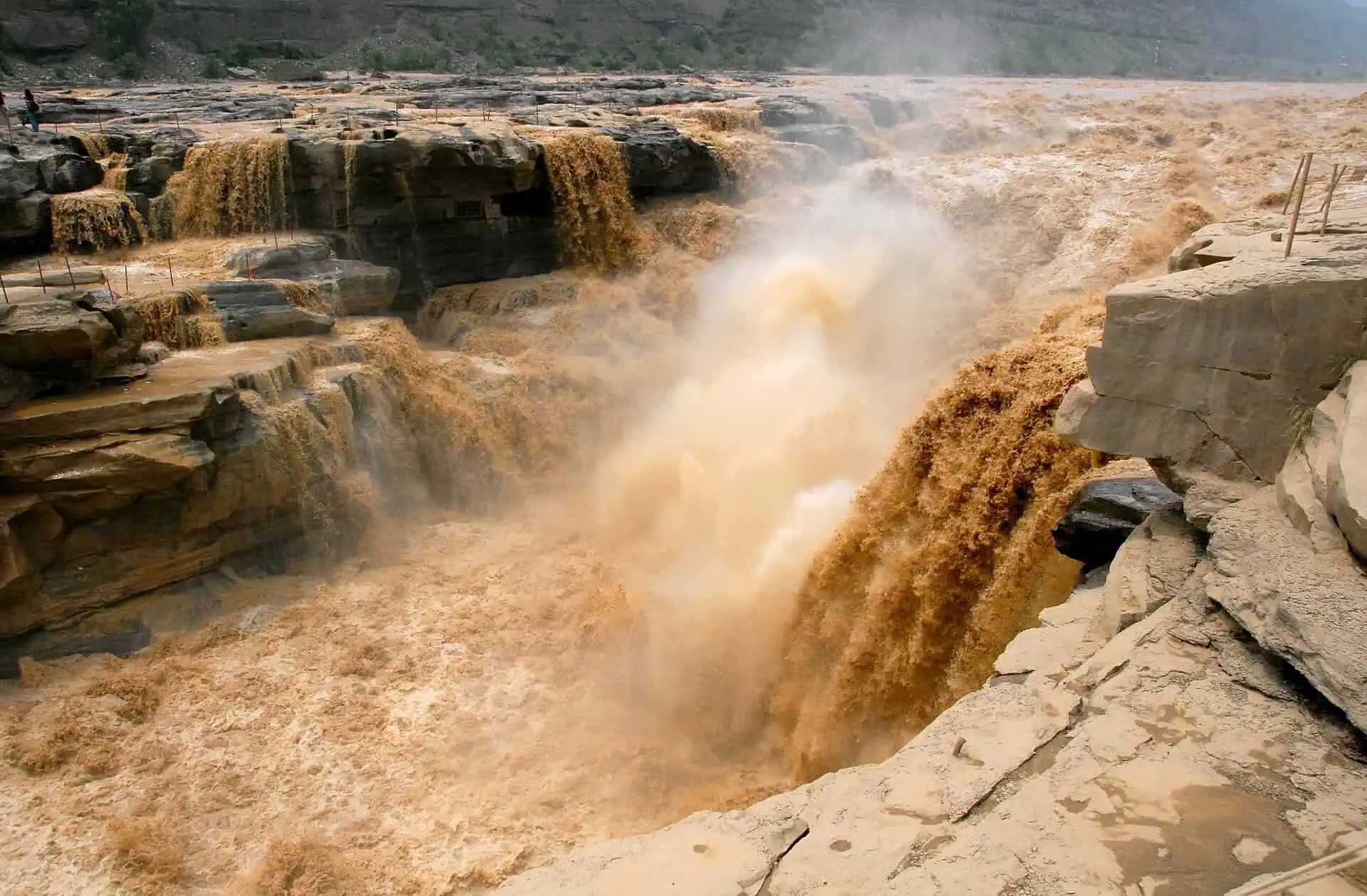
The Yellow River's temper, carved into rock since before any dynasty — the mightiest amber falls in China, four hours by road from Xi'an.
Learn more →